

World
Europe signs off on a new privacy pact that allows people’s data to keep flowing to US


LONDON (AP) — The European Union signed off Monday on a new agreement over the privacy of people’s personal information that gets pinged across the Atlantic, aiming to ease European concerns about electronic spying by American intelligence agencies.
The EU-U.S. Data Privacy Framework has an adequate level of protection for personal data, the EU’s executive commission said. That means it’s comparable to the 27-nation’s own stringent data protection standards, so companies can use it to move information from Europe to the United States without adding extra security.

U.S. President Joe Biden signed an executive order in October to implement the deal after reaching a preliminary agreement with European Commission President Ursula von der Leyen. Washington and Brussels made an effort to resolve their yearslong battle over the safety of EU citizens’ data that tech companies store in the U.S. after two earlier data transfer agreements were thrown out.
“Personal data can now flow freely and safely from the European Economic Area to the United States without any further conditions or authorizations,” EU Justice Commissioner Didier Reynders said at a press briefing in Brussels.
Washington and Brussels long have clashed over differences between the EU’s stringent data privacy rules and the comparatively lax regime in the U.S., which lacks a federal privacy law. That created uncertainty for tech giants including Google and Facebook parent Meta, raising the prospect that U.S. tech firms might need to keep European data that is used for targeted ads out of the United States.
The European privacy campaigner who triggered legal challenges over the practice, however, dismissed the latest deal. Max Schrems said the new agreement failed to resolve core issues and vowed to challenge it to the EU’s top court.
Schrems kicked off the legal saga by filing a complaint about the handling of his Facebook data after whistleblower Edward Snowden’s revelations a decade ago about how the U.S. government eavesdropped on people’s online data and communications.
Calling the new agreement a copy of the previous one, Schrems said his Vienna-based group, NOYB, was readying a legal challenge and expected the case to be back in the European Court of Justice by the end of the year.
“Just announcing that something is ‘new’, ‘robust’ or ‘effective’ does not cut it before the Court of Justice,” Schrems said. “We would need changes in U.S. surveillance law to make this work — and we simply don’t have it.”
The framework, which takes effect Tuesday, promises strengthened safeguards against data collection abuses and provides multiple avenues for redress.
Under the deal, U.S. intelligence agencies’ access to data is limited to what’s “necessary and proportionate” to protect national security.
Europeans who suspect U.S. authorities have accessed their data will be able to complain to a new Data Protection Review Court, made up of judges appointed from outside the U.S. government. The threshold to file a complaint will be “very low” and won’t require people to prove their data has been accessed, Reynders said.
Business groups welcomed the decision, which clears a legal path for companies to continue cross-border data flows.
“This is a major breakthrough,” said Alexandre Roure, public policy director at the Brussels office of the Computer and Communications Industry Association, whose members include Apple, Google and Meta.
“After waiting for years, companies and organisations of all sizes on both sides of the Atlantic finally have the certainty of a durable legal framework that allows for transfers of personal data from the EU to the United States,” Roure said.

In an echo of Schrems’ original complaint, Meta Platforms was hit in May with a record $1.3 billion EU privacy fine for relying on legal tools deemed invalid to transfer data across the Atlantic.
Meta had warned in its latest earnings report that without a legal basis for data transfers, it would be forced to stop offering its products and services in Europe, “which would materially and adversely affect our business, financial condition, and results of operations.”


Florida
Civil Rights Group Honors Nobel Peace Prize Winner Navi Pillay, Highlights Florida’s Trayvon Martin Connection

The Orlando-based civil rights association recalls supporting the former U.N. human rights chief’s 2012 call for an investigation into the teenager’s killing in Sanford.
ORLANDO, Fla. (FNN) — The Florida Civil Rights Association is congratulating 2026 Nobel Peace Prize winner Navanethem “Navi” Pillay, recalling her call for an investigation into Trayvon Martin’s killing and the international attention it brought to questions of racial equality and justice in Florida.
The Norwegian Nobel Committee announced Pillay’s selection Oct. 9 for her efforts to promote peace and international law. The South African jurist served as United Nations high commissioner for human rights from 2008 to 2014 and helped shape landmark international court decisions.
In a press release, FCRA President J. Willie David III said Pillay’s intervention connected a Florida family’s demand for answers to a broader concern for human rights.
“Pillay’s call for an investigation reinforced that a family’s demand for justice in Sanford mattered beyond Florida and the United States,” David said.
“We welcomed her intervention in 2012 because families deserve answers and the law must protect everyone equally.”
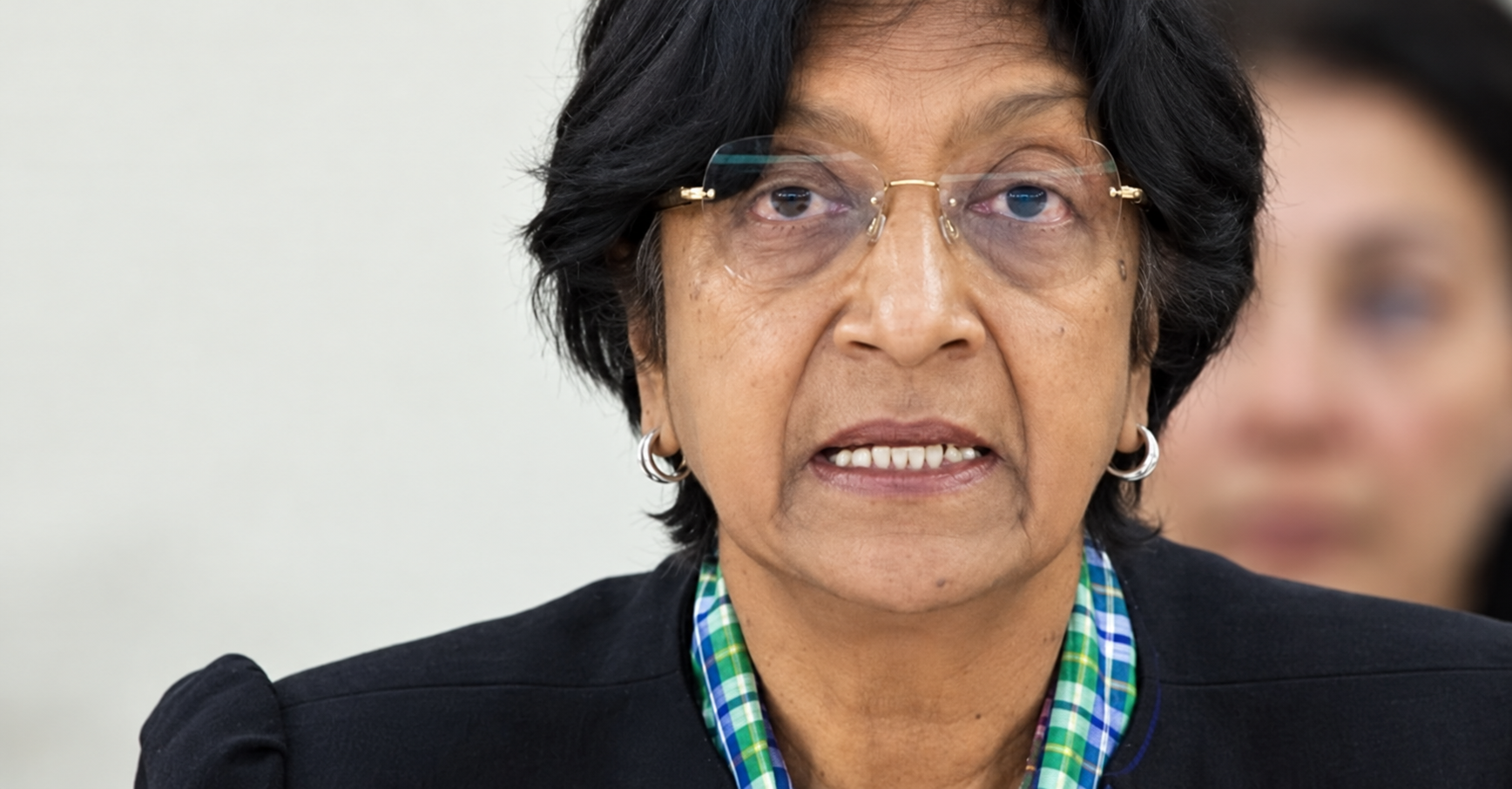
UN Human Rights Commissioner Navi Pillay (Photo credit: UN Photo/Jean-Marc Ferre)
FCRA recalls its response in 2012
Martin, an unarmed Black 17-year-old, was fatally shot by neighborhood watch volunteer George Zimmerman on Feb. 26, 2012, in Sanford, northeast of Orlando.
In April 2012, Pillay called for an immediate investigation into the killing as the case drew international attention and scrutiny of Florida’s Stand Your Ground law.
FCRA welcomed that call. The association’s current release cites an April 7, 2012, West Orlando News report that quoted David discussing the case’s global impact.
“The shooting death of Trayvon Martin and Florida’s Stand Your Ground Law have created a worldwide movement that calls into question how justice is delivered to victims of color,” David said at the time, according to the release.
FCRA describes the activism surrounding Martin’s death as a defining moment that galvanized a new generation of civil rights advocates.
Zimmerman was charged with second-degree murder and acquitted in July 2013. In February 2015, the U.S. Justice Department closed its separate investigation, finding insufficient evidence to pursue federal criminal civil rights charges.
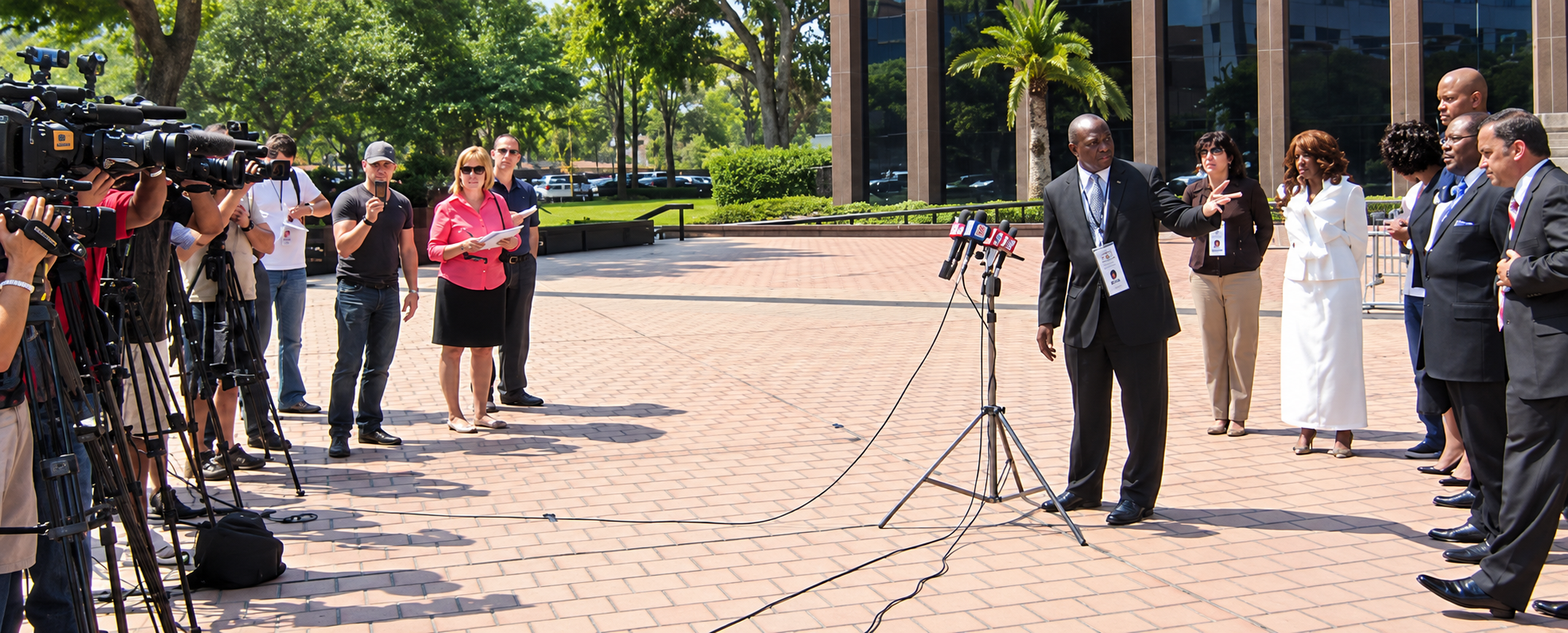
The Florida Civil Rights Association (FCRA) held a press conference outside the State of Florida’s regional offices in Orlando in 2012, calling on then-Gov. Rick Scott to take action following Trayvon Martin’s killing. Photo by FCRA.
Why Florida’s case drew global scrutiny
The Florida connection shows how the handling of a local killing can draw international scrutiny over racial discrimination, access to justice and the protection of human rights.
Pillay’s intervention brought those concerns into the international discussion surrounding Martin’s death. In September 2013, U.N. human rights experts also urged the United States to complete its civil rights investigation and examine concerns about racial profiling.
The significance lies in human rights oversight: how public institutions investigate deaths and provide equal treatment can attract attention beyond national borders. Pillay’s call was an appeal for investigation, rather than an international court judgment about Zimmerman’s guilt or Florida’s compliance with international law.
For FCRA, that connection remains relevant to how Florida leaders evaluate laws and practices affecting the communities they serve.
Pillay’s record in international justice
Pillay challenged discrimination under apartheid before serving on South Africa’s High Court, the International Criminal Tribunal for Rwanda and the International Criminal Court.
At the Rwanda tribunal, she was part of the judicial panel that established that rape and sexual violence can constitute acts of genocide, a landmark development in international criminal law.
David said honoring that career should also encourage accountability at home.
“Her Nobel Peace Prize recognizes a career built on confronting injustice through the rule of law,” he said. “Honoring that work means demanding transparent investigations and equal protection here at home. Rights belong to everyone.”
A renewed call for fairness in Florida
FCRA urged Florida leaders to safeguard impartial investigations, examine whether Stand Your Ground and other laws are applied fairly, and address policies or practices that produce discriminatory outcomes.
Founded in 2005, the association advocates for civil rights, human rights and civil liberties through education, advocacy and accountability. Its statement links Pillay’s international recognition to a continuing demand for fairness and human dignity in Florida.


 Florida4 days ago
Civil Rights Group Honors Nobel Peace Prize Winner Navi Pillay, Highlights Florida’s Trayvon Martin Connection
 Central Florida News1 day ago
Tiffany Moore Russell Plans Orange County Campaign Stops Ahead of Early Voting
 Florida15 hours ago
Trump Plans Fort Myers Rally as Byron Donalds Seeks to Become Florida’s First Black Governor
 Politics22 hours ago
RNC Chairman Joe Gruters Calls Trump an ‘Absolute Machine’ Ahead of Midterm Elections


