MILWAUKEE, Wi. (FNN) — The first Republican Presidential Primary Debate was held last night in the heartland of the Midwest. In the past two elections, Wisconsin has been a battleground state like no other, which only makes it right that the Republican candidates hungry to consolidate some momentum and put in their best effort in an attempt to swing the polls.
Now, with first blood drawn, it’s time to recap the strongest performances of the night as we look towards more policy debates (and mudslinging) to come.
Winners
Nikki Haley
Say what you will about Nikki Haley’s rise to prominence within the Republican Party, but last night was a turning-of-the-head moment for her in this campaign. For all the flack that seasoned politicians have been getting when it comes to their corruption within politics, Haley’s comments criticizing both left- and right-wing policies were a breath of fresh air.
Not to mention her Kodak moments ripping into Vivek and schooling him in relation to foreign policy. When it came to our understanding of allies on the world stage, Haley’s politics were the most comprehensive of any candidate. She will undoubtedly make this her anchor for the rest of her campaign. In an attempt to get one over as the lone woman in an all-boys club, this is her best path to victory.
Mike Pence
Undoubtedly one of the biggest performers of last night. At first, Pence’s opening statements seemed a little fumbled and misconstrued when he talked down on Vivek Ramaswamy’s experience. Even still, Pence and the moderators did a good job of making the January insurrection topic a line in the sand for everyone on that stage. He even managed to throw in a couple of snide remarks to his old commander-in-chief. As the debate progressed, he took no issue with taking jabs and returning verbal punches when applicable.
Is he capable of going all the way? Probably not. But this debate did a great job at restoring some of the integrity to Pence’s name as his former boss is on the cusp of his fourth indictment.
Doug Burgum
The North Dakota governor had a tough time even making the stage after suffering an Achilles injury the day before. Nonetheless, his performance in the debate along with his answers were admirable. For a governor who is in charge of one of the biggest oil states in the country, his plan on energy diversification was much more nuanced and digestible in comparison to Ramaswamy’s archaic views on energy.
Despite his good ideas, it seems like Burgum has his work cut out for him in order to make a breakthrough on the polls.
Middle of the Pack
Chris Christie
The former New Jersey governor had a moment to shine when he criticized Vivek Ramaswamy for his “ChatGPT” like answers and talking points. However, the overall energy from Christie was lackluster, and Vivek had some poignant counterpoints when it came to his record on Trump. Tough talking points are great, but unlike his stature, his words rarely hold the same amount of weight. His best moments on stage were quarreling with others, not advancing his own agenda—which he needed to do badly in this debate to gain traction.
Vivek Ramaswamy
The verbose “outsider” of the GOP primary race has been red-hot since he announced his presidential campaign. However, being a charismatic public speaker didn’t get him points when it came to policy. The first-generation American was jeered to loud gasps and “aww”s when he openly proclaimed that Climate Change was a “hoax.”
He then got taken for a ride when it came to foreign policy, with Nikki Haley having the most quotable moment of the night at Vivek’s expense.
Is he charming? Yes. Is he inexperienced and proving himself a rawer candidate than previously thought? Absolutely. This debate was a back-to-the-drawing-board moment for Ramaswamy as he needs to come back to the debate table with substance, not just shocking statements of ‘American Revolution’ that ring hollower with each utterance. With each statement, he seems more like a Trump hologram and less like his own candidate.
Losers
Ron DeSantis
The Florida governor came out strong despite an awkward smile. While the steam seemed authentic in the early goings, his talking points started to become redundant. He stands for kids, he stands for families, he stands for freedom…but the most damning thing about his campaign thus far is his inability to come off as an authentic and likable leader to Americans outside of the Florida electorate bubble.
That’s partly why his campaign has been in a tailspin as of late. While this debate didn’t derail his campaign entirely, the ground he needs to make up may be too high to overcome. Considering DeSantis’ strongest numbers on the campaign trail were only at the very beginning, the coming months will surely be a moment of reckoning for him and his team.
Ron DeSantis defending his lukewarm debate performance in Milwaukee. Video: Forbes.
Asa Hutchinson
Former Arkansas governor Asa Hutchinson had very little time in the limelight last night and we can see why. Hutchinson’s disposition to criticize both the left and the right didn’t seem to strike a chord with either end of the aisle that well. Given his current standings in the polls, the likelihood of him making it to the next stretch of debates is highly unlikely.
Donald Trump
With the indictments of Donald Trump looming over this debate like a giant Republican elephant in the room, his name came up a surprisingly few amount of times. At this stage, it’s obvious to see Trump’s absence at the debate was more of a preservation tactic than it was a political calculation.
With the Fulton County Jail arraignment already in progress, it’s hard to fight for the presidential seat when you may very well be behind bars. Donald Trump is always seeking to have his name in the headlines. But even his own campaign team can admit that sometimes, there is such a thing as bad publicity. This recent stretch of weeks has been just that for the former President.
Tim Scott
The South Carolina senator is one of the long shots poll-wise who made it to the debate stage. He had his work cut out for him, competing alongside his state’s former governor Nikki Haley, who came out strong and decisive in her talking points. Adequate fundraising at the state level seems to be Scott’s biggest selling point, but it won’t be enough to catapult him towards the next stretch of debates at this juncture.
_____________________________
Nicolas Vera is a Florida National News reporter. | info@floridanationalnews.com
FORT MYERS, Fla. (FNN) — President Donald Trump is scheduled to hold a midterm rally in Fort Myers on Friday, Oct. 23, bringing his campaign efforts to the congressional district represented by his endorsed candidate for Florida governor, U.S. Rep. Byron Donalds.
Donalds, the Republican nominee, faces Democrat David Jolly in the Nov. 3 election. If elected, Donalds would become Florida’s first Black governor, succeeding term-limited Republican Gov. Ron DeSantis.
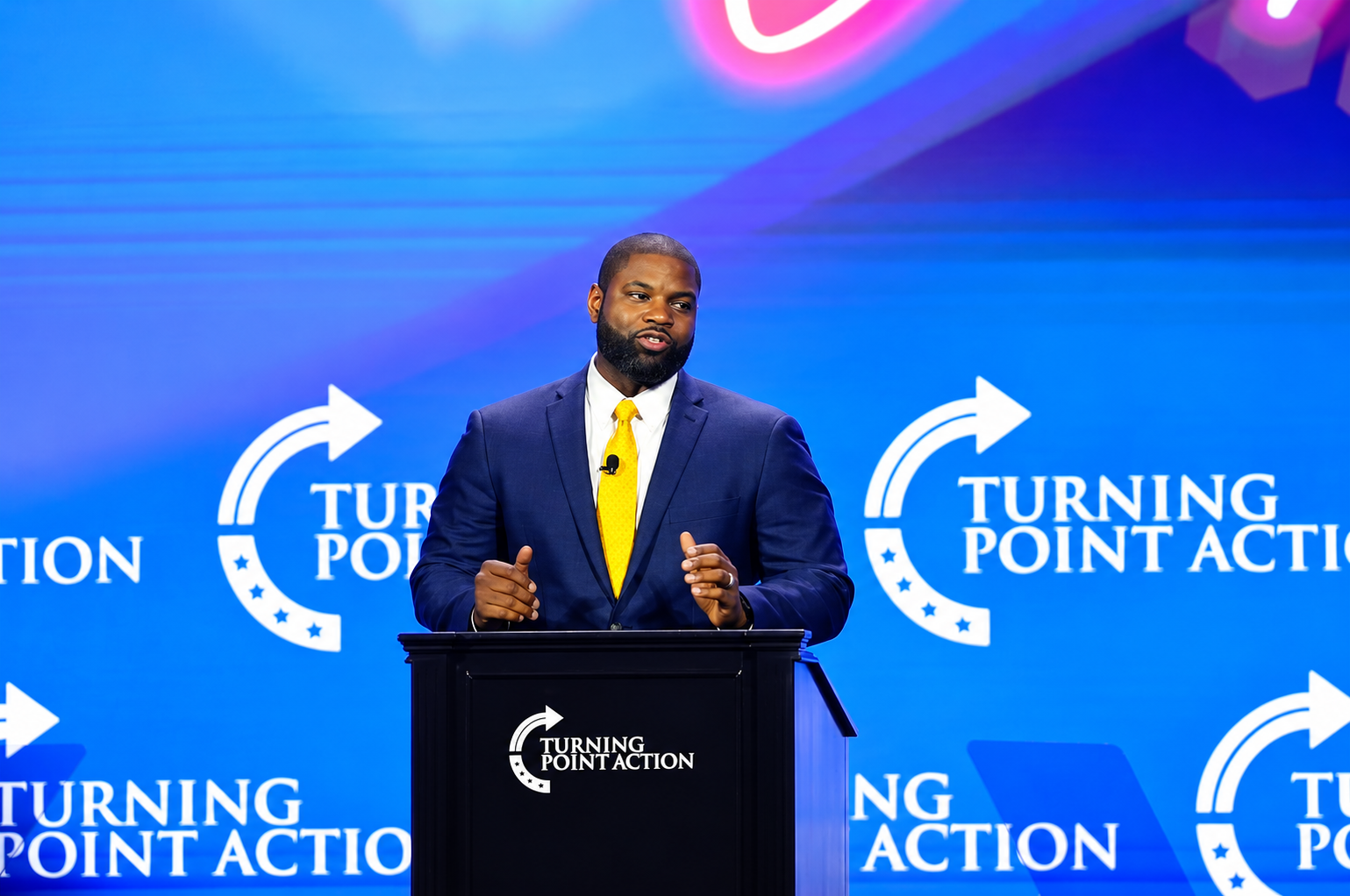
U.S. Rep. Byron Donalds speaks at a Turning Point Action event in Florida. Photo by Roman Garay / Florida National News.
Rally Set for Oct. 23
Trump’s remarks are scheduled to begin at 2 p.m., with doors opening at 10:30 a.m., according to the Republican Party’s event registration page. All times are Eastern.
Gulf Coast News reports that the rally will take place at Alico Arena at Florida Gulf Coast University. However, the official GOP registration page still lists the venue as “To Be Announced.” Attendees should check that page for confirmation and updates.
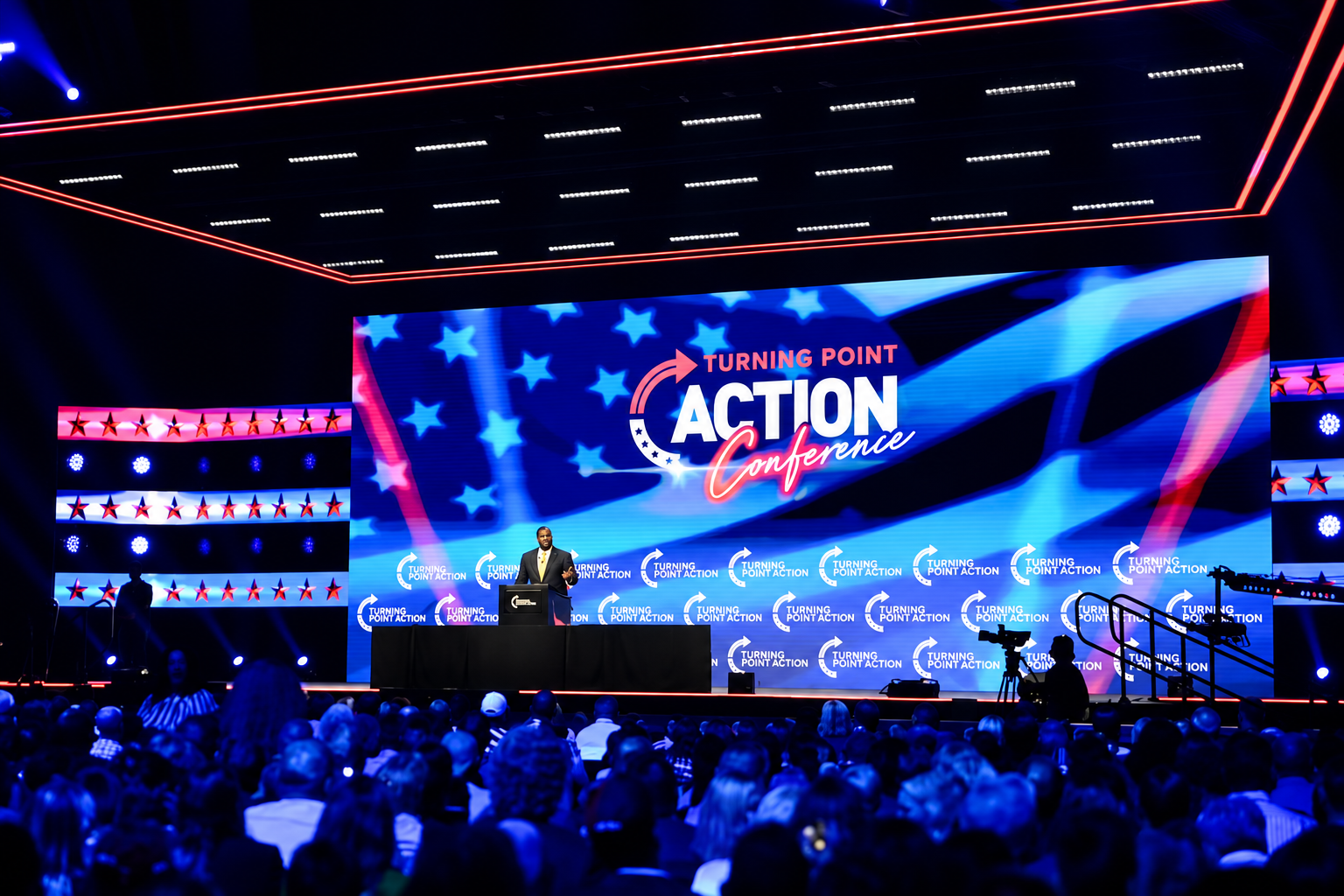
Prominent conservative figures, including Tucker Carlson, then-former President Donald Trump, U.S. Rep. Byron Donalds and Megyn Kelly, rallied Republican voters during the Turning Point Action Conference at the Palm Beach County Convention Center, July 15-16, 2023. Photo by Roman D. Garay / Florida National News.
Trump’s Endorsement Connects President to Historic Bid
Trump has endorsed Donalds, whose campaign lists the president among its prominent Republican supporters. The Fort Myers visit places Trump in Donalds’ Southwest Florida political base during the closing weeks of the election.
Following his primary victory, Donalds acknowledged Trump’s influence among Republican voters.
“Obviously, he has the strongest following of anybody in our party,” Donalds said, according to Associated Press reporting.
A Donalds victory would give Florida its first Black governor and extend Republican leadership in the governor’s office. Trump’s endorsement connects the president to that potentially historic outcome, although the rally announcement does not identify the event as exclusively supporting Donalds.
Republican Unity and Voter Turnout
Donalds called for Republicans to unite after the primary, telling supporters, “Tonight we are one united Republican Party,” according to the AP.
The Fort Myers rally will provide Trump another platform to address supporters ahead of the Nov. 3 midterm elections. The published event announcement confirms his appearance but does not list additional speakers.
WASHINGTON (FNN) — Republican National Committee Chairman Joe Gruters is urging Republicans to focus on voter turnout ahead of the Nov. 3 midterm elections, praising President Donald Trump’s campaign appearances and arguing that the party’s success depends on getting supporters to the polls.
In a Fox News appearance highlighted in an RNC news release, Gruters described Trump as an “absolute machine” and pointed to the president’s rallies as a central part of Republicans’ election strategy.
Gruters: ‘It’s All About Turnout Now’
Gruters expressed confidence in Republican candidates while sharply criticizing their Democratic opponents.
“We have strong candidates; [Democrats] have incredibly weak candidates. It’s all about turnout now. That’s why the president’s going to all these rallies. He’s an absolute machine, getting the job done,” Gruters said, according to the release.
His remarks emphasized voter mobilization as Republicans seek to protect and expand their congressional majorities.
RNC Chairman Highlights Trump’s Policies
Gruters also praised the administration’s policies, particularly its approach to the southern border, presenting those efforts as reasons voters should support Republican candidates.
“This president deserves a lot of credit. He deserves a lot of praise for all these great things that he has done,” he said.
The release included broader claims about border enforcement and drug trafficking but did not provide supporting data. Those statements represent Gruters’ assessment of the administration’s record.
Florida Connection to National GOP Leadership
Gruters, a former chairman of the Republican Party of Florida, now leads the national party’s effort to rally Republican voters. The Florida GOP described him as a longtime Trump ally when announcing his election as RNC chairman.
His national role places a political leader with Florida party experience at the forefront of Republicans’ midterm turnout campaign.
Closing Message: Get Supporters to the Polls
“This race all comes down to turnout,” Gruters said.
He framed the election as a choice about the country’s direction and urged voters to continue supporting Trump and conservative leadership.
“If you believe in the American dream, and you still have hope that you or your children could achieve it, then you’ve got to continue the leadership of the conservative party and this president, Donald J. Trump.”
ORANGE COUNTY, Fla. (FNN) — Orange County mayoral candidate Tiffany Moore Russell plans to attend Orlando’s Come Out With Pride celebration and visit churches across the county this weekend as her campaign reaches voters ahead of early voting, according to a campaign announcement.
The Oct. 17-18 stops will give residents opportunities to discuss their priorities with Moore Russell. Candidates, elected officials, community leaders and supporters are expected to join her at various locations, the campaign said.
“This weekend is about traveling across Orange County, meeting residents where they are and hearing directly from them about the future of our community,” Moore Russell said in the announcement. “That is the kind of Mayor I will be — present, accessible and focused on delivering for the people of Orange County.”
Saturday: Come Out With Pride
Moore Russell is scheduled to participate in the Most Colorful Parade at 4 p.m. Saturday, Oct. 17, in downtown Orlando, according to her campaign.
The campaign lists the parade’s starting point as Washington Street and Orange Avenue, with the route concluding at Lake Eola Park. Moore Russell’s appearance will highlight her support for Orange County’s LGBTQ+ community, the announcement said.
Sunday: Church Visits Across Orange County
Moore Russell’s community church tour is scheduled to begin at 7 a.m. Sunday, Oct. 18, at Saint Mark AME Church, 1968 Bruton Blvd., Orlando.
She will then visit additional churches throughout Orange County to meet with congregations, according to the campaign. The announcement did not identify the other churches or provide a complete schedule.
Affordability, Transportation and Small Businesses
During the weekend stops, Moore Russell plans to discuss housing affordability, transportation connections to jobs, support for small and local businesses, and improvements to county government services.
The campaign described those issues as central to her vision for the county but did not outline specific policy proposals in the announcement.
Early Voting Begins Oct. 19
Early voting in Orange County runs Monday, Oct. 19, through Sunday, Nov. 1, from 8 a.m. to 8 p.m. daily, according to the Orange County Supervisor of Elections. Registered Orange County voters may cast ballots at any of the county’s 27 early voting locations.
Election Day is Tuesday, Nov. 3, with polls open from 7 a.m. to 7 p.m. Voters casting ballots on Election Day must use their assigned polling place.




 Florida4 days ago


