Connect with us

Tech

NASA Marshall Center Director to Retire After 38 Years of Service

Published

on

Jody Singer, NASA’s Marshall Space Flight Center Director, announced Monday her retirement, effective Saturday, July 29, after more than 38 years of service. Credits: NASA

Jody Singer, NASA’s Marshall Space Flight Center Director, announced Monday her retirement, effective Saturday, July 29, after more than 38 years of service. Among many firsts in her career, Singer was appointed as the first female center director at Marshall in 2018, after serving as deputy director from 2016 to 2018.

Marshall’s current deputy center director, Joseph Pelfrey, will serve as the interim acting director until Singer’s successor is identified through a nationwide search and open competition.


“I wish Jody well during her retirement. And I know individuals at the beginning of their career at NASA – and members of the Artemis Generation who dream of working here – will be inspired by Jody’s service, knowing their contributions can help return NASA astronauts to the Moon and prepare us for crewed missions to Mars,” said NASA Administrator Bill Nelson. “And Joseph Pelfrey is no stranger to Marshall, having joined the center two decades ago as an aerospace engineer. Today, he helps guide Marshall’s broad portfolio of human spaceflight, science, and technology development, which supports missions across NASA. We are confident Joseph is prepared to guide Marshall through this transition.”

As center director, Singer managed one of NASA’s largest field installations, with nearly 7,000 on- and near-site civil service and contractor employees with an annual budget of approximately $5 billion.


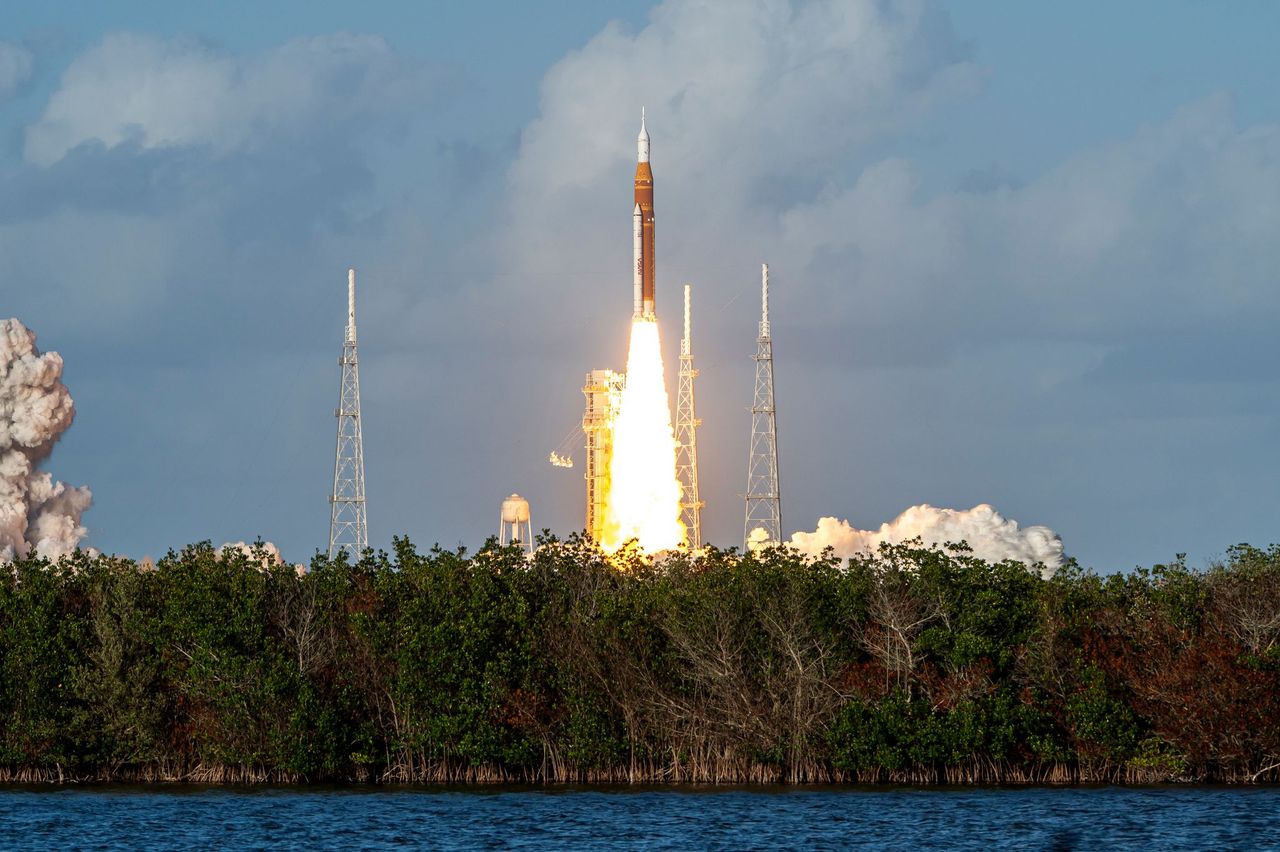
Under Singer’s leadership, NASA Marshall, known for its prominence in large space transportation systems, has expanded its portfolio to include human lunar landing and cargo systems, space habitation and transit systems, advanced propulsion, additive manufacturing, science payload operations, Mars ascent spacecraft and cutting-edge science and technology missions through innovative partnerships with other NASA centers, industry, government agencies and academia. The Marshall team was critical to the successes of NASA’s Webb Space Telescope, the Imaging X-ray Polarimetry Explorer mission, the DART (Double Asteroid Redirection Test) mission, and SLS (Space Launch System), the agency’s powerful heavy-lift rocket.

Singer joined NASA in 1985 though the professional intern program. She joined the Space Shuttle Program Office in 1986 as an engineer in the Space Shuttle Main Engine Office and was involved with Return to Flight activities after the space shuttle Challenger accident. She was the first female project manager for the Reusable Solid Rocket Booster Project from 2002 to 2007 and led the team during the shuttle Columbia Return to Flight activities. Starting in 2008 until the shuttle’s successful retirement in 2011, she was deputy manager in the Space Shuttle Propulsion Office. Cumulatively, Jody was part of 110 space shuttle launches.


Serving in roles of increasing responsibility, Singer held deputy positions for three concurrent programs, the space shuttle, Ares, and the start-up of SLS. As deputy for the Space Shuttle Propulsion Office, she guided successful fly-out and retirement of the shuttle and the transition of workforce and assets to the Ares Project Office and SLS Program. As the deputy program manager of SLS at Marshall, she helped oversee almost 3,000 civil servants and contractors involved in the developing, testing, and certification of the rocket. From 2013 to 2016, Singer was manager of the Flight Programs and Partnerships Office at Marshall, where she held primary responsibility for the center’s work with human advanced exploration projects, science flight mission programs, technology demonstration missions, commercial crew and International Space Station life support systems, research facilities, and payload mission operations.

Singer has twice been a NASA Fellow, at Pennsylvania State College and Simmons College Graduate School of Management. She is a recipient of numerous prestigious NASA awards, including the Space Flight Awareness Leadership Award, the NASA Exceptional Service Medal, the Silver Snoopy, and NASA Outstanding Leadership medals. She also is a recipient of two Senior Executive Service Presidential Rank of Meritorious Executive Awards. Her external recognitions include Rotary Stellar National Award for Space Achievement; Alabama Engineering Hall of Fame; Distinguished Fellow by the University of Alabama College of Engineering; Gardner Award; AIAA Associate Fellow; 2022 Alabama Engineer of the Year; and the AIAA Herman Oberth Award.


Continue Reading
Click to comment

Leave a Reply

Your email address will not be published. Required fields are marked *

Tech

NASA Astronaut Jonny Kim Returns to Earth After 245-Day ISS Mission

Published

on

WASHINGTON, D.C. (FNN) — NASA astronaut Jonny Kim returned to Earth early Tuesday alongside Roscosmos cosmonauts Sergey Ryzhikov and Alexey Zubritsky, concluding an eight-month science mission aboard the International Space Station focused on advancing life on Earth and preparing for future deep space exploration.

The trio landed safely under parachute at 12:03 a.m. EST (10:03 a.m. local time) southeast of Dzhezkazgan, Kazakhstan, aboard the Soyuz MS-27 spacecraft. Their departure from the station occurred at 8:41 p.m. EST on Dec. 8.

Record-Breaking Mission and First-Time Flyers

Across 245 days in orbit, the crew circled Earth 3,920 times and traveled nearly 104 million miles. Kim and Zubritsky completed their first spaceflights, while Ryzhikov—on his third mission—now holds 603 cumulative days in space.

The crew launched to the ISS on April 8 as part of a mission that contributed to NASA’s long-running efforts to advance scientific discovery and human spaceflight capabilities.

Scientific Research to Benefit Earth and Future Missions

While aboard the ISS, Kim supported numerous experiments and technology demonstrations. His work included studying the behavior of bioprinted tissues with blood vessels in microgravity—research that could accelerate space-based tissue production and improve medical treatments on Earth.

Kim also tested multi-robot remote command capabilities for the Surface Avatar investigation, a study that could inform the development of robotic assistants for future lunar and Martian missions. In addition, he contributed to research on in-space manufacturing of DNA-mimicking nanomaterials, which may enhance drug delivery systems and support emerging fields in regenerative medicine.

Return to Houston and the Future of Exploration

After routine medical checks in Kazakhstan, the crew will travel to the recovery staging area in Karaganda. Kim will then return to NASA’s Johnson Space Center in Houston.

For more than 25 years, astronauts have lived and worked continuously aboard the International Space Station, enabling scientific breakthroughs not achievable on Earth. As commercial partners expand human spaceflight services and develop new low Earth orbit destinations, NASA is directing its focus toward deep space exploration through the Artemis program and preparing for eventual human missions to Mars.

Continue Reading

Cultural

Byio Wants to Fix What Social Media Broke

Published

on

Image of R.M. Easterly, founder of Byio. Courtesy of People of Color in Tech

ORLANDO, Fla. (FNN NEWS) – Social media wasn’t supposed to be like this. Endless noise, manipulated algorithms, harassment buried under engagement metrics, and creators fighting just to be seen: it’s a landscape that rewards chaos over connection. Byio, a new platform built by Black women, is trying something radically different: slowing things down, putting people first, and making digital space intentional again.

Byio stands for “By Invite Only,” and it means that literally. You can’t just sign up. You join through a personal invite and each user only gets two. This isn’t exclusivity for the sake of hype. It’s a form of cultural quality control. Growth isn’t measured in downloads; it’s measured in alignment. The people behind Byio are building a digital space where values aren’t an afterthought.

Led by founder and CEO R.M. Easterly, Byio was created out of frustration not just with broken moderation systems or paywalled reach, but with the deeper issue of who gets to shape online culture. Black creators and communities have been disproportionately impacted by platform policies that erase or ignore them. Byio doesn’t just give them a voice — it gives them the blueprint.

What sets Byio apart isn’t a flashy feature list, though it has those: livestreaming, built-in monetization, creator gifting, e-commerce tools all built into the platform from day one

. But the real innovation is philosophical. Moderation isn’t only reactive. AI prompts are used to encourage users to pause before posting content that might escalate conflict. It’s not censorship — it’s digital self-awareness baked into the UX.

The platform launched in a staggered rollout known as the “TG10s” — the first 10,000 users who will help shape the culture. Discord is the current front porch of that community, with conversations already driving feedback and ideas. Some early supporters are even buying physical Byio stickers — not as access passes, but as expressions of belief in the mission.

And people are watching closely. Critics and newcomers alike are asking the right questions: Can a platform grow and still stay grounded? Will the AI moderation tools respect nuance and cultural context? Will creator monetization be fair and accessible? So far, the answers aren’t in grand promises but in the quiet, deliberate pace of how Byio is rolling out.

Compared to giants like Instagram, TikTok, or X, where the incentive structure leans heavily toward viral content and ad revenue, Byio feels like a platform pulling in the opposite direction. Even newer alternatives like Mastodon or Bluesky may tout decentralization, but they haven’t solved moderation or cultural bias at scale. Byio’s approach — tight-knit, human-led, AI-supported, culturally conscious — isn’t just unusual. It’s practically rebellious.

Byio isn’t for everyone. It’s not trying to be. But for creators, communities, and everyday users who’ve felt erased, misrepresented, or simply exhausted by the internet as it stands. This platform may be the start of something that doesn’t just look different, but feels different.

_______________________________________________

Kareen Kennedy is the Assistant Editor for Florida National News
kareen.kennedy@floridanationalnews.com

Continue Reading

Tech

NASA Successfully Launches TRACERS Mission to Study Earth’s Magnetic Field

Published

on

NASA’s TRACERS (Tandem Reconnection and Cusp Electrodynamics Reconnaissance Satellites) mission launched at 2:13 p.m. EDT atop a SpaceX Falcon 9 rocket at Space Launch Complex 4 East at Vandenberg Space Force Base in California. Credit: SpaceX

BREVARD COUNTY, Fla. (FNN) – Florida National News has learned that NASA’s latest mission, TRACERS (Tandem Reconnection and Cusp Electrodynamics Reconnaissance Satellites), has officially launched and will soon begin studying Earth’s magnetic field to better understand how it protects the planet from the harmful effects of space weather.

NASA Launches TRACERS to Study Earth’s Magnetic Shield

The TRACERS mission lifted off Wednesday at 11:13 a.m. PDT (2:13 p.m. EDT) aboard a SpaceX Falcon 9 rocket from Space Launch Complex 4 East at Vandenberg Space Force Base in California. The twin spacecraft will fly closely together—just 10 seconds apart—making over 3,000 measurements in a single year to provide a detailed picture of magnetic reconnection, a process that impacts space weather and Earth’s atmosphere.

“NASA is proud to launch TRACERS to demonstrate and expand American preeminence in space science research and technology,” said acting NASA Administrator Sean Duffy. “This mission will yield breakthroughs that will advance our pursuit of the Moon, and subsequently, Mars.”

Mission controllers successfully made contact with the second spacecraft three hours after separation, and a four-week commissioning period will now begin before science operations commence.

TRACERS’ Role in Understanding Magnetic Reconnection

TRACERS will orbit the polar cusp, an open region in Earth’s magnetic field near the North Pole. This area is critical for studying how solar wind—a stream of charged particles from the Sun—interacts with Earth’s magnetic field. The mission will investigate magnetic reconnection, where magnetic field lines from the Sun and Earth snap and realign, releasing intense bursts of energy.

These interactions cause charged particles to cascade into Earth’s atmosphere, affecting satellites, communication systems, and power grids. TRACERS will give scientists unprecedented insight into how fast and intensely these processes occur.

“The successful launch of TRACERS is a tribute to many years of work by an excellent team,” said David Miles, TRACERS principal investigator at the University of Iowa. “We’re excited to explore the dynamic processes driving space weather.”

Small Satellites Hitch a Ride with TRACERS

Alongside TRACERS, NASA deployed three additional small satellite missions:

  • Athena EPIC: A demonstration satellite showing how modular SmallSat designs can lower costs and speed up deployment while measuring Earth’s outgoing longwave radiation.

  • PExT: A polylingual experimental terminal using software-defined radios to connect across commercial and government networks—similar to cell phone roaming, but in space.

  • REAL: A CubeSat investigating how high-energy electrons are scattered from the Van Allen radiation belts into Earth’s atmosphere, helping to protect astronauts and spacecraft.

Each mission contributes valuable data and technology demonstrations for future space operations.

Continue Reading
Advertisement
Advertisement Ticket Time Machine ad
Advertisement Orlando Regional REALTOR Association logo
Advertisement Parts Pass App
Advertisement Hispanic Chamber of Commerce of Metro Orlando
Advertisement
Advertisement African American Chamber of Commerce of Central Florida
Advertisement FNN News en Español
Advertisement Indian American Chamber of Commerce logo
Advertisement Florida Sports Channel

FNN Newsletter

Trending