Connect with us

World

CARICOM Leaders Unveil Regional Measures to Combat Rising Cost of Living

Published

on

GROS ISLET, Saint Lucia (FNN NEWS) — Caribbean leaders agreed on a series of regional and national measures aimed at easing the rising cost of living during the 51st Regular Meeting of the Conference of Heads of Government of the Caribbean Community (CARICOM), held July 5–8 in Gros Islet, Saint Lucia.

Meeting under the theme “CARICOM: From Resilience to Renewal in a Changing World,” Heads of Government focused on policies designed to reduce the financial burden on households as geopolitical tensions continue to drive up global prices for fuel, transportation and essential goods.

People-First Agenda

Speaking at the closing news conference, CARICOM Chairman and Saint Lucia Prime Minister Philip J. Pierre said leaders centered their discussions on improving the daily lives of Caribbean citizens.

“Our discussions over the past four days were guided by one central objective—ensuring that CARICOM delivers results that people can see and feel in their everyday lives,” Pierre said.

He said member states agreed to strengthen regional cooperation to:

  • Protect consumers
  • Improve affordability
  • Provide additional relief for vulnerable households
  • Address rising prices across the Caribbean Community

Pierre acknowledged that every CARICOM nation is experiencing higher living costs, largely fueled by global increases in energy prices.

“There is one factor we have no control over, which is the price of fuel,” he said.

Saint Lucia has responded by removing the value-added tax (VAT) on selected essential goods.

Regional Solutions to Lower Costs

CARICOM leaders outlined several initiatives intended to reduce costs across the region, including:

  • Reducing taxes on imported fuel
  • Lowering freight and shipping costs
  • Expanding renewable energy investments
  • Reducing intra-regional cargo transportation expenses
  • Accelerating the launch of a regional ferry service

Leaders said improving transportation and energy infrastructure is critical to making goods and services more affordable throughout the Caribbean.

Barbados Expands Financial Relief

Barbados Prime Minister Mia Amor Mottley highlighted several national initiatives already underway, including:

  • A cost-of-living allowance for pensioners
  • A 30% increase in welfare payments
  • Consumer price comparison technology allowing shoppers to compare prices among retailers

Mottley also identified the proposed regional ferry service as one of CARICOM’s most significant economic initiatives.

The ferry system would reduce shipping costs by improving cargo movement among Caribbean nations while strengthening regional trade.

Officials plan to use a Trinidad and Tobago ferry as a proof of concept while private-sector operators acquire additional vessels. Regulatory work is expected to be completed within three months, while procurement of permanent vessels could take up to one year.

Mottley also announced efforts to establish agreements covering:

  • Mutual recognition of licenses
  • Insurance standards
  • Port infrastructure improvements
  • Cross-border movement of cargo vehicles

Healthcare Collaboration to Reduce Costs

Trinidad and Tobago Prime Minister Kamla Persad-Bissessar proposed expanding regional healthcare cooperation as another way to reduce living expenses.

She offered CARICOM members access to Trinidad and Tobago’s:

  • National prosthetic center
  • Specialized children’s hospital
  • Medical professionals and specialists

“If we partner together, we can bring down the cost of living,” Persad-Bissessar said.

Renewable Energy a Long-Term Priority

Outgoing CARICOM Chairman Dr. Terrance Drew, Prime Minister of Saint Kitts and Nevis, emphasized that energy remains one of the region’s greatest economic challenges.

He called for accelerated investments in:

  • Solar energy
  • Wind power
  • Geothermal energy
  • Wave energy

Drew said greater energy independence would help stabilize electricity costs, strengthen Caribbean economies and provide long-term relief for consumers.

“Renewable energy can really help transform the Caribbean and help us manage the cost of living for all of our people,” he said.

Looking Ahead

CARICOM leaders concluded the summit by reaffirming their commitment to expanding regional cooperation to improve affordability, strengthen consumer protections and increase economic resilience across the Caribbean.

Officials said the planned ferry network, renewable energy investments and coordinated economic policies are expected to play key roles in reducing costs for Caribbean families while promoting long-term regional growth.

Continue Reading

Florida

Civil Rights Group Honors Nobel Peace Prize Winner Navi Pillay, Highlights Florida’s Trayvon Martin Connection

Published

on

FCRA representatives address reporters beside a “Justice for Trayvon” sign outside Florida’s regional offices in Orlando.
The Florida Civil Rights Association (FCRA) held a press conference outside the State of Florida’s regional offices in Orlando in 2012, calling on then-Gov. Rick Scott to take action following Trayvon Martin’s killing. Photo by FCRA

The Orlando-based civil rights association recalls supporting the former U.N. human rights chief’s 2012 call for an investigation into the teenager’s killing in Sanford.

ORLANDO, Fla. (FNN) — The Florida Civil Rights Association is congratulating 2026 Nobel Peace Prize winner Navanethem “Navi” Pillay, recalling her call for an investigation into Trayvon Martin’s killing and the international attention it brought to questions of racial equality and justice in Florida.

The Norwegian Nobel Committee announced Pillay’s selection Oct. 9 for her efforts to promote peace and international law. The South African jurist served as United Nations high commissioner for human rights from 2008 to 2014 and helped shape landmark international court decisions.

In a press release, FCRA President J. Willie David III said Pillay’s intervention connected a Florida family’s demand for answers to a broader concern for human rights.

“Pillay’s call for an investigation reinforced that a family’s demand for justice in Sanford mattered beyond Florida and the United States,” David said.

“We welcomed her intervention in 2012 because families deserve answers and the law must protect everyone equally.”
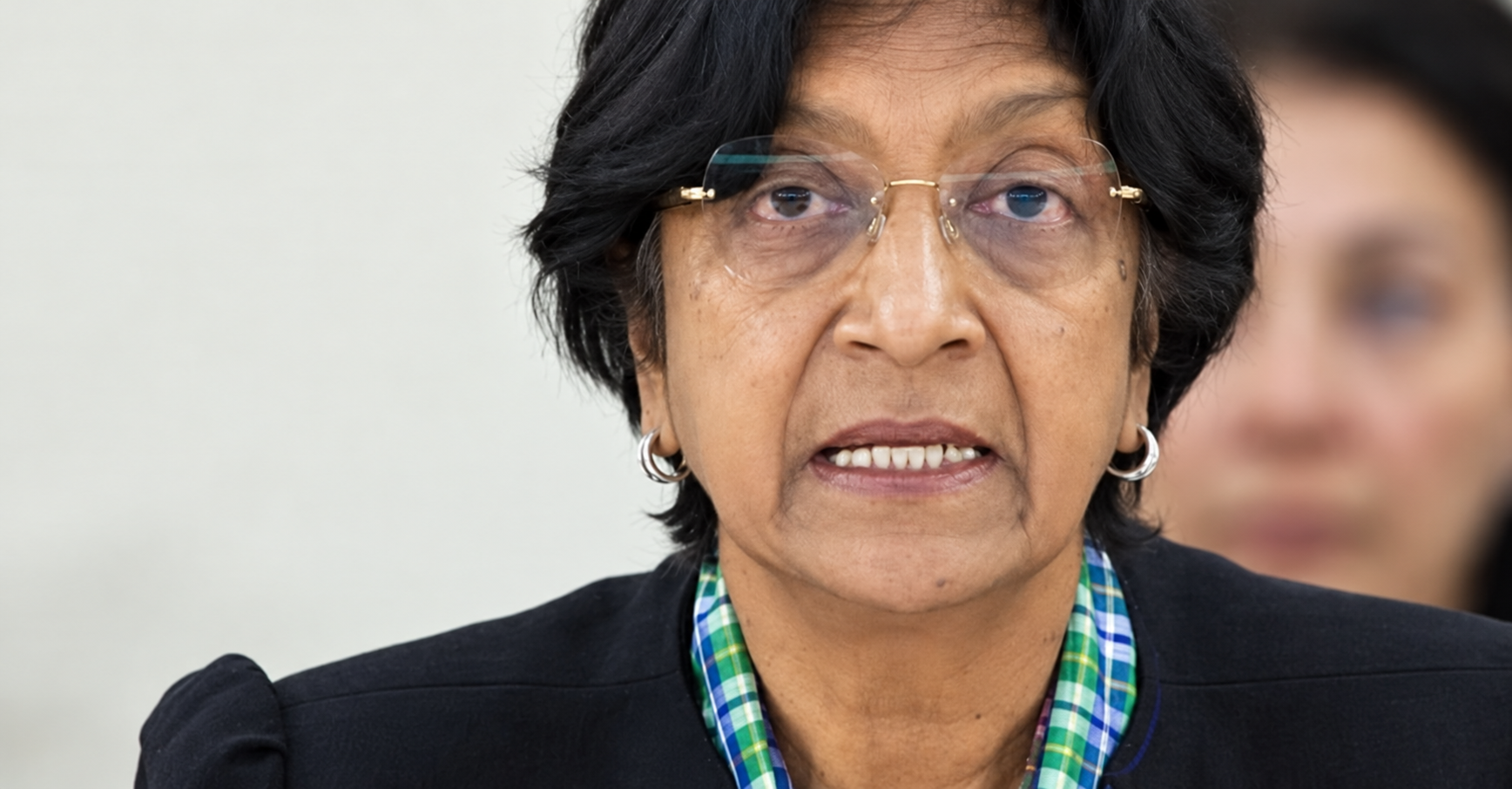
UN Human Rights Commissioner Navi Pillay (Photo credit: UN Photo/Jean-Marc Ferre)

FCRA recalls its response in 2012

Martin, an unarmed Black 17-year-old, was fatally shot by neighborhood watch volunteer George Zimmerman on Feb. 26, 2012, in Sanford, northeast of Orlando.

In April 2012, Pillay called for an immediate investigation into the killing as the case drew international attention and scrutiny of Florida’s Stand Your Ground law.

FCRA welcomed that call. The association’s current release cites an April 7, 2012, West Orlando News report that quoted David discussing the case’s global impact.

“The shooting death of Trayvon Martin and Florida’s Stand Your Ground Law have created a worldwide movement that calls into question how justice is delivered to victims of color,” David said at the time, according to the release.

FCRA describes the activism surrounding Martin’s death as a defining moment that galvanized a new generation of civil rights advocates.

Zimmerman was charged with second-degree murder and acquitted in July 2013. In February 2015, the U.S. Justice Department closed its separate investigation, finding insufficient evidence to pursue federal criminal civil rights charges.
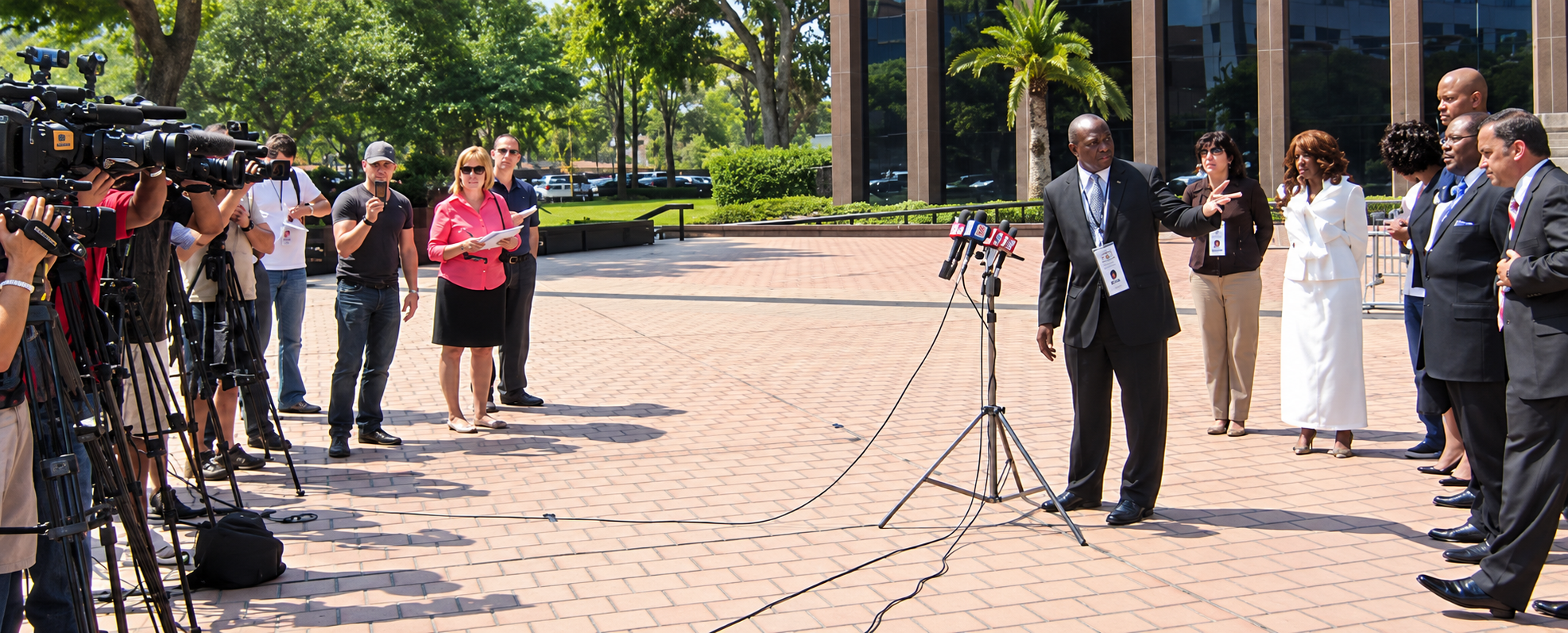
The Florida Civil Rights Association (FCRA) held a press conference outside the State of Florida’s regional offices in Orlando in 2012, calling on then-Gov. Rick Scott to take action following Trayvon Martin’s killing. Photo by FCRA.

Why Florida’s case drew global scrutiny

The Florida connection shows how the handling of a local killing can draw international scrutiny over racial discrimination, access to justice and the protection of human rights.

Pillay’s intervention brought those concerns into the international discussion surrounding Martin’s death. In September 2013, U.N. human rights experts also urged the United States to complete its civil rights investigation and examine concerns about racial profiling.

The significance lies in human rights oversight: how public institutions investigate deaths and provide equal treatment can attract attention beyond national borders. Pillay’s call was an appeal for investigation, rather than an international court judgment about Zimmerman’s guilt or Florida’s compliance with international law.

For FCRA, that connection remains relevant to how Florida leaders evaluate laws and practices affecting the communities they serve.

Pillay’s record in international justice

Pillay challenged discrimination under apartheid before serving on South Africa’s High Court, the International Criminal Tribunal for Rwanda and the International Criminal Court.

At the Rwanda tribunal, she was part of the judicial panel that established that rape and sexual violence can constitute acts of genocide, a landmark development in international criminal law.

David said honoring that career should also encourage accountability at home.

“Her Nobel Peace Prize recognizes a career built on confronting injustice through the rule of law,” he said. “Honoring that work means demanding transparent investigations and equal protection here at home. Rights belong to everyone.”

A renewed call for fairness in Florida

FCRA urged Florida leaders to safeguard impartial investigations, examine whether Stand Your Ground and other laws are applied fairly, and address policies or practices that produce discriminatory outcomes.

Founded in 2005, the association advocates for civil rights, human rights and civil liberties through education, advocacy and accountability. Its statement links Pillay’s international recognition to a continuing demand for fairness and human dignity in Florida.

Continue Reading

World

UN Chief Guterres Praises Pakistan’s Peacekeeping, Calls for Climate Funding

Published

on

Speaking at Pakistan’s Foreign Service Academy, the UN secretary-general praised the country’s humanitarian and diplomatic contributions while calling for financial reforms and inclusive artificial intelligence governance.

ISLAMABAD (FNN) — United Nations Secretary-General António Guterres praised Pakistan’s contributions to peacekeeping, refugee protection and climate action during an Oct. 7 address in Islamabad, urging world leaders to strengthen cooperation as conflicts, inequality and technological change reshape international affairs.

Speaking at the Foreign Service Academy, Guterres highlighted Pakistan’s history of hosting Afghan refugees, its service in UN peacekeeping operations and its efforts to promote dialogue between the United States and Iran, according to a UN release of his remarks.

He identified four major challenges facing international cooperation: peace and security, inequality, climate change and artificial intelligence.

“Today, humanity faces challenges on a scale no nation can solve by itself,” Guterres said.

Pakistan’s peacekeeping and humanitarian contributions

Guterres described Pakistan as a country whose generosity and resilience he had witnessed during his service as UN high commissioner for refugees and secretary-general.

He recalled Pakistani families sharing their homes and limited resources with Afghan refugees, as well as communities supporting people displaced by terrorism.

Pakistani peacekeepers, he said, have served for generations in dangerous environments, protecting civilians and supporting fragile peace processes.

He also praised Pakistan’s role on the UN Security Council and its diplomatic efforts to reduce tensions between Washington and Tehran.

“I commend Pakistan’s efforts to help forge peace between the United States and Iran,” he said.

Climate funding and the legacy of the 2022 floods

Recalling his visit during Pakistan’s devastating 2022 floods, Guterres said the disaster illustrated the unequal burden of climate change.

Pakistan contributes around 1% of global emissions but faces severe climate risks, he said. Millions of people experienced catastrophic losses from a crisis they did little to create.

He described meeting residents who abandoned their possessions to rescue neighbors, children, older adults and people with disabilities.

“In moments of crisis, saving ourselves begins with helping each other,” Guterres said.

He credited Pakistan’s leadership of the Group of 77 and China with helping secure the Loss and Damage Fund, which is intended to assist developing countries facing climate-related losses.

However, he said less than $500 million had been transferred to the fund’s trust fund nearly four years later, compared with an annual global climate disaster bill of about $200 billion.

“A crisis costing billions cannot be answered with funding counted in the millions,” he said.

Guterres also highlighted Pakistan’s solar energy expansion, calling for greater support for renewable energy, resilient infrastructure and climate adaptation.

Debt, development and financial reform

Guterres warned that rising debt burdens and inadequate development financing are limiting opportunities in developing countries.

He called for changes to the international financial system to give those countries greater representation and access to financing for sustainable growth.

“Developing countries should not have to choose between servicing debt and investing in their future,” he said.

Pakistan’s young, entrepreneurial population offers substantial potential, he said, but realizing it requires economic opportunity, respect for human rights, the rule of law and protection of civic space.

Artificial intelligence: Opportunity and risk

Guterres said artificial intelligence could improve health care, education, agriculture and disaster preparedness.

He also warned that AI could deepen inequality, concentrate power, spread disinformation and disrupt employment.

Developing countries must help shape the rules and institutions governing the technology, he said, rather than serve only as consumers of systems developed elsewhere.

“The governance of AI must reflect the interests of all humanity,” Guterres said.

He identified the United Nations as a forum where every country can participate in shaping that future.

Conflict, Gaza and international cooperation

Marking the third anniversary of the Oct. 7, 2023, Hamas attacks, Guterres condemned the attacks and said nothing justified the scale of death and destruction that followed for Palestinians in Gaza.

He warned of the threat of ethnic cleansing in the occupied Palestinian territory and called for full implementation of the Gaza peace plan and preservation of a two-state solution.

More broadly, he said a world with multiple centers of power needs effective international institutions to prevent fragmentation and instability.

He called for a UN-centered system that better reflects today’s distribution of countries, economies and influence.

A closing message of dialogue and mutual respect

Guterres concluded by describing a painting by Pakistani artist Abdur Rahman Chughtai displayed between his personal office and conference room.

The artwork, a gift from Pakistan to the United Nations more than 60 years ago, depicts Mughal Emperor Jehangir and his wife, Nur Jehan.

He said it symbolizes Pakistan’s cultural heritage and the value of wisdom, listening and exchange among civilizations.

“Dialogue, understanding, cooperation — that is the spirit reflected in that magnificent Pakistani painting,” Guterres said.

Source attribution: This article is based on the United Nations release of Secretary-General António Guterres’ Oct. 7, 2026, address to the Foreign Service Academy in Islamabad. All direct quotations are attributed to Guterres.

Continue Reading

World

Guterres Marks Third Anniversary of Oct. 7 Attacks With Call for Israeli-Palestinian Peace

Published

on

The UN secretary-general condemned the 2023 Hamas-led attacks, honored victims and former hostages, and urged an end to Palestinian suffering through a permanent ceasefire and expanded humanitarian assistance.

UNITED NATIONS (FNN) — UN Secretary-General António Guterres called for a permanent ceasefire and expanded humanitarian assistance in Gaza in a message marking the third anniversary of the Oct. 7, 2023, attacks on Israel.

According to a United Nations press release, Guterres urged all parties to fulfill their commitments and advance to the next phase of the ceasefire under the Comprehensive Plan to End the Gaza Conflict.

“It is time for the ceasefire to become permanent,” Guterres said. “It is time to allow humanitarian assistance at scale. And it is time to respect international law.”

Remembering victims of the Oct. 7 attacks

Guterres condemned the attacks by Hamas and other Palestinian armed groups, which he said killed more than 1,200 Israelis and foreign nationals. He said civilians were deliberately targeted in their homes, communities and at a music festival.

A total of 251 people were abducted and taken into Gaza, including women, children and older adults, according to his message.

Guterres said hostages endured torture, sexual violence and other forms of abuse. Some were killed by their captors or during the subsequent hostilities, he said.

“Nothing can justify these atrocities,” Guterres said.

Honoring survivors, former hostages and grieving families

The secretary-general described meetings with Israeli families, survivors and former hostages who shared accounts of lasting physical and emotional trauma.

He expressed relief for those who regained their freedom and reunited with loved ones, while mourning people killed in the attacks and those who died in captivity.

“Their suffering, and the enduring grief of their families, must never be forgotten,” he said.

Guterres emphasized that the horrors of Oct. 7 must never be repeated.

Calling for an end to suffering in Gaza

Guterres also addressed the devastating consequences of the hostilities for Palestinians in Gaza, citing widespread loss of life, displacement and destruction.

He said civilians continued to face intolerable conditions and called for their suffering to end immediately.

“Their suffering, too, demands an end — now,” he said.

Although the ceasefire reached in 2025 brought some relief, Guterres said it had not yet delivered security, sufficient humanitarian assistance or a credible route toward recovery and peace.

Making the ceasefire permanent

Guterres urged all parties to implement their commitments fully and move forward under the Comprehensive Plan to End the Gaza Conflict.

His message called for a permanent ceasefire, humanitarian assistance at the scale needed and respect for international law. He also emphasized the need for a political process that supports lasting peace throughout the region.

“The United Nations remains unwavering in its commitment to these imperatives,” he said.

A future of peace, security and dignity

Guterres urged leaders to make the anniversary a turning point toward a different future for Israelis and Palestinians.

“Let this anniversary mark not only another year of mourning, but also a renewed determination to build a different future,” he said.

He envisioned Israelis and Palestinians living side by side in peace and security, with their rights, dignity and aspirations fulfilled.


Continue Reading
Advertisement
Advertisement Ticket Time Machine ad
Advertisement Orlando Regional REALTOR Association logo
Advertisement Parts Pass App
Advertisement Hispanic Chamber of Commerce of Metro Orlando
Advertisement
Advertisement African American Chamber of Commerce of Central Florida
Advertisement FNN News en Español
Advertisement Indian American Chamber of Commerce logo
Advertisement Florida Sports Channel

FNN Newsletter

Trending