Florida
FNN PERSPECTIVE | Byron Donalds Visits ONYX Gala in Orlando: Could Orange County Help Him Win Florida’s Governor’s Race?
Published
4 weeks agoon
Democratic crossover endorsements provide context. Orange County’s vote margin could help shape the contest between Donalds and David Jolly.
ORLANDO, Fla. (FNN) — Republican gubernatorial nominee Byron Donalds’ appearance at ONYX Magazine’s Men of Honor Gala in Orlando raises a broader electoral question: Could crossover support in Democratic-leaning Orange County help him reach the governor’s mansion?
Source: ONYX Magazine Facebook Page
Donalds and Democratic opponent David Jolly attended the Oct. 3 celebration at the Rosen Centre Hotel, according to Hoodline reporting citing the Orlando Sentinel. The gathering brought together elected officials, business executives, educators and community leaders to recognize leadership, achievement and service. Source: Hoodline
Organizers emphasized that the candidates’ attendance did not constitute an endorsement. Among the honorees was Orange County Mayor Jerry Demings, selected for a lifetime achievement award. Source: Jacksonville Free Press
Orange County, home to Orlando, provides a setting for examining both candidates’ electoral prospects. Its history includes prominent Democrats backing Republicans, while its Democratic vote margins illustrate how the county can contribute to the statewide outcome.
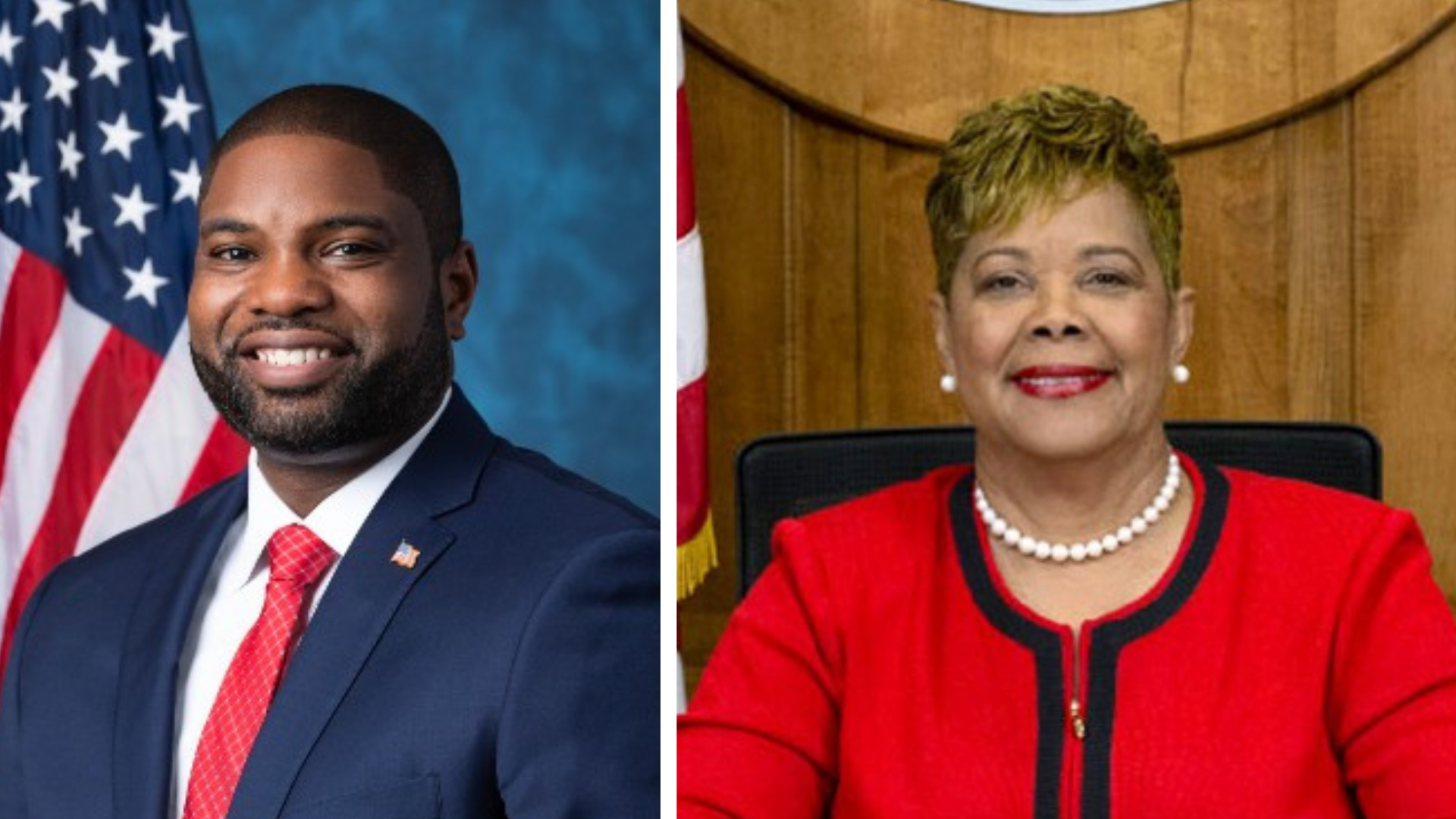
Republican gubernatorial nominee Byron Donalds, left, and Gainesville City Commissioner Cynthia Moore Chestnut, a longtime Democrat who endorsed Donalds for governor.
Donalds Has Secured a Democratic Crossover Endorsement
Gainesville City Commissioner Cynthia Moore Chestnut, a registered Democrat, endorsed Donalds over Jolly in September, according to WCJB. She cited Black representation, dissatisfaction with the Democratic ticket and support for historically Black colleges and universities, while acknowledging disagreements with some of Donalds’ policies. Source: WCJB
Chestnut subsequently introduced Donalds at a University of Florida town hall, emphasizing access to his office and fair consideration of Gainesville’s needs. Source: WCJB
Her endorsement raises a question about whether other Democrats, including those with conservative or moderate views, might support Donalds. However, her stated reasons do not establish a broader ideological shift. Dissatisfaction with party leadership or progressive positions does not automatically translate into Republican votes.
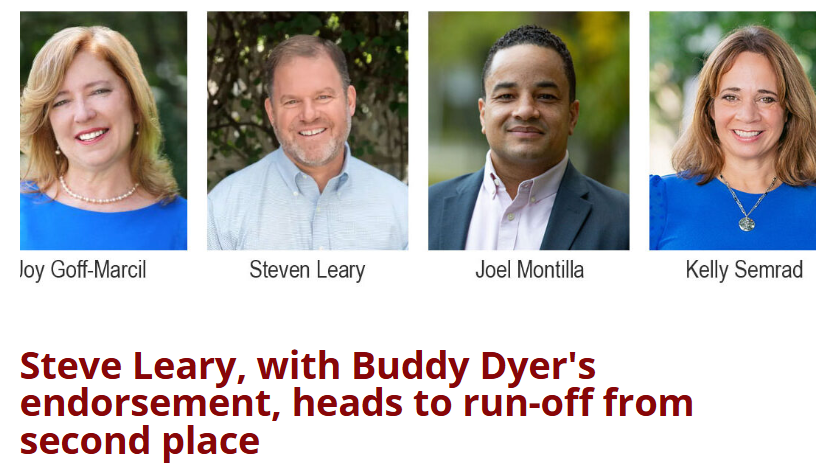
Orange County Democrats Have Backed Republicans Before
Democratic Orlando Mayor Buddy Dyer endorsed Republican state Rep. Mike Miller against Democrat Beth Tuura in the 2016 Florida House District 47 election — a partisan legislative contest. Source: Florida Politics
In the nonpartisan 2024 Orange County Commission District 5 race, Dyer endorsed Republican former Winter Park Mayor Steve Leary. Winter Park Voice also identified former Democratic state Sen. Gary Siplin, former Orange County Commissioner Victoria Siplin and Winter Park Commissioner Craig Russell as Democratic supporters of Leary. Source: Winter Park Voice
Dyer’s Orlando PAC contributed $4,000 to Neighbors for a Sensible Orange County, the political committee chaired by Leary, according to Winter Park Voice’s reporting on campaign finance filings. The committee also promoted Leary alongside Democratic candidates. This was financial support between political committees, rather than a personal donation by Dyer or a direct contribution to Leary’s candidate account. Source: Winter Park Voice
Former Orange County Chair Linda Chapin encouraged Democrats to support Republican Teresa Jacobs’ 2014 reelection campaign for county mayor while Democrat Val Demings was challenging her. Source: Orlando Weekly
Dyer and Orlando Commissioner Tony Ortiz also endorsed Republican Commissioner Jim Gray in the 2025 Orlando election. Ortiz had switched from Republican to Democrat earlier that year. Source: Orlando Weekly
These examples document individual cross-party support across different elections. They do not establish that those leaders endorse Donalds.
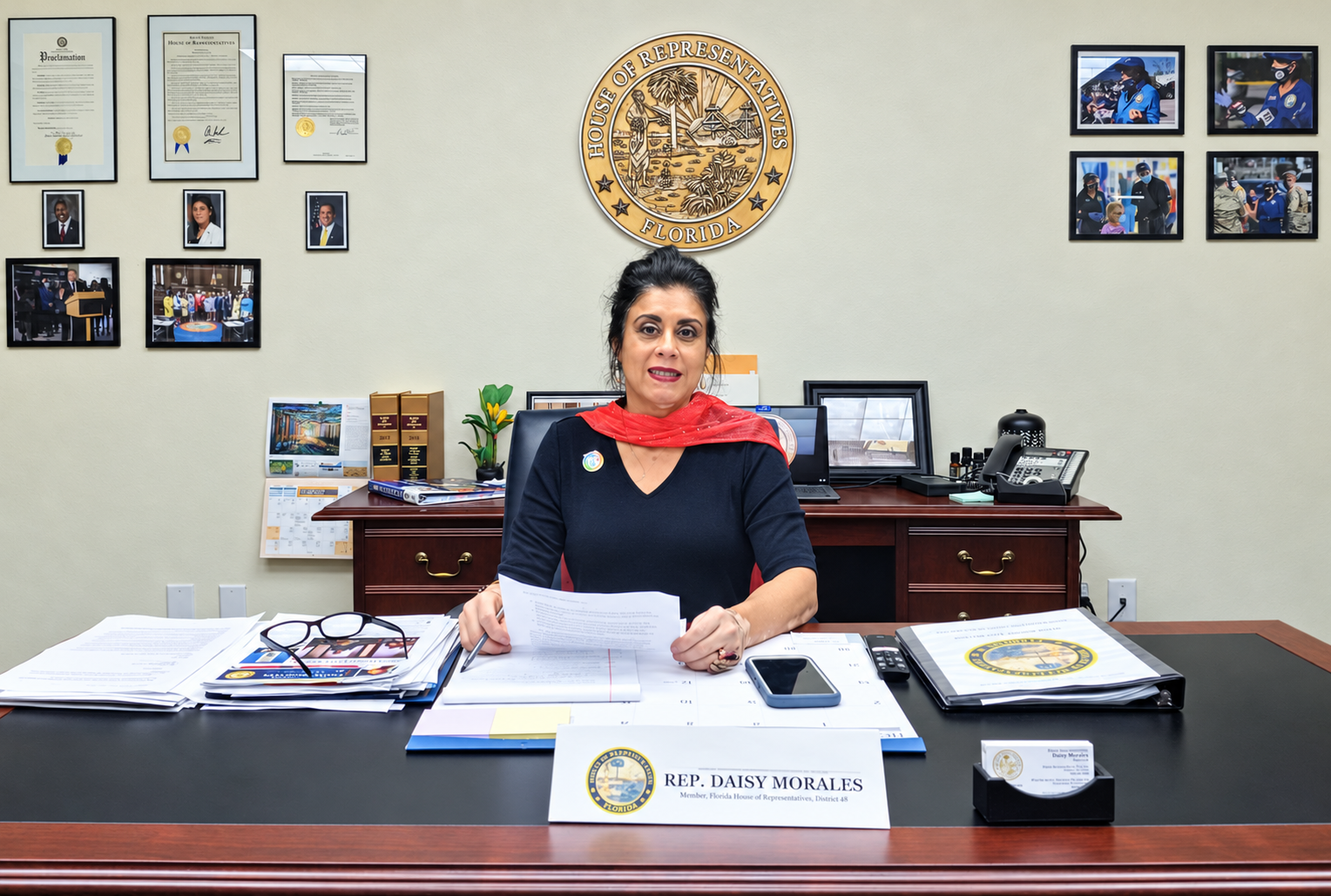
Then-state Rep. Daisy Morales, D-Orlando, sits at her district office in Orange County, Florida. Morales represented House District 48 from 2020 to 2022 and sponsored or co-sponsored more than 110 bipartisan bills that became law.
Montilla and Morales: Participation, Endorsements and Party Enforcement
Republican attorney Joel Antonio Montilla’s 2024 Orange County Commission campaign provides additional context about political participation and disputes over party loyalty.
Former Democratic state Rep. Daisy Morales participated on Montilla’s non-partisan campaign-launch host committee for Orange County Commissioner. Montilla separately confirmed to Florida Politics that Morales did not endorse his candidacy. Source: Florida Politics
Morales brings a record of electoral success in Orange County. In 2018, she won countywide reelection to the Orange County Soil and Water Conservation District board with 256,342 votes. In 2020, she defeated four opponents in the Democratic primary, including Samuel Vilchez Santiago, before defeating Republican Jesus Martinez in the general election to win Florida House District 48, a majority-Hispanic district with a large Puerto Rican community. Official general-election results show she received 47,341 votes, or 65.3%.
Morales alleges that Orange County’s Democratic establishment, including Vilchez Santiago, her 2026 House District 43 primary opponent and former Orange County Democratic Party chair, targeted her over an alleged violation of party endorsement rules while treating prominent Democrats who supported Republican candidates differently. She characterizes that treatment as selective enforcement in a defamation lawsuit filed in Orange County.
The documented crossover endorsements provide context for her allegation, but determining whether party rules were applied unevenly requires comparing the applicable rules, circumstances and disciplinary decisions in each case.
Endorsements, financial contributions, campaign management and host-committee participation represent distinct activities. Those distinctions matter when evaluating both crossover support and allegations of inconsistent party enforcement. Morales’ participation in Montilla’s event does not establish support for Donalds.
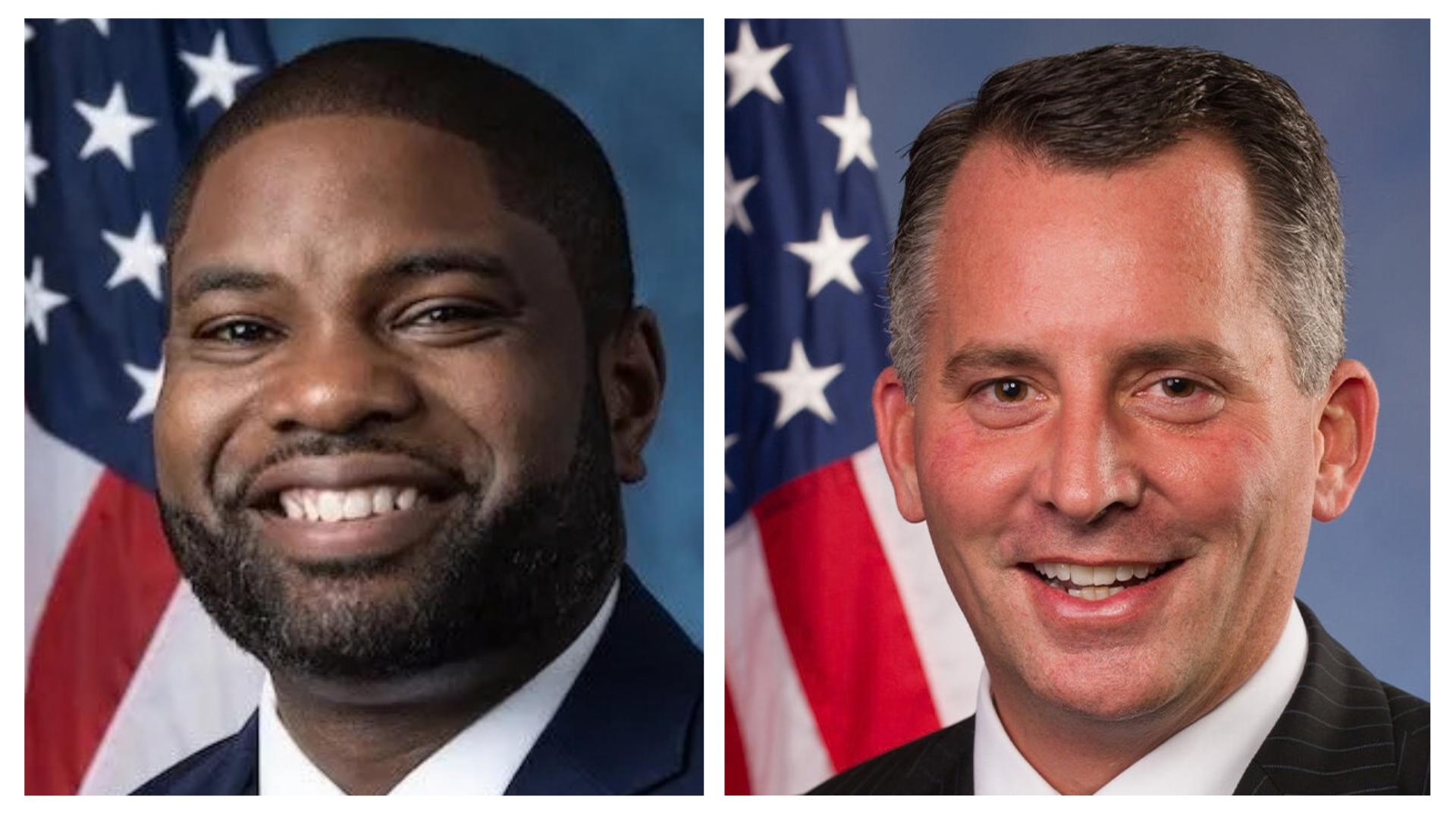
U.S. Rep. Byron Donalds, left, the Republican nominee for Florida governor, and former U.S. Rep. David Jolly, the Democratic nominee.
Orange County: A Gateway to the Governor’s Mansion?
Orange County’s influence rests on the votes it contributes and the advantage it delivers to either candidate.
In the 2018 governor’s election, Democrat Andrew Gillum received 296,257 votes in Orange County, compared with Republican Ron DeSantis’ 174,228 — a Democratic advantage of 122,029 votes. DeSantis nevertheless won statewide by 32,463 votes. Source: Florida Division of Elections
The county also voted Democratic in the 2024 presidential election. Kamala Harris received 340,807 votes, while Donald Trump received 258,279, giving Harris an 82,528-vote advantage. Source: Florida Division of Elections
The elections involved different offices, candidates and turnout conditions. Their results provide historical context rather than a forecast for the governor’s race.
Neither Donalds nor Jolly must win Orange County to win Florida. The margin is what matters. A smaller Democratic advantage would improve Donalds’ statewide position, assuming results elsewhere remained unchanged. A larger advantage for Jolly could help offset Republican strength in other counties.
Changes in that margin could reflect turnout, crossover voting or choices by voters without a party affiliation. County totals alone cannot establish how many Democrats voted Republican.
Will Community Engagement Translate Into Votes?
The ONYX gala placed both candidates before a community gathering outside a conventional partisan campaign event. Whether such appearances generate support will depend on voters’ assessments of their records, proposals and priorities.
Endorsements have limits. Gray lost his 2025 reelection bid to Democrat Tom Keen despite Dyer’s backing and a fundraising advantage. Source: Florida Politics
Chestnut’s endorsement provides a documented example of Democratic support for Donalds. Polling and voter interviews would be needed to determine whether comparable support exists in Orange County and how significant it might be.
For Donalds, making a sustained case to Black voters would require addressing the issues they identify as priorities, including housing costs, economic opportunity, education, health care and public safety. Community appearances create opportunities to hear those concerns and explain specific proposals; electoral support depends on whether voters find the answers persuasive.
A Donalds victory would make him Florida’s first Black governor. Orange County could help shape the outcome through the Democratic advantage Jolly builds or the margin Donalds narrows.
What would most influence your choice for Florida’s next governor: party affiliation, the candidate’s record or specific policy proposals — and why?
Florida
Sam Garrison Proposes Florida House Committees on Technology, Public Integrity and Long-Term Policy
Published
1 day agoon
November 5, 2026The speaker-designate’s proposed structure would create a Policy & Strategy Committee, elevate technology oversight and reestablish a committee focused on ethics and public corruption.
TALLAHASSEE, Fla. (FNN) — Florida House Speaker-designate Sam Garrison outlined proposed changes to the chamber’s committee structure Thursday, calling for greater attention to long-term policy, artificial intelligence, cybersecurity and public integrity during the 2026-28 legislative term.
In a Nov. 5 memorandum to House members provided to Florida National News, Garrison said the proposal preserves most of the existing structure while making changes intended to improve coordination and examine the lasting consequences of legislative decisions.
“I am committed to making committee time meaningful,” Garrison wrote. “I want you to dig into ideas, hear from the public, and truly study your colleagues’ bills because behind every bill, every policy, and every budget item are people — our people.”
New Committee Would Examine Long-Term Policy and Costs
Garrison proposed creating a Policy & Strategy Committee to coordinate major initiatives involving multiple committees or state agencies.
The committee would draw on the expertise of subject-matter committees to examine how major reforms would operate and what they would cost. Its proposed jurisdiction includes long-range planning and fiscal stability, and it could consider legislation with a fiscal impact.
Garrison said the committee would provide a forum for considering challenges that extend beyond an individual legislative session or term.
“I want the House to consider where Florida needs to be in five or 10 or 20 years and what steps we should take now to get there,” he wrote.
Technology Oversight Would Become a Full Committee
The proposed Advanced Technology & Digital Security Committee would replace the previous term’s Information Technology Budget & Policy Subcommittee.
The full committee would focus on state technology governance and modernization, including agencies’ ability to implement legislation. Its responsibilities would also include:
- Artificial intelligence and emerging technologies.
- Cybersecurity and digital privacy.
- Data governance.
- Critical infrastructure security.
Garrison distinguished the committee’s policy and oversight responsibilities from spending decisions. The Appropriations Committee and its subcommittees would continue to consider technology funding.
“These issues affect both state government and the Floridians and businesses that rely on technology every day,” Garrison wrote.
He said the goal is to make informed technology decisions that prevent costly failures.
Public Integrity Committee Would Return
Garrison also proposed reestablishing the Public Integrity Committee, emphasizing ethics, integrity and investigations into public corruption.
The committee would consider related matters involving lobbying, financial disclosure and conflicts of interest.
“Floridians should be able to trust their government to act in the public interest,” Garrison wrote. “A dedicated committee will allow Members to examine the laws and standards that protect that trust.”
The Rules & Calendar Committee would retain responsibility for House rules, floor procedures and member conduct, according to the memorandum.
Most of the Existing Structure Would Remain
Garrison said most of the current committee structure would remain intact. Other changes would update committee names and bring related issues under shared jurisdictions.
The proposed adjustments are intended to help lawmakers examine connections among state policy, local decisions and their effects on residents.
The memorandum referred members to attached documents detailing the proposed structure and jurisdictions. It did not identify committee chairs or member assignments.
Public Input and Legislative Review Emphasized
Garrison urged members to use committee meetings to hear from the public, examine their colleagues’ proposals and consider the people affected by legislation and spending decisions.
“Our committee process should give you the opportunity to contribute and every proposal the careful consideration it deserves,” he wrote. “I look forward to working with you over the next two years.”
Florida
DeSantis’ Political Star Rises as Florida GOP Holds Statewide Offices Amid National Defeats
Published
1 day agoon
November 5, 2026Republicans retain Florida’s statewide leadership despite Democratic gains in the Legislature, giving the outgoing governor a platform in the debate over the GOP’s future.
TALLAHASSEE, Fla. (FNN) — Gov. Ron DeSantis pointed to Florida’s Republican victories Wednesday as evidence that his governing approach helped withstand a national Democratic surge, highlighting the state as a remaining Republican stronghold after major defeats elsewhere.
Speaking a day after the election, DeSantis described the national Republican losses as approaching an “extinction-level event.” He contrasted those setbacks with Florida, where Republicans retained the governor’s office, all three Cabinet offices and the U.S. Senate seat on the ballot. abcnews.com
The results give DeSantis a platform to promote his record as Republicans assess their future. However, narrower statewide margins and Democratic legislative gains complicate any claim of an unqualified Republican mandate.
Florida Holds Statewide Republican Leadership
Republican Byron Donalds defeated Democrat David Jolly for governor, while U.S. Sen. Ashley Moody defeated Democratic challenger Angie Nixon. Republicans also won the races for attorney general, chief financial officer and agriculture commissioner.
The sweep left Florida Democrats without a statewide victory despite a more favorable national environment for their party. floridaphoenix.com
DeSantis, who was not on the ballot, argued that Florida Republicans benefited from the record established during his administration. His assessment places the state’s performance at the center of a broader question: What can Republicans learn from the places where they retained power?
DeSantis’ Political Star Gains Visibility
DeSantis’ remarks offered a defense of his governing approach as Republicans confronted the election’s consequences.
He credited Florida’s resilience to policy achievements and voter trust, while emphasizing that his immediate focus remained completing his term. wusf.org
Florida’s results strengthen his opportunity to participate in the national leadership debate. They do not, by themselves, establish that Republican voters have chosen him to lead the party or that he will launch another presidential campaign.
The distinction matters: Electoral success in Florida provides a political argument, while a national campaign would require support extending well beyond the state.
Texas Defeats Increase Florida’s Importance
DeSantis singled out Texas as a particularly consequential Republican setback. Once a dependable foundation of GOP strength, Texas delivered Democratic victories in the governor’s race, a U.S. Senate contest and other statewide offices.
He warned that those losses could weaken Republicans nationally for years. www.orlandoweekly.com
Against that backdrop, Florida’s Republican sweep gives its leaders greater prominence. The state’s emerging role as a Republican “Southern Star” is an interpretation of that contrast, rather than a designation DeSantis used.
For the outgoing governor, Florida offers evidence of political durability during a difficult election. For the national party, it offers a case to examine alongside the states where Republican support collapsed.
DeSantis Credits Amendment 3 With Turnout
DeSantis also credited voter-approved Amendment 3, the property tax measure, with attracting voters who subsequently supported Republican candidates.
He said implementation would require further legislative action and discussed protecting homeowners’ savings from being offset by other local charges. cbs12.com
His explanation remains an assessment of the election. Determining how much the amendment affected turnout and individual races would require additional analysis.
Democratic Legislative Gains Temper GOP Celebration
Florida’s statewide sweep did not prevent Republican losses elsewhere on the ballot.
Democrats gained seats in the Legislature and ended the Republican supermajority in the state House. Their leaders argued that the close statewide contests demonstrated Florida remained competitive and warranted greater national investment. floridaphoenix.com
Republicans therefore emerged with continued governing authority but less room for complacency. Retaining statewide offices and losing legislative ground are both part of the election’s outcome.
2018 Offers Democrats a Benchmark
Florida Democrats’ 2018 results provide a historical comparison between narrowly losing a statewide contest and winning governing authority.
Republican Ron DeSantis won the governor’s race with 4,076,186 votes, or 49.6%, while Democrat Andrew Gillum received 4,043,723 votes, or 49.2%. DeSantis prevailed by 32,463 votes, approximately 0.4 percentage points. results.elections.myflorida.com
In the agriculture commissioner’s race, Democrat Nikki Fried won 4,032,954 votes, or 50.04%, defeating Republican Matt Caldwell, who received 4,026,201 votes, or 49.96%. Fried’s winning margin was 6,753 votes, approximately 0.08 percentage points. uselectionatlas.org
| 2018 statewide race | Candidate | Party | Votes | Percentage |
|---|---|---|---|---|
| Governor | Ron DeSantis — winner | Republican | 4,076,186 | 49.6% |
| Governor | Andrew Gillum | Democratic | 4,043,723 | 49.2% |
| Agriculture commissioner | Nikki Fried — winner | Democratic | 4,032,954 | 50.04% |
| Agriculture commissioner | Matt Caldwell | Republican | 4,026,201 | 49.96% |
Table lists the two leading candidates in each race. Governor’s percentages include votes cast for other candidates. results.elections.myflorida.com
Those results give substance to the discussion about investment and competitiveness. Campaign funding can support organization and outreach, but these election totals alone do not establish how much national spending influenced either outcome.
Gillum nearly captured the governor’s office; Fried secured a statewide Cabinet seat. That difference remains central to evaluating political progress: Smaller losing margins can indicate opportunity, while victories determine who exercises authority.
A Stronger Platform, With Challenges Ahead
Florida’s results give DeSantis a stronger position from which to argue that his approach deserves attention within the Republican Party.
Yet the election also supplied a warning for his party at home. Republicans preserved statewide leadership while Democrats demonstrated greater strength in legislative contests.
As Donalds prepares to succeed him, DeSantis leaves with Florida’s Republican governing structure intact. Whether that record becomes the foundation for a larger national role will depend on how Republican voters and leaders respond to the party’s defeats.
Florida
Florida Republicans sweep statewide races; Democrats break House supermajority
Published
2 days agoon
November 4, 2026Republicans retain the governor’s office, all three Cabinet posts, both legislative chambers and both U.S. Senate seats, while Democratic gains end the GOP’s House supermajority.
TALLAHASSEE, Fla. (FNN) — Republicans swept Florida’s statewide races Tuesday and retained control of both legislative chambers, extending Democrats’ statewide losing streak despite gains that ended the GOP’s supermajority in the Florida House.
Republican Byron Donalds defeated Democrat David Jolly for governor, while U.S. Sen. Ashley Moody defeated Democratic state Rep. Angie Nixon. Republicans also won the races for attorney general, chief financial officer and agriculture commissioner. www.fox13news.com
The results preserve Republican control of the governor’s office, all three Cabinet posts and both of Florida’s U.S. Senate seats. Republican Sen. Rick Scott, reelected in 2024, was not on this year’s ballot. www.rickscott.senate.gov
Democrats have not won a statewide election since Nikki Fried captured the agriculture commissioner’s office in 2018. www.wlrn.org
Florida statewide results and winning margins
Unofficial returns available Nov. 4 showed Republicans winning all five statewide contests. The figures reflect separate reporting snapshots; totals and margins may change before certification.
| Office | Republican: votes (percentage) | Democrat: votes (percentage) | GOP vote margin | Margin in percentage points |
|---|---|---|---|---|
| Governor | Byron Donalds: 4,132,334 (50.02%) | David Jolly: 4,024,639 (48.71%) | 107,695 | 1.31 |
| Attorney general | James Uthmeier: 4,177,901 (50.93%) | Jose Javier Rodriguez: 4,024,563 (49.07%) | 153,338 | 1.86 |
| Chief financial officer | Blaise Ingoglia: 4,151,579 (50.94%) | Annette Taddeo: 3,997,932 (49.06%) | 153,647 | 1.88 |
| Agriculture commissioner | Wilton Simpson: 4,160,577 (51.08%) | Joey Mendoza Atkins: 3,984,621 (48.92%) | 175,956 | 2.16 |
| U.S. Senate | Ashley Moody: 4,207,947 (50.87%) | Angie Nixon: 3,969,186 (47.99%) | 238,761 | 2.88 |
Source: Florida Department of State’s Election Watch. The governor’s race was the closest of the five. Other candidates account for the remaining vote shares where applicable. Governor
Democratic gains end Republican House supermajority
Republicans retained their legislative majorities, but Democratic gains ended the GOP’s House supermajority.
The Florida Democratic Party reported a net gain of 15 House seats and a Republican-to-Democratic flip in Senate District 10, where John Lowndes defeated Jason Brodeur. Florida Democratic Party
Among the House pickups listed by the party were Eric Gray in District 35, Darryl Block in Dist,rict 36, Jane Aman in District 37, Nik Dean in District 38 and Jarod Fox in District 39. Other listed victories included Todd Delmay in District 101 and Lucia Baez-Geller in District 106. Florida Democratic Party
The party’s district list marked 16 House seats as Republican-to-Democratic flips, while its announcement reported a net gain of 15. Gross pickups and net gains measure different things; the net figure also accounts for Democratic losses. News Service of Florida reported Republicans were positioned to recapture House District 87 from Democrat Emily Gregory. Florida Democratic Party
House District 33, where Democrat Daniel McDow faced Republican Monique Miller, remained close enough for a recount, leaving the final legislative tally unsettled. WUSF
Ending the House supermajority limits Republicans’ ability to act without Democratic support on matters requiring a two-thirds vote. Republicans nevertheless retain control of legislative leadership and the ordinary lawmaking agenda. WUSF
GOP registration advantage exceeds 1.5 million
Republicans entered the election with a substantial voter registration advantage.
Florida’s Sept. 30 report listed 5,678,755 active registered Republicans and 4,133,397 Democrats — a Republican lead of 1,545,358. Another 3,345,188 voters had no party affiliation, and 514,782 belonged to minor parties. dos.fl.gov
The GOP’s statewide winning margins were far smaller than its registration advantage. But registration totals do not reveal how individual voters cast their ballots, and the results alone cannot separate the effects of turnout, crossover voting and support from unaffiliated voters.
Gillum’s 2018 showing tops Jolly’s current result
Former Democratic gubernatorial nominee Andrew Gillum received more votes, a larger vote share and a smaller losing margin in 2018 than Jolly recorded in the unofficial 2026 returns.
Gillum received 4,043,723 votes, or approximately 49.19%, against Ron DeSantis’ 4,076,186 votes, or 49.59%. His certified defeat was 32,463 votes, approximately 0.40 percentage points. results.elections.myflorida.com
Jolly’s current tally is 4,024,639 votes, or 48.71%, leaving him 107,695 votes behind Donalds. Governor
Gillum received 19,084 more votes and finished 0.48 percentage points higher than Jolly’s current showing. His losing vote margin was 75,232 smaller.
Jolly, a former Republican congressman, left the GOP in 2018, became an independent and later joined the Democratic Party before launching his gubernatorial campaign in 2025. www.pbs.org
The comparison involves different electorates and political conditions, and Jolly’s totals remain unofficial. It does not establish that his previous Republican affiliation caused his defeat.
Certification still ahead
Florida’s Elections Canvassing Commission is scheduled to certify statewide results Nov. 17. Outstanding ballot processing and any required recounts could change the unofficial totals before then. Time line
Trending
Florida3 days agoHISTORIC WIN: Byron Donalds elected Florida’s first Black governor
Central Florida News3 days agoHISTORYMAKER: Tiffany Moore Russell makes history as first Black woman elected Orange County mayor
Central Florida News4 days agoUSF Defeats UAB 30–10, Secures Fourth Consecutive Bowl-Eligible Season
Florida2 days agoFlorida Republicans sweep statewide races; Democrats break House supermajority
Florida3 days agoJames Uthmeier defeats Jose Javier Rodriguez, wins first elected term as Florida attorney general