Florida
[COURTS & LAW] Paula Stark Court Record Could Impact Daisy Morales, James Bush III Defamation Lawsuits Against FHDCC
Published
1 hour agoon
Stark’s Leon County Election Fight, Bush’s $1 Million Default Battle in Miami-Dade and Morales’ Orange County Defamation Lawsuit Could Put FHDCC’s Legal Status Under Scrutiny in Three Florida Courts
ORLANDO, Fla. (FNN) — Three Florida court cases. Three counties. One political committee — and an unresolved legal question that could affect two pending defamation lawsuits.
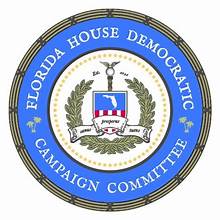
Court records obtained and reviewed by Florida National News show the Florida House Democratic Campaign Committee (FHDCC) sought permission to become a Party Defendant in Republican state Rep. Paula Stark’s Leon County election lawsuit in June 2026.
Less than a month later, FHDCC took a different procedural position in former Democratic state Rep. James Bush III’s Miami-Dade defamation lawsuit, arguing that it is an unincorporated political organization that lacks the capacity to be sued in its own name.
That position is supported by a sworn affidavit submitted by State Rep. Christine Hunschofsky, chair of FHDCC, describing her authority over committee funds and legal matters and stating the committee’s position that it cannot be sued as a political committee.
Now, former Democratic state Rep. Daisy Morales has named FHDCC as a defendant in a separate defamation lawsuit in Orange County.
The cases involve different parties, claims and legal issues. FHDCC’s attempt to intervene in Stark’s case does not establish that the committee has capacity to be sued in Bush or Morales.
But the developing record presents a significant question: FHDCC affirmatively asked one Florida circuit court to allow it to become a Party Defendant, then later argued in another that its organizational structure prevents it from being sued in its own name.
FHDCC Asked to Become a Party Defendant in Stark Case
Stark, a Republican state representative from St. Cloud, sued after election officials determined she failed to qualify for reelection to House District 47.
Her case, Paula Stark v. Cord Byrd, et al., Case No. 2026-CA-1311, was filed in the Second Judicial Circuit in Leon County before Circuit Judge Joshua M. Hawkes.
#FloridaPolitics, #FloridaNews, #FloridaCourts, #FloridaElections, #FHDCC, #FloridaHouse, #DefamationLawsuit, #ElectionLaw, #PaulaStark, #JamesBushIII, #DaisyMorales, #ChristineHunschofsky, #MarkHerron, #SamuelVilchezSantiago, #LeonCounty, #MiamiDade, #OrangeCounty, #OrlandoPolitics, #FloridaNationalNews, #FNNNews,
On June 25, 2026, attorney Mark Herron filed a motion on behalf of FHDCC and Democratic House District 47 candidates Jorge Figueroa and Anthony Nieves.
The filing was expressly titled “Motion to Intervene as a Party Defendants in Pending Election Case” and asked Hawkes to permit FHDCC, Figueroa and Nieves to intervene as Party Defendants under Florida Rule of Civil Procedure 1.230.
FHDCC also described itself in the motion as an affiliated party committee established under Section 103.092, Florida Statutes, to support Democratic candidates for the Florida House.
The committee asserted that the outcome of Stark’s lawsuit would affect the resources FHDCC would expend in the House District 47 election.
Herron signed the filing as “Attorney for the Florida House Democratic Campaign Committee.”
Herron also serves as FHDCC treasurer. His dual role could become relevant if the Bush or Morales defamation lawsuits reach discovery concerning the committee’s organization, finances or decision-making. Any potential testimony would depend on Herron’s firsthand knowledge and applicable attorney-client and other legal protections.
Hawkes Denied FHDCC Intervention
FHDCC did not succeed in becoming a party to Stark’s case.
In his July 8 Order on Petition for Mandamus, Hawkes explained that he denied FHDCC intervention because the committee’s asserted interest amounted to “just a financial stake.”
Hawkes instead allowed Figueroa and Nieves to intervene because their candidacies and political positions were directly affected by whether the primary would remain closed. The written order consequently identifies Figueroa and Nieves — not FHDCC — as intervenors.
That distinction is critical.
The Stark record establishes that FHDCC asked to become a Party Defendant. It does not establish that the court accepted FHDCC in that capacity. Hawkes expressly denied the committee’s request.
Hawkes ultimately denied Stark’s request for ballot relief. In his analysis, he also referenced an argument advanced by “counsel for Intervenors.”
The Stark litigation was subsequently closed.
Why Stark Matters
Hawkes did not decide whether FHDCC has legal capacity to sue or be sued.
He rejected FHDCC’s intervention because its asserted interest in the election dispute was insufficient.
But the underlying motion remains significant because it establishes that FHDCC, through counsel, affirmatively invoked a Florida court’s jurisdiction and asked to participate as a Party Defendant.
That record could become relevant if FHDCC maintains in other courts that its organizational structure prevents it from being sued in its own name.
Bush’s $1 Million Default Battle in Miami-Dade
While Stark’s election litigation was unfolding in Leon County, FHDCC was facing a different legal battle in Miami-Dade.
Former Democratic state Rep. James Bush III filed a defamation lawsuit in August 2025 against Edge Communications, LLC, Strong Community, FHDCC and state Rep. Ashley Gantt.
The case, James Bush III v. Edge Communications, LLC, et al., Case No. 2025-015569-CA-01, was assigned to Section CA31 of the Eleventh Judicial Circuit and Circuit Judge Migna Sanchez-Llorens, according to the court’s Case Management Order.
The order, signed Oct. 11, 2025, established July 8, 2026, as the deadline for summary judgment and dispositive motions, resolution of certain pretrial matters and mediation. It projected an Oct. 6, 2026 trial date.
On July 8 — the same day Hawkes issued his Stark ruling in Leon County — clerk defaults were entered against FHDCC and other defendants in Bush’s lawsuit, according to filings previously reviewed by FNN.
FHDCC moved to set aside its default on July 15.
Bush then filed a Motion for Final Default Judgment on July 29 seeking $1 million, plus costs, against the defaulted defendants.
The distinction is important: Bush is seeking a $1 million final default judgment. The court has not entered a $1 million judgment based on the records reviewed for this report.
FHDCC Argues It Cannot Be Sued in Its Own Name
FHDCC’s response to the Miami-Dade default creates the central comparison with the Stark record.
In its Motion to Set Aside Default, FHDCC argued that it is a 527 political unincorporated organization that lacks capacity to be sued in its own name.
The committee cited Larkin v. Buranosky, a 2008 Florida appellate decision involving unincorporated political organizations.
That remains FHDCC’s legal position, not a determination by the Miami-Dade court.
But the timing creates a significant comparison:
June 25 — Leon County: FHDCC asks to enter litigation as a Party Defendant.
July 8 — Leon County: Hawkes denies FHDCC intervention.
July 15 — Miami-Dade County: FHDCC argues that its organizational status prevents it from being sued in its own name.
Those positions are not automatically contradictory. Intervention and capacity to be sued are distinct legal questions, and Hawkes did not decide whether FHDCC possessed capacity to sue or be sued.
But the records could invite scrutiny of how FHDCC characterizes its legal identity and litigation authority in different proceedings.
FHDCC Chair Hunschofsky Submits Sworn Affidavit
The Miami-Dade dispute took on added significance when State Rep. Christine Hunschofsky, chair of the Florida House Democratic Campaign Committee, submitted a sworn affidavit supporting FHDCC’s effort to set aside the default.
Hunschofsky described FHDCC as a Florida registered political committee affiliated with the Florida Democratic Party but not controlled by it.
She also described her authority within the organization, stating that she is responsible for the allocation of FHDCC funds and for legal actions against the committee and its defense.
Hunschofsky further stated that FHDCC is an unincorporated entity and that the committee understands it “cannot be sued as a political committee.”
She said that after learning Bush had obtained a default, she immediately instructed attorney Juan-Carlos Planas to seek to set aside the default and have the case dismissed based on FHDCC’s position that it cannot be sued under Florida law.
The affidavit represents sworn statements by FHDCC’s chair concerning the committee’s structure and her responsibilities. Her assertion concerning whether FHDCC can be sued is the committee’s legal position; it does not establish that Sanchez-Llorens has accepted that interpretation.
Morales Defamation Lawsuit Brings Question to Orange County
The third case brings the issue to Orange County.
On Aug. 14, former Democratic state Rep. Daisy Morales filed a defamation lawsuit against FHDCC and Democratic House District 43 nominee Samuel Vilchez Santiago.
The case, Daisy Morales v. Samuel Vilchez Santiago and Florida House Democratic Campaign Committee, Case No. 482026CA008697A001OX, is pending in the Ninth Judicial Circuit before Circuit Judge Michael Deen.
Morales asserts claims for defamation/libel and defamation by implication arising from political mailers distributed during the Democratic primary campaign.
Among the disputed statements was a representation that Morales endorsed Republican candidates and was expelled from the Orange County Democratic Party.
Morales alleges the statements were false and defamatory.
Those allegations remain pending. Neither Vilchez Santiago nor FHDCC has been found liable for defamation.
Vilchez Santiago defeated Morales in the Aug. 18 Democratic primary, but the election result does not resolve the civil lawsuit.
Could Stark and Bush Affect Morales?
The Stark intervention record makes the potential Orange County issue clearer.
If FHDCC raises the same capacity defense against Morales that it raised against Bush, the Orange County court could be asked to consider a broader record concerning the committee’s legal identity and structure.
That record could include FHDCC’s request to become a Party Defendant in Stark; Herron’s representation of the committee; Hawkes’ denial of FHDCC intervention; FHDCC’s Miami-Dade capacity argument; Hunschofsky’s sworn affidavit; and state records governing the committee’s organization and operations.
None of that evidence establishes the merits of Morales’ defamation claims.
But it could become relevant to a threshold question:
Is FHDCC itself a proper defendant?
And if Florida law ultimately says it is not, another question follows:
Who is the proper party for allegedly actionable conduct undertaken through the committee?
Three Courts, Different Consequences
The issue carries different consequences in each court.
Leon County: FHDCC affirmatively sought Party Defendant status, but Hawkes denied its intervention. Stark’s case is closed, and nothing in the Bush or Morales litigation currently changes that outcome.
Miami-Dade County: The consequences are immediate. Bush is seeking a $1 million final default judgment while FHDCC is attempting to set aside its default and arguing that it cannot be sued in its own name.
Orange County: The issue is prospective. If FHDCC raises the same capacity defense against Morales, Deen could be asked to examine the developing Stark and Bush records in determining whether FHDCC is a proper defendant.
One Political Committee, Three Florida Courts
The court records do not establish wrongdoing by FHDCC, Herron, Hunschofsky or their attorneys. Nor do they establish the merits of the Bush or Morales defamation claims.
What they do establish is an unusual litigation record involving the same political committee across three Florida circuit courts.
In Leon County, FHDCC asked to become a Party Defendant — and Hawkes denied the request.
In Miami-Dade County, FHDCC is fighting a clerk’s default and Bush’s request for a $1 million final default judgment while arguing that it cannot be sued in its own name.
In Orange County, FHDCC is now a named defendant in Morales’ defamation lawsuit.
The cases could ultimately put a fundamental question under scrutiny:
What is the Florida House Democratic Campaign Committee’s legal status — and if FHDCC cannot be sued in its own name, who may be held legally accountable for actionable conduct undertaken through the committee if that conduct is ultimately proven?
You may like

Florida House Democratic Campaign Committee Chair Christine Hunschofsky Faces Lawsuits, Election Complaints

Florida House Democratic Campaign Committee Faces Defamation Lawsuits, Possible Election Complaints

Ex-Florida Speaker Paul Renner Says Reps. Sheila Cherfilus-McCormick and Cory Mills Must Resign or Be Removed from Congress
Florida
FIU Becomes First Florida University to Launch CORE Emergency Management Partnership
Published
2 days agoon
August 26, 2026MIAMI, Fla. (FNN) — Florida officials announced the launch of the Coalition for Operational Readiness in Education, or CORE, Program at Florida International University, beginning an initiative designed to strengthen the state’s emergency management workforce through partnerships with colleges, universities and technical and trade schools.
The program will connect higher education institutions with the Florida Division of Emergency Management and other state agencies to provide students with specialized education and training in emergency management.
CORE is also expected to provide opportunities for students to earn industry-recognized certificates and establish pathways to jobs with emergency management offices and private-sector industry partners across Florida.
FIU First to Launch CORE
Florida International University in Miami is the first institution where CORE is being rolled out.
State officials said 11 institutions have committed to participating, with the long-term goal of expanding the initiative to every college, university, technical school and trade school in Florida.
The statewide expansion would create a pipeline of students trained for careers involving disaster preparedness, emergency response and recovery.
Building Florida’s Emergency Management Workforce
Florida’s exposure to hurricanes and other natural disasters has made emergency preparedness and response a major state priority.
Officials said maintaining Florida’s emergency management capabilities requires developing the next generation of professionals who will work before, during and after disasters and other emergencies.
The CORE partnerships are designed to connect classroom education with professional training, certifications and employment opportunities.
Education-to-Employment Pipeline
The program is intended to create a more direct pathway from education to careers in emergency management.
Through partnerships involving state agencies, educational institutions and industry organizations, students could gain specialized training while developing credentials recognized by employers.
The initiative could also help state and local emergency management agencies develop a larger pool of trained candidates as Florida’s population and emergency-response needs continue to grow.
Statewide Expansion Planned
While the program begins at FIU, officials said the broader objective is statewide.
The goal is to eventually establish CORE partnerships throughout Florida’s higher education and workforce-training system, including universities, colleges, technical schools and trade schools.
Florida officials also envision CORE becoming a workforce-development model that other states could replicate.
Key Takeaways
- Program: Coalition for Operational Readiness in Education (CORE)
- Initial launch: Florida International University in Miami
- State partner: Florida Division of Emergency Management and other state agencies
- Participating institutions: 11 institutions have committed so far
- Training: Specialized emergency management education and workforce preparation
- Credentials: Industry-recognized certificates
- Career component: Pathways to emergency management agencies and industry employers
- Long-term goal: Expand CORE to colleges, universities, technical schools and trade schools throughout Florida
- National objective: Develop a Florida workforce model that could be replicated in other states
Florida
Byron Donalds Selects Miami-Dade Sen. Bryan Avila as Running Mate in Florida Governor’s Race
Published
3 days agoon
August 25, 2026MIAMI, Fla. (FNN) — Republican gubernatorial nominee Byron Donalds selected Florida state Sen. Bryan Avila of Miami-Dade County as his running mate for lieutenant governor, adding a South Florida lawmaker to the GOP ticket for the 2026 general election.
Donalds announced Avila as his choice Tuesday, Aug. 25, at Miami’s historic Freedom Tower, a location closely associated with South Florida’s Cuban exile community.
The selection puts Avila alongside Donalds as Republicans turn their attention to the general election and the race to succeed Gov. Ron DeSantis.
Who Is Bryan Avila?
Avila is a Republican state senator from Miami-Dade County and previously served in the Florida House of Representatives.
His selection gives the Donalds ticket a prominent South Florida presence and adds a lawmaker with experience in both chambers of the Florida Legislature.
The Miami announcement also places immigration, communism, economic opportunity and Florida’s relationship with Latin American communities near the center of the Republican ticket’s general-election messaging.
Road to the General Election
With Avila joining the ticket, Donalds now moves toward the November general election with the Republican nominees for governor and lieutenant governor in place.
The lieutenant governor selection is one of Donalds’ most consequential decisions since securing the Republican nomination, helping define the geographic, political and demographic strategy of his statewide campaign.
Florida
Florida House Democratic Campaign Committee Chair Christine Hunschofsky Faces Lawsuits, Election Complaints
Published
5 days agoon
August 24, 2026Who is next? Lawsuits and Florida election complaints put the incoming House Democratic leader’s oversight of political attacks, campaign spending and tactics against former Democratic lawmakers under scrutiny
ORLANDO, Fla. (FNN) — Incoming Florida House Democratic Leader Christine Hunschofsky, a former Parkland mayor is facing growing scrutiny over campaign tactics by the Florida House Democratic Campaign Committee, the party-affiliated committee she chairs, as former Democratic lawmakers challenge political attacks through lawsuits and Florida election complaints.
The disputes are placing increased scrutiny on Christine Hunschofsky, chair of the Florida House Democratic Campaign Committee, and Cassidy Whitaker, the committee’s caucus director for the 2026 election cycle.
The controversy goes beyond ordinary party infighting, with former Democratic lawmakers alleging that FHDCC used opposition research and campaign communications containing false or misleading information to attack members of its own party.
Those allegations raise questions about the committee’s research, approval process and campaign tactics — and whether House Democratic leaders can rebuild trust with lawmakers targeted by the same political organization they are expected to help lead.
Former Democratic lawmakers are now turning to the courts and Florida’s election complaint process to challenge FHDCC-linked campaign tactics, intensifying scrutiny of the committee’s leadership, spending, opposition research and oversight.
The lawsuits and complaints remain allegations. They do not establish that Hunschofsky, FHDCC or others violated the law.
But the controversy is no longer simply an internal Democratic campaign fight.
FHDCC Faces Real Legal Challenges
State Representative-Elect and former Democratic state Rep. James Bush III sued FHDCC and other defendants in Miami-Dade County over allegedly defamatory election communications.
Former Democratic state Rep. Daisy Morales has separately challenged campaign communications involving FHDCC through litigation in Orange County and Florida’s election complaint process.
The cases involve separate elections and allegations and must be decided on their individual evidence.
State Rep.-elect Daphne Campbell, a former state senator and former state representative, told Florida National News in a phone interview that she is considering filing a defamation lawsuit as well.
Together, however, they place FHDCC’s campaign practices under greater scrutiny and create a leadership test for Hunschofsky as she prepares to lead Florida House Democrats.
Hunschofsky’s Leadership Under Scrutiny
Hunschofsky’s position as chair does not automatically make her personally liable for every communication, expenditure or decision made by FHDCC.
But leadership brings accountability for how an organization operates.
Political attack campaigns require research, writing, production, vendors, financing and distribution. FHDCC’s internal structure determines how those activities are authorized and supervised.
That makes Hunschofsky’s authority, knowledge and oversight relevant as the committee responds to legal challenges involving its campaign activity.
The central issue is straightforward: What happened under the FHDCC banner, and what responsibility did its leadership have for it?.
Party Establishment vs. Voters’ Choice
The controversy also exposes a deeper tension between party leadership and voters who expect to choose representatives based on the priorities of their communities.
Political parties can recruit, endorse and financially support candidates.
Voters make the final choice.
Heavy intervention by a party organization in a Democratic primary can create the perception that party leaders are trying to make that choice for voters.
That can damage trust when voters believe local experience, constituent service and understanding of their community matter more than the preferences of party leadership.
Democrats Spending Money Fighting Democrats
The internal battles come as Florida Democrats face a larger electoral challenge.
Republicans hold substantial power in Tallahassee, while Democrats need financial resources to compete for legislative seats and statewide offices.
Money spent attacking Democrats in expensive Democratic primaries cannot simultaneously be spent challenging Republicans.
FHDCC has the right to participate in elections within the law. But intraparty battles followed by lawsuits and election complaints create a political question about whether those resources are advancing the committee’s broader mission of electing Democrats.
Minority Democrats and Party Trust
The disputes also involve former minority Democratic lawmakers.
Bush and Campbell are Black. Morales is Puerto Rican, Hispanic.
That does not establish racial or ethnic discrimination by Hunschofsky or FHDCC.
But former minority Democratic lawmakers turning to courts and election regulators over tactics associated with their own party creates a political challenge for Democrats, who depend heavily on Black and Hispanic voters.
Those voters have the same interest as every Florida voter in accurate campaign information, fair elections and political organizations that follow the rules.
A Political Standard That Should Apply to Both Parties
The controversy also creates an uncomfortable comparison for Democrats who have criticized President Donald Trump’s aggressive treatment of political opponents.
The lawsuits and election complaints do not establish that FHDCC copied Trump’s strategy or adopted a “Trump playbook.”
But they raise a broader question of consistency.
Democrats who demand accountability when Republicans exercise political power aggressively should be prepared to apply the same standards to organizations within their own party.
Republicans should do the same when allegations involve their side.
Fairness cannot depend on which party benefits.
From Political Fight to Legal Process
Negative campaigning and opposition research are legal and receive substantial First Amendment protection.
Political committees, however, remain subject to election laws, campaign-finance requirements and civil law.
A lawsuit does not prove defamation.
FHDCC’s separate argument that it cannot be sued.
An election complaint does not prove an election-law violation.
Neither automatically creates a criminal investigation.
If evidence ultimately supports potential criminal conduct, the appropriate law-enforcement agency or prosecutor — not political parties, candidates or news organizations — determines whether an investigation is warranted.
The principle protects everyone: allegations must be proven, due process must be respected and political influence should not shield proven violations.
Who Is Next?
The growing legal disputes leave FHDCC with a political problem extending beyond Bush, Morales and Campbell.
Who is next on the Florida House Democratic Campaign Committee’s target list?
No Democrat is entitled to immunity from legitimate political criticism simply because that candidate belongs to the party.
But candidates should be able to expect political organizations to play by the rules.
The same principle applies to Republicans.
Political organizations can fight hard, expose legitimate weaknesses and spend money advocating for their candidates.
They still have to follow the law.
Hunschofsky Faces a Leadership Test
Hunschofsky is not watching the controversy from outside the organization.
She chairs the Florida House Democratic Campaign Committee while preparing to lead Florida House Democrats, including minority Democratic lawmakers who were targeted by the committee’s campaign attacks.
The lawsuits and election complaints therefore put FHDCC’s governance, campaign strategy and financial oversight directly within the public debate surrounding her leadership.
The courts will determine the civil allegations before them. Election regulators will determine matters within their jurisdiction. If evidence independently supports potential criminal violations, law-enforcement authorities can determine whether an investigation is warranted.
For Hunschofsky, the leadership test is whether the committee she chairs can defend its campaign practices, account for its spending and maintain the trust of Democratic voters while the allegations move through Florida’s courts and election-enforcement system.
The lawsuits and election complaints remain allegations. They are not findings that Hunschofsky or FHDCC violated the law.
For Florida voters, the standard should be simple:
Play by the rules. Follow the evidence. Apply the law equally.
Florida National News is seeking comment from Hunschofsky and FHDCC regarding the lawsuits, election complaints, campaign spending and committee oversight. FNN will update this report with responses and significant developments.
Trending
Florida5 days agoFlorida House Democratic Campaign Committee Chair Christine Hunschofsky Faces Lawsuits, Election Complaints
Florida2 days agoFIU Becomes First Florida University to Launch CORE Emergency Management Partnership
Sports3 days agoBaker and Emily Mayfield to Host Fourth Annual BE the Ball Event in Tampa
Sports3 days agoThe Clash Returns to Daytona in 2027 as Tickets Go On Sale for NASCAR Season Opener
Florida3 days agoByron Donalds Selects Miami-Dade Sen. Bryan Avila as Running Mate in Florida Governor’s Race