Connect with us

Politics

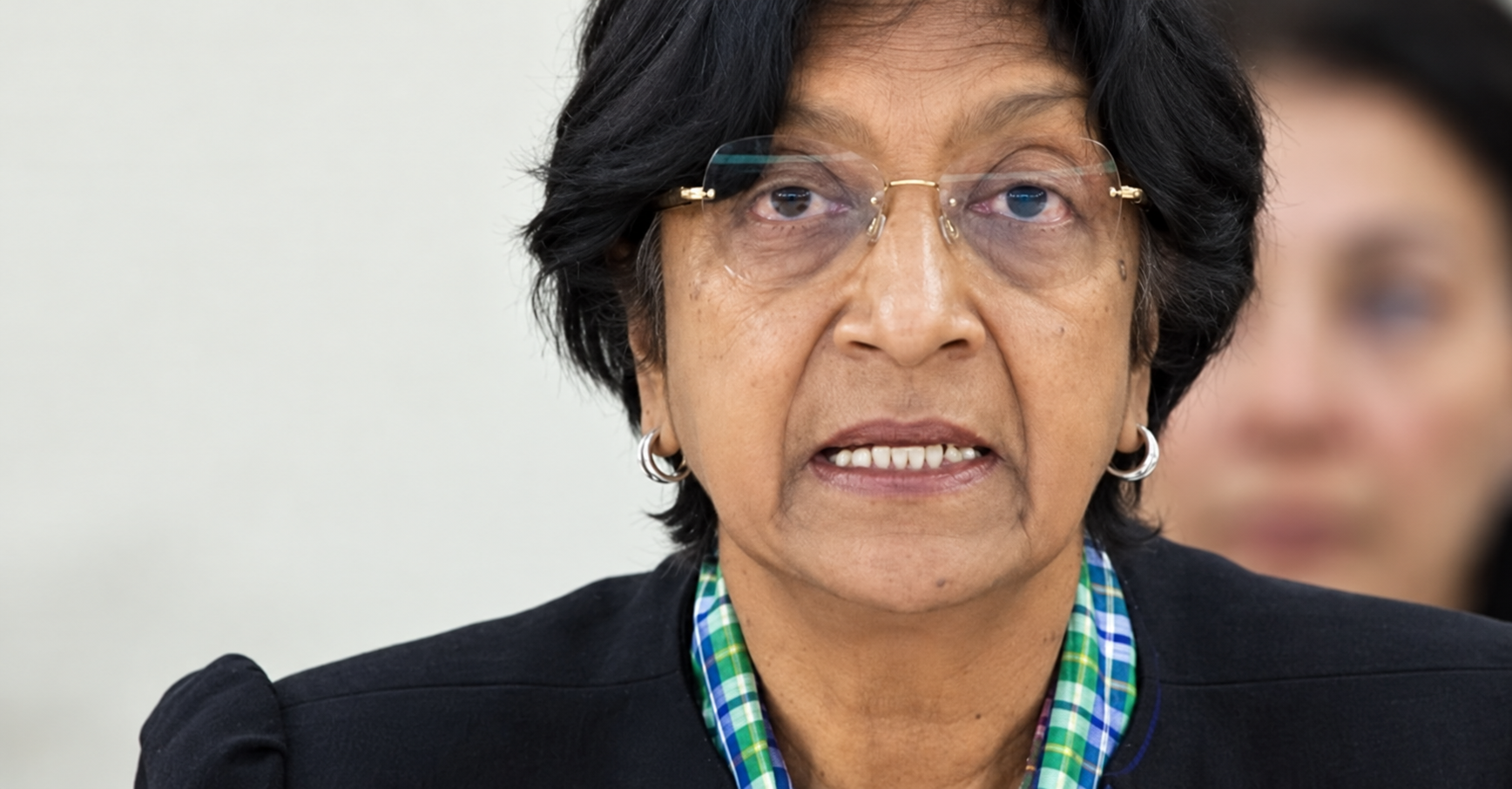
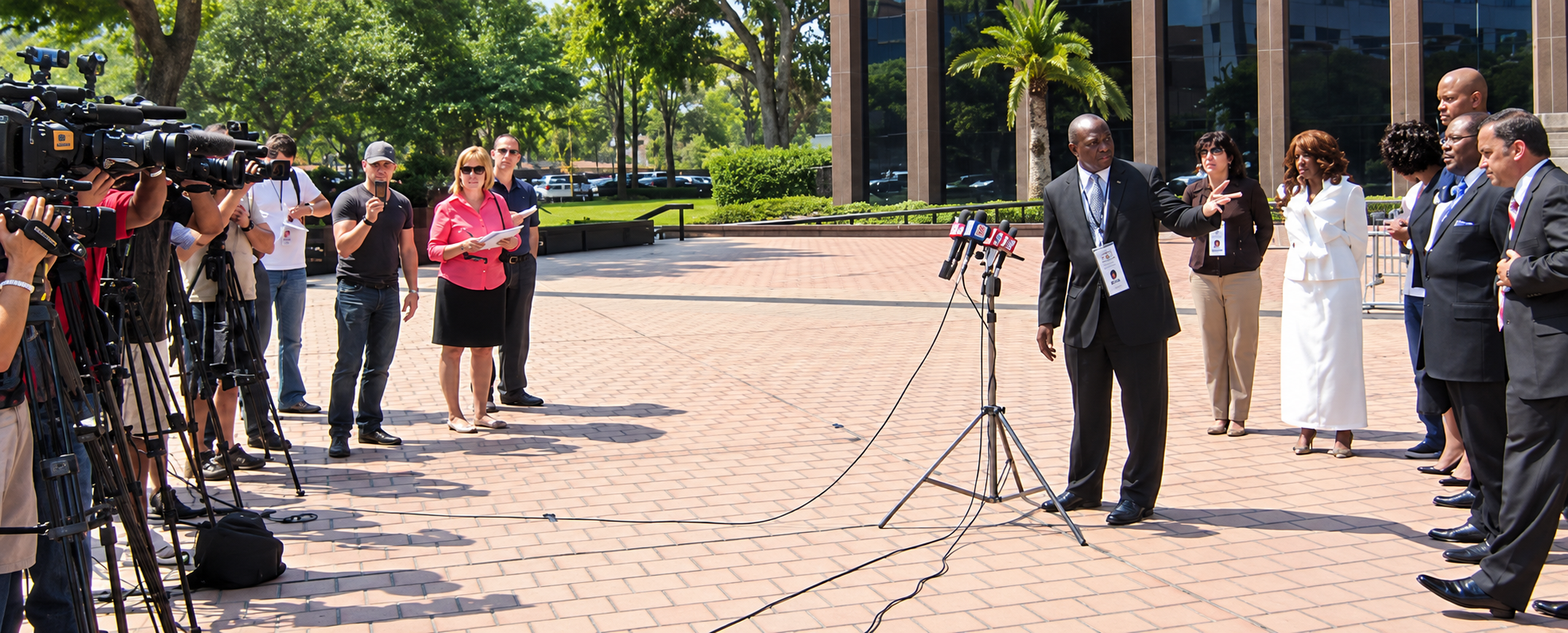
U.S. Commission on Civil Rights Public Briefing: “Collateral Consequences: The Crossroads of Punishment, Redemption and the Effects on Communities”

Published

on

WASHINGTON, (FNN NEWS) — On May 19, in Washington, the Commission will hold a public briefing: “Collateral Consequences: The Crossroads of Punishment, Redemption and the Effects on Communities.”

Some 20 million formerly incarcerated individuals confront significant hurdles to reenter society and pursue a law-abiding life. For example, many are denied the right to vote and to sit on a jury – rights embedded in our Constitution. They may face numerous barriers to reentry, including denial of governmental assistance designed to assist with finding employment. These collateral consequences affect families of the formerly incarcerated in a multitude of ways. For decades, communities of color have been disproportionately represented in the rates of felony convictions, and therefore are hardest hit.

The Commission will hear presentations from diverse stakeholders, including affected individuals, community and advocacy groups, government officials, and academics.

Chair Catherine E. Lhamon said, “Individuals who have paid their debt to society deserve the chance to rebuild their lives after incarceration. The Commission looks forward to receiving information about whether and how current barriers to employment, voting, housing, education, among other core areas of civic life, deprive these Americans of that second chance.”

The briefing is open to the public, and will be held at the Commission: 1331 Pennsylvania Av. NW, 11th Floor, Washington, DC 20425. The sessions will be live-streamed:

https://www.youtube.com/user/USCCR/videos

There will also be a call-in line (listen only): 1-888-481-2844; ID: 6912715.

AGENDA

I. Introductory Remarks, Chair Catherine E. Lhamon: 9:30 – 9:40 am EST

II. Panel One: Overview of Collateral Consequences from Incarceration:

9:40 – 11:05 am

National experts provide an overview of the long-lasting effects of incarceration after a prison sentence has ended. Panelists will discuss how these continuing barriers impact recidivism and particular communities.

Speakers:

  • Margaret Love, Executive Director, Collateral Consequences Resource Center
  • Vikrant Reddy, Senior Research Fellow, Charles Koch Institute
  • Traci Burch, Associate Professor of Political Science, Northwestern University
  • John Malcolm, Vice President of the Institute for Constitutional Government, Heritage Foundation
  • Naomi Goldberg, Policy and Research Director, Movement Advancement Project

III. Panel Two: Access to civil participation after incarceration:

11:10 am – 12:15 pm

National experts and professors discuss the barriers to civil participation following incarceration, specifically focusing on the right to vote and jury participation.

Speakers:

  • Marc Mauer, Executive Director, The Sentencing Project
  • Hans von Spakovsky, Senior Legal Fellow, Meese Center for Legal and Judicial Studies, Heritage Foundation
  • James Binnall, Assistant Professor of Law, Criminology, and Criminal Justice, California State University at Long Beach
  • Anna Roberts, Associate Professor, Seattle University School of Law; Faculty Fellow, Fred T. Korematsu Center for Law and Equality

IV. Break

V. Panel Three: Access to self-sufficiency and meeting basic needs:

1:15 – 2:30 pm

National experts discuss the barriers to self-sufficiency and meeting basic needs after incarceration. Panelists will focus on employment, housing and access to public benefits.

Speakers:

  • Maurice Emsellem, Program Director, National Employment Law Project
  • Kate Walz, Director of Housing Justice, Sargent Shriver National Center on Poverty Law
  • Amy Hirsch, Managing Attorney, North Philadelphia Law Center; Welfare, Aging and Disabilities Units, Community Legal Services
  • Marc Levin, Director, Center for Effective Justice; Texas Public Policy Foundation; Right on Crime

The public is encouraged to provide comments via email: reentry@usccr.gov.

The U.S. Commission on Civil Rights is an independent, bipartisan agency charged with advising the President and Congress on civil rights matters and issuing an annual federal civil rights enforcement report. Please follow us on Twitter and Facebook.

SOURCE | U.S. Commission on Civil Rights

Continue Reading
Click to comment

Leave a Reply

Your email address will not be published. Required fields are marked *

Florida

DeSantis’ New Florida Congressional Map Could Spark Lawsuits, Legislative Showdown, and Statewide Protests

Published

on

TALLAHASSEE, Fla. (FNN) — Governor Ron DeSantis unveiled a proposed congressional redistricting map that could significantly reshape Florida’s representation in the U.S. House ahead of the 2026 midterm elections.

The proposal, released Monday, outlines districts that could favor Republicans in 24 seats, compared to four Democratic-leaning districts. Currently, Florida’s congressional delegation includes 20 Republicans and seven Democrats, with one vacant seat.

REDISTRICTING PROPOSAL & POLITICAL IMPACT
The governor said the new map reflects Florida’s population changes and fulfills his commitment to mid-decade redistricting. Lawmakers have been called into a special legislative session to consider the proposal.

The map appears to eliminate four Democratic-held seats, including a Tampa-area district represented by U.S. Rep. Kathy Castor, an Osceola County district held by U.S. Rep. Darren Soto—the first Puerto Rican elected to Congress from Florida—and a Palm Beach-Broward district that could displace U.S. Rep. Jared Moskowitz.

The proposal also affects a majority-Black voting district spanning Palm Beach and Broward counties, previously represented by former U.S. Rep. Sheila Cherfilus-McCormick, raising concerns about the future of minority representation.

Supporters, including Evan Power, say the map could better align districts with voter distribution. Critics, including Nikki Fried, have called the proposal unconstitutional gerrymandering. Florida law prohibits partisan gerrymandering, setting up potential legal challenges.

Rep. Tray McCurdy, D-Orlando and Rep. Angie Nixon, D-Jacksonville sit on the Florida Seal in protest as debate stops on Senate Bill 2-C: Establishing the Congressional Districts of the State in the House of Representatives Thursday, April 21, 2022 at the Capitol in Tallahassee, Fla. Rep. Daisy Morales, D-Orlando, joins the protest, holding a sign. The session was halted on the protest. (AP Photo/Phil Sears)


LOOKING BACK: 2022 PROTESTS OVER REDISTRICTING

The current debate mirrors tensions from 2022, when Democratic lawmakers staged a sit-in protest on the Florida House floor in opposition to a previous congressional map backed by DeSantis.

Lawmakers including Yvonne Hinson, Angie Nixon, Travaris McCurdy, Felicia Robinson, and Daisy Morales participated in the protest, temporarily halting legislative proceedings.

Morales, a member of the Congressional Redistricting Subcommittee and the only Hispanic lawmaker involved in the sit-in, strongly criticized the map at the time.

“Our democracy is being attacked. The governor eliminating two Black congressional seats is a power grab and it’s wrong,” Morales said in a written statement. “Stripping seats from Black representation is the same as saying the Black voice—the Black vote—doesn’t matter.”

She also warned about potential impacts on Hispanic representation:

“With this map passing, I’m deeply concerned it could target the only Puerto Rican representing Florida in Congress, Darren Soto, to benefit partisan interests. We don’t want to disenfranchise the 1.2 million Puerto Ricans in Florida.”

WHAT COMES NEXT IN 2026
As lawmakers prepare to debate the new proposal, Democrats are expected to push back through legal challenges, legislative opposition, and public advocacy.

The outcome of Florida’s redistricting battle could play a pivotal role in shaping control of the U.S. House and influence the national political landscape heading into the 2026 midterm elections.

Continue Reading

Politics

Gov. Ron DeSantis Orders Flags at Half-Staff for Slain Coral Springs Vice Mayor Nancy M. Metayer Bowen

Published

on

Coral Springs Vice Mayor Nancy M. Metayer Bowen

TALLAHASSEE, Fla. (FNN) — Gov. Ron DeSantis has ordered flags to be flown at half-staff in honor of Coral Springs Vice Mayor Nancy M. Metayer Bowen, who was killed April 1 in what authorities describe as a domestic violence incident.

The directive calls for U.S. and Florida state flags to be lowered from sunrise to sunset Friday, April 17, 2026, at the State Capitol in Tallahassee and at all local and state buildings, installations and grounds throughout Coral Springs.

According to Coral Springs Police, officers conducted a wellness check at Metayer Bowen’s home after city staff raised concerns when she missed scheduled meetings and could not be reached. Responding officers found her deceased inside the residence.

Investigators said the killing appears to be a domestic violence incident. Her husband, Stephen Bowen, was later taken into custody and faces charges of premeditated murder and tampering with evidence. The case remains under active investigation.

State and local leaders say the half-staff order honors Metayer Bowen’s service and legacy in the Coral Springs community, where she was recognized for her leadership and commitment to public service.

What We Know About Her Death
Police say Metayer Bowen was killed April 1 at her Coral Springs home. Officers discovered her body during a wellness check prompted by her unexplained absence from official duties and lack of communication.

Husband Arrested, Faces Charges
Authorities arrested her husband, Stephen Bowen, who now faces premeditated murder and evidence-tampering charges. Investigators have identified the case as an apparent domestic violence incident.

State Honors Her Legacy
Gov. DeSantis ordered flags lowered across key government buildings in Tallahassee and Coral Springs, recognizing Metayer Bowen’s public service and the impact of her loss on the community.

Continue Reading

Crimes and Courts

Florida Creates Public Assistance Fraud Task Force, Appoints Special Prosecutor to Crack Down on Fraud

Published

on

Courtesy of the Office of the Attorney General

TALLAHASSEE, Fla. (FNN)James Uthmeier announced the launch of the Public Assistance Fraud Task Force, a multi-agency initiative aimed at strengthening investigations and prosecutions of fraud involving taxpayer-funded benefit programs.

As part of the effort, Assistant Statewide Prosecutor Scott Strauss has been appointed as special prosecutor to oversee complex, multi-circuit fraud cases and coordinate legal strategies across agencies.

TASK FORCE TO TARGET FRAUD

The task force is designed to provide legal counsel and streamline criminal prosecutions for state agencies and law enforcement, enhancing Florida’s ability to build strong cases against individuals accused of fraud.

“We are launching this task force to bring accountability and prosecute those who are stealing from Floridians,” Uthmeier said. “Florida is not Minnesota or California, and we will safeguard the taxpayers’ investment in the services meant for the vulnerable.”

MULTI-AGENCY COLLABORATION

State leaders emphasized the importance of coordination across agencies to combat increasingly sophisticated fraud schemes.

“Under the leadership of Governor Ron DeSantis and Attorney General Uthmeier, Florida has continued to identify, address, and prevent fraud,” said Shevaun L. Harris, secretary of the Agency for Health Care Administration. “This multi-agency initiative creates an opportunity to collectively reaffirm that commitment.”

Brad McVay added that protecting taxpayer-funded programs is essential to maintaining public trust.

“Floridians deserve a government that safeguards their taxpayer dollars from fraudsters,” McVay said.

Florida Department of Law Enforcement Commissioner Mark Glass also stressed enforcement.

“If you commit fraud against public assistance programs, you will be held accountable,” Glass said.

ROLE OF SPECIAL PROSECUTOR

The special prosecutor will evaluate and oversee ongoing multi-circuit investigations, assist in developing cases for prosecution, and support law enforcement with legal tools such as warrants and affidavits.

Kathleen Von Hoene said the initiative will strengthen protections for vulnerable populations.

“Our goal is to protect the public, preserve the integrity of the Medicaid program, and safeguard the populations it serves,” she said.

PROGRAMS AND ENFORCEMENT

Florida’s public assistance programs include Medicaid, SNAP, WIC, housing assistance and reemployment services. Fraud involving these programs can result in criminal charges ranging from misdemeanors to felonies, with penalties including fines, restitution and incarceration.

Law enforcement agencies interested in participating in the task force can contact the Office of Statewide Prosecution for more information.

Continue Reading
Advertisement
Advertisement Ticket Time Machine ad
Advertisement Orlando Regional REALTOR Association logo
Advertisement Parts Pass App
Advertisement Hispanic Chamber of Commerce of Metro Orlando
Advertisement
Advertisement African American Chamber of Commerce of Central Florida
Advertisement FNN News en Español
Advertisement Indian American Chamber of Commerce logo
Advertisement Florida Sports Channel

FNN Newsletter

Trending