

Florida
DeSantis plans to announce 2024 bid Wednesday on Twitter Spaces with Elon Musk, sources tell AP


Florida
Donalds, Jolly Court Black Voters In Governor’s Race. How Much Are They Spending With Black-Owned Media?

Endorsements and community visits highlight the competition for Black support, while advertising purchases remain an unanswered question.
ORLANDO, Fla. (FNN) — Republican Byron Donalds and Democrat David Jolly are courting Black voters through endorsements, community appearances and organizing efforts, but how much their political operations are spending with Black-owned media remains unverified in the reporting reviewed for this article.
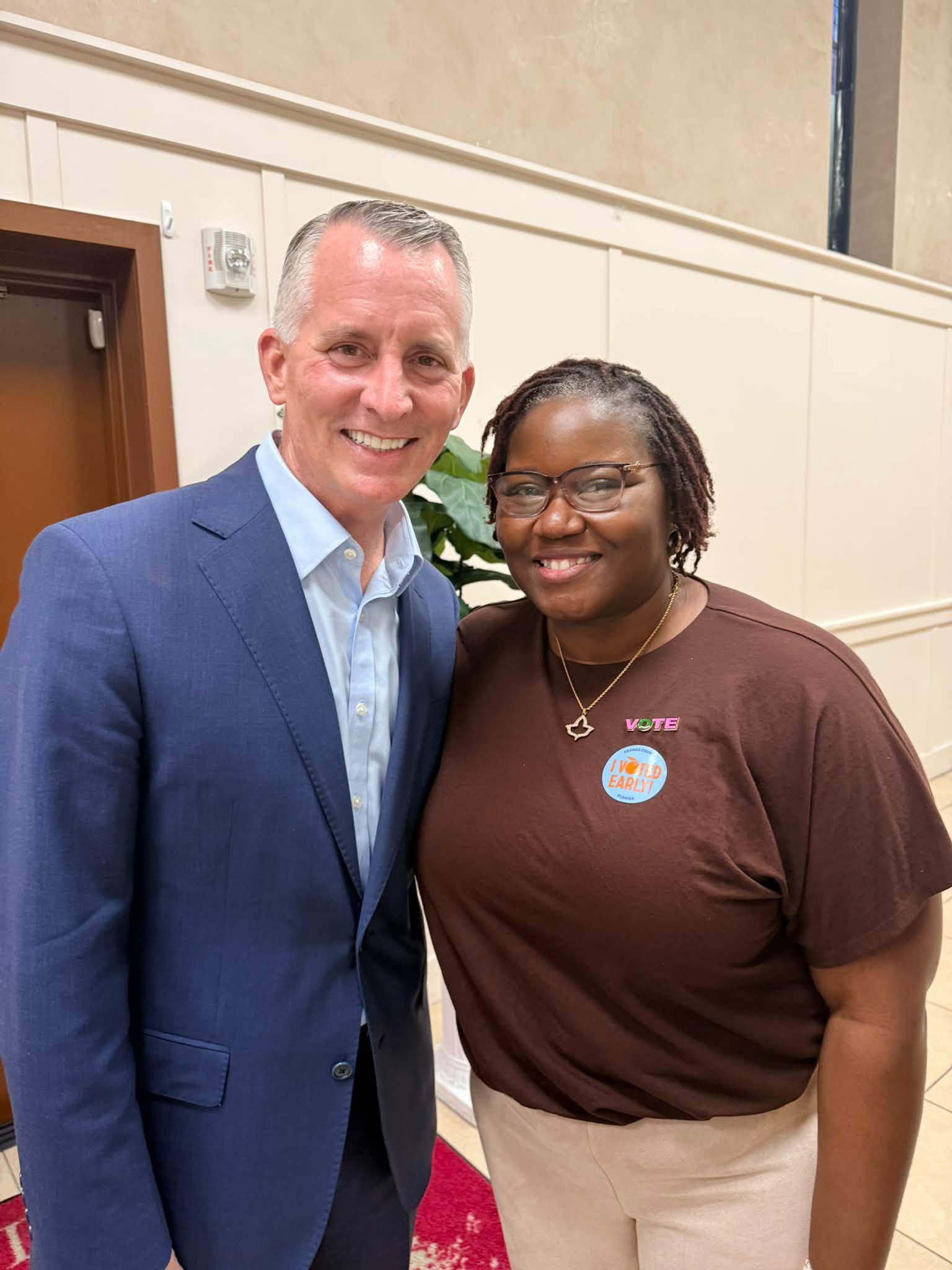
Donalds has secured support from Eatonville Vice Mayor Angela Thomas and Gainesville City Commissioner Cynthia Moore Chestnut, a longtime Democrat. Jolly has assembled a statewide coalition of Black elected officials, religious leaders and policy advisers ahead of the Nov. 3 election.
The endorsements show how individual leaders are approaching the governor’s race. Advertising records would help answer a separate question: How much business are the political operations seeking Black votes directing to Black-owned publishers and broadcasters?

Donalds Gains Endorsements
Thomas endorsed Donalds on Oct. 19, the same day Jolly visited Eatonville for a get-out-the-vote event, according to News 6.
“I am honored to have Vice Mayor Angela Thomas’s support,” Donalds wrote in the Facebook statement announcing her endorsement.
“Eatonville’s story of self-governance is one of the proudest in Florida’s history, and her leadership carries that legacy forward today.”
Donalds connected her support to his message about individual freedom and local decision-making.
“That’s the kind of trust in communities I’ll bring to Tallahassee — letting Floridians run their own lives, not Tallahassee,” he wrote.
Chestnut’s endorsement brought a prominent Black Democratic voice into Donalds’ camp. In a statement published by WCJB, she acknowledged policy disagreements with him while defending her decision to cross party lines.
“I want to see a Black governor of Florida in my lifetime,” Chestnut said.
She also encouraged voters to question Donalds directly about public education, property taxes, voting rights and economic opportunity.
Donalds would become Florida’s first Black governor if elected. Support from individual officials, however, does not establish a statewide shift among Black voters.
Jolly Builds a Black Leadership Coalition
Jolly’s campaign announced a Black leadership coalition Sept. 10 that includes former Jacksonville Mayor Alvin Brown, state Sens. Shevrin Jones and Tracie Davis, former state Sen. Arthenia Joyner and Pinellas County Commissioner Rene Flowers.
The campaign said the group would organize voters, help develop policy and expand community engagement. Jolly’s announced commitments include establishing an office of civil rights, supporting voting rights legislation and opposing restrictions targeting the teaching of Black history.
During his Eatonville visit, Jolly emphasized his responsibility to reach communities throughout Florida.
“Part of running for governor is representing every community across the state,” he told News 6.
A former Republican congressman who later became an independent before joining the Democratic Party, Jolly has made homeowners insurance reform, access to primary health care and public education central campaign issues.
Following the Advertising Dollars
Both political operations have announced substantial advertising efforts.
Florida Politics reported that Friends of Byron Donalds announced a $20 million statewide advertising buy ahead of the August primary. The publication separately reported that Jolly launched a multimillion-dollar statewide advertising effort in September. The announcements cover different periods and political entities and cannot be treated as equivalent spending totals.
Those announcements do not provide a complete accounting of purchases from Black-owned media.
Advertisements aimed at Black voters can run through companies with different ownership structures. Reaching a Black audience does not necessarily mean a campaign purchased advertising from a Black-owned business.
A comparable accounting would identify which Black-owned outlets received payments, how much they received and when. It would include purchases placed through agencies and separate candidate spending from political committee spending.
Without those figures, the available reporting does not establish whether either operation’s investment falls short of a stated commitment or other defined benchmark.
Florida’s Black Media Network
Florida’s established Black press includes The Miami Times in South Florida, the statewide Florida Courier, Daytona Times, The Florida Star in Jacksonville, Florida Sentinel Bulletin in Tampa and The Weekly Challenger in St. Petersburg and Pinellas County.
These publications illustrate the geographic reach of the state’s Black press. Their inclusion is not an audience ranking or a finding that they received advertising from either political operation.
The National Newspaper Publishers Association describes the Black press as a source of community news, information and commentary delivered through print and digital platforms.
Why the Spending Question Matters
For voters, the governor’s race involves representation and decisions affecting insurance costs, schools, health care and civil rights. Endorsements provide one perspective on the candidates; their records and proposals provide another.
Advertising disclosure would add a financial measure of outreach. It would show which Black-owned media businesses received campaign purchases and allow readers to compare those payments with each operation’s overall advertising budget.
As Donalds and Jolly compete for Black support, that accounting would help the public evaluate how their spending decisions align with their community engagement.
Florida National News calls on the Donalds and Jolly campaigns and their affiliated political committees to publicly announce their advertising spending with Black-owned media.
The disclosure should identify outlets, amounts paid, spending periods and purchases placed through agencies. Planned purchases should be listed separately from completed payments.
The same disclosure standard should apply to Democratic and Republican political operations seeking Black voters’ support. Advertising purchases must remain independent of editorial coverage and endorsements.

FORT MYERS, Fla. (FNN) — President Donald Trump is scheduled to hold a midterm rally in Fort Myers on Friday, Oct. 23, bringing his campaign efforts to the congressional district represented by his endorsed candidate for Florida governor, U.S. Rep. Byron Donalds.
Donalds, the Republican nominee, faces Democrat David Jolly in the Nov. 3 election. If elected, Donalds would become Florida’s first Black governor, succeeding term-limited Republican Gov. Ron DeSantis.
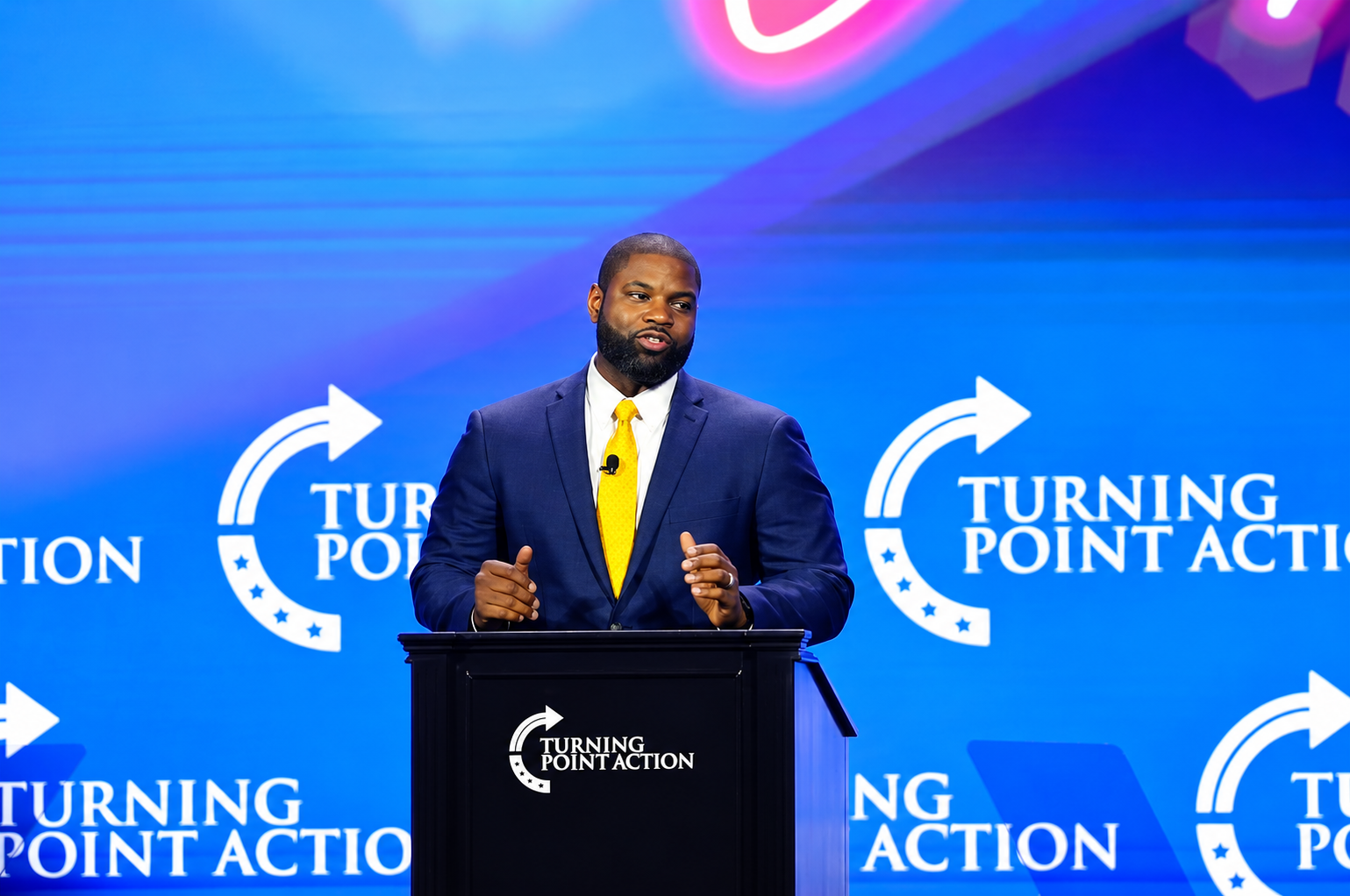
U.S. Rep. Byron Donalds speaks at a Turning Point Action event in Florida. Photo by Roman Garay / Florida National News.
Rally Set for Oct. 23
Trump’s remarks are scheduled to begin at 2 p.m., with doors opening at 10:30 a.m., according to the Republican Party’s event registration page. All times are Eastern.
Gulf Coast News reports that the rally will take place at Alico Arena at Florida Gulf Coast University. However, the official GOP registration page still lists the venue as “To Be Announced.” Attendees should check that page for confirmation and updates.
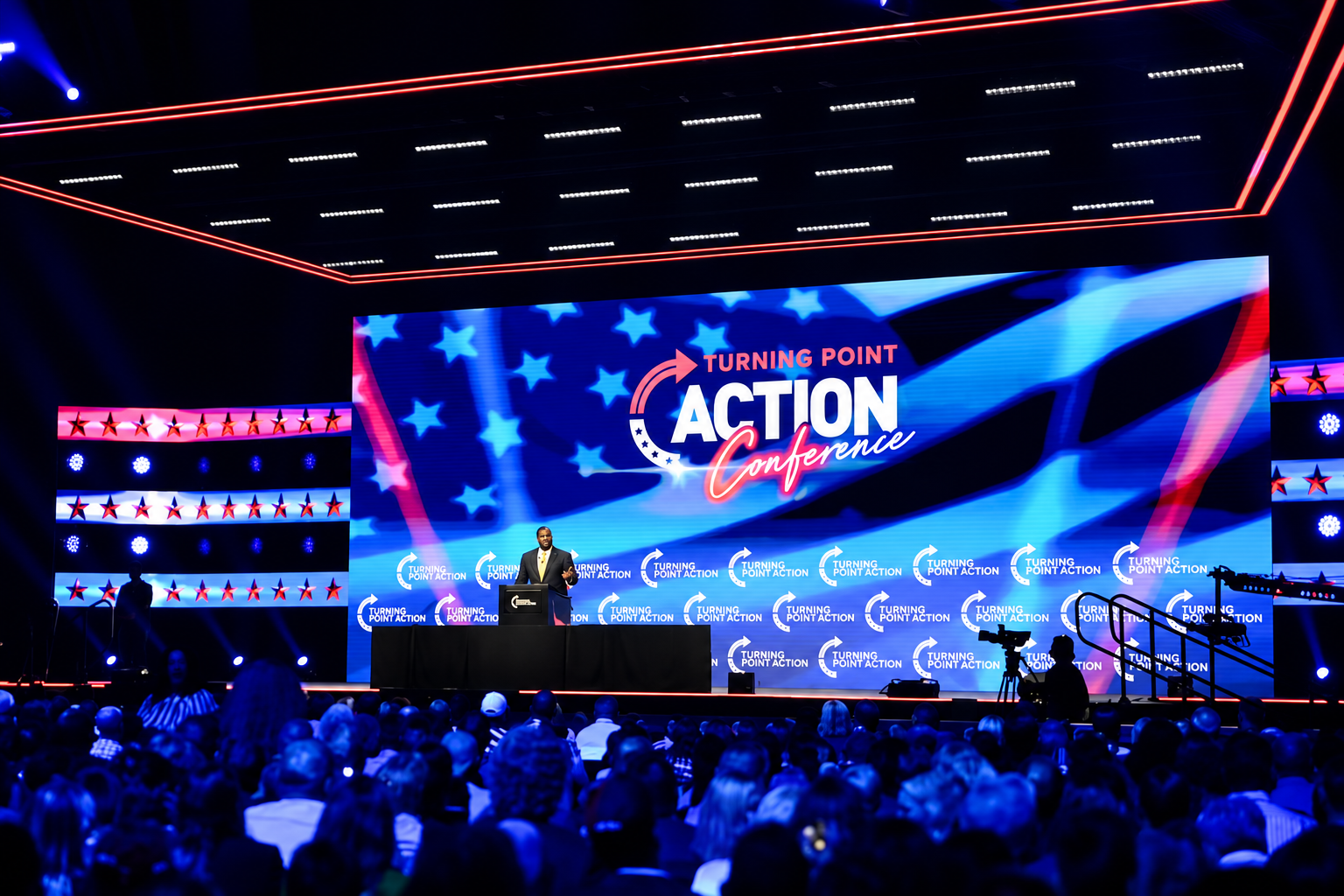
Prominent conservative figures, including Tucker Carlson, then-former President Donald Trump, U.S. Rep. Byron Donalds and Megyn Kelly, rallied Republican voters during the Turning Point Action Conference at the Palm Beach County Convention Center, July 15-16, 2023.
Photo by Roman D. Garay / Florida National News.
Trump’s Endorsement Connects President to Historic Bid
Trump has endorsed Donalds, whose campaign lists the president among its prominent Republican supporters. The Fort Myers visit places Trump in Donalds’ Southwest Florida political base during the closing weeks of the election.
Following his primary victory, Donalds acknowledged Trump’s influence among Republican voters.
“Obviously, he has the strongest following of anybody in our party,” Donalds said, according to Associated Press reporting.
A Donalds victory would give Florida its first Black governor and extend Republican leadership in the governor’s office. Trump’s endorsement connects the president to that potentially historic outcome, although the rally announcement does not identify the event as exclusively supporting Donalds.
Republican Unity and Voter Turnout
Donalds called for Republicans to unite after the primary, telling supporters, “Tonight we are one united Republican Party,” according to the AP.
The Fort Myers rally will provide Trump another platform to address supporters ahead of the Nov. 3 midterm elections. The published event announcement confirms his appearance but does not list additional speakers.
Florida
Civil Rights Group Honors Nobel Peace Prize Winner Navi Pillay, Highlights Florida’s Trayvon Martin Connection

The Orlando-based civil rights association recalls supporting the former U.N. human rights chief’s 2012 call for an investigation into the teenager’s killing in Sanford.
ORLANDO, Fla. (FNN) — The Florida Civil Rights Association is congratulating 2026 Nobel Peace Prize winner Navanethem “Navi” Pillay, recalling her call for an investigation into Trayvon Martin’s killing and the international attention it brought to questions of racial equality and justice in Florida.
The Norwegian Nobel Committee announced Pillay’s selection Oct. 9 for her efforts to promote peace and international law. The South African jurist served as United Nations high commissioner for human rights from 2008 to 2014 and helped shape landmark international court decisions.
In a press release, FCRA President J. Willie David III said Pillay’s intervention connected a Florida family’s demand for answers to a broader concern for human rights.
“Pillay’s call for an investigation reinforced that a family’s demand for justice in Sanford mattered beyond Florida and the United States,” David said.
“We welcomed her intervention in 2012 because families deserve answers and the law must protect everyone equally.”
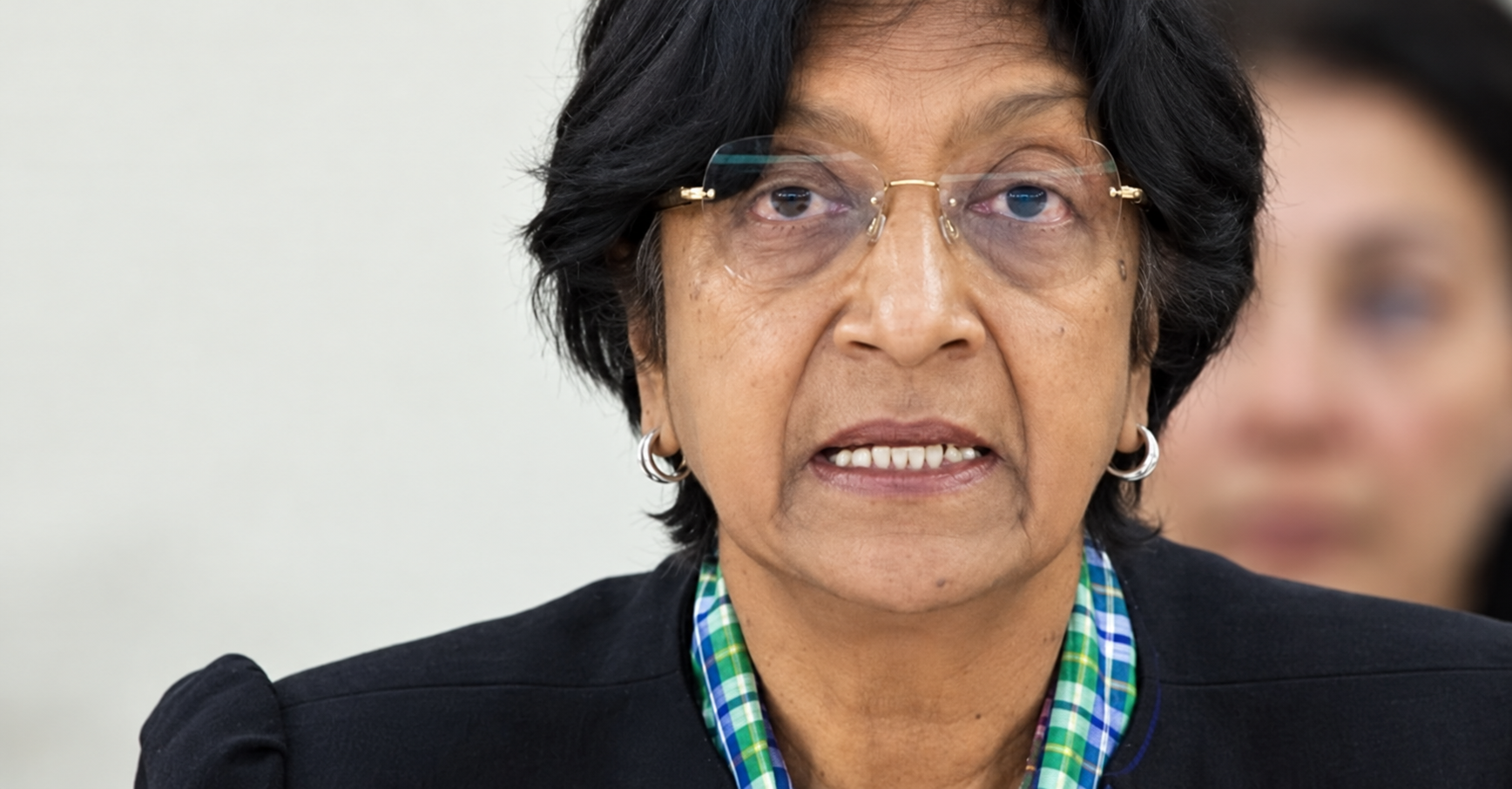
UN Human Rights Commissioner Navi Pillay (Photo credit: UN Photo/Jean-Marc Ferre)
FCRA recalls its response in 2012
Martin, an unarmed Black 17-year-old, was fatally shot by neighborhood watch volunteer George Zimmerman on Feb. 26, 2012, in Sanford, northeast of Orlando.
In April 2012, Pillay called for an immediate investigation into the killing as the case drew international attention and scrutiny of Florida’s Stand Your Ground law.
FCRA welcomed that call. The association’s current release cites an April 7, 2012, West Orlando News report that quoted David discussing the case’s global impact.
“The shooting death of Trayvon Martin and Florida’s Stand Your Ground Law have created a worldwide movement that calls into question how justice is delivered to victims of color,” David said at the time, according to the release.
FCRA describes the activism surrounding Martin’s death as a defining moment that galvanized a new generation of civil rights advocates.
Zimmerman was charged with second-degree murder and acquitted in July 2013. In February 2015, the U.S. Justice Department closed its separate investigation, finding insufficient evidence to pursue federal criminal civil rights charges.
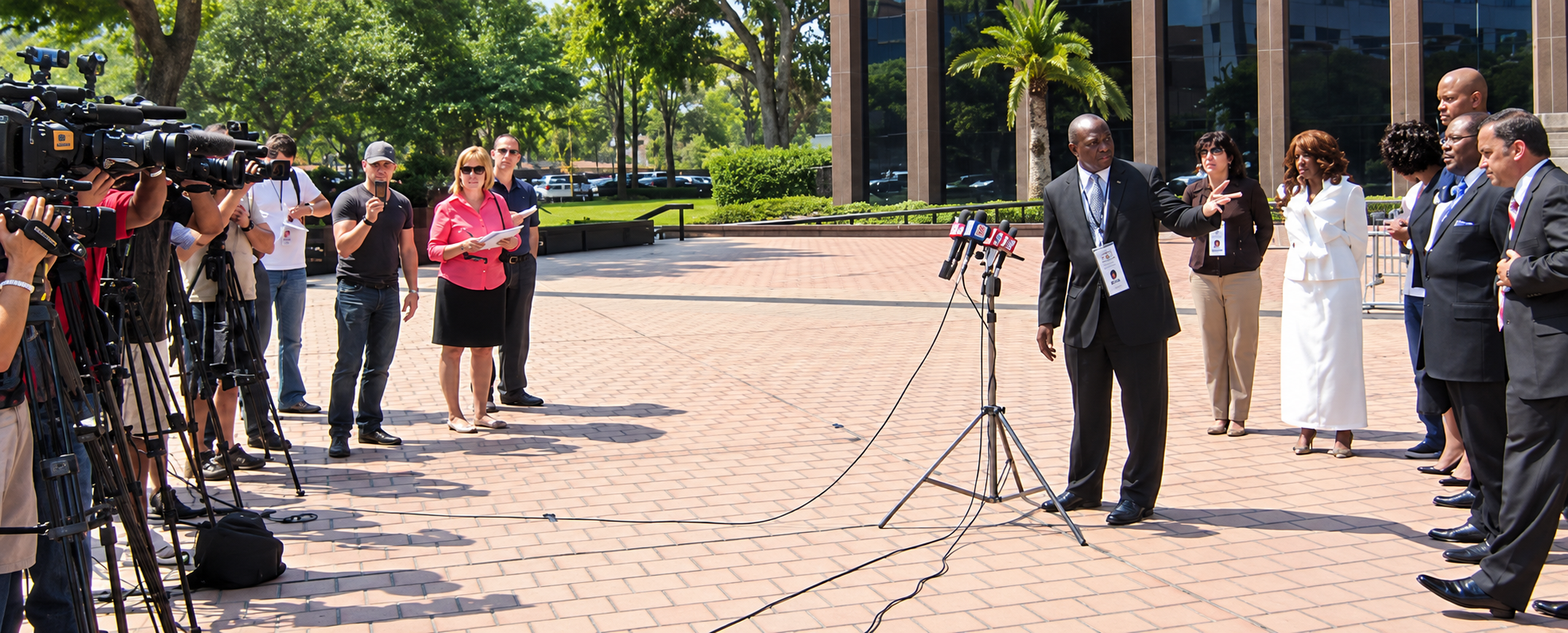
The Florida Civil Rights Association (FCRA) held a press conference outside the State of Florida’s regional offices in Orlando in 2012, calling on then-Gov. Rick Scott to take action following Trayvon Martin’s killing. Photo by FCRA.
Why Florida’s case drew global scrutiny
The Florida connection shows how the handling of a local killing can draw international scrutiny over racial discrimination, access to justice and the protection of human rights.
Pillay’s intervention brought those concerns into the international discussion surrounding Martin’s death. In September 2013, U.N. human rights experts also urged the United States to complete its civil rights investigation and examine concerns about racial profiling.
The significance lies in human rights oversight: how public institutions investigate deaths and provide equal treatment can attract attention beyond national borders. Pillay’s call was an appeal for investigation, rather than an international court judgment about Zimmerman’s guilt or Florida’s compliance with international law.
For FCRA, that connection remains relevant to how Florida leaders evaluate laws and practices affecting the communities they serve.
Pillay’s record in international justice
Pillay challenged discrimination under apartheid before serving on South Africa’s High Court, the International Criminal Tribunal for Rwanda and the International Criminal Court.
At the Rwanda tribunal, she was part of the judicial panel that established that rape and sexual violence can constitute acts of genocide, a landmark development in international criminal law.
David said honoring that career should also encourage accountability at home.
“Her Nobel Peace Prize recognizes a career built on confronting injustice through the rule of law,” he said. “Honoring that work means demanding transparent investigations and equal protection here at home. Rights belong to everyone.”
A renewed call for fairness in Florida
FCRA urged Florida leaders to safeguard impartial investigations, examine whether Stand Your Ground and other laws are applied fairly, and address policies or practices that produce discriminatory outcomes.
Founded in 2005, the association advocates for civil rights, human rights and civil liberties through education, advocacy and accountability. Its statement links Pillay’s international recognition to a continuing demand for fairness and human dignity in Florida.


 Florida5 days ago
Trump Plans Fort Myers Rally as Byron Donalds Seeks to Become Florida’s First Black Governor
 Central Florida News5 days ago
Tiffany Moore Russell Plans Orange County Campaign Stops Ahead of Early Voting
 Politics5 days ago
RNC Chairman Joe Gruters Calls Trump an ‘Absolute Machine’ Ahead of Midterm Elections
 Central Florida News5 days ago
Orlando Magic Beat Miami Heat 136-115 in Preseason Finale Behind Banchero, Bane
 Florida7 hours ago
Donalds, Jolly Court Black Voters In Governor’s Race. How Much Are They Spending With Black-Owned Media?


