Connect with us

Politics

‘Don’t Say Gay’ feud advances with new proposed legislation

Published

on

TALLAHASSEE, Fla. (AP) — Florida lawmakers will move to increase state control of Walt Disney World’s private government, according to a notice published Friday, the latest development in a feud over a law critics have dubbed “Don’t Say Gay.”

The notice posted on the Osceola County website says the Republican-controlled statehouse will take up legislation changing the structure and powers of the Reedy Creek Improvement District, as the 55-year-old Disney government is known.

A bill has not yet been filed detailing exactly what changes would be under consideration. The notice serves as a procedural step in what has become a closely watched process between Disney and Florida.

Republican Gov. Ron DeSantis last year signed legislation that would dissolve the Disney government in June 2023, a moved aimed at punishing the company for its public opposition to a law that bars instruction on sexual orientation and gender identity in kindergarten through third grade and lessons deemed not age appropriate.

Additionally, Disney said it would suspend political donations in the state and that it would support organizations working to oppose the education law.

DeSantis and statehouse Republicans slammed Disney, saying the entertainment giant had become a purveyor of so-called woke ideologies that are inappropriate for children.

The squabble marked a rare moment of discord between the state and Disney, one of Florida’s largest employers and a major political donor. It also provided another front in an ongoing culture war that has made DeSantis one of the nation’s most popular Republicans.

The creation of Reedy Creek district was instrumental in Disney’s decision to build near Orlando in the 1960s. Having a separate government allows the company to provide zoning, fire protection, utilities and infrastructure services on its sprawling property.

The language of Friday’s notice aligns with assurances Republican lawmakers and DeSantis have made regarding the district’s future, including a pledge that the district’s debts and bond obligations would not fall to local county governments.

The notice also says the legislation would intend to increase state accountability of the district, change how its governing body is selected, and revise permitting rules and the district’s regulatory frameworks, among other things.

“Disney will no longer control its own government, will live under the same laws as everyone else, will be responsible for their outstanding debts, and will pay their fair share of taxes,” Taryn Fenske, a spokeswoman for DeSantis, said in a written statement. “Imposing a state-controlled board will also ensure that Orange County cannot use this issue as a pretext to raise taxes on Orange County residents.”

The Legislature is set to meet for its next regular session in March.

Continue Reading
Click to comment

Leave a Reply

Your email address will not be published. Required fields are marked *

Florida

Florida Republicans sweep statewide races; Democrats break House supermajority

Published

on

Republicans retain the governor’s office, all three Cabinet posts, both legislative chambers and both U.S. Senate seats, while Democratic gains end the GOP’s House supermajority.

TALLAHASSEE, Fla. (FNN) — Republicans swept Florida’s statewide races Tuesday and retained control of both legislative chambers, extending Democrats’ statewide losing streak despite gains that ended the GOP’s supermajority in the Florida House.

Republican Byron Donalds defeated Democrat David Jolly for governor, while U.S. Sen. Ashley Moody defeated Democratic state Rep. Angie Nixon. Republicans also won the races for attorney general, chief financial officer and agriculture commissioner. www.fox13news.com

The results preserve Republican control of the governor’s office, all three Cabinet posts and both of Florida’s U.S. Senate seats. Republican Sen. Rick Scott, reelected in 2024, was not on this year’s ballot. www.rickscott.senate.gov

Democrats have not won a statewide election since Nikki Fried captured the agriculture commissioner’s office in 2018. www.wlrn.org

Florida statewide results and winning margins

Unofficial returns available Nov. 4 showed Republicans winning all five statewide contests. The figures reflect separate reporting snapshots; totals and margins may change before certification.

OfficeRepublican: votes (percentage)Democrat: votes (percentage)GOP vote marginMargin in percentage points
GovernorByron Donalds: 4,132,334 (50.02%)David Jolly: 4,024,639 (48.71%)107,6951.31
Attorney generalJames Uthmeier: 4,177,901 (50.93%)Jose Javier Rodriguez: 4,024,563 (49.07%)153,3381.86
Chief financial officerBlaise Ingoglia: 4,151,579 (50.94%)Annette Taddeo: 3,997,932 (49.06%)153,6471.88
Agriculture commissionerWilton Simpson: 4,160,577 (51.08%)Joey Mendoza Atkins: 3,984,621 (48.92%)175,9562.16
U.S. SenateAshley Moody: 4,207,947 (50.87%)Angie Nixon: 3,969,186 (47.99%)238,7612.88

Source: Florida Department of State’s Election Watch. The governor’s race was the closest of the five. Other candidates account for the remaining vote shares where applicable. Governor

Democratic gains end Republican House supermajority

Republicans retained their legislative majorities, but Democratic gains ended the GOP’s House supermajority.

The Florida Democratic Party reported a net gain of 15 House seats and a Republican-to-Democratic flip in Senate District 10, where John Lowndes defeated Jason Brodeur. Florida Democratic Party

Among the House pickups listed by the party were Eric Gray in District 35, Darryl Block in Dist,rict 36, Jane Aman in District 37, Nik Dean in District 38 and Jarod Fox in District 39. Other listed victories included Todd Delmay in District 101 and Lucia Baez-Geller in District 106. Florida Democratic Party

The party’s district list marked 16 House seats as Republican-to-Democratic flips, while its announcement reported a net gain of 15. Gross pickups and net gains measure different things; the net figure also accounts for Democratic losses. News Service of Florida reported Republicans were positioned to recapture House District 87 from Democrat Emily Gregory. Florida Democratic Party

House District 33, where Democrat Daniel McDow faced Republican Monique Miller, remained close enough for a recount, leaving the final legislative tally unsettled. WUSF

Ending the House supermajority limits Republicans’ ability to act without Democratic support on matters requiring a two-thirds vote. Republicans nevertheless retain control of legislative leadership and the ordinary lawmaking agenda. WUSF

GOP registration advantage exceeds 1.5 million

Republicans entered the election with a substantial voter registration advantage.

Florida’s Sept. 30 report listed 5,678,755 active registered Republicans and 4,133,397 Democrats — a Republican lead of 1,545,358. Another 3,345,188 voters had no party affiliation, and 514,782 belonged to minor parties. dos.fl.gov

The GOP’s statewide winning margins were far smaller than its registration advantage. But registration totals do not reveal how individual voters cast their ballots, and the results alone cannot separate the effects of turnout, crossover voting and support from unaffiliated voters.

Gillum’s 2018 showing tops Jolly’s current result

Former Democratic gubernatorial nominee Andrew Gillum received more votes, a larger vote share and a smaller losing margin in 2018 than Jolly recorded in the unofficial 2026 returns.

Gillum received 4,043,723 votes, or approximately 49.19%, against Ron DeSantis’ 4,076,186 votes, or 49.59%. His certified defeat was 32,463 votes, approximately 0.40 percentage points. results.elections.myflorida.com

Jolly’s current tally is 4,024,639 votes, or 48.71%, leaving him 107,695 votes behind Donalds. Governor

Gillum received 19,084 more votes and finished 0.48 percentage points higher than Jolly’s current showing. His losing vote margin was 75,232 smaller.

Jolly, a former Republican congressman, left the GOP in 2018, became an independent and later joined the Democratic Party before launching his gubernatorial campaign in 2025. www.pbs.org

The comparison involves different electorates and political conditions, and Jolly’s totals remain unofficial. It does not establish that his previous Republican affiliation caused his defeat.

Certification still ahead

Florida’s Elections Canvassing Commission is scheduled to certify statewide results Nov. 17. Outstanding ballot processing and any required recounts could change the unofficial totals before then. Time line

Continue Reading

Politics

Voters Give Democrats Congressional Majorities as Affordability and Iran War Shape Trump Rebuke

Published

on

Chuck Schumer raises both fists beside Hakeem Jeffries, with American flags behind them

Hakeem Jeffries and Chuck Schumer prepare for a shift in congressional power, with voters demanding economic relief and stronger presidential oversight while Trump retains his veto.

WASHINGTON (FNN) — Democrats won control of the House and Senate in Tuesday’s midterm elections, delivering a major setback to President Donald Trump and positioning congressional Democratic leaders Hakeem Jeffries and Chuck Schumer to challenge his administration during the final two years of his presidency.

The victories extended into traditionally Republican territory, with economic anxiety and opposition to the Iran war helping reshape the electoral map. Reuters reported Democratic breakthroughs in states including Texas, Kansas and South Carolina.

The results put Democrats in position to control both chambers when the new Congress convenes in January. Several contests remained unresolved Wednesday, leaving the final size of their majorities unsettled.

Jeffries positioned for historic House speakership

The Democratic House victory puts Jeffries, a New York congressman, in line to become the first Black speaker of the House.

His elevation is not automatic. Winning a congressional majority gives Democrats the opportunity to elect the speaker, but Jeffries must secure the necessary support in a House floor vote.

Jeffries will also face the task of uniting moderate and progressive Democrats around an agenda that can survive divided government. Reuters reported that his priorities include addressing affordability and reversing Republican cuts to Medicaid.

“We’re going to fight to make sure that we make this country affordable for every single American,” Jeffries told supporters, according to NPR.

Senate victory expands Democrats’ leverage

The Senate result gives Democrats influence over legislation, presidential nominations and committee investigations.

Schumer, the Senate Democratic leader, described the outcome as a “generational remake of the Senate map,” according to reporting published by WTTW. His leadership position in the incoming Congress remains subject to the Democratic caucus’s selection process.

Democratic Senate victories included Republican-held seats in North Carolina, Ohio, Iowa, Kansas, Texas and South Carolina, according to Roll Call. The gains give the party an opportunity to scrutinize administration nominees and shape the chamber’s agenda.

A majority, however, does not eliminate every procedural obstacle. Under existing Senate rules, ending debate on most legislation generally requires 60 votes, making Republican cooperation important for many proposals.

Affordability crisis moves to the center of the agenda

The election creates pressure on Democrats to demonstrate that congressional control can produce practical relief.

Jeffries has outlined priorities involving affordable housing, education, health care and retirement security. Those subjects reflect the household expenses that helped drive the campaign and will shape expectations for the incoming majority.

But passing bills through Congress and delivering changes in law are separate challenges. Democrats will need agreement between their chambers, a workable approach to federal spending and, in many cases, negotiations with the White House.

Their political test will extend beyond opposition to Trump: Voters will be able to judge whether the new majority advances credible proposals and explains the costs, benefits and obstacles involved.

Iran war raises questions about congressional authority

Opposition to the Iran war helped fuel the Democratic gains, according to Reuters. The outcome increases pressure for congressional scrutiny of military objectives, spending and the administration’s strategy.

For lawmakers seeking to prevent wars they consider unnecessary, Congress has constitutional tools that extend beyond public criticism.

The Constitution gives Congress authority to declare war, raise and support armed forces, and control appropriations. The president serves as commander in chief, creating a division of responsibilities rather than placing every military decision in one branch.

A Democratic Congress could hold hearings, examine the administration’s legal justifications and consider legislation governing military operations or funding. Such measures would face their own legal, procedural and political constraints; an election result alone does not end a conflict.

Trump retains veto power

Trump will remain president, and the change in congressional control does not remove his constitutional authority to veto legislation.

A veto can be overridden only with a two-thirds vote in both the House and Senate. Democratic majorities therefore do not, by themselves, guarantee enactment of their legislative agenda.

Trump signaled resistance to the incoming majority’s proposals after the election, sharing an image of a cap bearing the word “VETO,” according to WTTW’s reporting.

The result sets up negotiations and potential confrontations over spending, domestic programs and national security. Congress can also conduct oversight without first obtaining the president’s agreement to new legislation.

“No king”: Voters seek stronger checks and balances

The election offered evidence of substantial public demand for Congress to exercise greater independence.

About seven in 10 voters said Congress was not doing enough to provide checks and balances on the president, according to the AP Voter Poll. The finding also carries a caution for Democrats: Dissatisfaction with Republican governance does not necessarily translate into unconditional support for the opposing party.

The phrase “no king in America” expresses a principle underlying the constitutional system: Presidential authority exists alongside the powers of Congress and the courts. The same constitutional limits apply regardless of which party controls an institution.

For Jeffries, Schumer and the incoming majorities, the task will be to translate electoral success into accountable government — addressing economic concerns, examining military commitments and exercising congressional authority within the Constitution.

Continue Reading

Central Florida News

HISTORYMAKER: Tiffany Moore Russell makes history as first Black woman elected Orange County mayor

Published

on

Tiffany Moore Russell defeats Chris Messina as housing costs, transportation needs and budget pressures confront the county’s next administration.

ORLANDO, Fla. (FNN) — Tiffany Moore Russell was elected Orange County’s first Black woman mayor Tuesday, adding another milestone to her public service career as she prepares to lead a county confronting housing affordability, transportation demands and difficult spending decisions.

Moore Russell defeated businessman Chris Messina in the nonpartisan runoff to succeed term-limited Mayor Jerry Demings. Unofficial Associated Press results reported by WFTV showed Moore Russell receiving 266,945 votes, or approximately 63%, compared with 158,247 votes, or approximately 37%, for Messina. Results remain unofficial until certified.

Although candidates ran without party labels on the ballot, Moore Russell is a Democrat and Messina is a Republican. Her victory makes her the first Black woman elected to the county’s top executive position.
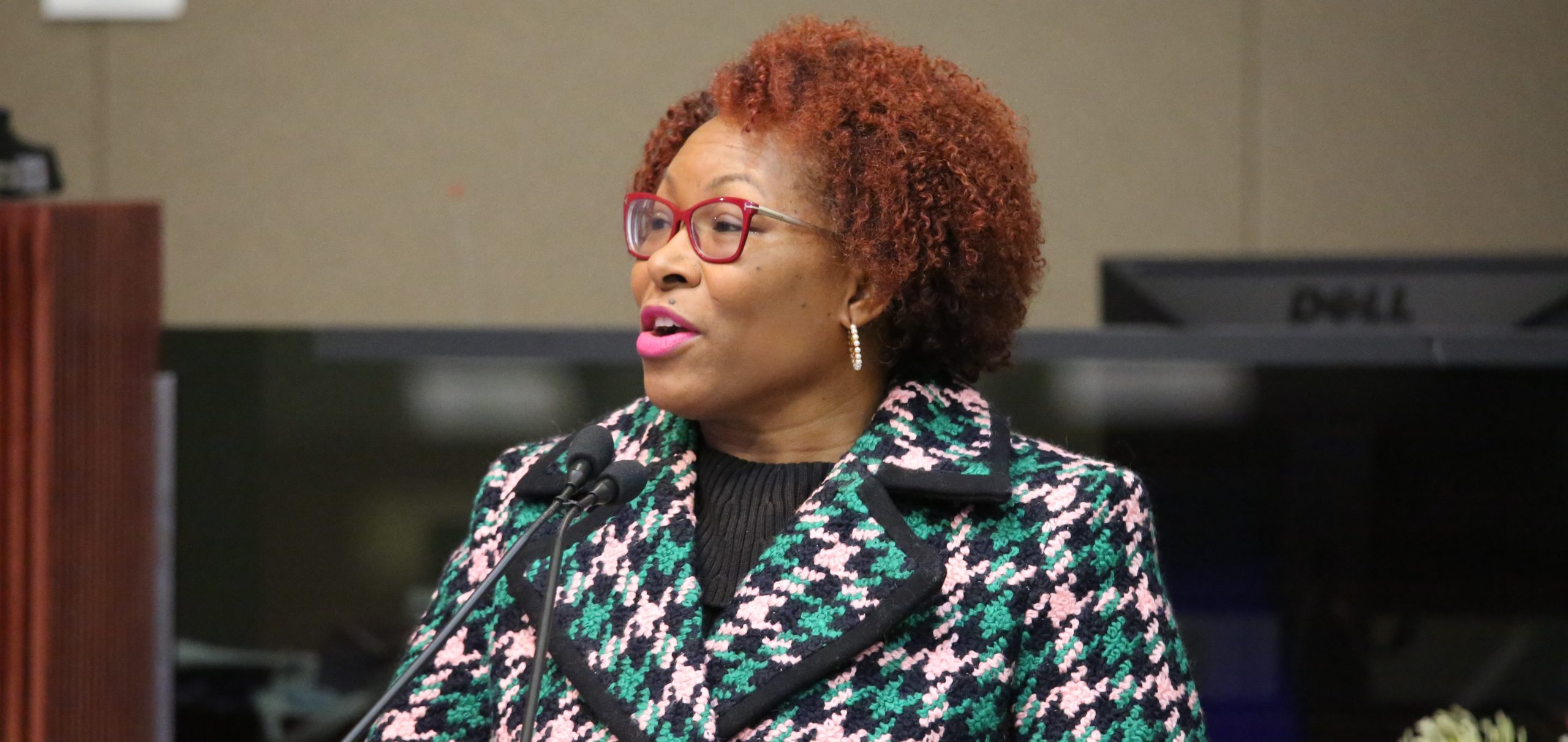
Orange County Clerk of Courts Tiffany Moore Russell speaks at the Orange County State Legislative Delegation. Photo by J Willie David, III / Florida National News

A historic victory with a message for future leaders

Moore Russell described the milestone as an opportunity to inspire young people who might one day seek public office.

“I think we’re still breaking barriers here in this country, and in Florida, and in Orange County,” she said, according to Central Florida Public Media.

The mayor-elect’s career has included other historic achievements. In 2006, she became the youngest person elected to the Orange County Commission. Her election as clerk of courts in 2014 made her the first Black woman elected to that position in Florida.

The latest victory moves her from overseeing court-related services to leading county government, with responsibility for daily operations, thousands of employees and a multibillion-dollar budget. The mayor also represents Orange County in regional discussions involving transportation, tourism and growth.

Housing affordability tops the agenda

For residents struggling to afford rent or purchase a home, the new administration’s housing decisions will be an early measure of its priorities.

Moore Russell identified housing as her leading issue in a candidate questionnaire published by the News Collaborative of Central Florida. She proposed expanding workforce and affordable housing through public-private partnerships, preserving existing affordable homes and encouraging mixed-income development.

Her proposals also called for coordination with municipalities to increase housing options while protecting neighborhoods.

During the campaign, she supported streamlining permitting to encourage affordable housing construction. Turning those proposals into projects will require decisions about development, infrastructure and the use of county resources.

Transportation needs extend beyond road congestion

Improving transportation will be another major challenge as county leaders consider how residents reach jobs, housing and services.

During an October debate, Moore Russell advocated a more connected rail system, including SunRail service seven days a week. Messina emphasized changes to bus operations and technology intended to make trips more direct and less expensive.

Moore Russell also supported seeking greater flexibility to use tourist development tax revenue for transportation and housing for tourism workers. Changing how those dollars can be spent would require action beyond the mayor’s office, including changes to state law.

Budget pressures will test campaign promises

Moore Russell will enter office following county approval of an approximately $9 billion budget. During the campaign, both candidates emphasized fiscal responsibility while offering different approaches to spending and services.

A central disagreement involved Amendment 3, the proposed property-tax measure on the November ballot. Moore Russell opposed it, citing county projections that it could reduce the following year’s budget by approximately $165 million. Messina supported the measure and questioned whether those projections sufficiently accounted for growth.

At the October debate, Moore Russell said potential budget responses included consolidating departments, reviewing hiring and vacant positions, and adjusting the timing of capital projects. Those options illustrate the choices facing an administration seeking to maintain services while controlling expenses.

Experience helped define the runoff

Moore Russell campaigned on her experience as clerk of courts and a former county commissioner. Messina, a technology entrepreneur, argued that the county needed business leadership and a different approach to government.

The two advanced from an August election that also included former U.S. Rep. Stephanie Murphy and County Commissioner Mayra Uribe. No candidate received the majority necessary to avoid a runoff.

Voters ultimately selected Moore Russell to succeed Demings. Her administration will now face the work of translating campaign proposals into housing, transportation and budget decisions affecting communities throughout Orange County.

Continue Reading
Advertisement
Advertisement Ticket Time Machine ad
Advertisement Orlando Regional REALTOR Association logo
Advertisement Parts Pass App
Advertisement Hispanic Chamber of Commerce of Metro Orlando
Advertisement
Advertisement African American Chamber of Commerce of Central Florida
Advertisement FNN News en Español
Advertisement Indian American Chamber of Commerce logo
Advertisement Florida Sports Channel

FNN Newsletter

Trending