

World
Dr. Rudolph Moise Aids Jamaica in Hurricane Melissa Relief as Jack Brewer Foundation Launches U.S. Evacuation Mission


MIAMI, Fla. (FNN) — Dr. Rudolph Moise, a distinguished Air Force Colonel, former Haiti Ambassador-at-Large, and global health care leader, joined the Jack Brewer Foundation on a humanitarian mission to Jamaica to support communities impacted by Hurricane Melissa.
Emergency Relief Mission
Moise joined a team of 20 volunteers on a chartered humanitarian flight to Montego Bay, Jamaica, as part of the Hurricane Melissa response effort. The mission, sponsored by the Jack Brewer Foundation, delivered more than 15,000 pounds of critical aid, including tents, sleeping bags, batteries, pallets of meat, and food supplies intended for the regions hit hardest by the storm.
According to a posting on The Jack Brewer Foundation’s website, the organization is also coordinating an emergency evacuation and rescue mission for U.S. citizens stranded in Jamaica in the aftermath of Hurricane Melissa. Working with government partners and humanitarian agencies, the foundation plans to facilitate safe passage for registered passengers on a special evacuation flight scheduled to depart Wednesday from Montego Bay International Airport (MBJ) to Miami International Airport (MIA).
Priority is being given to families, the elderly, and individuals with medical needs, and all travelers must register individually to ensure proper documentation and seat assignments.

Medical Assistance and Community Support
During the relief mission, Moise provided medical assistance to several individuals in need. He noted the resilience and optimism of Jamaican residents despite widespread damage and loss.
“We came to the Caribbean nation of Jamaica to provide support to its beloved people during this critical time,” Moise said, emphasizing the importance of global cooperation in disaster response. “The Jamaican people are incredibly resilient. This is an all-hands-on-deck effort to confront this crisis, and despite the tremendous losses many have endured, most still managed to greet us with a smile.”
Video clips and photographs from the trip document Moise’s work alongside volunteers as they distributed supplies and assisted local families.
A History of Disaster Response
This relief effort is not Moise’s first humanitarian deployment. In January 2010, he traveled to Haiti with a Disaster Rescue Team just two days after the catastrophic earthquake struck the country. His team saved 11 lives during that mission.
____________________________________________________________________________________________

News@FloridaNationalNews.com

Florida
Civil Rights Group Honors Nobel Peace Prize Winner Navi Pillay, Highlights Florida’s Trayvon Martin Connection


The Orlando-based civil rights association recalls supporting the former U.N. human rights chief’s 2012 call for an investigation into the teenager’s killing in Sanford.
ORLANDO, Fla. (FNN) — The Florida Civil Rights Association is congratulating 2026 Nobel Peace Prize winner Navanethem “Navi” Pillay, recalling her call for an investigation into Trayvon Martin’s killing and the international attention it brought to questions of racial equality and justice in Florida.
The Norwegian Nobel Committee announced Pillay’s selection Oct. 9 for her efforts to promote peace and international law. The South African jurist served as United Nations high commissioner for human rights from 2008 to 2014 and helped shape landmark international court decisions.
In a press release, FCRA President J. Willie David III said Pillay’s intervention connected a Florida family’s demand for answers to a broader concern for human rights.
“Pillay’s call for an investigation reinforced that a family’s demand for justice in Sanford mattered beyond Florida and the United States,” David said.
“We welcomed her intervention in 2012 because families deserve answers and the law must protect everyone equally.”
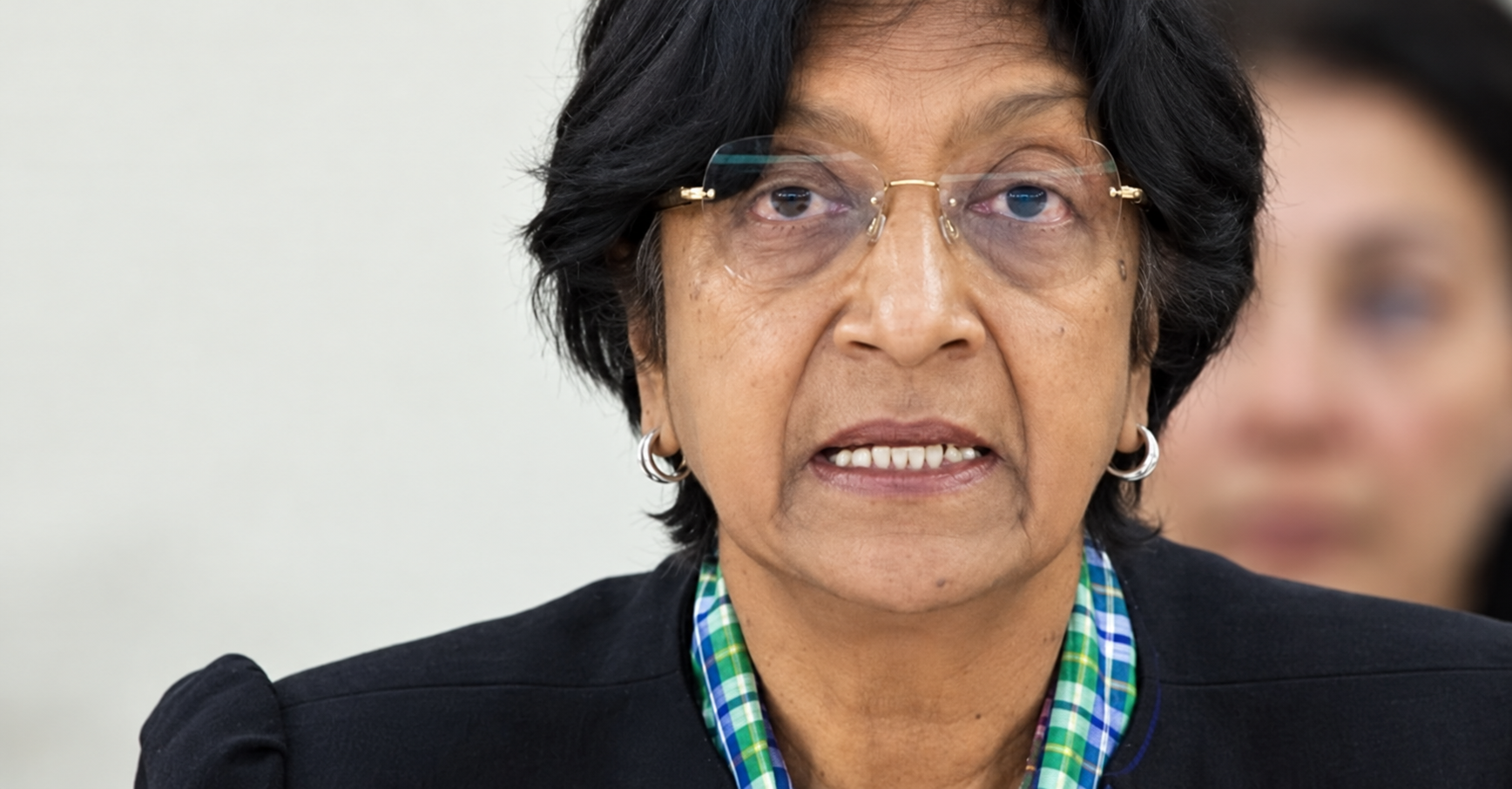
UN Human Rights Commissioner Navi Pillay (Photo credit: UN Photo/Jean-Marc Ferre)
FCRA recalls its response in 2012
Martin, an unarmed Black 17-year-old, was fatally shot by neighborhood watch volunteer George Zimmerman on Feb. 26, 2012, in Sanford, northeast of Orlando.
In April 2012, Pillay called for an immediate investigation into the killing as the case drew international attention and scrutiny of Florida’s Stand Your Ground law.
FCRA welcomed that call. The association’s current release cites an April 7, 2012, West Orlando News report that quoted David discussing the case’s global impact.
“The shooting death of Trayvon Martin and Florida’s Stand Your Ground Law have created a worldwide movement that calls into question how justice is delivered to victims of color,” David said at the time, according to the release.
FCRA describes the activism surrounding Martin’s death as a defining moment that galvanized a new generation of civil rights advocates.
Zimmerman was charged with second-degree murder and acquitted in July 2013. In February 2015, the U.S. Justice Department closed its separate investigation, finding insufficient evidence to pursue federal criminal civil rights charges.
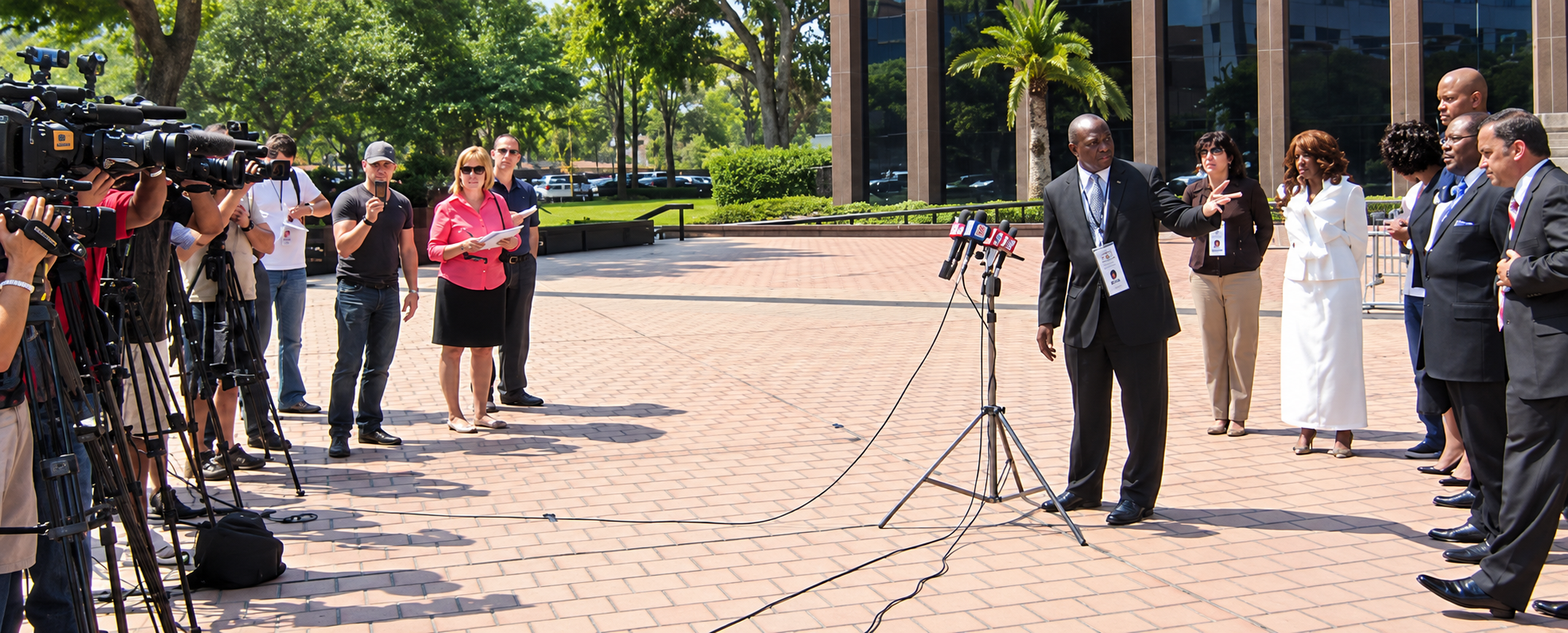
The Florida Civil Rights Association (FCRA) held a press conference outside the State of Florida’s regional offices in Orlando in 2012, calling on then-Gov. Rick Scott to take action following Trayvon Martin’s killing. Photo by FCRA.
Why Florida’s case drew global scrutiny
The Florida connection shows how the handling of a local killing can draw international scrutiny over racial discrimination, access to justice and the protection of human rights.
Pillay’s intervention brought those concerns into the international discussion surrounding Martin’s death. In September 2013, U.N. human rights experts also urged the United States to complete its civil rights investigation and examine concerns about racial profiling.
The significance lies in human rights oversight: how public institutions investigate deaths and provide equal treatment can attract attention beyond national borders. Pillay’s call was an appeal for investigation, rather than an international court judgment about Zimmerman’s guilt or Florida’s compliance with international law.
For FCRA, that connection remains relevant to how Florida leaders evaluate laws and practices affecting the communities they serve.
Pillay’s record in international justice
Pillay challenged discrimination under apartheid before serving on South Africa’s High Court, the International Criminal Tribunal for Rwanda and the International Criminal Court.
At the Rwanda tribunal, she was part of the judicial panel that established that rape and sexual violence can constitute acts of genocide, a landmark development in international criminal law.
David said honoring that career should also encourage accountability at home.
“Her Nobel Peace Prize recognizes a career built on confronting injustice through the rule of law,” he said. “Honoring that work means demanding transparent investigations and equal protection here at home. Rights belong to everyone.”
A renewed call for fairness in Florida
FCRA urged Florida leaders to safeguard impartial investigations, examine whether Stand Your Ground and other laws are applied fairly, and address policies or practices that produce discriminatory outcomes.
Founded in 2005, the association advocates for civil rights, human rights and civil liberties through education, advocacy and accountability. Its statement links Pillay’s international recognition to a continuing demand for fairness and human dignity in Florida.


 Florida5 days ago
Donalds, Jolly Court Black Voters In Governor’s Race. How Much Are They Spending With Black-Owned Media?
 Central Florida News3 days ago
Broadcaster Ray Cruz Santiago Criticizes Samuel Vilchez Santiago With Communist Graphics, Puerto Rican Identity Claims
 Central Florida News4 days ago
Festival of Trees Marks 40 Years With Holiday Displays, Santa Breakfasts and Parties
 Entertainment4 days ago
“4000 Days,” “Frampton” Set for Naples International Film Festival Oct. 24–25
 Business4 days ago
GOAA Highlights Airport Improvements, Approves New Small Business Policies


