

Politics
Empty chair and a prop chicken: Barr skips Mueller hearing


WASHINGTON (AP) — Attorney General William Barr skipped a House hearing Thursday on special counsel Robert Mueller’s Trump-Russia report, escalating an already acrimonious battle between Democrats and President Donald Trump’s Justice Department.
Barr’s decision, made after a disagreement with a House committee over questioning, came the day the department also missed a committee deadline to provide it with a full, unredacted version of Mueller’s report and its underlying evidence. In all, it’s likely to prompt a vote on holding Barr in contempt and possibly the issuance of subpoenas, bringing House Democrats and the Trump administration closer to a prolonged battle in court.
As the hearing opened, lawmakers faced an empty chair with a place card set for Barr. Democratic members of the committee had fun with the spectacle, placing a prop chicken by Barr’s microphone — to underscore their contention that he was afraid to appear — and jokingly looking under the desk to make sure he wasn’t there.
Committee Chairman Jerrold Nadler of New York said that if Barr doesn’t provide the committee “with the information it demands and the respect that it deserves, Mr. Barr’s moment of accountability will come soon enough.”
Republicans were not amused by the antics or Nadler’s tough talk.
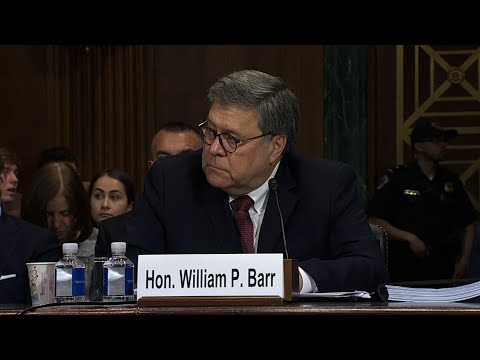
“The reason Bill Barr isn’t here today is because the Democrats decided they didn’t want him here today,” said the top Republican on the panel, Georgia Rep. Doug Collins. Nadler and the Democrats had demanded that staff attorneys in addition to lawmakers be allowed to question Barr. Barr said he wouldn’t attend under that condition.
As Barr refused to testify, Democrats sought to speak to Mueller himself. Nadler said the panel hoped the special counsel would appear before the committee on May 15 and the panel was “firming up the date.”
The attorney general’s cancellation meant he would avoid another round of sharp questioning after testifying Wednesday before the Senate Judiciary Committee. Democrats on the panel contended that Barr was protecting Trump after he assessed Mueller’s report on his own and declared there wasn’t enough evidence that the president had committed obstruction of justice. Mueller didn’t charge Trump with obstruction but wrote that he couldn’t exonerate him, either.
The standoff with the Justice Department is one of several fights House Democrats are waging with the Trump administration. Trump has vowed to fight “all of the subpoenas” as multiple committees have sought to speak with administration officials or obtain documents relevant to his policies and finances. Democrats have signaled they won’t back down and will take the steps necessary — including in court — to get the White House to comply.
House Speaker Nancy Pelosi has said she’s not interested in impeachment, for the moment. But she told The Associated Press on Wednesday that “the threat of impeachment is always there.”
Nadler and the Justice Department traded barbs Wednesday shortly after Barr informed lawmakers of his decision on the hearing, with Nadler saying the attorney general was “trying to blackmail the committee” by setting his own terms.
Also weighing in on the matter of who would ask questions was Trump.
“They want to treat him differently than they have anybody else,” the president told Fox Business Network’s Trish Regan on Wednesday night, adding, “You elect people that are supposed to be able to do their own talking.” Trump said he heard that Barr had performed “incredibly well” before the Senate panel.
It’s unclear whether Barr will eventually negotiate an appearance with the House panel. Nadler said he would not issue a subpoena for Barr’s appearance on Thursday but would first focus on getting the full Mueller report, likely including a vote holding Barr in contempt of Congress.
While a contempt vote would make a strong statement, it is unlikely to force the Justice Department to hand over the report. A vote of the full House on contempt would send a criminal referral to the U.S. attorney for the District of Columbia — a Justice Department official who is likely to defend the administration’s interests. But even if the U.S. attorney declines to prosecute, Democrats could pursue other avenues in court.
In a letter sent to the committee late Wednesday, Assistant Attorney General Stephen Boyd laid out a list of reasons that the department won’t provide the full Mueller report or all the underlying evidence. Boyd said the special counsel’s investigative files include “millions of pages of classified and unclassified documents, bearing upon more than two dozen criminal cases and investigations, many of which are ongoing.” Boyd also reiterated that the department would not disclose secret grand jury material, another battle that could end up in court if Nadler decides to fight it.
The Justice Department has already made a less-redacted version of the report available for a small number of lawmakers, including Nadler and Pelosi, but Democrats have so far declined to read it, saying they want the entire report released to a wider audience.
Republicans objected to Nadler’s demands and say the staff questioning is unnecessary. They argue that Democrats are trying to have impeachment hearings without going through the official process of impeachment.
“Chairman Nadler sabotaged his own hearing,” Collins said. “That’s sad. Because now Republicans and Democrats are not going to be able to question Bill Barr.”


FORT MYERS, Fla. (FNN) — President Donald Trump is scheduled to hold a midterm rally in Fort Myers on Friday, Oct. 23, bringing his campaign efforts to the congressional district represented by his endorsed candidate for Florida governor, U.S. Rep. Byron Donalds.
Donalds, the Republican nominee, faces Democrat David Jolly in the Nov. 3 election. If elected, Donalds would become Florida’s first Black governor, succeeding term-limited Republican Gov. Ron DeSantis.
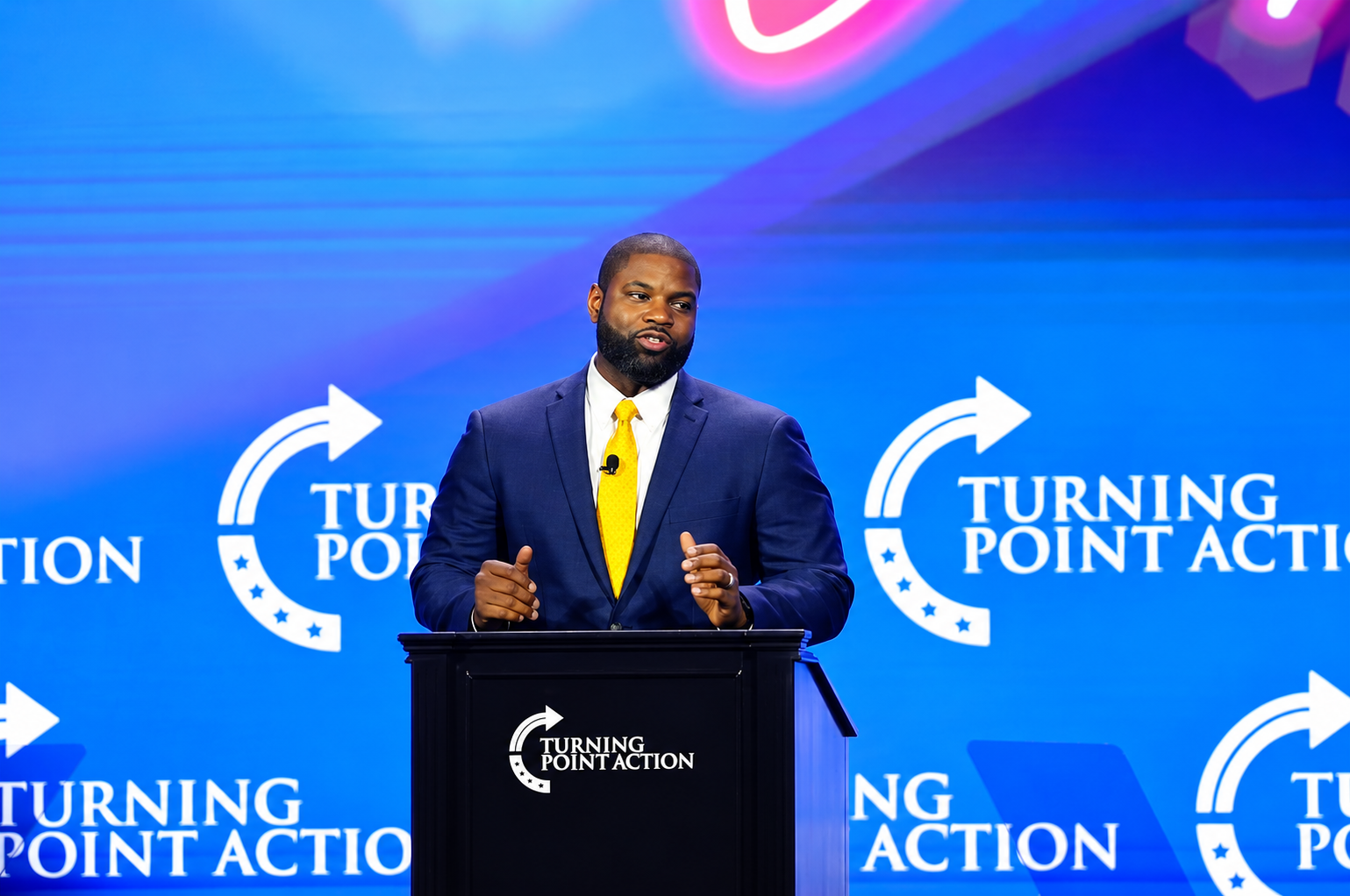
U.S. Rep. Byron Donalds speaks at a Turning Point Action event in Florida. Photo by Roman Garay / Florida National News.
Rally Set for Oct. 23
Trump’s remarks are scheduled to begin at 2 p.m., with doors opening at 10:30 a.m., according to the Republican Party’s event registration page. All times are Eastern.
Gulf Coast News reports that the rally will take place at Alico Arena at Florida Gulf Coast University. However, the official GOP registration page still lists the venue as “To Be Announced.” Attendees should check that page for confirmation and updates.
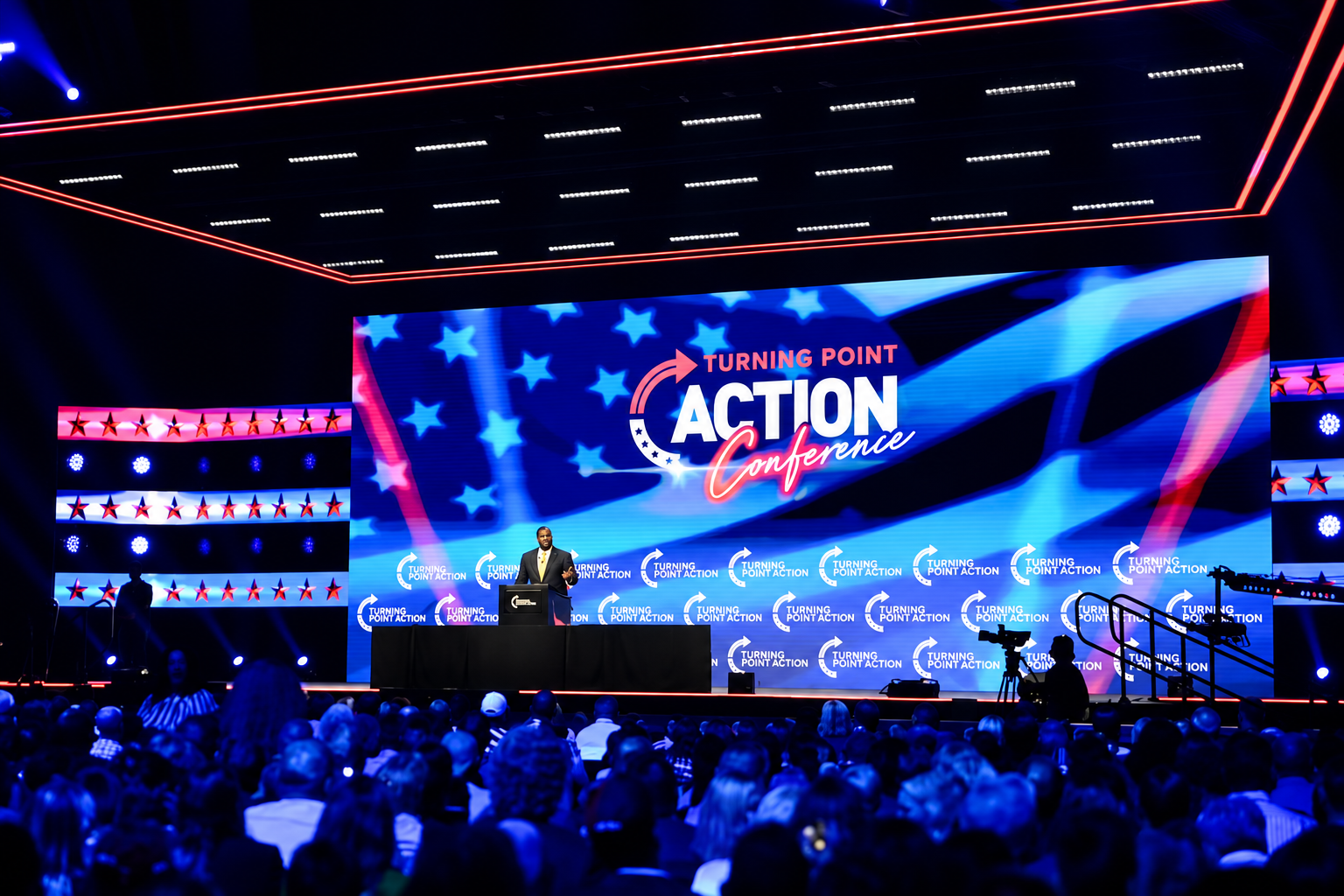
Prominent conservative figures, including Tucker Carlson, then-former President Donald Trump, U.S. Rep. Byron Donalds and Megyn Kelly, rallied Republican voters during the Turning Point Action Conference at the Palm Beach County Convention Center, July 15-16, 2023.
Photo by Roman D. Garay / Florida National News.
Trump’s Endorsement Connects President to Historic Bid
Trump has endorsed Donalds, whose campaign lists the president among its prominent Republican supporters. The Fort Myers visit places Trump in Donalds’ Southwest Florida political base during the closing weeks of the election.
Following his primary victory, Donalds acknowledged Trump’s influence among Republican voters.
“Obviously, he has the strongest following of anybody in our party,” Donalds said, according to Associated Press reporting.
A Donalds victory would give Florida its first Black governor and extend Republican leadership in the governor’s office. Trump’s endorsement connects the president to that potentially historic outcome, although the rally announcement does not identify the event as exclusively supporting Donalds.
Republican Unity and Voter Turnout
Donalds called for Republicans to unite after the primary, telling supporters, “Tonight we are one united Republican Party,” according to the AP.
The Fort Myers rally will provide Trump another platform to address supporters ahead of the Nov. 3 midterm elections. The published event announcement confirms his appearance but does not list additional speakers.


 Central Florida News2 days ago
Tiffany Moore Russell Plans Orange County Campaign Stops Ahead of Early Voting
 Florida2 days ago
Trump Plans Fort Myers Rally as Byron Donalds Seeks to Become Florida’s First Black Governor
 Politics2 days ago
RNC Chairman Joe Gruters Calls Trump an ‘Absolute Machine’ Ahead of Midterm Elections
 Central Florida News2 days ago
Orlando Magic Beat Miami Heat 136-115 in Preseason Finale Behind Banchero, Bane


