Florida
Florida House Democratic Campaign Committee Chair Christine Hunschofsky Faces Lawsuits, Election Complaints
Published
3 months agoon
Who is next? Lawsuits and Florida election complaints put the incoming House Democratic leader’s oversight of political attacks, campaign spending and tactics against former Democratic lawmakers under scrutiny
ORLANDO, Fla. (FNN) — Incoming Florida House Democratic Leader Christine Hunschofsky, a former Parkland mayor is facing growing scrutiny over campaign tactics by the Florida House Democratic Campaign Committee, the party-affiliated committee she chairs, as former Democratic lawmakers challenge political attacks through lawsuits and Florida election complaints.
The disputes are placing increased scrutiny on Christine Hunschofsky, chair of the Florida House Democratic Campaign Committee, and Cassidy Whitaker, the committee’s caucus director for the 2026 election cycle.
The controversy goes beyond ordinary party infighting, with former Democratic lawmakers alleging that FHDCC used opposition research and campaign communications containing false or misleading information to attack members of its own party.
Those allegations raise questions about the committee’s research, approval process and campaign tactics — and whether House Democratic leaders can rebuild trust with lawmakers targeted by the same political organization they are expected to help lead.
Former Democratic lawmakers are now turning to the courts and Florida’s election complaint process to challenge FHDCC-linked campaign tactics, intensifying scrutiny of the committee’s leadership, spending, opposition research and oversight.
The lawsuits and complaints remain allegations. They do not establish that Hunschofsky, FHDCC or others violated the law.
But the controversy is no longer simply an internal Democratic campaign fight.
FHDCC Faces Real Legal Challenges
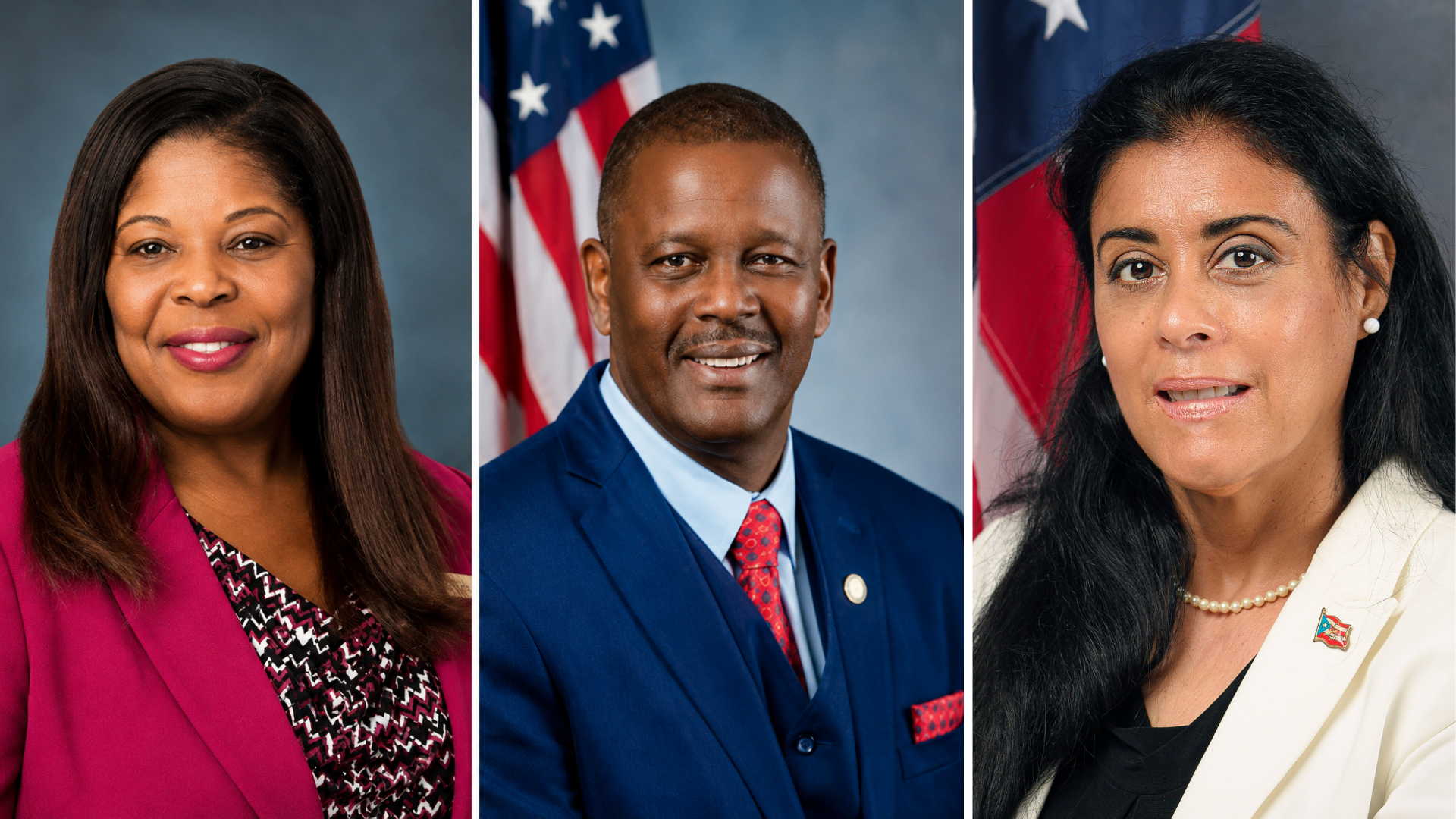
State Representative-Elect and former Democratic state Rep. James Bush III sued FHDCC and other defendants in Miami-Dade County over allegedly defamatory election communications.
Former Democratic state Rep. Daisy Morales has separately challenged campaign communications involving FHDCC through litigation in Orange County and Florida’s election complaint process.
The cases involve separate elections and allegations and must be decided on their individual evidence.
State Rep.-elect Daphne Campbell, a former state senator and former state representative, told Florida National News in a phone interview that she is considering filing a defamation lawsuit as well.
Together, however, they place FHDCC’s campaign practices under greater scrutiny and create a leadership test for Hunschofsky as she prepares to lead Florida House Democrats.
Hunschofsky’s Leadership Under Scrutiny
Hunschofsky’s position as chair does not automatically make her personally liable for every communication, expenditure or decision made by FHDCC.
But leadership brings accountability for how an organization operates.
Political attack campaigns require research, writing, production, vendors, financing and distribution. FHDCC’s internal structure determines how those activities are authorized and supervised.
That makes Hunschofsky’s authority, knowledge and oversight relevant as the committee responds to legal challenges involving its campaign activity.
The central issue is straightforward: What happened under the FHDCC banner, and what responsibility did its leadership have for it?.
Party Establishment vs. Voters’ Choice
The controversy also exposes a deeper tension between party leadership and voters who expect to choose representatives based on the priorities of their communities.
Political parties can recruit, endorse and financially support candidates.
Voters make the final choice.
Heavy intervention by a party organization in a Democratic primary can create the perception that party leaders are trying to make that choice for voters.
That can damage trust when voters believe local experience, constituent service and understanding of their community matter more than the preferences of party leadership.
Democrats Spending Money Fighting Democrats
The internal battles come as Florida Democrats face a larger electoral challenge.
Republicans hold substantial power in Tallahassee, while Democrats need financial resources to compete for legislative seats and statewide offices.
Money spent attacking Democrats in expensive Democratic primaries cannot simultaneously be spent challenging Republicans.
FHDCC has the right to participate in elections within the law. But intraparty battles followed by lawsuits and election complaints create a political question about whether those resources are advancing the committee’s broader mission of electing Democrats.
Minority Democrats and Party Trust
The disputes also involve former minority Democratic lawmakers.
Bush and Campbell are Black. Morales is Puerto Rican, Hispanic.
That does not establish racial or ethnic discrimination by Hunschofsky or FHDCC.
But former minority Democratic lawmakers turning to courts and election regulators over tactics associated with their own party creates a political challenge for Democrats, who depend heavily on Black and Hispanic voters.
Those voters have the same interest as every Florida voter in accurate campaign information, fair elections and political organizations that follow the rules.
A Political Standard That Should Apply to Both Parties
The controversy also creates an uncomfortable comparison for Democrats who have criticized President Donald Trump’s aggressive treatment of political opponents.
The lawsuits and election complaints do not establish that FHDCC copied Trump’s strategy or adopted a “Trump playbook.”
But they raise a broader question of consistency.
Democrats who demand accountability when Republicans exercise political power aggressively should be prepared to apply the same standards to organizations within their own party.
Republicans should do the same when allegations involve their side.
Fairness cannot depend on which party benefits.
From Political Fight to Legal Process
Negative campaigning and opposition research are legal and receive substantial First Amendment protection.
Political committees, however, remain subject to election laws, campaign-finance requirements and civil law.
A lawsuit does not prove defamation.
FHDCC’s separate argument that it cannot be sued.
An election complaint does not prove an election-law violation.
Neither automatically creates a criminal investigation.
If evidence ultimately supports potential criminal conduct, the appropriate law-enforcement agency or prosecutor — not political parties, candidates or news organizations — determines whether an investigation is warranted.
The principle protects everyone: allegations must be proven, due process must be respected and political influence should not shield proven violations.
Who Is Next?
The growing legal disputes leave FHDCC with a political problem extending beyond Bush, Morales and Campbell.
Who is next on the Florida House Democratic Campaign Committee’s target list?
No Democrat is entitled to immunity from legitimate political criticism simply because that candidate belongs to the party.
But candidates should be able to expect political organizations to play by the rules.
The same principle applies to Republicans.
Political organizations can fight hard, expose legitimate weaknesses and spend money advocating for their candidates.
They still have to follow the law.
Hunschofsky Faces a Leadership Test
Hunschofsky is not watching the controversy from outside the organization.
She chairs the Florida House Democratic Campaign Committee while preparing to lead Florida House Democrats, including minority Democratic lawmakers who were targeted by the committee’s campaign attacks.
The lawsuits and election complaints therefore put FHDCC’s governance, campaign strategy and financial oversight directly within the public debate surrounding her leadership.
The courts will determine the civil allegations before them. Election regulators will determine matters within their jurisdiction. If evidence independently supports potential criminal violations, law-enforcement authorities can determine whether an investigation is warranted.
For Hunschofsky, the leadership test is whether the committee she chairs can defend its campaign practices, account for its spending and maintain the trust of Democratic voters while the allegations move through Florida’s courts and election-enforcement system.
The lawsuits and election complaints remain allegations. They are not findings that Hunschofsky or FHDCC violated the law.
For Florida voters, the standard should be simple:
Play by the rules. Follow the evidence. Apply the law equally.
Florida National News is seeking comment from Hunschofsky and FHDCC regarding the lawsuits, election complaints, campaign spending and committee oversight. FNN will update this report with responses and significant developments.
You may like

FNN PERSPECTIVE | Byron Donalds Visits ONYX Gala in Orlando: Could Orange County Help Him Win Florida’s Governor’s Race?

FNN Perspective: Black Leaders Back Byron Donalds for Governor. Will More Black and Hispanic Leaders Follow?

State House Democratic Nominee Samuel Vilchez Santiago Faces Defamation Lawsuit, Election Law Investigation
Entertainment
Florida Strawberry Festival Announces 2027 Lineup Featuring Becky G, Shaboozey, 38 Special and more
Published
2 weeks agoon
November 13, 2026
The March 4–14 festival in Plant City will feature country, rock, pop and faith-based performers, with advance admission and concert tickets available beginning Dec. 10.
PLANT CITY, Fla. (FNN) — Becky G, Shaboozey, 38 Special, Styx and Train are among the performers announced for the 2027 Florida Strawberry Festival, which runs March 4–14 in Plant City.
The Wish Farms Soundstage lineup brings together established favorites and emerging performers across country, rock, pop, R&B and faith-based music. Other scheduled acts include The Oak Ridge Boys, Tanya Tucker, Travis Tritt, Charlie Wilson and Jamey Johnson.
“A Timeless Tradition”
The festival’s 2027 theme, “A Timeless Tradition,” celebrates its connection to generations of families and visitors.
Florida Strawberry Festival President Kyle Robinson said the entertainment schedule reflects that connection while offering a variety of musical styles.
“From longtime favorites to some of today’s most exciting artists, there is something for everyone to enjoy,” Robinson said in the announcement.
Country fans can catch Lorrie Morgan, Max McNown and Hudson Westbrook with McCoy Moore. The Roots & Boots show will feature Sammy Kershaw, Collin Raye and Aaron Tippin.
Rock performances include Styx, 38 Special and Grand Funk Railroad. Micky Dolenz will present “60 Years of The Monkees,” while Josiah Queen and
Maverick City are also scheduled.
Complete announced headline concert schedule
All dates are in 2027, with times local to Plant City.
| Date | Time | Performer |
|---|---|---|
| Thursday, March 4 | 3:30 p.m. | The Oak Ridge Boys |
| Thursday, March 4 | 7:30 p.m. | Styx |
| Friday, March 5 | 3:30 p.m. | Tommy James & The Shondells |
| Friday, March 5 | 7:30 p.m. | Josiah Queen |
| Saturday, March 6 | 3:30 p.m. | Shaboozey |
| Saturday, March 6 | 7:30 p.m. | Max McNown |
| Sunday, March 7 | 6:30 p.m. | Hudson Westbrook with McCoy Moore |
| Monday, March 8 | 3:30 p.m. | Tanya Tucker |
| Monday, March 8 | 7:30 p.m. | Maverick City |
| Tuesday, March 9 | 3:30 p.m. | Roots & Boots featuring Sammy Kershaw, Collin Raye and Aaron Tippin |
| Tuesday, March 9 | 7:30 p.m. | Travis Tritt |
| Wednesday, March 10 | 3:30 p.m. | Micky Dolenz: 60 Years of The Monkees |
| Wednesday, March 10 | 7:30 p.m. | 38 Special |
| Thursday, March 11 | 3:30 p.m. | Grand Funk Railroad |
| Thursday, March 11 | 7:30 p.m. | Charlie Wilson |
| Friday, March 12 | 3:30 p.m. | Lorrie Morgan |
| Friday, March 12 | 7:30 p.m. | Becky G |
| Saturday, March 13 | 7:30 p.m. | Jamey Johnson |
| Sunday, March 14 | 7:30 p.m. | Train |
Schedule provided in the festival announcement supplied to FNN.
Tickets go on sale Dec. 10
Advance tickets for festival gate admission and headline concerts go on sale Thursday, Dec. 10, 2026, at 8 a.m. Eastern time.
Tickets will be available through:
- In person: Amscot Main Ticket Office, 2209 W. Oak Ave., Plant City.
- Online: flstrawberryfestival.com.
- Mobile: The Florida Strawberry Festival app.
- Phone: 813-754-1996.
Concert tickets do not include festival gate admission. Guests must also purchase admission to enter the festival. The festival’s official entertainment page confirms the Dec. 10 concert-ticket launch. Florida Strawberry Festival
What’s next?
Fans can review the concert schedule and plan their purchases ahead of the ticket launch. Visit the festival’s official website for current event information and ticket availability.
Stay connected to Florida National News for music, concert and entertainment coverage across Florida.
Florida
Sam Garrison Proposes Florida House Committees on Technology, Public Integrity and Long-Term Policy
Published
3 weeks agoon
November 5, 2026The speaker-designate’s proposed structure would create a Policy & Strategy Committee, elevate technology oversight and reestablish a committee focused on ethics and public corruption.
TALLAHASSEE, Fla. (FNN) — Florida House Speaker-designate Sam Garrison outlined proposed changes to the chamber’s committee structure Thursday, calling for greater attention to long-term policy, artificial intelligence, cybersecurity and public integrity during the 2026-28 legislative term.
In a Nov. 5 memorandum to House members provided to Florida National News, Garrison said the proposal preserves most of the existing structure while making changes intended to improve coordination and examine the lasting consequences of legislative decisions.
“I am committed to making committee time meaningful,” Garrison wrote. “I want you to dig into ideas, hear from the public, and truly study your colleagues’ bills because behind every bill, every policy, and every budget item are people — our people.”
New Committee Would Examine Long-Term Policy and Costs
Garrison proposed creating a Policy & Strategy Committee to coordinate major initiatives involving multiple committees or state agencies.
The committee would draw on the expertise of subject-matter committees to examine how major reforms would operate and what they would cost. Its proposed jurisdiction includes long-range planning and fiscal stability, and it could consider legislation with a fiscal impact.
Garrison said the committee would provide a forum for considering challenges that extend beyond an individual legislative session or term.
“I want the House to consider where Florida needs to be in five or 10 or 20 years and what steps we should take now to get there,” he wrote.
Technology Oversight Would Become a Full Committee
The proposed Advanced Technology & Digital Security Committee would replace the previous term’s Information Technology Budget & Policy Subcommittee.
The full committee would focus on state technology governance and modernization, including agencies’ ability to implement legislation. Its responsibilities would also include:
- Artificial intelligence and emerging technologies.
- Cybersecurity and digital privacy.
- Data governance.
- Critical infrastructure security.
Garrison distinguished the committee’s policy and oversight responsibilities from spending decisions. The Appropriations Committee and its subcommittees would continue to consider technology funding.
“These issues affect both state government and the Floridians and businesses that rely on technology every day,” Garrison wrote.
He said the goal is to make informed technology decisions that prevent costly failures.
Public Integrity Committee Would Return
Garrison also proposed reestablishing the Public Integrity Committee, emphasizing ethics, integrity and investigations into public corruption.
The committee would consider related matters involving lobbying, financial disclosure and conflicts of interest.
“Floridians should be able to trust their government to act in the public interest,” Garrison wrote. “A dedicated committee will allow Members to examine the laws and standards that protect that trust.”
The Rules & Calendar Committee would retain responsibility for House rules, floor procedures and member conduct, according to the memorandum.
Most of the Existing Structure Would Remain
Garrison said most of the current committee structure would remain intact. Other changes would update committee names and bring related issues under shared jurisdictions.
The proposed adjustments are intended to help lawmakers examine connections among state policy, local decisions and their effects on residents.
The memorandum referred members to attached documents detailing the proposed structure and jurisdictions. It did not identify committee chairs or member assignments.
Public Input and Legislative Review Emphasized
Garrison urged members to use committee meetings to hear from the public, examine their colleagues’ proposals and consider the people affected by legislation and spending decisions.
“Our committee process should give you the opportunity to contribute and every proposal the careful consideration it deserves,” he wrote. “I look forward to working with you over the next two years.”
Florida
DeSantis’ Political Star Rises as Florida GOP Holds Statewide Offices Amid National Defeats
Published
3 weeks agoon
November 5, 2026Republicans retain Florida’s statewide leadership despite Democratic gains in the Legislature, giving the outgoing governor a platform in the debate over the GOP’s future.
TALLAHASSEE, Fla. (FNN) — Gov. Ron DeSantis pointed to Florida’s Republican victories Wednesday as evidence that his governing approach helped withstand a national Democratic surge, highlighting the state as a remaining Republican stronghold after major defeats elsewhere.
Speaking a day after the election, DeSantis described the national Republican losses as approaching an “extinction-level event.” He contrasted those setbacks with Florida, where Republicans retained the governor’s office, all three Cabinet offices and the U.S. Senate seat on the ballot. abcnews.com
The results give DeSantis a platform to promote his record as Republicans assess their future. However, narrower statewide margins and Democratic legislative gains complicate any claim of an unqualified Republican mandate.
Florida Holds Statewide Republican Leadership
Republican Byron Donalds defeated Democrat David Jolly for governor, while U.S. Sen. Ashley Moody defeated Democratic challenger Angie Nixon. Republicans also won the races for attorney general, chief financial officer and agriculture commissioner.
The sweep left Florida Democrats without a statewide victory despite a more favorable national environment for their party. floridaphoenix.com
DeSantis, who was not on the ballot, argued that Florida Republicans benefited from the record established during his administration. His assessment places the state’s performance at the center of a broader question: What can Republicans learn from the places where they retained power?
DeSantis’ Political Star Gains Visibility
DeSantis’ remarks offered a defense of his governing approach as Republicans confronted the election’s consequences.
He credited Florida’s resilience to policy achievements and voter trust, while emphasizing that his immediate focus remained completing his term. wusf.org
Florida’s results strengthen his opportunity to participate in the national leadership debate. They do not, by themselves, establish that Republican voters have chosen him to lead the party or that he will launch another presidential campaign.
The distinction matters: Electoral success in Florida provides a political argument, while a national campaign would require support extending well beyond the state.
Texas Defeats Increase Florida’s Importance
DeSantis singled out Texas as a particularly consequential Republican setback. Once a dependable foundation of GOP strength, Texas delivered Democratic victories in the governor’s race, a U.S. Senate contest and other statewide offices.
He warned that those losses could weaken Republicans nationally for years. www.orlandoweekly.com
Against that backdrop, Florida’s Republican sweep gives its leaders greater prominence. The state’s emerging role as a Republican “Southern Star” is an interpretation of that contrast, rather than a designation DeSantis used.
For the outgoing governor, Florida offers evidence of political durability during a difficult election. For the national party, it offers a case to examine alongside the states where Republican support collapsed.
DeSantis Credits Amendment 3 With Turnout
DeSantis also credited voter-approved Amendment 3, the property tax measure, with attracting voters who subsequently supported Republican candidates.
He said implementation would require further legislative action and discussed protecting homeowners’ savings from being offset by other local charges. cbs12.com
His explanation remains an assessment of the election. Determining how much the amendment affected turnout and individual races would require additional analysis.
Democratic Legislative Gains Temper GOP Celebration
Florida’s statewide sweep did not prevent Republican losses elsewhere on the ballot.
Democrats gained seats in the Legislature and ended the Republican supermajority in the state House. Their leaders argued that the close statewide contests demonstrated Florida remained competitive and warranted greater national investment. floridaphoenix.com
Republicans therefore emerged with continued governing authority but less room for complacency. Retaining statewide offices and losing legislative ground are both part of the election’s outcome.
2018 Offers Democrats a Benchmark
Florida Democrats’ 2018 results provide a historical comparison between narrowly losing a statewide contest and winning governing authority.
Republican Ron DeSantis won the governor’s race with 4,076,186 votes, or 49.6%, while Democrat Andrew Gillum received 4,043,723 votes, or 49.2%. DeSantis prevailed by 32,463 votes, approximately 0.4 percentage points. results.elections.myflorida.com
In the agriculture commissioner’s race, Democrat Nikki Fried won 4,032,954 votes, or 50.04%, defeating Republican Matt Caldwell, who received 4,026,201 votes, or 49.96%. Fried’s winning margin was 6,753 votes, approximately 0.08 percentage points. uselectionatlas.org
| 2018 statewide race | Candidate | Party | Votes | Percentage |
|---|---|---|---|---|
| Governor | Ron DeSantis — winner | Republican | 4,076,186 | 49.6% |
| Governor | Andrew Gillum | Democratic | 4,043,723 | 49.2% |
| Agriculture commissioner | Nikki Fried — winner | Democratic | 4,032,954 | 50.04% |
| Agriculture commissioner | Matt Caldwell | Republican | 4,026,201 | 49.96% |
Table lists the two leading candidates in each race. Governor’s percentages include votes cast for other candidates. results.elections.myflorida.com
Those results give substance to the discussion about investment and competitiveness. Campaign funding can support organization and outreach, but these election totals alone do not establish how much national spending influenced either outcome.
Gillum nearly captured the governor’s office; Fried secured a statewide Cabinet seat. That difference remains central to evaluating political progress: Smaller losing margins can indicate opportunity, while victories determine who exercises authority.
A Stronger Platform, With Challenges Ahead
Florida’s results give DeSantis a stronger position from which to argue that his approach deserves attention within the Republican Party.
Yet the election also supplied a warning for his party at home. Republicans preserved statewide leadership while Democrats demonstrated greater strength in legislative contests.
As Donalds prepares to succeed him, DeSantis leaves with Florida’s Republican governing structure intact. Whether that record becomes the foundation for a larger national role will depend on how Republican voters and leaders respond to the party’s defeats.