

US NATIONAL NEWS
Former Trump Impeachment Manager Val Demings Calls Trump Officials’ Response to War Plans Leak “A Shameless Mountain of Lies”


WASHINGTON (FNN) – A major national security scandal has erupted after top officials from President Donald Trump’s administration reportedly shared classified U.S. military strike plans in a private Signal chat, raising alarms about national security breaches and possible legal violations.

Former Trump Impeachment Manager Val Demings Speaks Out
Former U.S. Congresswoman Val Demings, who served as a Trump impeachment manager, strongly condemned the breach, describing it as “a shameless mountain of lies” and a reckless compromise of military strategy.
“As a former member of the Intelligence and Homeland Security committees, the thought of these people sharing strategic military operations on Signal is shocking. Those who testified before the Senate were under oath. Power built on endless lies is not power at all—it’s a house of cards. America, this will end badly unless you demand better,” Demings wrote in a statement on her personal Facebook page.

Val Demings is a former U.S. Congresswoman, former Trump Impeachment Manager, former member of the Intelligence and Homeland Security Committees, and retired Orlando Chief of Police.
Details of the Leaked War Plans
The National Security Council has confirmed the authenticity of the leaked messages, which included classified operational details of upcoming U.S. military strikes on Iran-backed Houthi rebels in Yemen. The leaked documents allegedly contained:
- Target locations for military strikes
- Weapon deployment strategies
- Attack sequencing and operational details
The sensitive war plans were reportedly shared with The Atlantic’s editor-in-chief, Jeffrey Goldberg, in a private Signal group chat involving:
Defense Secretary Pete Hegseth
Vice President JD Vance
National Security Advisor Mike Waltz
Possible Violations of Federal Laws & National Security Rules
The unauthorized disclosure of sensitive military operations may violate multiple federal laws, including:
- Espionage Act (18 U.S. Code § 793) – Unlawful disclosure of classified national defense information
- Presidential Records Act – Mishandling of government records and sensitive communications
- Federal Records Act – Unauthorized sharing of government communications
- Insider Threat Program Violations – Breach of classified intelligence security measures
- UCMJ (Uniform Code of Military Justice) Violations – If military personnel were involved in the leak
Congress Calls for Full Investigation
Bipartisan leaders in both the Senate and House are calling for an investigation into the war plans leak. Lawmakers are demanding:
- Public hearings to address the security breach
- Testimony from top Trump officials named in the leak
- Legal consequences for those responsible
During the Senate Intelligence Committee hearing, Vice Chair Mark Warner (D-VA) described the actions of the nation’s top intelligence officials as “sloppy, careless, incompetent behavior.”
“If this was the case of a military officer or an intelligence officer and they had this kind of behavior, they would be fired,” he said.
What’s Next?
- Congressional Hearings on the national security breach
- Potential criminal charges for those responsible
- Wider political fallout for Trump’s national security team
_________________________________________________________________________
Florida National New
news@FloridaNationalNews.com


FORT MYERS, Fla. (FNN) — President Donald Trump is scheduled to hold a midterm rally in Fort Myers on Friday, Oct. 23, bringing his campaign efforts to the congressional district represented by his endorsed candidate for Florida governor, U.S. Rep. Byron Donalds.
Donalds, the Republican nominee, faces Democrat David Jolly in the Nov. 3 election. If elected, Donalds would become Florida’s first Black governor, succeeding term-limited Republican Gov. Ron DeSantis.
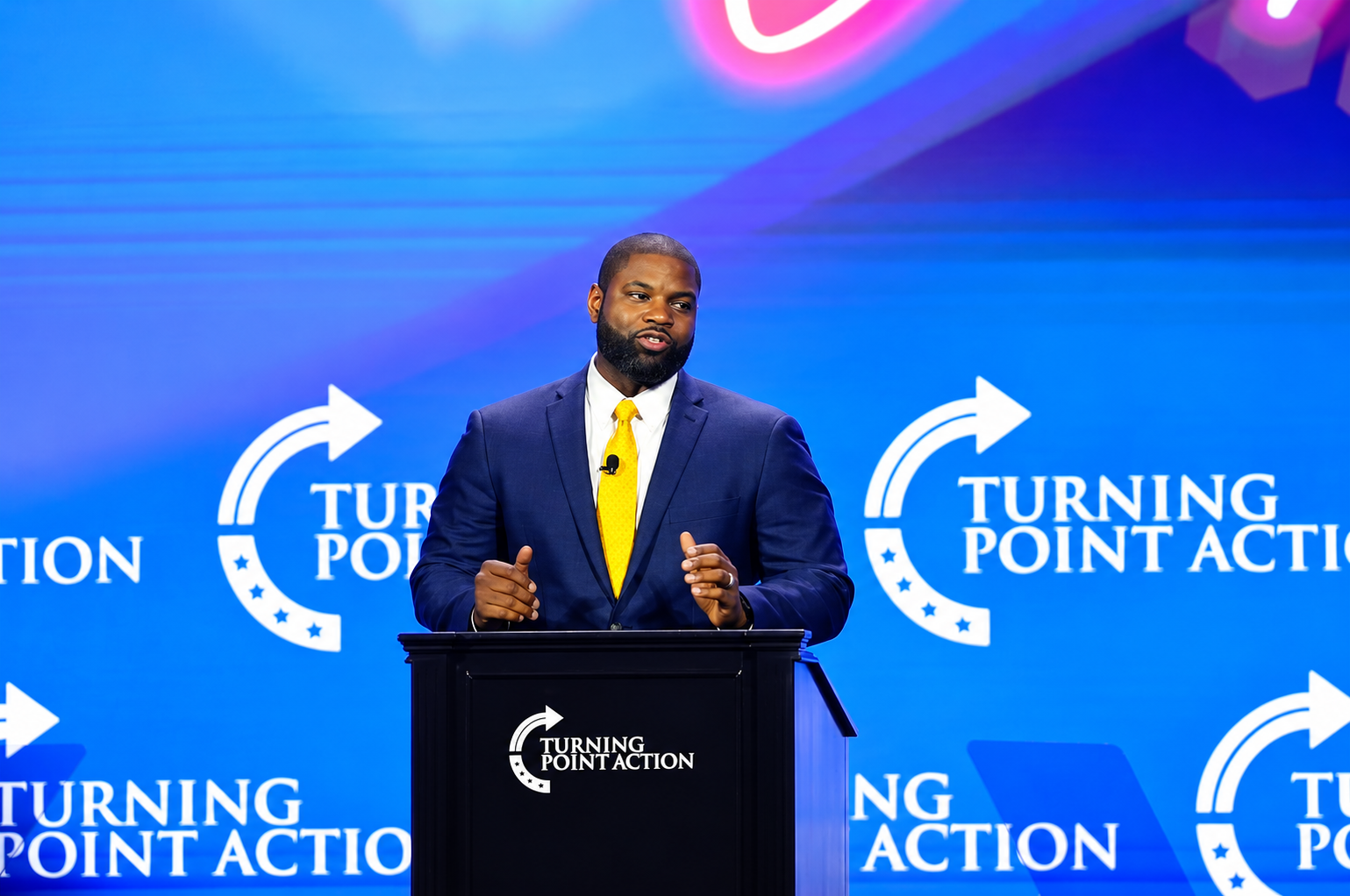
U.S. Rep. Byron Donalds speaks at a Turning Point Action event in Florida. Photo by Roman Garay / Florida National News.
Rally Set for Oct. 23
Trump’s remarks are scheduled to begin at 2 p.m., with doors opening at 10:30 a.m., according to the Republican Party’s event registration page. All times are Eastern.
Gulf Coast News reports that the rally will take place at Alico Arena at Florida Gulf Coast University. However, the official GOP registration page still lists the venue as “To Be Announced.” Attendees should check that page for confirmation and updates.
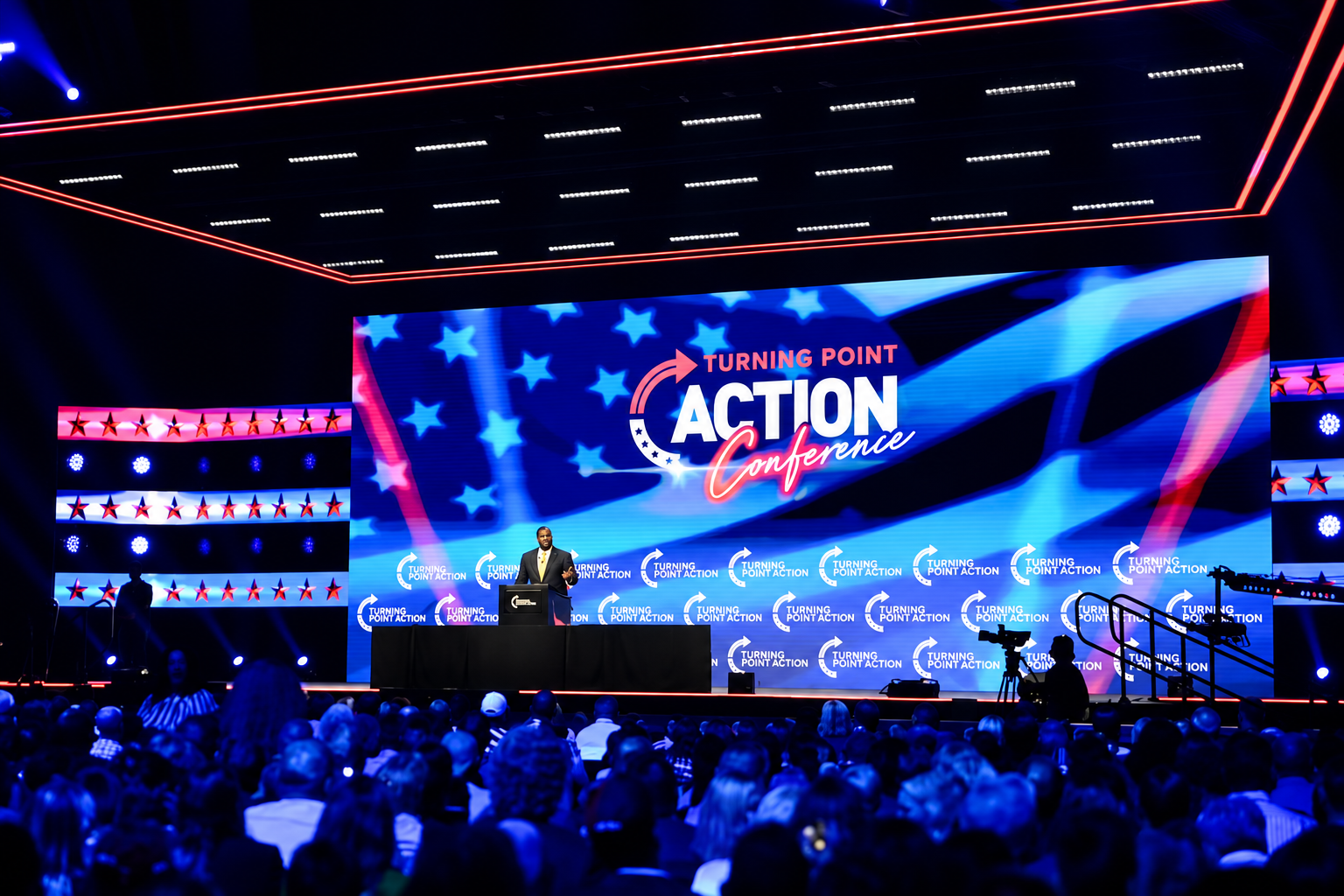
Prominent conservative figures, including Tucker Carlson, then-former President Donald Trump, U.S. Rep. Byron Donalds and Megyn Kelly, rallied Republican voters during the Turning Point Action Conference at the Palm Beach County Convention Center, July 15-16, 2023.
Photo by Roman D. Garay / Florida National News.
Trump’s Endorsement Connects President to Historic Bid
Trump has endorsed Donalds, whose campaign lists the president among its prominent Republican supporters. The Fort Myers visit places Trump in Donalds’ Southwest Florida political base during the closing weeks of the election.
Following his primary victory, Donalds acknowledged Trump’s influence among Republican voters.
“Obviously, he has the strongest following of anybody in our party,” Donalds said, according to Associated Press reporting.
A Donalds victory would give Florida its first Black governor and extend Republican leadership in the governor’s office. Trump’s endorsement connects the president to that potentially historic outcome, although the rally announcement does not identify the event as exclusively supporting Donalds.
Republican Unity and Voter Turnout
Donalds called for Republicans to unite after the primary, telling supporters, “Tonight we are one united Republican Party,” according to the AP.
The Fort Myers rally will provide Trump another platform to address supporters ahead of the Nov. 3 midterm elections. The published event announcement confirms his appearance but does not list additional speakers.


 Florida2 days ago
Donalds, Jolly Court Black Voters In Governor’s Race. How Much Are They Spending With Black-Owned Media?
 Business1 day ago
GOAA Highlights Airport Improvements, Approves New Small Business Policies
 Central Florida News22 hours ago
Broadcaster Ray Cruz Santiago Criticizes Samuel Vilchez Santiago With Communist Graphics, Puerto Rican Identity Claims
 Central Florida News1 day ago
Festival of Trees Marks 40 Years With Holiday Displays, Santa Breakfasts and Parties
 Entertainment1 day ago
“4000 Days,” “Frampton” Set for Naples International Film Festival Oct. 24–25


