

Education
NASA Missions Provide New Insights into ‘Ocean Worlds’

Published
10 years agoon

WASHINGTON (FNN NEWS) — Two veteran NASA missions are providing new details about icy, ocean-bearing moons of Jupiter and Saturn, further heightening the scientific interest of these and other “ocean worlds” in our solar system and beyond. The findings are presented in papers published Thursday by researchers with NASA’s Cassini mission to Saturn and Hubble Space Telescope.
In the papers, Cassini scientists announce that a form of chemical energy that life can feed on appears to exist on Saturn’s moon Enceladus, and Hubble researchers report additional evidence of plumes erupting from Jupiter’s moon Europa.
“This is the closest we’ve come, so far, to identifying a place with some of the ingredients needed for a habitable environment,” said Thomas Zurbuchen, associate administrator for NASA’s Science Mission Directorate at Headquarters in Washington. “These results demonstrate the interconnected nature of NASA’s science missions that are getting us closer to answering whether we are indeed alone or not.”
The paper from researchers with the Cassini mission, published in the journal Science, indicates hydrogen gas, which could potentially provide a chemical energy source for life, is pouring into the subsurface ocean of Enceladus from hydrothermal activity on the seafloor.
The presence of ample hydrogen in the moon’s ocean means that microbes – if any exist there – could use it to obtain energy by combining the hydrogen with carbon dioxide dissolved in the water. This chemical reaction, known as “methanogenesis” because it produces methane as a byproduct, is at the root of the tree of life on Earth, and could even have been critical to the origin of life on our planet.
Life as we know it requires three primary ingredients: liquid water; a source of energy for metabolism; and the right chemical ingredients, primarily carbon, hydrogen, nitrogen, oxygen, phosphorus and sulfur. With this finding, Cassini has shown that Enceladus – a small, icy moon a billion miles farther from the sun than Earth – has nearly all of these ingredients for habitability. Cassini has not yet shown phosphorus and sulfur are present in the ocean, but scientists suspect them to be, since the rocky core of Enceladus is thought to be chemically similar to meteorites that contain the two elements.
“Confirmation that the chemical energy for life exists within the ocean of a small moon of Saturn is an important milestone in our search for habitable worlds beyond Earth,” said Linda Spilker, Cassini project scientist at NASA’s Jet Propulsion Laboratory (JPL) in Pasadena, California.
The Cassini spacecraft detected the hydrogen in the plume of gas and icy material spraying from Enceladus during its last, and deepest, dive through the plume on Oct. 28, 2015. Cassini also sampled the plume’s composition during flybys earlier in the mission. From these observations scientists have determined that nearly 98 percent of the gas in the plume is water, about 1 percent is hydrogen and the rest is a mixture of other molecules including carbon dioxide, methane and ammonia.
The measurement was made using Cassini’s Ion and Neutral Mass Spectrometer (INMS) instrument, which sniffs gases to determine their composition. INMS was designed to sample the upper atmosphere of Saturn’s moon Titan. After Cassini’s surprising discovery of a towering plume of icy spray in 2005, emanating from hot cracks near the south pole, scientists turned its detectors toward the small moon.
Cassini wasn’t designed to detect signs of life in the Enceladus plume – indeed, scientists didn’t know the plume existed until after the spacecraft arrived at Saturn.
“Although we can’t detect life, we’ve found that there’s a food source there for it. It would be like a candy store for microbes,” said Hunter Waite, lead author of the Cassini study.
The new findings are an independent line of evidence that hydrothermal activity is taking place in the Enceladus ocean. Previous results, published in March 2015, suggested hot water is interacting with rock beneath the sea; the new findings support that conclusion and add that the rock appears to be reacting chemically to produce the hydrogen.
The paper detailing new Hubble Space Telescope findings, published in The Astrophysical Journal Letters, reports on observations of Europa from 2016 in which a probable plume of material was seen erupting from the moon’s surface at the same location where Hubble saw evidence of a plume in 2014. These images bolster evidence that the Europa plumes could be a real phenomenon, flaring up intermittently in the same region on the moon’s surface.
The newly imaged plume rises about 62 miles (100 kilometers) above Europa’s surface, while the one observed in 2014 was estimated to be about 30 miles (50 kilometers) high. Both correspond to the location of an unusually warm region that contains features that appear to be cracks in the moon’s icy crust, seen in the late 1990s by NASA’s Galileo spacecraft. Researchers speculate that, like Enceladus, this could be evidence of water erupting from the moon’s interior.
“The plumes on Enceladus are associated with hotter regions, so after Hubble imaged this new plume-like feature on Europa, we looked at that location on the Galileo thermal map. We discovered that Europa’s plume candidate is sitting right on the thermal anomaly,” said William Sparks of the Space Telescope Science Institute in Baltimore, Maryland. Sparks led the Hubble plume studies in both 2014 and 2016.
The researchers say if the plumes and the warm spot are linked, it could mean water being vented from beneath the moon’s icy crust is warming the surrounding surface. Another idea is that water ejected by the plume falls onto the surface as a fine mist, changing the structure of the surface grains and allowing them to retain heat longer than the surrounding landscape.
For both the 2014 and 2016 observations, the team used Hubble’s Space Telescope Imaging Spectrograph (STIS) to spot the plumes in ultraviolet light. As Europa passes in front of Jupiter, any atmospheric features around the edge of the moon block some of Jupiter’s light, allowing STIS to see the features in silhouette. Sparks and his team are continuing to use Hubble to monitor Europa for additional examples of plume candidates and hope to determine the frequency with which they appear.
NASA’s future exploration of ocean worlds is enabled by Hubble’s monitoring of Europa’s putative plume activity and Cassini’s long-term investigation of the Enceladus plume. In particular, both investigations are laying the groundwork for NASA’s Europa Clipper mission, which is planned for launch in the 2020s.
“If there are plumes on Europa, as we now strongly suspect, with the Europa Clipper we will be ready for them,” said Jim Green, Director of Planetary Science, at NASA Headquarters.
Hubble’s identification of a site which appears to have persistent, intermittent plume activity provides a tempting target for the Europa mission to investigate with its powerful suite of science instruments. In addition, some of Sparks’ co-authors on the Hubble Europa studies are preparing a powerful ultraviolet camera to fly on Europa Clipper that will make similar measurements to Hubble’s, but from thousands of times closer. And several members of the Cassini INMS team are developing an exquisitely sensitive, next-generation version of their instrument for flight on Europa Clipper.
SOURCES | NASA

You may like


Central Florida News
Festival of Trees Marks 40 Years With Holiday Displays, Santa Breakfasts and Parties
Published
4 days agoon
October 22, 2026
The nine-day celebration benefits the Orlando Museum of Art and its educational programs.
ORLANDO, Fla. (FNN) — Festival of Trees will return to the Orlando Museum of Art Nov. 14–22, celebrating its 40th anniversary with designer-decorated trees, visits with Santa, holiday workshops and evening parties.
Presented by the Council of 101, with AdventHealth as platinum presenting sponsor, this year’s festival carries the theme “Forty Seasons of Joy.” Its design inspiration comes from the ruby, a traditional symbol of a 40th anniversary.
The museum will feature more than 50 designer-decorated trees, along with wreaths, tablescapes, holiday vignettes, a Gingerbread Village and a Holiday Boutique, according to organizers.
“Whether you’re bringing the children to meet Santa, gathering friends for a festive night out or finding inspiration for your own holiday decorating, there’s a way to make the season your own at Festival of Trees,” said Elizabeth Benoist, president of the Council of 101.
Hours, Tickets and Museum Support
The festival will be open daily from 10 a.m. to 5 p.m. The Nutcracker Café will operate from 10 a.m. to 3 p.m.
General admission costs $23 for adults and $15 for children ages 3–12. Seniors, active-duty and retired military personnel, first responders and educators qualify for $15 admission with valid identification.
Guests can purchase designer trees, wreaths and gingerbread creations, enter drawings for tabletop displays and participate in a silent auction. Proceeds support the museum and its educational and lifelong-learning programs.
“We’re excited to welcome guests back for another memorable celebration that supports the Orlando Museum of Art and the important role it plays in enriching our community through art and education,” Benoist said.
Santa Breakfasts and Family Celebrations
Breakfast with Santa returns Nov. 14, 15 and 21 from 8:30 to 10 a.m. Families can reserve tables for four, six, eight or 10 guests, with prices ranging from $185 to $460.
The breakfasts include a hot meal, crafts, face painting, photos with Santa, balloon artists and early access to the festival.
The Reindeer Romp Children’s Holiday Party takes place Nov. 20 from 6:30 to 9 p.m., with VIP admission beginning at 5:30 p.m. Activities include photos with Santa, story time with Mrs. Claus, face painting, holiday sing-alongs and reindeer stilt walkers.
Tickets cost $35 per adult or child of any age, or $40 for VIP admission. Dinner will be available for purchase at the café.
Holiday Parties and Evening Events
The celebration begins before the public opening with the Opening Night “TreeView” Party on Nov. 13 from 7 to 10 p.m. The evening includes entertainment, food offerings and a ceremonial tree lighting. Guests receive a welcome glass of sparkling wine and two drink tickets; a cash bar will also be available.
Other evening events include:
| Event | Date and time | Admission |
|---|---|---|
| Ugly Sweater Holiday Party — Live music, a holiday sweater contest and cash bar | Nov. 14, 7:30–9:30 p.m. | $40 |
| Festival After 5 — After-hours displays and Holiday Cookie Stops; food and beverages sold separately | Nov. 19, 5:30–9:30 p.m. | $15 adults; $10 children |
| Sip & Sleigh Cocktail Party — Adults-only evening with jazzy holiday music; food and drinks sold separately | Nov. 21, 7–9 p.m. | $35 |
Decorating, Beauty and Entertaining Workshops
The festival’s workshops offer ideas guests can bring into their own holiday celebrations.
| Workshop | Date and time | Ticket price |
|---|---|---|
| From the White House to Your House — Winter Park interior designer Lindsay Matteoni shares stories, photographs and tips from volunteering to decorate the White House for Christmas | Nov. 14, 3:30–5 p.m. | $65 |
| Shimmer & Spice — Film and television makeup artist Leslie Christin demonstrates holiday makeup techniques | Nov. 15, 1:30–3:30 p.m. | $65 |
| The Festive Platter — Chef-led appetizer demonstration, tastings and take-home recipes | Nov. 15, 3:30–5:30 p.m. | $70 |
| Baubles & Branches — Bow-making techniques and seasonal decorating tips | Nov. 21, 3–5 p.m. | $65 |
The makeup workshop is limited to 25 guests, who should bring a hand or stand mirror. Participants in Baubles & Branches may bring their own ribbon or use materials provided.
Special-event tickets are priced separately from general admission and include festival admission, according to organizers.
Special Days Honor Seniors and Community Heroes
Salute to Seniors takes place Nov. 18 from 10 a.m. to 5 p.m., offering guests ages 60 and older $15 admission and special entertainment.
Heroes Day, scheduled for Nov. 22 during the same hours, offers $15 admission with valid identification to active-duty and retired military personnel, first responders and educators.
New Café Operator Supports Hunger Relief
Plate Above Catering, a catering company of Second Harvest Food Bank of Central Florida, will operate The Nutcracker Café this year.
Organizers said the partnership connects the festival’s support for arts education with local hunger relief efforts.
Tickets, special-event details and updates are available at councilof101.org. Follow @FestivalofTreesOrlando on Facebook and @councilof101oma on Instagram.
Central Florida News
Bethune-Cookman Secures Nearly $5.2 Million in Federal Health Funding
Published
4 days agoon
October 22, 2026
Separate $250,000 state appropriation will help launch a dual enrollment nursing program.
DAYTONA BEACH, Fla. (FNN) — Bethune-Cookman University’s College of Nursing and Health Sciences has secured nearly $5.2 million in federal funding from the Health Resources and Services Administration, marking the university’s first funding award from the agency, according to B-CU.
Separately, a $250,000 appropriation from the state of Florida will help launch the university’s new dual enrollment nursing program.
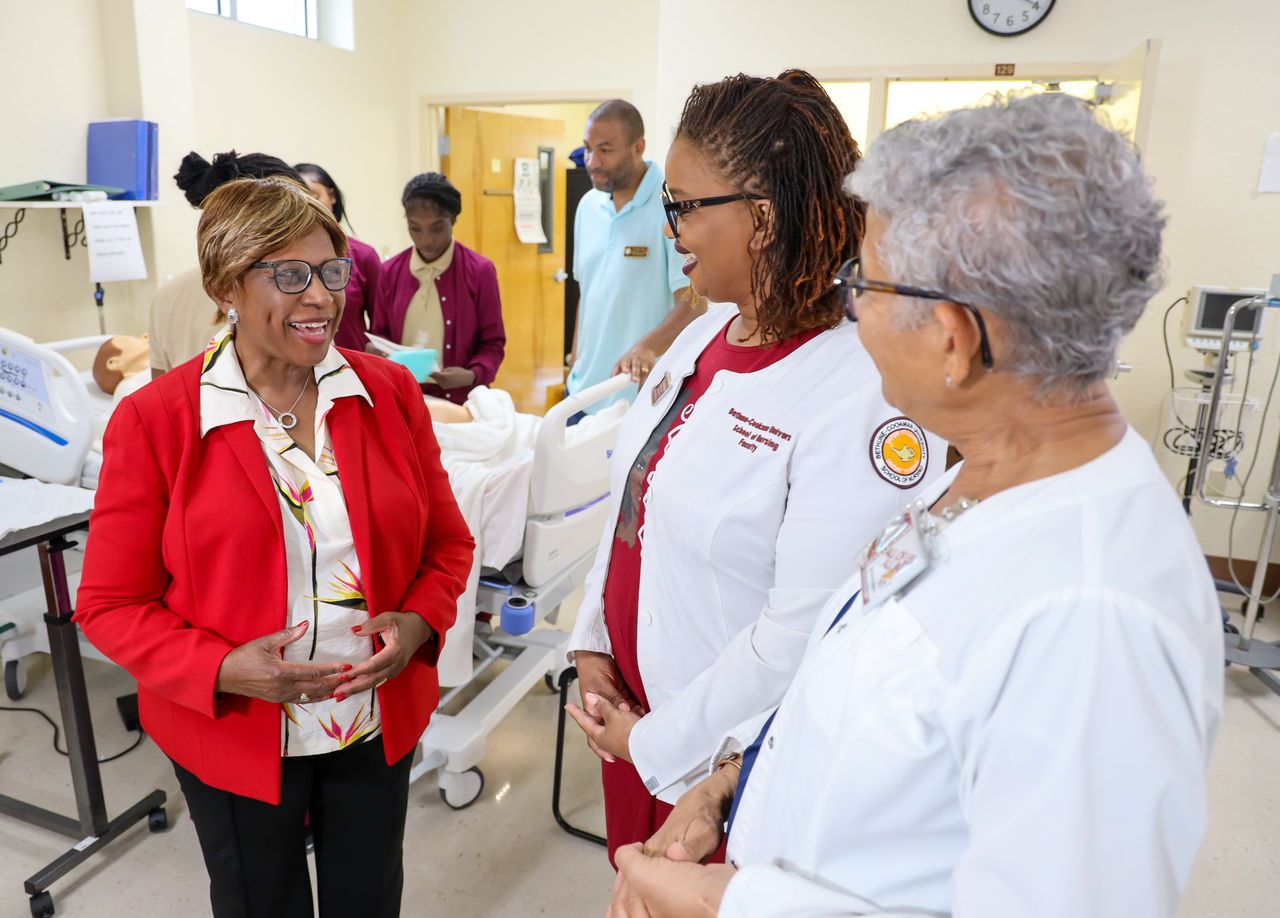
Bethune-Cookman Secures Nearly $5.2 Million in Federal Health Funding
First HRSA Funding for B-CU
The university described the federal award as a first for the institution. The information provided identifies the College of Nursing and Health Sciences as the recipient but does not specify the award’s programs, spending timeline or anticipated number of participants.
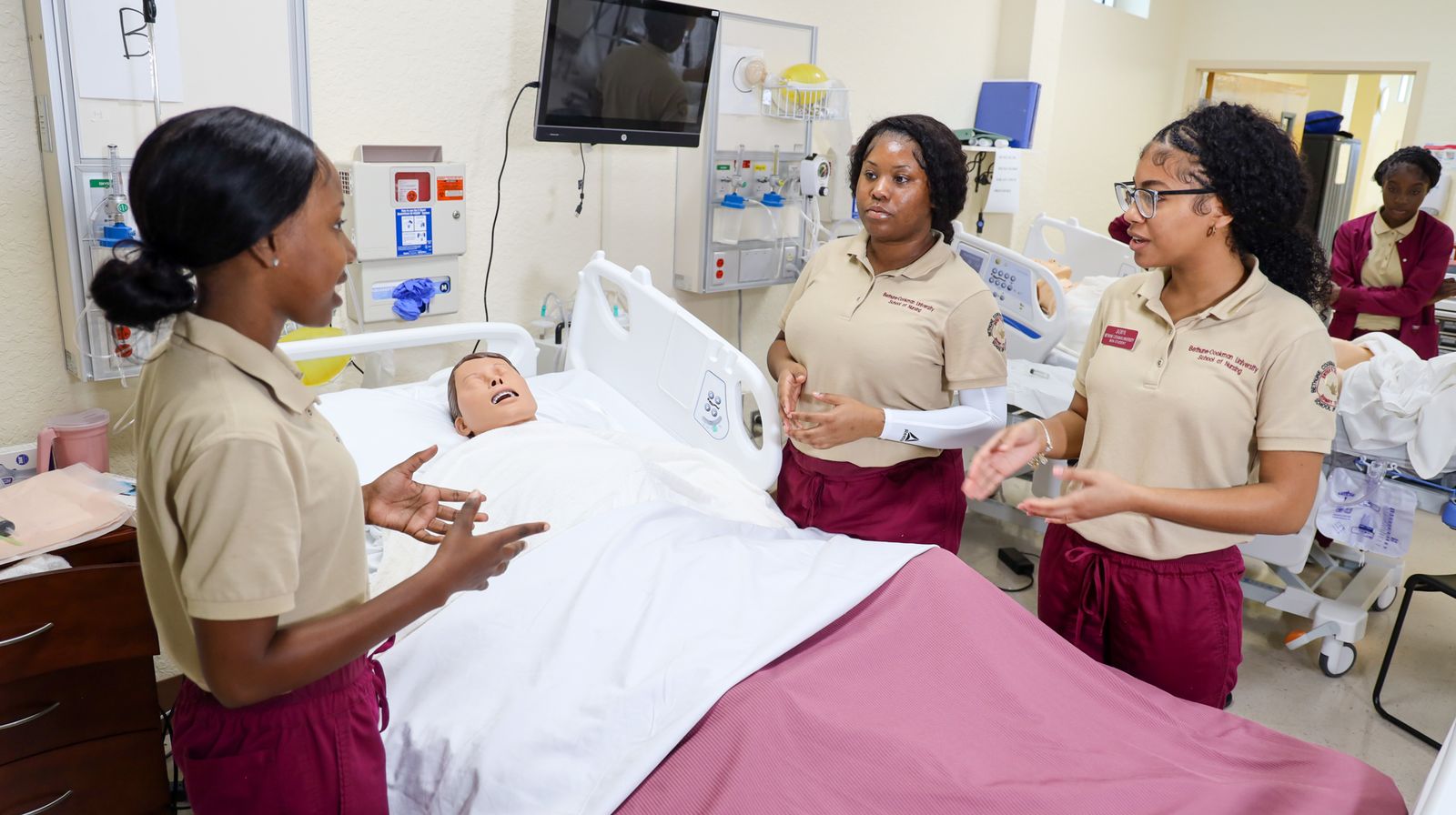
Bethune-Cookman Secures Nearly $5.2 Million in Federal Health Funding
State Funding Supports Nursing Program
The state appropriation will support the launch of B-CU’s dual enrollment nursing program. It is separate from the nearly $5.2 million in federal funding.
Central Florida News
UCP Charter Schools, UCF Launch Community Schools Initiative to Expand Student and Family Support
Published
4 months agoon
July 6, 2026
ORLANDO, Fla. (FNN NEWS) — UCP Charter Schools and the University of Central Florida have launched a new partnership to expand academic, health and family support services through the U.S. Department of Education’s Full-Service Community Schools initiative.
The federally funded Unlimited Potential Initiative (UPI) will establish Community Schools at UCP Bailes Community Academy, UCP Downtown and UCP Pine Hills Charter School beginning with the 2026-27 school year. Two additional UCP campuses are scheduled to join the initiative in January 2027.
University-Assisted Community Schools Model
The initiative is a collaboration between UCP Charter Schools, the Toni Jennings Exceptional Education Institute (TJEEI) and the UCF Center for Community Schools (UCF CCS).
Together, the partners will implement the University-Assisted Community Schools model, which brings together schools, families, higher education institutions, community organizations and local stakeholders to address barriers to student success while improving educational and family outcomes.
Expanded Student and Family Services
Through the partnership, UCP Charter Schools and UCF will enhance and expand services that include:
- After-school enrichment programs
- Academic support services
- Health and wellness resources
- Family engagement opportunities
- Connections to community-based services
Community Input Will Guide the Initiative
As implementation begins, UCP Charter Schools and UCF’s Toni Jennings Exceptional Education Institute will conduct comprehensive needs assessments at each participating campus.
Families, students, school staff and community partners will be invited to participate through surveys, focus groups and stakeholder meetings. Feedback gathered during the process will help shape each school’s Community School plan and future programming.
“Community schools are most successful when they build upon the strengths and priorities of the communities they serve,” said Dr. Matthew Marino of UCF’s Toni Jennings Exceptional Education Institute. “We are excited to partner with UCP Charter Schools to develop sustainable systems of support that connect students and families with the resources, opportunities and relationships that contribute to long-term success.”
Serving More Than 2,100 Central Florida Students
UCP Charter Schools serves more than 2,100 students across Central Florida through an inclusive educational model designed to provide individualized learning opportunities and support for every student.
School leaders said the organization’s longstanding commitment to customized education, family engagement and community partnerships positions it well to implement the Community Schools model.
“At UCP, we have always believed that schools can serve as the hub of their communities,” said Anna Morin, associate superintendent of UCP Charter Schools and project liaison for the initiative. “This partnership will allow us to deepen our work with families, expand access to critical resources and create new opportunities for students to thrive. Most importantly, the needs and voices of our families, students and staff will guide the development of each school’s Community School plan.”
Shared Commitment to Student Success
The Community Schools initiative reflects a shared commitment between UCP Charter Schools and UCF to strengthen educational achievement, increase family engagement and develop sustainable partnerships that support the whole child and the entire family.


FNN Newsletter
Trending


 Florida5 days ago
Donalds, Jolly Court Black Voters In Governor’s Race. How Much Are They Spending With Black-Owned Media?
 Central Florida News4 days ago
Broadcaster Ray Cruz Santiago Criticizes Samuel Vilchez Santiago With Communist Graphics, Puerto Rican Identity Claims
 Central Florida News4 days ago
Festival of Trees Marks 40 Years With Holiday Displays, Santa Breakfasts and Parties
 Entertainment4 days ago
“4000 Days,” “Frampton” Set for Naples International Film Festival Oct. 24–25
 Business4 days ago
GOAA Highlights Airport Improvements, Approves New Small Business Policies


