

Politics
PHOTOS: Trump, Carlson, Republican Firebrands Energize Voters at 2023 Turning Points Action Conference

Published
3 years agoon

WEST PALM BEACH, Fla. (FNN) – Some of the biggest conservative names, including Tucker Carlson, former President Trump, and Megyn Kelly rallied to energize Republican voters for the 2024 presidential election during the Turning Point Action Conference last weekend.
-

 Entrepreneur and 2024 Republican presidential hopeful Vivek Ramaswamy makes a speech during the 2023 Turning Points Action Conference at the Palm Beach Convention Center July 15, 2023. Photo: Roman D. Garay / Florida National News.
 -
 Conservative media personality and Trump stalwart Steve Bannon greets fans during the 2023 Turning Points Action Conference at the Palm Beach Convention Center July 15, 2023. Photo: Roman D. Garay / Florida National News.
 -
 Former president Donald Trump riles up the Republican base during the 2023 Turning Points Action Conference at the Palm Beach Convention Center July 15, 2023. Photo: Roman D. Garay / Florida National News.
 -
 Conservative media personality Tucker Carlson speaks during the 2023 Turning Points Action Conference at the Palm Beach Convention Center July 15, 2023. Photo: Roman D. Garay / Florida National News.
 -
 Conservative media personality Tucker Carlson speaks during the 2023 Turning Points Action Conference at the Palm Beach Convention Center July 15, 2023. Photo: Roman D. Garay / Florida National News.
 -
 U.S. Rep. Byron Donalds (R-Florida) delivers a speech during the 2023 Turning Points Action Conference at the Palm Beach Convention Center July 15, 2023. Photo: Roman D. Garay / Florida National News.
 -
 Former president Donald Trump enters the stage with fireworks during the 2023 Turning Points Action Conference at the Palm Beach Convention Center July 15, 2023. Photo: Roman D. Garay / Florida National News.
 -
 U.S. Rep. Byron Donalds (R-Florida) talks with Republican voters during the 2023 Turning Points Action Conference at the Palm Beach Convention Center July 15, 2023. Photo: Roman D. Garay / Florida National News.

You may like


Trump Calls for “Permanent Pause” on Migration from Poorer Nations After D.C. Shooting

Elon Musk Waves ‘Chainsaw of Bureaucracy’ at Conservative Conference, Vows to Cut Through Federal Government

Honoring the Legacy of Senator Geraldine Thompson: A Champion of Voting Rights, Education, and African American History


Florida
‘My Grandfather Was a Communist’: Venezuelan Refugee Samuel Vilchez Santiago Makes History With Florida House Democratic Nomination
Published
1 day agoon
August 18, 2026
Vilchez Santiago defeats former state Rep. Daisy Morales in contentious HD 43 rematch, marking a potential milestone for Venezuelan American representation and a shift in Central Florida’s Latino political leadership
ORLANDO, Fla. (FNN) — Samuel Vilchez Santiago, a Venezuelan-born political refugee who has publicly described the ideological divide within his family by saying, “My grandfather was a communist,” won the Democratic nomination Tuesday for Florida House District 43, defeating former state Rep. Daisy Morales in a contentious rematch six years after she defeated him.
Vilchez Santiago captured about 65% of the Democratic primary vote, according to unofficial election-night results, reversing the outcome of their first Florida House contest in 2020.
The 29-year-old Democrat now advances to the November general election for the open seat being vacated by Democratic state Rep. Johanna López.
The victory potentially puts Vilchez Santiago within one election of a significant milestone for Venezuelan American political representation in Florida while also signaling another change in the political leadership of an Orlando-area district where Puerto Rican lawmakers have recently held the seat.
From Venezuela to Central Florida Politics
Vilchez Santiago’s Venezuelan background has been central to his public identity and political career.
Born in Venezuela, Vilchez Santiago came to the United States with his family after his parents opposed the government of former Venezuelan President Hugo Chávez.
His family’s political history includes a striking ideological divide.
In a 2019 profile published by Princeton University’s Pace Center for Civic Engagement, Vilchez Santiago discussed growing up around politics and said, “My grandfather was a communist.”
At the same time, Vilchez Santiago described his parents as politically active opponents of the Chavista government in Venezuela.
The distinction is important: The statement describes his grandfather’s political beliefs. It does not establish that Vilchez Santiago himself is or was a communist.
His family’s experience ultimately led Vilchez Santiago to the United States, where he grew up in Central Florida, attended Colonial High School and later graduated from Princeton University.
He subsequently built a career in immigrant advocacy, nonprofit work and Democratic politics.
Why It Matters: Central Florida’s Latino Political Landscape Is Changing
The result represents more than a rematch between two Democratic candidates.
If Vilchez Santiago wins the November general election, an Orlando-area Florida House seat recently represented by Puerto Rican-born lawmakers would move to a Venezuelan-born legislator, illustrating the growing diversity — and changing centers of political influence — within Central Florida’s Latino electorate.
Morales, who was born in Puerto Rico, won election to the Florida House in 2020 and represented the former House District 48.
López, the current House District 43 representative, is also Puerto Rican-born.
With López leaving the House and Morales losing Tuesday’s Democratic primary, the district could transition from Puerto Rican-born representation to Venezuelan-born representation.
That is particularly notable in Central Florida, home to one of the nation’s most politically significant Puerto Rican populations.
But the result should not be interpreted as Puerto Rican voters rejecting Puerto Rican representation.
Hispanic voters are not a single political bloc, and election results alone cannot establish how voters of any particular national origin cast their ballots.
Instead, the election illustrates how Central Florida’s Latino political landscape continues to expand beyond traditional Puerto Rican political leadership as Venezuelan and other Latin American communities increase their civic and electoral influence.
Potential Historic Milestone for Venezuelan Americans
Vilchez Santiago’s victory could also carry significance beyond House District 43.
When he first sought election to the Florida House in 2020, his candidacy was publicly described as an effort to become the first Venezuelan American elected to the chamber.
Six years later, he is closer to achieving that goal.
His rise also reflects the increasing political visibility of Venezuelan Americans outside South Florida, where the community has historically maintained its largest political presence in the state.
Vilchez Santiago’s personal story — from Venezuelan political refugee to Democratic nominee for the Florida Legislature — could become part of that broader political transition if he wins in November.
Six Years Later, the Result Is Reversed
Tuesday’s election was a political rematch six years in the making.
Morales defeated Vilchez Santiago in the 2020 Democratic primary for the former House District 48.
She went on to win the general election and entered the Florida Legislature.
The political circumstances were dramatically different in 2026.
Vilchez Santiago entered this year’s contest with significantly greater political infrastructure, fundraising and institutional support than during his first legislative campaign.
He secured endorsements from Democratic elected officials, organized labor and political organizations, positioning himself as the establishment-backed candidate in the primary.
The result demonstrated how dramatically political fortunes can change.
In 2020, Morales defeated Vilchez Santiago and advanced to the Florida House.
In 2026, Vilchez Santiago reversed the outcome and captured the Democratic nomination.
Money, PAC Support and Democratic Establishment Become Part of the Story
Money and institutional support emerged as major factors in the 2026 campaign.
Vilchez Santiago’s campaign and political allies entered the closing weeks with a substantial financial advantage, while Democratic organizations and labor groups lined up behind his candidacy.
The Florida House Democratic Campaign Committee also became directly involved in the race through campaign communications supporting Vilchez Santiago and attacking Morales.
The scale and source of political spending became a central issue during the final weeks of the primary, with Morales questioning the financial relationships among Vilchez Santiago’s campaign, supporting political committees and Democratic Party organizations.
Those financial relationships and expenditures should be evaluated through publicly filed campaign-finance records, which provide the authoritative accounting of contributions and spending.
Regardless of the controversy surrounding the spending, Tuesday’s results demonstrated the effectiveness of the political coalition supporting Vilchez Santiago.
Contentious Final Days Bring Defamation Lawsuit
The primary became increasingly bitter as Election Day approached.
Days before voting ended, Morales filed a defamation lawsuit against Vilchez Santiago and the Florida House Democratic Campaign Committee over political mailers that accused her of supporting Republican candidates and referenced her removal from the Orange County Democratic Party.
Morales disputes key assertions contained in the campaign communications.
Vilchez Santiago rejected the allegations and publicly characterized the lawsuit as politically motivated.
The lawsuit remains separate from the election result. Allegations contained in a civil complaint are not findings of wrongdoing, and the defendants are entitled to contest the claims through the judicial process.
Florida Elections Complaint Adds Another Layer
Morales also pursued an election-related complaint concerning campaign statements and activities surrounding the race.
That proceeding is likewise separate from Tuesday’s election results.
Any determination of whether Florida election law was violated belongs to the appropriate election authorities and, where applicable, the courts.
Unless an authorized government body or court determines otherwise, the unofficial election results proceed through Florida’s normal certification process.
The existence of an election complaint does not establish that any person or organization violated the law.
From Party Chairman to Democratic Nominee
Vilchez Santiago’s political résumé has expanded considerably since his first House campaign.
He later served as chairman of the Orange County Democratic Party and became increasingly involved in state and national Democratic politics.
His professional work has included immigrant advocacy and nonprofit political fundraising, including work with ActBlue.
He also built relationships with elected officials, organized labor and Democratic organizations that became important political assets during his second campaign for the Florida House.
Those connections helped transform the candidate who lost to Morales in 2020 into the Democratic nominee six years later.
A Family History Shaped by Competing Political Ideologies
Perhaps the most distinctive element of Vilchez Santiago’s political biography is the contrast within his own family’s experience.
His grandfather, according to Vilchez Santiago’s own published account, was a communist.
His parents opposed Venezuela’s Chavista government.
His family fled political persecution and sought refuge in the United States.
Vilchez Santiago grew up in Central Florida, attended Princeton, entered Democratic politics, chaired the Orange County Democratic Party and became involved in national political and nonprofit work.
Now he is the Democratic nominee for a seat in the Florida Legislature.
That trajectory gives the HD 43 election a dimension extending beyond a typical state legislative primary.
What Comes Next
Winning the Democratic nomination does not make Vilchez Santiago a state representative.
He must still win the November general election.
The general-election campaign will determine whether Tuesday’s Democratic primary victory ultimately produces a potentially historic Venezuelan American breakthrough in the Florida House.
It will also determine who succeeds López in representing a diverse district that includes communities across East Orlando and the Lake Nona area.
Six years after Morales defeated him for a Democratic House nomination, Vilchez Santiago reversed the outcome Tuesday.
His next test comes in November — when voters will decide whether his journey from Venezuelan political refugee to Democratic nominee ends with a seat in the Florida Legislature.
Florida
Samuel Vilchez Santiago vs. Daisy Morales: Defamation Lawsuit, Election Complaints Test HD 43 Electability
Published
2 days agoon
August 18, 2026
$233,000-plus political operation, $60,000-plus PAC transfers, candidate-approved attack mailer and last-minute legal challenges turn Florida House District 43 Democratic primary into a test of money, experience and judgment
ORLANDO, Fla. (FNN) — Samuel Vilchez Santiago entered Election Day in the Florida House District 43 Democratic primary with many of the traditional ingredients of a winning campaign: substantial fundraising, a supporting political committee, organized labor, major endorsements, national political experience and an extensive Democratic network.
Former state Rep. Daisy Morales entered with something different: eight years of elected public service, previous Florida House experience, a legislative record voters can examine — and a previous Democratic primary victory over Vilchez Santiago.
The contrast is straightforward:
Political infrastructure or governing experience?
But the closing days transformed the race into something more complicated.
Morales filed a defamation lawsuit against Vilchez Santiago and the Florida House Democratic Campaign Committee and separately sought an expedited Florida Elections Commission investigation into disputed campaign statements. She has also sought additional state review of related election allegations.
Meanwhile, Morales says District 43 voters were hit with a mountain of negative mailers and text messages targeting her candidacy.
None of those developments establishes that Vilchez Santiago, the Florida House Democratic Campaign Committee or another political organization violated the law. Lawsuits and complaints contain allegations that remain subject to investigation or adjudication.
But they create an Election Day question extending beyond legal liability:
Did a heavily financed political operation that appeared positioned to win create unnecessary vulnerabilities through an aggressive effort to define Morales negatively?
Or, more simply:
Did political advantage become political overkill?
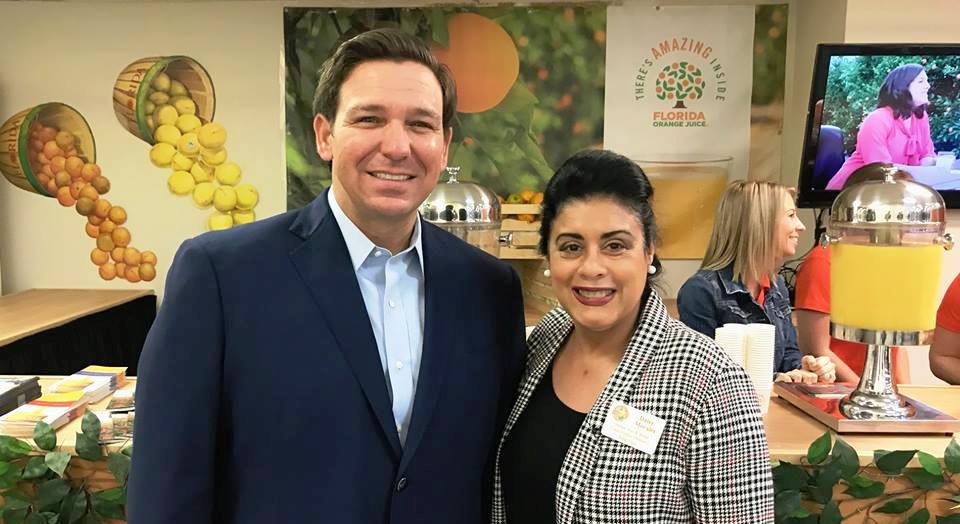
2019 FLORIDA STATE FAIR — TAMPA: Then-Florida Gov. Ron DeSantis with Orange County Soil & Water Conservation District Board Chair and Supervisor Daisy Morales at the Florida State Fair in Tampa. Source: Daisy Morales Facebook page, Feb. 7, 2019. Unedited original photo.
DESANTIS PHOTO: WHAT HAPPENED AT THE 2019 FLORIDA STATE FAIR?
One of the most striking images in a Florida House Democratic Campaign Committee attack mailer shows Morales with newly elected Republican Gov. Ron DeSantis.
What the photograph does not show is its broader context.
The photograph dates to Feb. 7, 2019, at the Florida State Fair in Tampa, shortly after Florida’s newly elected statewide officials took office.
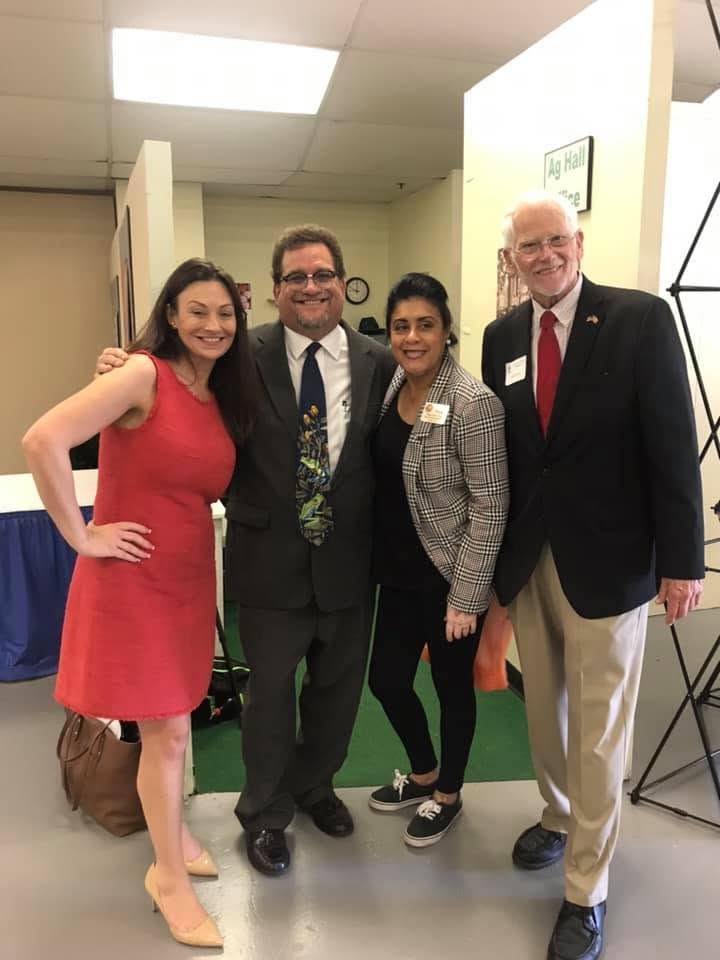
2019 FLORIDA STATE FAIR — TAMPA Democrat Florida Agriculture Commissioner Nikki Fried with Brett Upthagrove, Polk Soil and Water Conservation District Board, Seat 5; Daisy Morales, Orange County Soil and Water Conservation District supervisor; and other district officials at the 2019 Florida State Fair in Tampa. Source: Daisy Morales Facebook page, Feb. 7, 2019. Unedited original photo.
Florida’s statewide leadership included Republican DeSantis, newly elected Democratic Agriculture Commissioner Nikki Fried, Republican Attorney General Ashley Moody and Republican Chief Financial Officer Jimmy Patronis.
The State Fair brought elected officials together with farmers, ranchers, agricultural organizations and members of the public.
Morales was also an elected public official.

The Hillsborough Soil & Water Conservation District photo includes Supervisor Daisy Morales with district officials at the Florida State Fair in Tampa. The image featuring then-Gov. Ron DeSantis and Morales is one of approximately 15 photographs documenting the State Fair event. Source: Daisy Morales Facebook page, Feb. 7, 2019. Unedited original photograph.
At the time, she was serving as a reelected Orange County Soil & Water Conservation District supervisor. Morales says she was invited to attend in connection with her public service and to work with and support the Hillsborough Soil & Water Conservation District on agriculture, farmers, ranchers and soil and water conservation issues.
She would not be elected to the Florida House until November 2020, nearly two years later.
The photograph therefore documents Morales meeting DeSantis at a major state event while she was an elected conservation official and he was Florida’s newly elected governor.
Standing alone, the photograph does not establish that Morales endorsed DeSantis, supported the Republican Party, formed a political alliance with him or supported his political agenda.
So what exactly was the seven-year-old photograph intended to tell Democratic primary voters?
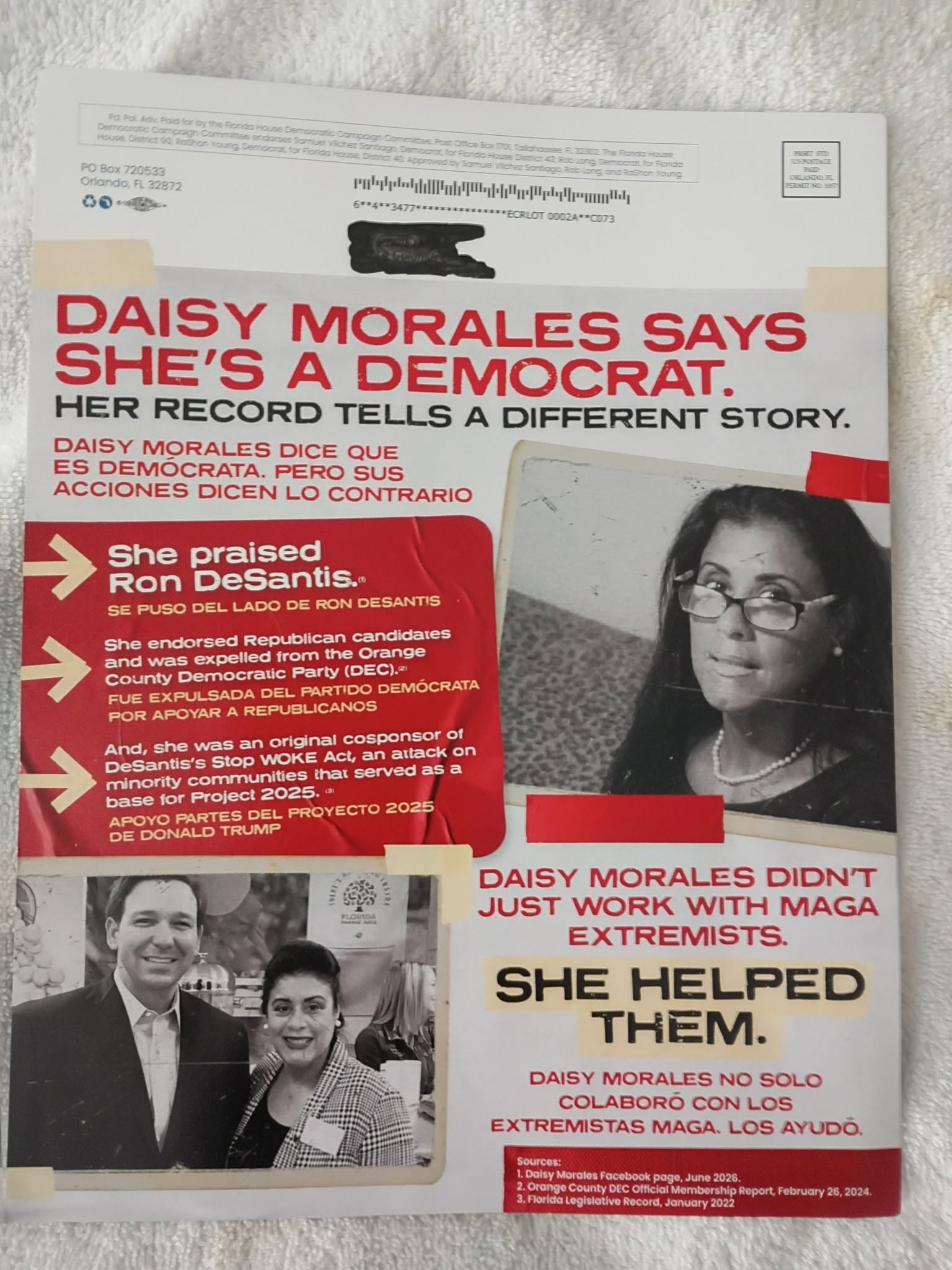
This campaign attack mailer was among numerous negative mailers targeting Daisy Morales during the 2026 Democratic primary for Florida House District 43, a race between two Democratic candidates. Source: Florida House Democratic Campaign Committee (FHDCC). The mailer states it was approved by candidate Samuel Vilchez Santiago.
WHAT DID THE PHOTO ACTUALLY PROVE?
Political advertising communicates through images as powerfully as it does through words.
When a photograph of Morales with a Republican governor appears alongside accusations portraying her as supporting Republicans, voters could interpret the image as evidence supporting that characterization.
But context matters.
Morales was an elected conservation official attending an agriculture-centered public event where Florida’s newly installed statewide officials were interacting with attendees.
The photograph proves an encounter. However, the attack mailer attributes the photo to Daisy Morales’ Facebook page in June 2026. That date is inaccurate. The original, unedited photograph was posted on Morales’ Facebook page on Feb. 7, 2019, during the Florida State Fair in Tampa.
Whether it proves the broader partisan characterization suggested by the political advertisement is another question entirely.
FNN FACT-CHECK RATED MAILER ‘MOSTLY FALSE’
Florida National News separately reviewed the Florida House Democratic Campaign Committee mailer and rated its overall factual message “Mostly False.”
The FNN fact-check concluded that consequential assertions concerning Morales’ alleged Republican support, Democratic Party status and legislative record were disputed, unsupported or missing material context.
Regarding the DeSantis photograph, the distinction is straightforward:

“Governor Ron DeSantis Meets Florida’s Youngest Elected Official” Florida National News — March 2021 Orange County Soil & Water Conservation District Supervisor and Board Vice Chair Nate Douglas (left) speaks with Florida Gov. Ron DeSantis at the Governor’s Mansion during the State of the State Dinner Reception on Tuesday, March 2, 2021. The photograph documents Douglas and DeSantis attending and interacting at the same official event. The photograph alone does not establish a political endorsement, partisan affiliation, political alliance, or support for DeSantis or Republican candidates. Such a conclusion would require additional evidence, such as a public endorsement, campaign statement, financial contribution, campaign activity, or other documented expression of political support. Photo: State Rep. Daisy Morales Date: March 2, 2021 Source: Florida National News (FNN)
A photograph showing Morales with DeSantis establishes that they were photographed together. Without additional evidence, it does not establish an endorsement or political alliance.
The FNN rating is a journalistic assessment. It is not a judicial finding and does not establish defamation or an election-law violation.
But the controversy leads directly to another question:
Who paid for the communication — and who approved it?
PAID BY HOUSE DEMOCRATIC COMMITTEE, APPROVED BY VILCHEZ SANTIAGO
The disputed mailer identifies the Florida House Democratic Campaign Committee as paying for the communication and states that it was approved by Samuel Vilchez Santiago, Democrat, for state representative.
That matters.
This was not simply an anonymous social media post or an attack produced by an unknown source.
The political judgment question becomes:
Why did a candidate-approved political communication use a seven-year-old photograph from Morales’ public service without presenting voters with the circumstances surrounding it?
Then the dispute moved beyond voters’ mailboxes.
It went to court.
DEFAMATION LAWSUIT HITS DAYS BEFORE ELECTION
Morales filed a defamation lawsuit against Vilchez Santiago and the Florida House Democratic Campaign Committee in Orange County Circuit Court in the closing days of the primary.
The lawsuit challenges campaign representations concerning Morales’ alleged support for Republican candidates and her disputed removal from the Orange County Democratic Party.
Vilchez Santiago has rejected Morales’ allegations and publicly characterized the lawsuit as a desperate political move.
No court has found Vilchez Santiago or the Florida House Democratic Campaign Committee liable for defamation.
But electability presents a different question:
Was the political benefit of the attacks worth the exposure created when those statements became the subject of litigation?
FEC COMPLAINT CAME BEFORE THE LAWSUIT
The lawsuit was not Morales’ first formal challenge.
Before filing it, she asked the Florida Elections Commission to investigate possible election-law violations involving allegedly false statements and disputed political communications.
Morales requested expedited review because of the proximity of the primary.
The filing does not establish that Vilchez Santiago or anyone else violated Florida election law.
But the sequence is significant:
Attack communications → FNN fact-check → FEC complaint → defamation lawsuit → requests for additional state review.
Instead of ending the primary almost exclusively on endorsements, fundraising and policy, Vilchez Santiago entered Election Day confronting questions about the accuracy and judgment behind the attacks.
ACTBLUE AND ‘COMBATING MISINFORMATION’: WHY HIS BACKGROUND MATTERS
Those questions carry additional significance because Vilchez Santiago has made political fundraising and combating misinformation part of his professional and political résumé.
According to his campaign biography, Vilchez Santiago works as a senior nonprofit manager at ActBlue, where he says he helps thousands of nonprofits and grassroots movements across the country build people-powered fundraising programs.
His biography also highlights his service as a Hispanic media surrogate for the Biden-Harris campaign and later as national co-chair of Venezuelans with Harris, describing that work as helping combat misinformation and mobilize immigrant voters nationwide.
That background does not establish that Vilchez Santiago knowingly disseminated misinformation in the House District 43 race.
Nor does his employment make ActBlue responsible for his campaign activities.
But it makes accuracy particularly relevant to the judgment question.
A candidate who highlights experience combating misinformation and helping thousands of organizations navigate political fundraising can reasonably expect voters to closely scrutinize the accuracy and context of political communications he approves.
What verification occurred before the attack mailers were approved?
Was the context of the 2019 State Fair photograph examined?
Were representations concerning Morales’ Democratic Party status independently verified?
Was a distinction made between appearing with Republican officials at public events and actually endorsing Republican candidates?
Those questions do not presume wrongdoing.
They address judgment, consistency and credibility.
And they create a notable contrast:
Vilchez Santiago’s biography highlights experience combating misinformation. Florida National News subsequently rated the broader factual message of a candidate-approved attack mailer against Morales “Mostly False.”
A MOUNTAIN OF ATTACK MAILERS AND TEXTS: $60,000-PLUS POLITICAL OVERKILL?
For District 43 voters, campaign finance was not simply about numbers on disclosure reports.
The political battle showed up in their mailboxes and on their phones.
Morales describes a wave of negative mailers and text messages attacking her candidacy as the primary approached.
At the same time, updated campaign-finance figures cited in this analysis put transfers from Central Floridians for Change, a political committee supporting Vilchez Santiago, to the Florida House Democratic Campaign Committee at more than $60,000.
Earlier figures identified $50,000. The cumulative amount subsequently increased beyond $60,000, according to the updated figures cited for this analysis.
The transfers themselves do not establish wrongdoing. Nor does the amount establish that every transferred dollar financed communications attacking Morales.
But voters can examine the sequence:
Vilchez Santiago-supporting PAC → more than $60,000 transferred to the Florida House Democratic Campaign Committee → committee communications supporting Vilchez Santiago and attacking Morales → Vilchez Santiago’s approval appearing on disputed campaign material.
That sequence does not, standing alone, prove improper coordination or unlawful spending.
But politically, it raises a straightforward question:
Was a mountain of attack mailers and text messages necessary to win — or did $60,000-plus in political firepower become overkill?
$233,000 TO WIN A $29,697 JOB: WHEN DOES POLITICAL FIREPOWER BECOME OVERKILL?
The broader financial picture makes that question more striking.
According to the updated campaign-finance figures cited in this analysis, Vilchez Santiago’s candidate campaign and the political committee supporting his candidacy generated more than $233,000 in political resources.
The candidate campaign and political committee are legally separate. The PAC’s funds should not be described as money personally controlled by Vilchez Santiago.
But the combined scale illustrates the resources surrounding his candidacy.
He had money.
He had major endorsements.
He had organized labor.
He had party relationships.
He had a supporting political committee.
He had national political experience.
He had an extensive voter-contact operation.
Now compare those political resources with another number:
$29,697.
That is the annual salary paid to a rank-and-file Florida legislator.
The more than $60,000 in PAC transfers cited in this analysis alone represent more than twice the annual legislative salary for the office the candidates are seeking.
That does not suggest the spending was illegal or inherently improper. Campaigns routinely cost substantially more than the salaries attached to elected offices.
Nor should salary be confused with the importance of the position. Florida legislators vote on a state budget exceeding $100 billion and make decisions affecting millions of residents.
But the numbers illustrate the extraordinary intensity of this Democratic primary:
$29,697 annual legislative salary.
More than $60,000 in PAC transfers.
More than $233,000 in broader political resources.
A mountain of negative mailers and texts.
An FNN fact-check.
An election complaint.
A defamation lawsuit.
With so many political advantages already in place, how much additional negative campaigning was necessary?
Or did the effort to defeat Morales become bigger than the office itself?
DID HIS SUPPORTERS SIGN UP FOR THE OVERKILL?
Vilchez Santiago’s extensive endorsements were intended to demonstrate credibility, momentum and political strength.
But the closing controversy creates another question:
Did the elected officials, labor organizations, Democratic groups and political leaders who endorsed Vilchez Santiago sign up simply to support his candidacy — or did they anticipate the scale and tone of the negative campaign that followed?
An endorsement alone does not establish that a supporter knew about, financed, authorized or approved any disputed communication.
That distinction is essential.
Supporting a candidate is one thing.
Financing, authorizing, approving or knowingly participating in a particular disputed communication is another.
Ordinary endorsers therefore should not be associated with alleged misconduct merely because they supported Vilchez Santiago.
But endorsements were used to validate his candidacy and leadership.
That means voters may still ask whether the campaign that emerged in the closing weeks reflects the leadership and judgment those supporters believed they were endorsing.
SOME POLITICAL PLAYERS FACE A DIFFERENT QUESTION
The situation is different for organizations directly involved in disputed political activity.
The Florida House Democratic Campaign Committee is not merely an endorser.
It is a named defendant alongside Vilchez Santiago in Morales’ defamation lawsuit and is identified as the organization that paid for the disputed mailer.
Being named as a defendant does not establish liability.
Likewise, government complaints requesting investigations do not establish violations.
The distinction matters:
Who endorsed Vilchez Santiago? Who financed communications? Who approved them? Who produced them? And who, if anyone, knew whether disputed representations were accurate?
Those are different factual questions and should not be collapsed into one.
AFFORDABILITY VS. POLITICAL OVERKILL
Then there are the people the next representative will actually serve.
House District 43 families are confronting housing costs, property insurance, groceries, transportation expenses and other affordability pressures.
Against that backdrop, Morales can ask whether a political operation surrounded by substantial resources devoted too much of its closing argument to defeating another Democrat rather than explaining how it would make life more affordable.
Political committees are permitted to spend money influencing elections.
The electability question is about priorities and judgment.
Could more of the campaign’s political capital have been devoted to affordability, education, public safety and economic opportunity?
Or did the effort to politically overwhelm Morales ultimately overwhelm Vilchez Santiago’s own positive message?
MORALES’ COUNTERWEIGHT: WHAT DID SHE DO WHEN VOTERS GAVE HER THE JOB?
If Vilchez Santiago asks voters to evaluate fundraising, endorsements, organizing and professional political experience, Morales offers a fundamentally different test:
What did she accomplish when voters actually sent her to Tallahassee?
Morales served in elected local office before winning election to the Florida House in November 2020.
Her legislative record includes work involving veterans, property-tax relief, people with disabilities, consumer protection and community investments.
That gives voters something different to evaluate:
Not simply what Morales promises to do — but what she did when she previously held the office.
DISABLED VETERANS: HB 45 PASSES UNANIMOUSLY
One of Morales’ clearest legislative accomplishments involved disabled veterans.
Morales was the primary House sponsor of HB 45 in 2022, Educational Opportunities for Disabled Veterans, legislation addressing educational benefits for qualifying disabled veterans.
The measure passed the Florida House 115-0 and the Senate 38-0.
That unanimous bipartisan support gives Morales a tangible result to place against Vilchez Santiago’s endorsements and political infrastructure.
Vilchez Santiago can point to the coalition he built to get to Tallahassee. Morales can point to legislation she advanced after voters sent her there.
PROPERTY-TAX RELIEF: FROM $500 TO $5,000
Morales also sponsored HB 13, addressing property-tax relief for qualifying widows, widowers, blind residents and people who are totally and permanently disabled.
The measure increased the applicable exemption from $500 to $5,000, effective Jan. 1, 2023.
That accomplishment connects directly to an affordability debate now dominating Florida politics.
Morales can therefore argue that she is not simply campaigning on affordability in 2026.
She can point to previous legislative work involving tax relief.
DOWN SYNDROME COMMUNITY: HB 213
Morales’ legislative record also included HB 213, establishing a Down syndrome specialty license plate benefiting Florida’s Down syndrome community.
For voters evaluating representation of people with disabilities, the measure adds another concrete accomplishment to Morales’ record.
Her broader legislative work included consumer-protection legislation, commercial telephone solicitation reforms, protections involving elderly and disabled adults and appropriations benefiting community organizations.
No legislator passes legislation alone, and sponsorship or co-sponsorship should not be presented as sole responsibility for measures enacted by the Legislature.
But the record gives voters measurable results to evaluate.
MILLIONS IN COMMUNITY INVESTMENTS
Morales also sponsored or supported appropriations that secured legislative approval for projects benefiting Central Florida and communities statewide.
Among the projects associated with her legislative work were funding for UCF nursing programs in Lake Nona, Farm Share, organizations serving blind Floridians and other community initiatives.
Appropriations require approval by the Legislature and governor, so no individual lawmaker can accurately claim sole responsibility for state funding.
But advocating for local projects and navigating them through the appropriations process is part of the job voters expect their representative to perform.
That adds another dimension to the electability comparison:
Who can deliver once the campaign ends?
EXPERIENCE VS. POLITICAL INFRASTRUCTURE
That may be the clearest substantive contrast in House District 43.
Vilchez Santiago’s résumé emphasizes:
ActBlue. Helping thousands of nonprofits and grassroots movements. National Democratic political work. Combating misinformation. Major endorsements. Organized labor. Fundraising. Political organization.
Morales’ résumé emphasizes:
Eight years of elected public service. Florida House experience. Legislation. Appropriations. Constituent service. A legislative voting record. A previous victory over Vilchez Santiago.
Neither résumé automatically determines who would be the better representative.
But they present fundamentally different choices.
Vilchez Santiago asks voters to convert political and organizational experience into legislative experience.
Morales asks voters to return someone who has already done the legislative job.
THE OLDER QUESTION: WHAT HAPPENED TO MORALES INSIDE THE DEMOCRATIC PARTY?
The controversy also reaches back to Morales’ disputed 2024 removal from the Orange County Democratic Party.
Morales alleges party loyalty rules were selectively and inconsistently enforced.
The issue carries additional significance because Vilchez Santiago previously chaired the Orange County Democratic Executive Committee.
Morales points to other Democrats who publicly supported, endorsed or worked with Republican candidates and argues they did not face comparable disciplinary consequences.
That raises a legitimate question:
Were the same Democratic Party rules consistently applied to similarly situated members?
There has been no official finding that Morales’ removal was manufactured, fraudulent or deliberately engineered to benefit Vilchez Santiago in the 2026 election.
Those remain allegations and investigative questions.
PARTY REMOVAL LATER BECOMES CAMPAIGN AMMUNITION
What happened afterward makes the issue politically significant.
Vilchez Santiago was chairman of the local Democratic organization.
Morales was removed during his tenure.
Vilchez Santiago later became her opponent.
And Morales’ Democratic Party status subsequently became part of the political case used against her.
None of those facts, standing alone, establishes that the disciplinary action was manufactured for a future election.
But the sequence makes transparency important.
Who initiated the process? Who participated? What evidence was considered? What rules were applied? Were those same rules applied to other Democrats?
And ultimately:
Did a party action taken while Vilchez Santiago was chairman later provide him with a political advantage when he became Morales’ opponent?
Those questions can be investigated without presuming the answers.
VILCHEZ SANTIAGO STILL HOLDS MAJOR ELECTABILITY ADVANTAGES
None of the controversies erases Vilchez Santiago’s strengths.
Money matters.
Endorsements matter.
Organized labor matters.
Campaign infrastructure matters.
Repeated voter contact matters.
Vilchez Santiago entered Election Day with significant advantages in each category.
His campaign can also argue that Morales’ lawsuit and complaints are last-minute attempts to redirect attention from criticism of her political record and party history.
And voters repeatedly exposed to negative communications may have formed opinions before Morales’ rebuttal reached them.
The election could ultimately demonstrate exactly why fundraising, organization and endorsements remain powerful.
MORALES HAS ONE ADVANTAGE MONEY CANNOT BUY: SHE HAS BEATEN HIM BEFORE
Morales brings another piece of evidence.
She has defeated Vilchez Santiago before.
Morales won their 2020 Democratic primary before winning election to the Florida House that November.
The 2026 district boundaries, electorate, campaign resources and political environment are different.
A previous victory does not predict another.
But it provides Morales with a straightforward closing argument:
Vilchez Santiago has the money, endorsements and political infrastructure. Morales has already demonstrated that she can defeat him and serve in the Florida House.
DID A WINNING OPERATION BECOME POLITICAL OVERKILL?
That brings the race back to its central question.
Vilchez Santiago built many of the ingredients of a winning campaign.
Yet the closing days became about much more than those advantages.
A seven-year-old DeSantis photograph became political ammunition.
FNN rated the broader mailer’s factual message “Mostly False.”
Vilchez Santiago’s own résumé highlighting experience combating misinformation added another layer of scrutiny.
An FEC complaint followed.
A defamation lawsuit followed.
More than $60,000 reportedly moved from a PAC supporting his candidacy to the House Democratic committee involved in campaign communications.
And Morales says voters encountered a mountain of negative mailers and text messages.
Meanwhile, her disputed Democratic Party removal resurfaced because that party action later became part of the political argument against her.
Individually, those developments do not establish wrongdoing.
Collectively, they changed the closing conversation.
WHY IT MATTERS TO ELECTION DAY VOTERS
House District 43 ultimately presents voters with two theories of electability.
Vilchez Santiago offers political infrastructure: money, endorsements, organized labor, national political experience, fundraising expertise and an extensive coalition.
Morales offers governing experience: previous elected service, legislation, appropriations, constituent service and a record voters can examine.
None of the legal developments establishes that Vilchez Santiago committed defamation, violated election law or improperly participated in Morales’ party removal.
A lawsuit is not a verdict.
A complaint is not a finding.
An endorsement does not make a supporter responsible for campaign tactics.
And political contributions do not automatically establish control over another committee’s spending.
But voters evaluate more than legal liability.
They evaluate:
Judgment. Credibility. Experience. Priorities. Leadership. Results.
That leaves House District 43 Democrats with two final questions:
Did Samuel Vilchez Santiago’s money, endorsements and political organization build the campaign necessary to defeat Daisy Morales — or did more than $60,000 in PAC transfers and a mountain of negative communications turn a winning advantage into political overkill?
Or will Morales’ previous victory, legislative record and governing experience prove more valuable when voters cast their ballots?
House District 43 voters will decide.
Central Florida News
Orange County Clerk Race Comes Down to Singh, Walton Johnson as Democrats Vote Tuesday
Published
2 days agoon
August 18, 2026
ORLANDO, Fla. (FNN) — Orange County Democratic voters are choosing Tuesday between former Orange County Property Appraiser Rick Singh and longtime court administrator and attorney Roberta Walton Johnson in a competitive primary for Orange County Clerk of Courts, a contest that combines experience, political endorsements and questions about which candidate is best prepared to oversee one of the county’s most important constitutional offices.
The Aug. 18 primary will determine the Democratic nominee for the office responsible for maintaining court records, processing legal filings, collecting and distributing millions of dollars in court-related payments and providing public access to records across Orange County.
The race has taken on additional urgency after Maribel Gomez Cordero withdrew from the contest. Her name remains on ballots already printed, but the Orange County Supervisor of Elections has advised Democratic voters that votes cast for Cordero will not count toward determining the nominee.
That leaves Singh and Walton Johnson competing directly for the Democratic nomination.
WHY IT MATTERS TO ELECTION DAY VOTERS
Tuesday’s decision is about more than name recognition or political endorsements.
The Clerk of Courts manages records and services that residents encounter during some of the most consequential moments of their lives — including criminal and civil cases, traffic matters, family court proceedings, marriage licenses and other court-related transactions.
For Election Day voters who have not yet made a choice, the race presents two distinctly different arguments about experience.
Singh offers voters the experience of having previously won countywide office and managed another Orange County constitutional office.
Walton Johnson offers direct institutional experience inside the Clerk of Courts operation and argues that her legal and administrative background prepares her to lead the office immediately.
SINGH BRINGS COUNTYWIDE ELECTORAL EXPERIENCE
Singh served as Orange County Property Appraiser from 2013 until 2021 after winning countywide elections.
That history gives Singh one of his strongest arguments: Orange County voters already know his name, and he has previously demonstrated an ability to build a coalition large enough to win countywide.
Singh has emphasized executive experience and his record managing a constitutional office while campaigning to return to elected county government.
His previous electoral record, however, cuts both ways.
Singh lost the 2020 Democratic primary for property appraiser to Amy Mercado, giving Walton Johnson an opening to argue that voters should choose new leadership rather than return a former constitutional officer to countywide office.
WALTON JOHNSON CAMPAIGNS ON CLERK EXPERIENCE
Walton Johnson has centered her candidacy on experience directly connected to the office she is seeking.
She serves as general counsel for the Orange County Clerk of Circuit and County Courts, providing her with firsthand knowledge of the agency’s legal responsibilities and operations.
Her campaign can therefore make a simple argument to undecided voters: She already knows the office.
Walton Johnson has also attracted support from prominent political figures, including Orlando Mayor Buddy Dyer, strengthening her position among Democratic voters who place significant weight on endorsements and institutional experience.
WALTON JOHNSON’S PAST BECOMES CAMPAIGN ISSUE
The campaign has also focused attention on a decades-old criminal case involving Walton Johnson.
Florida Politics reported that the case involved stolen tax-refund checks in Georgia approximately three decades ago. Walton Johnson has described the matter as a mistake from her youth and has pushed back against political attacks surrounding the case and questions about whether it affects her qualifications to serve.
The issue gives Election Day voters another question to consider: how much weight should be given to conduct from decades ago compared with a candidate’s subsequent professional and public-service record?
The increasingly personal attacks surrounding the issue have also generated criticism from Democrats who say the campaign has become unnecessarily divisive.
SINGH’S RECORD ALSO FACES SCRUTINY
Singh enters Election Day with his own political baggage.
His eight years as property appraiser provide him with executive experience, but they also give voters a public record to evaluate.
His 2020 defeat demonstrated that countywide name recognition does not guarantee victory and gives Walton Johnson an opportunity to contrast her current Clerk of Courts experience with Singh’s previous tenure in another constitutional office.
For undecided Democrats, the question may ultimately become whether they prefer previous countywide executive experience or current Clerk of Courts experience.
CORDERO WITHDRAWAL CREATES ELECTION DAY WILDCARD
Cordero’s withdrawal adds an unusual complication.
Because ballots had already been prepared, her name remains before voters. The Supervisor of Elections has warned that votes cast for Cordero will not count in determining the Democratic nominee.
That makes voter awareness particularly important Tuesday.
The remaining campaigns also have an incentive to reach voters who previously supported or considered supporting Cordero. In a close election, even a relatively small bloc of redirected voters could affect the outcome.
WHAT UNDECIDED VOTERS ARE DECIDING
For voters entering the polling booth without a firm preference, the contest can be distilled into several questions:
- Does Singh’s experience winning and managing a countywide constitutional office outweigh his 2020 defeat and controversies associated with his previous tenure?
- Does Walton Johnson’s direct experience inside the Clerk of Courts make her better prepared for the specific job?
- How much weight should voters give political endorsements?
- How should voters evaluate controversies and attacks involving each candidate?
- Which candidate is more likely to effectively manage the Clerk’s office while maintaining public confidence in its operations?
Those questions could be especially important among voters making their decision in the final hours.
NO CLEAR PUBLIC POLLING LEADER
Unlike higher-profile statewide contests, the Clerk of Courts race has not been accompanied by extensive independent public polling.
That makes claims that either candidate is decisively ahead difficult to independently substantiate.
Singh’s countywide electoral history and name recognition could give him an advantage among voters who recognize his name on the ballot.
Walton Johnson’s direct Clerk experience and political endorsements could counter that advantage, particularly among Democratic voters familiar with county government.
The absence of reliable public polling makes turnout — and each campaign’s ability to get supporters to the polls — especially important.
WHY TURNOUT COULD DECIDE IT
County constitutional-office primaries generally receive less public attention than races for governor, Congress or the Legislature.
That means relatively small differences in turnout can have an outsized impact.
Singh and Walton Johnson do not necessarily need to persuade every Democratic voter in Orange County. They need to turn out their respective coalitions while winning enough undecided voters to create a countywide plurality.
With Cordero no longer an active candidate, the effectiveness of each campaign’s Election Day organization could prove decisive.
THE BOTTOM LINE FOR VOTERS
Tuesday’s Democratic primary offers Orange County voters two candidates with substantially different résumés.
Rick Singh is asking voters to return a former countywide constitutional officer to public office, emphasizing executive and electoral experience.
Roberta Walton Johnson is asking voters to promote someone already working within the Clerk of Courts operation, emphasizing legal knowledge, continuity and direct institutional experience.
The choice ultimately comes down to what Democratic voters value more: a former elected executive with countywide campaign experience or an attorney with direct experience inside the office she wants to lead.
Polls close at 7 p.m. Tuesday, and voters in line by 7 p.m. are permitted to cast a ballot.
The Democratic nominee will move on from Tuesday’s primary to the Nov. 3 general election.
FLORIDA NATIONAL NEWS ELECTION 2026
Florida National News will continue covering the 2026 Florida primary election and Orange County races as results become available.


FNN Newsletter
Trending
 Florida5 days ago
Daisy Morales Seeks Florida Elections Commission Investigation of ActBlue Manager, Former Democratic Party Chair Samuel Vilchez Santiago
 Central Florida News2 days ago
Orange County Clerk Race Comes Down to Singh, Walton Johnson as Democrats Vote Tuesday
-
Florida1 day ago
‘My Grandfather Was a Communist’: Venezuelan Refugee Samuel Vilchez Santiago Makes History With Florida House Democratic Nomination
 Florida2 days ago
Samuel Vilchez Santiago vs. Daisy Morales: Defamation Lawsuit, Election Complaints Test HD 43 Electability


