

World
President Biden Declares Major Disaster in Puerto Rico After Tropical Storm Ernesto


WASHINGTON, D.C. (FNN) – President Joseph R. Biden, Jr. has declared a major disaster in the Commonwealth of Puerto Rico following the devastating impacts of Tropical Storm Ernesto from August 13 to August 16, 2024. Federal assistance has been authorized to aid recovery efforts in over 25 municipalities, addressing emergency work and the repair or replacement of damaged infrastructure.

A bridge submerged by the flooded La Plata River is seen in the aftermath of Ernesto, in Toa Baja, Puerto Rico, on Aug. 14. (Ricardo Arduengo/Reuters)
Puerto Rican Heritage Network Praises Federal Disaster Declaration for Storm Ernesto Relief
The announcement comes as a relief to many Puerto Rican families on the island and the mainland. Former Florida State Representative Daisy Morales, President of the Puerto Rican Heritage Network (PRHN), commended the Biden Administration for its prompt response and support.
“Families in the mainland are relieved Puerto Ricans in the motherland are getting federal assistance from the Biden Administration,” Morales stated. “We will continue to monitor the recovery efforts.”
Federal Assistance Overview
The declaration provides federal funding on a cost-sharing basis for:
- Emergency Work: Clearing debris, restoring critical services, and temporary housing.
- Repair or Replacement: Addressing damage to public facilities, roads, bridges, and utilities.
- Hazard Mitigation: Efforts to reduce future disaster risks across the entire Commonwealth.
David Miller, Jr. of FEMA has been appointed to coordinate federal recovery operations in the affected areas. FEMA will work closely with commonwealth and local governments, as well as nonprofit organizations, to ensure swift and effective aid delivery.
Impact of Tropical Storm Ernesto
The storm wreaked havoc across Puerto Rico, causing:
- Severe flooding and landslides in several municipalities.
- Damage to homes, public facilities, and critical infrastructure.
- Economic disruption in both urban and rural areas.
The municipalities most affected include Aguas Buenas, Aibonito, Añasco, Barranquitas, Canóvanas, Ceiba, Coamo, Comerío, Corozal, Hormigueros, Jayuya, Las Marías, Loíza, Manatí, Maricao, Maunabo, Mayagüez, Naguabo, Orocovis, San Lorenzo, San Sebastián, Santa Isabel, Vega Alta, Vieques, Villalba, and Yabucoa.
What’s Next?
- Further Assessments: FEMA will conduct additional damage evaluations, and new designations may follow.
- Long-Term Recovery: Reconstruction of homes, roads, and facilities while implementing hazard mitigation projects.
- Community Support: Nonprofit organizations and local governments will play a vital role in supporting affected families.
For inquiries or updates, the FEMA News Desk can be contacted at (202) 646-3272 or FEMA-NEWS-DESK@FEMA.DHS.GOV.


Florida
Civil Rights Group Honors Nobel Peace Prize Winner Navi Pillay, Highlights Florida’s Trayvon Martin Connection

The Orlando-based civil rights association recalls supporting the former U.N. human rights chief’s 2012 call for an investigation into the teenager’s killing in Sanford.
ORLANDO, Fla. (FNN) — The Florida Civil Rights Association is congratulating 2026 Nobel Peace Prize winner Navanethem “Navi” Pillay, recalling her call for an investigation into Trayvon Martin’s killing and the international attention it brought to questions of racial equality and justice in Florida.
The Norwegian Nobel Committee announced Pillay’s selection Oct. 9 for her efforts to promote peace and international law. The South African jurist served as United Nations high commissioner for human rights from 2008 to 2014 and helped shape landmark international court decisions.
In a press release, FCRA President J. Willie David III said Pillay’s intervention connected a Florida family’s demand for answers to a broader concern for human rights.
“Pillay’s call for an investigation reinforced that a family’s demand for justice in Sanford mattered beyond Florida and the United States,” David said.
“We welcomed her intervention in 2012 because families deserve answers and the law must protect everyone equally.”
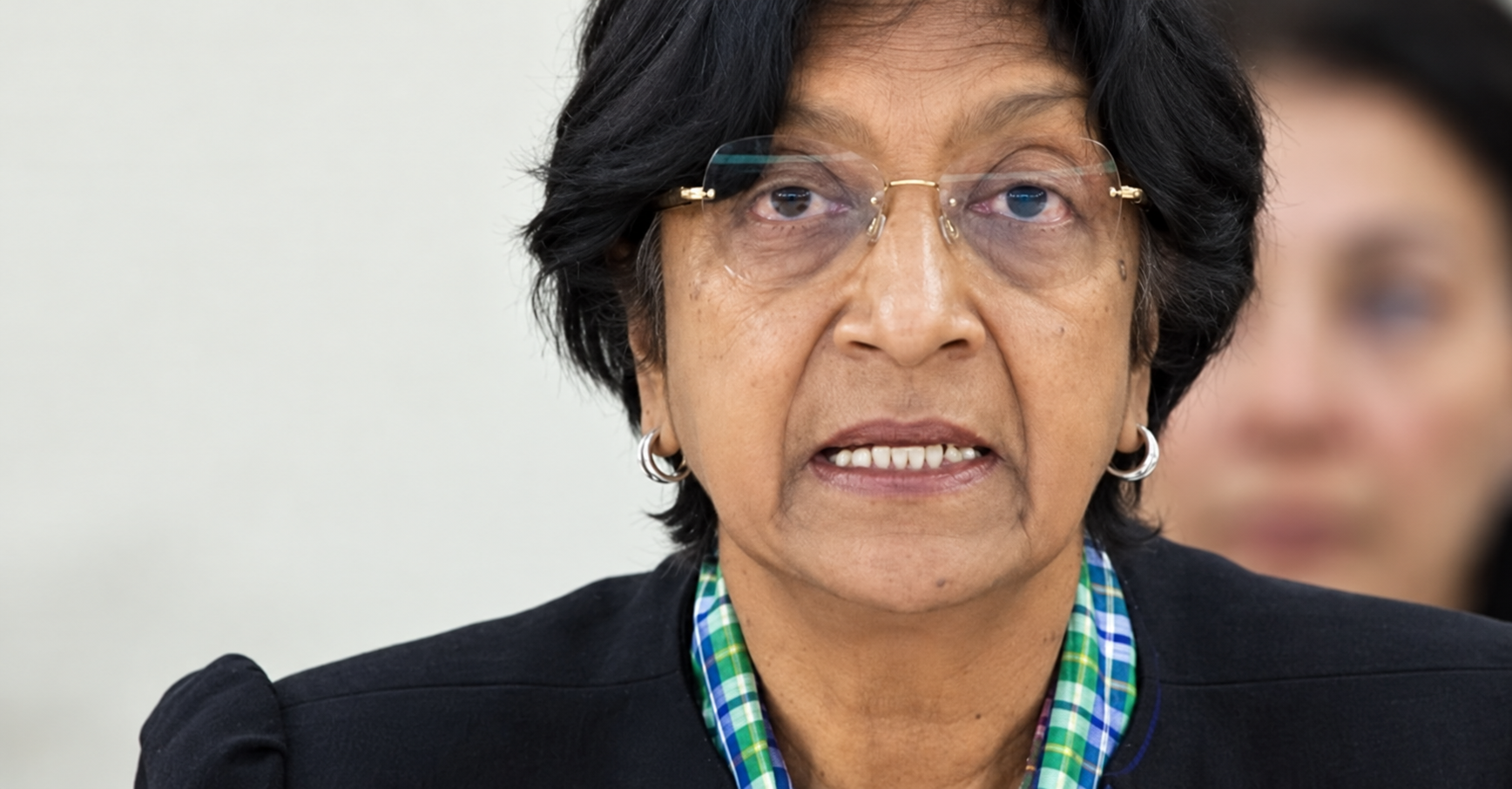
UN Human Rights Commissioner Navi Pillay (Photo credit: UN Photo/Jean-Marc Ferre)
FCRA recalls its response in 2012
Martin, an unarmed Black 17-year-old, was fatally shot by neighborhood watch volunteer George Zimmerman on Feb. 26, 2012, in Sanford, northeast of Orlando.
In April 2012, Pillay called for an immediate investigation into the killing as the case drew international attention and scrutiny of Florida’s Stand Your Ground law.
FCRA welcomed that call. The association’s current release cites an April 7, 2012, West Orlando News report that quoted David discussing the case’s global impact.
“The shooting death of Trayvon Martin and Florida’s Stand Your Ground Law have created a worldwide movement that calls into question how justice is delivered to victims of color,” David said at the time, according to the release.
FCRA describes the activism surrounding Martin’s death as a defining moment that galvanized a new generation of civil rights advocates.
Zimmerman was charged with second-degree murder and acquitted in July 2013. In February 2015, the U.S. Justice Department closed its separate investigation, finding insufficient evidence to pursue federal criminal civil rights charges.
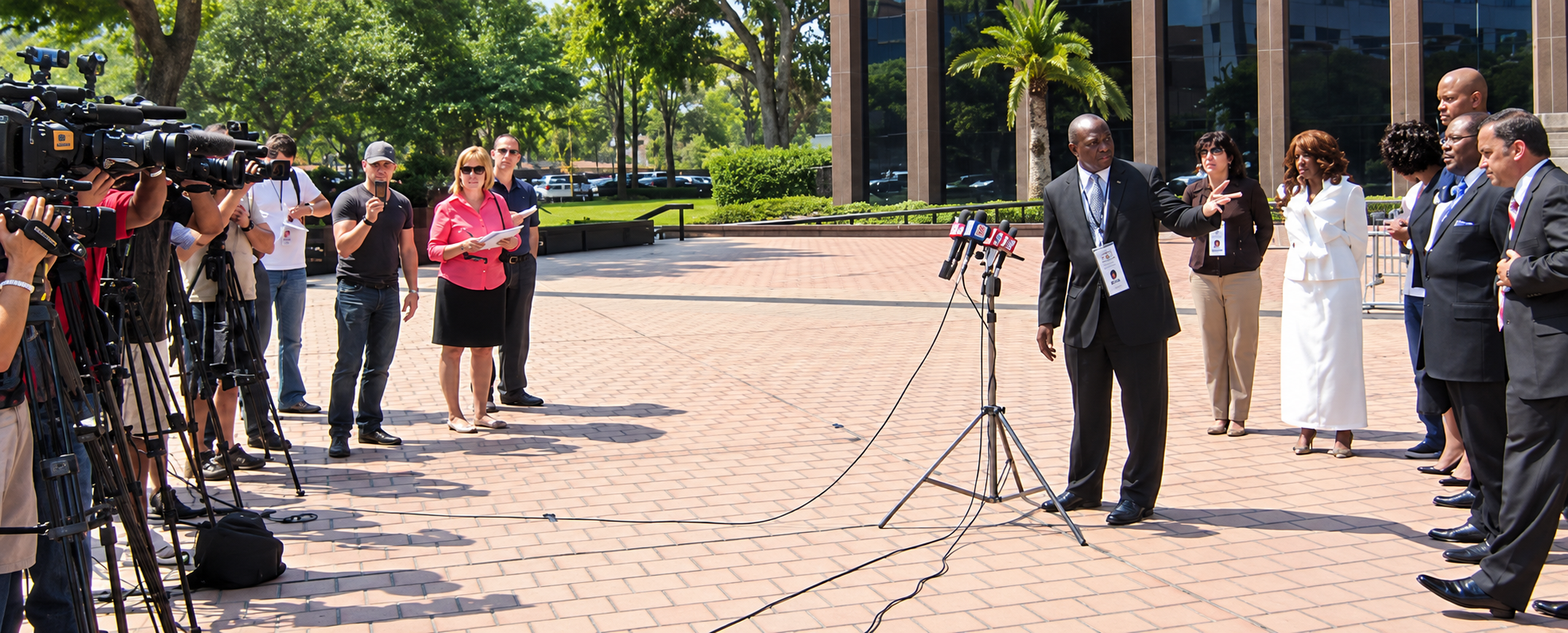
The Florida Civil Rights Association (FCRA) held a press conference outside the State of Florida’s regional offices in Orlando in 2012, calling on then-Gov. Rick Scott to take action following Trayvon Martin’s killing. Photo by FCRA.
Why Florida’s case drew global scrutiny
The Florida connection shows how the handling of a local killing can draw international scrutiny over racial discrimination, access to justice and the protection of human rights.
Pillay’s intervention brought those concerns into the international discussion surrounding Martin’s death. In September 2013, U.N. human rights experts also urged the United States to complete its civil rights investigation and examine concerns about racial profiling.
The significance lies in human rights oversight: how public institutions investigate deaths and provide equal treatment can attract attention beyond national borders. Pillay’s call was an appeal for investigation, rather than an international court judgment about Zimmerman’s guilt or Florida’s compliance with international law.
For FCRA, that connection remains relevant to how Florida leaders evaluate laws and practices affecting the communities they serve.
Pillay’s record in international justice
Pillay challenged discrimination under apartheid before serving on South Africa’s High Court, the International Criminal Tribunal for Rwanda and the International Criminal Court.
At the Rwanda tribunal, she was part of the judicial panel that established that rape and sexual violence can constitute acts of genocide, a landmark development in international criminal law.
David said honoring that career should also encourage accountability at home.
“Her Nobel Peace Prize recognizes a career built on confronting injustice through the rule of law,” he said. “Honoring that work means demanding transparent investigations and equal protection here at home. Rights belong to everyone.”
A renewed call for fairness in Florida
FCRA urged Florida leaders to safeguard impartial investigations, examine whether Stand Your Ground and other laws are applied fairly, and address policies or practices that produce discriminatory outcomes.
Founded in 2005, the association advocates for civil rights, human rights and civil liberties through education, advocacy and accountability. Its statement links Pillay’s international recognition to a continuing demand for fairness and human dignity in Florida.


 Central Florida News4 days ago
Tiffany Moore Russell Plans Orange County Campaign Stops Ahead of Early Voting
 Florida3 days ago
Trump Plans Fort Myers Rally as Byron Donalds Seeks to Become Florida’s First Black Governor
 Politics3 days ago
RNC Chairman Joe Gruters Calls Trump an ‘Absolute Machine’ Ahead of Midterm Elections
 Central Florida News4 days ago
Orlando Magic Beat Miami Heat 136-115 in Preseason Finale Behind Banchero, Bane


