

Politics
Trump reports little income from Truth Social, $1M from NFTs


Florida
Civil Rights Group Honors Nobel Peace Prize Winner Navi Pillay, Highlights Florida’s Trayvon Martin Connection

The Orlando-based civil rights association recalls supporting the former U.N. human rights chief’s 2012 call for an investigation into the teenager’s killing in Sanford.
ORLANDO, Fla. (FNN) — The Florida Civil Rights Association is congratulating 2026 Nobel Peace Prize winner Navanethem “Navi” Pillay, recalling her call for an investigation into Trayvon Martin’s killing and the international attention it brought to questions of racial equality and justice in Florida.
The Norwegian Nobel Committee announced Pillay’s selection Oct. 9 for her efforts to promote peace and international law. The South African jurist served as United Nations high commissioner for human rights from 2008 to 2014 and helped shape landmark international court decisions.
In a press release, FCRA President J. Willie David III said Pillay’s intervention connected a Florida family’s demand for answers to a broader concern for human rights.
“Pillay’s call for an investigation reinforced that a family’s demand for justice in Sanford mattered beyond Florida and the United States,” David said.
“We welcomed her intervention in 2012 because families deserve answers and the law must protect everyone equally.”
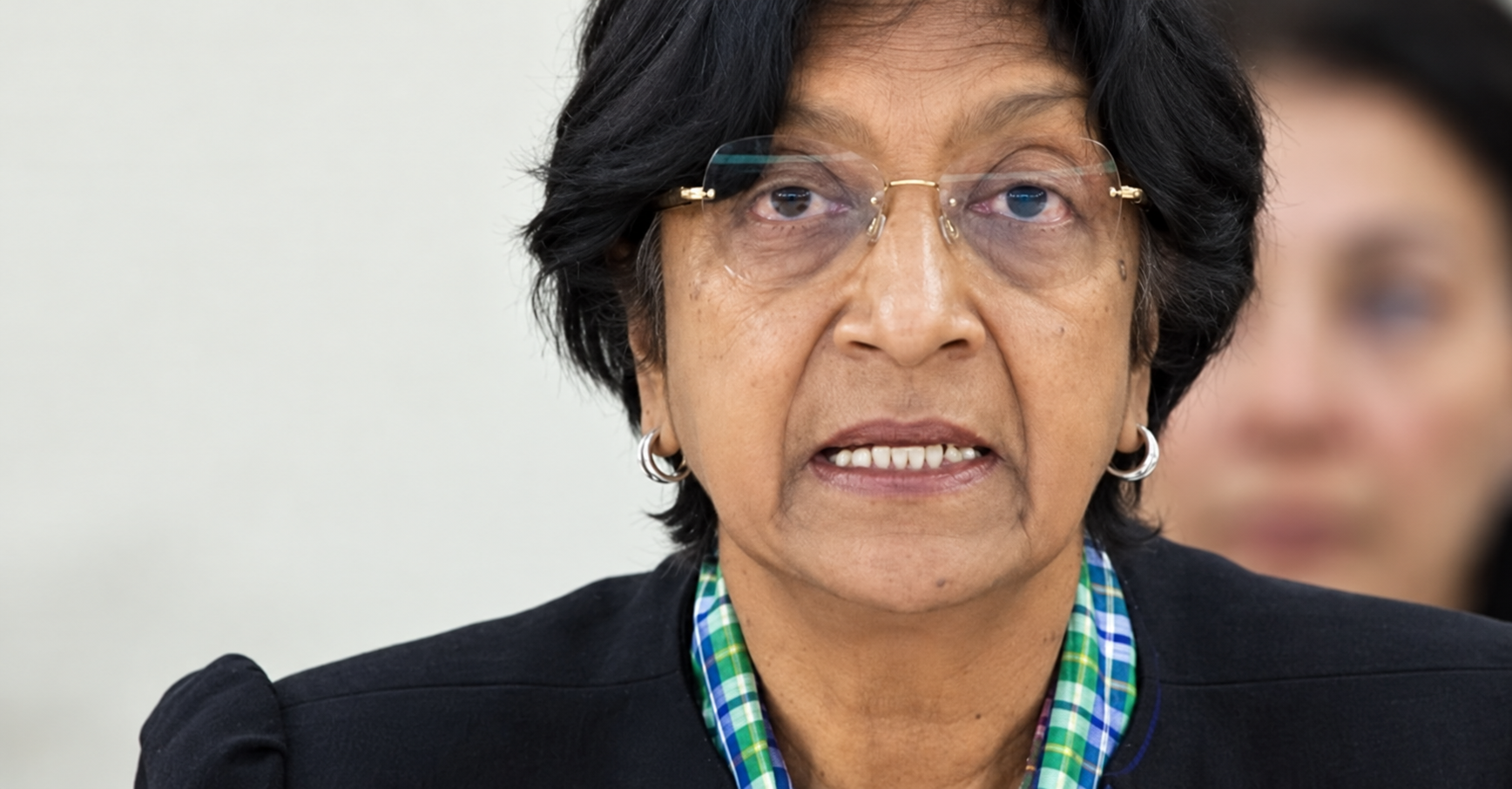
UN Human Rights Commissioner Navi Pillay (Photo credit: UN Photo/Jean-Marc Ferre)
FCRA recalls its response in 2012
Martin, an unarmed Black 17-year-old, was fatally shot by neighborhood watch volunteer George Zimmerman on Feb. 26, 2012, in Sanford, northeast of Orlando.
In April 2012, Pillay called for an immediate investigation into the killing as the case drew international attention and scrutiny of Florida’s Stand Your Ground law.
FCRA welcomed that call. The association’s current release cites an April 7, 2012, West Orlando News report that quoted David discussing the case’s global impact.
“The shooting death of Trayvon Martin and Florida’s Stand Your Ground Law have created a worldwide movement that calls into question how justice is delivered to victims of color,” David said at the time, according to the release.
FCRA describes the activism surrounding Martin’s death as a defining moment that galvanized a new generation of civil rights advocates.
Zimmerman was charged with second-degree murder and acquitted in July 2013. In February 2015, the U.S. Justice Department closed its separate investigation, finding insufficient evidence to pursue federal criminal civil rights charges.
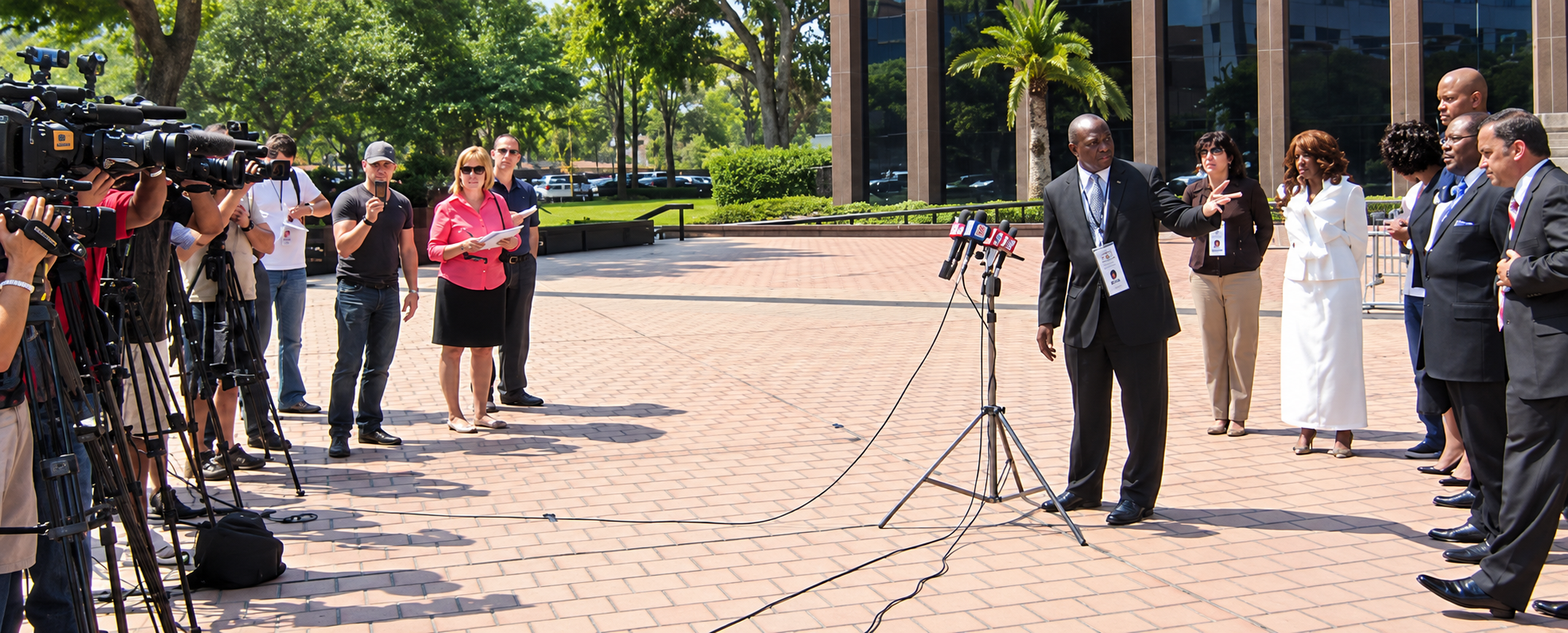
The Florida Civil Rights Association (FCRA) held a press conference outside the State of Florida’s regional offices in Orlando in 2012, calling on then-Gov. Rick Scott to take action following Trayvon Martin’s killing. Photo by FCRA.
Why Florida’s case drew global scrutiny
The Florida connection shows how the handling of a local killing can draw international scrutiny over racial discrimination, access to justice and the protection of human rights.
Pillay’s intervention brought those concerns into the international discussion surrounding Martin’s death. In September 2013, U.N. human rights experts also urged the United States to complete its civil rights investigation and examine concerns about racial profiling.
The significance lies in human rights oversight: how public institutions investigate deaths and provide equal treatment can attract attention beyond national borders. Pillay’s call was an appeal for investigation, rather than an international court judgment about Zimmerman’s guilt or Florida’s compliance with international law.
For FCRA, that connection remains relevant to how Florida leaders evaluate laws and practices affecting the communities they serve.
Pillay’s record in international justice
Pillay challenged discrimination under apartheid before serving on South Africa’s High Court, the International Criminal Tribunal for Rwanda and the International Criminal Court.
At the Rwanda tribunal, she was part of the judicial panel that established that rape and sexual violence can constitute acts of genocide, a landmark development in international criminal law.
David said honoring that career should also encourage accountability at home.
“Her Nobel Peace Prize recognizes a career built on confronting injustice through the rule of law,” he said. “Honoring that work means demanding transparent investigations and equal protection here at home. Rights belong to everyone.”
A renewed call for fairness in Florida
FCRA urged Florida leaders to safeguard impartial investigations, examine whether Stand Your Ground and other laws are applied fairly, and address policies or practices that produce discriminatory outcomes.
Founded in 2005, the association advocates for civil rights, human rights and civil liberties through education, advocacy and accountability. Its statement links Pillay’s international recognition to a continuing demand for fairness and human dignity in Florida.
Florida
Florida Governor Candidates: Donalds Spent Longer as a Democrat; Jolly Reports Longer Republican History

Central Florida News
Commissioner Uribe Announces New Date for Hispanic Heritage Festival Due to Weather

ORLANDO, Fla. (FNN) — Commissioner Uribe announced that the Hispanic Heritage Festival has been rescheduled due to weather conditions. The event will now take place Saturday, Oct. 24, 2026, from 9 a.m. to noon at Cypress Grove Park, 290 Holden Ave., Orlando.
The festival will celebrate the rich history, cultures, traditions and contributions of Hispanic and Latino communities through live music, dance performances, food and community resources.
Scheduled highlights include:
- Live music by youth orchestra The Nucleus Orchestral.
- Dance performances featuring Maria Saavedra of FusionFest with Huellas de Colombia, Unidos for Ecuador and Mexico Dansa.
- Food from Zaza.
- Community resources from 311 and other participants.
Join Commissioner Uribe and the community for a morning celebrating Hispanic and Latino heritage.
NEW DATE: Saturday, Oct. 24, 2026
TIME: 9 a.m. to noon
LOCATION: Cypress Grove Park
ADDRESS: 290 Holden Ave., Orlando, FL 32839



 Florida3 days ago
Florida Governor Candidates: Donalds Spent Longer as a Democrat; Jolly Reports Longer Republican History
 Central Florida News5 days ago
USF Comes Up Short at UTSA as Late Touchdown Seals 31-24 Loss
 Florida20 hours ago
Civil Rights Group Honors Nobel Peace Prize Winner Navi Pillay, Highlights Florida’s Trayvon Martin Connection


