

US NATIONAL NEWS
US Department of State Press Briefing with Spokesperson Matthew Miller

Published
3 years agoon
MR MILLER: I don’t know about the main act. I will do my best. Matt, want to start? Anything further, or I free to go?
QUESTION: Well, I’m just curious, because when the Secretary said by the end of the summer you won’t have confirmed ambassadors in Egypt, Israel, Jordan, or Lebanon. But I don’t think, unless I’m wrong – and please correct me if I’m wrong – that there has been anyone even nominated to replace Tom Nides.
MR MILLER: The point he was making is that we have —
QUESTION: Oh, I get the point.
MR MILLER: We had no —
QUESTION: I mean, you can’t complain if you don’t have —
MR MILLER: We – if – if we had a nominee today —
QUESTION: Maybe. But you don’t —
MR MILLER: — that nominee would still face the same blanket hold after that nominee went through the Senate, the regular process.
QUESTION: But – fine. But has —
MR MILLER: Still saying the blanket hold —
QUESTION: Has the – has the administration – has the White House nominated anyone?
MR MILLER: We have not yet nominated, but if you look at the number of —
QUESTION: (Off-mike.)
MR MILLER: Let me finish. If you look at the – if you look at the situation as it exists currently, all the nominees that start today are still backlogged based on what’s happening in the floor. There’s a – there is a huge backlog.
QUESTION: Okay. Okay. I’m not debating that point. I’m just wondering if – are there – have there been people nominated for those four – for those four posts?
MR MILLER: We have – I don’t have the full —
QUESTION: I think at least one of them has been.
MR MILLER: Yeah, I think —
QUESTION: But – but certainly no one for Israel.
MR MILLER: That’s right. Well, the ambassador for Israel just stepped down in the last two weeks, so the point —
QUESTION: Yeah. Well, yeah. But you’re complaining about something that’s going to happen later this summer but you don’t even have anyone in the pipeline.
MR MILLER: I would be more than happy to withdraw the complaint if the Senate decides to start moving on our ambassadees expeditious – our ambassadors expeditiously and we can count on the ambassador to nominate —
QUESTION: Okay.
MR MILLER: — nominee to Israel to be moved through unanimous consent, as these typically have been.
QUESTION: All right, I was just hoping you were going to make some news about who would be – who would be nominated.
MR MILLER: I don’t think I – I don’t – I don’t think I should —
QUESTION: Or as the new deputy – or as the new deputy secretary.
MR MILLER: I don’t think I should do that.
QUESTION: Did Ambassador Nides leave? Is he already – I’m sorry, but just to clarify on Ambassador Nides, did he already leave his post?
MR MILLER: I believe he’s – I believe he’s finished his tenure, yes.
Go ahead.
QUESTION: Thank you. I just wanted to follow up because we received a statement from Senator Paul, Rand Paul, in response to Blinken’s letter and comments. And he’s placing the blame with Chairman Menendez, saying if – saying the committee will only return to expedited procedure when Chairman Menendez signs COVID-19 document requests. Is that something that the State Department would encourage Menendez to do? Is that something that you – Blinken or officials have spoken to senators? Can you just speak to that?
MR MILLER: So I won’t get into what is an internal Senate issue. I will say with – from our perspective, we have already provided documents to Senator Paul that are responsive to his requests. We have made clear that we see this as an ongoing process. We will continue to provide documents that are responsive to his requests. But he is asking us for documents that are not State Department documents and documents that we cannot provide because they’re not in our possession but yet continues to use that as an excuse to hold up State Department nominees, as the Secretary pointed out – pointed out, who have never been held to this standard before. The vast majority of career ambassadors have been confirmed through unanimous consent.
So we are happy to continue to engage in a legitimate process with Senator Paul. I will let Senator Menendez speak to internal Senate issues, but he shouldn’t be holding our nominees hostage, because all that does is hurt our national security.
Go ahead, Janne.
QUESTION: Thank you, Matt. The UN Security Council failed to announce last week a statement condemning the North Korea’s ballistic missile launch violations due to opposition from China and Russia. As long as China and Russia protect North Korea in the UN Security Council, North Korea will not stop its provocations. What solution does the United States have to convince China and Russia?
MR MILLER: Well, I will just say, as you pointed out, you’re right; all of the members of the UN Security Council except Russia and China voted to condemn the DPRK’s continued violation of UN Security Council resolutions, expressing concern about continued launches, and calling for progress for dialogue. We hope the UN Security Council will continue to come together to address the DPRK’s actions.
And I will say that this is an issue that the Secretary raised in his meetings when we were in China. It’s an issue we continue to raise with China, and we would hope that China and Russia would urge the DPRK to come to the table.
QUESTION: Second question. South Korean President Yoon made a surprise visit to Ukraine and met with President Zelenskyy, and President Yoon promised to help Ukraine with military supplies and reconstruction. How can the U.S. evaluate this?
MR MILLER: We welcomed the visit and we welcomed the president’s expression of support. We always think it’s important when other foreign leaders can make the trip to Ukraine to speak firsthand with President Zelenskyy and other members of the Ukrainian Government to see the destruction that has been inflicted on that country by Russia, and we encourage every country in the world to join us in supporting Ukraine.
QUESTION: China?
MR MILLER: Yeah, go ahead.
QUESTION: Thank you. Thank you, Matt. My first question is about Pakistan just had its Corps Commanders’ Conference held today in which they urged Afghanistan to take care of the terrorist sanctuaries there which are coming and doing activities in Pakistan. And this – in one week this is the second time that Pakistan military has openly told Afghanistan to take some action, otherwise they are going to take some action against them. Your comments about that?
MR MILLER: So I don’t have any comment specifically on that, but I will say we have made very clear that we believe the Taliban has the responsibility to prevent the – Afghanistan from being used as a safe haven for launching terrorist attacks.
QUESTION: Okay. And my second question is about President Modi and the UAE president had a meeting a few days ago, and they decided to do their trade of over $8 billion and change it into their local currencies. We have seen a big twist in the dollarization value decrease over there. Is the U.S. paying any attention to that or doing any steps on that?
MR MILLER: We are, but I don’t have any comment on it.
QUESTION: Thank you.
MR MILLER: Said.
QUESTION: Thank you. A couple questions on the Palestinian-Israel issue. Peace Now reports that since the beginning of January, the Israelis have approved something like 13,000 new housing settlement units and so on. I mean, I sound like a broken record, but what could this administration do to sort of deter the Israelis instead of rewarding them? I mean, we see that the president of Israel is coming, maybe the prime minister of Israel is coming, so —
MR MILLER: I will say, as I have said before, that we have been absolutely clear on this issue. The United States opposes such unilateral actions that make a two-state solution more difficult to achieve and are an obstacle to peace. That includes settlement activity. We have made this clear publicly – made it clear in conversation with you a number of times – and we make it clear in our conversations with Israeli Government officials.
QUESTION: Another question on a journalist, a Palestinian journalist that has been arrested by the Palestinian Authority for conducting his job. I know that the PA – you’re the benefactor of the PA in many ways, so do you have any comment on the brutality of the Palestinian Authority in terms of dealing with Palestinian journalists?
MR MILLER: I don’t have any comment on this specific case. I would say that broadly speaking, the United States supports press freedom and the protection of all journalists in carrying out their work.
QUESTION: Yeah. Are you aware of the arrest of Akil Awawdeh?
MR MILLER: Seen the reports.
QUESTION: A follow-up on Israel?
MR MILLER: Yeah, go ahead.
QUESTION: Yes. Since the president’s visiting tomorrow and it’s been announced today that Prime Minister Netanyahu has been invited to come to the U.S. to meet with President Biden, you’ve expressed these concerns over and over, often in response to Said questions, but in response to many different actions that the Israeli Government has taken, you’re expressing concerns about the policies of this government, but we now see an invitation being extended. We’ve got the president coming. I guess what’s your response to the – I think a lot of people would see that and say you’re not following up these concerns with any sort of tangible action.
MR MILLER: I would say I think that the characterization oversimplifies our relationship with this government. As is true for a number of our allies, there are things with which we agree with Israel, things with which we disagree. We make clear in all of our engagements with Israel that our commitment to their security is ironclad. At the same time, we make – we raise concerns that we have with them.
We also have priorities that we’re working on with respect to the Government of Israel. As you know, Secretary Blinken traveled to Saudi Arabia recently, where he pressed for normalization with Saudi Arabia. We’ve launched an extensive effort to deepen and broaden normalization with other countries in the region.
So yes, we do have concerns with certain actions the Government of Israel takes, but we have other issues on which we have shared priorities and we work together. So our relationship with them is one where we have some things we agree on and work together, and other places where we have concerns and we press them privately and publicly.
QUESTION: But one of those issues that you are in touch with them on is the Israelis getting access to the Visa Waiver Program. There’s been some reporting out of Israel; Israeli officials seem to be sort of suggesting that they’re going to be able to move forward on that, that there might be a pilot program to see whether Palestinian Americans can travel in the same way as other Americans in Israel. Could – is there any update you can give us on Israel’s chances of getting into that program soon?
MR MILLER: I am not going to comment on those reports or prognosticate on their chances other than to say that we continue to be in discussions with Israel about this matter. We continue to work with them toward fulfilling the Visa Waiver Program requirements, including extending reciprocal privileges to all U.S. citizens and nationals, including Palestinian Americans, to travel to and through Israel. It’s an important issue. It’s one we’ve been engaged with them on for some time, but I don’t have an update on the status.
QUESTION: Moving to China?
MR MILLER: Yeah, go ahead.
QUESTION: Thank you, Matt. Last week, Iraq has signed a deal with Tehran that exchanged gas for oil, and that – this has likely violated your sanctions on Iran. Any reactions to that?
MR MILLER: I don’t. We continue to monitor that issue.
QUESTION: Okay, and one last question. This week, the Iraqi prime minister visited Syria and met with Bashar al-Assad, and also they discussed about different issues in the region. As the Syrian Bashar al-Assad coming back to the regional arena, do you have a clear policy towards the Kurdish issue in Syria? How do you want to resolve the Kurdish issue in Syria at this stage?
MR MILLER: Let me take that one back.
QUESTION: China?
MR MILLER: Go ahead.
QUESTION: Thank you. Turkish President Recep Tayyip Erdogan signaled that we might have to wait till October to seeing the Turkish parliament ratifying Sweden’s accession to NATO. Based on your recent conversations that you have with the Turkish Government, are you optimistic that this might move forward faster and get it done earlier, before October?
MR MILLER: I won’t speak to timelines. I will say that we were – we are optimistic that Sweden’s accession into NATO will be approved. We appreciate Prime Minister Erdogan’s work on this matter – president, excuse me; I knew as it came out of my mouth that it was wrong. We appreciate President Erdogan’s work on this matter, but I don’t have any timeline other than to say that we hope it’s approved as soon as possible.
Go ahead, Guita.
QUESTION: Thanks. Do you have any updates on the work of the Office of the Special Envoy for Iran in gaining the release of the dual-national Americans imprisoned in Iran?
MR MILLER: I do not. It’s an issue on which that office continues to be engaged. We are working to return – we are working to secure the return of those American citizens, but I don’t have any update.
QUESTION: Has the needle moved at all since past communications?
MR MILLER: I just don’t have any update other than to say it continues to be an important priority for us.
QUESTION: Okay. Again in Iran now, the police or the government has started a new crackdown for hijab. Since the anniversary of Mahsa Amini’s death is approaching, any comments on that?
MR MILLER: I will say that we are concerned by the reports that Iran’s so-called morality police are cracking – again cracking down to enforce mandatory hijab. It seems the regime has learned nothing from the recent protests. And we believe that women and girls everywhere should be allowed to wear what they want.
Yeah, go ahead.
QUESTION: Thank you.
QUESTION: Me?
MR MILLER: Yeah.
QUESTION: Thank you. Kosovo Prime Minister Albin Kurti has stated that Kosovo police is the extension of the KLA, which was the militia during the war in the ’90s. So if the Kosovo police – president of Serbia told me in the interview for the public today – I’m quoting – he said, “If the Kosovo police is the successor of the KLA, then the legal fact is, the KLA and all the groups that emerged from it are prohibited by the UN Resolution 1244.” He said that he’s going to talk about this with the NATO secretary general this week in Brussels. My question: Do you support Albin Kurti’s rhetoric that Kosovo police is the extension of the KLA?
MR MILLER: Let me take that one back and get you an answer.
QUESTION: Okay. Can I ask another?
QUESTION: Sorry, I —
MR MILLER: Go – yeah, go ahead. I’ll give a follow-up.
QUESTION: Okay.
MR MILLER: I’ll come to you next. Go ahead.
QUESTION: So the other thing related to the situation in the north of Kosovo – so president of Serbia said that since the beginning of this year – I’m quoting him – seven Serbs have been wounded in attacks by the Albanians. And he said this often involved official Albanian figures like police officers or members of Kosovo security forces. And he said no legal proceedings are being conducted against those responsible for targeting Serbian population in the north. So – and he said that NATO must put an end to all these provocations. So are you as the United States going to address the arrest of Serbian population in the north Kosovo?
MR MILLER: I will say – I will reiterate what we’ve said before, which is that we urge both sides to take steps to de-escalate and return to the EU-facilitated dialogue.
Go ahead.
QUESTION: Yeah, thanks, Matt. Two quick questions regarding China. What is President Biden’s response to holding China accountable for their organ harvesting, forced sterilization, labor and abortion of Muslim, or Muslim Uyghurs, in Chinese internment camps, as well as Christian persecution, not only in China but internationally? And then a follow-up on —
MR MILLER: I will say we have been very clear that we oppose the treatment of Uyghurs in China and have taken steps already – a number of steps to hold China accountable for those actions.
QUESTION: Okay, about Christian persecution, do you have a comment?
MR MILLER: And the same. Go ahead.
QUESTION: Okay. And then what is President Biden’s response to U.S. national security concerns with Chinese companies owning American farmland and businesses?
MR MILLER: Let me take that one back.
QUESTION: China?
MR MILLER: Go ahead.
QUESTION: Yeah, also on China. Has China provided any explanation for Foreign Minister Qin Gang’s absence?
MR MILLER: They’ve said that he is dealing with health issues. Secretary Blinken met at the end of last week with Wang Yi, another one of his counterparts, and expressed his best wishes to see him soon.
QUESTION: And then on a different topic, did the precedent set by the department in the Afghan dissent cable – giving that to the House Foreign Affairs Committee – set or, like, change the way or allow Senator Rand Paul to make demands that he’s making?
MR MILLER: I certainly don’t believe so. We saw that as an extraordinary accommodation that we made to the Congress in a very special circumstance. As you know, we allowed members of Congress to come here and read that cable behind closed doors. We see that as a very different issue than the demands that Senator Paul is making. And again, I would just reiterate Senator Paul can make legitimate requests of the State Department, of others in the administration. What we object to is him holding hostage nominees who are career Foreign Service officers who have served in Republican and Democratic administrations alike. Many of them have been nominated to and confirmed for ambassadorships under Republican presidents, including the previous administration. Holding those nominees up for issues that have nothing to do with their qualifications and hurting our national security – our national security in the process, that’s what we object to.
Shannon.
QUESTION: I’ll ask you about the Ukrainian counteroffensive. A defense official said today that since the latest counteroffensive began, they’ve been able to retake about 81 square miles of territory. That’s a little larger than the size of D.C. Now, compare that to the 4,600 square miles that Ukraine was able to take during the first counteroffensive. Does the U.S. and its allies see that as a significant step forward for Ukraine, or does the strategy here need to be revised?
MR MILLER: I will say, as I’ve said consistently since the beginning of this counteroffensive, that from this podium I’m not going to pass judgment on the progress or provide kind of minute-by-minute updates on what is ultimately a military matter that doesn’t even involve our own military. I will say, from our perspective, obviously the Russians have had time to dig in, to fortify, to put landmines all over the Ukrainian countryside. And so I know that the Ukrainians expected that this would be a difficult process; we expected that it would be a difficult process. I think the important thing is that the Ukrainians have everything they need to conduct this counteroffensive. They have yet to commit all of the military units that they have available to them, including some units that were trained by NATO forces over the past year. So I would say it is still early days in the counteroffensive, but as to any battlefield assessments, I will leave that to the Ukrainians.
Yeah, go ahead.
QUESTION: So a couple of hours ago, House Foreign Affairs Chairman Michael McCaul said he hopes that U.S. could put some leverage on countries like Türkiye that are depending on F-16s to use their leverage on Putin for the grain deal. Is there any link between F-16 sales to Türkiye and the grain deal? And are you in touch with Congress or Ankara today about Russia’s decision about the grain deal?
MR MILLER: There is no link, and I will say that Türkiye has been at the forefront of encouraging Russia to first enter into and then extend the Black Sea Grain Initiative. So Türkiye has been a leader in this effort of trying to secure food supplies for the entire world. We have commended them for their efforts, and it is Russia that is holding up this initiative, not Türkiye or any other country.
Go ahead.
QUESTION: Thank you, Matthew. Very quick question on – two question on Bangladesh. After returning back Under Secretary Zeya, Bangladesh regime is back to – under attack the opposition party’s release. And just we – yesterday, there was an election – by-election, though main opposition boycotted because of that, that the – the – even independent candidate under attack, came under – he’s in hospital now – and less than 10 percent of vote casted. And so how could you believe that Prime Minister Hasina will ensure free, fair election as 2014 and 2018 election was not free, fair, and still the by-election is not free and fair, and candidates, like, under attack? So what is your position on that? Are you following this?
MR MILLER: I would say that this type of political violence has no place in democratic elections. We encourage the Government of Bangladesh to investigate any reports of violence thoroughly, transparently, and impartially, and to hold the perpetrators of violence to account. And I would say, as we have said before, that we would expect the Government of Bangladesh to hold free and fair elections, and we continue to monitor it closely.
QUESTION: Yeah, the – just Wednesday night in New York, one of the opposition activists protest in front of the ruling visiting Awami League party MP. And just after few hours, the – his family got under attack in this – back home in Bangladesh, his brother and his mother and the family members. And the government ruling party put it in live Facebook that they are attacking who is raising voice outside the country, they are attacking their home, so it on the live. So if someone is talking from U.S. or protesting or arguing with the government party, so – and they are not safe in their home country. So what is your views on that?
MR MILLER: I would just say, again, that that type of violence that you mentioned has no place in democratic elections.
QUESTION: One more on Bangladesh, Matt?
MR MILLER: Let me go —
QUESTION: Couple of questions. I wondered if you could say anything about the meeting the Secretary has today with the CEOs of Intel, Qualcomm, and Nvidia, and how much the – this department sort of looks to the private sector to – in terms of feedback on policy towards China, particularly restrictions on semiconductors.
MR MILLER: Yeah, I would say the Secretary looked at that meeting as an opportunity to do two things: number one, to share his perspective on the industry and on supply chain issues, especially after his recent visit to China; and number two, to hear directly from those companies about how they see supply chain issues, about how they see doing business in China. We’ve seen China recently announce restrictions on the export of materials that are used to construct chips, and so he saw it as a productive meeting to exchange views on those two issues.
QUESTION: And just moving on to a slightly different issue, Thailand, last week the parliament was unable to – or didn’t approve Pita, the head of the Move Forward Party, to become the prime minister. I wondered – I know the U.S. has kind of spoken a little bit to the current sort of post-election environment in Thailand. But are you concerned that the party – Move Forward is the party that won the most seats in the elections in May – that a government could end up being formed without them being represented?
MR MILLER: Let me say a few things. First, the United States doesn’t have a preferred outcome in the Thai election. We don’t support any particular party or politician. What we do support is multiparty democracy and a post-election process that reflects the will of the Thai people and supports a democratic and prosperous future for Thailand.
We are very closely watching the post-election developments. That includes the recent developments in the legal system, which are of concern. We believe this moment is an opportunity for Thailand to demonstrate its commitment to democracy.
QUESTION: Just you mentioned developments in the legal system that are of concern. I wonder if you could say a little bit more clearly, if Mr. Pita is disqualified from taking office or if the party is dissolved, does that represent a red line for the U.S.?
MR MILLER: I don’t want to speculate about how we might react to events that have not yet occurred. I will say that we are watching it closely and the recent developments are of concern to us.
Michel, why don’t you go ahead and close us out.
QUESTION: The U.S. has attended a meeting in Qatar on Lebanon today, and the meeting included Saudi Arabia, Egypt, France, and Qatar. Do you have any readout for the meeting?
MR MILLER: We have a statement that has either gone out while I was at the podium or will be going out shortly on this meeting. What I will say is that the five countries underscored our commitment to Lebanon’s sovereignty and independence. We noted with concern, however, that nearly nine months after the end of the president’s term, Lebanon’s political leaders have yet to elect a successor. We also underscore the desperate need for judicial reform and implementation of the rule of law, especially in regard to the 2020 Port of Beirut explosion investigation. And we’ll have more details in the statement that comes out soon.
QUESTION: Does the U.S. support the elections of the Lebanese Armed Forces commander as the president?
MR MILLER: We do not take positions on elections. Thank you.

You may like
Florida
Trump Plans Fort Myers Rally as Byron Donalds Seeks to Become Florida’s First Black Governor
Published
1 week agoon
October 17, 2026
FORT MYERS, Fla. (FNN) — President Donald Trump is scheduled to hold a midterm rally in Fort Myers on Friday, Oct. 23, bringing his campaign efforts to the congressional district represented by his endorsed candidate for Florida governor, U.S. Rep. Byron Donalds.
Donalds, the Republican nominee, faces Democrat David Jolly in the Nov. 3 election. If elected, Donalds would become Florida’s first Black governor, succeeding term-limited Republican Gov. Ron DeSantis.
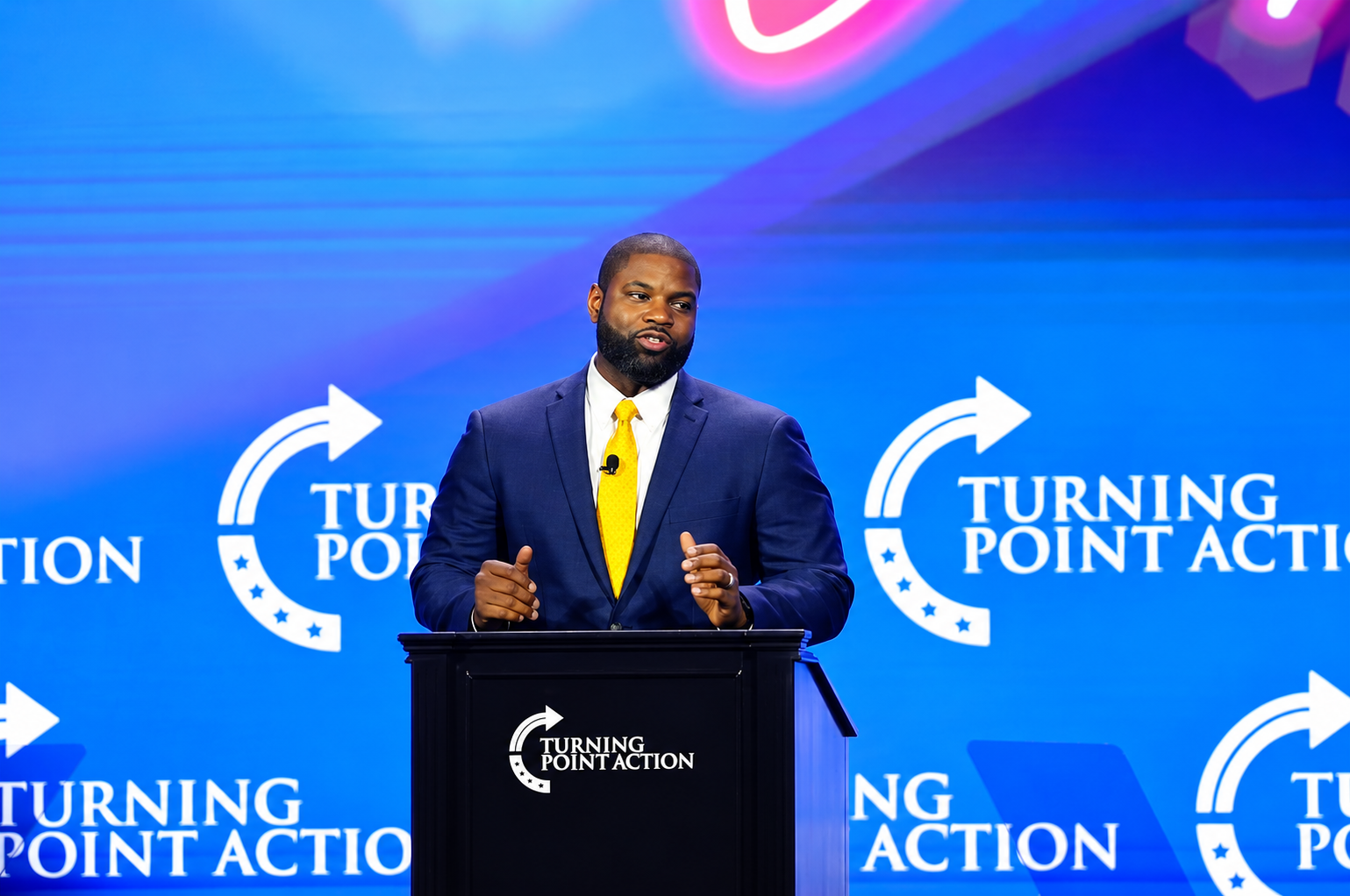
U.S. Rep. Byron Donalds speaks at a Turning Point Action event in Florida. Photo by Roman Garay / Florida National News.
Rally Set for Oct. 23
Trump’s remarks are scheduled to begin at 2 p.m., with doors opening at 10:30 a.m., according to the Republican Party’s event registration page. All times are Eastern.
Gulf Coast News reports that the rally will take place at Alico Arena at Florida Gulf Coast University. However, the official GOP registration page still lists the venue as “To Be Announced.” Attendees should check that page for confirmation and updates.
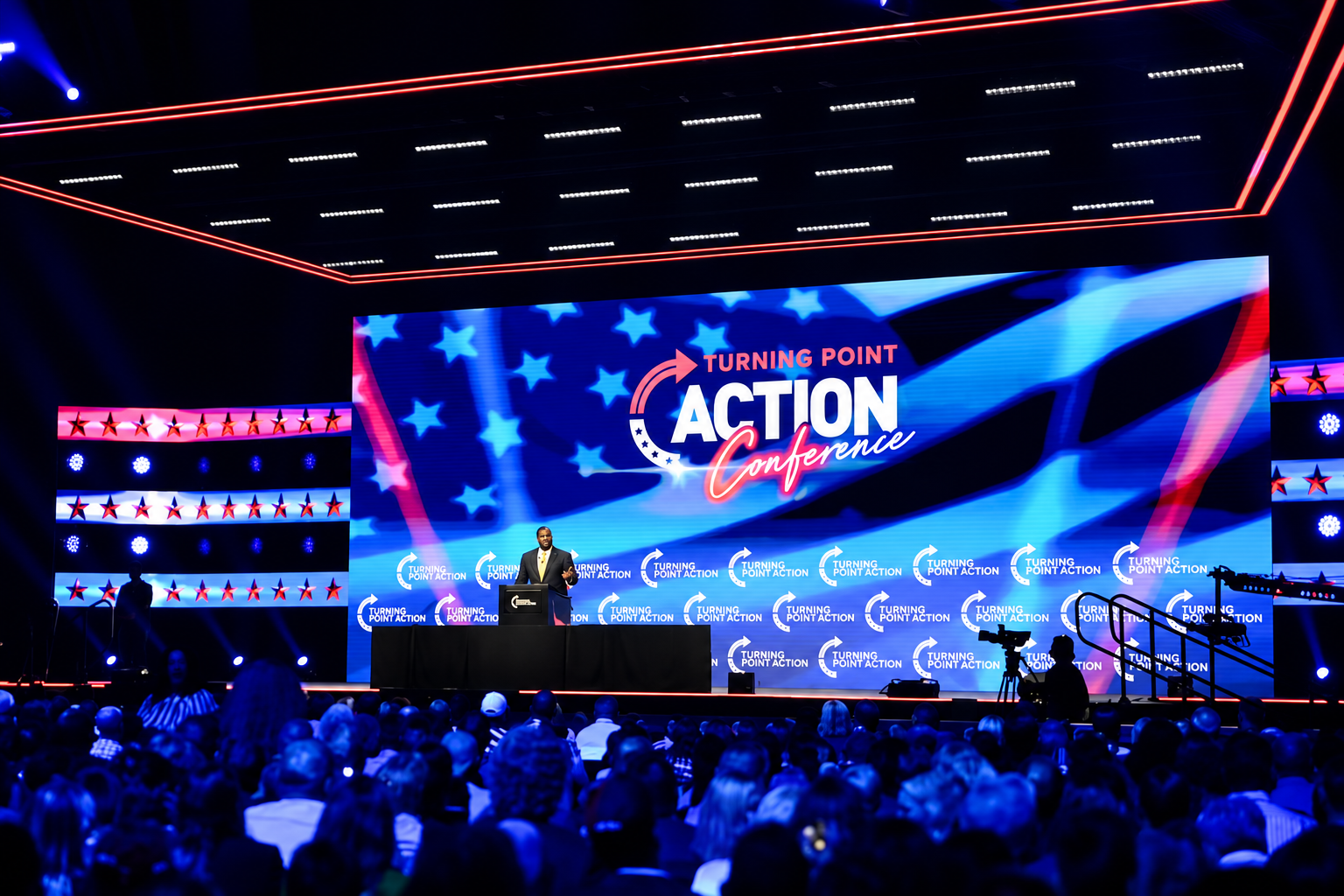
Prominent conservative figures, including Tucker Carlson, then-former President Donald Trump, U.S. Rep. Byron Donalds and Megyn Kelly, rallied Republican voters during the Turning Point Action Conference at the Palm Beach County Convention Center, July 15-16, 2023.
Photo by Roman D. Garay / Florida National News.
Trump’s Endorsement Connects President to Historic Bid
Trump has endorsed Donalds, whose campaign lists the president among its prominent Republican supporters. The Fort Myers visit places Trump in Donalds’ Southwest Florida political base during the closing weeks of the election.
Following his primary victory, Donalds acknowledged Trump’s influence among Republican voters.
“Obviously, he has the strongest following of anybody in our party,” Donalds said, according to Associated Press reporting.
A Donalds victory would give Florida its first Black governor and extend Republican leadership in the governor’s office. Trump’s endorsement connects the president to that potentially historic outcome, although the rally announcement does not identify the event as exclusively supporting Donalds.
Republican Unity and Voter Turnout
Donalds called for Republicans to unite after the primary, telling supporters, “Tonight we are one united Republican Party,” according to the AP.
The Fort Myers rally will provide Trump another platform to address supporters ahead of the Nov. 3 midterm elections. The published event announcement confirms his appearance but does not list additional speakers.
Politics
RNC Chairman Joe Gruters Calls Trump an ‘Absolute Machine’ Ahead of Midterm Elections
Published
1 week agoon
October 17, 2026
WASHINGTON (FNN) — Republican National Committee Chairman Joe Gruters is urging Republicans to focus on voter turnout ahead of the Nov. 3 midterm elections, praising President Donald Trump’s campaign appearances and arguing that the party’s success depends on getting supporters to the polls.
In a Fox News appearance highlighted in an RNC news release, Gruters described Trump as an “absolute machine” and pointed to the president’s rallies as a central part of Republicans’ election strategy.
Gruters: ‘It’s All About Turnout Now’
Gruters expressed confidence in Republican candidates while sharply criticizing their Democratic opponents.
“We have strong candidates; [Democrats] have incredibly weak candidates. It’s all about turnout now. That’s why the president’s going to all these rallies. He’s an absolute machine, getting the job done,” Gruters said, according to the release.
His remarks emphasized voter mobilization as Republicans seek to protect and expand their congressional majorities.
RNC Chairman Highlights Trump’s Policies
Gruters also praised the administration’s policies, particularly its approach to the southern border, presenting those efforts as reasons voters should support Republican candidates.
“This president deserves a lot of credit. He deserves a lot of praise for all these great things that he has done,” he said.
The release included broader claims about border enforcement and drug trafficking but did not provide supporting data. Those statements represent Gruters’ assessment of the administration’s record.
Florida Connection to National GOP Leadership
Gruters, a former chairman of the Republican Party of Florida, now leads the national party’s effort to rally Republican voters. The Florida GOP described him as a longtime Trump ally when announcing his election as RNC chairman.
His national role places a political leader with Florida party experience at the forefront of Republicans’ midterm turnout campaign.
Closing Message: Get Supporters to the Polls
“This race all comes down to turnout,” Gruters said.
He framed the election as a choice about the country’s direction and urged voters to continue supporting Trump and conservative leadership.
“If you believe in the American dream, and you still have hope that you or your children could achieve it, then you’ve got to continue the leadership of the conservative party and this president, Donald J. Trump.”
Business
Dallas Mayor Eric Johnson Listed as Speaker for Global AI, Supply Chain Summit
Published
3 weeks agoon
October 9, 2026
Organizers say the Oct. 26–27 conference will bring together business leaders, policymakers and technology professionals for discussions on global commerce, digital transformation and industry innovation.
DALLAS, TX (FNN) — Dallas Mayor Eric L. Johnson is listed as an invited speaker for the Global Procurement, Supply Chain, AI & Logistics Summit and Global Recognition Awards 2026, scheduled for Oct. 26–27 in Dallas, according to an announcement from the event’s organizer.
The American Association of Procurement, Supply Chain and Tourism Management, known as AAPSCM, said the two-day summit will take place at the AC Hotel & Residence Inn Dallas by the Galleria, 5460 James Temple Drive.
The conference will focus on artificial intelligence, supply chain resilience, innovation and the future of global commerce.
Mayor listed among international speakers
Organizers identified Johnson among the invited speakers joining executives, policymakers, academics, consultants and professionals in procurement, supply chain management, technology and logistics.
The announcement describes participants as coming “from the United States and around the world.”
According to the release, Johnson is listed among speakers participating in the Oct. 27 program. The announcement does not specify the subject or time of his remarks.
AI, forecasting and digital transformation
The second day’s agenda includes a session on artificial intelligence and machine learning in inventory management, forecasting, and sales and operations planning.
An executive leadership session titled “Driving Innovation & Digital Transformation” is scheduled to follow.
The program will examine technology’s role in procurement, logistics and supply chain operations, with an emphasis on how leaders respond to changing business conditions.
Awards to recognize industry achievement
The summit will also include procurement and supply chain awards, followed by Global Excellence Awards recognizing individuals, organizations and industry leaders.
Organizers said the awards program includes more than 35 categories spanning procurement, supply chain management, artificial intelligence and logistics.
The announcement describes the awards as recognizing “achievement, innovation and leadership.”
Executives and decision-makers expected
AAPSCM said it expects attendees to include chief executives, chief procurement officers, chief supply chain officers, chief operating officers and technology leaders.
The anticipated audience also includes procurement directors, logistics professionals, government representatives and specialists in AI and digital transformation.
About the organizer
AAPSCM describes itself as a U.S.-based nonprofit professional organization that supports professional development through certification, education, training, membership, conferences and international collaboration.
Event and registration information
- Event: 2nd Global Procurement, Supply Chain, AI & Logistics Summit & Global Recognition Awards 2026
- Dates: Oct. 26–27, 2026
- Venue: AC Hotel & Residence Inn Dallas by the Galleria
- Address: 5460 James Temple Drive, Dallas, Texas 75240
- Organizer: American Association of Procurement, Supply Chain and Tourism Management
- Registration: aapscm-conferences.org
- Organization: aapscm.org


FNN Newsletter
Trending


 Central Florida News4 days ago
Broadcaster Ray Cruz Santiago Criticizes Samuel Vilchez Santiago With Communist Graphics, Puerto Rican Identity Claims
 Central Florida News5 days ago
Festival of Trees Marks 40 Years With Holiday Displays, Santa Breakfasts and Parties
 Entertainment5 days ago
“4000 Days,” “Frampton” Set for Naples International Film Festival Oct. 24–25
 Business5 days ago
GOAA Highlights Airport Improvements, Approves New Small Business Policies
 Florida5 days ago
Nikki Fried to Challenge Trump’s Economic Record Ahead of Florida Visit


