Politics
Allegations Fly as Recall Vote Looms for California’s Newsom
Published
5 years agoon
LOS ANGELES (AP) — In a blitz of TV ads and a last-minute rally, California Democratic Gov. Gavin Newsom urged voters Sunday to turn back a looming recall vote that could remove him from office, while leading Republican Larry Elder broadly criticized the media for what he described as double standards that insulated Newsom from criticism and scrutiny throughout the contest.
The sunny, late-summer weekend was a swirl of political activity, as candidates held rallies, continued bus tours and cluttered the TV airwaves with advertising offering their closing arguments in advance of the election that concludes Tuesday.
Newsom — who is expecting President Joe Biden on Monday for a capstone get-out-the-vote rally in Long Beach — was in a largely Hispanic area on the northern edge of Los Angeles, where he sought to drive up turnout with the key voting bloc.
Elder also was in Los Angeles, where he was joined by activist and former actress Rose McGowan, who repeated her claims from recent days that Newsom’s wife, Jennifer Siebel Newsom, attempted to persuade her in 2017 not to go public with her allegations of sexual misconduct against Hollywood producer Harvey Weinstein.
Siebel Newsom’s office described the allegations as a “complete fabrication.” In a brief interview with The Associated Press, Newsom characterized McGowan’s claims as a “last-minute classic hit piece” from one of Elder’s supporters.
The governor called Elder desperate and grasping, saying McGowan’s claims about his wife “just shows you how low things go in campaigns these days.”
He echoed his earlier criticism of Elder, saying the conservative talk show host and lawyer “doesn’t believe that women have the right to their own reproductive freedoms, he’s devoutly opposed to Roe v. Wade, doesn’t believe there’s a glass ceiling, doesn’t believe in pay equity laws.”
During her appearance, McGowan spoke warmly of Elder and lambasted Hollywood Democrats who she said traumatized her life. She now lives in Mexico.
“Do I agree with him on all points? No,” McGowan said. “So what. He is the better candidate. He is the better man.”
The last-minute exchange highlighted growing tensions in the election, which largely grew out frustration with Newsom’s pandemic orders that shuttered schools and businesses during the pandemic. Voting concludes Tuesday. Recent polling shows Newsom is likely to hold his job.
As Newsom’s “first partner,” Siebel Newsom, an actress turned documentary filmmaker, has championed gender equality and society’s treatment of women and families.
McGowan, 48, who is known for her role in the “Scream” movie franchise, was one of the earliest of dozens of women to accuse Hollywood producer Harvey Weinstein of sexual misconduct, making her a major figure in the #MeToo movement.
Elder, who could become the state’s first Black governor, targeted some of his sharpest remarks at what he described as skewed media coverage.
Earlier this week, his walking tour of homeless encampments in LA’s Venice Beach neighborhood was cut short after a woman bicyclist wearing a gorilla mask threw an egg toward Elder and then took a swing at a member of his entourage. The confrontation set off strong reactions on Twitter, with conservatives charging the incident wasn’t immediately branded a racist attack because Elder is a conservative.
If he was a Democrat “it would have been a major story,” Elder said. He also said McGowan’s accusations largely have been ignored by the media, but argued that if similar charges had been made about him “that’s all you guys would be talking about.”
“This is a double standard,” he said. “I’m sick of it.”
Emails posted on Twitter by McGowan showed she had contact with Newsom’s wife, which her office confirmed but said their communication was “as fellow survivors of sexual assault and in Jennifer’s former capacity leading the Representation Project, an organization that fights limiting gender stereotypes and norms.”
One of McGowan’s key claims is that during a 2017 phone conversation, Newsom’s wife referenced a law firm that was working with Weinstein and asked her what the firm could do “to make you happy.”
McGowan said Sunday she didn’t recognize the firm’s name at the time. “I had no idea who that was. So, I just said nothing and hung up on her. That was my last contact with her,” she said.
The election will determine whether Newsom can complete his first term or will be tossed out of office more than a year early. Voters are being asked two questions: Should Newsom be recalled and, if so, who should replace him? If he gets a majority vote on the first question, the second question with the names of 46 replacement candidate is irrelevant. Otherwise, the highest vote-getter among the replacement candidates would become governor.
You may like
Florida
Civil Rights Group Honors Nobel Peace Prize Winner Navi Pillay, Highlights Florida’s Trayvon Martin Connection
Published
1 day agoon
October 13, 2026The Orlando-based civil rights association recalls supporting the former U.N. human rights chief’s 2012 call for an investigation into the teenager’s killing in Sanford.
ORLANDO, Fla. (FNN) — The Florida Civil Rights Association is congratulating 2026 Nobel Peace Prize winner Navanethem “Navi” Pillay, recalling her call for an investigation into Trayvon Martin’s killing and the international attention it brought to questions of racial equality and justice in Florida.
The Norwegian Nobel Committee announced Pillay’s selection Oct. 9 for her efforts to promote peace and international law. The South African jurist served as United Nations high commissioner for human rights from 2008 to 2014 and helped shape landmark international court decisions.
In a press release, FCRA President J. Willie David III said Pillay’s intervention connected a Florida family’s demand for answers to a broader concern for human rights.
“Pillay’s call for an investigation reinforced that a family’s demand for justice in Sanford mattered beyond Florida and the United States,” David said.
“We welcomed her intervention in 2012 because families deserve answers and the law must protect everyone equally.”
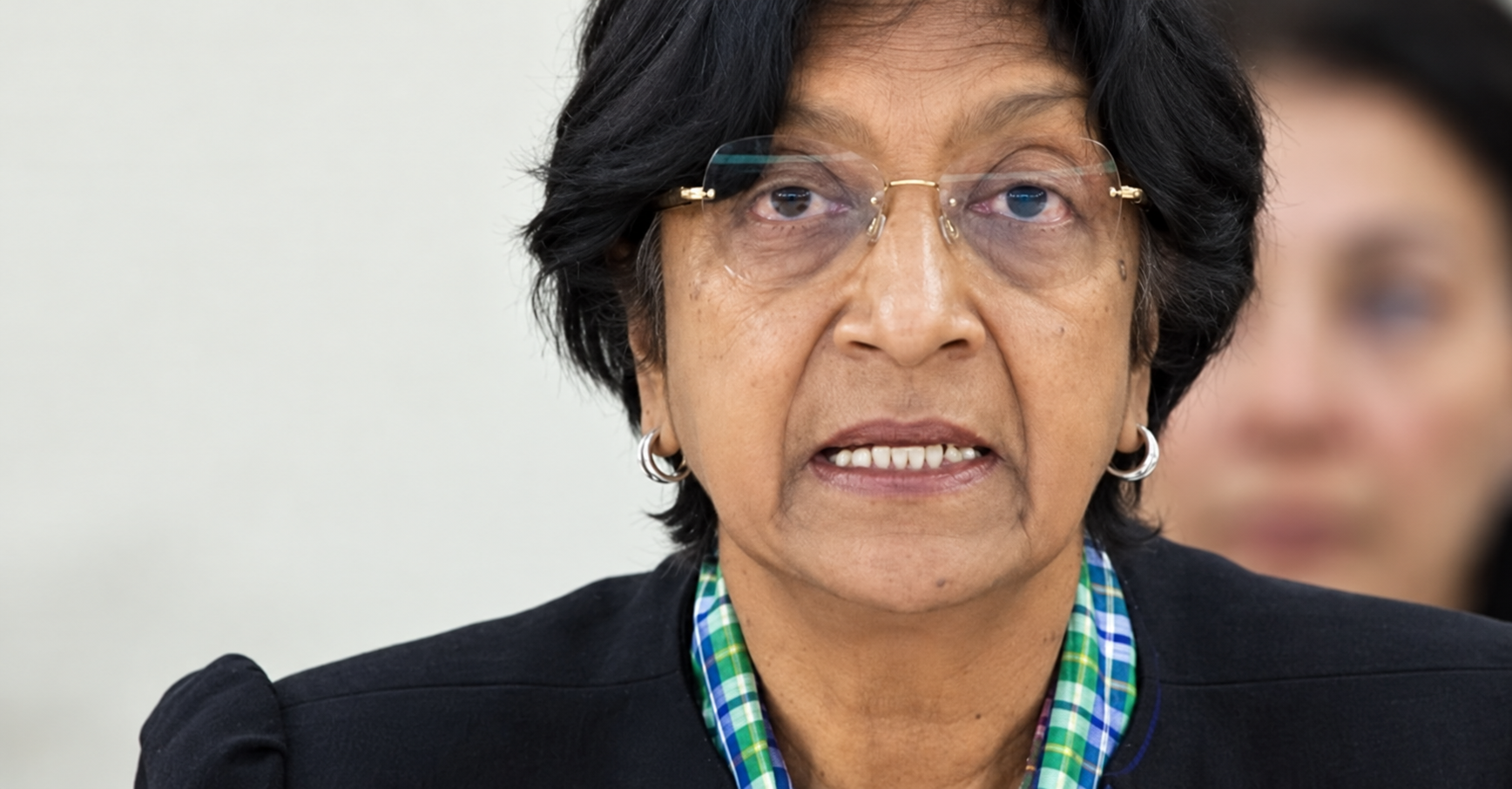
FCRA recalls its response in 2012
Martin, an unarmed Black 17-year-old, was fatally shot by neighborhood watch volunteer George Zimmerman on Feb. 26, 2012, in Sanford, northeast of Orlando.
In April 2012, Pillay called for an immediate investigation into the killing as the case drew international attention and scrutiny of Florida’s Stand Your Ground law.
FCRA welcomed that call. The association’s current release cites an April 7, 2012, West Orlando News report that quoted David discussing the case’s global impact.
“The shooting death of Trayvon Martin and Florida’s Stand Your Ground Law have created a worldwide movement that calls into question how justice is delivered to victims of color,” David said at the time, according to the release.
FCRA describes the activism surrounding Martin’s death as a defining moment that galvanized a new generation of civil rights advocates.
Zimmerman was charged with second-degree murder and acquitted in July 2013. In February 2015, the U.S. Justice Department closed its separate investigation, finding insufficient evidence to pursue federal criminal civil rights charges.
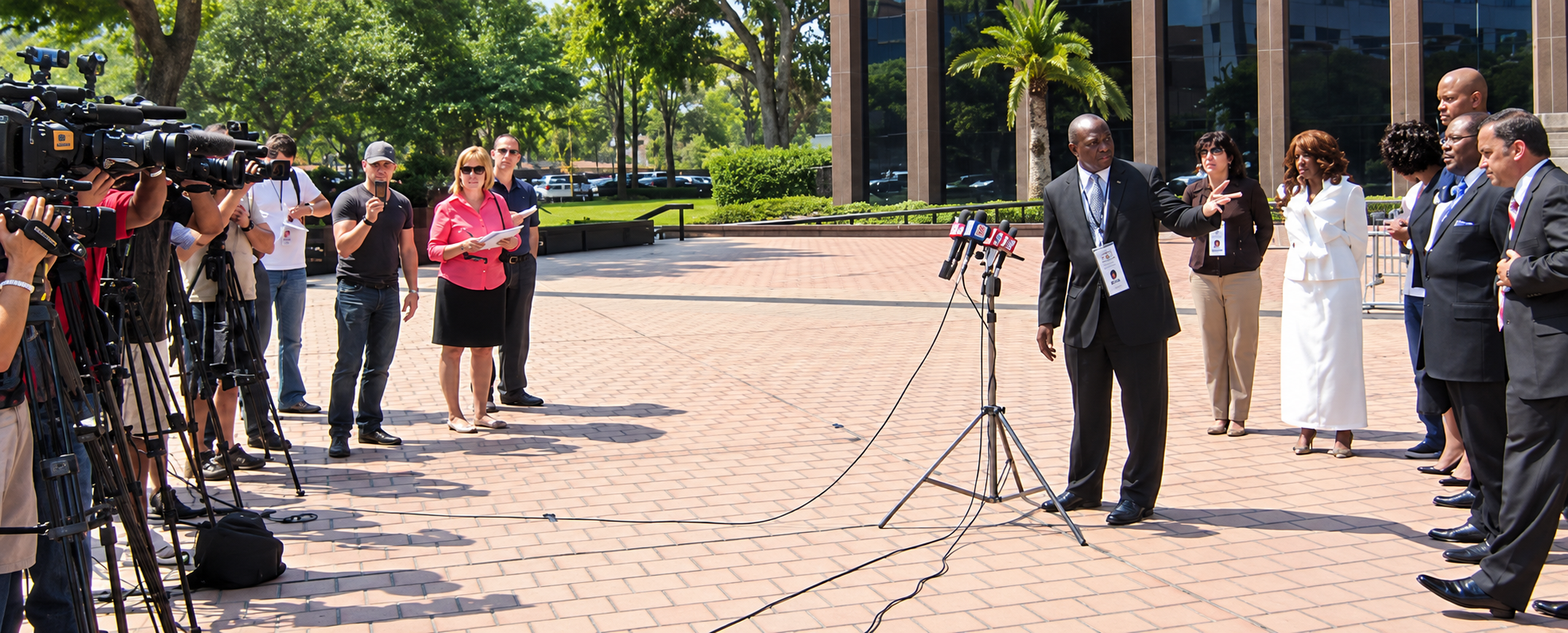
The Florida Civil Rights Association (FCRA) held a press conference outside the State of Florida’s regional offices in Orlando in 2012, calling on then-Gov. Rick Scott to take action following Trayvon Martin’s killing. Photo by FCRA.
Why Florida’s case drew global scrutiny
The Florida connection shows how the handling of a local killing can draw international scrutiny over racial discrimination, access to justice and the protection of human rights.
Pillay’s intervention brought those concerns into the international discussion surrounding Martin’s death. In September 2013, U.N. human rights experts also urged the United States to complete its civil rights investigation and examine concerns about racial profiling.
The significance lies in human rights oversight: how public institutions investigate deaths and provide equal treatment can attract attention beyond national borders. Pillay’s call was an appeal for investigation, rather than an international court judgment about Zimmerman’s guilt or Florida’s compliance with international law.
For FCRA, that connection remains relevant to how Florida leaders evaluate laws and practices affecting the communities they serve.
Pillay’s record in international justice
Pillay challenged discrimination under apartheid before serving on South Africa’s High Court, the International Criminal Tribunal for Rwanda and the International Criminal Court.
At the Rwanda tribunal, she was part of the judicial panel that established that rape and sexual violence can constitute acts of genocide, a landmark development in international criminal law.
David said honoring that career should also encourage accountability at home.
“Her Nobel Peace Prize recognizes a career built on confronting injustice through the rule of law,” he said. “Honoring that work means demanding transparent investigations and equal protection here at home. Rights belong to everyone.”
A renewed call for fairness in Florida
FCRA urged Florida leaders to safeguard impartial investigations, examine whether Stand Your Ground and other laws are applied fairly, and address policies or practices that produce discriminatory outcomes.
Founded in 2005, the association advocates for civil rights, human rights and civil liberties through education, advocacy and accountability. Its statement links Pillay’s international recognition to a continuing demand for fairness and human dignity in Florida.
Florida
Florida Governor Candidates: Donalds Spent Longer as a Democrat; Jolly Reports Longer Republican History
Published
4 days agoon
October 11, 2026Party changes and congressional votes offer a closer look at both candidates’ records on issues affecting Black Americans.
ORLANDO, Fla. (FNN) — Republican Byron Donalds spent nearly seven years as a registered Democrat—longer than Democrat David Jolly’s approximately 18 months in the party. Jolly, however, reports having spent 25 years as a Republican, exceeding Donalds’ approximately 16½ years.
The two major-party candidates for Florida governor have political histories that cross party lines. Their congressional votes offer another basis for scrutiny: Jolly supported repealing the Affordable Care Act, while Donalds opposed major voting-rights and police-accountability proposals. Both also supported other legislation relevant to Black communities.
Why This Article Matters to Voters
Voters can examine previous decisions in public office alongside campaign promises. Party affiliation identifies a political association; legislative records show how candidates acted on specific proposals.
The measures examined here concern health insurance, employment opportunities, voting discrimination, police accountability and racial violence. These issues affect African Americans and the wider electorate, making the candidates’ records relevant to voters deciding who should lead Florida.
Who Spent Longer in Each Party?
Donalds was registered as a Democrat in Collier County from April 2003 until March 2010, according to Florida Politics. He then became a Republican. Jolly left the Republican Party in September 2018, became an unaffiliated voter and registered as a Democrat in April 2025.
| Candidate | Time as a Democrat | Time as a Republican |
|---|---|---|
| Byron Donalds | Approximately 6 years, 11 months, April 2003–March 2010 | Approximately 16 years, 7 months, March 2010–October 2026 |
| David Jolly | Approximately 1 year, 6 months, April 2025–October 2026 | 25 years, according to his account, before leaving in September 2018 |
Durations are approximate as of Oct. 11, 2026. Jolly’s 25-year Republican history was reported by WUSF; his original Republican registration date was not independently verified for this comparison.
Donalds’ documented Democratic registration exceeds Jolly’s by approximately five years and five months. Jolly’s stated Republican history exceeds Donalds’ by approximately eight years.
Jolly’s Defeat, Party Change and Return to Electoral Politics
Jolly lost his 2016 congressional reelection bid as a Republican to Democrat Charlie Crist in Florida’s 13th Congressional District. Published election results show Crist received 184,693 votes to Jolly’s 171,149, winning by 13,544 votes.
Crist, a former Republican governor, had already moved from Republican to independent to Democrat. Jolly later followed the same sequence, although that does not establish identical motivations. Reporting republished on Jolly’s campaign website described his departure from the Republican Party as a response to its direction under Donald Trump.
Jolly declined to endorse Trump in 2016, according to Sunshine State News. PolitiFact subsequently found that a Democratic campaign advertisement portraying Jolly as a Trump ally was inaccurate.
After considering but declining another congressional run in 2018, as reported by Roll Call, Jolly returned to electoral politics with his governor campaign. He registered as a Democrat in April 2025, roughly six weeks before announcing his candidacy June 5—more than a year before the 2026 election.
Different Congressional Terms, Relevant Policy Questions
Official congressional biographies show that Jolly served in Congress from March 2014 through Jan. 3, 2017, during President Barack Obama’s administration. His service ended before Trump’s first inauguration. Donalds entered Congress in January 2021 after serving in the Florida House from 2016 through 2020.
Their congressional terms did not overlap, so this comparison examines different bills rather than votes they cast together.
Both served as Republicans during the votes examined below. Their subsequent or previous party affiliations do not change those legislative records.
Jolly Supported ACA Repeal and Workforce Training
Official U.S. House Clerk records show that Jolly voted to repeal the Affordable Care Act on Feb. 3, 2015. The proposal did not become law, but his vote supported removing a framework that expanded health insurance access for African Americans.
According to the U.S. Department of Health and Human Services, the uninsured rate among nonelderly Black Americans fell from 20.9% in 2010 to 10.8% in 2022 following implementation of the ACA’s coverage provisions. Those gains make health coverage relevant to examining repeal proposals, without establishing that Jolly’s unsuccessful repeal vote caused anyone to lose insurance.
House Clerk records also show that Jolly supported the final House agreement to the Workforce Innovation and Opportunity Act on July 9, 2014. The legislation supported training and employment services for people facing employment barriers, including eligible Black workers and young people. Its programs serve people across racial groups, according to the U.S. Department of Labor.
Donalds Opposed Voting-Rights and Policing Bills, Backed Antilynching Measure
House Clerk records show that Donalds voted against the John R. Lewis Voting Rights Advancement Act on Aug. 24, 2021. The proposal sought stronger federal safeguards against racial discrimination in voting, including renewed requirements for certain jurisdictions to obtain approval before changing election practices.
On March 3, 2021, Donalds voted against the George Floyd Justice in Policing Act. The congressional bill summary describes proposed protections against racial profiling and changes to police accountability.
In a statement published by his congressional office, Donalds defended his opposition by arguing that the measure would defund and dismantle policing. That was his characterization of the proposal, whose provisions included measures addressing racial profiling and constitutional violations by law enforcement.
Donalds voted for the Emmett Till Antilynching Act on Feb. 28, 2022, according to House Clerk records, supporting federal legislation addressing lynching through hate-crime law—a measure with particular historical significance for African Americans.
What Voters Can Assess
These selected votes document Jolly’s support for ACA repeal and workforce opportunities, and Donalds’ opposition to major voting-rights and policing proposals alongside support for antilynching legislation.
They do not establish discriminatory intent or determine whose entire record benefited African Americans more. That would require a broader review of policies and measurable outcomes, including Donalds’ Florida legislative record.
Donalds spent longer as a documented registered Democrat, while Jolly reports a longer Republican history. Both cast the congressional votes examined here as Republicans.
Either Major-Party Candidate Would Bring a Republican History
If either of the two major-party candidates wins, Florida’s next governor will bring a substantial Republican history to office—Donalds as a current Republican and Jolly as a former Republican congressman now running as a Democrat. Voters can weigh those histories alongside their legislative records, current positions and plans for Florida.
Central Florida News
Commissioner Uribe Announces New Date for Hispanic Heritage Festival Due to Weather
Published
6 days agoon
October 9, 2026ORLANDO, Fla. (FNN) — Commissioner Uribe announced that the Hispanic Heritage Festival has been rescheduled due to weather conditions. The event will now take place Saturday, Oct. 24, 2026, from 9 a.m. to noon at Cypress Grove Park, 290 Holden Ave., Orlando.
The festival will celebrate the rich history, cultures, traditions and contributions of Hispanic and Latino communities through live music, dance performances, food and community resources.
Scheduled highlights include:
- Live music by youth orchestra The Nucleus Orchestral.
- Dance performances featuring Maria Saavedra of FusionFest with Huellas de Colombia, Unidos for Ecuador and Mexico Dansa.
- Food from Zaza.
- Community resources from 311 and other participants.
Join Commissioner Uribe and the community for a morning celebrating Hispanic and Latino heritage.
NEW DATE: Saturday, Oct. 24, 2026
TIME: 9 a.m. to noon
LOCATION: Cypress Grove Park
ADDRESS: 290 Holden Ave., Orlando, FL 32839