Florida
VIDEO: Orange County School Board Chairman Bill Sublette Launches His Campaign for County Mayor
Published
9 years agoon
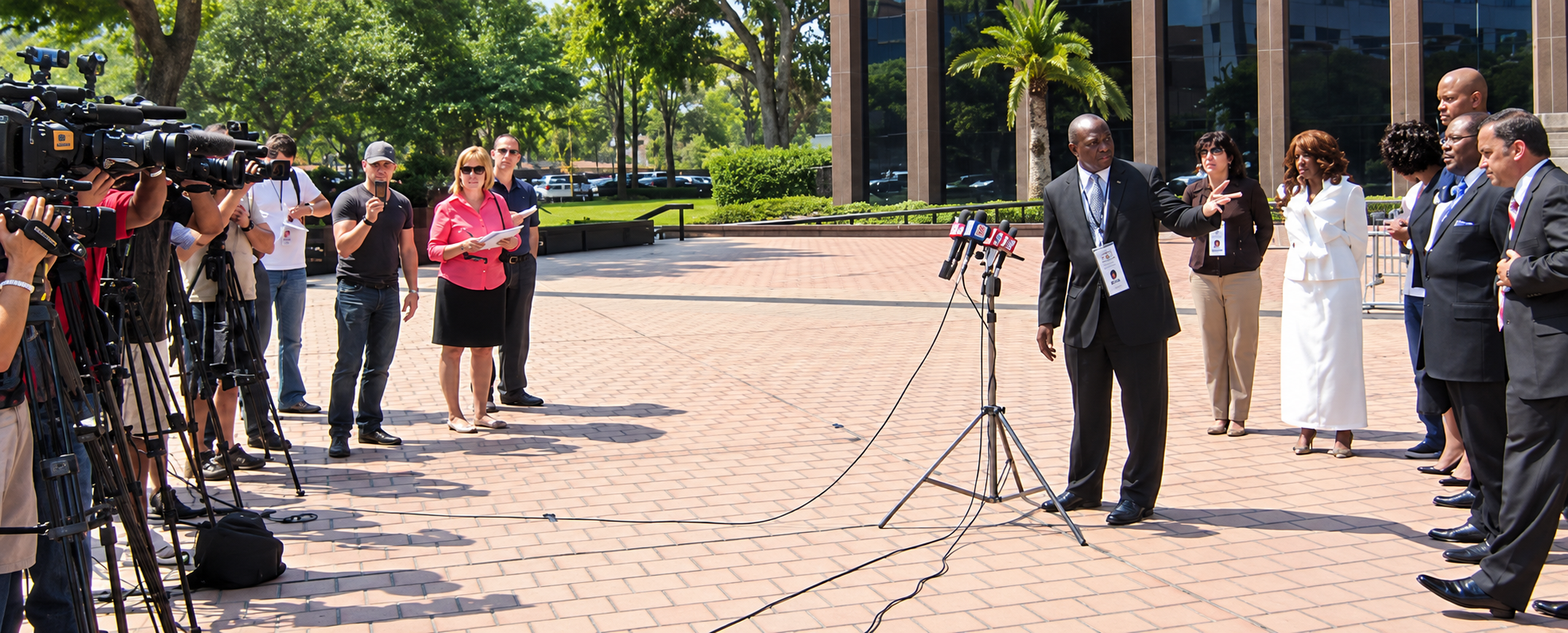
ORLANDO, Fla. (FNN NEWS) – Orange County School Board Chairman Bill Sublette launched his official campaign for Orange County Mayor in a press conference in the lobby of the First Green Bank in downtown Orlando Monday.
In his press conference, Sublette announced that he plans to employ his extensive experience with the Orange County School Board to continue to bring change to Orange County.
_____________________________________________
Mellissa Thomas is Florida National News Editor. | news@floridanationalnews.com
Entertainment
Miss Utah’s Teen Elle Anderson Crowned Miss America’s Teen 2027
Published
55 minutes agoon
September 6, 2026Anderson makes history as Utah’s first Miss America’s Teen winner, earning the national crown after preliminary wins in talent and evening wear
WEST PALM BEACH, Fla. (FNN) — Miss Utah’s Teen Elle Anderson was crowned Miss America’s Teen 2027 on Saturday, becoming the first representative from Utah to win the national title and the 21st young woman to wear the Miss America’s Teen crown.
Anderson emerged from a field of 52 state delegates representing all 50 states, the District of Columbia and Puerto Rico during the national competition in West Palm Beach.
Her victory follows preliminary awards in talent and evening wear. Anderson earned the talent recognition for her violin performance of “Czardas” by Vittorio Monti.
Elle Anderson Makes History for Utah
Anderson’s victory marks a milestone for the Miss Utah organization as its first Miss America’s Teen national title.
Beyond competition, Anderson has focused her platform on youth leadership, service and emergency preparedness.
Her Community Service Initiative, Every Beat Matters, was created in honor of her late brother and promotes teen-focused CPR training and emergency readiness.
The initiative centers on three principles — Confidence, Preparation and Rescue — with the goal of giving young people practical skills that could help save lives.
More Than $40,000 in Scholarships
Anderson has earned more than $40,000 in scholarships through the Miss America Opportunity.
She is enrolled at Brigham Young University, where she plans to study journalism and business. Anderson also plans to pursue law school.
Her combination of academic goals, community service and performing arts experience helped distinguish her throughout the national competition.
Anderson: ‘You Don’t Need a Crown to Be a Leader’
As Miss America’s Teen 2027, Anderson will serve as a national ambassador for the program, traveling and encouraging young women to pursue leadership and community service.
“I want every young person I meet this year to walk away knowing that their voice matters, their choices matter, and most importantly, they matter,” Anderson said in a statement.
“You don’t need a crown to be a leader. You don’t need a title to serve. You don’t need to wait for someone to tell you that you’re ready. You are ready,” she added.
Anderson said she wants to spend her year as Miss America’s Teen reinforcing that message to young women across the country.
Miss America’s Teen 2027 Top Five
Anderson secured the crown after advancing through multiple rounds of competition and reaching the Top 5.
Madalyn Sullivan of Mississippi was named first runner-up, followed by Zoe Zogleman of Texas as second runner-up, Natalia Yurecko of Minnesota as third runner-up and Logan Wells of South Carolina as fourth runner-up.
Semifinalists included Melony Tidmore of Georgia, Aria Christensen of Oregon, Tianna Lei Wailehua of Hawaii, Camdyn Lee of North Carolina, Lucille Esler of New York and Kendall Laroche of New Hampshire.
A New National Role Begins
With the crown, Anderson begins a yearlong national role representing Miss America’s Teen and promoting her Every Beat Matters initiative.
Her historic victory combines several elements of the Miss America Opportunity — scholarship, talent, service, education and leadership — while giving Utah its first Miss America’s Teen national title.
For Anderson, the crown also provides a national platform for a deeply personal mission: helping young people develop the confidence and preparation to respond when someone’s life may depend on them.
Florida
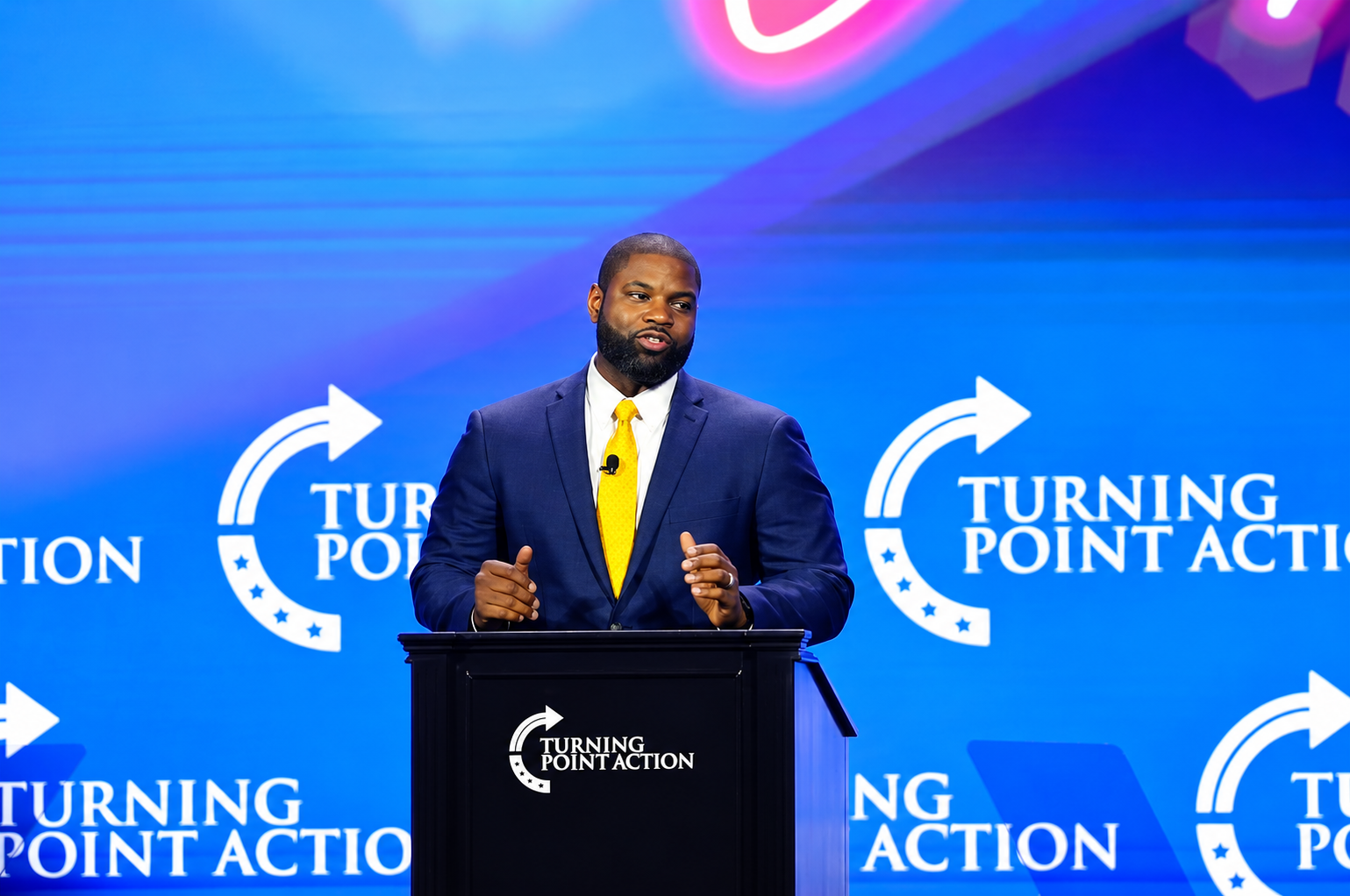
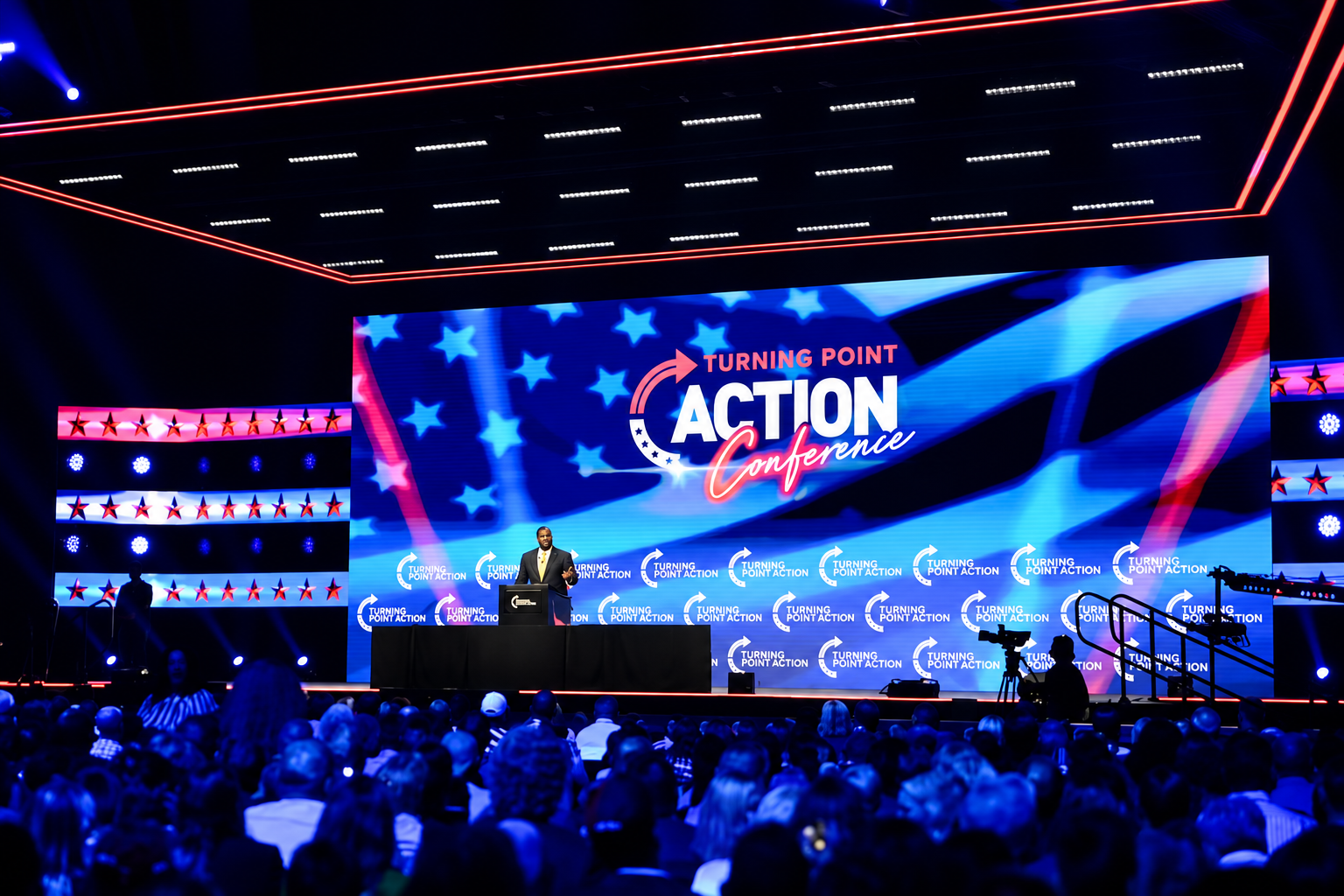
Byron Donalds to Speak at Trump’s Midterm Convention as Florida Democrats Target Their Political Alliance
Published
9 hours agoon
September 6, 2026Florida Democrats seize on Donalds’ Dallas appearance as the Republican gubernatorial nominee heads into the general election
TALLAHASSEE, Fla. (FNN) — Republican gubernatorial nominee Byron Donalds will join President Donald Trump and other prominent Republicans at the GOP Midterm Convention in Dallas next week, prompting Florida Democrats to renew attacks on Donalds’ close political alliance with the president.
Donalds is scheduled to speak at the Sept. 9-10 gathering, according to Florida Politics. Republican National Committee Chair Joe Gruters and U.S. Rep. Anna Paulina Luna are among other Florida Republicans scheduled to participate.
The appearance comes as Trump takes an increasingly visible role in Republican efforts ahead of the November midterms. AP reports Trump has promised to campaign extensively for Republican candidates and is urging the party to run on his administration’s record despite political concerns surrounding the economy and other issues.
Florida Democrats Target Donalds’ Trump Ties
The Florida Democratic Party responded to Donalds’ scheduled appearance by seeking to make his relationship with Trump an issue in Florida’s gubernatorial campaign.
“Despite Floridians’ growing disdain for Donald Trump and the pain caused by the Byron-Trump economy, Byron Donalds is ready to remind the state of their close connection by sharing the spotlight with Trump next week,” Florida Democratic Party spokesperson Evan Ecklund said in a party news release.
Ecklund also criticized Donalds over tax and data-center policies and called him Trump’s “most-trusted puppet.”
Those descriptions are partisan characterizations from the Florida Democratic Party. They should not be read as independent findings by FNN.
Trump-Donalds Alliance Has Been Central to the Governor’s Race
Donalds and Trump have maintained a highly visible political alliance.
Trump repeatedly endorsed Donalds during Florida’s Republican gubernatorial primary, and Donalds has consistently aligned himself with Trump’s political agenda. Donalds’ appearance in Dallas extends that relationship into the general election campaign.
For Democrats, the convention provides another opportunity to connect Donalds directly to Trump.
For Republicans, the event is an opportunity to mobilize their voters and emphasize their policy agenda ahead of November.
Gruters framed the election around taxes, border security, government regulation and the economy while sharply criticizing Democratic policies.
Trump Takes a Larger Midterm Role
The Dallas gathering also comes as Trump increases his involvement in Republican midterm campaigning.
Trump has pledged to campaign for Republican candidates in competitive races around the country. AP reports that he has encouraged Republican lawmakers to emphasize his administration’s record even as the party confronts voter concerns over the economy and other national issues.
For Donalds, the convention puts Florida’s Republican nominee on a national stage alongside one of his most prominent political supporters.
For Florida Democrats, it provides another opening to argue that Trump’s record should also be part of voters’ assessment of Donalds.
That competing message — Republicans embracing Trump’s record and Democrats seeking to make that association a liability — is likely to remain part of the political debate heading toward November.
Florida
FNN Perspective: Cynthia Moore Chestnut’s Byron Donalds Endorsement Spotlights Nearly Four Decades of Public Service and Cross-Party Politics
Published
11 hours agoon
September 6, 2026Gainesville Democrat’s support for the Republican nominee renews debate over Black representation, party loyalty, political choice and the freedom to disagree
FNN PERSPECTIVE — Gainesville City Commissioner Cynthia Moore Chestnut’s endorsement of Republican gubernatorial nominee Byron Donalds has generated criticism from fellow Democrats and opened a broader discussion about party loyalty, Black political representation and an American political tradition that allows voters and public figures to cross party lines for many different reasons.
This perspective examines Chestnut’s decision in the context of her nearly four decades of public service, her stated reasons for supporting Donalds, historical examples of cross-party endorsements and the freedom of Americans to support — and criticize — political candidates.
Cynthia Moore Chestnut’s Nearly Four Decades of Public Service
Chestnut’s endorsement represents one decision in a public-service career extending back nearly four decades.
A Tallahassee native, Chestnut earned a bachelor’s degree in speech pathology from Florida A&M University, a master’s degree in speech pathology from Florida State University and a doctorate in public administration from Nova Southeastern University.
She became the first Black woman elected to the Gainesville City Commission, then broke additional barriers in state and county government. She became the first woman and first Black person elected to represent Florida House District 23 and later the first Black woman elected to the Alachua County Commission and the first to chair it, according to her official city biography.
Chestnut also became deeply involved in Democratic Party leadership, including service in county and state party organizations.
That history helps explain why her decision to support a Republican for governor has attracted attention beyond an ordinary political endorsement.
Why Cynthia Moore Chestnut Endorsed Byron Donalds
Chestnut has made clear that she remains a Democrat.
She initially emphasized political independence, her belief that Black voters should not be considered the property of either party and her desire to see Florida elect its first Black governor.
But Chestnut has since provided additional context.
In a Sept. 5 interview, she said Democratic nominee David Jolly’s selection of Gwen Graham as his running mate significantly influenced her decision. Chestnut criticized what she called an “all-white ticket” and said she believed Jolly missed an opportunity to select a Black or Hispanic running mate who could broaden the ticket’s representation and appeal.
Chestnut also said she spoke with Donalds and came away impressed that he listened to her. She told the interviewer that supporting Donalds does not mean she is becoming a Republican and said she does not support President Donald Trump.
Those additional details are important because they demonstrate that Chestnut’s endorsement cannot accurately be reduced to a single consideration.
LaVon Bracy Davis Strongly Disagrees With Chestnut
Democratic state Sen. LaVon Bracy Davis has offered a sharply different assessment.
Bracy Davis criticized the endorsement and questioned how Chestnut could reconcile her history of Democratic and Black political leadership with Donalds’ political record.
Her objections have included Donalds’ positions on voting rights and his relationship with the MAGA movement. Bracy Davis also rejected the idea that the possibility of electing Florida’s first Black governor should outweigh her concerns about Donalds’ policies.
The disagreement illustrates an important feature of political expression: Chestnut is free to explain why she crossed party lines, while Bracy Davis and others are equally free to challenge the reasoning behind that decision.
Cross-Party Endorsements Happen for Many Different Reasons
There is no single explanation for crossing party lines.
Voters and political leaders may support someone from another party because of policy, qualifications, leadership, personal relationships, representation, dissatisfaction with their own party, a particular issue or their individual assessment of the candidates in a particular election.
American political history contains numerous examples.
Some Democrats have supported Republicans. Some Republicans have supported Democrats. Others have left one party entirely or changed their registration.
Those decisions should be examined individually rather than treated as politically equivalent.
Gen. Colin Powell and Other Republicans Crossed Party Lines for Barack Obama
One prominent example occurred during the historic 2008 presidential election.
Republican former Secretary of State and retired Gen. Colin Powell endorsed Democratic nominee Barack Obama over Republican nominee John McCain, despite Powell’s longstanding friendship with McCain.
Powell cited several considerations, including leadership, economic issues, foreign policy, the direction of the Republican campaign and McCain’s selection of Sarah Palin. He described Obama as a “transformational figure” and said that although he recognized the racial significance of the election, race was not the dominant reason for his endorsement.
Powell was not alone.
Obama’s campaign organized a Republicans for Obama effort that included former Republican Rep. Jim Leach of Iowa, former Republican Sen. Lincoln Chafee of Rhode Island and former Bush foreign-policy adviser Rita Hauser. Republican Fairbanks Mayor Jim Whitaker also endorsed Obama.
Leach cited foreign policy and the national interest in explaining his decision. The various Republicans who supported Obama therefore did not necessarily cross party lines for precisely the same reason.
Obama went on to become the first Black president of the United States.
Obama and Donalds Are Different — The Comparison Is Cross-Party Choice
The historical comparison should have clear limits.
Barack Obama and Byron Donalds are different candidates, from different political eras, with different records, constituencies and policy positions. Likewise, Powell’s reasons for endorsing Obama were his own and should not be equated with Chestnut’s reasons for endorsing Donalds.
The relevant historical connection is narrower: prominent political figures have crossed party lines for different reasons throughout American political history.
Powell made one decision based on his assessment of the 2008 candidates. Chestnut has made another based on her stated considerations in Florida’s 2026 governor’s race.
Neither example establishes how someone else should vote.
John McCain Demonstrated That Opposition Does Not Require Misinformation
The 2008 campaign provides another relevant lesson — this time about political disagreement rather than endorsement.
McCain was trying to defeat Obama.
Yet during an October 2008 campaign event, McCain corrected supporters who expressed fear about Obama and rejected a woman’s false characterization of Obama as an Arab.
McCain described Obama as a “decent family man” and citizen with whom he had serious disagreements on fundamental issues. He also urged his supporters to remain respectful.
McCain did not stop opposing Obama. He continued campaigning against him.
The episode demonstrated that vigorous political opposition and respect for factual accuracy do not have to be mutually exclusive.
Political Expression Includes Endorsement and Criticism
That principle brings the discussion back to Chestnut.
Political speech and association receive substantial protection from government infringement under the First Amendment, subject to established legal limitations.
Americans can advocate for candidates, criticize public officials, associate politically, change parties or decline to follow a party’s preferred candidate.
But freedom of expression does not insulate a political decision from criticism.
Chestnut can explain why she believes Donalds deserves her support. Bracy Davis and others can argue that Donalds’ record should disqualify him from receiving that support.
Political freedom does not require everyone to reach the same conclusion.
David Jolly’s Political Journey Adds Another Dimension
The 2026 governor’s race itself demonstrates that political affiliations can change.
Democratic nominee David Jolly previously represented Florida in Congress as a Republican. He subsequently left the Republican Party, became unaffiliated and registered as a Democrat in 2025 before seeking the Democratic nomination for governor.
His situation is different from Chestnut’s.
Jolly changed parties. Chestnut says she remains a Democrat while supporting the Republican nominee.
But the two circumstances reinforce a broader point: party affiliation can be important without determining every political decision an individual makes.
One Endorsement, Nearly Four Decades of Public Service
Chestnut’s Donalds endorsement may become one of the most debated decisions of her long political career.
Critics can consider it significant. They can examine Donalds’ record, Chestnut’s stated reasons and her history in Democratic politics and reach their own conclusions.
Her broader record is also part of the story.
For nearly four decades, Chestnut has served in municipal, state and county government, broken racial and gender barriers, participated in Democratic Party leadership and remained active in Gainesville and Alachua County civic life.
One endorsement does not require the public to disregard that history. And nearly four decades of public service do not place one endorsement beyond public scrutiny.
Both can be examined together.
Florida Voters Will Make Their Own Choice
Ultimately, an endorsement does not cast anyone else’s ballot.
Chestnut has made her choice and explained her reasons. Her critics have exercised their freedom to challenge that choice. Donalds and Jolly will make their cases to voters.
Floridians will make the final decision for themselves.
That may be the larger lesson of the controversy surrounding Chestnut.
Cross-party endorsements happen for different reasons. Political affiliations can change. People who share a party affiliation can reach very different conclusions about candidates.
The ability to support, oppose, endorse, criticize, organize and vote reflects political freedoms that generations of Americans fought to expand — including Black Americans who confronted Jim Crow disenfranchisement and discrimination in the struggle for full political participation.
Chestnut’s nearly four decades of public service form part of that broader history.
Her endorsement of Donalds is now another chapter — one Floridians remain free to support, oppose, question or debate.
Trending
Entertainment1 day agoMiss Texas, Miss Utah and Miss New Jersey Win 2026 Miss America Preliminary Talent Awards
Florida1 day agoByron Donalds Secures Endorsement From Gainesville Democrat Cynthia Moore Chestnut, Spotlighting Cross-Party Politics
Entertainment2 days agoLee Brice, Kane Brown, Brantley Gilbert, Brandon Lake and Stephen Wilson Jr. to Headline Audacy’s Stars and Strings in South Florida
Florida11 hours agoFNN Perspective: Cynthia Moore Chestnut’s Byron Donalds Endorsement Spotlights Nearly Four Decades of Public Service and Cross-Party Politics
Politics1 day agoFL NOW PAC Endorses Caprice Edmond, Daniela Simic and Megan Tennimon for Florida School Board