

Opinion
Can Family and Friends with Opposing Political Views Have Relationships that Survive Post-Election?


ORLANDO, Fla (FNN NEWS) – Discussions about politics have been known to be taboo for friends and family since the dawn of time. This past election cycle saw an uprising of sorts for many people who felt our country was in disarray while others felt we were headed in the right direction with the election of President Trump. Whether the discussion was immigration, our nation’s debt or even health care, they all became heavily debatable issues.
While politics has always been a topic you stay clear of on holiday gatherings with family, this past election cycle we saw a more visible descent and some relationships simply didn’t survive. In this review I’ll explore some specific examples readers shared and some suggestions on how to decide if a relationship is worth recovering from when politics divide us at the core.
Emily Goldie, a Trump supporter, suggested, “Yes I had a friend who I was close with at work. She un-friended ALL fellow employees who voted for Trump and said if you voted for Trump you are a racist.” Seriously, why is it so many think if you voted for Trump you are a racist or a bigot? It couldn’t be further from the truth. Goldie continued, “My dating life has taken a hit as well. I had a guy consistently nag me on why I voted for Trump. He was a Democrat. I finally had to break up with him because I couldn’t take it. To me it was disrespectful and I finally said enough.”
Goldie brings up an interesting point … just how important are politics to relationships, especially new ones? Overall, I found more women concerned with losing friends than men. Many men felt like David Burr: “I have lost several friends, including family. Once they attack I kick them to the curb. Not enough space in my life for ugliness.” For the most part, I tend to agree with Burr’s assessment. Life is far too short to engage with those who can’t find middle ground and be more understanding of different views.
THE POLITICAL CULTURAL ADJUSTMENT CYCLE
In years past, while there can only be one winner, most relationships recover and survive the divide and polarization of elections. While the lead-in to a Presidential election can be filled with ups and downs, last year certainly showed us it’s not just the victory that matters, but what that victory means … literally.

The current political adjustment cycle from the 2016 elections is anything but traditional. Diagram by Randy Ross for Florida National News.
One source, who chose to remain anonymous, noted: “My brother and I stopped talking mid-2016 due to opposing political views. He was for Bernie, then transferred to Hillary. In an effort to save our sibling relationship I asked to see him. He politely declined to have coffee or lunch or anything with me when I went to DC for the Inauguration, even though I offered to drive out of my way to see him.” The source continued that because this was her only sibling and their parents had passed, “We started talking again in mid-March of this year. Additionally, I unfriended multiple Facebook friends on Nov 9 when they started posting nasty things on my Facebook wall. Haven’t regretted unfriending them for a second!”
Kathryn Gates-Skipper told FNN News, “Yes, it has affected me dearly…for instance, fighting among friends and family. Politicians will come and go, but your friends and family are supposed to always be there.” It was a common theme among the nearly 100 responses I received regarding the feelings people had for the loss of friends or family members during the last election cycle. Skipper, former Florida Veterans Chair for Trump and newly appointed board member of the Orange County Trump Republican Club and duly for the Florida Chapter of America First United, continued, “No one person can please everyone. But how a person handles the situation shows a person’s true character. I hate seeing friends and people not accepting the truth and reality that Trump is now our President. They act like spoiled brats.”
Skipper’s comments remind me of how intense the election process was, yet it’s the post-election rejection of the results that surprises many even more. “The left has become intolerant. That is part of the philosophical difference,” said Linda Rodgers Gilliland. “We weren’t intolerant when Obama won twice. Mostly it is the 24 hour news cycle that has to create drama so people continue to watch, mostly owned by liberals. I think it is dangerous.”
IS SOCIAL MEDIA TO BLAME?
One thing is for sure: social media, and specifically Facebook, have given family and friends–and total strangers for that matter–a new way to counteract opinions. In 2012 we saw just the tip of the iceberg as people began to test the waters on this new form of social interaction, Facebook. At this time there are no laws that prohibit what’s literally become a free-for-all regarding free speech on social media. Unlike other social media platforms like Twitter and Instagram, Facebook seems to be the current keyboard warrior stomping grounds.
A Hillary supporter who asked to not be mentioned by name recalled, “I supported Hillary Clinton. I was constantly attacked when I went to comment on FOX News or other news Facebook pages. I never believed she was a crook and the Trump people just made me feel that my opinion didn’t matter.”
One source suggested the liberal left are being overly sensitive. “We [Republicans] sure would not be acting like a bunch of crybabies if Hillary had won. We would have gotten over it and gone back to work. We would be upset, but we would not be acting like snowflakes.” (“Snowflakes” referring to some that seemed overly emotional regarding the results of the election, quickly melting when touching the heated ground of reality.)
Sean D. Hartman said, “My closest friends in politics have always been the ones I’ve had the staunchest disagreements with.” Well, Sean, you’ll have to tell us all your secret on how you maintained those friendships in the darkest of discussions.
“Randy, I have often thought of calling you over this same issue. I live with a man that is a diehard liberal. He watches MSNBC all day long. He would not let me put my Trump sign in the yard so I had to display my yard sign in my car which really pissed me off,” said a second anonymous source. “He has made comments about President Trump constantly, saying he was joking. Well, I wasn’t laughing. We have almost called it a day over this. It has been abusive to some degree and I love being around the Trumpers, for they validate my feelings.”
My suggestion, and no, I’m not a relationship expert, but get out now. “You in danger, girl.”
Maggie DeGennaro revealed that she lost two friends when she welcomed the new President the day after the elections. “Two ladies blocked me not knowing what party affiliation I was. I never talk about who I voted for, as in business you have to serve all people regardless of their political party. It was extremely painful, as I knew them a long time. To this day they will not talk to me.”
I’ve observed DeGennaro on social media for a few years. You couldn’t ask for a more positive and lifting soul.
HOLD ON TO YOUR ROOTS
The sad reality is something about this past election cycle isn’t letting many flow naturally through a traditional recovery cycle. Those that support our President support him more than ever. Those that don’t seemingly want nothing short of President Trump being impeached, most not even knowing the terms and conditions required for the action to even be considered. And with that level of division, it certainly appears we’re in for a rough next few years. Maryann Pistilli, a Republican from Volusia County and staunch Trump supporter who knocked on over 28,000 doors during this last presidential election, had a more tolerant view of things. “At the end of the day, we are all Americans. Great men and women died for our freedom. In order to prevail in this country, we must unite, for it is the only way.”
If it were only this easy.
There is a need for patience and understanding, but there’s also a need for a reality check. If you lose a friend or family member over politics, recognize there will be a grieving period, a sadness that is actually normal during any life changing adjustment cycle. There will be denial. There will be anger. And if you’re lucky there will be forgiveness, respect and understanding. “Don’t rehash the past. Welcome new Trump supporters without rubbing it in their faces, and discuss the present and future solutions,” says Susan Lynn Smith, a Trump supporter.
What we can’t do is suppress our convictions because of those that disagree with us. I too have lost friends over politics–many actually. I think what often occurs is we unite over a common goal, not realizing that at the core there may not be much you have in common. Michael Benitez Flores said, “I think people shouldn’t push their views onto others. You have a political, religious or otherwise agenda, it just needs [to be] kept to yourself. Too much backstabbing and not enough ‘Aloha, here we are’.” What we must do is simply dissect the value of our relationships and whether we’re willing to do the “research” necessary to maintain them. In politics, sometimes the answer is no.
Roy Biancalana suggested we might need to consider keeping a lighthearted approach to our political views versus the aggressive passion seen often on both sides. “If you are attached to your thoughts [political positions], drama will ensue,” he said. “If you hold them lightly and not make them part of your identity, then you won’t be bothered by an opposing point of view, and thus there won’t be any issue at all living with or relating to a person who sees the world differently. In fact, you might actually learn something.”
Learn something… now wouldn’t that be a nice compromise? Rebecca Rose, a conservative, suggested we can learn from each other as well. “I’ve found that some liberals I’m very close to have no clue about the facts and are open and shocked when I inform them.” This too a reoccurring theme where the media seems to influence many into opinions that aren’t rooted in the truth.
From the many responses I received, the ones that seemed most concerning were when family was divided because of the election results. Tim Thomas lost a family member through the process. “My cousin deleted me from Facebook, blocked me and has cut off all contact because I made a disparaging comment on Facebook on Inauguration Day related to protesters blocking access to members of the military. My son asked him about it, and he told my son to ‘F*** off!’ I’m pretty sure he was just channeling his anger over the election at me, but [it’s] still sad that for some, opposing viewpoints is forbidden.”
What we often realize, whether with family or friends, we really didn’t or don’t know some of the people we debate. We don’t know what makes them tick or where they stand. Not until something life-changing, like a presidential election, enters into the equation.
Remember it was the great Madea that said, “Some people come into your life for a reason. Some for a season. Some people, like leaves that drop in the fall, aren’t meant to be in your life forever. Search for those that are the roots that make the tree grow.” And you know what? I get that. Like my mom (Betty Parker Ross) has always told me, “Randy, you can count true friends on one hand.” And when we self-evaluate, we all have a handful of “roots” that will be there no matter what nuturing us and there for you through all the storms of life. There even after the results of an election.

Florida
FNN PERSPECTIVE | Byron Donalds Visits ONYX Gala in Orlando: Could Orange County Help Him Win Florida’s Governor’s Race?


Democratic crossover endorsements provide context. Orange County’s vote margin could help shape the contest between Donalds and David Jolly.
ORLANDO, Fla. (FNN) — Republican gubernatorial nominee Byron Donalds’ appearance at ONYX Magazine’s Men of Honor Gala in Orlando raises a broader electoral question: Could crossover support in Democratic-leaning Orange County help him reach the governor’s mansion?
Source: ONYX Magazine Facebook Page
Donalds and Democratic opponent David Jolly attended the Oct. 3 celebration at the Rosen Centre Hotel, according to Hoodline reporting citing the Orlando Sentinel. The gathering brought together elected officials, business executives, educators and community leaders to recognize leadership, achievement and service. Source: Hoodline
Organizers emphasized that the candidates’ attendance did not constitute an endorsement. Among the honorees was Orange County Mayor Jerry Demings, selected for a lifetime achievement award. Source: Jacksonville Free Press
Orange County, home to Orlando, provides a setting for examining both candidates’ electoral prospects. Its history includes prominent Democrats backing Republicans, while its Democratic vote margins illustrate how the county can contribute to the statewide outcome.
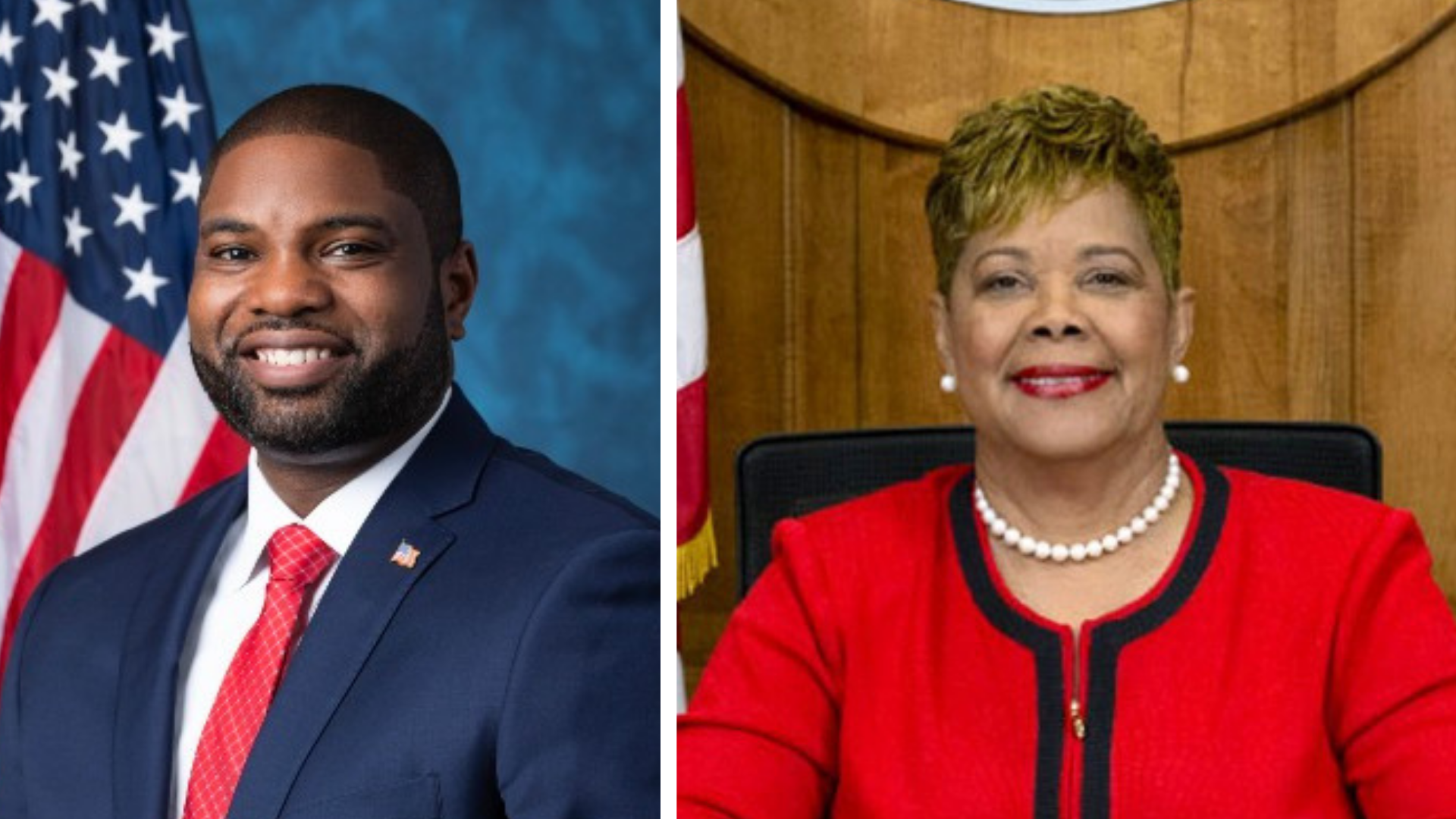
Republican gubernatorial nominee Byron Donalds, left, and Gainesville City Commissioner Cynthia Moore Chestnut, a longtime Democrat who endorsed Donalds for governor.
Donalds Has Secured a Democratic Crossover Endorsement
Gainesville City Commissioner Cynthia Moore Chestnut, a registered Democrat, endorsed Donalds over Jolly in September, according to WCJB. She cited Black representation, dissatisfaction with the Democratic ticket and support for historically Black colleges and universities, while acknowledging disagreements with some of Donalds’ policies. Source: WCJB
Chestnut subsequently introduced Donalds at a University of Florida town hall, emphasizing access to his office and fair consideration of Gainesville’s needs. Source: WCJB
Her endorsement raises a question about whether other Democrats, including those with conservative or moderate views, might support Donalds. However, her stated reasons do not establish a broader ideological shift. Dissatisfaction with party leadership or progressive positions does not automatically translate into Republican votes.
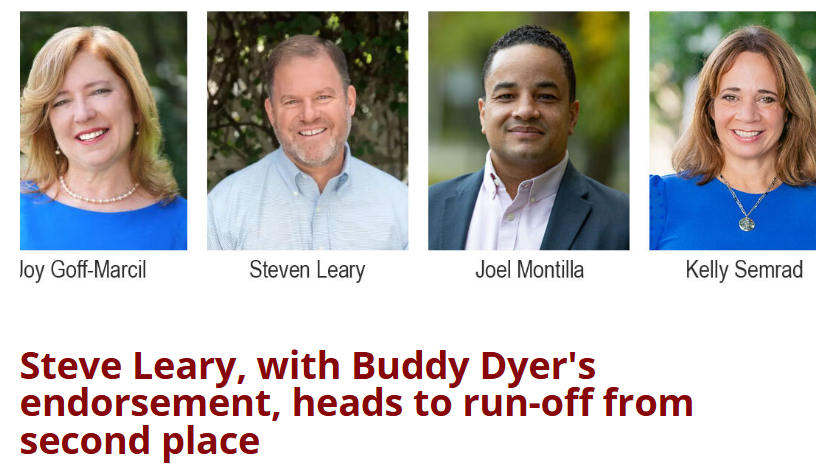
Source: Winter Park Voice
Orange County Democrats Have Backed Republicans Before
Democratic Orlando Mayor Buddy Dyer endorsed Republican state Rep. Mike Miller against Democrat Beth Tuura in the 2016 Florida House District 47 election — a partisan legislative contest. Source: Florida Politics
In the nonpartisan 2024 Orange County Commission District 5 race, Dyer endorsed Republican former Winter Park Mayor Steve Leary. Winter Park Voice also identified former Democratic state Sen. Gary Siplin, former Orange County Commissioner Victoria Siplin and Winter Park Commissioner Craig Russell as Democratic supporters of Leary. Source: Winter Park Voice
Dyer’s Orlando PAC contributed $4,000 to Neighbors for a Sensible Orange County, the political committee chaired by Leary, according to Winter Park Voice’s reporting on campaign finance filings. The committee also promoted Leary alongside Democratic candidates. This was financial support between political committees, rather than a personal donation by Dyer or a direct contribution to Leary’s candidate account. Source: Winter Park Voice
Former Orange County Chair Linda Chapin encouraged Democrats to support Republican Teresa Jacobs’ 2014 reelection campaign for county mayor while Democrat Val Demings was challenging her. Source: Orlando Weekly
Dyer and Orlando Commissioner Tony Ortiz also endorsed Republican Commissioner Jim Gray in the 2025 Orlando election. Ortiz had switched from Republican to Democrat earlier that year. Source: Orlando Weekly
These examples document individual cross-party support across different elections. They do not establish that those leaders endorse Donalds.
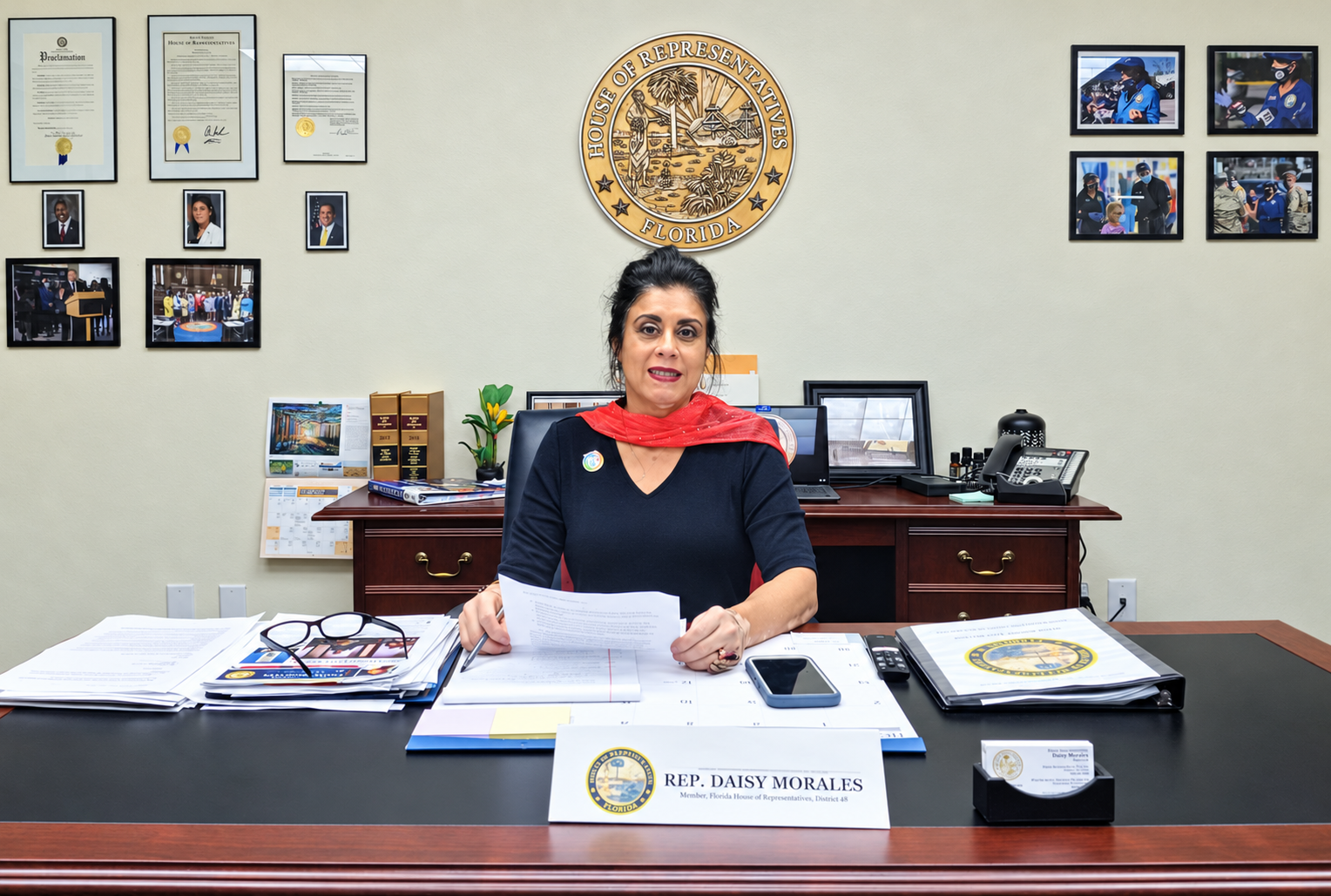
Then-state Rep. Daisy Morales, D-Orlando, sits at her district office in Orange County, Florida. Morales represented House District 48 from 2020 to 2022 and sponsored or co-sponsored more than 110 bipartisan bills that became law.
Montilla and Morales: Participation, Endorsements and Party Enforcement
Republican attorney Joel Antonio Montilla’s 2024 Orange County Commission campaign provides additional context about political participation and disputes over party loyalty.
Former Democratic state Rep. Daisy Morales participated on Montilla’s non-partisan campaign-launch host committee for Orange County Commissioner. Montilla separately confirmed to Florida Politics that Morales did not endorse his candidacy. Source: Florida Politics
Morales brings a record of electoral success in Orange County. In 2018, she won countywide reelection to the Orange County Soil and Water Conservation District board with 256,342 votes. In 2020, she defeated four opponents in the Democratic primary, including Samuel Vilchez Santiago, before defeating Republican Jesus Martinez in the general election to win Florida House District 48, a majority-Hispanic district with a large Puerto Rican community. Official general-election results show she received 47,341 votes, or 65.3%.
Morales alleges that Orange County’s Democratic establishment, including Vilchez Santiago, her 2026 House District 43 primary opponent and former Orange County Democratic Party chair, targeted her over an alleged violation of party endorsement rules while treating prominent Democrats who supported Republican candidates differently. She characterizes that treatment as selective enforcement in a defamation lawsuit filed in Orange County.
The documented crossover endorsements provide context for her allegation, but determining whether party rules were applied unevenly requires comparing the applicable rules, circumstances and disciplinary decisions in each case.
Endorsements, financial contributions, campaign management and host-committee participation represent distinct activities. Those distinctions matter when evaluating both crossover support and allegations of inconsistent party enforcement. Morales’ participation in Montilla’s event does not establish support for Donalds.
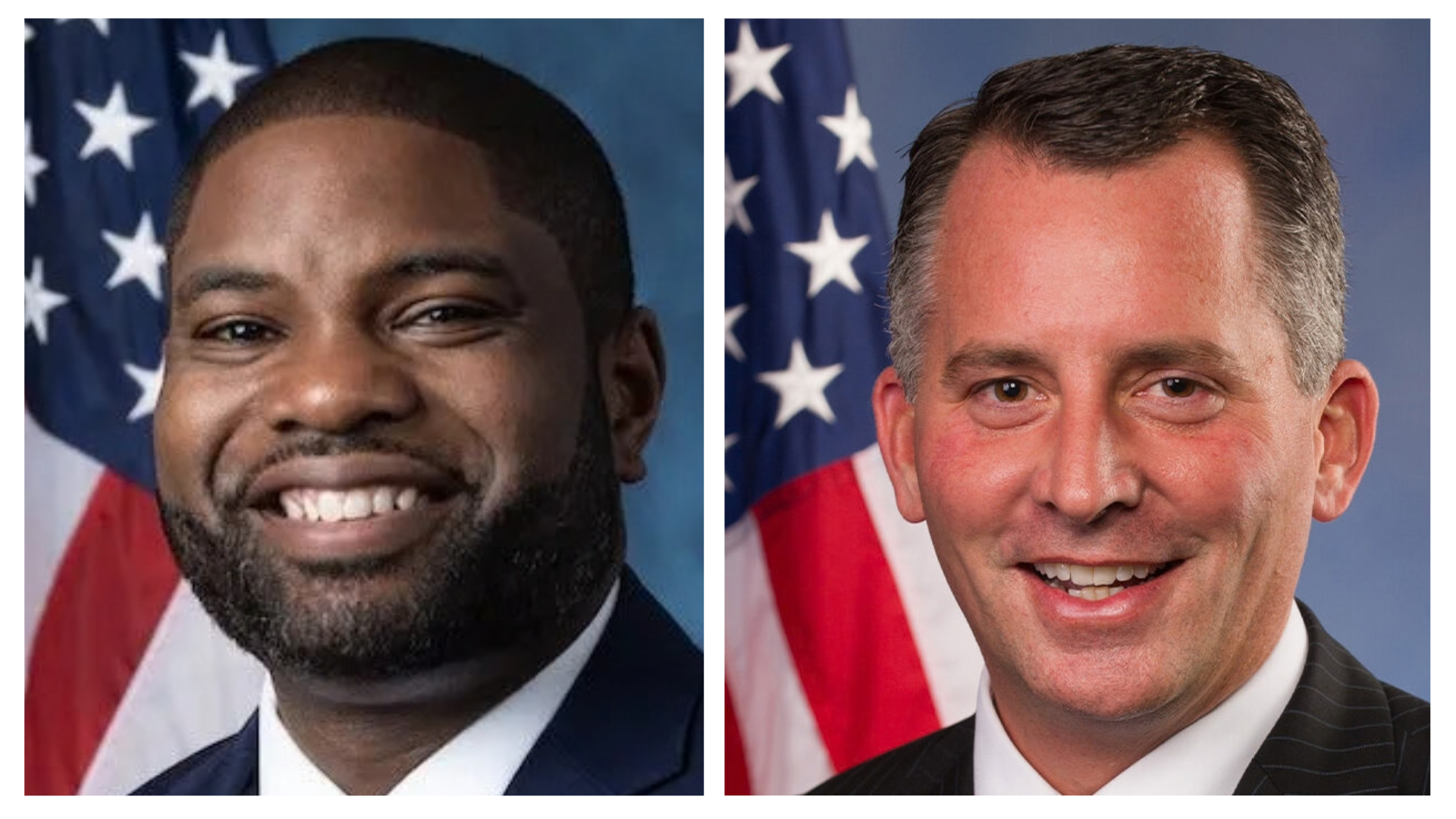
U.S. Rep. Byron Donalds, left, the Republican nominee for Florida governor, and former U.S. Rep. David Jolly, the Democratic nominee.
Orange County: A Gateway to the Governor’s Mansion?
Orange County’s influence rests on the votes it contributes and the advantage it delivers to either candidate.
In the 2018 governor’s election, Democrat Andrew Gillum received 296,257 votes in Orange County, compared with Republican Ron DeSantis’ 174,228 — a Democratic advantage of 122,029 votes. DeSantis nevertheless won statewide by 32,463 votes. Source: Florida Division of Elections
The county also voted Democratic in the 2024 presidential election. Kamala Harris received 340,807 votes, while Donald Trump received 258,279, giving Harris an 82,528-vote advantage. Source: Florida Division of Elections
The elections involved different offices, candidates and turnout conditions. Their results provide historical context rather than a forecast for the governor’s race.
Neither Donalds nor Jolly must win Orange County to win Florida. The margin is what matters. A smaller Democratic advantage would improve Donalds’ statewide position, assuming results elsewhere remained unchanged. A larger advantage for Jolly could help offset Republican strength in other counties.
Changes in that margin could reflect turnout, crossover voting or choices by voters without a party affiliation. County totals alone cannot establish how many Democrats voted Republican.
Will Community Engagement Translate Into Votes?
The ONYX gala placed both candidates before a community gathering outside a conventional partisan campaign event. Whether such appearances generate support will depend on voters’ assessments of their records, proposals and priorities.
Endorsements have limits. Gray lost his 2025 reelection bid to Democrat Tom Keen despite Dyer’s backing and a fundraising advantage. Source: Florida Politics
Chestnut’s endorsement provides a documented example of Democratic support for Donalds. Polling and voter interviews would be needed to determine whether comparable support exists in Orange County and how significant it might be.
For Donalds, making a sustained case to Black voters would require addressing the issues they identify as priorities, including housing costs, economic opportunity, education, health care and public safety. Community appearances create opportunities to hear those concerns and explain specific proposals; electoral support depends on whether voters find the answers persuasive.
A Donalds victory would make him Florida’s first Black governor. Orange County could help shape the outcome through the Democratic advantage Jolly builds or the margin Donalds narrows.
What would most influence your choice for Florida’s next governor: party affiliation, the candidate’s record or specific policy proposals — and why?
Florida
FNN ANALYSIS: After 2024 Defections, Florida Democrats Face 2026 Election Test: Can They Rebuild as Republicans Expand Their Advantage?

Florida
FNN Perspective: Cynthia Moore Chestnut’s Byron Donalds Endorsement Spotlights Nearly Four Decades of Public Service and Cross-Party Politics


