Connect with us

Florida

Governor Ron DeSantis Signs Sweeping Legislation to Protect the Innocence of Florida’s Children

Published

on

TAMPA, Fla. — Today, Governor Ron DeSantis signed the Let Kids Be Kids bill package to protect Florida’s children from permanent mutilating surgical procedures, gender identity politics in schools, and attending sexually explicit adult performances. For more information about the bills signed today, click here.
“Florida is proud to lead the way in standing up for our children,” said Governor Ron DeSantis. “As the world goes mad, Florida represents a refuge of sanity and a citadel of normalcy.”
“Thank you to Governor Ron DeSantis for continuing to implement legislation to keep our students safe and our schools focused on education, not indoctrination,” said Commissioner of Education Manny Diaz, Jr. “Today’s actions make it clear – educators in Florida are expected to teach our standards, and not interject their own opinions or worldview into the classroom. The Department will remain focused on teaching students core subjects, rather than woke gender ideology or inappropriate topics.”
“Thank you Governor DeSantis for signing legislation that protects our children,” said Agency for Health Care Administration Secretary Jason Weida. “Florida is following the science to elevate our standards of care to protect kids from harmful drugs and surgeries.”
SB 254 – Treatments for Sex Reassignment:
  • Prohibits sex reassignment surgeries and experimental puberty blockers for children.
  • Requires adult patients who are receiving these medications or surgeries to be informed about the dangers and irreversible nature of these procedures and to give written, informed consent.
  • Provides courts temporary emergency jurisdiction to step in and halt sex reassignment procedures for out-of-state children present in Florida.
  • Creates a pathway for individuals to obtain damages when they were injured or killed after receiving sex reassignment surgeries or medications as minors.
HB 1069 protects students from having to declare their pronouns in school. Additionally, this bill expands parental rights in education by prohibiting classroom instruction on sexual orientation and gender identity in Pre-K through 8th grade.
HB 1438 protects children from sexually explicit performances in all venues. This bill prohibits a person from knowingly admitting a minor to an adult performance. Additionally, this legislation authorizes the Department of Business and Professional Regulation to fine, suspend, or revoke the operating or alcohol licenses of hotels or restaurants if they admit a child into an adult performance.
HB 1521 ensures that Florida’s bathrooms, changing rooms, and locker rooms are safe places for women. The bill requires educational institutions, detention facilities, correctional institutions, juvenile correctional facilities, and public buildings with a restroom or changing facility to designate separate facilities based on biological sex or to provide one-person unisex facilities.
The Governor also signed legislation to protect youth sports in Florida and ensure that all students can play sports without interference from extremist bureaucratic boards. HB 225 allows private school, virtual school, and home school students to participate in sports and other extracurricular activities at other public or private schools, regardless of zip code.
HB 225 also reorganizes the FHSAA Board of Directors to 13 members, instead of the current 16 members. Four members will be elected by school representative members while eight members will be appointed by the governor, and the final member will be the Commissioner of Education or his designee. This bill also allows teams to provide brief opening remarks, including prayers, before high school athletic contests.

Florida

Florida Republicans sweep statewide races; Democrats break House supermajority

Published

on

Republicans retain the governor’s office, all three Cabinet posts, both legislative chambers and both U.S. Senate seats, while Democratic gains end the GOP’s House supermajority.

TALLAHASSEE, Fla. (FNN) — Republicans swept Florida’s statewide races Tuesday and retained control of both legislative chambers, extending Democrats’ statewide losing streak despite gains that ended the GOP’s supermajority in the Florida House.

Republican Byron Donalds defeated Democrat David Jolly for governor, while U.S. Sen. Ashley Moody defeated Democratic state Rep. Angie Nixon. Republicans also won the races for attorney general, chief financial officer and agriculture commissioner. www.fox13news.com

The results preserve Republican control of the governor’s office, all three Cabinet posts and both of Florida’s U.S. Senate seats. Republican Sen. Rick Scott, reelected in 2024, was not on this year’s ballot. www.rickscott.senate.gov

Democrats have not won a statewide election since Nikki Fried captured the agriculture commissioner’s office in 2018. www.wlrn.org

Florida statewide results and winning margins

Unofficial returns available Nov. 4 showed Republicans winning all five statewide contests. The figures reflect separate reporting snapshots; totals and margins may change before certification.

OfficeRepublican: votes (percentage)Democrat: votes (percentage)GOP vote marginMargin in percentage points
GovernorByron Donalds: 4,132,334 (50.02%)David Jolly: 4,024,639 (48.71%)107,6951.31
Attorney generalJames Uthmeier: 4,177,901 (50.93%)Jose Javier Rodriguez: 4,024,563 (49.07%)153,3381.86
Chief financial officerBlaise Ingoglia: 4,151,579 (50.94%)Annette Taddeo: 3,997,932 (49.06%)153,6471.88
Agriculture commissionerWilton Simpson: 4,160,577 (51.08%)Joey Mendoza Atkins: 3,984,621 (48.92%)175,9562.16
U.S. SenateAshley Moody: 4,207,947 (50.87%)Angie Nixon: 3,969,186 (47.99%)238,7612.88

Source: Florida Department of State’s Election Watch. The governor’s race was the closest of the five. Other candidates account for the remaining vote shares where applicable. Governor

Democratic gains end Republican House supermajority

Republicans retained their legislative majorities, but Democratic gains ended the GOP’s House supermajority.

The Florida Democratic Party reported a net gain of 15 House seats and a Republican-to-Democratic flip in Senate District 10, where John Lowndes defeated Jason Brodeur. Florida Democratic Party

Among the House pickups listed by the party were Eric Gray in District 35, Darryl Block in Dist,rict 36, Jane Aman in District 37, Nik Dean in District 38 and Jarod Fox in District 39. Other listed victories included Todd Delmay in District 101 and Lucia Baez-Geller in District 106. Florida Democratic Party

The party’s district list marked 16 House seats as Republican-to-Democratic flips, while its announcement reported a net gain of 15. Gross pickups and net gains measure different things; the net figure also accounts for Democratic losses. News Service of Florida reported Republicans were positioned to recapture House District 87 from Democrat Emily Gregory. Florida Democratic Party

House District 33, where Democrat Daniel McDow faced Republican Monique Miller, remained close enough for a recount, leaving the final legislative tally unsettled. WUSF

Ending the House supermajority limits Republicans’ ability to act without Democratic support on matters requiring a two-thirds vote. Republicans nevertheless retain control of legislative leadership and the ordinary lawmaking agenda. WUSF

GOP registration advantage exceeds 1.5 million

Republicans entered the election with a substantial voter registration advantage.

Florida’s Sept. 30 report listed 5,678,755 active registered Republicans and 4,133,397 Democrats — a Republican lead of 1,545,358. Another 3,345,188 voters had no party affiliation, and 514,782 belonged to minor parties. dos.fl.gov

The GOP’s statewide winning margins were far smaller than its registration advantage. But registration totals do not reveal how individual voters cast their ballots, and the results alone cannot separate the effects of turnout, crossover voting and support from unaffiliated voters.

Gillum’s 2018 showing tops Jolly’s current result

Former Democratic gubernatorial nominee Andrew Gillum received more votes, a larger vote share and a smaller losing margin in 2018 than Jolly recorded in the unofficial 2026 returns.

Gillum received 4,043,723 votes, or approximately 49.19%, against Ron DeSantis’ 4,076,186 votes, or 49.59%. His certified defeat was 32,463 votes, approximately 0.40 percentage points. results.elections.myflorida.com

Jolly’s current tally is 4,024,639 votes, or 48.71%, leaving him 107,695 votes behind Donalds. Governor

Gillum received 19,084 more votes and finished 0.48 percentage points higher than Jolly’s current showing. His losing vote margin was 75,232 smaller.

Jolly, a former Republican congressman, left the GOP in 2018, became an independent and later joined the Democratic Party before launching his gubernatorial campaign in 2025. www.pbs.org

The comparison involves different electorates and political conditions, and Jolly’s totals remain unofficial. It does not establish that his previous Republican affiliation caused his defeat.

Certification still ahead

Florida’s Elections Canvassing Commission is scheduled to certify statewide results Nov. 17. Outstanding ballot processing and any required recounts could change the unofficial totals before then. Time line

Continue Reading

Florida

James Uthmeier defeats Jose Javier Rodriguez, wins first elected term as Florida attorney general

Published

on

James Uthmeier raises one hand while speaking at a microphone during an Orlando news conference, with U.S. and Florida flags behind him.
Florida Attorney General James Uthmeier speaks during a news conference in Orlando, Fla. Photo by Florida National News.

Appointed by Gov. Ron DeSantis in 2025, Uthmeier secured a full term as Republicans swept statewide races and Democrats extended their statewide losing streak.

TALLAHASSEE, Fla. (FNN) — Republican James Uthmeier defeated Democrat Jose Javier Rodriguez in Florida’s attorney general race Tuesday, securing his first elected term after Gov. Ron DeSantis appointed him to the office in 2025.

The victory keeps Florida’s top legal office in Republican hands and adds to a statewide Republican sweep that left Democrats without a statewide election victory since 2018.

Uthmeier wins by more than 153,000 votes

Unofficial results posted by the Florida Division of Elections showed:

CandidatePartyVotesPercentage
James UthmeierRepublican4,177,90150.93%
Jose Javier RodriguezDemocratic4,024,56349.07%

Uthmeier’s advantage was 153,338 votes, or 1.86 percentage points. The totals remain unofficial and may change before certification.

From gubernatorial appointment to election victory

DeSantis appointed Uthmeier attorney general in February 2025 after Ashley Moody moved to the U.S. Senate. Uthmeier was sworn in Feb. 17, 2025.

Before taking office, Uthmeier served as DeSantis’ chief of staff and general counsel. His previous experience included work at the U.S. Department of Commerce and the law firm Jones Day.

Tuesday’s election gives him a full term in the office he initially entered through appointment.

Candidates respond to the outcome

Uthmeier thanked voters and emphasized his public safety agenda.

“Grateful for your trust,” he posted on X, according to News Service of Florida.

Rodriguez congratulated Uthmeier while saying expectations for the office should continue to include public safety, consumer protection and government accountability regardless of the election’s outcome.

Republicans retain statewide power

Uthmeier’s victory accompanied Republican wins by Byron Donalds for governor, Blaise Ingoglia for chief financial officer, Wilton Simpson for agriculture commissioner and Moody for U.S. Senate.

Together with Republican Sen. Rick Scott, who was not on this year’s ballot, those results preserve GOP control of the governor’s office, all three Cabinet posts and both Florida U.S. Senate seats.

Democrats made gains in the Legislature, ending the Republican supermajority in the Florida House, but Republicans retained control of both legislative chambers.

The narrower statewide margins did not translate into Democratic victories. Nikki Fried’s 2018 election as agriculture commissioner remains the party’s most recent statewide win.

Certification scheduled for Nov. 17

Florida’s Elections Canvassing Commission is scheduled to certify statewide results Nov. 17, following county reporting and any required recounts.

Continue Reading

Florida

HISTORIC WIN: Byron Donalds elected Florida’s first Black governor

Published

on

Republican defeats Democrat David Jolly following a campaign backed by Black community leaders, including Gainesville Democrat Cynthia Chestnut.

TALLAHASSEE, Fla. (FNN) — Republican U.S. Rep. Byron Donalds won Florida’s governor’s race Tuesday, defeating Democrat David Jolly and becoming the first Black person elected to lead the state. NBC News projected Donalds as the winner of the historic contest.

With 99% of the expected vote counted, Donalds received 4,113,531 votes, or 50.1%, compared with 3,996,073 votes, or 48.7%, for Jolly, according to NBC News Decision Desk results. Donalds led by 117,458 votes, approximately 1.4 percentage points. The election-night totals remained unofficial.

Donalds will succeed term-limited Gov. Ron DeSantis, keeping the governor’s office in Republican hands. His campaign paired conservative policy positions with outreach to Black voters and support from community leaders, including some Democrats.

A historic first for Florida and the nation

Donalds becomes the first Black Republican elected governor in the United States, according to The Washington Post’s election coverage.

He is not the first Black Republican to serve as a governor. Republican P.B.S. Pinchback assumed Louisiana’s governorship during Reconstruction in 1872, becoming the nation’s first Black governor without winning an election to that office.

Virginia Democrat L. Douglas Wilder became the first Black person popularly elected governor in 1989 and took office in 1990. Donalds’ victory establishes a new milestone for Florida and the Republican Party.
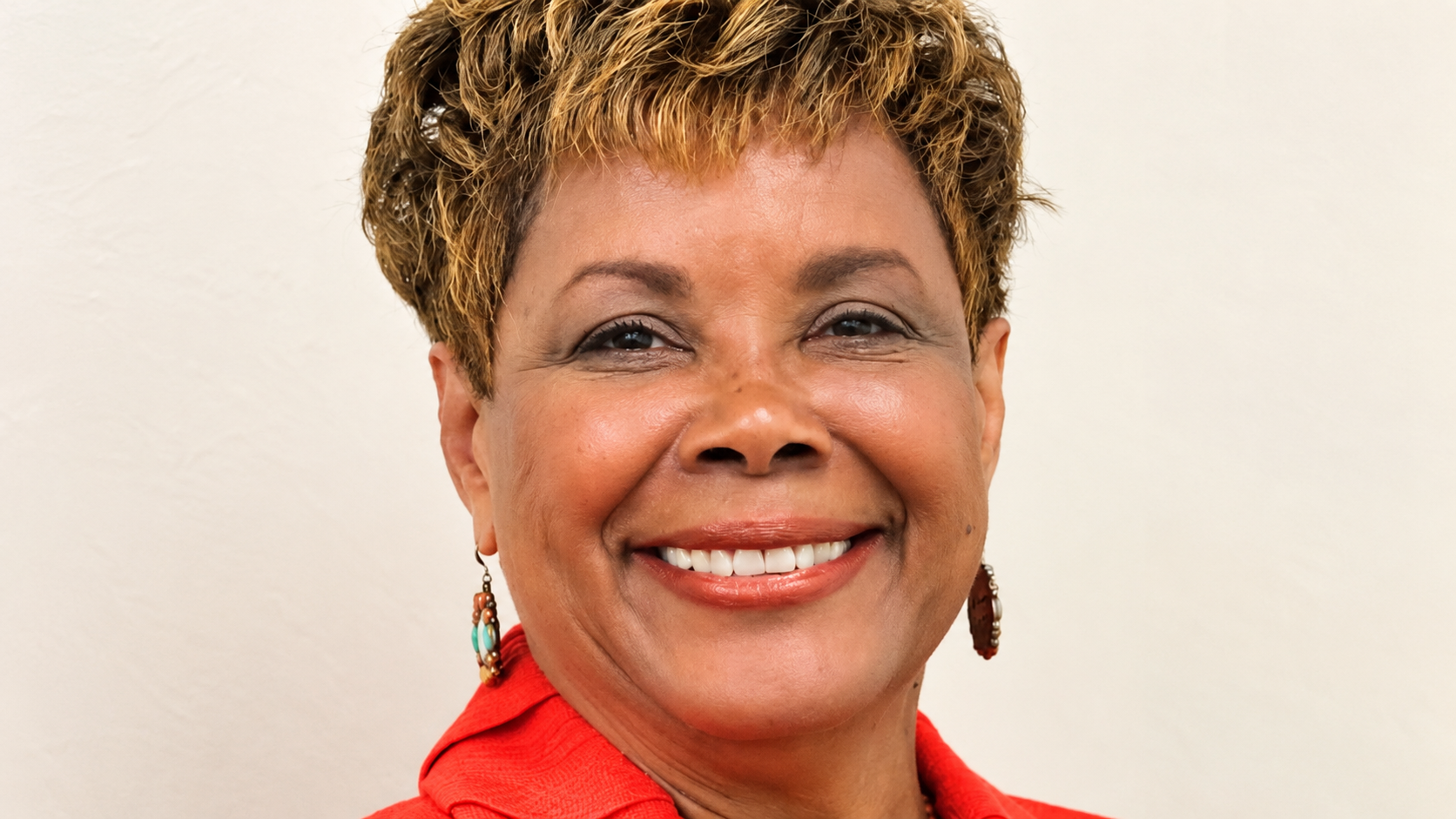
Gainesville City Commissioner Cynthia Moore Chestnut, a longtime public servant whose political career has spanned city, county and state government. Source Cynthia Moore Chestnut

Black leaders’ endorsements preceded historic win

Black elected officials, pastors, business owners and civic leaders became a visible part of Donalds’ campaign.

More than two dozen supporters launched the Florida Coalition of Black Leaders for Donalds to back the congressman and his running mate, Bryan Avila. Its members included sheriffs, lawmakers and educators, reflecting an effort to build support through established community networks.

Gainesville City Commissioner Cynthia Chestnut delivered one of the campaign’s most prominent endorsements across party lines.

Chestnut, a Black Democrat and former state representative, supported Donalds despite disagreements with some of his policies. She said her decision reflected her judgment about Black leadership and frustration with Democrats’ selection of Jolly over Black and Hispanic candidates.

“I want to see a Black governor of Florida in my lifetime,” Chestnut said in a statement reported by WCJB.

Her endorsement drew criticism from Democratic state Sen. LaVon Bracy Davis, who cited Donalds’ voting-rights record and challenged the rationale for supporting him. The dispute highlighted differences among Black leaders over representation, party loyalty and public policy.

Donalds’ victory fulfilled the historic outcome Chestnut sought. However, available election-night reporting does not establish how many votes those endorsements generated or whether they determined the result.

Affordability shaped the campaign

The contest also centered on household expenses, particularly housing and homeowners insurance costs in a hurricane-prone state.

Jolly, a former Republican congressman running as a Democrat, sought to attract voters dissatisfied with rising costs. Donalds emphasized affordability, public safety and educational opportunity while defending continued Republican leadership.

The candidates offered different approaches to large data centers. Jolly supported a moratorium on new hyperscale facilities, pointing to environmental and public-health concerns. Donalds favored local decisions about where facilities should be built and said their operations should not raise residents’ utility bills.

Republican advantages faced a competitive challenge

Jolly faced substantial obstacles, including a Republican voter-registration advantage of roughly 1.5 million and Donalds’ stronger fundraising position.

President Donald Trump campaigned with Donalds during the race’s final days. DeSantis also endorsed him, and Donalds portrayed his candidacy as a continuation of the outgoing governor’s approach.

Despite those advantages, polling indicated a competitive contest. A University of North Florida survey conducted Oct. 12-19 showed Donalds ahead 49% to 47%, a difference within the poll’s margin of error.

From state lawmaker to governor-elect

Donalds served in the Florida House before winning election to Congress in 2020. He subsequently became a nationally recognized conservative voice and Trump ally.

He is scheduled to take office Jan. 5, 2027, with affordability among the central challenges awaiting his administration.

Continue Reading
Advertisement
Advertisement Ticket Time Machine ad
Advertisement Orlando Regional REALTOR Association logo
Advertisement Parts Pass App
Advertisement Hispanic Chamber of Commerce of Metro Orlando
Advertisement
Advertisement African American Chamber of Commerce of Central Florida
Advertisement FNN News en Español
Advertisement Indian American Chamber of Commerce logo
Advertisement Florida Sports Channel

FNN Newsletter

Trending