

Florida
In court, Trump faced charges with no cameras present. Outside, he campaigned for all to see


MIAMI (AP) — Former President Donald Trump gave a wave and a thumbs-up to crowds outside the federal courthouse in downtown Miami after pleading not guilty to criminal charges. He then headed to a Cuban restaurant where he warmly greeted waiting supporters in a camera-ready scene that resembled a campaign stop, and later he railed against the charges before a friendly crowd of invited guests at a private golf club he owns.
In the largely unseen moments Tuesday — his attorney entering his plea, Trump sitting grim-faced with arms folded across his chest — the gravity of being the first former president charged with a federal crime was apparent.
In the seen moments, broadcast around the world in real time, there were a long motorcade, flag-waving supporters and a smaller number of anti-Trump protesters outside the courthouse. Then the former president and 2024 candidate had a detour in mind, to a popular restaurant where he was all smiles, greeted by supporters, prayed over by a rabbi and shadowed by his personal aide, who also has been charged in the case.
Then Trump flew on his private jet to New Jersey, where backers welcomed him with rally-like enthusiasm, music and chants for a speech delivered before a clubhouse with columns resembling the White House. The remarks, with live coverage only from his favored cable channel, were rife with errors and falsehoods that went unchallenged in the moment.
Trump has long been adroit at creating his own portrait of events, ever mindful of the power of television to shape an impression even as his actions have strained the safeguards of American democracy. The post-court itinerary was an orchestrated effort at counterprogramming as he campaigns again for president and maintains that he has been unfairly targeted by political rivals.
The international attention and the screaming crowds were more signs of the extraordinary nature of the day’s events and the person at the center of it all. A defendant like no other, Trump was the first former president to appear before a federal judge on criminal charges. He also is leading the Republican field for the 2024 presidential nomination, holding his status as frontrunner even as he has faced these and other legal troubles.
Hardly any of those gathered in Miami interacted with Trump, if they saw him at all through the window of his SUV. He arrived as part of a motorcade that entered the courthouse garage for his hearing on felony charges. The former president also left in the SUV with the windows rolled up before heading to Versailles, a restaurant, coffee shop and bakery that is a required stop for politicians visiting Miami. There, the crowd serenaded him with the “Happy Birthday” song, one day before the former president’s 77th birthday.
“Some birthday! We’ve got a government that’s out of control,” Trump said.

Trump has been making frequent stops at local restaurants during his campaign trips, in part to contrast his easy rapport with his supporters with his chief Republican rival, Florida Gov. Ron DeSantis. But Tuesday’s stop was different, aimed at showcasing Trump’s continued support from GOP voters and signaling that he remains unbowed by the indictments.
He then headed to the airport for his flight back to New Jersey. At Bedminster, he called the 37 felony charges against him “election interference and yet another attempt to rig and steal” an election, repeating false claims about his 2020 loss to Joe Biden.
Some of Trump’s most high-profile supporters turned out Tuesday. In Miami, failed U.S. Senate candidate Kari Lake of Arizona, whom Trump endorsed last year, walked through the crowd. Among those at Bedminster was election conspiracist Mike Lindell, founder of MyPillow.
Outside the Miami courthouse earlier in the day, security was tight, with police vehicles blocking a palm tree-lined breezeway and public entrance to the building. A helicopter passed overhead at times, and officers circled the perimeter on bicycles.
The scene included what is now a staple of a Trump appearance or rally. People selling T-shirts with Trump’s face in a mock mugshot, with large letters reading “NOT GUILTY,” others hawking hats but also, fitting for Miami, mangoes.
Some waved Trump 2024 flags, supporting his bid for president. Another man, who opposes Trump, dressed in black-and-white prison stripes and held a sign reading “LOCK HIM UP.” At times, people shouted past each other, and small groups of pro-Trump supporters and anti-Trump protesters squabbled, occasionally yelling obscenities at each other.
Domenic Santana, who showed up in the jailhouse uniform complete with handcuffs and a plastic ball and chain, said he “wanted to join the circus.”
Santana came to the U.S. as a child from Cuba and retired in Miami after decades operating an eatery in the New York area. The 61-year-old considers himself a political independent and says his mother and daughter voted for Trump.
“A fellow New Yorker can spot a rat a mile away,” he said. “Frankly, he should’ve been locked up ages ago.”
More typical, among the earliest arrivals outside the courthouse were the father-son duo of Florencio and Kevin Rodriguez, who came to the U.S. 15 years ago as asylum seekers fleeing dictatorship in Cuba.
Wearing a shirt that read “Jesus is my savior, Trump is my president,” the younger Rodriguez, Kevin, said it was possible that Trump was guilty of illegally retaining classified documents.
But he questioned the fairness of the proceedings in light of what he said was prosecutors’ lax attitude toward President Joe Biden and former Secretary of State Hillary Clinton — both of whom have also been accused of mishandling classified intelligence, though without any intention of hiding their actions.
“Even if he’s guilty, we will still support him,” Rodriguez said.
Madelin Munilla, 67, who came to Miami as a child when her parents fled Fidel Castro’s Cuba, carried a sign with a photo of Biden alongside leaders who had their opponents put in jail.
“This is what they do in Latin America,” she said.
Others came to counter the Trump supporters. Jack Kaplan, 68, drove two hours from Fort Pierce. Carrying a copy of the indictment affixed to a clipboard and a sign reading “Trump is Toast,” the retired car dealer said he’ll celebrate with a $1,400 bottle of Mouton Rothschild red wine if the former president is locked away.
“I’ve already got the bottle sitting in my wine cooler,” said Kaplan as a Trump supporter carrying a sign reading “Keep America Great” walked by. “I’m going to have a big party.”


Florida
Civil Rights Group Honors Nobel Peace Prize Winner Navi Pillay, Highlights Florida’s Trayvon Martin Connection

The Orlando-based civil rights association recalls supporting the former U.N. human rights chief’s 2012 call for an investigation into the teenager’s killing in Sanford.
ORLANDO, Fla. (FNN) — The Florida Civil Rights Association is congratulating 2026 Nobel Peace Prize winner Navanethem “Navi” Pillay, recalling her call for an investigation into Trayvon Martin’s killing and the international attention it brought to questions of racial equality and justice in Florida.
The Norwegian Nobel Committee announced Pillay’s selection Oct. 9 for her efforts to promote peace and international law. The South African jurist served as United Nations high commissioner for human rights from 2008 to 2014 and helped shape landmark international court decisions.
In a press release, FCRA President J. Willie David III said Pillay’s intervention connected a Florida family’s demand for answers to a broader concern for human rights.
“Pillay’s call for an investigation reinforced that a family’s demand for justice in Sanford mattered beyond Florida and the United States,” David said.
“We welcomed her intervention in 2012 because families deserve answers and the law must protect everyone equally.”
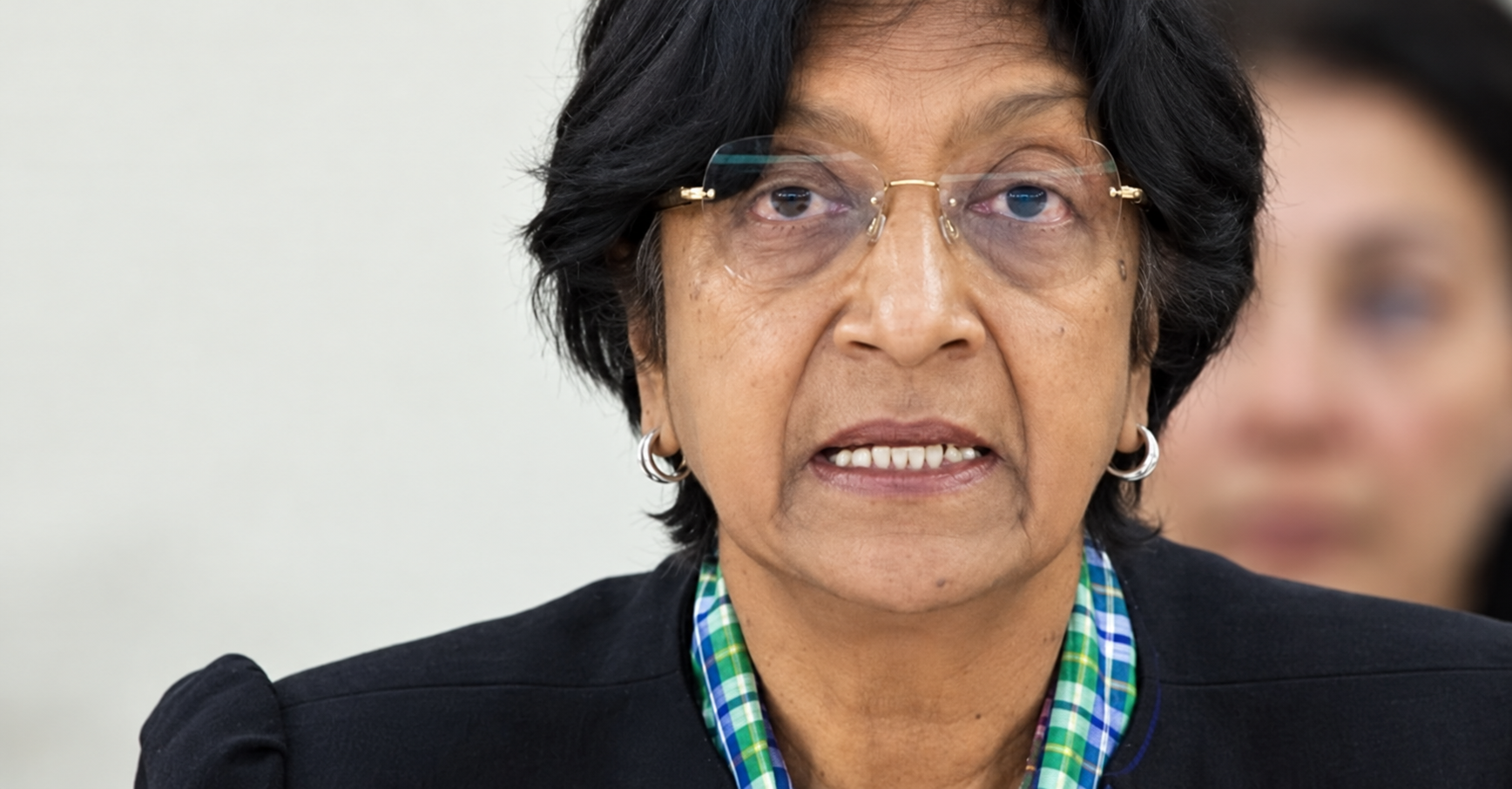
UN Human Rights Commissioner Navi Pillay (Photo credit: UN Photo/Jean-Marc Ferre)
FCRA recalls its response in 2012
Martin, an unarmed Black 17-year-old, was fatally shot by neighborhood watch volunteer George Zimmerman on Feb. 26, 2012, in Sanford, northeast of Orlando.
In April 2012, Pillay called for an immediate investigation into the killing as the case drew international attention and scrutiny of Florida’s Stand Your Ground law.
FCRA welcomed that call. The association’s current release cites an April 7, 2012, West Orlando News report that quoted David discussing the case’s global impact.
“The shooting death of Trayvon Martin and Florida’s Stand Your Ground Law have created a worldwide movement that calls into question how justice is delivered to victims of color,” David said at the time, according to the release.
FCRA describes the activism surrounding Martin’s death as a defining moment that galvanized a new generation of civil rights advocates.
Zimmerman was charged with second-degree murder and acquitted in July 2013. In February 2015, the U.S. Justice Department closed its separate investigation, finding insufficient evidence to pursue federal criminal civil rights charges.
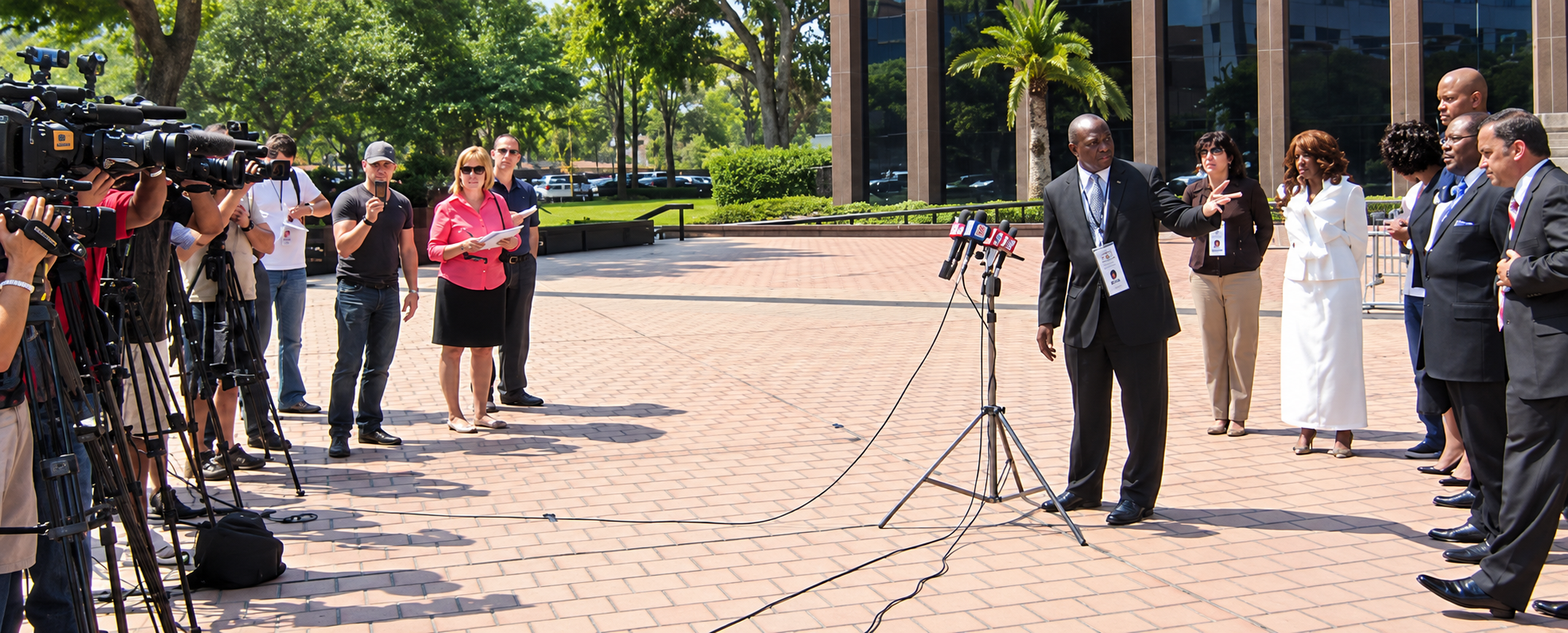
The Florida Civil Rights Association (FCRA) held a press conference outside the State of Florida’s regional offices in Orlando in 2012, calling on then-Gov. Rick Scott to take action following Trayvon Martin’s killing. Photo by FCRA.
Why Florida’s case drew global scrutiny
The Florida connection shows how the handling of a local killing can draw international scrutiny over racial discrimination, access to justice and the protection of human rights.
Pillay’s intervention brought those concerns into the international discussion surrounding Martin’s death. In September 2013, U.N. human rights experts also urged the United States to complete its civil rights investigation and examine concerns about racial profiling.
The significance lies in human rights oversight: how public institutions investigate deaths and provide equal treatment can attract attention beyond national borders. Pillay’s call was an appeal for investigation, rather than an international court judgment about Zimmerman’s guilt or Florida’s compliance with international law.
For FCRA, that connection remains relevant to how Florida leaders evaluate laws and practices affecting the communities they serve.
Pillay’s record in international justice
Pillay challenged discrimination under apartheid before serving on South Africa’s High Court, the International Criminal Tribunal for Rwanda and the International Criminal Court.
At the Rwanda tribunal, she was part of the judicial panel that established that rape and sexual violence can constitute acts of genocide, a landmark development in international criminal law.
David said honoring that career should also encourage accountability at home.
“Her Nobel Peace Prize recognizes a career built on confronting injustice through the rule of law,” he said. “Honoring that work means demanding transparent investigations and equal protection here at home. Rights belong to everyone.”
A renewed call for fairness in Florida
FCRA urged Florida leaders to safeguard impartial investigations, examine whether Stand Your Ground and other laws are applied fairly, and address policies or practices that produce discriminatory outcomes.
Founded in 2005, the association advocates for civil rights, human rights and civil liberties through education, advocacy and accountability. Its statement links Pillay’s international recognition to a continuing demand for fairness and human dignity in Florida.
Florida
Florida Governor Candidates: Donalds Spent Longer as a Democrat; Jolly Reports Longer Republican History

Florida
FNN PERSPECTIVE | Byron Donalds Visits ONYX Gala in Orlando: Could Orange County Help Him Win Florida’s Governor’s Race?

Democratic crossover endorsements provide context. Orange County’s vote margin could help shape the contest between Donalds and David Jolly.
ORLANDO, Fla. (FNN) — Republican gubernatorial nominee Byron Donalds’ appearance at ONYX Magazine’s Men of Honor Gala in Orlando raises a broader electoral question: Could crossover support in Democratic-leaning Orange County help him reach the governor’s mansion?
Source: ONYX Magazine Facebook Page
Donalds and Democratic opponent David Jolly attended the Oct. 3 celebration at the Rosen Centre Hotel, according to Hoodline reporting citing the Orlando Sentinel. The gathering brought together elected officials, business executives, educators and community leaders to recognize leadership, achievement and service. Source: Hoodline
Organizers emphasized that the candidates’ attendance did not constitute an endorsement. Among the honorees was Orange County Mayor Jerry Demings, selected for a lifetime achievement award. Source: Jacksonville Free Press
Orange County, home to Orlando, provides a setting for examining both candidates’ electoral prospects. Its history includes prominent Democrats backing Republicans, while its Democratic vote margins illustrate how the county can contribute to the statewide outcome.
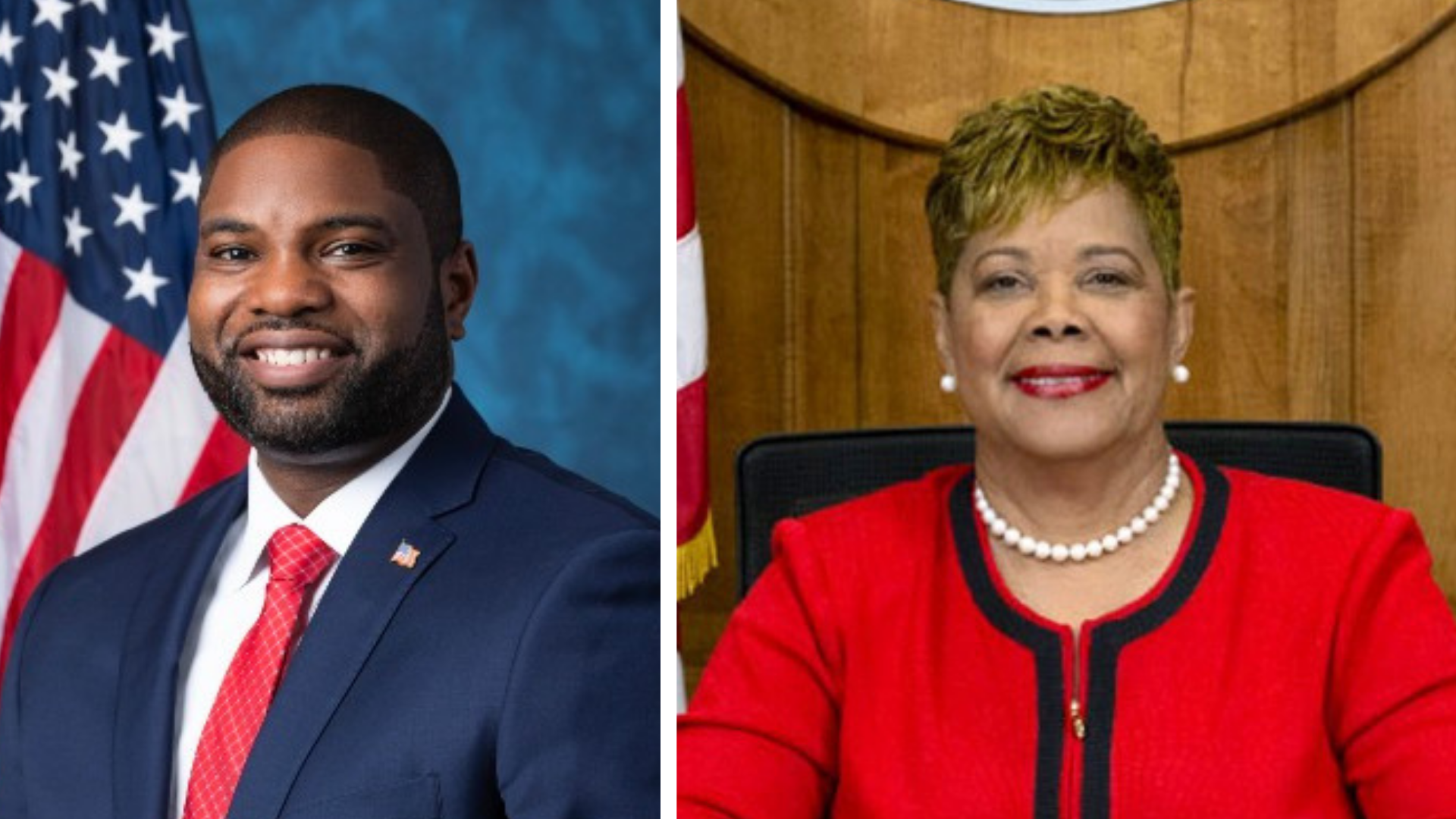
Republican gubernatorial nominee Byron Donalds, left, and Gainesville City Commissioner Cynthia Moore Chestnut, a longtime Democrat who endorsed Donalds for governor.
Donalds Has Secured a Democratic Crossover Endorsement
Gainesville City Commissioner Cynthia Moore Chestnut, a registered Democrat, endorsed Donalds over Jolly in September, according to WCJB. She cited Black representation, dissatisfaction with the Democratic ticket and support for historically Black colleges and universities, while acknowledging disagreements with some of Donalds’ policies. Source: WCJB
Chestnut subsequently introduced Donalds at a University of Florida town hall, emphasizing access to his office and fair consideration of Gainesville’s needs. Source: WCJB
Her endorsement raises a question about whether other Democrats, including those with conservative or moderate views, might support Donalds. However, her stated reasons do not establish a broader ideological shift. Dissatisfaction with party leadership or progressive positions does not automatically translate into Republican votes.
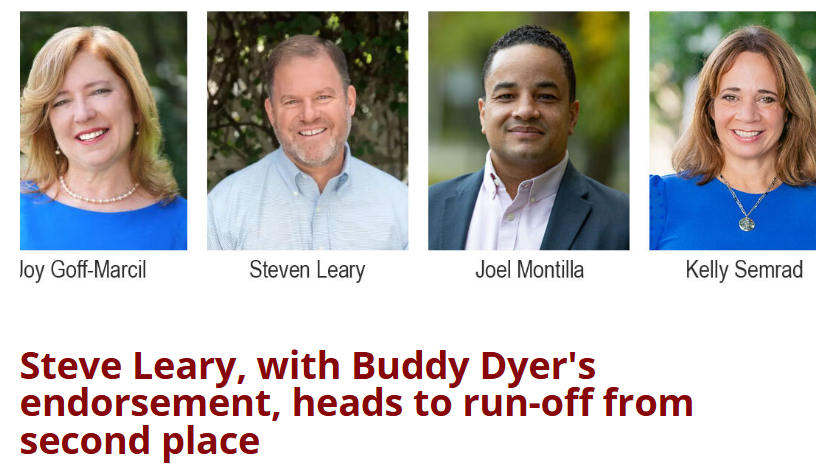
Source: Winter Park Voice
Orange County Democrats Have Backed Republicans Before
Democratic Orlando Mayor Buddy Dyer endorsed Republican state Rep. Mike Miller against Democrat Beth Tuura in the 2016 Florida House District 47 election — a partisan legislative contest. Source: Florida Politics
In the nonpartisan 2024 Orange County Commission District 5 race, Dyer endorsed Republican former Winter Park Mayor Steve Leary. Winter Park Voice also identified former Democratic state Sen. Gary Siplin, former Orange County Commissioner Victoria Siplin and Winter Park Commissioner Craig Russell as Democratic supporters of Leary. Source: Winter Park Voice
Dyer’s Orlando PAC contributed $4,000 to Neighbors for a Sensible Orange County, the political committee chaired by Leary, according to Winter Park Voice’s reporting on campaign finance filings. The committee also promoted Leary alongside Democratic candidates. This was financial support between political committees, rather than a personal donation by Dyer or a direct contribution to Leary’s candidate account. Source: Winter Park Voice
Former Orange County Chair Linda Chapin encouraged Democrats to support Republican Teresa Jacobs’ 2014 reelection campaign for county mayor while Democrat Val Demings was challenging her. Source: Orlando Weekly
Dyer and Orlando Commissioner Tony Ortiz also endorsed Republican Commissioner Jim Gray in the 2025 Orlando election. Ortiz had switched from Republican to Democrat earlier that year. Source: Orlando Weekly
These examples document individual cross-party support across different elections. They do not establish that those leaders endorse Donalds.
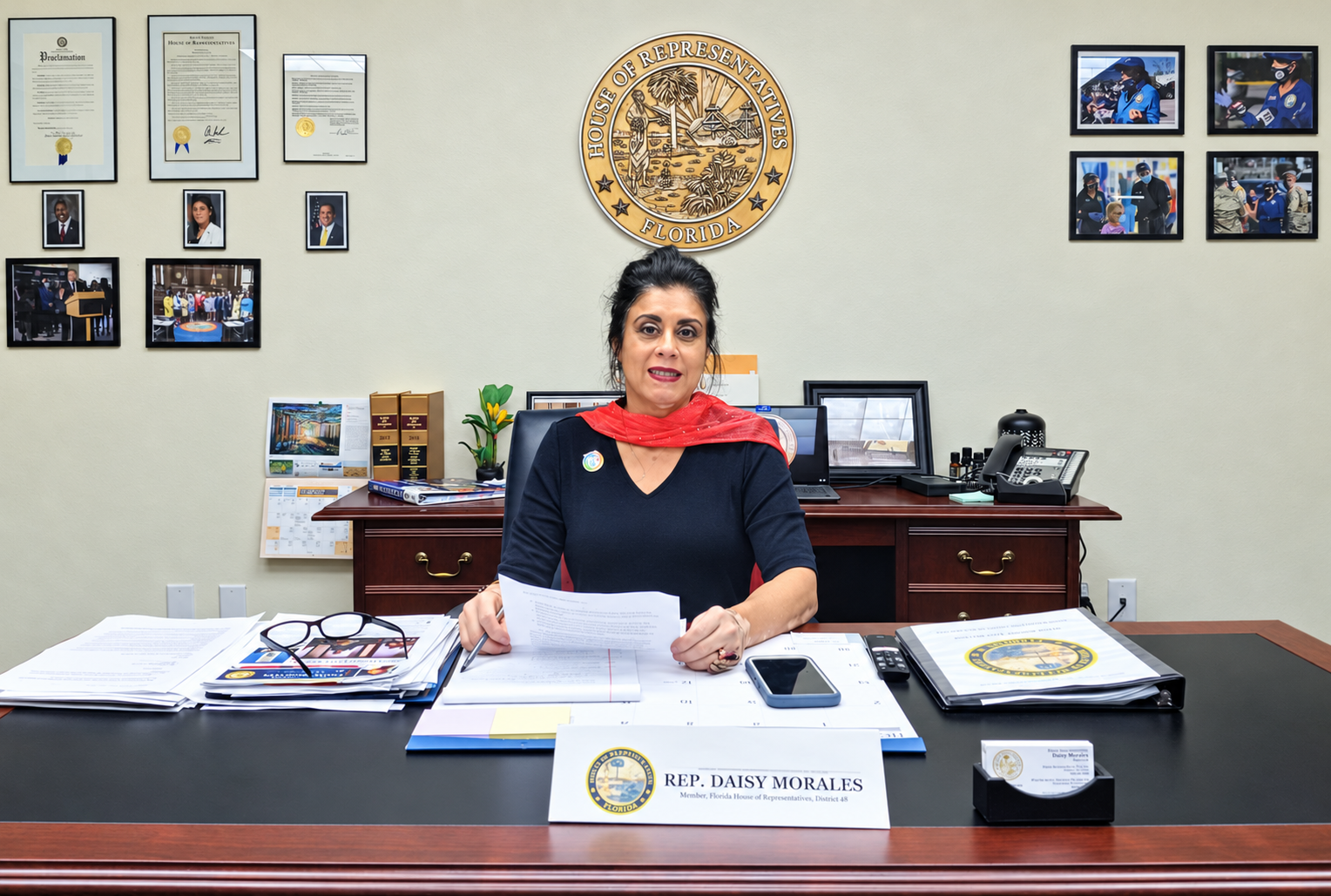
Then-state Rep. Daisy Morales, D-Orlando, sits at her district office in Orange County, Florida. Morales represented House District 48 from 2020 to 2022 and sponsored or co-sponsored more than 110 bipartisan bills that became law.
Montilla and Morales: Participation, Endorsements and Party Enforcement
Republican attorney Joel Antonio Montilla’s 2024 Orange County Commission campaign provides additional context about political participation and disputes over party loyalty.
Former Democratic state Rep. Daisy Morales participated on Montilla’s non-partisan campaign-launch host committee for Orange County Commissioner. Montilla separately confirmed to Florida Politics that Morales did not endorse his candidacy. Source: Florida Politics
Morales brings a record of electoral success in Orange County. In 2018, she won countywide reelection to the Orange County Soil and Water Conservation District board with 256,342 votes. In 2020, she defeated four opponents in the Democratic primary, including Samuel Vilchez Santiago, before defeating Republican Jesus Martinez in the general election to win Florida House District 48, a majority-Hispanic district with a large Puerto Rican community. Official general-election results show she received 47,341 votes, or 65.3%.
Morales alleges that Orange County’s Democratic establishment, including Vilchez Santiago, her 2026 House District 43 primary opponent and former Orange County Democratic Party chair, targeted her over an alleged violation of party endorsement rules while treating prominent Democrats who supported Republican candidates differently. She characterizes that treatment as selective enforcement in a defamation lawsuit filed in Orange County.
The documented crossover endorsements provide context for her allegation, but determining whether party rules were applied unevenly requires comparing the applicable rules, circumstances and disciplinary decisions in each case.
Endorsements, financial contributions, campaign management and host-committee participation represent distinct activities. Those distinctions matter when evaluating both crossover support and allegations of inconsistent party enforcement. Morales’ participation in Montilla’s event does not establish support for Donalds.
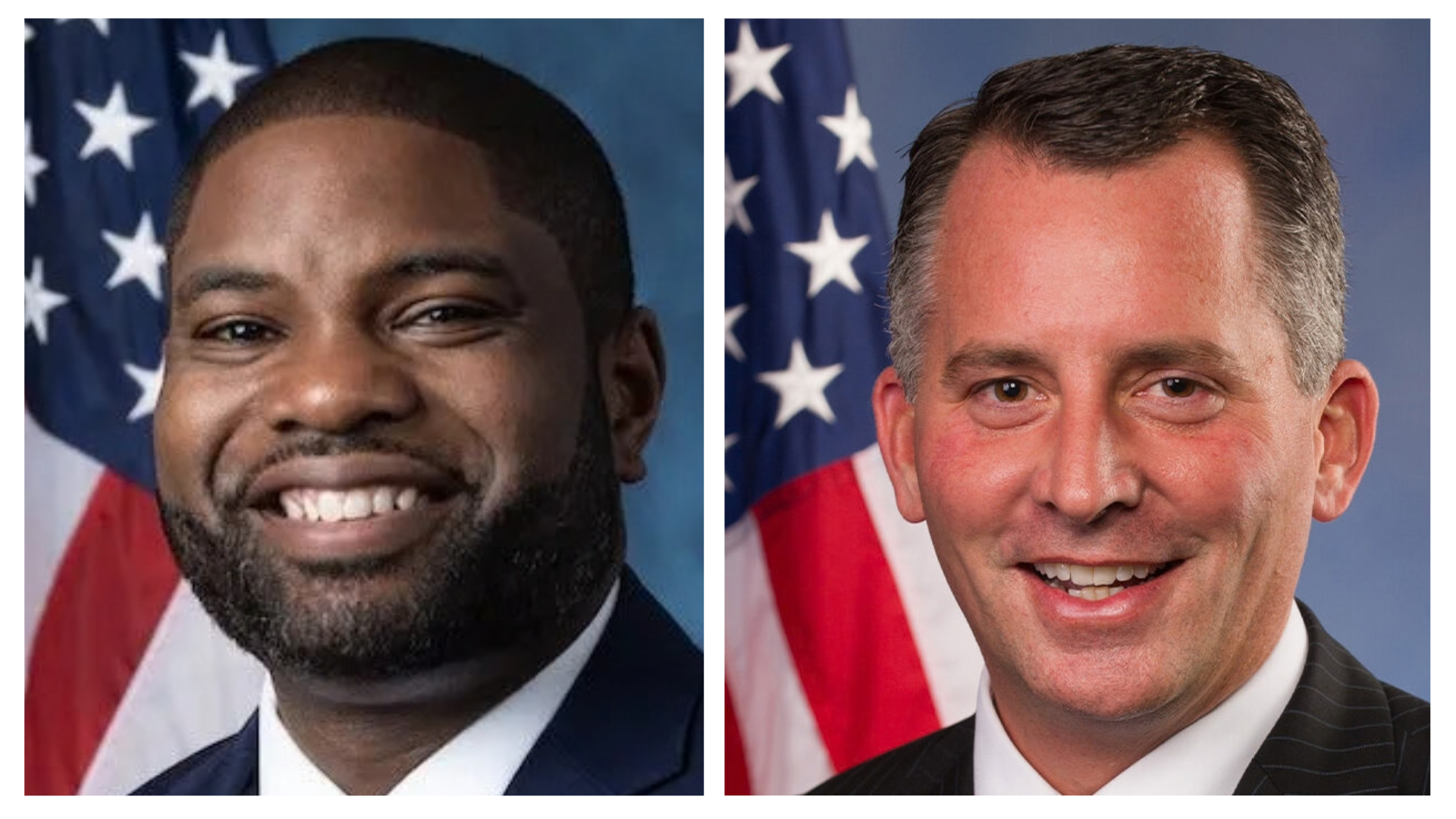
U.S. Rep. Byron Donalds, left, the Republican nominee for Florida governor, and former U.S. Rep. David Jolly, the Democratic nominee.
Orange County: A Gateway to the Governor’s Mansion?
Orange County’s influence rests on the votes it contributes and the advantage it delivers to either candidate.
In the 2018 governor’s election, Democrat Andrew Gillum received 296,257 votes in Orange County, compared with Republican Ron DeSantis’ 174,228 — a Democratic advantage of 122,029 votes. DeSantis nevertheless won statewide by 32,463 votes. Source: Florida Division of Elections
The county also voted Democratic in the 2024 presidential election. Kamala Harris received 340,807 votes, while Donald Trump received 258,279, giving Harris an 82,528-vote advantage. Source: Florida Division of Elections
The elections involved different offices, candidates and turnout conditions. Their results provide historical context rather than a forecast for the governor’s race.
Neither Donalds nor Jolly must win Orange County to win Florida. The margin is what matters. A smaller Democratic advantage would improve Donalds’ statewide position, assuming results elsewhere remained unchanged. A larger advantage for Jolly could help offset Republican strength in other counties.
Changes in that margin could reflect turnout, crossover voting or choices by voters without a party affiliation. County totals alone cannot establish how many Democrats voted Republican.
Will Community Engagement Translate Into Votes?
The ONYX gala placed both candidates before a community gathering outside a conventional partisan campaign event. Whether such appearances generate support will depend on voters’ assessments of their records, proposals and priorities.
Endorsements have limits. Gray lost his 2025 reelection bid to Democrat Tom Keen despite Dyer’s backing and a fundraising advantage. Source: Florida Politics
Chestnut’s endorsement provides a documented example of Democratic support for Donalds. Polling and voter interviews would be needed to determine whether comparable support exists in Orange County and how significant it might be.
For Donalds, making a sustained case to Black voters would require addressing the issues they identify as priorities, including housing costs, economic opportunity, education, health care and public safety. Community appearances create opportunities to hear those concerns and explain specific proposals; electoral support depends on whether voters find the answers persuasive.
A Donalds victory would make him Florida’s first Black governor. Orange County could help shape the outcome through the Democratic advantage Jolly builds or the margin Donalds narrows.
What would most influence your choice for Florida’s next governor: party affiliation, the candidate’s record or specific policy proposals — and why?


 Florida4 days ago
Civil Rights Group Honors Nobel Peace Prize Winner Navi Pillay, Highlights Florida’s Trayvon Martin Connection
 Central Florida News6 hours ago
Tiffany Moore Russell Plans Orange County Campaign Stops Ahead of Early Voting
 Politics4 hours ago
RNC Chairman Joe Gruters Calls Trump an ‘Absolute Machine’ Ahead of Midterm Elections


