

Politics
Kerry Makes Gut-Wrenching Visit to Hiroshima A-Bomb Site


Florida
Florida House Democratic Campaign Committee Chair Christine Hunschofsky Faces Lawsuits, Election Complaints


Who is next? Lawsuits and Florida election complaints put the incoming House Democratic leader’s oversight of political attacks, campaign spending and tactics against former Democratic lawmakers under scrutiny
ORLANDO, Fla. (FNN) — Incoming Florida House Democratic Leader Christine Hunschofsky, a former Parkland mayor is facing growing scrutiny over campaign tactics by the Florida House Democratic Campaign Committee, the party-affiliated committee she chairs, as former Democratic lawmakers challenge political attacks through lawsuits and Florida election complaints.
The disputes are placing increased scrutiny on Christine Hunschofsky, chair of the Florida House Democratic Campaign Committee, and Cassidy Whitaker, the committee’s caucus director for the 2026 election cycle.
The controversy goes beyond ordinary party infighting, with former Democratic lawmakers alleging that FHDCC used opposition research and campaign communications containing false or misleading information to attack members of its own party.
Those allegations raise questions about the committee’s research, approval process and campaign tactics — and whether House Democratic leaders can rebuild trust with lawmakers targeted by the same political organization they are expected to help lead.
Former Democratic lawmakers are now turning to the courts and Florida’s election complaint process to challenge FHDCC-linked campaign tactics, intensifying scrutiny of the committee’s leadership, spending, opposition research and oversight.
The lawsuits and complaints remain allegations. They do not establish that Hunschofsky, FHDCC or others violated the law.
But the controversy is no longer simply an internal Democratic campaign fight.
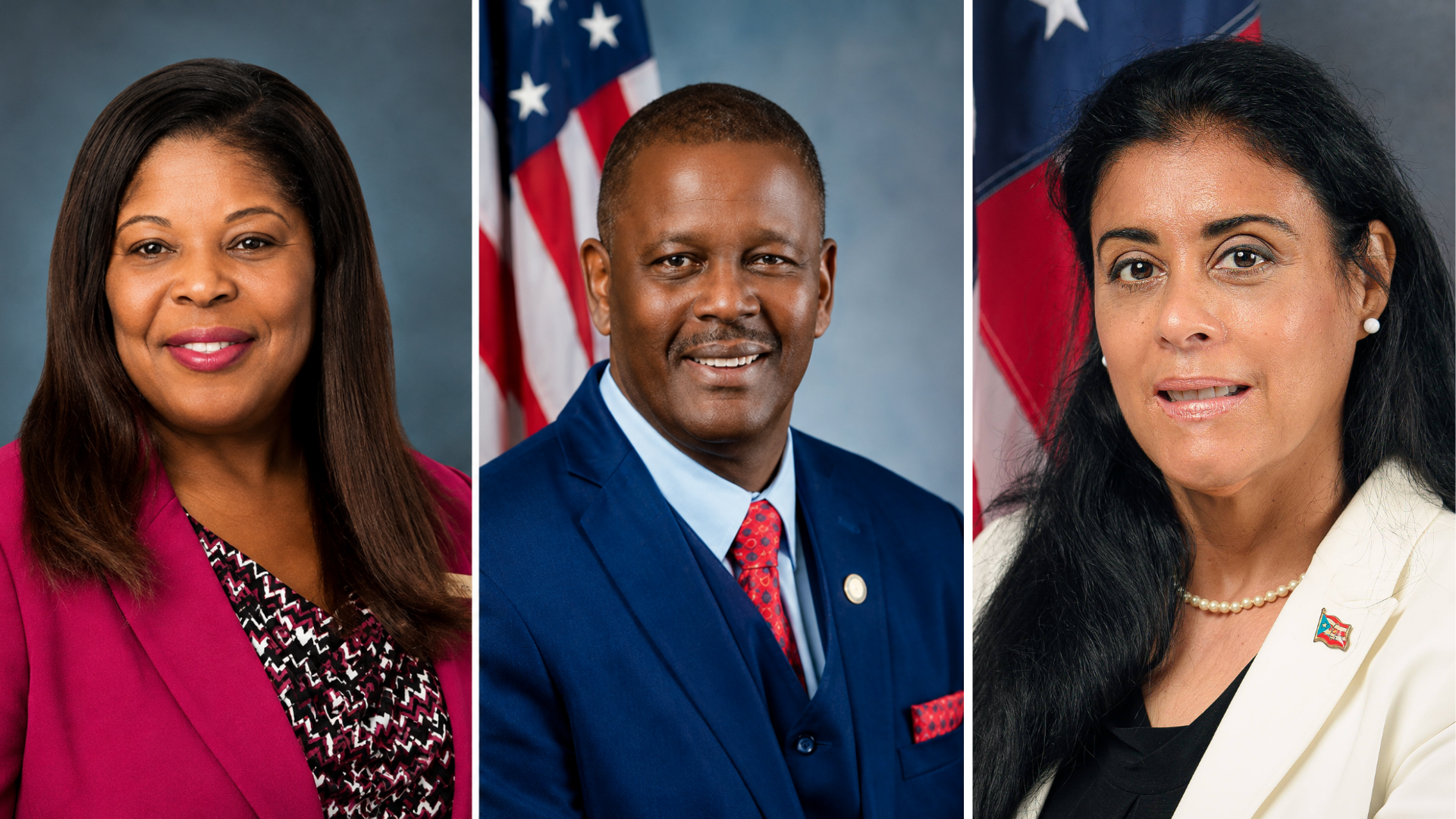
FHDCC Faces Real Legal Challenges
State Representative-Elect and former Democratic state Rep. James Bush III sued FHDCC and other defendants in Miami-Dade County over allegedly defamatory election communications.
Former Democratic state Rep. Daisy Morales has separately challenged campaign communications involving FHDCC through litigation in Orange County and Florida’s election complaint process.
The cases involve separate elections and allegations and must be decided on their individual evidence.
State Rep.-elect Daphne Campbell, a former state senator and former state representative, told Florida National News in a phone interview that she is considering filing a defamation lawsuit as well.
Together, however, they place FHDCC’s campaign practices under greater scrutiny and create a leadership test for Hunschofsky as she prepares to lead Florida House Democrats.
Hunschofsky’s Leadership Under Scrutiny
Hunschofsky’s position as chair does not automatically make her personally liable for every communication, expenditure or decision made by FHDCC.
But leadership brings accountability for how an organization operates.
Political attack campaigns require research, writing, production, vendors, financing and distribution. FHDCC’s internal structure determines how those activities are authorized and supervised.
That makes Hunschofsky’s authority, knowledge and oversight relevant as the committee responds to legal challenges involving its campaign activity.
The central issue is straightforward: What happened under the FHDCC banner, and what responsibility did its leadership have for it?.

Party Establishment vs. Voters’ Choice
The controversy also exposes a deeper tension between party leadership and voters who expect to choose representatives based on the priorities of their communities.
Political parties can recruit, endorse and financially support candidates.
Voters make the final choice.
Heavy intervention by a party organization in a Democratic primary can create the perception that party leaders are trying to make that choice for voters.
That can damage trust when voters believe local experience, constituent service and understanding of their community matter more than the preferences of party leadership.
Democrats Spending Money Fighting Democrats
The internal battles come as Florida Democrats face a larger electoral challenge.
Republicans hold substantial power in Tallahassee, while Democrats need financial resources to compete for legislative seats and statewide offices.
Money spent attacking Democrats in expensive Democratic primaries cannot simultaneously be spent challenging Republicans.
FHDCC has the right to participate in elections within the law. But intraparty battles followed by lawsuits and election complaints create a political question about whether those resources are advancing the committee’s broader mission of electing Democrats.
Minority Democrats and Party Trust
The disputes also involve former minority Democratic lawmakers.
Bush and Campbell are Black. Morales is Puerto Rican, Hispanic.
That does not establish racial or ethnic discrimination by Hunschofsky or FHDCC.
But former minority Democratic lawmakers turning to courts and election regulators over tactics associated with their own party creates a political challenge for Democrats, who depend heavily on Black and Hispanic voters.
Those voters have the same interest as every Florida voter in accurate campaign information, fair elections and political organizations that follow the rules.
A Political Standard That Should Apply to Both Parties
The controversy also creates an uncomfortable comparison for Democrats who have criticized President Donald Trump’s aggressive treatment of political opponents.
The lawsuits and election complaints do not establish that FHDCC copied Trump’s strategy or adopted a “Trump playbook.”
But they raise a broader question of consistency.
Democrats who demand accountability when Republicans exercise political power aggressively should be prepared to apply the same standards to organizations within their own party.
Republicans should do the same when allegations involve their side.
Fairness cannot depend on which party benefits.
From Political Fight to Legal Process
Negative campaigning and opposition research are legal and receive substantial First Amendment protection.
Political committees, however, remain subject to election laws, campaign-finance requirements and civil law.
A lawsuit does not prove defamation.
FHDCC’s separate argument that it cannot be sued.
An election complaint does not prove an election-law violation.
Neither automatically creates a criminal investigation.
If evidence ultimately supports potential criminal conduct, the appropriate law-enforcement agency or prosecutor — not political parties, candidates or news organizations — determines whether an investigation is warranted.
The principle protects everyone: allegations must be proven, due process must be respected and political influence should not shield proven violations.
Who Is Next?
The growing legal disputes leave FHDCC with a political problem extending beyond Bush, Morales and Campbell.
Who is next on the Florida House Democratic Campaign Committee’s target list?
No Democrat is entitled to immunity from legitimate political criticism simply because that candidate belongs to the party.
But candidates should be able to expect political organizations to play by the rules.
The same principle applies to Republicans.
Political organizations can fight hard, expose legitimate weaknesses and spend money advocating for their candidates.
They still have to follow the law.
Hunschofsky Faces a Leadership Test
Hunschofsky is not watching the controversy from outside the organization.
She chairs the Florida House Democratic Campaign Committee while preparing to lead Florida House Democrats, including minority Democratic lawmakers who were targeted by the committee’s campaign attacks.
The lawsuits and election complaints therefore put FHDCC’s governance, campaign strategy and financial oversight directly within the public debate surrounding her leadership.
The courts will determine the civil allegations before them. Election regulators will determine matters within their jurisdiction. If evidence independently supports potential criminal violations, law-enforcement authorities can determine whether an investigation is warranted.
For Hunschofsky, the leadership test is whether the committee she chairs can defend its campaign practices, account for its spending and maintain the trust of Democratic voters while the allegations move through Florida’s courts and election-enforcement system.
The lawsuits and election complaints remain allegations. They are not findings that Hunschofsky or FHDCC violated the law.
For Florida voters, the standard should be simple:
Play by the rules. Follow the evidence. Apply the law equally.
Florida National News is seeking comment from Hunschofsky and FHDCC regarding the lawsuits, election complaints, campaign spending and committee oversight. FNN will update this report with responses and significant developments.
Florida
Florida House Democratic Campaign Committee Faces Defamation Lawsuits, Possible Election Complaints

Two former Democratic lawmakers have sued the Florida House Democratic Campaign Committee over alleged false campaign communications, while a third weighs legal action amid growing concerns about voter impact and election integrity.
ORLANDO, Fla. (FNN) — Two former Democratic state representatives have filed defamation lawsuits a year apart naming the Florida House Democratic Campaign Committee as a defendant, while a third former lawmaker told Florida National News she is considering legal action following Tuesday’s primary.
Former state Reps. James Bush III and Daisy Morales filed separate lawsuits in Miami-Dade and Orange counties alleging false or defamatory political communications were disseminated during their campaigns.
Former state Sen. Daphne Campbell, who won Tuesday’s Democratic primary for Florida House District 108, told FNN in a phone interview that she is considering a defamation lawsuit involving the committee. Campbell and Bush, who won the Democratic nomination for House District 109, also told FNN they are considering complaints with the Florida Elections Commission.
The allegations have not been adjudicated. Filing a lawsuit or election complaint does not establish wrongdoing, and the defendants are entitled to contest the claims.
Two Lawsuits, One Common Defendant
The Florida House Democratic Campaign Committee is a defendant in separate defamation cases filed approximately one year apart by Bush and Morales.
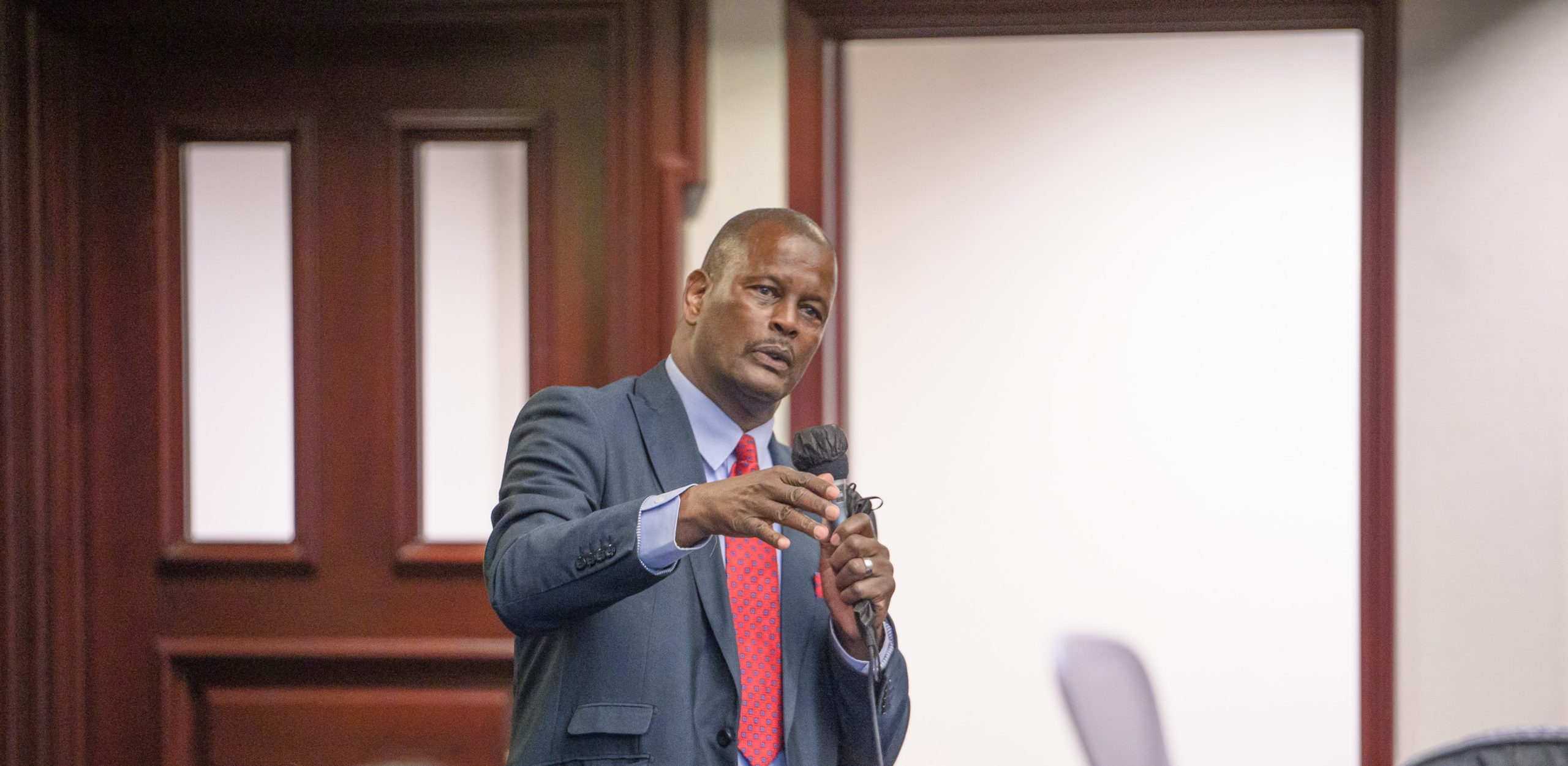
Miami-Dade: James Bush III Lawsuit
Case: James Bush III v. Ashley Gantt, et al.
Court: 11th Judicial Circuit, Miami-Dade County
Filed: Aug. 12, 2025
Plaintiff: James Bush III
Defendants: State Rep. Ashley Gantt; Florida House Democratic Campaign Committee; Stronger Together, a political committee; and Edge Communications
Damages sought: More than $1 million and a jury trial
Bush’s seven-page complaint alleges defamatory information was disseminated through campaign mailers, telephone calls and electronic communications during his 2022 re-election campaign.
The communications included portrayals of Bush as aligned with Republicans and Gov. Ron DeSantis and criticism of his legislative record.
Bush alleges the communications contained false factual assertions that damaged his reputation. Gantt and her attorney have called the lawsuit baseless. The allegations have not been proven in court.
In a phone interview with FNN, Bush said the controversy should be examined for its potential impact on voters and the integrity of the election process.
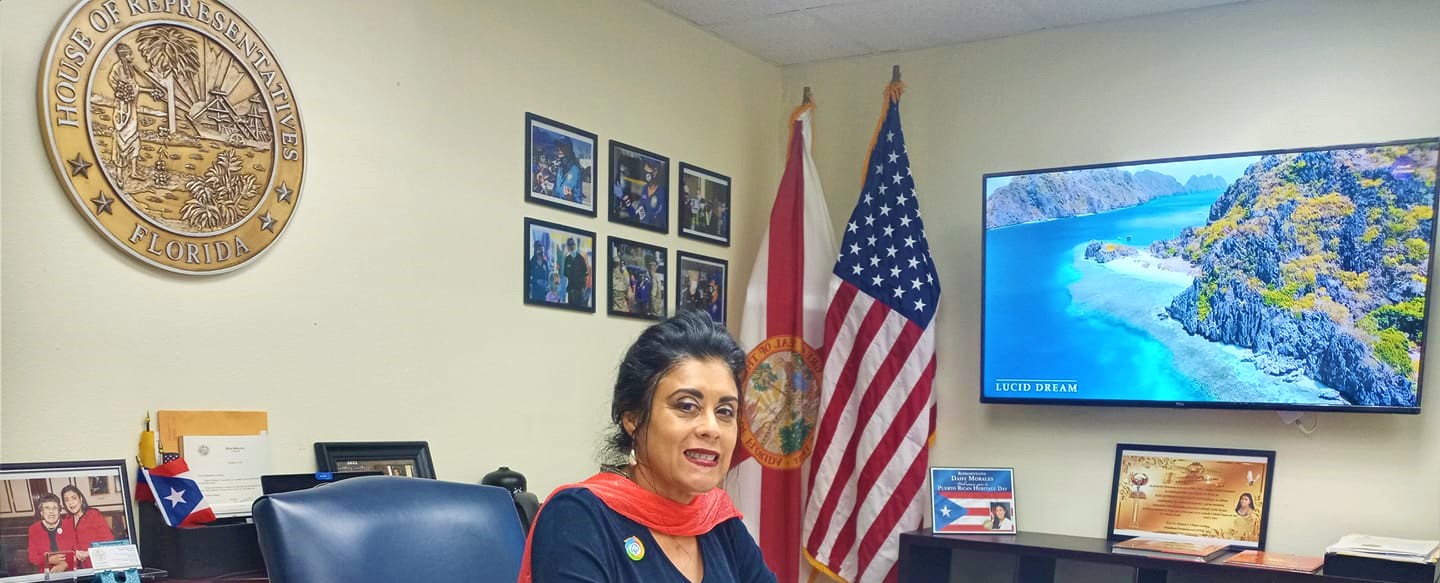
The Honorable Daisy Morales, Democrat, Florida House District 48 (2020-2022)
Orlando: Daisy Morales Lawsuit
Case: Daisy Morales v. Samuel Vilchez Santiago and Florida House Democratic Campaign Committee
Case No.: 482026CA008697A001OX
Court: Ninth Judicial Circuit, Orange County
Filed: Aug. 14, 2026
Assigned judge: Circuit Judge Michael Deen
Plaintiff: Daisy Morales
Defendants: Samuel Vilchez Santiago and Florida House Democratic Campaign Committee
Claims: Defamation/libel and defamation by implication
Damages: More than $50,000 for jurisdictional purposes, with damages to be determined by a jury
Morales’ 23-page complaint centers on political communications distributed during the closing days of the House District 43 Democratic primary.
The lawsuit alleges a campaign mailer falsely represented as fact that Morales had “endorsed Republican candidates and was expelled from the Orange County Democratic Party (DEC).”
Morales disputes those characterizations and alleges the communications damaged her reputation, political standing and candidacy while Democratic voters were deciding the primary.
“This goes beyond whether one candidate wins or loses,” Morales told FNN. “When voters are deliberately given false statements of fact immediately before an election, it can affect their decisions before a court or election agency ever has an opportunity to determine what actually happened.”
The defendants have not been found liable, and the allegations remain pending.
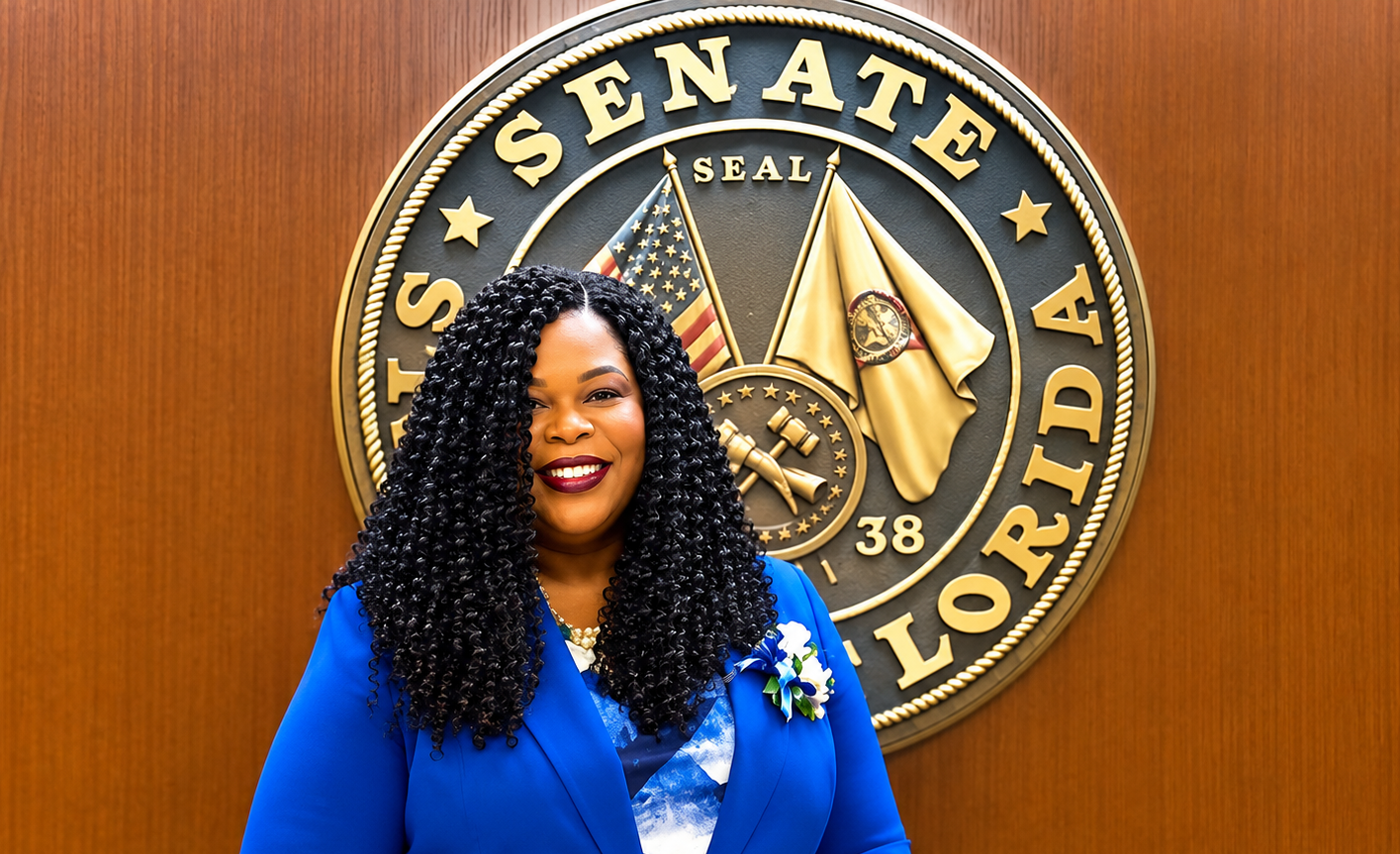
The Honorable Daphne Cambpell, Democrat, Former State Representative, Former State Senator and State Representative-Elect, Florida House District 108
Campbell Considering Third Defamation Case
Campbell told FNN she is reviewing a possible defamation lawsuit involving the Florida House Democratic Campaign Committee following her HD 108 campaign.
Campbell, who previously served in both the Florida House and Senate, defeated two opponents Tuesday to win the Democratic nomination.
She described what she views as a broader problem involving Democratic establishment influence, political committees and the treatment of candidates who challenge party-backed or establishment-preferred candidates.
Campbell also told FNN that a congressional candidate is considering a possible defamation action involving the committee.
FNN has not independently confirmed that prospective lawsuit and is withholding the candidate’s identity pending an on-the-record statement or court filing. FNN will report separately if litigation is filed.
Lawmakers Point to Similar Campaign Tactics
Bush, Campbell and Morales say their experiences raise broader questions about political mailers, text messages, telephone outreach and other communications used to influence Democratic primary voters.
Bush alleges false information was disseminated through mailers, calls and electronic communications. Morales alleges false or materially misleading factual statements were distributed through political advertising. Campbell says she is reviewing communications from her campaign to determine whether legal action is warranted.
The similarities do not establish coordination or a broader scheme.
Evidence of common decision-makers, financing, consultants, vendors, opposition research, messaging or approval processes would be necessary to substantiate broader allegations. Such evidence could potentially emerge through civil discovery or an investigation by an agency with jurisdiction.
The Legal Divide: Defamation, Election Violations and Election Contests
The disputes involve three separate areas of law: civil defamation, election-law enforcement and election contests.
Candidates and public officials face a high constitutional threshold in defamation cases involving public issues. Under the U.S. Supreme Court’s New York Times Co. v. Sullivan standard, a public official generally must establish “actual malice” — that a defamatory statement was made with knowledge of its falsity or reckless disregard for whether it was false.
That means negative, misleading or damaging political speech does not automatically constitute defamation. Courts must distinguish actionable false statements of fact from protected opinion, rhetoric and political criticism.
The Florida Elections Commission serves a different function. It investigates alleged violations within its statutory election-law and campaign-finance jurisdiction. It is not a general defamation court.
An election complaint therefore must identify conduct violating a specific election statute; an allegation that political advertising was false or defamatory does not, standing alone, establish an election-law violation.
Florida Election-Contest Law Does Not Expressly List Defamation
A third legal issue could have broader implications.
Under Section 102.168, Florida Statutes, an unsuccessful candidate may contest an election or nomination on specified grounds, including certain misconduct, fraud or corruption by election officials or canvassing-board members sufficient to change or place the result in doubt; the successful candidate’s ineligibility; sufficient illegal votes or rejected legal votes; and specified bribery.
The statute does not expressly identify defamatory campaign communications by a candidate, political committee or party organization as an independent ground for contesting an election.
Morales says that is a gap Florida lawmakers should examine.
Impact on Voters: Election Day Moves Faster Than the Courts
The lawmakers say the central problem is timing.
Political mailers, texts, digital advertisements and telephone communications can reach thousands of voters within days. Defamation litigation can take months or years.
An election can therefore be certified long before a judge or jury determines whether a disputed campaign statement was defamatory.
“The voter is also harmed when an election decision is based on deliberately false information,” Morales said. “You cannot give voters their vote back six months or two years later after a court finally determines what was true.”
That creates a difficult balance. The First Amendment provides extensive protection for political speech, including harsh criticism of candidates. At the same time, candidates can be held accountable under existing law for actionable defamatory statements when the required elements and constitutional standards are proven.
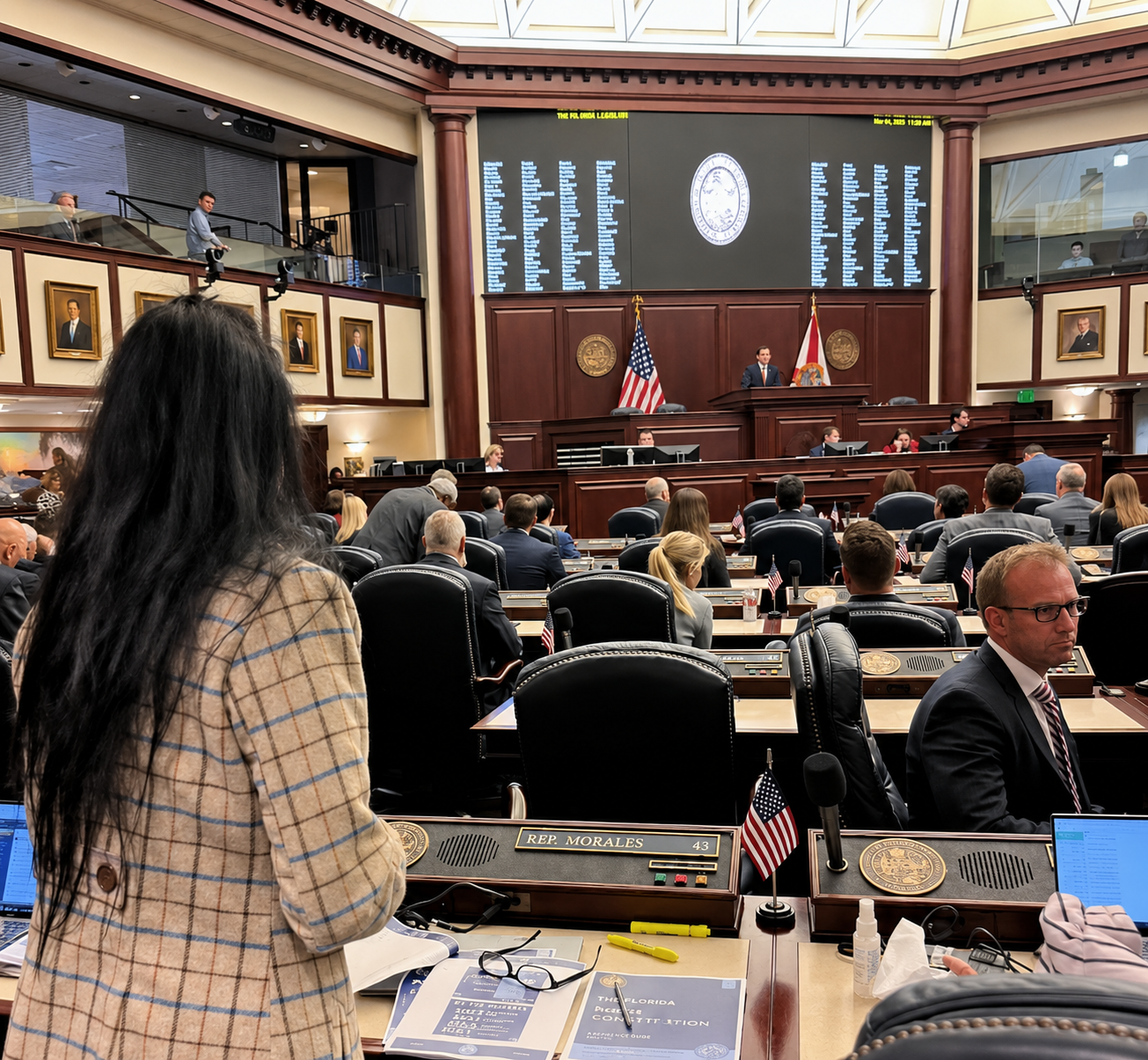
Former State Representative Daisy Morales
Morales Calls for Election-Contest Law Amendment
Morales said Florida should examine whether its election-contest statute should provide a narrowly tailored remedy when defamatory campaign conduct is proven and there is sufficient evidence that it materially affected an election.
She said lawmakers should study approaches taken by states including California and Oregon, while developing a Florida-specific proposal consistent with First Amendment protections.
“Florida’s election-contest law needs to be amended for the realities of modern elections,” Morales said. “If a court determines that a candidate, political committee or another political actor knowingly used defamatory false statements to influence voters, and there is sufficient evidence that the conduct materially affected the election, Florida law should provide an appropriate election remedy.”
Morales said any legislation should impose a high evidentiary threshold and distinguish legitimate criticism and political opinion from provably false statements of material fact.
Such legislation would raise significant constitutional questions and would require careful drafting to protect political speech and prevent ordinary campaign disputes from becoming grounds for overturning election results.
Why Courts and Election Regulators Matter
The existence of two lawsuits against the same political organization does not prove a coordinated operation.
But civil litigation can potentially uncover evidence through discovery, including contracts, invoices, communications, advertising drafts, opposition research, vendor relationships, approval records and information concerning what individuals knew before disputed material was disseminated.
Depending on what such evidence establishes, it could be relevant to the civil lawsuits or to separately alleged election-law violations within the Florida Elections Commission’s jurisdiction.
For now, there is one documented connection: Bush and Morales, two former Democratic Florida House members in different counties and election cycles, have separately named the Florida House Democratic Campaign Committee as a defendant in defamation litigation arising from campaign communications.
Campbell says she may become the third former Democratic lawmaker to pursue such a claim.
Whether the cases represent unrelated episodes of hard-fought primary politics or evidence of something broader cannot be determined from the lawsuits alone.
For Florida voters, however, the cases raise a larger question:
What remedy should exist if intentionally false factual campaign communications are eventually proven defamatory — and also proven to have materially affected an election — after the ballots have already been counted?
Bush and Morales have taken their allegations to court. Campbell says she is considering doing the same.
Morales now says the question should also go before the Florida Legislature.


 Florida4 days ago
Florida House Democratic Campaign Committee Faces Defamation Lawsuits, Possible Election Complaints
 Florida4 days ago
Angie Nixon, ‘Freedom Fighter,’ Defeats Establishment Candidate, Wins Democratic Nomination for U.S. Senate
 Crimes and Courts4 days ago
Ben Crump Joins Nolan Wells Family, Dr. Jamal Bryant for Prayer Rally on What Would Have Been His 19th Birthday


 Florida4 days ago
NASCAR Championship Weekend Returning to Homestead-Miami Speedway in 2027 With $20 Million Renovation
 Florida4 days ago
Alex Vindman Backs Angie Nixon After Florida Democratic U.S. Senate Primary Loss


