

Politics
Putin: NKorea’s Kim ready to denuclearize _ with conditions


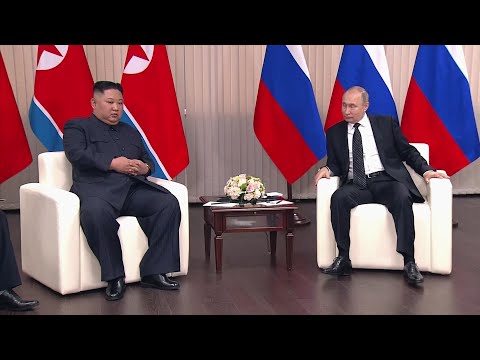
VLADIVOSTOK, Russia (AP) — Russian President Vladimir Putin said North Korean leader Kim Jong Un confirmed during their first summit Thursday that he is willing to give up his nuclear weapons — but only if he gets an ironclad security guarantee first.
The Russian president stressed that Moscow and Washington both want North Korea to abandon its nuclear weapons. But he said the security guarantees should be underwritten by multiple countries, hinting at an arrangement like the six-nation talks Russia participated in until their collapse in 2009.
Putin added that Kim encouraged him to explain the nuances of Pyongyang’s position to President Donald Trump. He said he’s willing to share details of the summit with the American president.
“I will talk about it tomorrow with the leadership of China,” Putin said before heading to Beijing on a two-day visit after meeting with Kim. “And we will just as openly discuss this issue with the U.S. leadership. There are no secrets. Russia’s position always has been transparent. There are no plots of any kind.”
Putin’s remarks after the one-day summit just off the Pacific port city of Vladivostok reflect Kim’s growing frustration with Washington’s efforts to maintain “maximum pressure” until the North commits to denuclearization.
But his characterization of Kim’s comments also suggests there have been no major changes in North Korea’s basic position.
North Korea has all along contended that it needs its nuclear arsenal to defend itself against what it sees as U.S. hostility and wants concrete reassurances of its safety — including the removal of the American nuclear threat as an integral part of the denuclearization of the entire Korean Peninsula.
It wasn’t immediately clear what other agreements the leaders might have struck.
Along with a statement of political support, Kim was believed to be looking for some kind of economic support and possibly even a workaround to sanctions that will force more than 10,000 North Korean laborers in Russia to leave by the end of the year. The laborers are a major source of income for Pyongyang.
Putin said they discussed the issue and would find a solution taking into account “humanitarian” factors, though he didn’t say what that would be.
On the economic front, both sides share an interest in enhanced cooperation if sanctions are eased.
Russia would like to gain broader access to North Korea’s mineral resources, including rare metals. Pyongyang, for its part, covets Russia’s electricity supplies and investment to modernize its dilapidated Soviet-built industrial plants, railways and other infrastructure.
For Putin, the summit was also seen as an opportunity for Russia to emerge as an essential player in the North Korean nuclear standoff.
Moscow has kept a relatively low profile as Kim embarked on what has been an audacious diplomatic journey over the past year.
The Putin summit follows four summits with Chinese President Xi Jinping, three with South Korean President Moon Jae-in and two with Trump. Despite the current stalemate, Trump has said he would like to meet Kim again.
Moon said Thursday he will try to hold a fourth summit with Kim and facilitate the resumption of U.S.-North Korea talks.
Since his latest talks with Trump, in Hanoi, ended without any sign of progress, North Korea has expressed its open anger with what it calls an excessively hard-line position by Trump’s top advisers in the deadlocked negotiations.
Last week, it demanded U.S. Secretary of State Mike Pompeo be removed from the talks and strongly criticized national security adviser John Bolton. There have been reports that Kim has done some internal shaking up as well, possibly firing one of his own main negotiators.
Though Kim appeared confident and respectful as he and Putin met for the first time, he comported himself formally — creating a scene reminiscent of old Soviet-style meetings and a sharp contrast with his more cordial summits with Moon and, at times, even Trump.
He and Putin approached each other with fixed smiles and held an extended handshake for the cameras.
“The reason we visited Russia this time is to meet and share opinions with your excellency, President Putin, and also share views on the Korean Peninsula and regional political situation, which has garnered the urgent attention of the world, and also hold deep discussions on strategic ways to pursue stability in the regional political situation and on the matters of jointly managing the situation,” he said in a somewhat stilted introduction.
Kim arrived in Vladivostok Wednesday aboard his private train and offered what is possibly his first interview ever with a foreign media outlet.
He told Russian state television that he was hoping his first visit to Russia would be “successful and useful.” He evoked his father’s “great love for Russia” and said that he intends to strengthen ties between the two countries. The late Kim Jong Il made three trips to Russia, the last in 2011.
Moscow was part of six-nation talks on the North Korean standoff that fell apart after Pyongyang’s withdrawal in 2009. Putin said he wasn’t sure if the talks could be revived, but he emphasized that international involvement will be needed to discuss guarantees for Pyongyang.
Dmitri Trenin, the director of the Carnegie Moscow Center, said ahead of Thursday’s talks that Putin would try to encourage Kim to continue constructive talks with the U.S. But he added that Moscow doubts the North could be persuaded to fully abandon its nuclear weapons, considering that a “mission impossible.”
Vladivostok, a city of more than half a million on the Sea of Japan, faced gridlock on its roads as traffic was blocked in the city center due to Kim’s visit. The authorities also temporarily closed the waters around Russky Island to all maritime traffic.
Kim was expected to return to Pyongyang on Friday.


FORT MYERS, Fla. (FNN) — President Donald Trump is scheduled to hold a midterm rally in Fort Myers on Friday, Oct. 23, bringing his campaign efforts to the congressional district represented by his endorsed candidate for Florida governor, U.S. Rep. Byron Donalds.
Donalds, the Republican nominee, faces Democrat David Jolly in the Nov. 3 election. If elected, Donalds would become Florida’s first Black governor, succeeding term-limited Republican Gov. Ron DeSantis.
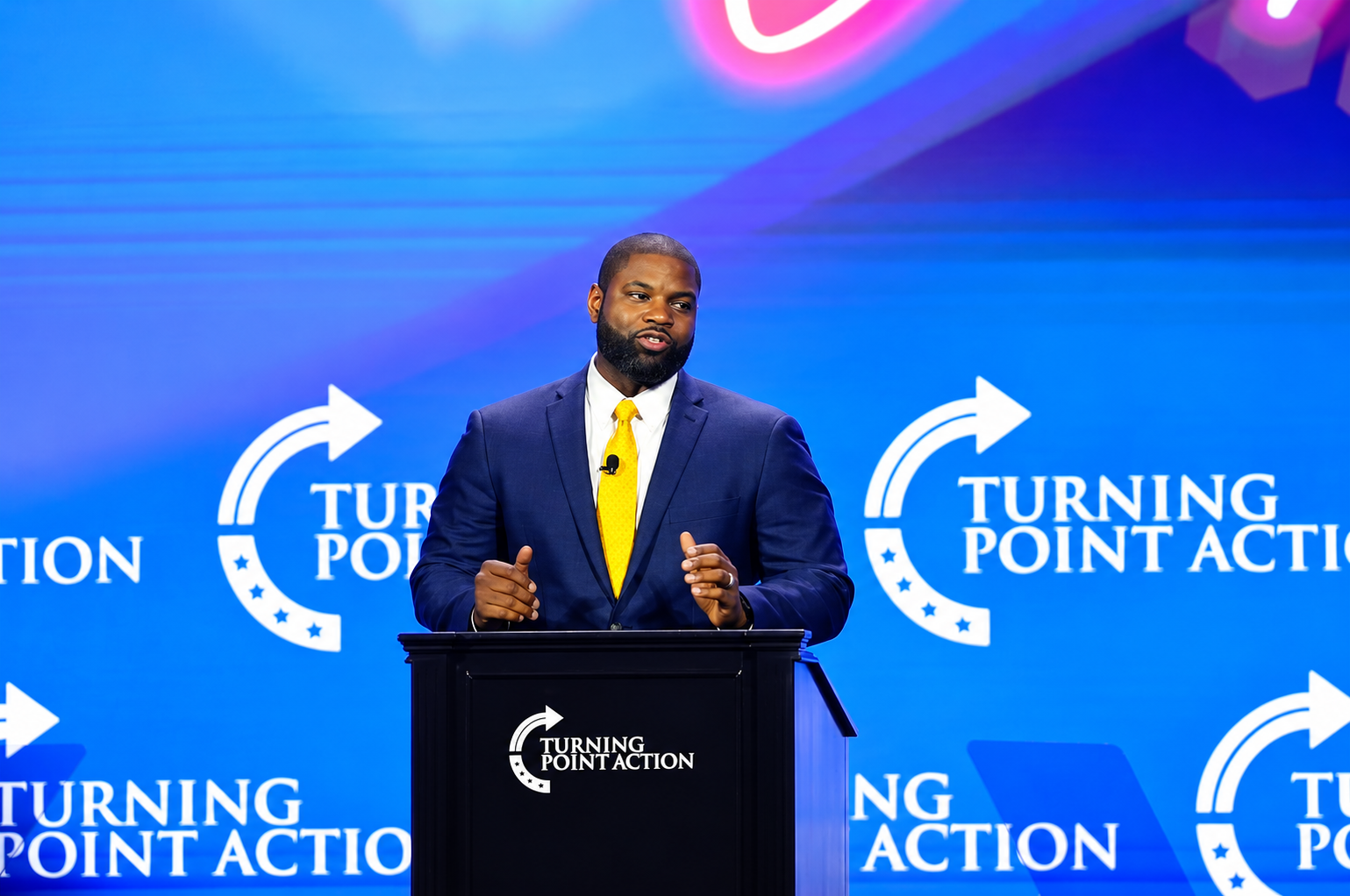
U.S. Rep. Byron Donalds speaks at a Turning Point Action event in Florida. Photo by Roman Garay / Florida National News.
Rally Set for Oct. 23
Trump’s remarks are scheduled to begin at 2 p.m., with doors opening at 10:30 a.m., according to the Republican Party’s event registration page. All times are Eastern.
Gulf Coast News reports that the rally will take place at Alico Arena at Florida Gulf Coast University. However, the official GOP registration page still lists the venue as “To Be Announced.” Attendees should check that page for confirmation and updates.
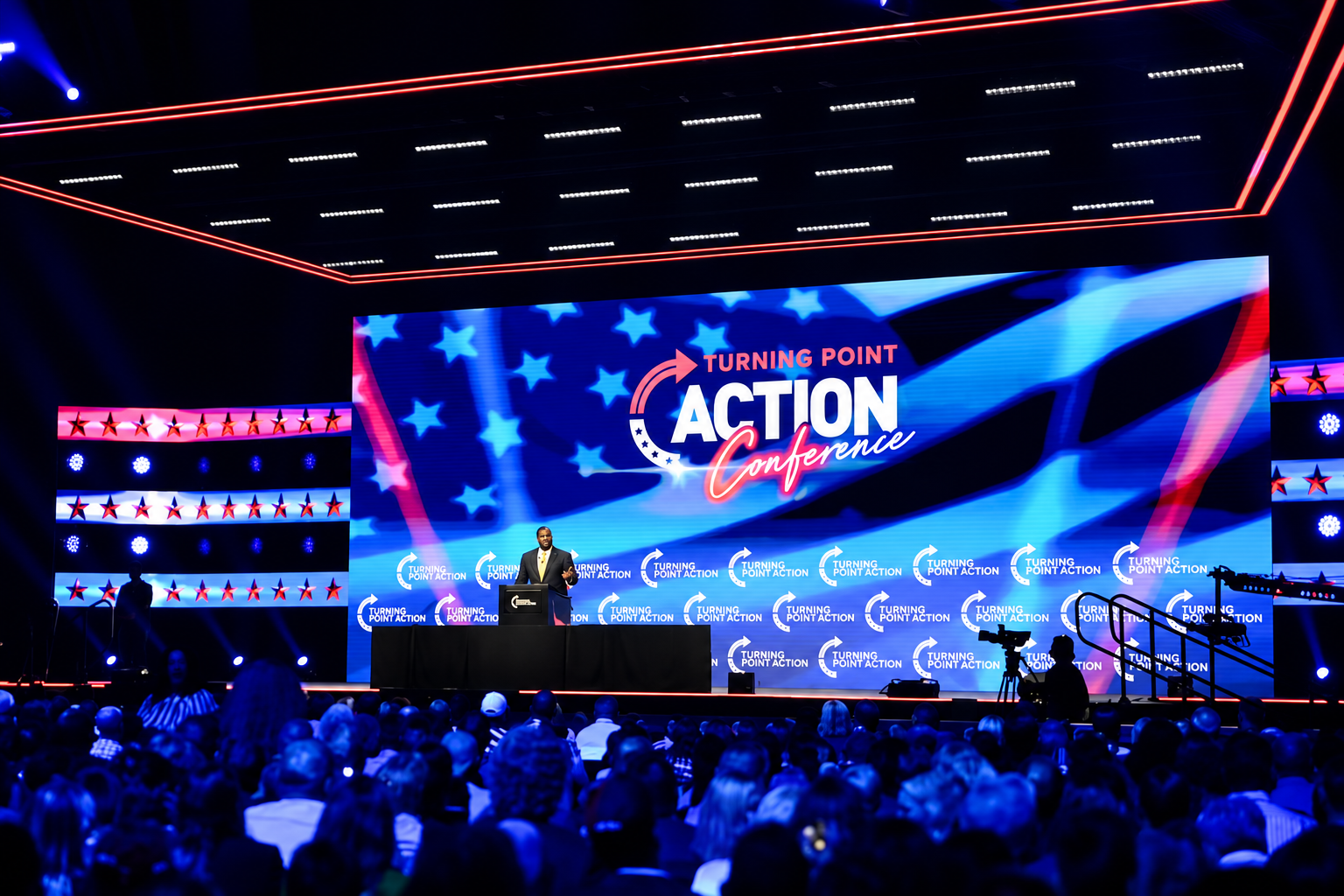
Prominent conservative figures, including Tucker Carlson, then-former President Donald Trump, U.S. Rep. Byron Donalds and Megyn Kelly, rallied Republican voters during the Turning Point Action Conference at the Palm Beach County Convention Center, July 15-16, 2023.
Photo by Roman D. Garay / Florida National News.
Trump’s Endorsement Connects President to Historic Bid
Trump has endorsed Donalds, whose campaign lists the president among its prominent Republican supporters. The Fort Myers visit places Trump in Donalds’ Southwest Florida political base during the closing weeks of the election.
Following his primary victory, Donalds acknowledged Trump’s influence among Republican voters.
“Obviously, he has the strongest following of anybody in our party,” Donalds said, according to Associated Press reporting.
A Donalds victory would give Florida its first Black governor and extend Republican leadership in the governor’s office. Trump’s endorsement connects the president to that potentially historic outcome, although the rally announcement does not identify the event as exclusively supporting Donalds.
Republican Unity and Voter Turnout
Donalds called for Republicans to unite after the primary, telling supporters, “Tonight we are one united Republican Party,” according to the AP.
The Fort Myers rally will provide Trump another platform to address supporters ahead of the Nov. 3 midterm elections. The published event announcement confirms his appearance but does not list additional speakers.


 Central Florida News2 days ago
Tiffany Moore Russell Plans Orange County Campaign Stops Ahead of Early Voting
 Florida2 days ago
Trump Plans Fort Myers Rally as Byron Donalds Seeks to Become Florida’s First Black Governor
 Politics2 days ago
RNC Chairman Joe Gruters Calls Trump an ‘Absolute Machine’ Ahead of Midterm Elections
 Central Florida News2 days ago
Orlando Magic Beat Miami Heat 136-115 in Preseason Finale Behind Banchero, Bane


