Politics
Report: Russia still using social media to roil US politics


WASHINGTON (AP) — Russia’s sweeping political disinformation campaign on U.S. social media was more far-reaching than originally thought, with troll farms working to discourage black voters and “blur the lines between reality and fiction” to help elect Donald Trump in 2016, according to reports released Monday by the Senate intelligence committee.
And the campaign didn’t end with Trump’s ascent to the White House. Troll farms are still working to stoke racial and political passions in America at a time of high political discord.
The two studies are the most comprehensive picture yet of the Russian interference campaigns on American social media. They add to the portrait investigators have been building since 2017 on Russia’s influence — though Trump has equivocated on whether the interference actually happened.
Facebook, Google and Twitter declined to comment on the specifics of the reports.
The reports were compiled by the cybersecurity firm New Knowledge and by the Computational Propaganda Research Project, a study by researchers at the University of Oxford and Graphika, a social media analysis firm.
The Oxford report details how Russians broke down their messages to different groups, including discouraging black voters from going to the polls and stoking anger on the right.
“These campaigns pushed a message that the best way to advance the cause of the African-American community was to boycott the election and focus on other issues instead,” the researchers wrote.
At the same time, “Messaging to conservative and right-wing voters sought to do three things: repeat patriotic and anti-immigrant slogans; elicit outrage with posts about liberal appeasement of ‘others’ at the expense of US citizens, and encourage them to vote for Trump.”
The report from New Knowledge says there are still some live accounts tied to the original Internet Research Agency, which was named in an indictment from special counsel Robert Mueller in February for an expansive social media campaign intended to influence the 2016 presidential election. Some of the accounts have a presence on smaller platforms as the major companies have tried to clean up after the Russian activity was discovered.
“With at least some of the Russian government’s goals achieved in the face of little diplomatic or other pushback, it appears likely that the United States will continue to face Russian interference for the foreseeable future,” the researchers wrote.
The New Knowledge report says that none of the social media companies turned over complete data sets to Congress and some of them “may have misrepresented or evaded” in testimony about the interference by either intentionally or unintentionally downplaying the scope of the problem.
The Senate panel has been investigating Russian interference on social media and beyond for almost two years. Intelligence committee Chairman Richard Burr said in a statement that the data shows how aggressively Russia tried to divide Americans by race, religion and ideology and erode trust in institutions.
“Most troublingly, it shows that these activities have not stopped,” said Burr, a North Carolina Republican.
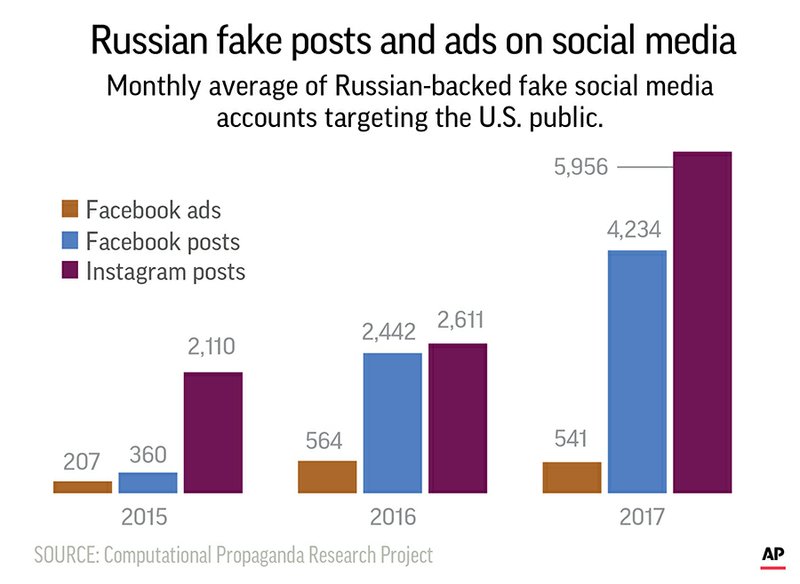
One major takeaway from both studies is the breadth of Russian interference that appeared on Instagram, which is owned by Facebook and was not frequently mentioned when its parent company testified on Capitol Hill. The study says that as attention was focused on Facebook and Twitter in 2017, the Russians shifted much of their activity to Instagram.
The New Knowledge study says that there were 187 million engagements with users on Instagram, while there were 77 million on Facebook.
“Instagram was a significant front in the IRA’s influence operation, something that Facebook executives appear to have avoided mentioning in congressional testimony,” the researchers wrote. They added that “our assessment is that Instagram is likely to be a key battleground on an ongoing basis.”
The Russian activity went far beyond the three tech companies that provided information, reaching many smaller sites as well. The New Knowledge report details sophisticated attempts to infiltrate internet games, browser extensions and music apps. The Russians even used social media to encourage users of the game Pokemon Go — which was at peak popularity in the months before the 2016 presidential election — to use politically divisive usernames, for example.
The report discusses even more unconventional ways that the Russian accounts attempted to connect with Americans and recruit assets, such as merchandise with certain messages, specific follower requests, job offers and even help lines that could encourage people to unknowingly disclose sensitive information to Russia that could later be used against them.
The Russians’ attempts to influence Americans on social media first became widely public in the fall of 2017. Several months later, Mueller’s indictment laid out a vast, organized Russian effort to sway political opinion. While the social media companies had already detailed some of the efforts, the indictment tied actual people to the operation and named 13 Russians responsible.
Also notable is the study’s finding that WikiLeaks founder Julian Assange was favorably treated in posts aimed at both left-leaning and right-leaning users. The New Knowledge report says there were a number of posts expressing support for Assange and Wikileaks, including several in October 2016 just before WikiLeaks released hacked emails from Hillary Clinton’s campaign.
The Oxford study notes that peaks in Internet Research Agency advertising and organic activity — or posts, shares and comments by users — often corresponded with important dates on the U.S. calendar, crises and international events.
The researchers from Oxford said that organic postings were much more far reaching than advertisements, despite Facebook’s sole focus on ads when the company first announced it had been compromised in 2017.
Other findings in the studies:
— During the week of the presidential election, posts directed to right-leaning users aimed to generate anger and suspicion and hinted at voter fraud, while posts targeted to African-Americans largely ignored mentions of the election until the last minute.
— Establishment figures of both parties, especially Clinton, were universally panned. Even a tag targeted to feminists criticized Clinton and promoted her primary opponent, independent Bernie Sanders;
— Several posts promoted the Russian agenda in Syria and Syrian President Bashar Assad.
— IRA’s posts focused on the United States started on Twitter as far back as 2013, and eventually evolved into the multi-platform strategy.
— Russian activity on Twitter was less organized around themes like race or partisanship but more driven by local and current events and made use of occasional pop culture references.
— Facebook posts linked to the IRA “reveal a nuanced and deep knowledge of American culture, media, and influencers in each community the IRA targeted.” Certain memes appeared on pages targeted to younger people but not older people. “The IRA was fluent in American trolling culture,” the researchers say.

Florida
Civil Rights Group Honors Nobel Peace Prize Winner Navi Pillay, Highlights Florida’s Trayvon Martin Connection


The Orlando-based civil rights association recalls supporting the former U.N. human rights chief’s 2012 call for an investigation into the teenager’s killing in Sanford.
ORLANDO, Fla. (FNN) — The Florida Civil Rights Association is congratulating 2026 Nobel Peace Prize winner Navanethem “Navi” Pillay, recalling her call for an investigation into Trayvon Martin’s killing and the international attention it brought to questions of racial equality and justice in Florida.
The Norwegian Nobel Committee announced Pillay’s selection Oct. 9 for her efforts to promote peace and international law. The South African jurist served as United Nations high commissioner for human rights from 2008 to 2014 and helped shape landmark international court decisions.
In a press release, FCRA President J. Willie David III said Pillay’s intervention connected a Florida family’s demand for answers to a broader concern for human rights.
“Pillay’s call for an investigation reinforced that a family’s demand for justice in Sanford mattered beyond Florida and the United States,” David said.
“We welcomed her intervention in 2012 because families deserve answers and the law must protect everyone equally.”
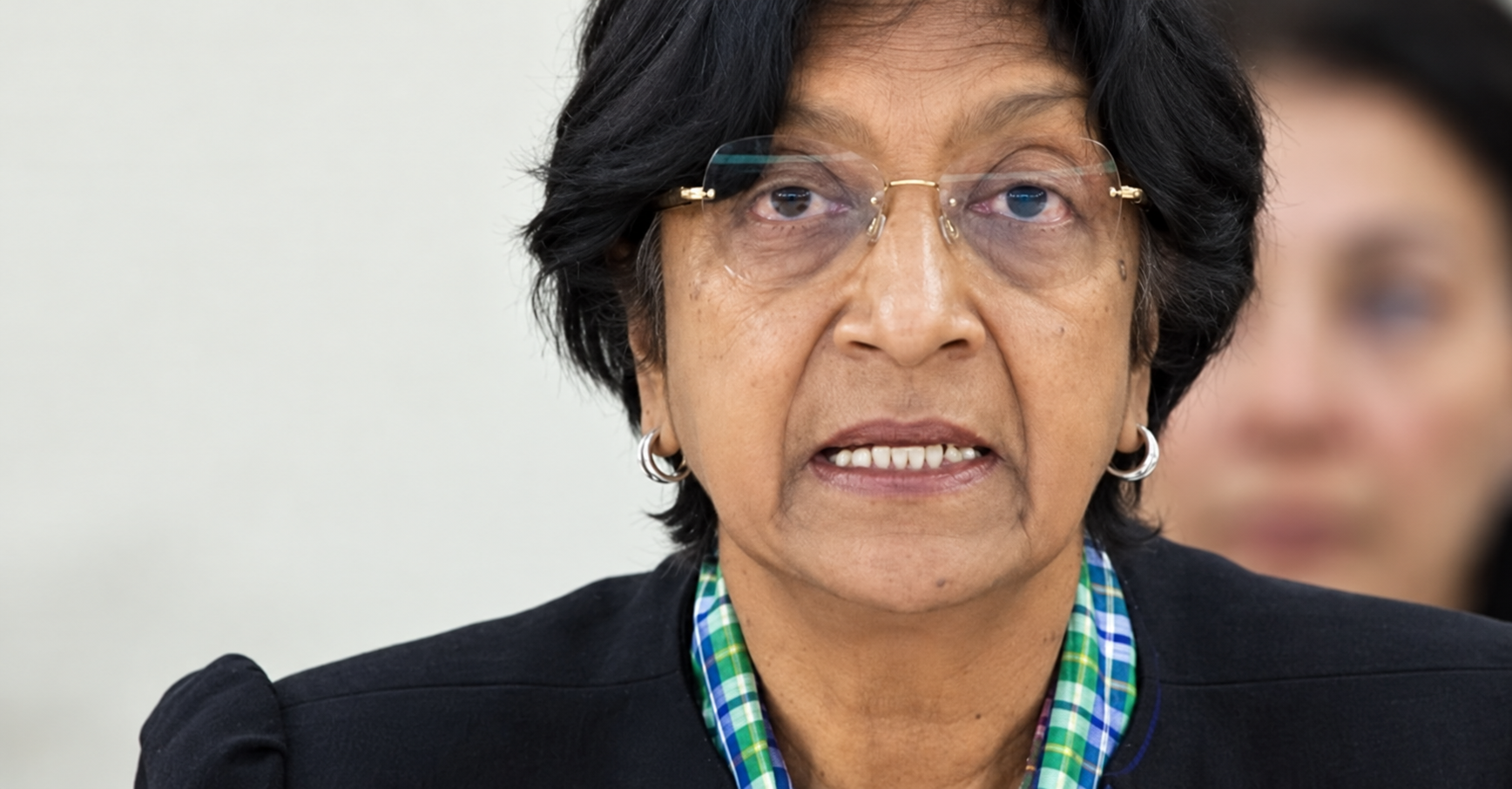
UN Human Rights Commissioner Navi Pillay (Photo credit: UN Photo/Jean-Marc Ferre)
FCRA recalls its response in 2012
Martin, an unarmed Black 17-year-old, was fatally shot by neighborhood watch volunteer George Zimmerman on Feb. 26, 2012, in Sanford, northeast of Orlando.
In April 2012, Pillay called for an immediate investigation into the killing as the case drew international attention and scrutiny of Florida’s Stand Your Ground law.
FCRA welcomed that call. The association’s current release cites an April 7, 2012, West Orlando News report that quoted David discussing the case’s global impact.
“The shooting death of Trayvon Martin and Florida’s Stand Your Ground Law have created a worldwide movement that calls into question how justice is delivered to victims of color,” David said at the time, according to the release.
FCRA describes the activism surrounding Martin’s death as a defining moment that galvanized a new generation of civil rights advocates.
Zimmerman was charged with second-degree murder and acquitted in July 2013. In February 2015, the U.S. Justice Department closed its separate investigation, finding insufficient evidence to pursue federal criminal civil rights charges.
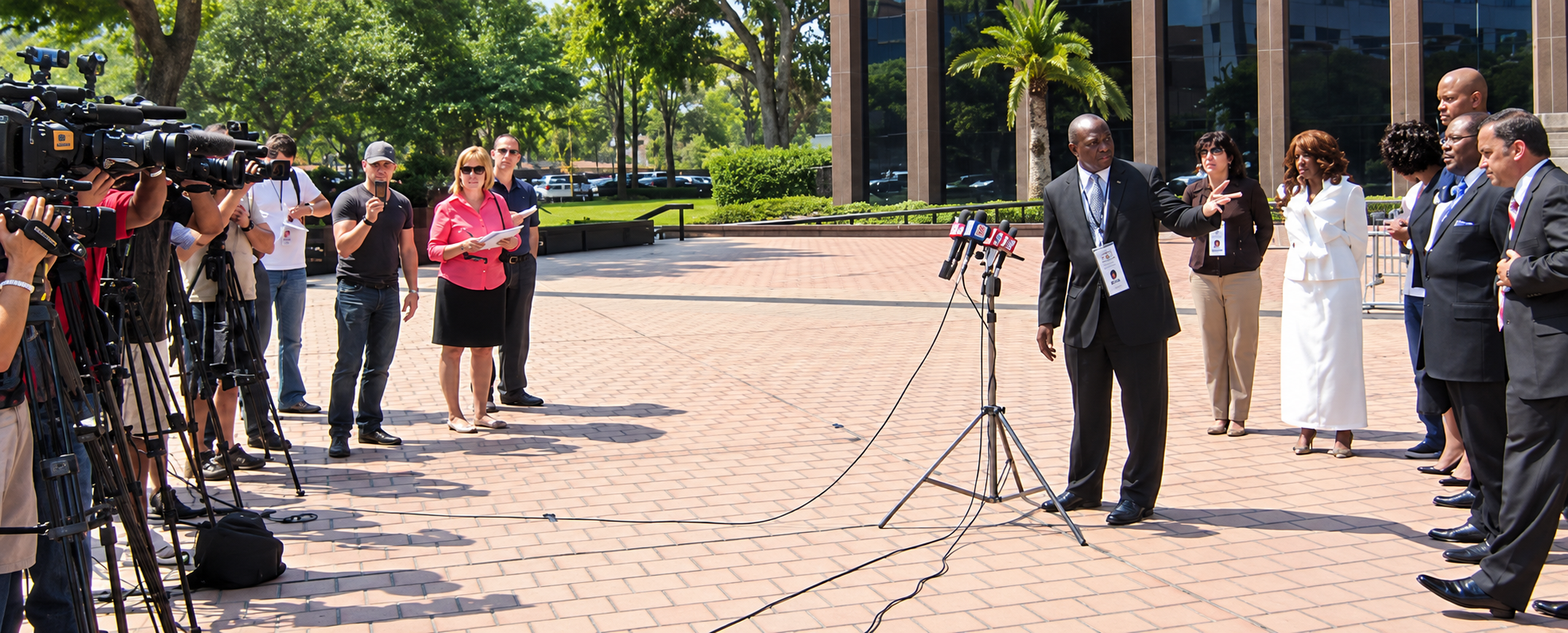
The Florida Civil Rights Association (FCRA) held a press conference outside the State of Florida’s regional offices in Orlando in 2012, calling on then-Gov. Rick Scott to take action following Trayvon Martin’s killing. Photo by FCRA.
Why Florida’s case drew global scrutiny
The Florida connection shows how the handling of a local killing can draw international scrutiny over racial discrimination, access to justice and the protection of human rights.
Pillay’s intervention brought those concerns into the international discussion surrounding Martin’s death. In September 2013, U.N. human rights experts also urged the United States to complete its civil rights investigation and examine concerns about racial profiling.
The significance lies in human rights oversight: how public institutions investigate deaths and provide equal treatment can attract attention beyond national borders. Pillay’s call was an appeal for investigation, rather than an international court judgment about Zimmerman’s guilt or Florida’s compliance with international law.
For FCRA, that connection remains relevant to how Florida leaders evaluate laws and practices affecting the communities they serve.
Pillay’s record in international justice
Pillay challenged discrimination under apartheid before serving on South Africa’s High Court, the International Criminal Tribunal for Rwanda and the International Criminal Court.
At the Rwanda tribunal, she was part of the judicial panel that established that rape and sexual violence can constitute acts of genocide, a landmark development in international criminal law.
David said honoring that career should also encourage accountability at home.
“Her Nobel Peace Prize recognizes a career built on confronting injustice through the rule of law,” he said. “Honoring that work means demanding transparent investigations and equal protection here at home. Rights belong to everyone.”
A renewed call for fairness in Florida
FCRA urged Florida leaders to safeguard impartial investigations, examine whether Stand Your Ground and other laws are applied fairly, and address policies or practices that produce discriminatory outcomes.
Founded in 2005, the association advocates for civil rights, human rights and civil liberties through education, advocacy and accountability. Its statement links Pillay’s international recognition to a continuing demand for fairness and human dignity in Florida.
Florida
Florida Governor Candidates: Donalds Spent Longer as a Democrat; Jolly Reports Longer Republican History

Central Florida News
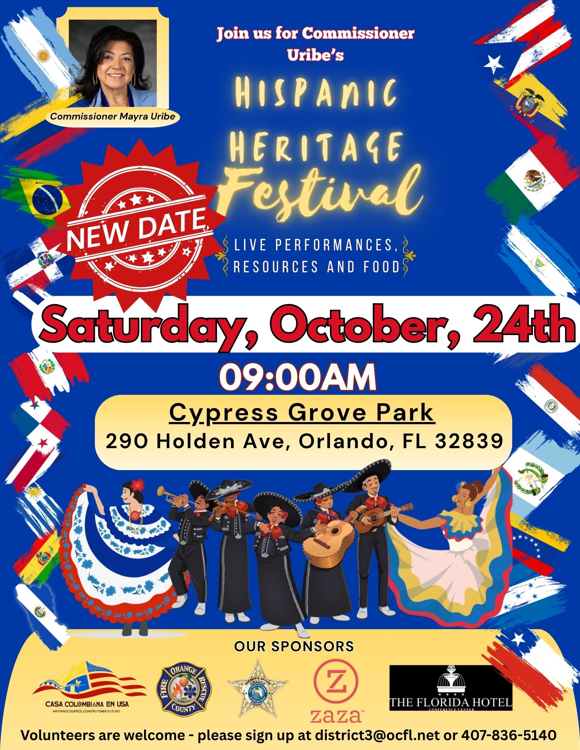
Commissioner Uribe Announces New Date for Hispanic Heritage Festival Due to Weather

ORLANDO, Fla. (FNN) — Commissioner Uribe announced that the Hispanic Heritage Festival has been rescheduled due to weather conditions. The event will now take place Saturday, Oct. 24, 2026, from 9 a.m. to noon at Cypress Grove Park, 290 Holden Ave., Orlando.
The festival will celebrate the rich history, cultures, traditions and contributions of Hispanic and Latino communities through live music, dance performances, food and community resources.
Scheduled highlights include:
- Live music by youth orchestra The Nucleus Orchestral.
- Dance performances featuring Maria Saavedra of FusionFest with Huellas de Colombia, Unidos for Ecuador and Mexico Dansa.
- Food from Zaza.
- Community resources from 311 and other participants.
Join Commissioner Uribe and the community for a morning celebrating Hispanic and Latino heritage.
NEW DATE: Saturday, Oct. 24, 2026
TIME: 9 a.m. to noon
LOCATION: Cypress Grove Park
ADDRESS: 290 Holden Ave., Orlando, FL 32839