

Politics
Robert Mueller to testify publicly before 2 House committees


WASHINGTON (AP) — Special counsel Robert Mueller has agreed to testify publicly before Congress on July 17 after Democrats issued subpoenas to compel him to appear, the chairmen of two House committees announced.
Mueller’s unusual back-to-back testimony in front of the House Judiciary and the Intelligence committees is likely to be the most highly anticipated congressional hearing in years, particularly given Mueller’s resolute silence throughout his two-year investigation into Russian contacts with President Donald Trump’s campaign . Mueller never responded to angry, public attacks from Trump, nor did he ever personally join his prosecutors in court or make announcements of criminal charges from the team.
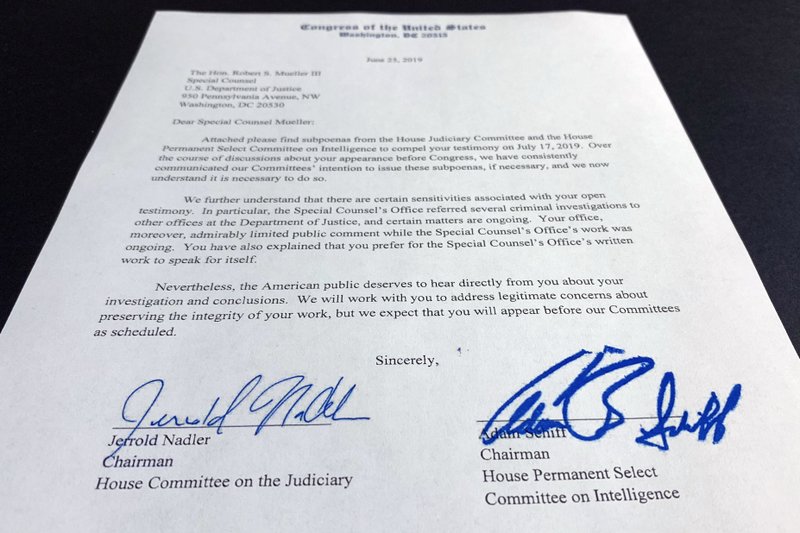
The letter from House Judiciary Chairman Jerrold Nadler and House Intelligence Committee Chairman Adam Schiff to special counsel Robert Mueller that was sent with subpoenas to compel Mueller’s testimony to the committees on July 17, is photographed in Washington, Tuesday, June 25, 2019. (AP Photo/Jon Elswick)
“We chose those words carefully and the work speaks for itself,” Mueller said May 29. “I would not provide information beyond what is already public in any appearance before Congress.”
Those remarks did little to settle the demands for his testimony. The two committees continued negotiations that had already been going on for weeks, saying they still wanted to hear from Mueller no matter how reluctant he was.
“When you accept the role of special counsel in one of the most significant investigations in modern history you’re going to have to expect that you’re going to be asked to come and testify before Congress,” House Intelligence Committee Chairman Adam Schiff, D-Calif., told reporters shortly after the announcement.
Trump himself simply tweeted, “Presidential Harassment!”
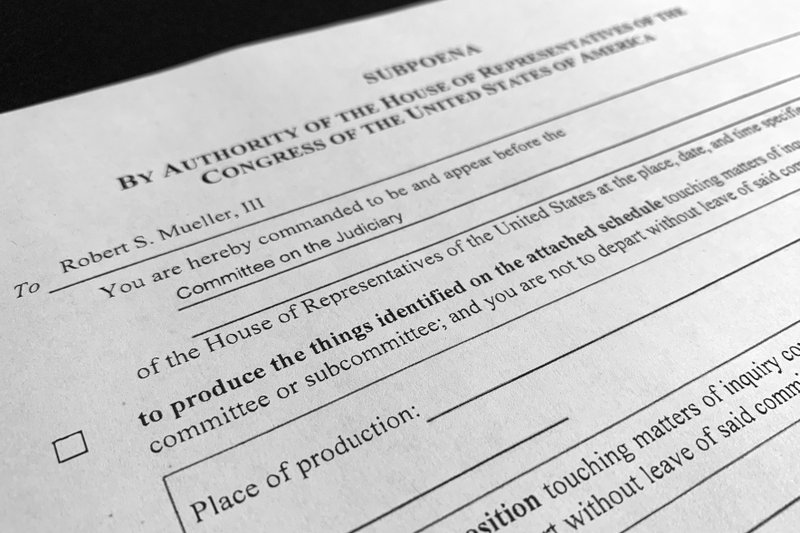
The subpoena from the House Judiciary and House Intelligence Committees to special counsel Robert Mueller is photographed in Washington, Tuesday, June 25, 2019. (AP Photo/Jon Elswick)
In the report issued in April, Mueller concluded there was not enough evidence to establish a conspiracy between Trump’s presidential campaign and Russia, which was the original question that started the investigation. But he also said he could not exonerate Trump on obstruction of justice. The report examined several episodes in which Trump attempted to influence the investigation.
Democrats say it is now the job of Congress to assess the report’s findings. Lawmakers are likely to confront Mueller on why he did not come to a firm conclusion on obstruction of justice. They are also likely to seek his reaction to a drumbeat of incessant criticism from the president and ask for his personal opinion about whether Trump would have been charged were he not the commander-in-chief.
Schiff and House Judiciary Committee Chairman Jerrold Nadler said they issued the subpoenas Tuesday, and Mueller agreed to testify pursuant to those subpoenas. In a letter to Mueller accompanying the subpoenas, the committee chairmen said “the American public deserves to hear directly from you about your investigation and conclusions.”
Schiff said there will be two hearings “back to back,” one for each committee, and they will also meet with Mueller’s staff in closed session afterward.
The Justice Department declined to comment.
Republicans have criticized Democrats for their continuing investigations of the president. House Minority Leader Kevin McCarthy, R-Calif., questioned why they would still want to hear from Mueller after the lengthy report was issued. “He said he didn’t want to talk to us anymore, didn’t he?”
But Georgia Rep. Doug Collins, the top Republican on the Judiciary panel, has said he has no objections to Mueller’s testimony.
“May this testimony bring to House Democrats the closure that the rest of America has enjoyed for months, and may it enable them to return to the business of legislating,” Collins said.


FORT MYERS, Fla. (FNN) — President Donald Trump is scheduled to hold a midterm rally in Fort Myers on Friday, Oct. 23, bringing his campaign efforts to the congressional district represented by his endorsed candidate for Florida governor, U.S. Rep. Byron Donalds.
Donalds, the Republican nominee, faces Democrat David Jolly in the Nov. 3 election. If elected, Donalds would become Florida’s first Black governor, succeeding term-limited Republican Gov. Ron DeSantis.
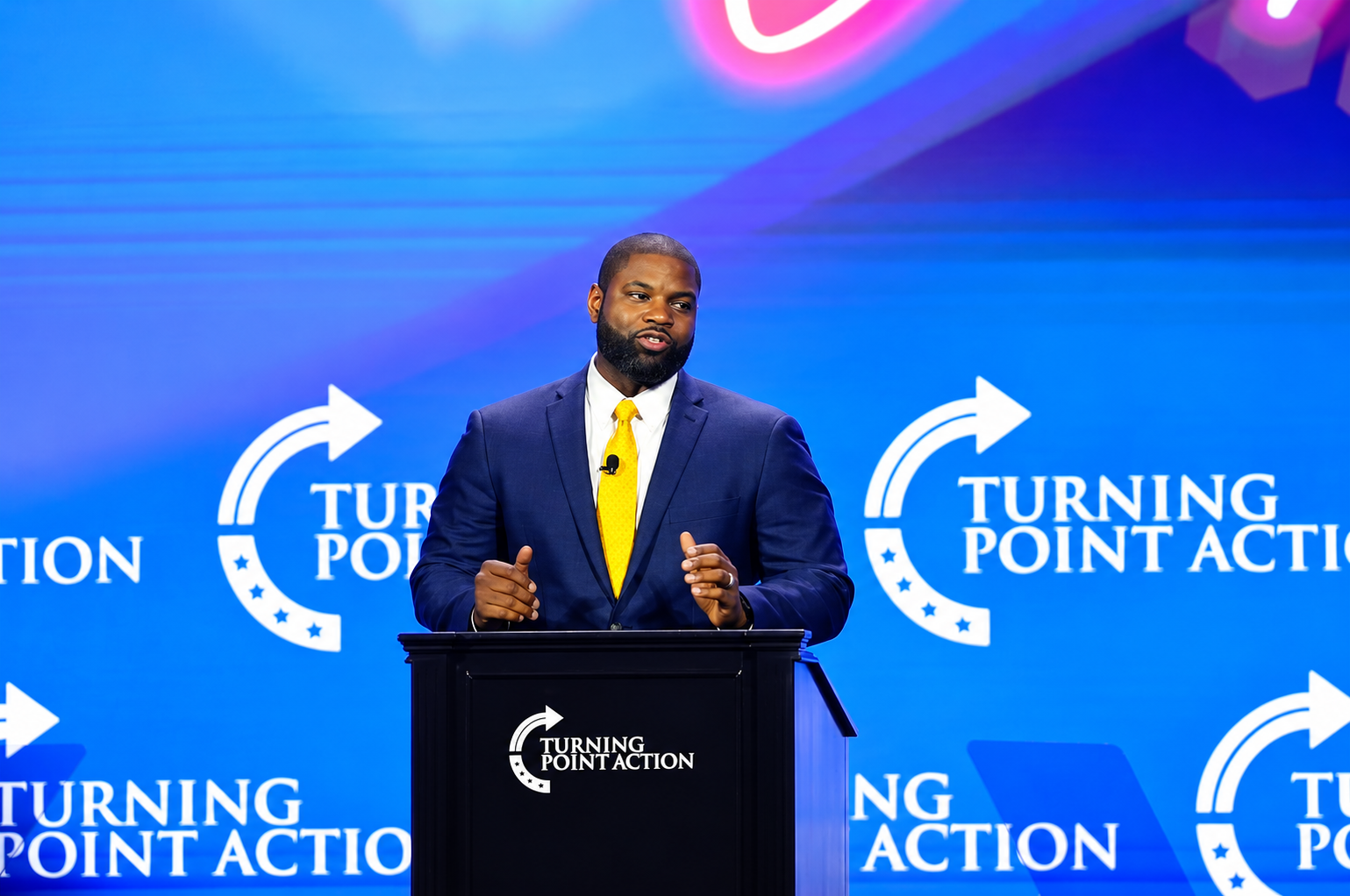
U.S. Rep. Byron Donalds speaks at a Turning Point Action event in Florida. Photo by Roman Garay / Florida National News.
Rally Set for Oct. 23
Trump’s remarks are scheduled to begin at 2 p.m., with doors opening at 10:30 a.m., according to the Republican Party’s event registration page. All times are Eastern.
Gulf Coast News reports that the rally will take place at Alico Arena at Florida Gulf Coast University. However, the official GOP registration page still lists the venue as “To Be Announced.” Attendees should check that page for confirmation and updates.
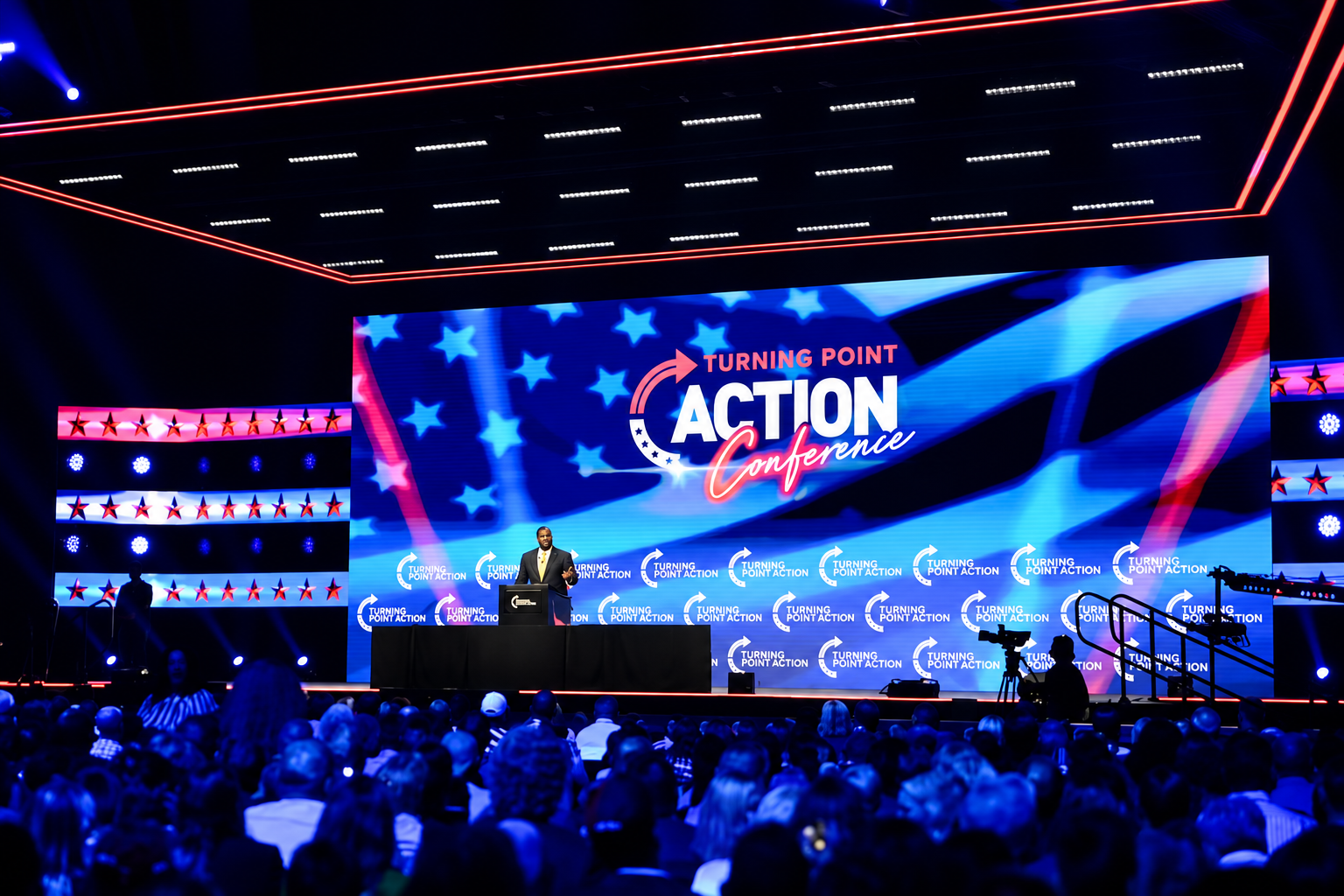
Prominent conservative figures, including Tucker Carlson, then-former President Donald Trump, U.S. Rep. Byron Donalds and Megyn Kelly, rallied Republican voters during the Turning Point Action Conference at the Palm Beach County Convention Center, July 15-16, 2023.
Photo by Roman D. Garay / Florida National News.
Trump’s Endorsement Connects President to Historic Bid
Trump has endorsed Donalds, whose campaign lists the president among its prominent Republican supporters. The Fort Myers visit places Trump in Donalds’ Southwest Florida political base during the closing weeks of the election.
Following his primary victory, Donalds acknowledged Trump’s influence among Republican voters.
“Obviously, he has the strongest following of anybody in our party,” Donalds said, according to Associated Press reporting.
A Donalds victory would give Florida its first Black governor and extend Republican leadership in the governor’s office. Trump’s endorsement connects the president to that potentially historic outcome, although the rally announcement does not identify the event as exclusively supporting Donalds.
Republican Unity and Voter Turnout
Donalds called for Republicans to unite after the primary, telling supporters, “Tonight we are one united Republican Party,” according to the AP.
The Fort Myers rally will provide Trump another platform to address supporters ahead of the Nov. 3 midterm elections. The published event announcement confirms his appearance but does not list additional speakers.


 Central Florida News4 days ago
Tiffany Moore Russell Plans Orange County Campaign Stops Ahead of Early Voting
 Florida3 days ago
Trump Plans Fort Myers Rally as Byron Donalds Seeks to Become Florida’s First Black Governor
 Politics3 days ago
RNC Chairman Joe Gruters Calls Trump an ‘Absolute Machine’ Ahead of Midterm Elections
 Central Florida News4 days ago
Orlando Magic Beat Miami Heat 136-115 in Preseason Finale Behind Banchero, Bane


