Politics
Trump signs immigration order featuring numerous exemptions


WASHINGTON (AP) — President Donald Trump claimed Wednesday that he had signed an executive order “temporarily suspending immigration into the United States.” But experts say the order will merely delay the issuance of green cards for a minority of immigrants.
Trump said his move, announced in a Monday tweet, was necessary to help Americans get back to work in an economy ravaged by the coronavirus.
“This will ensure that unemployed Americans of all backgrounds will be first in line for jobs as our economy reopens,” he said.
But the order includes a long list of exemptions, including for those who are currently in the country and those seeking entry to work as physicians and nurses, as well as the spouses and minor children of American citizens. The 60-day pause also leaves untouched the hundreds of thousands of temporary work visas the country issues each year.
That left partisans on both sides of the immigration battle suggesting the order was driven more by politics than policy during an election year.
Trump ran in 2016 on promising to crack down on both illegal and legal immigration, making the case — disputed by many — that foreign workers compete with Americans for jobs and drive down wages because they are willing to accept lower pay. While many of Trump’s efforts to dramatically upend the nation’s immigration system, from travel bans to asylum restrictions, had been stymied by Congress and the courts, the pandemic has allowed him to move forward on certain changes.


Like other world leaders, Trump has restricted travel from much of the globe, including China and large swaths of Europe. The borders with Mexico and Canada have been closed to all but “essential” travel.
With consulates closed, almost all visa processing by the State Department has been suspended for weeks. And Trump has used the virus to effectively end asylum at U.S. borders, turning away migrants, including children, by invoking a rarely used 1944 law aimed at preventing the spread of communicable diseases.
The green card measure will limit the ability of current green card holders to sponsor their extended families — a practice Trump has derided as “chain immigration” and tried to restrict.
The final version was far less drastic than advocates on both sides of the issue had expected after Trump posted a tweet late Monday that sent businesses, would-be immigrants and administration officials scrambling.
“In light of the attack from the Invisible Enemy, as well as the need to protect the jobs of our GREAT American Citizens, I will be signing an Executive Order to temporarily suspend immigration into the United States!” Trump wrote.
Mark Krikorian, executive director of the Center for Immigration Studies, said before the order was released that it would “have some very modest policy effect,” but he said “it’s actually not even that big a deal.” He said “the primary function was political, to respond to people’s concern that at this point, with maybe 15% of the labor force out of work, they had to do something.”
Frank Sharry, executive director of America’s Voice, a liberal immigration reform group, agreed in part.
“This announcement is more about grabbing a headline than changing immigration policy,” he said Wednesday. “To me, it smacks of an electoral strategy, not a policy change, and it smacks of desperation and panic.”
Omar Jadwat, the director of the American Civil Liberties Union’s Immigrants’ Rights Project, accused Trump of launching a “transparent attempt to distract from his own failures” that “will cause real pain for families and employers across the country.”
Pivoting to immigration is a strategy Trump has used before. He often turns to immigration when he feels backed into a corner and is looking for an issue to rev up his base.
Ahead of the 2018 midterm elections, for instance, Trump put immigration at the forefront, using migrant caravans in Latin America as a rallying cry as he ordered thousands of U.S. troops to the southern border to stop an “invasion.” He also floated ending the Constitution’s guarantee of birthright citizenship.
In recent days, officials bolstered by their successful efforts to restrict travel at the country’s borders had been discussing how they might seize the opportunity to enact additional immigration restrictions. Trump’s tweet nonetheless took many across the administration by surprise.
During the coronavirus crisis, Trump has found other ways to pivot to immigration. He used one of his task force briefings to highlight enhanced counternarcotics efforts to prevent smugglers from taking advantage of the pandemic — though he said there was no evidence of that — and has repeatedly invoked his border wall.
“In the meantime, even without this order, our Southern Border, aided substantially by the 170 miles of new Border Wall & 27,000 Mexican soldiers, is very tight – including for human trafficking!” he tweeted Wednesday.
Trump’s team on Tuesday, however, denied he was using the virus to make good on a long-standing campaign promise during an election year.
“This is common sense the American people can very well understand: When Americans need jobs, Americans must come first,” said White House spokeswoman Kayleigh McEnany.
“The president’s immigration policy just makes sense,” agreed Trump campaign spokesman Tim Murtaugh. With 22 million Americans applying for unemployment, he asked, “Why would you in good conscience introduce brand-new competition for them?”
Trump’s campaign showcased the move in an email blast to supporters that read: “PRESIDENT TRUMP WILL SIGN AN EXECUTIVE ORDER TO TEMPORARILY SUSPEND IMMIGRATION.”

Florida
Civil Rights Group Honors Nobel Peace Prize Winner Navi Pillay, Highlights Florida’s Trayvon Martin Connection

The Orlando-based civil rights association recalls supporting the former U.N. human rights chief’s 2012 call for an investigation into the teenager’s killing in Sanford.
ORLANDO, Fla. (FNN) — The Florida Civil Rights Association is congratulating 2026 Nobel Peace Prize winner Navanethem “Navi” Pillay, recalling her call for an investigation into Trayvon Martin’s killing and the international attention it brought to questions of racial equality and justice in Florida.
The Norwegian Nobel Committee announced Pillay’s selection Oct. 9 for her efforts to promote peace and international law. The South African jurist served as United Nations high commissioner for human rights from 2008 to 2014 and helped shape landmark international court decisions.
In a press release, FCRA President J. Willie David III said Pillay’s intervention connected a Florida family’s demand for answers to a broader concern for human rights.
“Pillay’s call for an investigation reinforced that a family’s demand for justice in Sanford mattered beyond Florida and the United States,” David said.
“We welcomed her intervention in 2012 because families deserve answers and the law must protect everyone equally.”
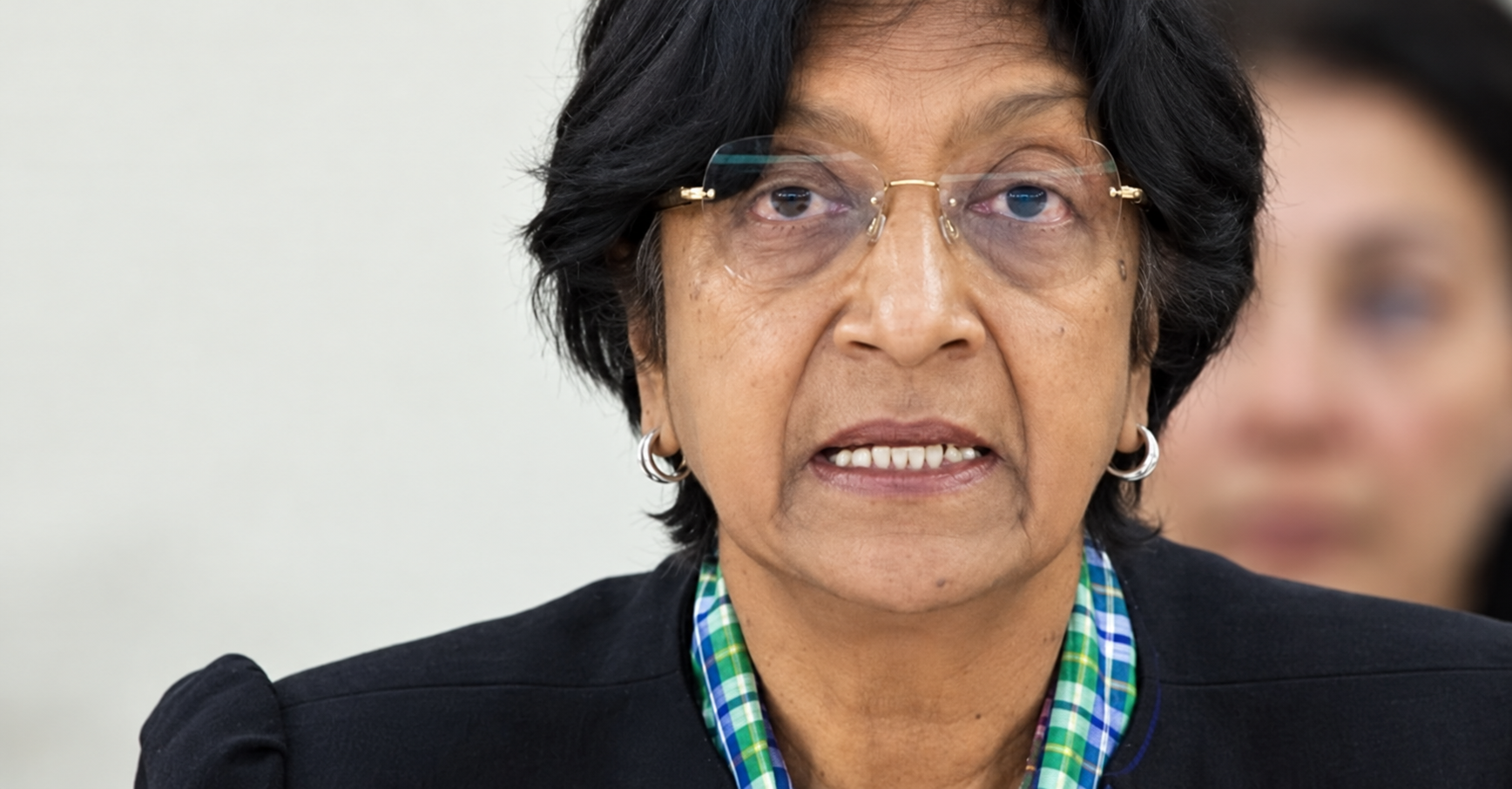
UN Human Rights Commissioner Navi Pillay (Photo credit: UN Photo/Jean-Marc Ferre)
FCRA recalls its response in 2012
Martin, an unarmed Black 17-year-old, was fatally shot by neighborhood watch volunteer George Zimmerman on Feb. 26, 2012, in Sanford, northeast of Orlando.
In April 2012, Pillay called for an immediate investigation into the killing as the case drew international attention and scrutiny of Florida’s Stand Your Ground law.
FCRA welcomed that call. The association’s current release cites an April 7, 2012, West Orlando News report that quoted David discussing the case’s global impact.
“The shooting death of Trayvon Martin and Florida’s Stand Your Ground Law have created a worldwide movement that calls into question how justice is delivered to victims of color,” David said at the time, according to the release.
FCRA describes the activism surrounding Martin’s death as a defining moment that galvanized a new generation of civil rights advocates.
Zimmerman was charged with second-degree murder and acquitted in July 2013. In February 2015, the U.S. Justice Department closed its separate investigation, finding insufficient evidence to pursue federal criminal civil rights charges.
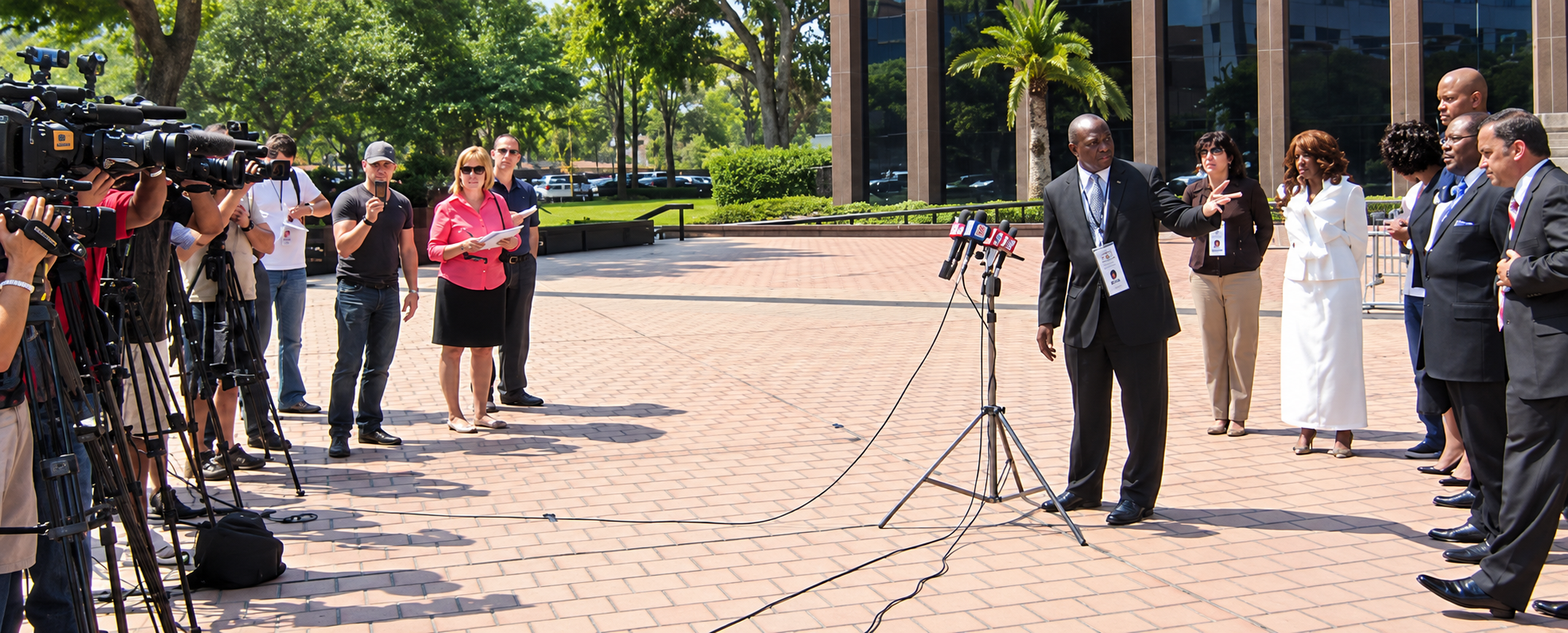
The Florida Civil Rights Association (FCRA) held a press conference outside the State of Florida’s regional offices in Orlando in 2012, calling on then-Gov. Rick Scott to take action following Trayvon Martin’s killing. Photo by FCRA.
Why Florida’s case drew global scrutiny
The Florida connection shows how the handling of a local killing can draw international scrutiny over racial discrimination, access to justice and the protection of human rights.
Pillay’s intervention brought those concerns into the international discussion surrounding Martin’s death. In September 2013, U.N. human rights experts also urged the United States to complete its civil rights investigation and examine concerns about racial profiling.
The significance lies in human rights oversight: how public institutions investigate deaths and provide equal treatment can attract attention beyond national borders. Pillay’s call was an appeal for investigation, rather than an international court judgment about Zimmerman’s guilt or Florida’s compliance with international law.
For FCRA, that connection remains relevant to how Florida leaders evaluate laws and practices affecting the communities they serve.
Pillay’s record in international justice
Pillay challenged discrimination under apartheid before serving on South Africa’s High Court, the International Criminal Tribunal for Rwanda and the International Criminal Court.
At the Rwanda tribunal, she was part of the judicial panel that established that rape and sexual violence can constitute acts of genocide, a landmark development in international criminal law.
David said honoring that career should also encourage accountability at home.
“Her Nobel Peace Prize recognizes a career built on confronting injustice through the rule of law,” he said. “Honoring that work means demanding transparent investigations and equal protection here at home. Rights belong to everyone.”
A renewed call for fairness in Florida
FCRA urged Florida leaders to safeguard impartial investigations, examine whether Stand Your Ground and other laws are applied fairly, and address policies or practices that produce discriminatory outcomes.
Founded in 2005, the association advocates for civil rights, human rights and civil liberties through education, advocacy and accountability. Its statement links Pillay’s international recognition to a continuing demand for fairness and human dignity in Florida.
Florida
Florida Governor Candidates: Donalds Spent Longer as a Democrat; Jolly Reports Longer Republican History

Central Florida News
Commissioner Uribe Announces New Date for Hispanic Heritage Festival Due to Weather

ORLANDO, Fla. (FNN) — Commissioner Uribe announced that the Hispanic Heritage Festival has been rescheduled due to weather conditions. The event will now take place Saturday, Oct. 24, 2026, from 9 a.m. to noon at Cypress Grove Park, 290 Holden Ave., Orlando.
The festival will celebrate the rich history, cultures, traditions and contributions of Hispanic and Latino communities through live music, dance performances, food and community resources.
Scheduled highlights include:
- Live music by youth orchestra The Nucleus Orchestral.
- Dance performances featuring Maria Saavedra of FusionFest with Huellas de Colombia, Unidos for Ecuador and Mexico Dansa.
- Food from Zaza.
- Community resources from 311 and other participants.
Join Commissioner Uribe and the community for a morning celebrating Hispanic and Latino heritage.
NEW DATE: Saturday, Oct. 24, 2026
TIME: 9 a.m. to noon
LOCATION: Cypress Grove Park
ADDRESS: 290 Holden Ave., Orlando, FL 32839