

World
UN chief says Sudan is on the brink of a ‘full-scale civil war’ after nearly 3 months of fighting


CAIRO (AP) — U.N. Secretary-General Antonio Guterres said Sudan is on the brink of a “full-scale civil war” as fierce clashes between rival generals continued unabated Sunday in the capital of Khartoum.
Guterres warned late Saturday that the war between the Sudanese military and a powerful paramilitary force is likely to destabilize the entire region, according to Farhan Haq, deputy spokesperson for the U.N. chief.
Sudan descended into chaos after months of tension between military chief Gen. Abdel-Fattah Burhan and his rival, Gen. Mohammed Hamdan Dagalo, commander of the paramilitary Rapid Support Forces, exploded into open fighting in mid-April.

Health Minister Haitham Mohammed Ibrahim said last month that the clashes have killed over 3,000 people and wounded over 6,000 others. The death tally, however, is highly likely to be much higher, he said. More than 2.9 million people have fled their homes to safer areas inside Sudan or crossed into neighboring countries, according to U.N. figures.
The fighting began 18 months after the two generals led a military coup in October 2021 that toppled a Western-backed civilian transition government. The coup and ensuing conflict dashed Sudanese hopes of a peaceful shift to democracy after a popular uprising forced the military removal of longtime autocrat Omar al-Bashir in April 2019.
The war has turned the capital Khartoum and other urban areas across the country into battlefields.
Residents in Khartoum said fierce fighting was underway early Sunday south of the capital. The warring factions were using heavy weapons in battles in the Kalaka neighborhood and the military’s aircraft were seen hovering over the area, said resident Abdalla al-Fatih.
In his statement, Guterres also condemned an airstrike Saturday that health authorities said killed at least 22 people in Omdurman, a city just across the Nile from the Khartoum. The assault was one of the deadliest in the conflict so far.
The RSF blamed the military for the attack in Omdurman. The military denied the accusation, saying in a statement Sunday that its air force didn’t carry out any airstrikes in the city Saturday.
The secretary-general also decried the large-scale violence and casualties in the western region of Darfur, which has experienced some of the worst fighting in the ongoing conflict, Haq said in a statement.
“There is an utter disregard for humanitarian and human rights law that is dangerous and disturbing,” Guterres said.
U.N. officials have said the violence in the region has recently taken on an ethnic dimension, with the RSF and Arab militias reportedly targeting non-Arab tribes in Darfur, a sprawling region consisting of five provinces. Last month, the governor of Darfur, Mini Arko Minawi, said the region was sliding back to its past genocide, referring to the conflict that engulfed the region in the early 2000s.
Entire towns and villages in West Darfur province were overrun by the RSF and their allied militias, forcing tens of thousands of residents to flee to neighboring Chad. Activists have reported many residents killed, women and girls raped, and properties looted and burned to the ground.
There were clashes between the military and the RSF elsewhere in Sudan on Sunday, including the province of North Kordofan, South Kordofan and Blue Nile.
Egypt, meanwhile, said it will host a meeting on Thursday for Sudan’s neighboring countries. The gathering aims at establishing “effective mechanisms” to help find a peaceful settlement to the conflict in coordination with other international and regional efforts, Ahmed Fahmy, spokesman for Egypt’s presidency, said in a statement.
Fahmy provided no further details on the gathering.
The efforts come as talks between warring factions in the Saudi Arabian coastal city of Jeddah repeatedly failed to stop the fighting. The Jeddah talks were brokered by Saudi Arabia and the United States

Florida
Civil Rights Group Honors Nobel Peace Prize Winner Navi Pillay, Highlights Florida’s Trayvon Martin Connection

The Orlando-based civil rights association recalls supporting the former U.N. human rights chief’s 2012 call for an investigation into the teenager’s killing in Sanford.
ORLANDO, Fla. (FNN) — The Florida Civil Rights Association is congratulating 2026 Nobel Peace Prize winner Navanethem “Navi” Pillay, recalling her call for an investigation into Trayvon Martin’s killing and the international attention it brought to questions of racial equality and justice in Florida.
The Norwegian Nobel Committee announced Pillay’s selection Oct. 9 for her efforts to promote peace and international law. The South African jurist served as United Nations high commissioner for human rights from 2008 to 2014 and helped shape landmark international court decisions.
In a press release, FCRA President J. Willie David III said Pillay’s intervention connected a Florida family’s demand for answers to a broader concern for human rights.
“Pillay’s call for an investigation reinforced that a family’s demand for justice in Sanford mattered beyond Florida and the United States,” David said.
“We welcomed her intervention in 2012 because families deserve answers and the law must protect everyone equally.”
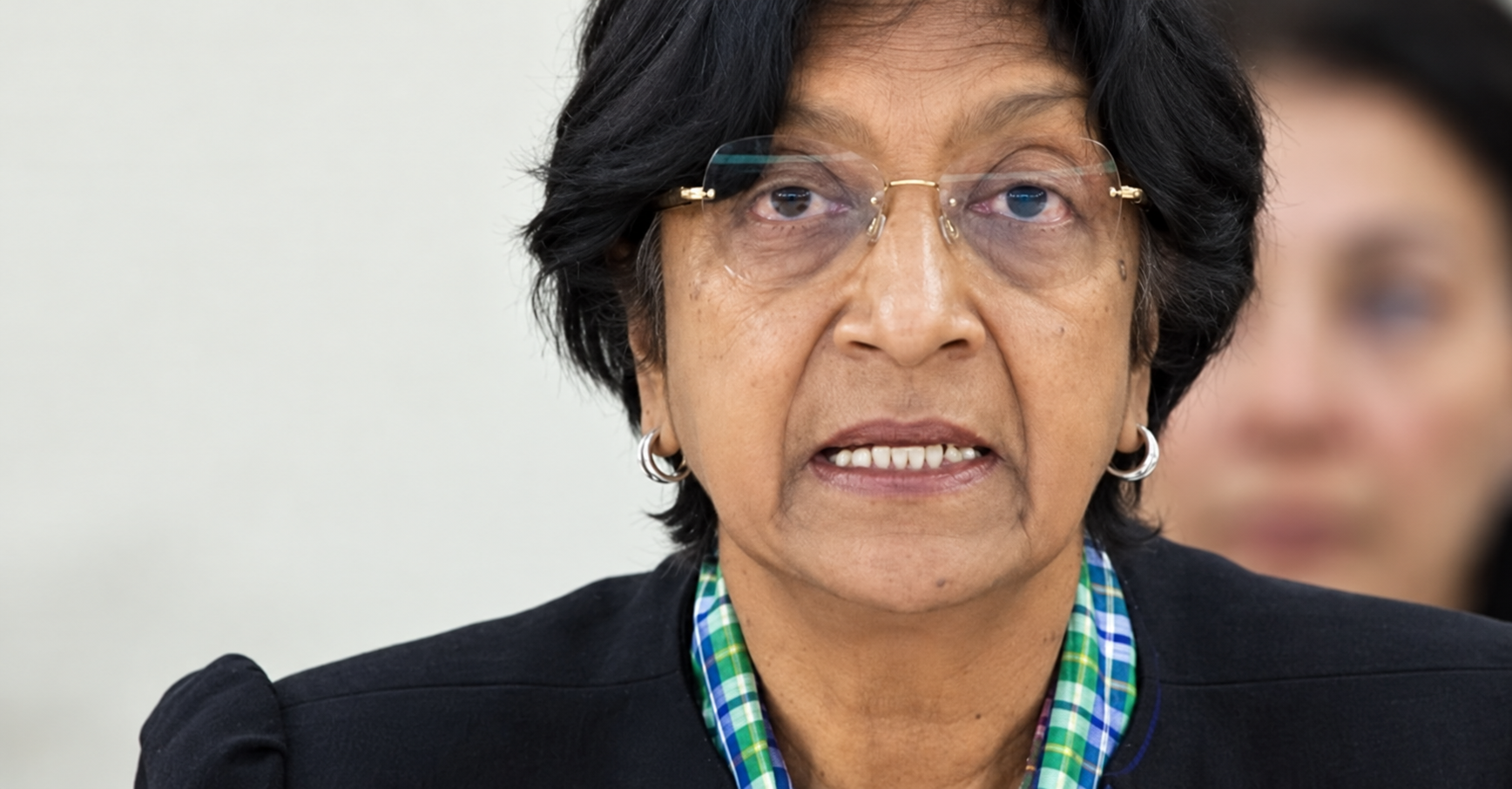
UN Human Rights Commissioner Navi Pillay (Photo credit: UN Photo/Jean-Marc Ferre)
FCRA recalls its response in 2012
Martin, an unarmed Black 17-year-old, was fatally shot by neighborhood watch volunteer George Zimmerman on Feb. 26, 2012, in Sanford, northeast of Orlando.
In April 2012, Pillay called for an immediate investigation into the killing as the case drew international attention and scrutiny of Florida’s Stand Your Ground law.
FCRA welcomed that call. The association’s current release cites an April 7, 2012, West Orlando News report that quoted David discussing the case’s global impact.
“The shooting death of Trayvon Martin and Florida’s Stand Your Ground Law have created a worldwide movement that calls into question how justice is delivered to victims of color,” David said at the time, according to the release.
FCRA describes the activism surrounding Martin’s death as a defining moment that galvanized a new generation of civil rights advocates.
Zimmerman was charged with second-degree murder and acquitted in July 2013. In February 2015, the U.S. Justice Department closed its separate investigation, finding insufficient evidence to pursue federal criminal civil rights charges.
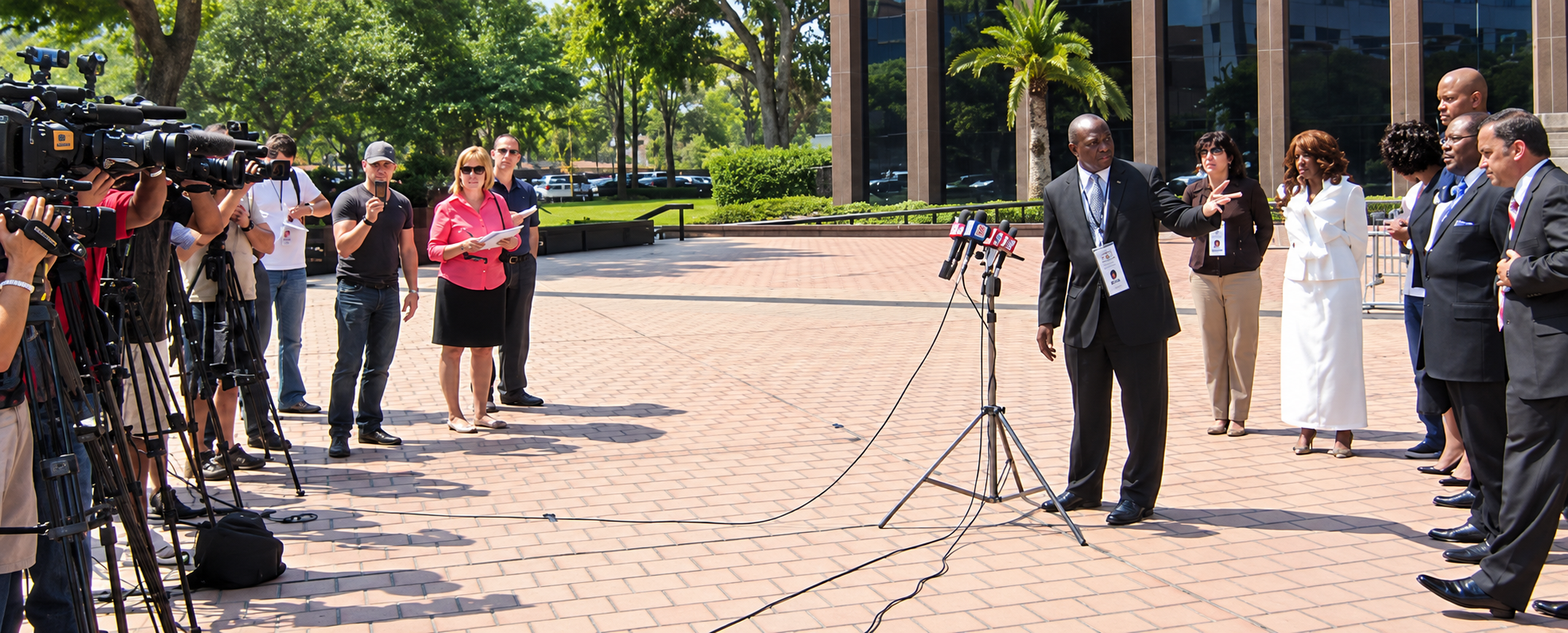
The Florida Civil Rights Association (FCRA) held a press conference outside the State of Florida’s regional offices in Orlando in 2012, calling on then-Gov. Rick Scott to take action following Trayvon Martin’s killing. Photo by FCRA.
Why Florida’s case drew global scrutiny
The Florida connection shows how the handling of a local killing can draw international scrutiny over racial discrimination, access to justice and the protection of human rights.
Pillay’s intervention brought those concerns into the international discussion surrounding Martin’s death. In September 2013, U.N. human rights experts also urged the United States to complete its civil rights investigation and examine concerns about racial profiling.
The significance lies in human rights oversight: how public institutions investigate deaths and provide equal treatment can attract attention beyond national borders. Pillay’s call was an appeal for investigation, rather than an international court judgment about Zimmerman’s guilt or Florida’s compliance with international law.
For FCRA, that connection remains relevant to how Florida leaders evaluate laws and practices affecting the communities they serve.
Pillay’s record in international justice
Pillay challenged discrimination under apartheid before serving on South Africa’s High Court, the International Criminal Tribunal for Rwanda and the International Criminal Court.
At the Rwanda tribunal, she was part of the judicial panel that established that rape and sexual violence can constitute acts of genocide, a landmark development in international criminal law.
David said honoring that career should also encourage accountability at home.
“Her Nobel Peace Prize recognizes a career built on confronting injustice through the rule of law,” he said. “Honoring that work means demanding transparent investigations and equal protection here at home. Rights belong to everyone.”
A renewed call for fairness in Florida
FCRA urged Florida leaders to safeguard impartial investigations, examine whether Stand Your Ground and other laws are applied fairly, and address policies or practices that produce discriminatory outcomes.
Founded in 2005, the association advocates for civil rights, human rights and civil liberties through education, advocacy and accountability. Its statement links Pillay’s international recognition to a continuing demand for fairness and human dignity in Florida.


 Central Florida News2 days ago
Tiffany Moore Russell Plans Orange County Campaign Stops Ahead of Early Voting
 Florida2 days ago
Trump Plans Fort Myers Rally as Byron Donalds Seeks to Become Florida’s First Black Governor
 Politics2 days ago
RNC Chairman Joe Gruters Calls Trump an ‘Absolute Machine’ Ahead of Midterm Elections
 Central Florida News3 days ago
Orlando Magic Beat Miami Heat 136-115 in Preseason Finale Behind Banchero, Bane


