Health
COVID-19 vaccine hunt heats up globally, still no guarantee
Published
6 years agoon
WASHINGTON (AP) — Hundreds of people are rolling up their sleeves in countries across the world to be injected with experimental vaccines that might stop COVID-19, spurring hope — maybe unrealistic — that an end to the pandemic may arrive sooner than anticipated.
About 100 research groups are pursuing vaccines with nearly a dozen in early stages of human trials or poised to start. It’s a crowded field, but researchers say that only increases the odds that a few might overcome the many obstacles that remain.
“We’re not really in a competition against each other. We’re in a race against a pandemic virus, and we really need as many players in that race as possible,” Dr. Andrew Pollard, who is leading the University of Oxford’s vaccine study, told The Associated Press.
The hard truth: There’s no way to predict which — if any — vaccine will work safely, or even to name a front-runner.
As Dr. Anthony Fauci, the U.S. government’s top expert, put it: “You need more shots on goal for a chance at getting a safe and effective vaccine.”
The first cautious tests of March, when small numbers of volunteers got injections to check for side effects, have turned into larger studies in China, the U.S. and Europe to look for hints that different vaccine candidates really protect.

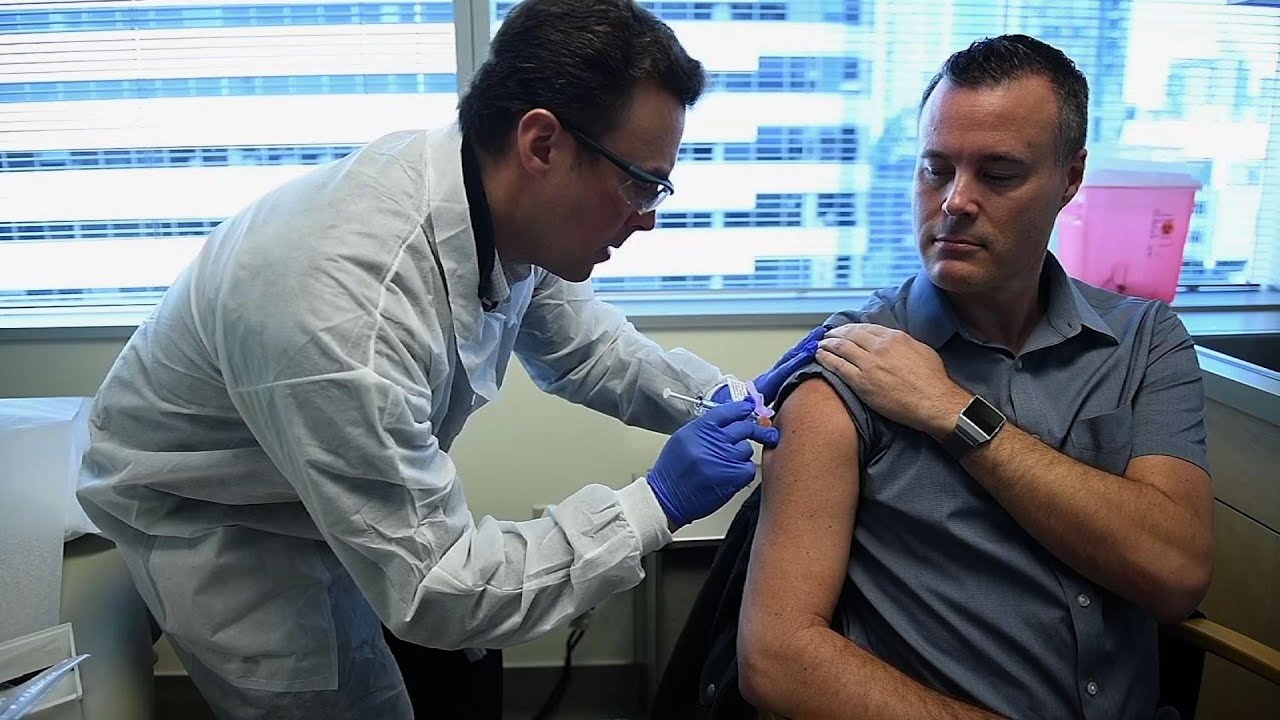
Next: Finding out for sure if any of the vaccines work in the real world by testing large groups of people in areas where the virus is circulating — a tricky prospect when study participants may be in places where the virus is fading or they are told to stay home — and finding a way to quickly distribute lots of doses of any successful candidates.
Policymakers are devising plans to try to overcome both obstacles in an attempt to compress the years it usually takes to develop a vaccine. Asked if a vaccine by January was possible, Dr. Deborah Birx, the White House coronavirus task force coordinator, told Fox News Sunday “on paper, it’s possible. It’s whether we can execute,” she said.
Fauci has cautioned that even if everything goes perfectly, 12 to 18 months to develop a vaccine would set a speed record — and January will mark a year since the National Institutes of Health began creating its own COVID-19 vaccine, now in trials with Moderna Inc.
MULTIPLE SHOTS WORK IN MULTIPLE WAYS
Depending how you count, there are between eight and 11 vaccine candidates in early stages of testing in China, the U.S., Britain and Germany — a collaboration between Pfizer Inc. and BioNTech last week began a study in Germany that’s simultaneously testing four somewhat different shots. More study sites are about to open in still other countries — and between May and July another handful of different vaccines is set to begin first-in-human testing.
“This allows me to play a small role in fighting this thing,” said Anthony Campisi, 33, of Philadelphia, who received his first test dose of Inovio Pharmaceuticals’ DNA-based vaccine at the University of Pennsylvania last month. “I can be a guinea pig.”
The initial vaccine candidates work in a variety of ways. That’s important because if one type fails, maybe another won’t.
Different types of vaccines work better in some virus families than others. But for coronaviruses, there’s no blueprint. Back in 2003 when scientists attempted vaccines against SARS, a cousin of the new virus, animal studies hinted at safety problems but then SARS disappeared and vaccine funding dried up. Vaccines against another COVID-19 cousin named MERS have only reached first-step safety testing.
“In 20/20 hindsight, we should have worked harder on coronavirus vaccines back then,” said Dr. Sten Vermund, dean of the Yale School of Public Health. Now, “we’re obligated to try a variety of strategies if we want fast results.”
PROS AND CONS
China’s Sinovac and SinoPharm are testing “inactivated” vaccines, made by growing the new coronavirus and killing it. The companies have revealed little information about how the shots differ. But the technology is tried-and-true — polio shots and some types of flu vaccine are inactivated virus — although it’s hard to scale up to rapidly produce millions of doses.
Most other vaccines in the pipeline aim to train the immune system to recognize a piece of the new coronavirus — mostly, the spiky protein that studs its outer surface.
One way: Use a harmless virus to carry the spike protein into the body. It’s easier to produce but determining which virus is the best “carrier” is a key question. China’s CanSino Biologics brewed its vaccine using a common cold-causing adenovirus, engineered so it won’t spread in the body. And in case people’s immune systems fight off the cold virus before the vaccine can do its job, Pollard’s Oxford team instead chose an adenovirus that normally infects chimpanzees.
Another way: Inject a piece of the coronavirus genetic code that instructs the body itself to produce spike protein that in turn primes the immune system to attack. It’s a new and unproven technology but one that promises even faster production. Vaccines made by NIH and Moderna, Inovio Pharmaceuticals, and that Pfizer-BioNtech collaboration use genetic code approaches.
Still more methods are next in line: Vaccine made of spike protein nanoparticles, and even a nasal spray alternative to shots.
PROVING THEY WORK
Most vaccine studies so far are tracking safety and whether volunteers’ blood shows any immune reactions. Some have jumped to larger numbers quickly, but there’s still concern about being able to prove real-world protection.
If study participants are holed up at home or live in areas where the virus has quit spreading rapidly, then too few may get sick for scientists to tell if the vaccine or social distancing was what protected them. The Oxford study, for example, will track about 1,000 people, half given the real vaccine. But the team plans a later-stage study with another 5,000 volunteers for a final answer and knows it might have to move to other countries.
“When you’re chasing a pandemic, the place that looks like the right one to go to today will be the wrong place two weeks from now. And that makes it really difficult,” Pollard said.
In the U.S., some lawmakers have urged a different and controversial experiment: Recruit young, healthy volunteers who agree to be deliberately infected with the new coronavirus to prove if a vaccine protects them. But some healthy adults do die from COVID-19 — and until doctors better understand why, that so-called “challenge study” makes for a risky proposition with serious ethical questions, Yale’s Vermund noted.
The World Health Organization last week called for countries to offer to be test sites for an international project that will speed the timeline by admitting on a rolling basis promising vaccine candidates for further study in locations where COVID-19 remains widespread at the time.
In the U.S., the Trump administration is planning its own project dubbed Operation Warp Speed that will overlap studies of “different candidates that are made differently and act differently,” Birx said.
If early evidence was strong enough and the virus is still widespread, the Food and Drug Administration might even consider emergency use of a vaccine before final test results were in, Dr. Peter Marks, who directs the FDA office that oversees vaccines, recently told reporters.
SUPPLYING THE WORLD
Whenever the first useful vaccine is identified, there won’t be enough for everyone. So a growing number of vaccine makers say they’re already starting to brew tons of doses — wasting millions of dollars if they bet on the wrong candidate but shaving a few months off mass vaccinations if their choice pans out.
“We need to start building new manufacturing sites now,” said Wellcome Trust vaccine chief Charlie Weller. “And we need to accept that some of these sites will be created for vaccines that will ultimately fail.”
It’s not just a gamble for shareholders. The U.S. government already has deals with Moderna and Johnson & Johnson that together total nearly $1 billion and include scaling up production.
“The critical thing at the beginning is just to make as much stuff as we can,” said Dr. Richard Hatchett, CEO of the Coalition for Epidemic Preparedness Innovations, which is funding several COVID-19 vaccine attempts around the world.
Even if one works, expect rationing early on as policymakers determine who most needs the first doses — possibly health workers or the elderly — until there’s enough for the world, rich and poor countries alike.
“I am concerned about what I call vaccine nationalism. That’s the tension between obligations elected leaders will feel to protect the lives of their citizens” versus the imperative for equitable global sharing, Hatchett said.
And with billions who’ll need a dose or maybe several, just one winner in this race won’t cut it.
“It’s not likely that one manufacturer or one candidate vaccine is going to be able to deal with the global need and supply that need,” Pollard said.
You may like
Health
Buccaneers to Honor Cancer Survivors at Sunday’s Crucial Catch Game, Donating $40K to Research
Published
2 years agoon
September 24, 2024By
Willie DavidTAMPA, Fla. (FNN SPORTS) – On Sunday, September 29, the Tampa Bay Buccaneers will host the Philadelphia Eagles at Raymond James Stadium in a 1 p.m. ET kickoff. The game will be the Buccaneers’ Crucial Catch event, supporting the NFL’s campaign to fight cancer and emphasizing the importance of early detection.
The Buccaneers will continue their tradition of giving back, with the Tampa Bay Buccaneers Foundation set to donate $40,000 to cancer research, raising their total contributions to over $550,000 in the last 13 years. Funds will benefit key cancer organizations including AdventHealth West Florida Foundation, Moffitt Cancer Center Foundation, and more.
Throughout the game, fans, players, and partners will “Raise the Flags” for loved ones affected by cancer. Fans will receive a custom mini-poster to show their support. At halftime, cancer survivors Bianca Muniz and Elana Gilbert will take the stage for an emotional performance honoring those impacted by cancer.
Official Crucial Catch merchandise will be available, with all proceeds supporting the American Cancer Society’s mission to provide screenings to underserved communities.
Health
AdventHealth awards $1.4 million to 6 nonprofits addressing urgent workforce needs in Central Florida
Published
2 years agoon
September 18, 2024By
Willie DavidORLANDO, Fla. — AdventHealth is distributing nearly $1.4 million over the next three years to the 2024 recipients of its Community Impact Grants, giving six Central Florida nonprofits the chance to bolster their missions and help bring prosperity and wholeness to the community by training the workforce of tomorrow.
This year’s Community Impact Grants are focused on one of Central Florida’s top community health concerns, addressing critical workforce development needs in the health care, construction, hospitality and tourism industries, by funding programs that will provide job training, internship and apprenticeship opportunities and education assistance. Workforce development was selected as the priority for this year’s grants based on input from residents in the triannual Community Health Needs Assessment, building on investments made in 2023 that focused on mental health.
“At AdventHealth, we talk a lot about whole-person care, and we also realize that a person’s health is determined by so much more than just the health care setting,” said JB Boonstra, executive director of Community Advocacy for AdventHealth. “We know that employment is one of the most significant social determinants of health and a key part of that is earning a living wage. This year’s spotlight on workforce development speaks directly to that.”
The median income for a household in the Orlando area is about $43,000, the Department of Labor reports — not even close to the wage needed to live in Florida for a family of four, which is about $66,300, according to the United Way’s ALICE report.
“Almost half the people who go to work every day don’t make enough money to pay the bills, and one of the biggest challenges we see here in Central Florida in terms of workforce development is access to career opportunities,” said Marc Stanakis, president and CEO of Jobs Partnership, one of this year’s grant recipients. “For a lot of people in our community, they just don’t know what’s available or what types of jobs they can pursue that would allow them to get on a career path toward economic mobility. For organizations like ours, it’s really exciting to see the change that happens by simply opening the door of opportunity for someone.”
The 2024 grant recipients:
- CareerSource Central Florida’s Community Health Champions program aims to create a career pipeline into the health care industry. Whatever roadblocks residents are facing, including language barriers, transportation challenges or unreliable Internet access for applying to jobs, CareerSource Central Florida offers a variety of vocational training and internship opportunities to overcome them. CSCF is upskilling health care workers who are culturally competent, empathetic and equipped to connect with the diverse populations they serve, making health care more accessible and impactful. Training goes beyond job skills, focusing on understanding and addressing the unique needs of community members.
- The Sharing Center’s ProjectRISE, which, in addition to the organization’s food pantry, homeless resource center and thrift store, aims to address poverty and assist residents in accessing higher-paying jobs. Funding for ProjectRISE will allow 360 residents to enroll in a four-week comprehensive workforce development program focused on building emotional intelligence, soft skills and job-acquisition skills.
- employU’s vocational rehabilitation program serves residents with mental and physical disabilities as part of the organization’s mission to create inclusive workplaces. Acting as a one-stop shop for career development and employment resources, employU provides employment training, paid work experience, job placement and job retention support. The organization will use the grant to fund new initiatives to help individuals access community resources and prepare for employment through workshops on financial literacy, social media safety and workplace readiness. It will also fund a program manager position to reach more residents and ultimately help them achieve financial independence.
- Home Builders Institute BuildStrong Academy of Orlando is a tuition-free program delivering industry-recognized skills to train a new generation of home builders looking to break into the construction industry. The Academy offers career-focused education through hands-on learning, classroom instruction and real-life experience. Students train with skilled trades instructors who guide them through HBI’s nationally and industry recognized Pre-Apprenticeship Certificate Training curriculum and receive job placement assistance upon graduation, helping build a pipeline of residential and commercial construction workers.
- iBuild Central Florida’s Pre-Apprenticeship Program is an innovative approach in attracting more people to jobs in the telecommunications construction industry, which is currently facing mass shortages nationwide. Based at Osceola Technical College, the program targets students enrolled in English language-acquisition and GED classes, 80% of whom live below the federal poverty line.
- Jobs Partnership’s Stepping Up program equips residents who are unemployed or working low-wage jobs, combining soft skills training, career navigation and vocational training scholarships. Since its founding in 1999, the organization has served more than 3,300 people, empowering them to change their professional trajectories and developing a career pipeline into the health care industry. Last year, 79% of participants got a new job or started vocational training after completing the program.
Among the organizations that received grants, two are focused on bolstering the construction workforce. Central Florida’s lack of construction workers has contributed to a lack of affordable and attainable housing, with median home prices reaching $440,000, according to the Orlando Regional Realtors Association. And as the state wrangles with a shortfall of nearly 436,000 rental units, renters — who make up a third of the region’s population — have also watched rents skyrocket, hitting $1,600 a month for a one-bedroom unit.
“Virtually every industry is experiencing labor shortages, but the construction industry is significantly undersupplied,” said Emily Price, senior vice president of development and partnerships engagement for the Home Builders Institute. “The construction industry needs approximately 732,000 new workers each year to meet demand.”
Recognizing that employment and access to housing go hand in hand, Crystal Davidson, vice president of iBuild Central Florida, said creating a pipeline into the construction industry addresses multiple challenges. “They’ll be in a career field in the construction industry where they won’t want for a job for at least the next 25 years,” Davidson said, “because there is such a skills trade shortage across the United States, but especially in Florida.”
For more than 115 years, AdventHealth has called Central Florida home, and as a not-for-profit organization, has the privileged duty to invest financial resources into the community. In 2023 alone, AdventHealth contributed nearly $1.3 billion in community investments in Orange, Osceola, Seminole and South Lake counties, allowing more residents to access the medical care they need and deserve and supporting local nonprofit organizations.
“Investing in our community is a responsibility that AdventHealth treats very seriously and passionately, because we’ve seen the transformation that happens with these dollars,” said Tricia Edris, chief innovation and partnerships officer for AdventHealth’s Central Florida Division. “AdventHealth is proud to bring these six organizations together to now tackle issues around workforce development. It’s too big a problem for just one of us to solve. We must come together as a community.”
Health
Officials Celebrate Milestone at AdventHealth Minneola Topping-Out Ceremony
Published
2 years agoon
September 6, 2024MINNEOLA, Fla. (FNN) – AdventHealth Minneola marked a major construction milestone today as leaders, physicians, elected officials, and community members gathered for the hospital’s topping-out ceremony. The new facility has reached its full height of four stories, with attendees signing a commemorative structural beam.
“AdventHealth is honored to be Minneola’s partner in health. I’m thrilled to bring this world-class healthcare facility to South Lake County,” said Kay Barnett, CEO of AdventHealth Minneola.
Located on Hancock Road near Florida’s Turnpike, the 204,000-square-foot hospital will feature an emergency department, operating suites, heart catheterization labs, 80 private inpatient rooms, and more. It is expected to bring around 500 jobs to the community.
“Providing care close to home is central to our mission,” said Dr. Miles Bennett, Chief Medical Officer for AdventHealth Winter Garden and Clermont.
The facility is set to open in late 2025.