

US NATIONAL NEWS
Department of State Press Briefing June 5

Published
3 years agoon
By
Willie DavidVedant Patel, Principal Deputy Spokesperson
1:18 p.m. EDT
MR PATEL: Good afternoon, everybody. I’m going to adjust this real quick. This is set to Matt’s height which I am not.
QUESTION: Good to see you.
MR PATEL: Good to see you (inaudible).
QUESTION: (Off-mike.)
MR PATEL: Much better. I know. I actually don’t have anything off the top, so go ahead.
QUESTION: Thank you. If I could start with the Chinese warship that crossed in front of a U.S. destroyer in the Taiwan Strait this weekend. Has the State Department had any conversations with Chinese counterparts about this? And do you feel it’s a sign that China is more aggressively pushing back against the U.S. and its allies in the South China Sea and near Taiwan?
MR PATEL: So I will let our colleagues at the Pentagon speak more about this incident. But broadly, as you know, the United States for many years has routinely conducted operations in the Taiwan Strait in accordance with international law. And in exercising the high seas freedoms of navigation and overflight, the United States upholds navigational rights and freedoms and will continue to fly, sail, and operate wherever international law allows.
QUESTION: But do you feel this is any sort of sign of escalation from China?
MR PATEL: I’m not going to parse or try to read into this situation any further. What I will note is that we are looking to continue to have a predictable relationship with the PRC. President Biden has been clear. We don’t seek any kind of new cold war, and our competition must not spill over into conflict. And what the international community expects of the United States and the PRC is to manage this relationship responsibly, and that’s something that we continue to intend to do.
QUESTION: Staying on China.
MR PATEL: Jenny. Sure.
QUESTION: Is Assistant Secretary Kritenbrink having any more meetings while he’s in Beijing, and has the ball moved forward at all on a potential rescheduling of the Secretary’s trip?
MR PATEL: So firstly, I don’t have any updates on the Secretary’s trip, as we’ve previously said that we hope to have this visit rescheduled when conditions allow. I don’t have any additional information to share on Assistant Kritenbrink – Assistant Secretary Kritenbrink’s meetings beyond what we put out before I came out.
But if you’ll offer me, he and Senior Director Sarah Beran from the National Security Council had meetings with PRC officials on June 5th. The two sides had candid and productive discussions as part of ongoing efforts to maintain open lines of communication and build on recent high-level diplomacy between these two countries. The two sides exchanged views on a number of bilateral issues, including of course addressing climate, fentanyl precursors, human rights, wrongfully detained American citizens, and they also discussed cross-strait issues and continuing to maintain channels of communication and keeping them open. But I don’t have anything additional to share on these meetings.
QUESTION: Did they raise the names of those Americans who are being detained?
MR PATEL: I’m just not going to get into the specifics of the meeting beyond what we already shared.
QUESTION: Don’t know – I was late.
MR PATEL: Are you sure?
QUESTION: Yes, I was on the phone. Yes, dealing with someone who was complaining about my choice of seersucker.
MR PATEL: Oh, okay.
QUESTION: But I said it’s after Memorial Day so I can.
MR PATEL: It’s a lovely blazer.
QUESTION: But I’ll pass because —
MR PATEL: You sure?
QUESTION: I —
MR PATEL: Okay.
QUESTION: For the moment, I will, yeah.
MR PATEL: All right. Said, go ahead.
QUESTION: Thank you, Vedant.
MR PATEL: Actually, Said, before I jump to you, is there anything else on the PRC since Daphne and Jenny asked before we move away? All right. Said, go ahead.
QUESTION: All right, thank you. Thank you. Good to see you, Vedant. Today marks the 56th anniversary of the occupation of Israel, the West Bank, occupying all Palestinians. And on this ominous occasion, there is a report that came out that issued by the Defense for Children International that speaks really, I mean, of bad conditions for Palestinian children.
So my question to you is twofold. One, of course, we heard the Secretary speak today at AIPAC, and he talked about the two-state solution. He talked about opportunities of prosperity and safety and so on, security for Palestinians and Israeli alike and so on. And my question to you, when will this come to pass? I mean, do we have to wait another 56 years for the generations after 56 years to enjoy some of the stuff that the Secretary spoke about and for children – Palestinian children not to be tortured and maltreated?
MR PATEL: Said, first let me just say the President and the Secretary have been clear that we believe Israelis and Palestinians equally deserve to live safely and securely. We also have been clear that both deserve to enjoy equal measures of freedom, justice, dignity, and prosperity.
It is our absolute goal and desire to see a negotiated two-state solution. It is what we continue to works towards. It’s what we continue to engage directly with – with both parties on. But it – also not entirely up to the United States, Said. And so while I certainly appreciate your question, we are not the only interlocuters here. And this is why that we have been so clear in our advocacy for this. And we’ve been clear about it with our Israeli partners, we’ve been clear about it with the Palestinian Authority, and we’ll continue to do so.
QUESTION: Yeah. But you must admit that the United States of America is Israel’s biggest benefactor, correct? I mean, they protect them diplomatically, politically, militarily. All this wonderful equipment that Israel has and uses constantly against the Palestinians are all American made. So you have a lot of leverage. I mean, to say that you’re not the only one, really that’s sort of looking the other way —
MR PATEL: Of course, Said —
QUESTION: — from the thrust of the question?
MR PATEL: — our commitment to Israel —
QUESTION: Do you really — you don’t have that much leverage with Israel?
MR PATEL: That’s not what I said, Said. That’s not what I said. Our commitment to Israel and Israel’s security is ironclad. But we – that – and we want to see a two-state solution. That’s why we’ve been so clear about it. We’ve raised it directly with our Israeli partners and with the Palestinian Authority, and we’ll continue to do so. And when steps are taken that undercut that vision, we have been clear and vocal about that as well.
All right, anything else on the region before we move away?
QUESTION: Yes.
MR PATEL: Go ahead, and then I’ll come to you.
QUESTION: (Off-mike.) I guess on that kind of point, how much harder does it make your job the way that the Netanyahu government is treating Palestinians when you’re trying to broker a normalization?
MR PATEL: I’m just not going to get into specifics about policy decisions coming from our Israeli partners. What I will say though is that we have been clear and we – and this has been a clear policy across governments and administrations – is that when steps are taken that undercut a vision for a two-state solution, that undercut our desire for Israelis and Palestinians to equally live safely and securely, we have been vocal about that, we have been clear about that. We have been clear about that with this government as well as with previous governments as well.
Sam, you had your hand up?
QUESTION: Blinken in his speech today before AIPAC, among other things, positively cited Ambassador Deborah Lipstadt, ambassador on anti-Semitism. She recently tweeted, “I wholeheartedly concur with condemnation of Roger Waters and his despicable Holocaust distortion.” The European group had tweeted, “Roger Waters gig in Berlin. Is there anything more antisemitic than using Anne Frank as a prop on a German stage while prancing around in a Nazi uniform attacking Jews?”
This is an incredible distortion of what happened. I don’t know if you’re familiar with The Wall, which is possibly the most classic rock opera in rock and roll history. So unrelenting denunciation of fascism and racism, one of the songs in it features him as mocking a demagogue like Charlie Chaplin did, and talking to the crowd and saying, “Are there any queers, are there any Jews, are there any blacks in the audience tonight? Get them up against the wall.” And then he gets a machine gun and mows them down.
It’s an obvious attack on fascism, and yet your ambassador is denouncing it and pretending that Roger Waters, presumably because he defends Palestinian rights as well as other people’s rights, is an example of anti-Semitism. Are you going to distance yourself from this, or are you going to back down on this?
MR PATEL: I’ve not seen – I’ve not seen that tweet, nor am I familiar with this piece of expression, so I am just going to refrain —
QUESTION: You’re not on Twitter at all?
MR PATEL: I’m going to refrain from offering anything else.
QUESTION: Wait, wait. Seriously, you’re not familiar with The Wall?
MR PATEL: I – surprise, Matt.
QUESTION: You’re not familiar with Pink Floyd?
MR PATEL: I know who Pink Floyd is, thank you. I know who Roger Waters is also. I am just not familiar with – with this.
QUESTION: Okay. Well, he caused a little bit – it caused a bit of a stir a week and a half ago, two weeks ago. So it would be interesting to see, in particular since the – an administration official saw fit to comment on it, what you guys – what you guys think from here.
MR PATEL: I’m happy to check for you, Matt, but I have —
QUESTION: Okay.
MR PATEL: — not seem the ambassador’s tweet, so will refrain from weighing in further.
QUESTION: This is her portfolio. It’s not like one ambassador is talking about a subject that’s not in their portfolio. She is beyond parity distorting anti-Semitism and criticism of Israel. He used Anne Frank’s name as a list of people, of martyrs, who he reveres. It’s an incredible distortion. I think it’s imperative if the State Department isn’t going to wholeheartedly dispense with any pretense about anti-Semitism being an actual problem and only use it as a way of denouncing people who stand up for Palestinian rights, you’ve got to do something.
MR PATEL: That is absolutely – that is absolutely not —
QUESTION: Well, the proof is in the pudding. I want a response to this, please.
MR PATEL: That is absolutely not our approach to that.
QUESTION: Well, prove it.
QUESTION: I mean look, it is a situation where we’re talking about a British musician giving a concert in Germany. It doesn’t really have anything to do with the U.S., but the fact of the matter is, is that she did weigh in on it. So it’s a legitimate question.
Can I ask you if you guys have any concerns at all about the appointment of this new – about Prime Minister Netanyahu’s appointment of this new media director, who seems to be a – apparently, I don’t know, but apparently seems to be someone who has advanced election denial theories in the U.S.?
MR PATEL: I don’t. Personnel decisions for the prime minister’s office are for them to undertake. What I will say though again, and you’ve heard me say this before, is that we will engage with our Israeli partners directly as it relates to the policies they pursue, not necessarily the makeup of their government and the personalities that are involved in it.
Anything else on the region before we move away?
MR PATEL: Okay, moving – go ahead, Daphne.
QUESTION: Saudi Arabia has said it will make a deep cut to its output in July on top of a broader OPEC+ deal to limit supply. Do you have concerns about this announcement, especially as it comes ahead of Blinken’s trip?
MR PATEL: You’ve heard us say this before: We believe that supply should meet demand. And we’ll continue to work with all producers and consumers to ensure that energy markets support economic growth and lower prices for American families. That’s what we’re focusing on. And as you so note, prices have come down significantly since last year, and so we’re focused on that and we’re focusing on lowering prices for American families.
QUESTION: Vedant, could I ask a follow-up on Saudi Arabia a little bit – on the visit, on the visit?
MR PATEL: Sure.
QUESTION: Yeah.
MR PATEL: Then I’ll come back to – yeah.
QUESTION: Very quickly. The visit comes amid the many reports that point to increased executions in Saudi Arabia. Are you concerned about that issue? Is that an issue that the Secretary is likely to discuss with the Saudis?
MR PATEL: Said, not just with Saudi Arabia, but with other countries around the world, when we see human rights attacked, we raise those directly. I am sure that we will do so here. I’m not going to get ahead of the Secretary’s trip or get ahead of specific engagements, but I have no doubt that this is something that we’ll continue to raise directly.
QUESTION: No, I’m – I wonder if you’re aware of these reports. I mean, I’m just like you. There are reports that there have been increased executions. Are you aware of them?
MR PATEL: I’ve seen those reports, Said, but I don’t have anything specific to add.
Guita, go ahead.
QUESTION: Thank you, Vedant. Speaking of Saudi Arabia, Iran is opening its – reopening its embassy in that country. Does the Biden administration look forward to it or see it as another channel of communication with the Islamic Republic of Iran? Could it facilitate anything?
MR PATEL: Look, Guita, we have – as a general matter, we’ve long encouraged direct dialogue and diplomacy, including between Iran and regional governments. An exchange of ambassadors would be an unsurprising step in the course of this dialogue. And we continue to hope that dialogue will contribute to the de-escalation of tensions, the contribution of some more regional stability, and will address other longstanding regional concerns.
QUESTION: Speaking of channels of communication, I’m sure you’ve seen the Financial Times report last week that Special Envoy Rob Malley has met with Iran’s UN ambassador several times on the U.S. dual nationals in prison in Iran. Can you confirm that? Can you tell us anything more?
MR PATEL: I don’t have anything to announce on this front, Guita. As you’ve heard me say previously, we have the means to communicate with Iran and deliver messages to them that are in America’s interest to do so. We’re not going to detail the contents of those messages or the means of those deliveries. I don’t have anything additional to add there.
QUESTION: I remember recently you’ve said you have the means to directly speak with Iran in this regard. Is that right?
MR PATEL: I’m not going to parse my comments any further.
QUESTION: Okay. One more, please.
MR PATEL: Yeah.
QUESTION: There’s a group of Iranian opposition outside this building. They’ve been there since Saturday, staged a sit-in, and we understand that a State Department official has met with them. Can you tell us anything about what the State official – how seriously they’re going to take what they – what the group had to say?
MR PATEL: Well, I don’t – I don’t have any specific meetings to read out, Guita. But we always value the opportunity to hear what members of the community and what civil society representatives have to say about the situation in Iran. But I don’t have anything to preview or share beyond that.
Go ahead. Yeah.
QUESTION: Thank you very much. I have a question about NATO.
MR PATEL: Okay.
QUESTION: Imagine a country whose intelligence agency admits that a terrorist organization on your FTO list, of the United States, “provides significant financing for terrorism” in that country, unquote, and still, as of yesterday, their militants are showing off in the capital with flags and banners belonging to ISIS, and the leader – ex-leader that the United States killed, Abu Bakr Al-Baghdadi. Now, I’m sure that the United States wouldn’t argue that that country is fit to join a defense alliance today, now, as Blinken put it just a couple of days ago. So what’s the difference when it comes to Sweden and Turkish – or just NATO Ally, Turkish soldiers, respectively?
MR PATEL: I’m sorry, can you – what are you asking?
QUESTION: What’s the difference? What’s the difference when it’s the case with regard to Sweden and Turkish soldiers — like you wouldn’t argue that American soldiers should be sent that – should be sent to that country to die, right? Because there’s clear evidence of terrorism support there, and they’ve done nothing to tackle that in the past. See, I’ve been asking this question about like a billion times. So why are you arguing that it’s now, the time is now, to approve that? Like, the Turkish parliament is going to decide that, obviously, so what’s the difference?
MR PATEL: Well, we have been very clear for some time now that we think that it’s time for Sweden to join NATO. We think that Sweden, as you’ve heard us say before, is an advanced democracy, but there is a deep partnership there. There’s a partnership among security collaboration. They already partner with NATO on a number of issues. And you – I would point you no further than the Secretary’s speech as to why the expansion of NATO by allowing the accession of Sweden to happen needs to happen immediately. Again, this is a collective Alliance decision, and each country will need to work through their respective processes. But I’m just not going to get ahead of it any further.
QUESTION: I mean, there’s no question about the fact that obviously expansion is needed, and the Turkish parliament has approved already the application of Finland. But do you not think it’s turned into something silly that over the past year there’s about like, what, a couple hundred terrorist militants or supporters, and this country has not – has done nothing to tackle this. Like, it’s embarrassing for the secretary general, because he was meeting on behalf of Sweden yesterday with the Turkish president, and just on the same day you have hundreds of terrorist supporters marching in the capital, uncontrolled.
MR PATEL: Well, we believe that there has been progress made in the agreements that were discussed on the margins of the Madrid Summit last year. And that’s why we continue to believe that Sweden should join NATO and should happen immediately. And as the Secretary said, the time is now.
Go ahead, Alex.
QUESTION: Thanks, Vedant. Welcome back to the podium. Word in town is that you missed us. And I have two questions on the Caucasus, but before that, what can you tell us about the latest on the ground in Ukraine? Is it your impression that the counter-offensive has begun?
MR PATEL: So Alex, I’m not going to, obviously, get into specific battlefield assessments from up here or speak on behalf of the Ukrainian Government. Candidly, though, I do believe that Russia is on its back foot in this war, and so I hope the Kremlin will re-evaluate their presence, cut its losses, and leave Ukrainian territory immediately.
QUESTION: Thank you. On the Caucasus —
MR PATEL: Yeah.
QUESTION: — Ukraine has sanctioned Georgian Airways last week and its owners following its decision to fly to Russia. Is the department, State Department, planning to follow suit?
MR PATEL: I’m not going to preview any actions or designations that the United States might take.
QUESTION: And have you been following the recent protests in Tbilisi? There’s a campaign launched by Georgian Dream’s government against protesters and its ongoing crackdown against independent voices in the country. How closely are you watching what’s going on in Georgia?
MR PATEL: So you saw – I’m sure you saw our embassy in Tbilisi spoke about this over the weekend, and I’ll reiterate what they said and say it again here – is that we are monitoring closely the cases of those who were arrested and detained on June 2nd while demonstrating peacefully in front of the parliament. The rights to peacefully assemble and the freedom of expression are core human rights and fundamental to democracy. And a lack of tolerance for dissent is inconsistent with the values of the Euro-Atlantic family of nations, which the majority of people of Georgia wish to join. And so I don’t have anything additional to add beyond that.
QUESTION: Thank you. And final, Armenia-Azerbaijan. We were told that the Secretary is planning to invite ministers to town next week. There’s another – another negotiation going on that will be happening in this town. Can you give us more details?
MR PATEL: I don’t have any specific dates to speak to, Alex, or offer a look ahead into the Secretary’s schedule. But yes, we look forward to hosting another round of talks in Washington later this month as the parties continue to pursue a peaceful future for the South Caucasus region. As you’ve heard me say before, direct dialogue is key to resolving issues and reaching a durable and dignified peace. The U.S. is pleased that talks between Armenia and Azerbaijan are proceeding in different venues, including the recent meeting of leaders as well. But I don’t have anything else to offer on that.
QUESTION: As you know, Matt issued a statement last week, and he sounded pretty optimistic about the way – the way negotiation process is going. Is there anything – any concern that you’re hearing on the sides that speaks otherwise?
MR PATEL: I’m not going to get ahead of this process, Alex, beyond just saying we look forward to hosting these governments later this month.
Go ahead.
QUESTION: Thank you, Mr. Patel. My question is about Dr. Aafia Siddiqui, who has been languishing in the U.S. jail for the last 20 years. Last week a political party leader and a lawyer had a chance to meet her after 20 years. This issue just came up again in Pakistani media again, and there is no doubt that the U.S. is one country which really cares about human rights, and it’s without politics. Now, many journalists believe in Pakistan – believe that this lady, because Pakistan was not pursuing the case properly – she’s a PhD doctor – she might – they believe that the Government of Pakistan didn’t pursue the case properly at that time, and that was one of the reasons why she got convicted by a judge and was sentenced to 80-some years of jail. There’s any chance – and it give a very bad impression of the human rights gesture, just a PhD lady involved in terrorism videos.
MR PATEL: So I will refer to the relevant law enforcement authorities on this. I don’t have anything to offer from up here as it relates to that.
QUESTION: But like, can, like, the U.S. think about revisiting the case just —
MR PATEL: Again, that would be for the relevant law enforcement authorities to speak to, not the State Department.
QUESTION: Okay. How about the individual, if you remember, Dr. Shakil Afridi, who worked for the U.S. and is languishing in jail in Pakistan, and the U.S. has demanded his release for quite some time? Is there any new efforts, or maybe a (inaudible) can be done between these two individuals when —
MR PATEL: I’m not going to speculate or hypothesize. I also am not going to get into the specifics of the case given privacy concerns, beyond saying that all across the world, when American citizens are detained, we take steps to ensure that they have consular access, and that will continue to be the case.
QUESTION: One last question.
MR PATEL: Go ahead.
QUESTION: I have – and you have said this before, too, that the U.S. wants to see a stable Pakistan. But we don’t see any condemnation from the U.S. now for last almost a year. Now we have former chief ministers, governors 80 years old being arrested, journalists are missing, military courts have been established to trial civilians. No condemnation from the U.S. with regard to any of these things?
MR PATEL: We engage directly with our Pakistani partners on the issues that are of importance to the United States and are of importance to broader regional security and stability. And as I have said before, we of course want to see a prosperous and stable Pakistan. That is in the interest of U.S.-Pakistan relations. And when we direct – we engage with these – with this country directly and not everything we read out are – when it comes to our diplomatic engagements.
QUESTION: Vedant, these are human rights —
MR PATEL: I’m going to work the room a little bit. I’ve gotten your question.
QUESTION: Okay.
MR PATEL: Go ahead.
QUESTION: Thank you. Thank you, Vedant.
MR PATEL: Yeah.
QUESTION: Bangladesh ruling Prime Minister Hasina reacted to the new visa policy by saying she does not have any headache as U.S. issuing any – she doesn’t have any headache with giving restriction or imposing sanction. There is – it is not only – only the ocean. There is another, more – Atlantic is the not only ocean. So the – though her party men describe that the U.S. new visa policy is for the opposition, to bring them in the election under her government. But the political parties, civil society groups do not believe that Sheikh Hasina will go for a free, fair, credible election as she did not keep her promise in 2014 and 2018.
MR PATEL: Well, the —
QUESTION: So how could you believe that Sheikh Hasina will go for a credible, neutral (inaudible)?
MR PATEL: The United States is committed to the promotion of democracy and free and fair elections all over the world. The government, political parties, civil society, and the media in Bangladesh have all expressed their desire that the upcoming national elections be free, fair, and peaceful. And in support of those free and fair and peaceful elections, the U.S. announced, as you so noted, a number of weeks ago a new policy that allows us to impose visa restrictions on Bangladeshi individuals, including current or former Bangladeshi officials, pro-government or opposition political party members, and others believed to be responsible for or complicit in undermining the democratic election process in Bangladesh.
QUESTION: (Off-mike.)
MR PATEL: I’m going to work the room a little bit to make sure.
QUESTION: Bangladesh?
MR PATEL: Go ahead.
QUESTION: Okay.
MR PATEL: Go ahead.
QUESTION: Thank you.
MR PATEL: Yeah.
QUESTION: So basically, Assistant Secretary Barbara Leaf mentioned that the U.S. is willing to consider sanctions on political leaders in Lebanon who they continue to obstruct democracy – in other sense, not allowing to elect a new president. So Speaker Berri and – called for a session, but also there’s other ways to obstruct this process of this election. How serious are you, really, to impose sanctions on political leaders that would be from class A that have been partners with you for many years?
MR PATEL: Well, I’m certainly not going to read out the tools that we have at our disposal from here, but we continue to have tools at our disposal to hold officials in Lebanon accountable. I’m not going to parse the assistant secretary’s words further than that, but I will also note that last month we were very clear in our call to the people of Lebanon for them to choose and select a president, one that could lead and serve at this very challenging time in the country. And that continues to be our call to the people of Lebanon.
QUESTION: There are two, now, candidates. One is backed up by Hizballah, Suleiman Frangieh, and one is now the director of the IMF for the Middle East, Jihad Azour. Let’s say for example – say Frangieh won the election. Does any veto of – from the U.S. on the Lebanese —
MR PATEL: I’m not going to —
QUESTION: — on Lebanese – why not?
MR PATEL: I’m not going to hypothesize or speculate —
QUESTION: Why?
MR PATEL: — on processual outcomes.
QUESTION: Okay, last question, please.
MR PATEL: So I’m going to go to your colleague.
QUESTION: Just last question.
MR PATEL: Okay.
QUESTION: About the explosion of Beirut, at the port.
MR PATEL: Mm-hmm.
QUESTION: What kind of measures this administration has taken to see the truth come into the light? We don’t see any pressure. This is the – it was the explosion of the century. You all saw it on TV, how big it is.
MR PATEL: Yeah.
QUESTION: And there’s no measures taken from this administration. Why so?
MR PATEL: We have continuously called for the investigation into that very unfortunate and tragic incident.
QUESTION: (Inaudible.)
MR PATEL: And we stand ready to – essentially we’ve called on an investigation to take place. I don’t have anything additional to – further to offer on that.
Go ahead.
QUESTION: Thank you.
QUESTION: Yeah, about —
MR PATEL: No, no, no. I called on him. I will call – come – we’ll work the room. Go ahead.
QUESTION: Thank you, Vedant. Yeah. On Iraq. It’s been four months that the KRG oil export into the international market has been stopped, which they supplied nearly half a million barrels per day to the global market. At the beginning of this stoppage, you were engaged with Türkiye and also with Iraq to resume this oil exporting. After this so long time stoppage, do you still have discussion with Türkiye and also Iraq to break this KRG oil exporting stoppage?
MR PATEL: We continue to support the resumed operations of the Iraq-Türkiye pipeline. And we have engaged on this issue with urgency with Baghdad, with Erbil, and Ankara. And I don’t have anything additional to share on this process, and we’ll ultimately let the governments of Iraq and Türkiye speak to the latest here.
QUESTION: And last question.
MR PATEL: Sure.
QUESTION: Yeah. There is a dispute between Erbil and Baghdad on the draft budget law. And there were some KRG officials say that we are not committing – committed to that, changes that made by the financial committee to articles of the law that pertain to the Kurdistan region. Then do you have any engagement with both Erbil and Baghdad to settle this dispute between them? Because we know that there are some people in Kurdistan region that say that Iraq, which the current government is backed by some groups that are aligned with Iran, they try to destroy this federalism that, I mean, existed in Iraq since 2003.
MR PATEL: Yeah. So we’ve discussed the critical importance of the budget and are in constant dialogue with our Iraqi partners. The U.S. supports the goals and the efforts of the Iraqis who want to build a strong and stable Iraq, including its Kurdistan region, and doing so in a way that attracts investment from the United States and the international community. But Iraq has a vibrant parliament, and it is for Iraqis to determine the direction of their political processes and sort out any specific budget disputes.
Go ahead.
QUESTION: Vedant, thank you so much.
MR PATEL: Go ahead. I’ll come to you after.
QUESTION: All right, yeah.
MR PATEL: Yeah.
QUESTION: Just a small – I’ll be very impactful with your time.
MR PATEL: Great.
QUESTION: Bangladeshi opposition projecting a letter by six U.S. congressmen seeking for presidential intervention on harsh measure in Bangladesh, a moral victory in their demand on outstanding government without polls. But country’s minority leaders from Hindus’ and Christians’ community have criticized the finding stated in the letter that Hindus have (inaudible) and Christian are persecuted under the current government. According to BD Media, they said such assertion is not true. My question to you, that with this letter to the President by six congressmen: Will the letter hold any impact on the bilateral ties with Bangladesh?
MR PATEL: So of course, when it – as it relates to the bilateral relationship with any country, not just Bangladesh, we of course engage with our partners in Congress and solicit and seek their input. I am not going to speak to this specific letter or comment on it. Obviously, correspondence with Congress we keep private. But broadly, as you’ve heard me say before, last year marked an anniversary of our relationship with Bangladesh, and we look forward to deepening that relationship in a number of areas, whether it be addressing energy, climate, deepening economic ties.
That being said, we also will continue to push for the freedom of expression of religion and faiths of all people around the world.
QUESTION: My last here.
MR PATEL: Okay.
QUESTION: The recent city corporation elections – the largest city corporation in Bangladesh, Gazipur – were held in festive manner and have been described as free, fair, and peaceful. The candidate from the ruling party narrowly lost the election, and the both candidate have expressed satisfaction with the election process and atmosphere. The government and the election commission observed their neutrality —
MR PATEL: Do you have a question here?
QUESTION: — on the fair election. However, the main opposition party, BNP, is claiming that the result is due to the recent announced U.S. visa policy. Would you comment on that, please?
MR PATEL: I’m not going to speak or get into specific election results in another country. What I will just say is what you just heard me say to your colleague, is that we are committed to the promotion of democracy and free and fair elections around the world.
Go ahead.
QUESTION: Thank you, Vedant.
MR PATEL: Yeah.
QUESTION: On Colombia. Because former Colombian ambassador to Venezuela Armando Benedetti got his U.S. visa canceled. He’s – he’s saying that the reason given by the State Department was a misuse or wrong use of his passport, but he is alleging that the State Department is ignoring that he, every time that he came here to the U.S., met with high dignitaries of the State Department. Do you have or are you aware of any meetings that he had with high officials from the State Department?
MR PATEL: I’m not aware of any meetings, but what I would also say on this specific matter is that we just wouldn’t comment on this because visa records are confidential. So I don’t have anything else.
QUESTION: And are you aware of any wrongdoing, possible wrongdoing from Armando Benedetti that could have led to —
MR PATEL: I’m just not – I’m not going to get into the specifics of this case as visa records are confidential.
Jenny.
QUESTION: Vedant, is the department aware of any Americans who were killed or injured in the train crash in India?
MR PATEL: We are not at this time aware of any U.S. citizen injured or killed in the train crash in Odisha, India. We’re monitoring the situation closely and are in touch with local authorities. We strongly encourage U.S. citizens in India to continue to monitor local news, follow the emergency instructions provided by local authorities, and of course enroll in our Smart Traveler Program to receive any additional updates.
Go ahead.
QUESTION: Vedant, I have a question on Prime Minister Modi’s upcoming visit, state visit, to United States. What are the big takeaways that you’re expecting from the visit? Is there – are there any agreements that will be signed? Because I believe Indian foreign secretary is in town currently to negotiate. What are the kind of areas that you’re focusing on and what are the big takeaways that you expect from the visit?
MR PATEL: So I’ve been doing this long enough to know to not get ahead of the President or the Secretary on this, so I’m going to let the state visit speak for itself. What I will just say is that we of course very much look forward to hosting Prime Minister Modi and the Indian Government for the state visit later this month. Our partnership with India is one of our most consequential and we look forward to continuing to deepen our collaboration on a number of issues, whether it be enhancing security cooperation, deepening our economic ties, deepening trade issues, and things of that sort. But I will let the visit speak for itself.
Go ahead.
QUESTION: Thanks. Liam Cosgrove with The Grayzone. This is on the Ukraine war. So there have been an increasing number of strikes on Russian territory with last week’s drone attack on Moscow being the most recent, and also an increasing number of Western leaders have come out sanctioning these strikes. I spoke with Jerry Nadler two weeks ago; he said he personally didn’t care, turnabout is fair play. The German Government has just come out and also basically sanctioned as – considering it part of Ukrainian self-defense. They are basically giving the green light to attack Russia. I wonder what the State Department’s position on this is, and are you concerned about comments like this and the message they send to Ukraine given the green light – the message they send to Russia, basically a Western-sanctioned invasion.
MR PATEL: So our focus has been on providing Ukraine’s forces with equipment and training they need to retake their own sovereign territory, and that’s exactly what the United States has done. As a general matter, we don’t support attacks inside of Russia, but Russia continues its airstrikes on Kyiv, many of which have devastated civilian areas, and Russia continues its brutal attacks on the people of Ukraine. And so the important thing is that Russia could end this war at any time by withdrawing its forces from Ukraine instead of continuing to launch brutal attacks against Ukraine’s cities and its people every day, targeting civilian infrastructure, targeting civilian areas.
QUESTION: But would there be a point where you have to step in and give more than the statement of disapproval —
MR PATEL: I’m just not going to speculate or hypothesize. Ksenija, go ahead.
QUESTION: The U.S. Government has made the request to Kosovo’s prime minister, Albin Kurti, with two requests. One to withdraw the police force from municipal buildings; and two, to have mayors work from alternative locations. Kurti so far has been unresponsive. NSC made a call the other day; Jon Finer repeated the request, didn’t move a needle. Today in the UK Parliament, the same requests coming out of the UK. So what measures, if any, do you consider right now to have Prime Minister Kurti heed your advice? And what is Secretary Blinken’s message for Kurti?
MR PATEL: Well, this is something that we’re going to continue to remain deeply engaged on and raise directly with both governments. And you are right, the U.S. condemns the unacceptable violence against the NATO-led KFOR troops, law enforcement, and journalists, and we call on all parties to take immediate actions to de-escalate tensions. President Vucic and the Government of Serbia should lower the security status of their armed forces and urge Kosovan Serbs to halt challenges to KFOR and refrain from further violence. The Government of Kosovo’s decision to force access to municipal buildings sharply and unnecessary escalated tensions, and Prime Minister Kurti and his government should ensure that elected mayors carry out their transitional duties from alternate locations and withdraw police forces from the vicinity.
We remain deeply engaged on this issue. As you said, Principal Deputy National Security Advisor Jon Finer spoke to PM Kurti and President Vucic. Counselor Derek Chollet spoke with President Vucic, and DAS Escobar from our Europe Bureau is in Pristina and Belgrade this week with the EU special representative. So we will continue to remain deeply engaged on this.
QUESTION: Can I ask about the Kissinger’s – the Kissinger event tonight? What Secretary Blinken is going to say in honor of Henry Kissinger? Can you preview something?
MR PATEL: I don’t have anything to add on that. It’s a private event, so I will let it speak for itself.
Dylan, go ahead.
QUESTION: Yeah, thanks. There have been a couple instances the past several weeks of foreign leaders weighing in on American domestic elections. German Chancellor Scholz, for instance, essentially endorsed President Biden’s re-election campaign. Mexican President AMLO implored Hispanics in Florida not to vote for Ron DeSantis. The Mexican foreign minister actually has a trip planned later this month where he is potentially going – people think he’s going to speak negatively about DeSantis and his immigration policy. This administration’s done a lot to curtail foreign election interference and influence. Are these kind of comments from foreign leaders endorsing or going against certain candidates something you would consider to fall under that category?
MR PATEL: I would not. This – these are foreign leaders expressing their own views about their bilateral relationship with the United States, and I will let their spokespeople clarify and add any context to their comments that you seek. But yes, this department – and along with the interagency – has continued to do immense work to counter foreign influence in our democracies, whether it be – and in democracies happening around the world. So —
QUESTION: You obviously in this department typically don’t make statements like that. You just broadly support democracy and fair elections and things of that sort when you’re commenting on foreign elections. That’s obviously very different than what these leaders are doing. Do you take any issue with it at all? Do you prefer that they wouldn’t make endorsements of candidates and things like that, or do you just not really have a preference?
MR PATEL: I, again, will let these governments speak and clarify their own comments. What we have been very clear about in the United States when elections have taken place in countries around the world, including in countries that are our allies and partners, is that we do not seek to support or choose a particular candidate or political party over another, and we can – will look forward to deepening our relationship with whichever country that might be.
Go ahead, in the back.
QUESTION: Thank you. My question is about arms control. So last Friday, National Security Advisor Jake Sullivan said that the U.S. is seeking dialogue with both Russia and China on nuclear arms without preconditions, but Russia suspended participation in the New START Treaty and China seems unwilling to engage in such discussions. So how does the U.S. make Russia and China go to the negotiating table?
MR PATEL: So the United States is ready to engage with Russia and China on implementation of existing agreements and on how to advance arms control and risk reduction, both bilaterally and in appropriate multilateral fora. We continue to abide by New START’s central limits and to fulfill all of its New START obligations that are not addressed through U.S. countermeasures.
Jenny, you had your hand up.
QUESTION: Chairman McCaul just put out a statement saying the department has allowed all members of the House Foreign Affairs Committee to view the dissent cable or you will allow that. Can you confirm that and do you have —
MR PATEL: I don’t have any specifics to offer on the process. What I will note is that we continue to engage with the committee directly, and I’m sure we’ll have further updates as this progresses. But as a reminder, we have at this point already provided a written summary of the dissent channel cable as well as dissent coming out of Embassy Kabul. We have offered a classified briefing on the contents of the cable. We have allowed Chairman McCaul and Ranking Member Meeks to come view the document as well. And we believe that all of these steps sufficiently meet what the committee is looking for, but we’ll —
QUESTION: So is it not —
MR PATEL: — circle back if we have any other updates.
QUESTION: — the case that you are going to allow all of the members of the committee?
MR PATEL: I just – this seems like breaking news so I’m not going to get ahead of the process here.
QUESTION: Iran talks, very quickly.
MR PATEL: Go ahead.
QUESTION: There was a report in The Financial Times on Friday that Envoy Rob Malley met several times with the Iranian envoy to the United Nations. Could you elaborate on this?
MR PATEL: I addressed that when Guita asked.
QUESTION: Oh, okay.
QUESTION: (Off-mike.)
MR PATEL: Go ahead.
QUESTION: Thank you.
QUESTION: I missed it.
QUESTION: I’ve got a couple of questions on the New START Treaty. Could you please explain why the United States waited like more than three months to announce its countermeasures after Russia suspended it?
MR PATEL: I’m not going to speak to the specific sequencing. What I will say is that we continue to abide by the treaty’s central limits and continue to fulfill all of its New START obligations that are not addressed by our countermeasures. Noted that Russia’s statement that it will voluntarily adhere to the New START Treaty’s central limits and the treaty’s reciprocal central limits are in both countries’ interests and plays a vital role in nuclear stability.
QUESTION: And have American diplomats been in touch with Russian counterparts recently or do they plan to communicate with them?
MR PATEL: I don’t have any specific engagements to read out.
QUESTION: And I have one more: When was the last time Russian military officials conducted an inspection in the U.S.?
MR PATEL: I don’t have a specific update for you on that.
All right. Thanks everybody.
(The briefing was concluded at 2:03 p.m.)

You may like
Florida
Trump Plans Fort Myers Rally as Byron Donalds Seeks to Become Florida’s First Black Governor

Published
1 week agoon
October 17, 2026
FORT MYERS, Fla. (FNN) — President Donald Trump is scheduled to hold a midterm rally in Fort Myers on Friday, Oct. 23, bringing his campaign efforts to the congressional district represented by his endorsed candidate for Florida governor, U.S. Rep. Byron Donalds.
Donalds, the Republican nominee, faces Democrat David Jolly in the Nov. 3 election. If elected, Donalds would become Florida’s first Black governor, succeeding term-limited Republican Gov. Ron DeSantis.
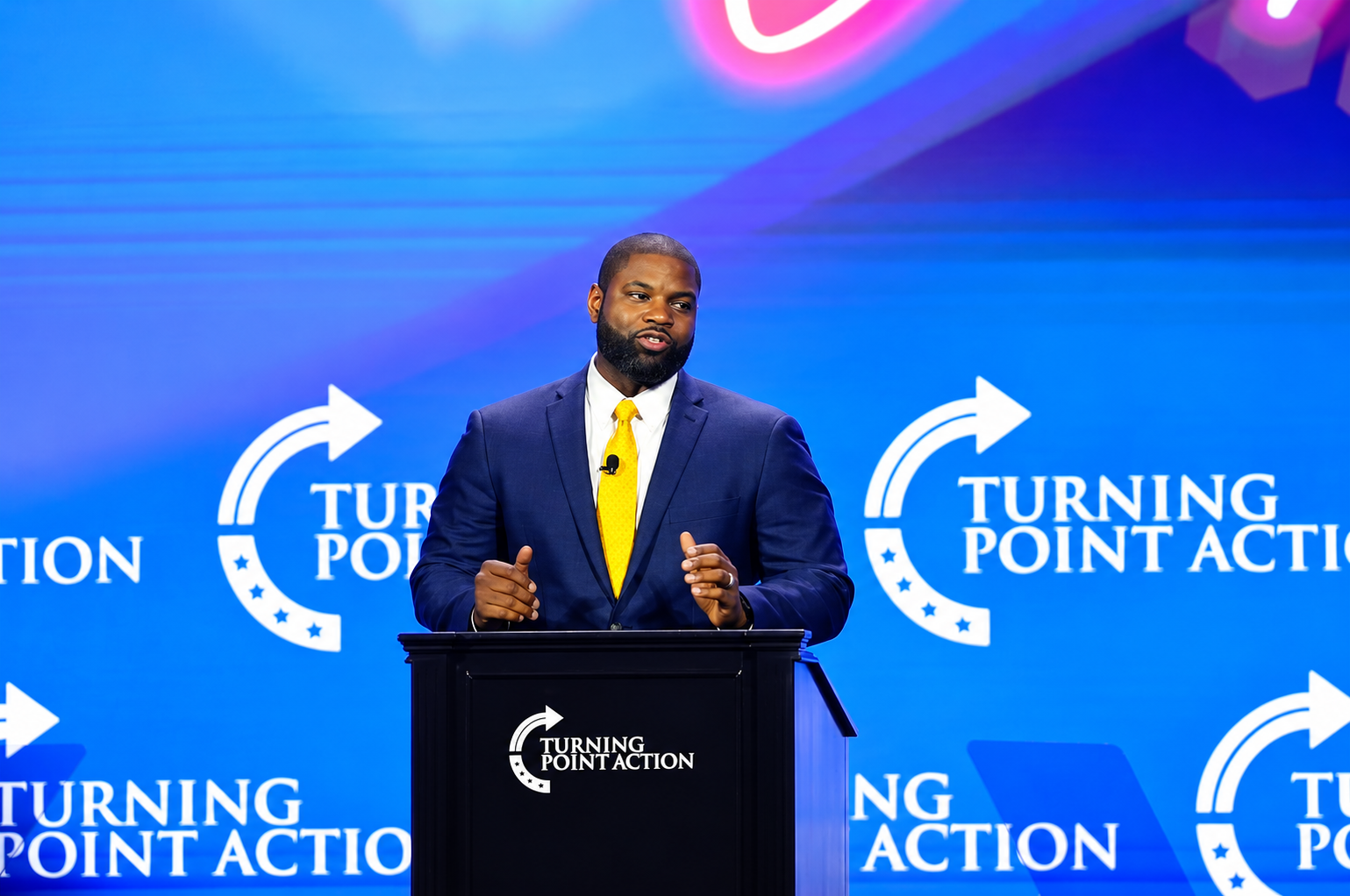
U.S. Rep. Byron Donalds speaks at a Turning Point Action event in Florida. Photo by Roman Garay / Florida National News.
Rally Set for Oct. 23
Trump’s remarks are scheduled to begin at 2 p.m., with doors opening at 10:30 a.m., according to the Republican Party’s event registration page. All times are Eastern.
Gulf Coast News reports that the rally will take place at Alico Arena at Florida Gulf Coast University. However, the official GOP registration page still lists the venue as “To Be Announced.” Attendees should check that page for confirmation and updates.
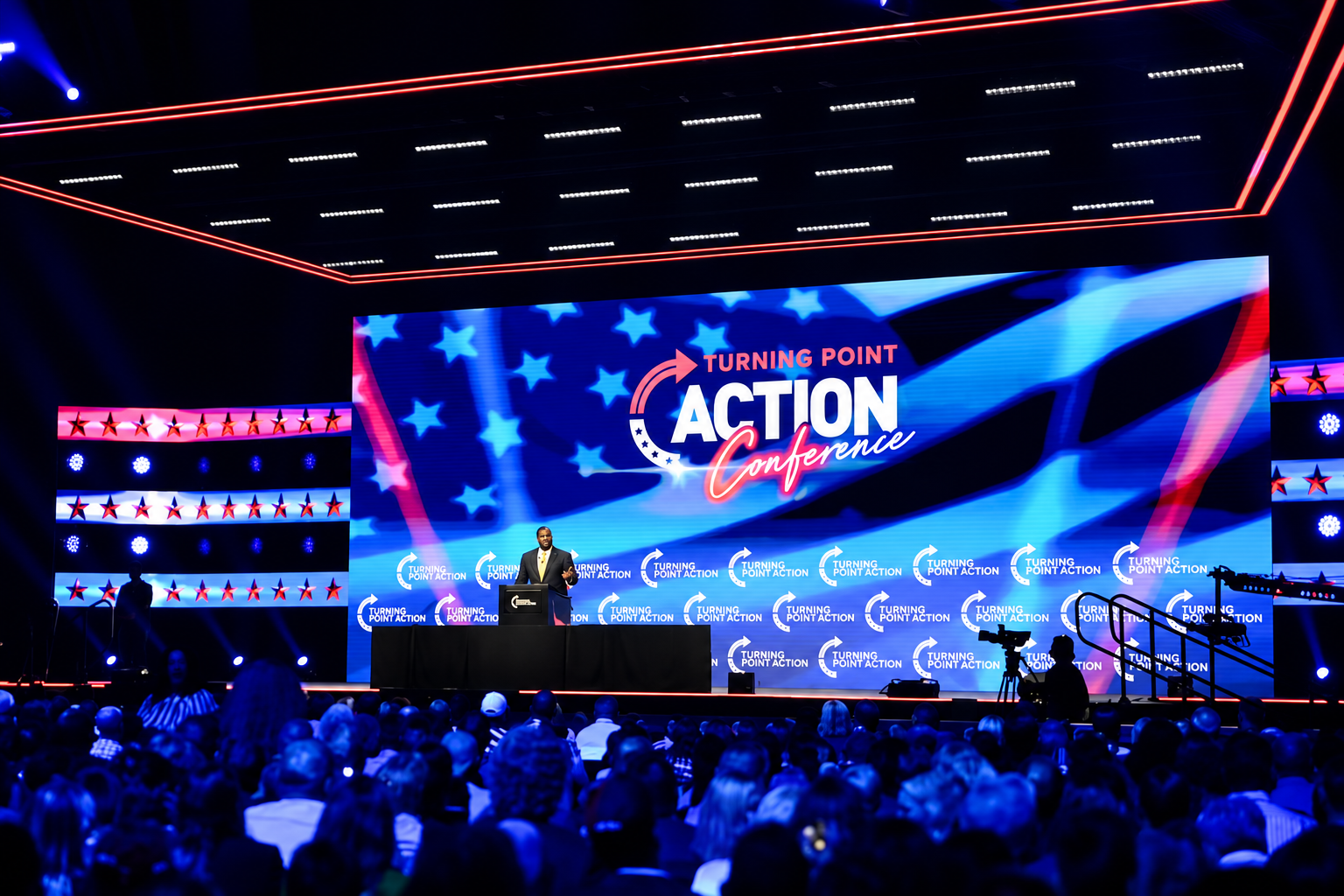
Prominent conservative figures, including Tucker Carlson, then-former President Donald Trump, U.S. Rep. Byron Donalds and Megyn Kelly, rallied Republican voters during the Turning Point Action Conference at the Palm Beach County Convention Center, July 15-16, 2023.
Photo by Roman D. Garay / Florida National News.
Trump’s Endorsement Connects President to Historic Bid
Trump has endorsed Donalds, whose campaign lists the president among its prominent Republican supporters. The Fort Myers visit places Trump in Donalds’ Southwest Florida political base during the closing weeks of the election.
Following his primary victory, Donalds acknowledged Trump’s influence among Republican voters.
“Obviously, he has the strongest following of anybody in our party,” Donalds said, according to Associated Press reporting.
A Donalds victory would give Florida its first Black governor and extend Republican leadership in the governor’s office. Trump’s endorsement connects the president to that potentially historic outcome, although the rally announcement does not identify the event as exclusively supporting Donalds.
Republican Unity and Voter Turnout
Donalds called for Republicans to unite after the primary, telling supporters, “Tonight we are one united Republican Party,” according to the AP.
The Fort Myers rally will provide Trump another platform to address supporters ahead of the Nov. 3 midterm elections. The published event announcement confirms his appearance but does not list additional speakers.
Politics
RNC Chairman Joe Gruters Calls Trump an ‘Absolute Machine’ Ahead of Midterm Elections
Published
1 week agoon
October 17, 2026
WASHINGTON (FNN) — Republican National Committee Chairman Joe Gruters is urging Republicans to focus on voter turnout ahead of the Nov. 3 midterm elections, praising President Donald Trump’s campaign appearances and arguing that the party’s success depends on getting supporters to the polls.
In a Fox News appearance highlighted in an RNC news release, Gruters described Trump as an “absolute machine” and pointed to the president’s rallies as a central part of Republicans’ election strategy.
Gruters: ‘It’s All About Turnout Now’
Gruters expressed confidence in Republican candidates while sharply criticizing their Democratic opponents.
“We have strong candidates; [Democrats] have incredibly weak candidates. It’s all about turnout now. That’s why the president’s going to all these rallies. He’s an absolute machine, getting the job done,” Gruters said, according to the release.
His remarks emphasized voter mobilization as Republicans seek to protect and expand their congressional majorities.
RNC Chairman Highlights Trump’s Policies
Gruters also praised the administration’s policies, particularly its approach to the southern border, presenting those efforts as reasons voters should support Republican candidates.
“This president deserves a lot of credit. He deserves a lot of praise for all these great things that he has done,” he said.
The release included broader claims about border enforcement and drug trafficking but did not provide supporting data. Those statements represent Gruters’ assessment of the administration’s record.
Florida Connection to National GOP Leadership
Gruters, a former chairman of the Republican Party of Florida, now leads the national party’s effort to rally Republican voters. The Florida GOP described him as a longtime Trump ally when announcing his election as RNC chairman.
His national role places a political leader with Florida party experience at the forefront of Republicans’ midterm turnout campaign.
Closing Message: Get Supporters to the Polls
“This race all comes down to turnout,” Gruters said.
He framed the election as a choice about the country’s direction and urged voters to continue supporting Trump and conservative leadership.
“If you believe in the American dream, and you still have hope that you or your children could achieve it, then you’ve got to continue the leadership of the conservative party and this president, Donald J. Trump.”
Business
Dallas Mayor Eric Johnson Listed as Speaker for Global AI, Supply Chain Summit
Published
3 weeks agoon
October 9, 2026
Organizers say the Oct. 26–27 conference will bring together business leaders, policymakers and technology professionals for discussions on global commerce, digital transformation and industry innovation.
DALLAS, TX (FNN) — Dallas Mayor Eric L. Johnson is listed as an invited speaker for the Global Procurement, Supply Chain, AI & Logistics Summit and Global Recognition Awards 2026, scheduled for Oct. 26–27 in Dallas, according to an announcement from the event’s organizer.
The American Association of Procurement, Supply Chain and Tourism Management, known as AAPSCM, said the two-day summit will take place at the AC Hotel & Residence Inn Dallas by the Galleria, 5460 James Temple Drive.
The conference will focus on artificial intelligence, supply chain resilience, innovation and the future of global commerce.
Mayor listed among international speakers
Organizers identified Johnson among the invited speakers joining executives, policymakers, academics, consultants and professionals in procurement, supply chain management, technology and logistics.
The announcement describes participants as coming “from the United States and around the world.”
According to the release, Johnson is listed among speakers participating in the Oct. 27 program. The announcement does not specify the subject or time of his remarks.
AI, forecasting and digital transformation
The second day’s agenda includes a session on artificial intelligence and machine learning in inventory management, forecasting, and sales and operations planning.
An executive leadership session titled “Driving Innovation & Digital Transformation” is scheduled to follow.
The program will examine technology’s role in procurement, logistics and supply chain operations, with an emphasis on how leaders respond to changing business conditions.
Awards to recognize industry achievement
The summit will also include procurement and supply chain awards, followed by Global Excellence Awards recognizing individuals, organizations and industry leaders.
Organizers said the awards program includes more than 35 categories spanning procurement, supply chain management, artificial intelligence and logistics.
The announcement describes the awards as recognizing “achievement, innovation and leadership.”
Executives and decision-makers expected
AAPSCM said it expects attendees to include chief executives, chief procurement officers, chief supply chain officers, chief operating officers and technology leaders.
The anticipated audience also includes procurement directors, logistics professionals, government representatives and specialists in AI and digital transformation.
About the organizer
AAPSCM describes itself as a U.S.-based nonprofit professional organization that supports professional development through certification, education, training, membership, conferences and international collaboration.
Event and registration information
- Event: 2nd Global Procurement, Supply Chain, AI & Logistics Summit & Global Recognition Awards 2026
- Dates: Oct. 26–27, 2026
- Venue: AC Hotel & Residence Inn Dallas by the Galleria
- Address: 5460 James Temple Drive, Dallas, Texas 75240
- Organizer: American Association of Procurement, Supply Chain and Tourism Management
- Registration: aapscm-conferences.org
- Organization: aapscm.org


FNN Newsletter
Trending


 Central Florida News4 days ago
Broadcaster Ray Cruz Santiago Criticizes Samuel Vilchez Santiago With Communist Graphics, Puerto Rican Identity Claims
 Central Florida News5 days ago
Festival of Trees Marks 40 Years With Holiday Displays, Santa Breakfasts and Parties
 Entertainment5 days ago
“4000 Days,” “Frampton” Set for Naples International Film Festival Oct. 24–25
 Business5 days ago
GOAA Highlights Airport Improvements, Approves New Small Business Policies
 Florida5 days ago
Nikki Fried to Challenge Trump’s Economic Record Ahead of Florida Visit


