Politics
Dr. the Right Honourable Keith Mitchell Prime Minister Address to the 62nd Meeting of the OECS Authority Commonwealth of Dominica November 18, 2015
Published
11 years agoon
By
Willie DavidCOMMONWEALTH OF DOMINICA, (FNN NEWS) – Ladies and gentlemen, it is a pleasure to be gathered here in Roseau for our 62nd Meeting of the OECS Authority. While it is always a relaxing experience to visit the “Nature Island”, our presence here over the next several days, marks our support for the Government and the People of the Commonwealth of Dominica at this most testing time in the Country’s development.
Indeed, our Economic Union is committed to harnessing our collective resolve in responding to the devastation caused by Tropical Storm Erica.
As Chairman, being here in Dominica, for the second time in two weeks, underscores the permanent and interconnected relationship which exists among the Members of our Economic Union.
This interdependence is the glue that unifies our common aspirations.
Indeed our co – dependence in this “tight little” Economic Union that is the OECS, is the hidden force that has created among our People this shared sense of destiny from as far back as 1967.
This is why no one can deny that Dominica’s present hurt, pains us all.
Dominica’s recovery is our joint enterprise.
And soon Dominica’s joy will be our joy.
It is fitting that we should place on record our heartfelt thanks to all those ordinary Citizens of our Economic Union, and indeed our CARICOM brothers and sisters, sons and daughters, who have demonstrated their tangible support for Dominica since the devastation.
This 62nd Meeting will give priority to discussions regarding a Strategy for Dominica’s Recovery and for determining a “Proposal for the OECS Future Disaster Responsiveness.”
Colleagues, ladies and gentlemen, our equity in these “global commons”, makes us all joint heirs to global phenomenon be they progressive or destructive.
Colleagues, even while we gather here to deepen our regional relationship, we must pause to remember all those affected by the devastating events in France a few days ago.
History and culture has bequeathed us an enduring relationship with our Francophone heritage, particularly through Members of our Economic Union such as Dominica, St. Lucia and my own Grenada.
Our kinship has been infused with new life through the accession of Martinique to our Economic Union; and from the immense possibilities of further expanded membership to Guadeloupe and St. Martin.
Our undeniable historical, cultural and other ties with our Francophone brothers and sisters, has evoked from deep down within us, a cry of anguish at the brutal attack on Paris.
Our OECS Economic Union therefore, joins with our CARICOM brothers and sisters, in placing on record our condemnation of the premeditated heinous terrorist attacks on Paris on November 13th.
We stand in solidarity with the people of France.
We also extend our prayers to those who lost loved ones on that fateful evening.
While historically, our Caribbean community has always struggled on the side of peace, increasingly; as these new dangers confront us we cannot shirk our historic responsibility. Instead, we will be forced to move to even higher levels of security coordination as we pool our modest resources, in the noble pursuit of peace.
We must remain committed to opposing all forms of terrorism, which threatens this peace and stability of societies around the world.
Ladies and gentlemen, the persistent threats of global terrorism, the challenged fiscal circumstances of virtually all members of our economic union, the persistent ravages of natural disasters, the systemic threats of global warming and climate change, the restlessness of our youth, and the undaunted aspirations of our People for high standards of living, remind us that our OECS Economic Union is the correct response and platform for development.
The Revised Treaty of Basseterre which provides for the Members of our OECS Economic Union to proceed along the integration plane at a faster pace, having regard to our size and intrinsic similarities, is becoming increasingly relevant.
Our OECS Economic Union bolsters CARICOM itself, by demonstrating the tangible benefits of integration. Our OECS Economic Union, by its focus on widening the portfolio of concrete benefits to our citizens, is an indicator of what our CARICOM Citizenship rights could look and feel like, if only Member States of our Community manage to overcome their individual national nuances.
At this our 62nd Meeting we will continue to explore the opportunities to expand the benefits of the OECS Economic Union membership by engaging in further discussions of “Rights Contingent to Free Movement of People.”
It is for this reason that we have worked diligently to advance the long-outstanding matter of the legal recognition of the Revised Treaty of Basseterre in the Revised Treaty of Chaguaramas. In the remaining months which are left of my Chairmanship, I hope we can arrive at consensus on this Protocol as an outcome which would contribute immensely to policy coherence across our CARICOM Community.
There can be no denying the fact that the OECS Economic Union is a highly progressive force in the present regional context.
It is therefore imperative for all of us to encourage and support it.
During my tenure as Chairman and working closely with the OECS Commission, under the competent leadership of the Director General, our Economic Union has continued to register meaningful progress on a number of fronts.
Our governance arrangements, which accord exclusive legislative competence to the Economic Union for monetary policy, civil aviation, maritime jurisdiction, trade policy and common market matters, continue to distinguish us from most integration arrangements among Groups of Countries.
In this respect, we continue to be a beacon for small states globally.
We have evidenced of meaningful progress in our governance arrangements over the last six months. Nearly all our Councils have been activated, and we have benefitted from two important Meetings each, by the Economic Affairs Council and the Legal Affairs Council.
Our governance model provides a forum for Opposition Parties to participate in the progress of work among the Economic Union. It was a privilege for me to have participated in the Opening Ceremony of the Meeting of OECS Opposition Parties several weeks ago, and from the ensuing reports, I understand that it was highly productive engagement.
These times of dynamic change in which we live require Governments to hit the ground running. It is therefore important for Opposition Parties to be well seized of developments in our Economic Union to ensure continuity, where Administrations change consistent with the will of the electorate.
A significant meeting of the Assembly of OECS Parliamentarians was held in Antigua only a few months ago. This is a key institution in our governance framework.
Colleagues, Ladies and gentlemen, the remarkable progress which is being recorded by our Councils for health, education, trade and tourism has contributed to advancing the goals of our OECS Development Strategy in these areas.
Still, there is tremendous scope for us to work even more closely. In the coming months it would add enormous value to our integration effort if we could achieve a well coordinated meeting of OECS Foreign Ministers. Achieving cost efficiency through rationalizing our foreign representations and Missions represents “low hanging fruit”.
Colleagues, we have only begun to taste the benefits of our OECS Economic Union, which has in a relatively short time span, established itself as a model among Small States. But we cannot become complacent, nor must we “bench-mark” ourselves against the inaction of others. We must continue to push the envelope in making our Economic Union even more effective in our decision-making, more coordinated in our strategies and approaches and more strategic in our interventions.
The global challenges which transcend national jurisdictions, enjoin us as OECS Members to the closest possible cooperation. Moreover, it is the only rational response to a global context which takes no cognizance of national sovereignty.
It is for these reasons that we must carefully manage our “national exceptionalism, particularly in areas on which we have entered commitments within the framework of the Revised Treaty of Basseterre.
Colleagues, the integration logic on which our economic union is based offers us a high probability to achieve sustained growth and development, but only if we act, insofar as is possible, as a coordinated sub-group within the framework of CARICOM.
Even then the task for our economic Union is arduous.
Our quest for development can be promising if we remain true to the integration model which has taken us this far. Promising, but undeniably difficult.
Accordingly colleagues, there is an urgent need as we go forward for us to both manage and nuance our differences, so that we remain faithful to the integration fundamentals which underpin this Economic Union.
It is no accident that our Revised Treaty envisages a major role for our foreign policy coordination. The global pressure being exerted on Off-shore financial jurisdictions in the Caribbean, seemingly from all quarters, threatens economic collapse for many. This is particularly true for our non-independent OECS Members.
Colleagues, the “black listing” of our off-shore jurisdictions constitutes one of the most glaring acts of economic discrimination, unleashed on small Caribbean States in recent history.
It is imperative that we should galvanize our efforts in addressing this threat to our vital economic interest. These acts of economic injustice has brought additional pressures on virtually every single OECS economy, but particularly on our non-independent Members such as Anguilla and the BVI. This most perverse and unfair action by a few Developed Countries, if left unresolved will further constrain our development prospects by dampening the economic performance of our non-independent Members, who to their credit and through their own resourcefulness have become largely self financing.
Ladies and gentlemen, I turn my attention to ICT.
The merger of FLOW and Cable and Wireless has caught our Economic Union somewhat behind the regulatory curve. Our Economic Union, and more appropriately our CARICOM Community, does not as yet have the legislation to govern the conduct of mergers and acquisitions. A draft protocol is being developed, and we must ensure that the Protocol and the legislation which will follow support the public interest without itself becoming an impediment to mergers and acquisitions which is an important aspect of building successful OECS businesses of the requisite scale to compete internationally.
Mergers are an inescapable aspect of the operation of free markets, and since our OECS markets are open, other mergers will come and go. What is more important for us as visionaries and custodians of our People’s aspirations is to define the broader vision for the development of our ICT space. We need to make haste in defining key aspects of the ICT Bundle, by determining what elements ought to be regarded as public goods, costs and terms of broadband, and access to other ICT services.
There appears to be enormous scope for pooling resources across Economic Union Members in rationalizing the spend on ICT, in a manner that provides for universal access to educational institutions, communities and to resource poor families.
It is this vision for ICT which has led us in the past six months to be extremely active in sketching the broad contours of an ICT space for the OECS. As Prime Minister with Lead responsibility for ICT in the CARICOM Quasi-Cabinet, we have advanced our work in this sphere, mindful of the need to remain coordinated with the broader CARCIOM vision. Two weeks ago we achieved an important milestone with the hosting of a high level meeting key strategic partners which resulted in a Road Map for ICT Development in the OECS.
We were also accorded observer status on the Governmental Advisory Committee of Internet Corporation for Assigned Names and Numbers (ICANN). We have established a collaborative relationship with the Service Research and Innovation Institute (SRII), a global organization, with a mission “To Drive Innovation for the Digital Economy.
SRII’s focus on:
1. Innovating the Service Economy – with emphasis on Healthcare, Education, Finance, Government Services, Transportation, Commerce, Food Security and Energy
2. Innovating IT-As-A-Service- with a special focus on Cloud Computing, Mobile Services, Security and Social and Data Analytics.
These will be important areas of strategic focus for the OECS, as we seek to entrench ICT as a basis for persons among the OECS Economic Union.
Colleagues, at the 60th Authority Meeting in Martinique, OECS Heads took the Decision to provide for collective financing of the organs and bodies of the Economic Union and other such key integration projects such as the CARICOM-IMPACS.
The time has come for us to give effect to this decision and to make the actual institutional arrangements that would result in the payment of contributions when they are due.
The reality is that our economic union cannot function autonomously.
I am encouraged by the knowledge that there can be no question regarding the tremendous value for money that the OECS Commission Secretariat continues to deliver. Nor can there be any quarrel over the returns on Investment.
My tenure has evidenced every Member engaging in good faith attempts to honor their financial obligations, and this is a very good start. We now need to go the extra mile in having these contributions honored in exactly the same manner and with the same resolve as we do our own commitments at home.
Colleagues Heads, ladies and gentlemen, the road ahead will not be easy. At the sub-regional and regional levels, coordination, cooperation and collective action continue to be our best strategies for our survival. We must continue to be ready to stand in the gap for each other, joined as we are by our common aspirations and a voracious thirst for justice, peace and prosperity.
We must be prepared to manage our national interest in a manner which maintains the unity and cohesion of our economic union. If we remain faithful to these founding principles, our OECS economic union can achieve a greater degree of effective sovereignty, than if we stood alone.
I thank you
You may like
Florida
FIU Becomes First Florida University to Launch CORE Emergency Management Partnership
Published
2 days agoon
August 26, 2026MIAMI, Fla. (FNN) — Florida officials announced the launch of the Coalition for Operational Readiness in Education, or CORE, Program at Florida International University, beginning an initiative designed to strengthen the state’s emergency management workforce through partnerships with colleges, universities and technical and trade schools.
The program will connect higher education institutions with the Florida Division of Emergency Management and other state agencies to provide students with specialized education and training in emergency management.
CORE is also expected to provide opportunities for students to earn industry-recognized certificates and establish pathways to jobs with emergency management offices and private-sector industry partners across Florida.
FIU First to Launch CORE
Florida International University in Miami is the first institution where CORE is being rolled out.
State officials said 11 institutions have committed to participating, with the long-term goal of expanding the initiative to every college, university, technical school and trade school in Florida.
The statewide expansion would create a pipeline of students trained for careers involving disaster preparedness, emergency response and recovery.
Building Florida’s Emergency Management Workforce
Florida’s exposure to hurricanes and other natural disasters has made emergency preparedness and response a major state priority.
Officials said maintaining Florida’s emergency management capabilities requires developing the next generation of professionals who will work before, during and after disasters and other emergencies.
The CORE partnerships are designed to connect classroom education with professional training, certifications and employment opportunities.
Education-to-Employment Pipeline
The program is intended to create a more direct pathway from education to careers in emergency management.
Through partnerships involving state agencies, educational institutions and industry organizations, students could gain specialized training while developing credentials recognized by employers.
The initiative could also help state and local emergency management agencies develop a larger pool of trained candidates as Florida’s population and emergency-response needs continue to grow.
Statewide Expansion Planned
While the program begins at FIU, officials said the broader objective is statewide.
The goal is to eventually establish CORE partnerships throughout Florida’s higher education and workforce-training system, including universities, colleges, technical schools and trade schools.
Florida officials also envision CORE becoming a workforce-development model that other states could replicate.
Key Takeaways
- Program: Coalition for Operational Readiness in Education (CORE)
- Initial launch: Florida International University in Miami
- State partner: Florida Division of Emergency Management and other state agencies
- Participating institutions: 11 institutions have committed so far
- Training: Specialized emergency management education and workforce preparation
- Credentials: Industry-recognized certificates
- Career component: Pathways to emergency management agencies and industry employers
- Long-term goal: Expand CORE to colleges, universities, technical schools and trade schools throughout Florida
- National objective: Develop a Florida workforce model that could be replicated in other states
Florida
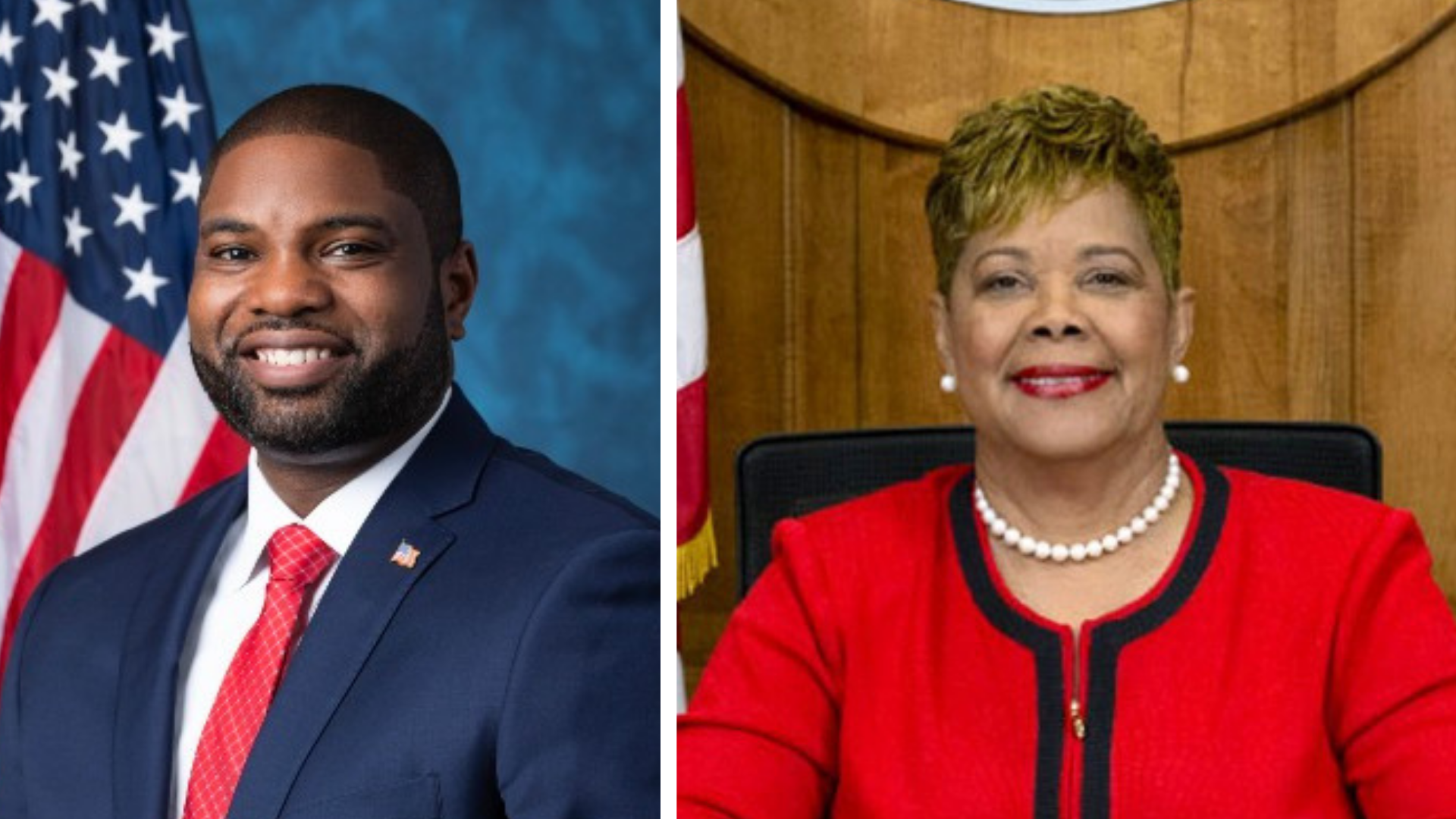
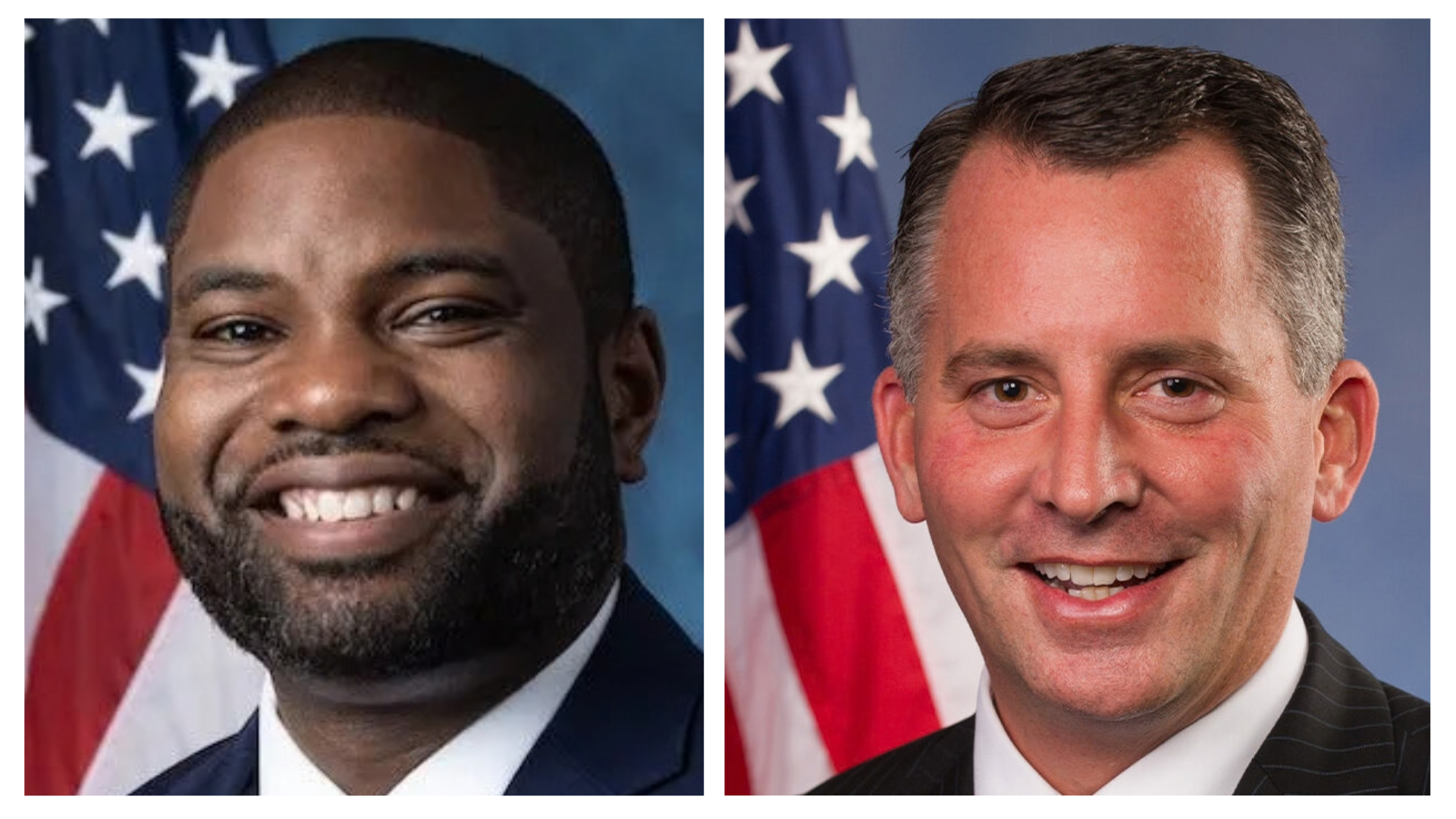
Byron Donalds Selects Miami-Dade Sen. Bryan Avila as Running Mate in Florida Governor’s Race
Published
3 days agoon
August 25, 2026MIAMI, Fla. (FNN) — Republican gubernatorial nominee Byron Donalds selected Florida state Sen. Bryan Avila of Miami-Dade County as his running mate for lieutenant governor, adding a South Florida lawmaker to the GOP ticket for the 2026 general election.
Donalds announced Avila as his choice Tuesday, Aug. 25, at Miami’s historic Freedom Tower, a location closely associated with South Florida’s Cuban exile community.
The selection puts Avila alongside Donalds as Republicans turn their attention to the general election and the race to succeed Gov. Ron DeSantis.
Who Is Bryan Avila?
Avila is a Republican state senator from Miami-Dade County and previously served in the Florida House of Representatives.
His selection gives the Donalds ticket a prominent South Florida presence and adds a lawmaker with experience in both chambers of the Florida Legislature.
The Miami announcement also places immigration, communism, economic opportunity and Florida’s relationship with Latin American communities near the center of the Republican ticket’s general-election messaging.
Road to the General Election
With Avila joining the ticket, Donalds now moves toward the November general election with the Republican nominees for governor and lieutenant governor in place.
The lieutenant governor selection is one of Donalds’ most consequential decisions since securing the Republican nomination, helping define the geographic, political and demographic strategy of his statewide campaign.
Florida
Florida House Democratic Campaign Committee Chair Christine Hunschofsky Faces Lawsuits, Election Complaints
Published
5 days agoon
August 24, 2026Who is next? Lawsuits and Florida election complaints put the incoming House Democratic leader’s oversight of political attacks, campaign spending and tactics against former Democratic lawmakers under scrutiny
ORLANDO, Fla. (FNN) — Incoming Florida House Democratic Leader Christine Hunschofsky, a former Parkland mayor is facing growing scrutiny over campaign tactics by the Florida House Democratic Campaign Committee, the party-affiliated committee she chairs, as former Democratic lawmakers challenge political attacks through lawsuits and Florida election complaints.
The disputes are placing increased scrutiny on Christine Hunschofsky, chair of the Florida House Democratic Campaign Committee, and Cassidy Whitaker, the committee’s caucus director for the 2026 election cycle.
The controversy goes beyond ordinary party infighting, with former Democratic lawmakers alleging that FHDCC used opposition research and campaign communications containing false or misleading information to attack members of its own party.
Those allegations raise questions about the committee’s research, approval process and campaign tactics — and whether House Democratic leaders can rebuild trust with lawmakers targeted by the same political organization they are expected to help lead.
Former Democratic lawmakers are now turning to the courts and Florida’s election complaint process to challenge FHDCC-linked campaign tactics, intensifying scrutiny of the committee’s leadership, spending, opposition research and oversight.
The lawsuits and complaints remain allegations. They do not establish that Hunschofsky, FHDCC or others violated the law.
But the controversy is no longer simply an internal Democratic campaign fight.
FHDCC Faces Real Legal Challenges
State Representative-Elect and former Democratic state Rep. James Bush III sued FHDCC and other defendants in Miami-Dade County over allegedly defamatory election communications.
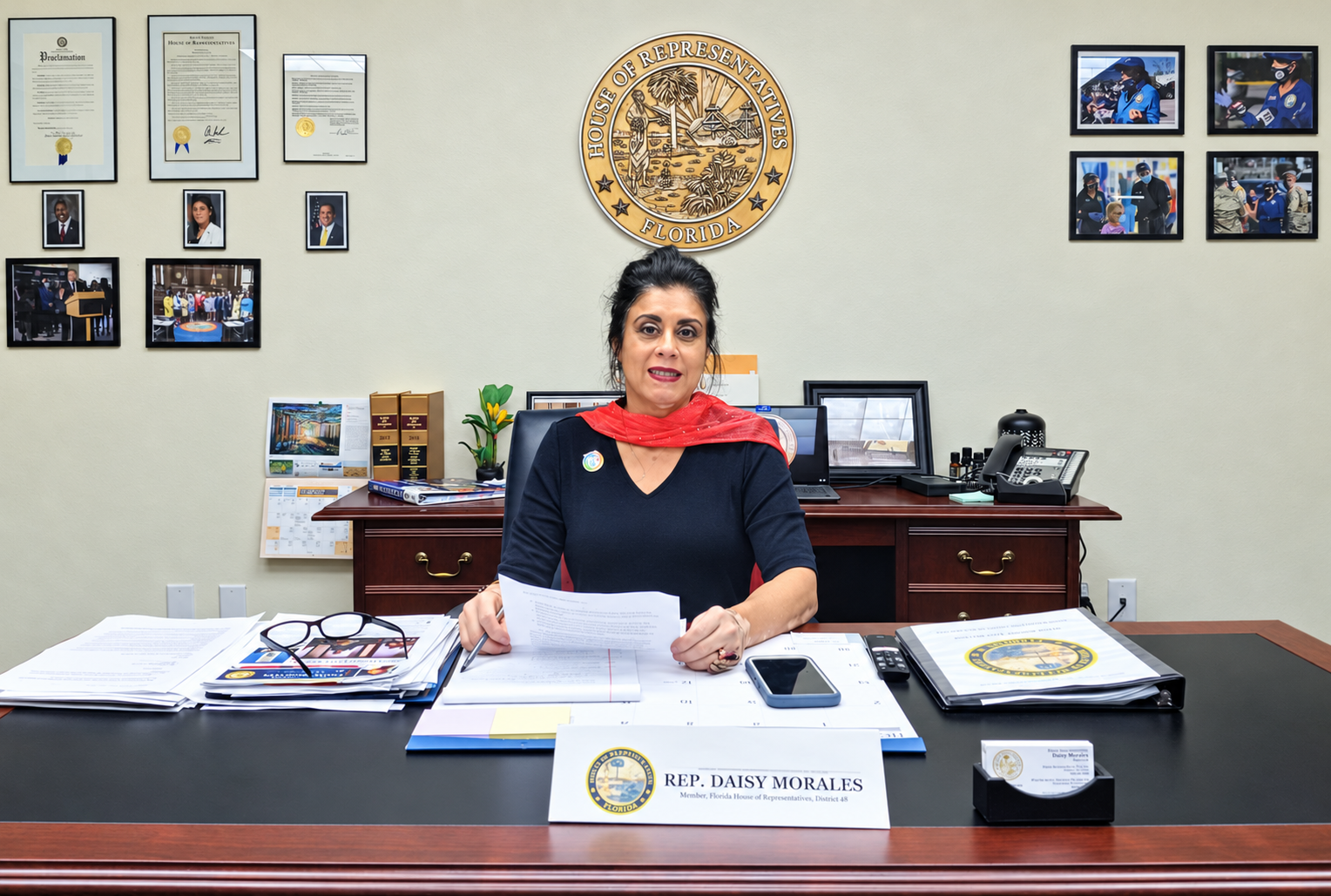
Former Democratic state Rep. Daisy Morales has separately challenged campaign communications involving FHDCC through litigation in Orange County and Florida’s election complaint process.
The cases involve separate elections and allegations and must be decided on their individual evidence.
State Rep.-elect Daphne Campbell, a former state senator and former state representative, told Florida National News in a phone interview that she is considering filing a defamation lawsuit as well.
Together, however, they place FHDCC’s campaign practices under greater scrutiny and create a leadership test for Hunschofsky as she prepares to lead Florida House Democrats.
Hunschofsky’s Leadership Under Scrutiny
Hunschofsky’s position as chair does not automatically make her personally liable for every communication, expenditure or decision made by FHDCC.
But leadership brings accountability for how an organization operates.
Political attack campaigns require research, writing, production, vendors, financing and distribution. FHDCC’s internal structure determines how those activities are authorized and supervised.
That makes Hunschofsky’s authority, knowledge and oversight relevant as the committee responds to legal challenges involving its campaign activity.
The central issue is straightforward: What happened under the FHDCC banner, and what responsibility did its leadership have for it?.
Party Establishment vs. Voters’ Choice
The controversy also exposes a deeper tension between party leadership and voters who expect to choose representatives based on the priorities of their communities.
Political parties can recruit, endorse and financially support candidates.
Voters make the final choice.
Heavy intervention by a party organization in a Democratic primary can create the perception that party leaders are trying to make that choice for voters.
That can damage trust when voters believe local experience, constituent service and understanding of their community matter more than the preferences of party leadership.
Democrats Spending Money Fighting Democrats
The internal battles come as Florida Democrats face a larger electoral challenge.
Republicans hold substantial power in Tallahassee, while Democrats need financial resources to compete for legislative seats and statewide offices.
Money spent attacking Democrats in expensive Democratic primaries cannot simultaneously be spent challenging Republicans.
FHDCC has the right to participate in elections within the law. But intraparty battles followed by lawsuits and election complaints create a political question about whether those resources are advancing the committee’s broader mission of electing Democrats.
Minority Democrats and Party Trust
The disputes also involve former minority Democratic lawmakers.
Bush and Campbell are Black. Morales is Puerto Rican, Hispanic.
That does not establish racial or ethnic discrimination by Hunschofsky or FHDCC.
But former minority Democratic lawmakers turning to courts and election regulators over tactics associated with their own party creates a political challenge for Democrats, who depend heavily on Black and Hispanic voters.
Those voters have the same interest as every Florida voter in accurate campaign information, fair elections and political organizations that follow the rules.
A Political Standard That Should Apply to Both Parties
The controversy also creates an uncomfortable comparison for Democrats who have criticized President Donald Trump’s aggressive treatment of political opponents.
The lawsuits and election complaints do not establish that FHDCC copied Trump’s strategy or adopted a “Trump playbook.”
But they raise a broader question of consistency.
Democrats who demand accountability when Republicans exercise political power aggressively should be prepared to apply the same standards to organizations within their own party.
Republicans should do the same when allegations involve their side.
Fairness cannot depend on which party benefits.
From Political Fight to Legal Process
Negative campaigning and opposition research are legal and receive substantial First Amendment protection.
Political committees, however, remain subject to election laws, campaign-finance requirements and civil law.
A lawsuit does not prove defamation.
FHDCC’s separate argument that it cannot be sued.
An election complaint does not prove an election-law violation.
Neither automatically creates a criminal investigation.
If evidence ultimately supports potential criminal conduct, the appropriate law-enforcement agency or prosecutor — not political parties, candidates or news organizations — determines whether an investigation is warranted.
The principle protects everyone: allegations must be proven, due process must be respected and political influence should not shield proven violations.
Who Is Next?
The growing legal disputes leave FHDCC with a political problem extending beyond Bush, Morales and Campbell.
Who is next on the Florida House Democratic Campaign Committee’s target list?
No Democrat is entitled to immunity from legitimate political criticism simply because that candidate belongs to the party.
But candidates should be able to expect political organizations to play by the rules.
The same principle applies to Republicans.
Political organizations can fight hard, expose legitimate weaknesses and spend money advocating for their candidates.
They still have to follow the law.
Hunschofsky Faces a Leadership Test
Hunschofsky is not watching the controversy from outside the organization.
She chairs the Florida House Democratic Campaign Committee while preparing to lead Florida House Democrats, including minority Democratic lawmakers who were targeted by the committee’s campaign attacks.
The lawsuits and election complaints therefore put FHDCC’s governance, campaign strategy and financial oversight directly within the public debate surrounding her leadership.
The courts will determine the civil allegations before them. Election regulators will determine matters within their jurisdiction. If evidence independently supports potential criminal violations, law-enforcement authorities can determine whether an investigation is warranted.
For Hunschofsky, the leadership test is whether the committee she chairs can defend its campaign practices, account for its spending and maintain the trust of Democratic voters while the allegations move through Florida’s courts and election-enforcement system.
The lawsuits and election complaints remain allegations. They are not findings that Hunschofsky or FHDCC violated the law.
For Florida voters, the standard should be simple:
Play by the rules. Follow the evidence. Apply the law equally.
Florida National News is seeking comment from Hunschofsky and FHDCC regarding the lawsuits, election complaints, campaign spending and committee oversight. FNN will update this report with responses and significant developments.
Trending
Florida5 days agoFlorida House Democratic Campaign Committee Chair Christine Hunschofsky Faces Lawsuits, Election Complaints
Florida2 days agoFIU Becomes First Florida University to Launch CORE Emergency Management Partnership
Sports3 days agoBaker and Emily Mayfield to Host Fourth Annual BE the Ball Event in Tampa
Sports3 days agoThe Clash Returns to Daytona in 2027 as Tickets Go On Sale for NASCAR Season Opener
Florida3 days agoByron Donalds Selects Miami-Dade Sen. Bryan Avila as Running Mate in Florida Governor’s Race