Tech
FTX founder charged in scheme to defraud crypto investors
Published
3 years agoon
NEW YORK (AP) — The U.S. government charged Samuel Bankman-Fried, the founder and former CEO of cryptocurrency exchange FTX, with a host of financial crimes on Tuesday, alleging he intentionally deceived customers and investors to enrich himself and others, while playing a central role in the company’s multibillion-dollar collapse.
Federal prosecutors said Bankman-Fried devised “a scheme and artifice to defraud” FTX’s customers and investors beginning in 2019, the year it was founded. He illegally diverted their money to cover expenses, debts and risky trades at the crypto hedge fund he started in 2017, Alameda Research, and to make lavish real estate purchases and large political donations, prosecutors said in a 13-page indictment.
Bankman-Fried, 30, was arrested Monday in the Bahamas at the request of the U.S. government, and remains in custody after being denied bail.
He has been charged with eight criminal violations, ranging from wire fraud to money laundering to conspiracy to commit fraud. If convicted of all the charges, Bankman-Fried — referred to by crypto enthusiasts as “SBF” — could face decades in jail.
At a news conference on Tuesday, U.S. Attorney Damian Williams in New York called it “one of the biggest frauds in American history,” and said the investigation is ongoing and fast-moving.
Bankman-Fried has fallen hard and fast from the top of the cryptocurrency industry he helped to evangelize. FTX filed for bankruptcy on Nov. 11, when it ran out of money after the cryptocurrency equivalent of a bank run.
Before the bankruptcy, he was considered by many in Washington and on Wall Street as a wunderkind of digital currencies, someone who could help take them mainstream, in part by working with policymakers to bring more oversight and trust to the industry.
Bankman-Fried had been worth tens of billions of dollars — at least on paper — and was able to attract celebrities like Tom Brady or former politicians like Tony Blair and Bill Clinton to his conferences at luxury resorts in the Bahamas. One prominent Silicon Valley firm, Sequoia Capital, invested hundreds of millions of dollars in FTX.
Sporting shorts and t-shirts to contrast himself with the buttoned-down world of Wall Street, he was the subject of fawning media profiles, a vocal advocate for a type of charitable giving known as “effective altruism,” and garnered millions of Twitter followers.
But since FTX’s implosion, Bankman-Fried and his company have been likened to other disgraced financiers and companies, such as Bernie Madoff and Enron.
The criminal indictment against Bankman-Fried and “others” at FTX is on top of civil charges announced Tuesday by the Securities and Exchange Commission and the Commodity Futures Trading Commission. The SEC alleges Bankman-Fried defrauded FTX customers by making loans to himself and other FTX executives, and illegally using investors’ money to buy real estate for himself and his family.
No other FTX executives were named in the indictment, nor was the CEO of Alameda Research, Caroline Ellison. Also not named in the indictment: Bankman-Fried’s father, Joseph Bankman, a Stanford University law professor who was considered an adviser to his son.
U.S. authorities said they will try to claw back any of Bankman-Fried’s financial gains from the alleged scheme.
A lawyer for Bankman-Fried, Mark S. Cohen, said Tuesday he is “reviewing the charges with his legal team and considering all of his legal options.”
At a congressional hearing Tuesday that was scheduled before Bankman-Fried’s arrest, the new CEO brought in to steer FTX through its bankruptcy proceedings leveled harsh criticism. He said there was scant oversight of customers’ money and “very few rules” about how their funds could be used.
John Ray III told members of the House Financial Services Committee that the collapse of FTX, resulting in the loss of more than $7 billion, was the culmination of months, or even years, of bad decisions and poor financial controls.
“This is not something that happened overnight or in a context of a week,” he said.
He added: “This is just plain, old-fashioned embezzlement, taking money from others and using it for your own purposes.”
Before his arrest, Bankman-Fried had been holed up in his luxury compound in the Bahamas. U.S. authorities are expected to request his extradition to the U.S.
Bankman-Fried was denied bail at a court hearing in the Bahamas on Tuesday after prosecutors argued he was a flight risk, according to Our News, a broadcast news company based there. He will remain in custody at the Bahamas department of corrections until Feb. 8, Our News reported.
Bankman-Fried’s was previously one of the world’s wealthiest people on paper; at one point his net worth reached $26.5 billion, according to Forbes. He was a prominent personality in Washington, donating millions of dollars to Democrats and Republicans. U.S. Attorney Williams said Tuesday that Bankman-Fried made “tens of millions of dollars” in illegal campaign donations.
His wealth unraveled quickly last month, when reports called into question the strength of FTX’s balance sheet. As customers sought to withdraw billions of dollars, FTX could not satisfy the requests: their money was gone.
“We allege that Sam Bankman-Fried built a house of cards on a foundation of deception while telling investors that it was one of the safest buildings in crypto,” said SEC Chair Gary Gensler.
The SEC complaint alleges that Bankman-Fried had raised more than $1.8 billion from investors since May 2019 by promoting FTX as a safe, responsible platform for trading crypto assets.
Instead, the complaint says, Bankman-Fried diverted customers’ funds to Alameda Research without telling them.
“He then used Alameda as his personal piggy bank to buy luxury condominiums, support political campaigns, and make private investments, among other uses,” the complaint reads.
In the weeks after FTX’s collapse, but before his arrest, Bankman-Fried gave interviews to several news organizations in which he grasped for ways to explain what happened.
For example, Bankman-Fried said he did not “knowingly” misuse customers’ funds, and that he believes angry customers will eventually get their money back.
At Tuesday’s congressional hearing, the new FTX CEO bluntly disputed those assertions: “We will never get all these assets back,” Ray said.
Jack Sharman, an attorney at Lightfoot, Franklin & White, said Bankman-Fried’s recent comments to the media could be damaging, admissible evidence in court. “Those statements in that speaking tour were in no way helpful to his cause,” Sharman said.
In its complaint, the SEC challenged Bankman-Fried’s recent statements that FTX and its customers were victims of a sudden market collapse that overwhelmed safeguards that had been in place.
“FTX operated behind a veneer of legitimacy,” said Gurbir Grewal, director of the SEC’s enforcement division. “That veneer wasn’t just thin, it was fraudulent.”
The collapse of FTX — which followed other cryptocurrency debacles earlier this year — is adding urgency to efforts to regulate the industry.
Yesha Yadav, a law professor at Vanderbilt University who specializes in financial and securities regulation, said U.S. lawmakers and regulators have been too slow to act, but that is likely to change.
“Lawmakers are clearly under pressure to do something, given that so many people have lost their money,” she said.
Tech
NASA Rolls Out Massive SLS Rocket Stage for Artemis III Mission to Kennedy Space Center
Published
5 days agoon
April 13, 2026By
Willie DavidNEW ORLEANS (FNN) — NASA will roll out the largest section of its Space Launch System rocket on Monday, April 20, marking a major milestone for the Artemis III mission.
The section, representing the top four-fifths of the SLS core stage, is being moved from NASA’s Michoud Assembly Facility in New Orleans. It includes the liquid hydrogen tank, liquid oxygen tank, intertank and forward skirt. The structure will be loaded onto NASA’s Pegasus barge for transport to Kennedy Space Center in Florida.
CORE STAGE DELIVERY AND INTEGRATION
Once the core stage arrives at Kennedy Space Center, teams will complete final outfitting and vertical integration. The hardware will then be transferred to NASA’s Exploration Ground Systems Program for stacking and launch preparation.
The Artemis III engine section and boat-tail, which protects the engines during launch, were previously moved to the Vehicle Assembly Building in July 2025. The four RS-25 engines are scheduled to arrive from Stennis Space Center in Mississippi no later than July 2026 for integration.
POWERING THE ARTEMIS III MISSION
Equipped with four RS-25 engines, the SLS core stage will generate more than 2 million pounds of thrust, enabling the launch of astronauts aboard the Orion spacecraft.
Artemis III is currently targeted for launch in 2027, following the successful Artemis II mission, which completed a crewed flight around the Moon on April 10.
NASA’S MOON-TO-MARS STRATEGY
The Artemis III mission is part of NASA’s broader Artemis program, aimed at returning astronauts to the Moon and establishing a sustained human presence.
The mission will test critical capabilities, including rendezvous and docking between the Orion spacecraft and commercial systems needed for future lunar landings, currently planned for 2028.
NASA is working in partnership with Boeing, the SLS core stage lead contractor, and L3Harris Technologies, the lead contractor for the RS-25 engines. The core stage remains the backbone of the SLS rocket and is manufactured at the Michoud Assembly Facilit
Tech
NASA’s Artemis II Astronauts Begin Historic Journey Around the Moon After Key Orion Engine Burn
Published
2 weeks agoon
April 3, 2026By
Willie DavidCAPE CANAVERAL, Fla. (FNN) — For the first time in more than 50 years, astronauts on a NASA mission are headed around the Moon after successfully completing a critical burn of the Orion spacecraft’s main engine.
The approximately six-minute firing of Orion’s service module engine Thursday — known as the translunar injection burn — accelerated the spacecraft and its crew beyond Earth’s orbit, placing them on a trajectory toward the Moon.
Aboard the spacecraft are NASA astronauts Reid Wiseman, Victor Glover and Christina Koch, along with Canadian Space Agency astronaut Jeremy Hansen.
“Today, for the first time since Apollo 17 in 1972, humans have departed Earth orbit,” said Dr. Lori Glaze, acting associate administrator for NASA’s Exploration Systems Development Mission Directorate. “Reid, Victor, Christina and Jeremy now are on a precise trajectory toward the Moon. Orion is operating with crew for the first time in space, and we are gathering critical data and learning from each step.”
NASA’s Space Launch System rocket and Orion spacecraft lifted off from Launch Pad 39B at Kennedy Space Center at 6:35 p.m. EDT on April 1, beginning a planned 10-day test mission around the Moon and back.
Successful Launch and Spacecraft Activation
Shortly after reaching space, Orion deployed its four solar array wings, allowing the spacecraft to generate power from the Sun. The crew and mission controllers then began transitioning the spacecraft from launch to normal flight operations while checking critical onboard systems.
About 49 minutes into the flight, the rocket’s upper stage fired to place Orion into an elliptical orbit around Earth. A second burn propelled the spacecraft — named “Integrity” by the crew — into a high Earth orbit extending roughly 46,000 miles above the planet for nearly 24 hours of system testing.
Following the maneuver, Orion separated from the upper stage and began flying independently.
System Tests and Crew Operations in Space
During the early phase of the mission, the astronauts conducted a manual piloting demonstration to evaluate Orion’s handling capabilities using the Interim Cryogenic Propulsion Stage as a docking target.
After the test, Orion executed an automated departure burn to safely move away from the stage. The propulsion stage later performed a disposal burn before re-entering Earth’s atmosphere over a remote area of the Pacific Ocean.
Before its re-entry, four small CubeSats were deployed from the rocket’s Orion stage adapter to conduct separate scientific missions.
Mission teams also transitioned communications to NASA’s Deep Space Network while the crew adjusted to the space environment. Astronauts completed their first rest periods, performed onboard exercise routines, restored the spacecraft’s toilet to normal operations and prepared the spacecraft for the translunar injection burn.
Lunar Flyby and Artemis Program Goals
The crew is scheduled to conduct a lunar flyby Monday, April 6, when astronauts will capture high-resolution images and make observations of the Moon’s surface — including portions of the lunar far side rarely seen directly by humans.
Although the far side will only be partially illuminated during the flyby, the lighting conditions are expected to cast long shadows across the terrain, highlighting ridges, slopes and crater rims that are difficult to observe under full sunlight.
After completing the flyby, the astronauts will return to Earth and splash down in the Pacific Ocean off the coast of San Diego.
The mission marks a major milestone for NASA’s Artemis program, which aims to send astronauts on increasingly ambitious missions to explore the Moon, advance scientific discovery, stimulate economic growth and prepare for the first crewed missions to Mars.
Florida
VIDEO: NASA Artemis II Mission Sends Astronauts Around the Moon in First Crewed Test Since Apollo
Published
2 weeks agoon
April 1, 2026By
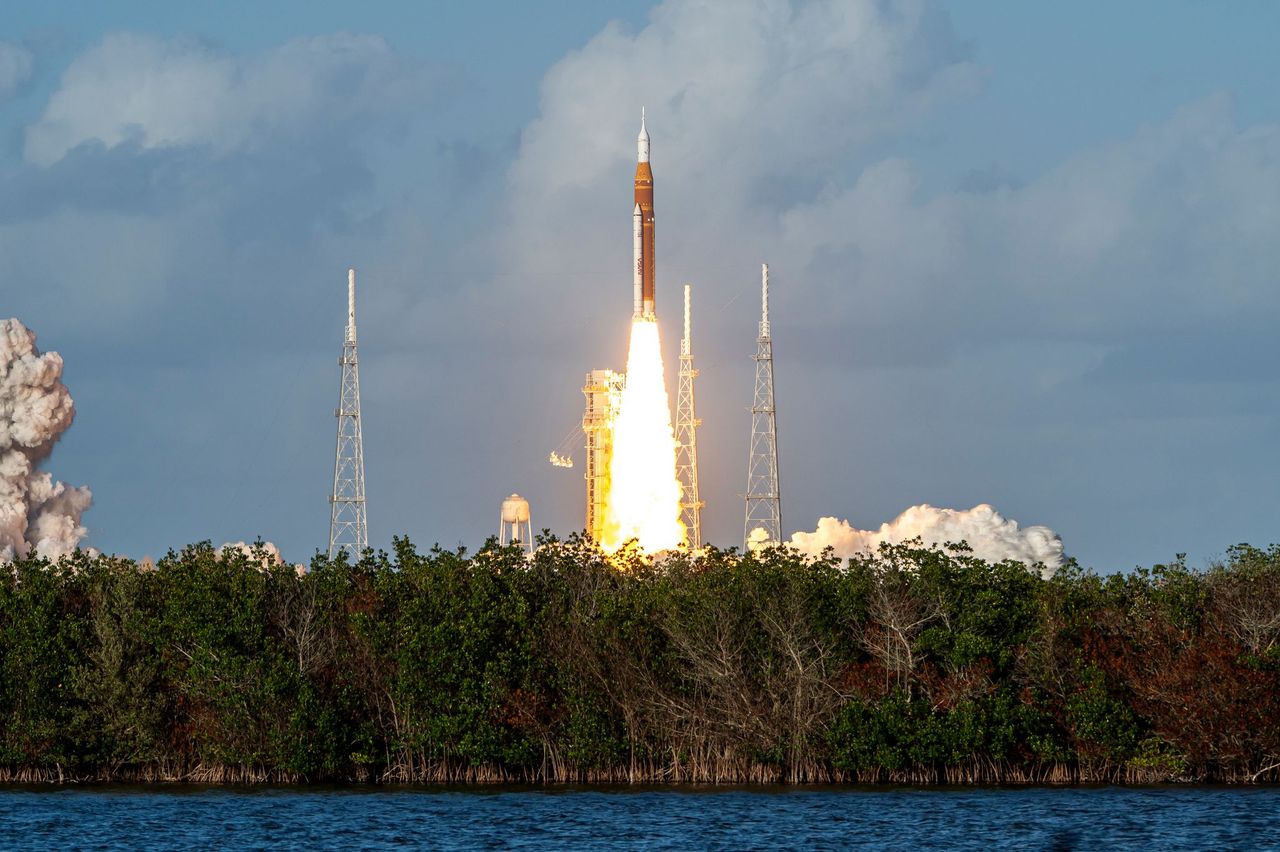
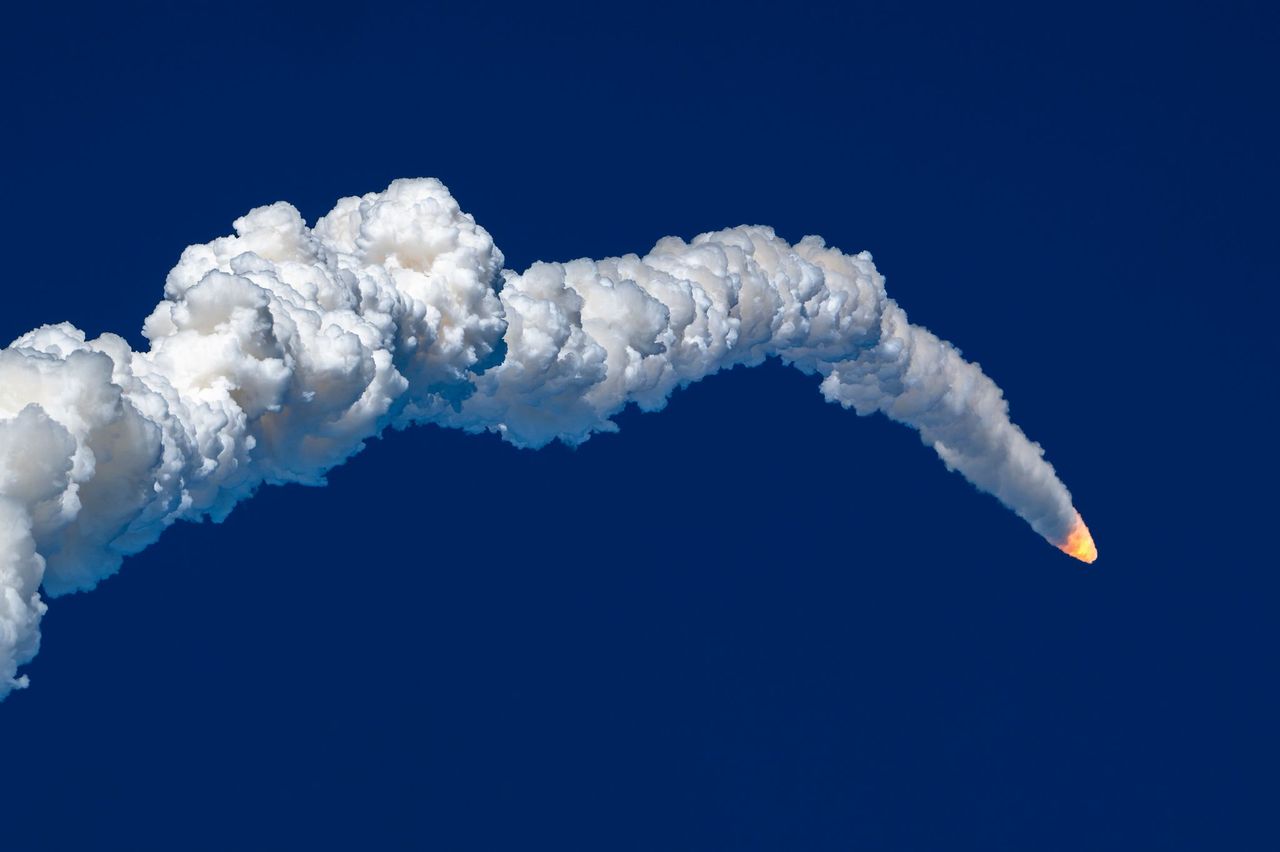
Willie DavidThe Artemis II crewed lunar mission launches from Kennedy Space Center on April 1, 2026. Four astronauts blasted off aboard a massive NASA rocket on a long-anticipated journey around the Moon—marking the first crewed lunar flyby in more than 50 years. Photo by Nickolas Wolf / Florida National News.
Historic Return to Deep Space Artemis II is the first crewed mission in NASA’s Artemis program, designed to return humans to the Moon and eventually establish a sustainable presence there. The flight follows the successful uncrewed test mission, Artemis I, which demonstrated the Orion spacecraft’s ability to travel to lunar orbit and return to Earth. The Artemis program represents NASA’s long-term strategy to explore deep space, including preparing astronauts for future missions to Mars. Astronaut Crew to Circle the Moon
The Artemis II crew includes four astronauts selected to test Orion’s life-support systems and navigation capabilities during the mission.
The Artemis II crewed lunar mission launches from Kennedy Space Center on April 1, 2026. Four astronauts blasted off aboard a massive NASA rocket on a long-anticipated journey around the Moon—marking the first crewed lunar flyby in more than 50 years.
Photo by Nickolas Wolf / Florida National News.
Their journey will take them thousands of miles beyond the Moon before returning to Earth. The mission will also demonstrate critical technologies needed for future lunar landings planned under upcoming Artemis missions.
Florida’s Space Coast in the Global Spotlight The launch is expected to draw thousands of spectators to Florida’s Space Coast, including viewers gathering along beaches in Cocoa Beach and nearby communities to witness the historic liftoff.
Trending
Central Florida News4 days agoNick Nesta Wins Apopka Mayor Runoff in Landslide, Defeats Christine Moore
Florida4 days agoDavid Jolly Campaign Tops $5 Million in Fundraising, Gains Momentum in Florida Governor’s Race
Central Florida News4 days agoMaribel Gomez Cordero, Rick Singh and Emily Bonilla File for Orange County Clerk of Courts Race
Entertainment3 days ago160+ Bands, 5 Stages: Welcome To Rockville Returns to Daytona International Speedway May 7–10 with Expanded Fan Experience
Politics2 days agoGov. Ron DeSantis Orders Flags at Half-Staff for Slain Coral Springs Vice Mayor Nancy M. Metayer Bowen