

US NATIONAL NEWS
NASA Names Winners of 2023 Student Rocket Launch Competition


NASA announced Tuesday the University of Alabama in Huntsville is the overall winner of the agency’s 2023 Student Launch challenge.
More than 800 students from across the U.S. and Puerto Rico launched high-powered, amateur rockets April 15, near NASA’s Marshall Space Flight Center in Huntsville, Alabama, as part of the culminating event for the agency’s annual Student Launch challenge.
For nine months prior, teams of middle school, high school, college, and university students were tasked to design, build, and launch a rocket and scientific payload to an altitude between 4,000 and 6,000 feet, while making a successful landing and executing a scientific or engineering payload mission.
“Our students share unique perspectives and design innovative technologies to address real-world difficulties of space exploration,” said Kevin McGhaw, director of NASA’s Office of STEM Engagement – Southeast Region. “As NASA celebrates its 23rd year of Student Launch, we are proud to help develop the next generation of skilled engineers and explorers capable of supporting NASA’s Artemis missions.”
The complete list of award winners are as follows:
 Students from the University of North Carolina at Charlotte, carry their rocket to the launch pad during NASA’s 2023 Student Launch competition near NASA’s Marshall Space Flight Center in Huntsville, Alabama, April 15.
Credits: NASA/Charles Beason |
2023 Overall Winners
- First place: University of Alabama in Huntsville
- Second place: University of North Carolina at Charlotte
- Third place: Vanderbilt University, Nashville, Tennessee
3D Printing Award:
College Level:
- First place: Iowa State University, Ames, Iowa
Middle/High School Level:
- First place: East Aurora High School, East Aurora, New York
Altitude Award:
College Level:
- First place: Vanderbilt University, Nashville, Tennessee
- Second place: University of North Carolina at Charlotte
- Third place: University of Alabama in Huntsville
Middle/High School Level:
- First place: Spring Grove Area High School, Spring Grove, Pennsylvania
- Second place: Camas High School, Camas, Washington
- Third place: MATHmania Robotics, Mission Viejo, California
Best-Looking Rocket Award:
College Level:
- First place: North Carolina State University, Raleigh
- Second place: Virginia Polytechnic Institute and State University, Blacksburg
- Third place: Auburn University, Alabama
Middle/High School Level:
- First place: Cedar Falls High School, Iowa
- Second place: Yamhill Carlton High School, Yamhill, Oregon
- Third place: Boy Scouts Troop 17, Charlottesville, Virginia
American Institute of Aeronautics and Astronautics Reusable Launch Vehicle Innovative Payload Award:
College Level:
- First place: University of Alabama in Huntsville
- Second place: Washington University in St. Louis
- Third place: University of North Carolina at Charlotte
Judges’ Choice Award:
Middle/High School Level:
- First place: Cedar Falls High School, Cedar Falls, Iowa
- Second place: Seabrook Intermediate School, Seabrook, Texas
- Third place: MATHmania Robotics, Mission Viejo, California
Project Review Award:
College Level:
- First place: University of North Carolina at Charlotte
- Second place: Vanderbilt University, Nashville, Tennessee
- Third place: University of Notre Dame, Indiana
AIAA Reusable Launch Vehicle Award:
College Level:
- First place: New York University, New York
- Second place: Washington University in St. Louis
- Third place: University of Alabama in Huntsville
AIAA Rookie Award:
College Level:
- First place: United States Military Academy, West Point, New York
- Second place: Angelo State University, San Angelo, Texas
- Third place: University of Central Florida, Orlando
Safety Award:
College Level:
- First place: University of North Carolina at Charlotte
- Second place: University of Alabama in Huntsville
- Third place: University of Notre Dame, Indiana
Social Media Award:
College Level:
- First place: University of Puerto Rico, Mayaguez Campus
- Second place: North Carolina State University, Raleigh
- Third place: University of North Carolina at Charlotte
Middle/High School Level:
- First place: Morris County 4-H Rocketry Club, Morris County, New Jersey
- Second place: East Aurora High School, East Aurora, New York
- Third place: Boy Scouts Troop 17, Charlottesville, Virginia
STEM Engagement Award:
College Level:
- First place: Vanderbilt University, Nashville, Tennessee
- Second place: University of Notre Dame, Indiana
- Third place: University of Alabama in Huntsville
Middle/High School Level:
- First place: Cedar Falls High School, Cedar Falls, Iowa
- Second place: MATHmania Robotics, Mission Viejo, California
- Third place: Camas High School, Camas, Washington
Service Academy Award:
- First place: The U.S. Military Academy at West Point, New York
Vehicle Design Award:
Middle/High School Level:
- First place: Yamhill Carlton Rocketry, Yamhill, Oregon
- Second place: Spring Grove Area High School, Spring Grove, Pennsylvania
- Third place: Cedar Falls High School, Cedar Falls, Iowa
Payload Design Award:
Middle/High School Level:
- First place: Portland Rocketry, Portland, Oregon
- Second place: Yamhill Carlton Rocketry, Yamhill, Oregon
- Third place: Seabrook Intermediate School, Seabrook, Texas
 Students from New York University, in the Bronx, showcase their rocket during NASA’s annual Rocket Fair April 13, near NASA’s Marshall Space Flight Center in Huntsville, Alabama.
Credits: NASA/Charles Beason |
Student Launch is one of NASA’s nine Artemis Student Challenges, activities which connect student ingenuity with NASA’s work returning to the Moon under Artemis in preparation for human exploration of Mars.
“Students are required to meet complex requirements and high expectations, literally,” said Fred Kepner, an education program specialist and activity lead for Student Launch at Marshall. “Student Launch is an authentic learning experience – one offering students experience working through the same processes NASA and our partners use for safety and quality control of space missions.”
Marshall hosts Student Launch with management support provided by NASA’s Office of STEM Engagement – Southeast Region. Funding is provided, in part, by NASA’s Space Operations Mission Directorate and NASA’s Next Gen STEM project. Additional support is provided by Northrup Grumman, National Space Club Huntsville, American Institute of Aeronautics and Astronautics, National Association of Rocketry, Relativity Space, Bastion Technologies, and Siemens Digital Industries Software.
Replays of this launch event and award ceremony are available on NASA’s Marshall YouTube and the Student Launch Facebook page.


FORT MYERS, Fla. (FNN) — President Donald Trump is scheduled to hold a midterm rally in Fort Myers on Friday, Oct. 23, bringing his campaign efforts to the congressional district represented by his endorsed candidate for Florida governor, U.S. Rep. Byron Donalds.
Donalds, the Republican nominee, faces Democrat David Jolly in the Nov. 3 election. If elected, Donalds would become Florida’s first Black governor, succeeding term-limited Republican Gov. Ron DeSantis.
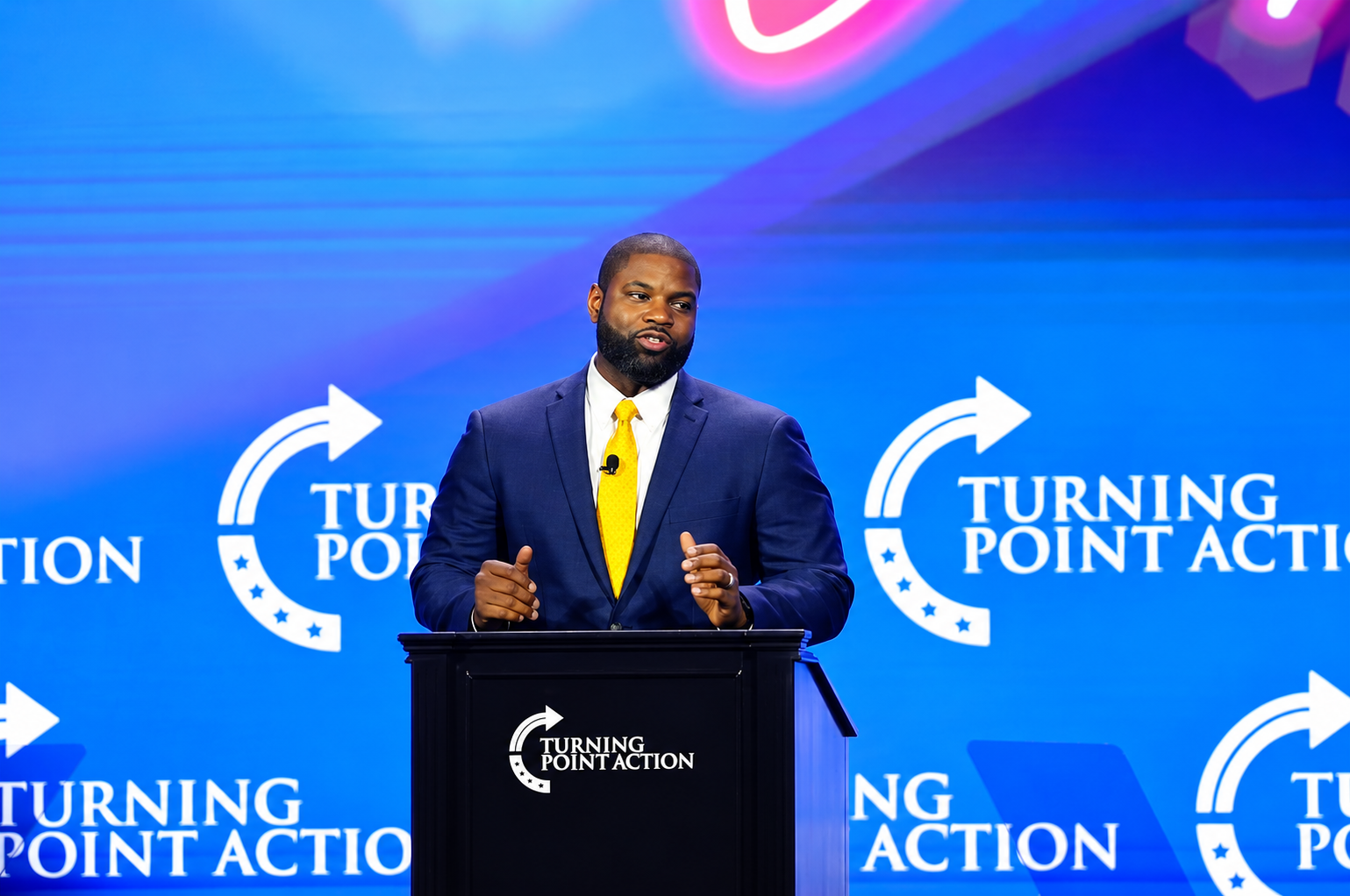
U.S. Rep. Byron Donalds speaks at a Turning Point Action event in Florida. Photo by Roman Garay / Florida National News.
Rally Set for Oct. 23
Trump’s remarks are scheduled to begin at 2 p.m., with doors opening at 10:30 a.m., according to the Republican Party’s event registration page. All times are Eastern.
Gulf Coast News reports that the rally will take place at Alico Arena at Florida Gulf Coast University. However, the official GOP registration page still lists the venue as “To Be Announced.” Attendees should check that page for confirmation and updates.
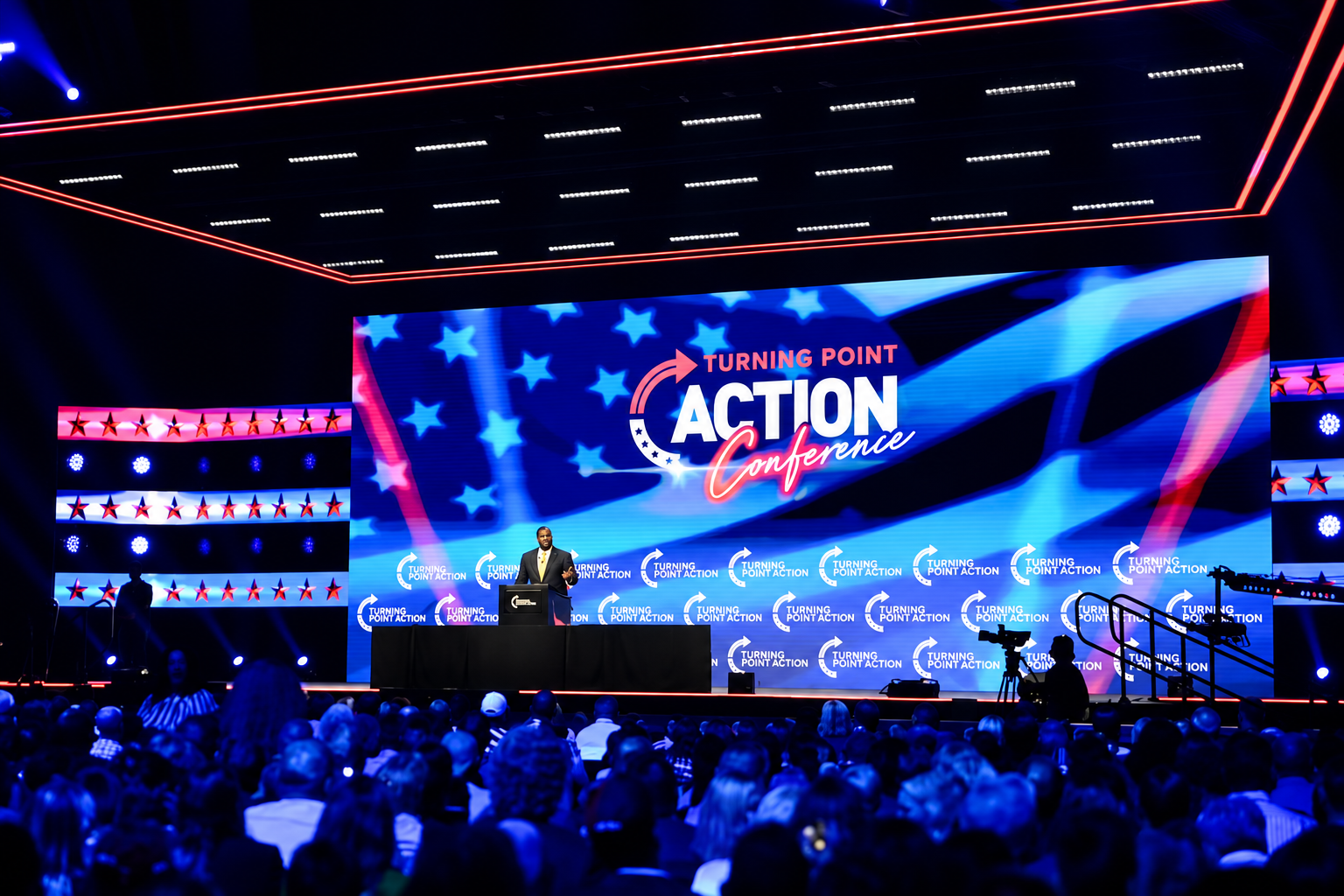
Prominent conservative figures, including Tucker Carlson, then-former President Donald Trump, U.S. Rep. Byron Donalds and Megyn Kelly, rallied Republican voters during the Turning Point Action Conference at the Palm Beach County Convention Center, July 15-16, 2023.
Photo by Roman D. Garay / Florida National News.
Trump’s Endorsement Connects President to Historic Bid
Trump has endorsed Donalds, whose campaign lists the president among its prominent Republican supporters. The Fort Myers visit places Trump in Donalds’ Southwest Florida political base during the closing weeks of the election.
Following his primary victory, Donalds acknowledged Trump’s influence among Republican voters.
“Obviously, he has the strongest following of anybody in our party,” Donalds said, according to Associated Press reporting.
A Donalds victory would give Florida its first Black governor and extend Republican leadership in the governor’s office. Trump’s endorsement connects the president to that potentially historic outcome, although the rally announcement does not identify the event as exclusively supporting Donalds.
Republican Unity and Voter Turnout
Donalds called for Republicans to unite after the primary, telling supporters, “Tonight we are one united Republican Party,” according to the AP.
The Fort Myers rally will provide Trump another platform to address supporters ahead of the Nov. 3 midterm elections. The published event announcement confirms his appearance but does not list additional speakers.


 Central Florida News4 days ago
Broadcaster Ray Cruz Santiago Criticizes Samuel Vilchez Santiago With Communist Graphics, Puerto Rican Identity Claims
 Central Florida News5 days ago
Festival of Trees Marks 40 Years With Holiday Displays, Santa Breakfasts and Parties
 Entertainment5 days ago
“4000 Days,” “Frampton” Set for Naples International Film Festival Oct. 24–25
 Business5 days ago
GOAA Highlights Airport Improvements, Approves New Small Business Policies
 Florida5 days ago
Nikki Fried to Challenge Trump’s Economic Record Ahead of Florida Visit


