Connect with us

Politics

North Korea said to be rebuilding structures at rocket site

Published

on

SEOUL, South Korea (AP) — North Korea is restoring facilities at a long-range rocket launch site that it dismantled last year as part of disarmament steps, according to foreign experts and a South Korean lawmaker who was briefed by Seoul’s spy service.

The finding follows a high-stakes nuclear summit last week between North Korean leader Kim Jong Un and U.S. President Donald Trump that ended without any agreement.

South Korea’s National Intelligence Service provided the assessment about the North’s Tongchang-ri launch site to lawmakers during a private briefing Tuesday. North Korea didn’t immediately respond in its state media.

An article from 38 North, a website specializing in North Korea studies, cited commercial satellite imagery as indicating that efforts to rebuild some structures at the site started sometime between Feb. 16 and March 2.

Dismantling parts of its long-range rocket launch facility was among several steps the North took last year when it entered nuclear talks with the United States and South Korea. North Korea has carried out satellite launches at the site in recent years, resulting in U.N. sanctions over expert claims that they were disguised tests of banned missile technology.

It wasn’t immediately clear how the report might affect nuclear diplomacy. The Trump-Kim summit fell apart because of differences over how much sanction relief North Korea could win in return for closing its aging main nuclear complex. The U.S. and North Korea accused each other of causing the summit breakdown, but both sides left the door open for future negotiations.

Trump said Kim told him that North Korea would continue to suspend nuclear and missile tests while negotiations are underway, and South Korea and the U.S. announced Sunday that they are eliminating massive springtime military drills and replacing them with smaller exercises in an effort to support the talks.

One of the South Korean lawmakers who attended the intelligence briefing said Wednesday that NIS director Suh Hoon said the structures being restored at the launch site include roofs and building doors.

The lawmaker requested anonymity because of the sensitive nature of the information.

He quoted Suh as saying that the move could be preparation to restart long-range rocket launches if nuclear diplomacy completely collapses, or could be an attempt to add structures that could be dramatically blown up in a show of denuclearization commitment when U.S. inspectors visit if negotiations with Washington go well.

The NIS said it couldn’t confirm the report on Suh’s briefing.

The 38 North report published Tuesday said the rail-mounted processing building, which is where space launch vehicles are worked on before they’re moved to the launch pad, is being reassembled. It said two support cranes can be seen at the building, and walls have been erected and a new roof added.

At the engine test stand, the website said it appears that the engine support structure is being reassembled. It said new roofs have been installed on the fuel and oxidizer buildings.

The report was written by Jack Liu and Jenny Town.

Beyond Parallel, a website run by the Center for Strategic and International Studies think tank, issued a similar assessment of the Tongchang-ri site. It said satellite imagery taken Saturday, two days after the failed summit, showed North Korea “is pursuing a rapid rebuilding” of the rocket site.

After repeated failures, North Korea successfully put a satellite into orbit for the first time in 2012 in a launch from the site, which is also known as the Sohae Satellite Launching Station. North Korea had another successful satellite launch in 2016.

North Korea has said its satellite launches are part of its peaceful space development program. None of the country’s high-profile missile tests, including three ICBM launches in 2017, was conducted at the site.

But many outside experts say ballistic missiles and rockets used in satellite launches share similar bodies, engines and other technology. They say each of the North’s satellite launches was believed to have improved its missile technology.

After carrying out the third of its three ICBM launches in late 2017, North Korea claimed to be able to attack the mainland United States with nuclear-armed missiles. Foreign missile experts say the North still needs to master a few remaining technologies, such as perfecting a re-entry vehicle, to have functioning ICBMs.

In early 2018, North Korea abruptly expressed its intention to deal away its weapons arsenal in return for political and economic benefits. The North has since suspended nuclear and missile tests and dismantled its underground nuclear testing site.

Its dismantling of parts of the Tongchang-ri facility occurred at the beginning of U.S.-North Korea negotiations last year. Both the launch pad and engine test stand were in about the same condition since last August, according to the 38 North report.

After a September summit with South Korean President Moon Jae-in in Pyongyang, North Korea’s capital, Kim agreed to “permanently shut down” the Tongchang-ri engine test ground and rocket launch pad with the participation of foreign experts.

A statement issued by Kim and Moon categorized the steps as parts of a broader goal to make the Korean Peninsula free from nuclear weapons and nuclear threat. This could suggest that North Korea acknowledged that the Tongchang-ri site is a nuclear-related facility.

Continue Reading
Click to comment

Leave a Reply

Your email address will not be published. Required fields are marked *

Florida

FIU Becomes First Florida University to Launch CORE Emergency Management Partnership

Published

on

MIAMI, Fla. (FNN) — Florida officials announced the launch of the Coalition for Operational Readiness in Education, or CORE, Program at Florida International University, beginning an initiative designed to strengthen the state’s emergency management workforce through partnerships with colleges, universities and technical and trade schools.

The program will connect higher education institutions with the Florida Division of Emergency Management and other state agencies to provide students with specialized education and training in emergency management.

CORE is also expected to provide opportunities for students to earn industry-recognized certificates and establish pathways to jobs with emergency management offices and private-sector industry partners across Florida.

FIU First to Launch CORE

Florida International University in Miami is the first institution where CORE is being rolled out.

State officials said 11 institutions have committed to participating, with the long-term goal of expanding the initiative to every college, university, technical school and trade school in Florida.

The statewide expansion would create a pipeline of students trained for careers involving disaster preparedness, emergency response and recovery.

Building Florida’s Emergency Management Workforce

Florida’s exposure to hurricanes and other natural disasters has made emergency preparedness and response a major state priority.

Officials said maintaining Florida’s emergency management capabilities requires developing the next generation of professionals who will work before, during and after disasters and other emergencies.

The CORE partnerships are designed to connect classroom education with professional training, certifications and employment opportunities.

Education-to-Employment Pipeline

The program is intended to create a more direct pathway from education to careers in emergency management.

Through partnerships involving state agencies, educational institutions and industry organizations, students could gain specialized training while developing credentials recognized by employers.

The initiative could also help state and local emergency management agencies develop a larger pool of trained candidates as Florida’s population and emergency-response needs continue to grow.

Statewide Expansion Planned

While the program begins at FIU, officials said the broader objective is statewide.

The goal is to eventually establish CORE partnerships throughout Florida’s higher education and workforce-training system, including universities, colleges, technical schools and trade schools.

Florida officials also envision CORE becoming a workforce-development model that other states could replicate.

Key Takeaways

  • Program: Coalition for Operational Readiness in Education (CORE)
  • Initial launch: Florida International University in Miami
  • State partner: Florida Division of Emergency Management and other state agencies
  • Participating institutions: 11 institutions have committed so far
  • Training: Specialized emergency management education and workforce preparation
  • Credentials: Industry-recognized certificates
  • Career component: Pathways to emergency management agencies and industry employers
  • Long-term goal: Expand CORE to colleges, universities, technical schools and trade schools throughout Florida
  • National objective: Develop a Florida workforce model that could be replicated in other states

Continue Reading

Florida

Byron Donalds Selects Miami-Dade Sen. Bryan Avila as Running Mate in Florida Governor’s Race

Published

on

MIAMI, Fla. (FNN) — Republican gubernatorial nominee Byron Donalds selected Florida state Sen. Bryan Avila of Miami-Dade County as his running mate for lieutenant governor, adding a South Florida lawmaker to the GOP ticket for the 2026 general election.

Donalds announced Avila as his choice Tuesday, Aug. 25, at Miami’s historic Freedom Tower, a location closely associated with South Florida’s Cuban exile community.

The selection puts Avila alongside Donalds as Republicans turn their attention to the general election and the race to succeed Gov. Ron DeSantis.

Who Is Bryan Avila?

Avila is a Republican state senator from Miami-Dade County and previously served in the Florida House of Representatives.

His selection gives the Donalds ticket a prominent South Florida presence and adds a lawmaker with experience in both chambers of the Florida Legislature.

The Miami announcement also places immigration, communism, economic opportunity and Florida’s relationship with Latin American communities near the center of the Republican ticket’s general-election messaging.

Road to the General Election

With Avila joining the ticket, Donalds now moves toward the November general election with the Republican nominees for governor and lieutenant governor in place.

The lieutenant governor selection is one of Donalds’ most consequential decisions since securing the Republican nomination, helping define the geographic, political and demographic strategy of his statewide campaign.

Continue Reading

Florida

Florida House Democratic Campaign Committee Chair Christine Hunschofsky Faces Lawsuits, Election Complaints

Published

on

Who is next? Lawsuits and Florida election complaints put the incoming House Democratic leader’s oversight of political attacks, campaign spending and tactics against former Democratic lawmakers under scrutiny

ORLANDO, Fla. (FNN) — Incoming Florida House Democratic Leader Christine Hunschofsky, a former Parkland mayor is facing growing scrutiny over campaign tactics by the Florida House Democratic Campaign Committee, the party-affiliated committee she chairs, as former Democratic lawmakers challenge political attacks through lawsuits and Florida election complaints.
The disputes are placing increased scrutiny on Christine Hunschofsky, chair of the Florida House Democratic Campaign Committee, and Cassidy Whitaker, the committee’s caucus director for the 2026 election cycle.

The controversy goes beyond ordinary party infighting, with former Democratic lawmakers alleging that FHDCC used opposition research and campaign communications containing false or misleading information to attack members of its own party.

Those allegations raise questions about the committee’s research, approval process and campaign tactics — and whether House Democratic leaders can rebuild trust with lawmakers targeted by the same political organization they are expected to help lead.

Former Democratic lawmakers are now turning to the courts and Florida’s election complaint process to challenge FHDCC-linked campaign tactics, intensifying scrutiny of the committee’s leadership, spending, opposition research and oversight.

The lawsuits and complaints remain allegations. They do not establish that Hunschofsky, FHDCC or others violated the law.

But the controversy is no longer simply an internal Democratic campaign fight.
FHDCC Faces Real Legal Challenges

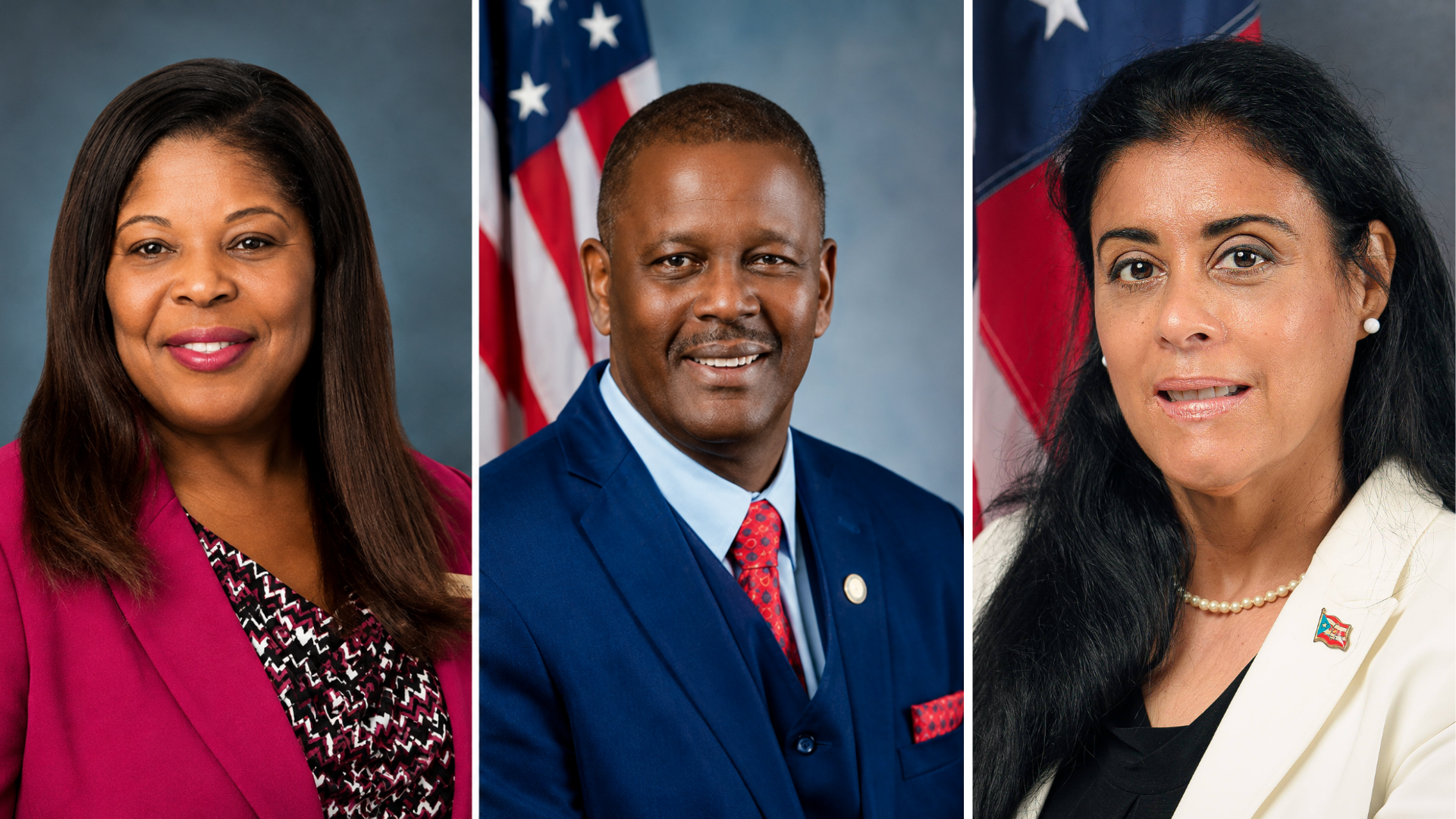
State Representative-Elect and former Democratic state Rep. James Bush III sued FHDCC and other defendants in Miami-Dade County over allegedly defamatory election communications.

Former Democratic state Rep. Daisy Morales has separately challenged campaign communications involving FHDCC through litigation in Orange County and Florida’s election complaint process.

The cases involve separate elections and allegations and must be decided on their individual evidence.

State Rep.-elect Daphne Campbell, a former state senator and former state representative, told Florida National News in a phone interview that she is considering filing a defamation lawsuit as well.

Together, however, they place FHDCC’s campaign practices under greater scrutiny and create a leadership test for Hunschofsky as she prepares to lead Florida House Democrats.

Hunschofsky’s Leadership Under Scrutiny

Hunschofsky’s position as chair does not automatically make her personally liable for every communication, expenditure or decision made by FHDCC.

But leadership brings accountability for how an organization operates.

Political attack campaigns require research, writing, production, vendors, financing and distribution. FHDCC’s internal structure determines how those activities are authorized and supervised.

That makes Hunschofsky’s authority, knowledge and oversight relevant as the committee responds to legal challenges involving its campaign activity.

The central issue is straightforward: What happened under the FHDCC banner, and what responsibility did its leadership have for it?.

Party Establishment vs. Voters’ Choice

The controversy also exposes a deeper tension between party leadership and voters who expect to choose representatives based on the priorities of their communities.

Political parties can recruit, endorse and financially support candidates.

Voters make the final choice.

Heavy intervention by a party organization in a Democratic primary can create the perception that party leaders are trying to make that choice for voters.

That can damage trust when voters believe local experience, constituent service and understanding of their community matter more than the preferences of party leadership.

Democrats Spending Money Fighting Democrats

The internal battles come as Florida Democrats face a larger electoral challenge.

Republicans hold substantial power in Tallahassee, while Democrats need financial resources to compete for legislative seats and statewide offices.

Money spent attacking Democrats in expensive Democratic primaries cannot simultaneously be spent challenging Republicans.

FHDCC has the right to participate in elections within the law. But intraparty battles followed by lawsuits and election complaints create a political question about whether those resources are advancing the committee’s broader mission of electing Democrats.

Minority Democrats and Party Trust

The disputes also involve former minority Democratic lawmakers.

Bush and Campbell are Black. Morales is Puerto Rican, Hispanic.

That does not establish racial or ethnic discrimination by Hunschofsky or FHDCC.

But former minority Democratic lawmakers turning to courts and election regulators over tactics associated with their own party creates a political challenge for Democrats, who depend heavily on Black and Hispanic voters.

Those voters have the same interest as every Florida voter in accurate campaign information, fair elections and political organizations that follow the rules.

A Political Standard That Should Apply to Both Parties

The controversy also creates an uncomfortable comparison for Democrats who have criticized President Donald Trump’s aggressive treatment of political opponents.

The lawsuits and election complaints do not establish that FHDCC copied Trump’s strategy or adopted a “Trump playbook.”

But they raise a broader question of consistency.

Democrats who demand accountability when Republicans exercise political power aggressively should be prepared to apply the same standards to organizations within their own party.

Republicans should do the same when allegations involve their side.

Fairness cannot depend on which party benefits.

From Political Fight to Legal Process

Negative campaigning and opposition research are legal and receive substantial First Amendment protection.

Political committees, however, remain subject to election laws, campaign-finance requirements and civil law.

A lawsuit does not prove defamation.

FHDCC’s separate argument that it cannot be sued.

An election complaint does not prove an election-law violation.

Neither automatically creates a criminal investigation.

If evidence ultimately supports potential criminal conduct, the appropriate law-enforcement agency or prosecutor — not political parties, candidates or news organizations — determines whether an investigation is warranted.

The principle protects everyone: allegations must be proven, due process must be respected and political influence should not shield proven violations.

Who Is Next?

The growing legal disputes leave FHDCC with a political problem extending beyond Bush, Morales and Campbell.

Who is next on the Florida House Democratic Campaign Committee’s target list?

No Democrat is entitled to immunity from legitimate political criticism simply because that candidate belongs to the party.

But candidates should be able to expect political organizations to play by the rules.

The same principle applies to Republicans.

Political organizations can fight hard, expose legitimate weaknesses and spend money advocating for their candidates.

They still have to follow the law.

Hunschofsky Faces a Leadership Test

Hunschofsky is not watching the controversy from outside the organization.

She chairs the Florida House Democratic Campaign Committee while preparing to lead Florida House Democrats, including minority Democratic lawmakers who were targeted by the committee’s campaign attacks.

The lawsuits and election complaints therefore put FHDCC’s governance, campaign strategy and financial oversight directly within the public debate surrounding her leadership.

The courts will determine the civil allegations before them. Election regulators will determine matters within their jurisdiction. If evidence independently supports potential criminal violations, law-enforcement authorities can determine whether an investigation is warranted.

For Hunschofsky, the leadership test is whether the committee she chairs can defend its campaign practices, account for its spending and maintain the trust of Democratic voters while the allegations move through Florida’s courts and election-enforcement system.

The lawsuits and election complaints remain allegations. They are not findings that Hunschofsky or FHDCC violated the law.

For Florida voters, the standard should be simple:

Play by the rules. Follow the evidence. Apply the law equally.

Florida National News is seeking comment from Hunschofsky and FHDCC regarding the lawsuits, election complaints, campaign spending and committee oversight. FNN will update this report with responses and significant developments.

Continue Reading
Advertisement
Advertisement Ticket Time Machine ad
Advertisement Orlando Regional REALTOR Association logo
Advertisement Parts Pass App
Advertisement Hispanic Chamber of Commerce of Metro Orlando
Advertisement
Advertisement African American Chamber of Commerce of Central Florida
Advertisement FNN News en Español
Advertisement Indian American Chamber of Commerce logo
Advertisement Florida Sports Channel

FNN Newsletter

Trending