Connect with us

Politics

Ousted ambassador to testify in Trump impeachment probe

Published

on

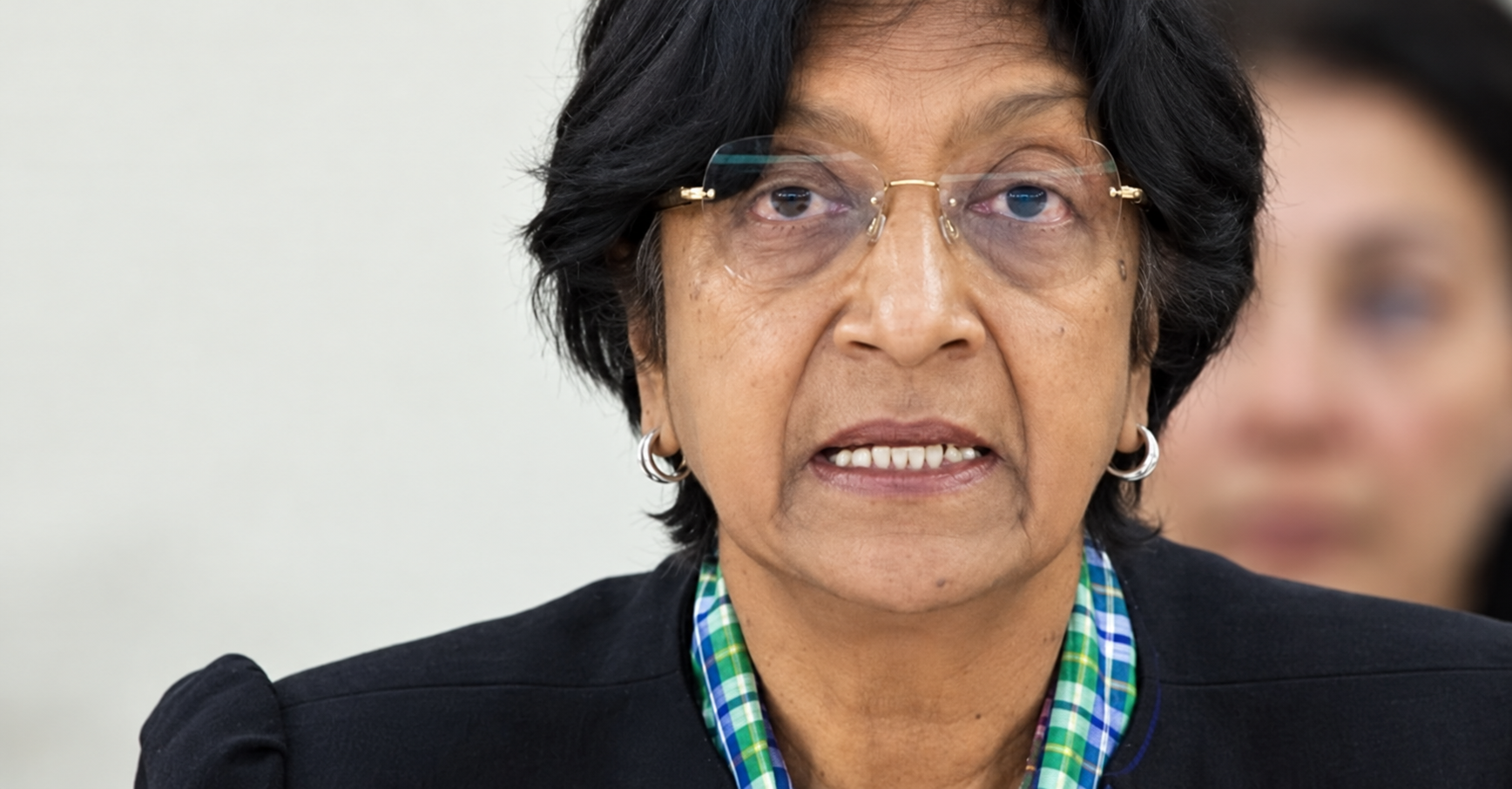
WASHINGTON (AP) — The House will hear from a singular witness Friday in the Trump impeachment hearings: Marie Yovanovitch, the former U.S. ambassador to Ukraine who was targeted by the president’s allies in a “smear” campaign now central to the inquiry.

The career diplomat, who served both Republican and Democratic presidents, is expected to relay her striking story of being suddenly recalled by Donald Trump and told to “watch my back” in a swiftly developing series of events that sounded alarms about the White House’s shadow foreign policy.

She and other officials now testifying publicly in the historic House hearings scrambled to understand Trump’s actions, providing revelatory accounts that Democrats are now relying on to make the case that the president’s behavior is impeachable.

In particular, Yovanovitch and others have described Rudy Giuliani, Trump’s personal lawyer, as leading what one called an “irregular channel” outside the diplomatic mainstream of U.S.-Ukraine relations. Asked during her closed-door deposition if anyone at the State Department who was alerted to Giuliani’s role tried to stop him, she testified, “I don’t think they felt they could.”

With the start of a second day of historic hearings to consider removal of America’s 45th president, Democrats and Republicans are hardening their messages to voters as they try to saw public opinion.

Americans are deeply entrenched in two camps over impeachment, resulting in a mounting political battle that will further test the nation in one of the most polarizing eras of modern times.

House Speaker Nancy Pelosi on Thursday brushed aside the Latin phrase “quid pro quo” that Democrats have been using to describe Trump’s actions with a more colloquial one: Bribery.

“Quid pro quo: Bribery,” Pelosi said about Trump’s July 25 phone call in which he asked Ukrainian President Volodymyr Zelenskiy for a favor.

Trump says the call was perfect. Pelosi said, “It’s perfectly wrong. It’s bribery.”

Trump continued to assail the proceedings as “a hoax” on Thursday, and House GOP Leader Kevin McCarthy dismissed the witness testimony as hearsay, at best second-hand information.

“Beltway charade,” the president’s son, Eric Trump, told reporters. He said good, hard-working Americans “don’t give a damn about that stuff.”

At its core, the impeachment inquiry concerns Trump’s July phone call with Zelenskiy that first came to attention when an anonymous government whistleblower filed a complaint.

In the phone conversation, Trump asked for a “favor,” according to an account provided by the White House. He wanted an investigation of Democrats and 2020 rival Joe Biden. Later it was revealed that the administration was also withholding military aid from Ukraine.

“The bribe is to grant or withhold military assistance in return for a public statement of a fake investigation into the elections,” Pelosi said. “That’s bribery.”

It’s also spelled out in the Constitution as one of the possible grounds for impeachment — “treason, bribery or other and high crimes and misdemeanors.”

Rep. Jim Himes, D-Conn., a member of the Intelligence Committee conducting the hearings, explained the shift: “English words are easier to understand than Latin words.”

The president flatly denied the latest revelations. During Wednesday’s hearing, William Taylor, the top diplomat who replaced Yovanovitch in Ukraine testified that another State Department witness overheard Trump asking about “the investigations” the day after his phone call with Kyiv.

“First I’ve heard of it,” he said, brushing off the question at the White House.

The Associated Press reported Thursday that a second US Embassy official also overheard Trump’s conversation.

During the first day of testimony, Taylor and another seasoned foreign service officer, George Kent, the deputy assistant secretary of State, delivered somber accounts about recent months.

They testified in defense of Yovanavitch amid what Kent called Giuliani’s “smear” campaign against her; about the dangers of abandoning Ukraine as it faces Russia; and of what Taylor called an “irregular channel” of foreign policy orchestrated by the president’s lawyer and carried out by other Trump allies.

It’s a dramatic, complicated story, and the Democrats’ challenge is to capture voter attention about the significance of Trump’s interactions with a distant country.

Ukraine, a young democracy with a hostile Russia at its border, is relying on the U.S. as it reaches to the West.

While Trump applauded the aggressive stance of some of his GOP defenders, he felt that many of the lawmakers in the opening hearing could have done more to support him and he pressed that case with congressional allies ahead of Friday, according to Republicans who were not authorized to speak publicly about private conversations and were granted anonymity.

Still, Trump’s reelection effort raised more than $3 million on the first day of public impeachment hearings, and campaign manager Brad Parscale announced it now hopes to raise $5 million within a 24-hour span.

Behind closed doors this week Pelosi reminded Democratic lawmakers of the importance of presenting a “common narrative” to the public as the proceedings move forward, according to a Democratic aide.

“We’re in Chapter One of a process,” said Rep. Raja Krishnamoorthi, D-Ill., a member of the Intelligence Committee conducting the inquiry. The challenge, he said, is educating Americans about what happened “and then explaining why it matters.”

Continue Reading
Click to comment

Leave a Reply

Your email address will not be published. Required fields are marked *

Florida

Central Florida Lawmakers Challenge DeSantis Redistricting Map as Lawsuits Mount

Published

on

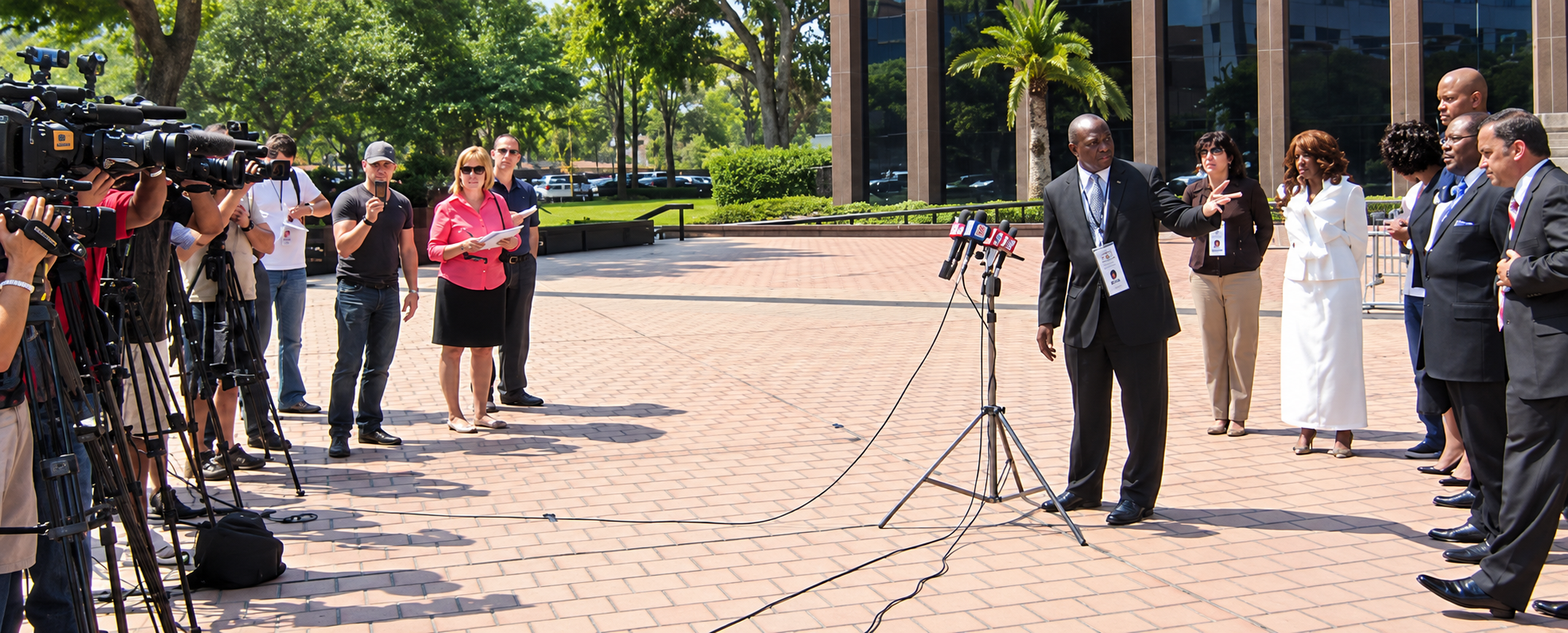
ORLANDO, Fla. (FNN) — The Central Florida Black Caucus of Local Elected Officials held a press conference on the steps of Orlando City Hall, criticizing a new congressional map signed into law by Florida Governor Ron DeSantis.

Speakers included U.S. Congressman Maxwell Frost, State Senator Lavon Bracy-Davis, State Representative Bruce Antone, Orange County Clerk of Courts Tiffany Moore Russell, representatives from Equal Ground, and the Central Florida Urban League. Officials argued the map weakens minority representation and follows a recent U.S. Supreme Court ruling that scaled back key protections under the Voting Rights Act.

Florida National News has learned that three lawsuits have been filed seeking to block the newly approved congressional map following the redistricting process. The map is widely viewed as an effort to expand Republican representation in Florida’s congressional delegation ahead of upcoming elections.

IMPACT ON BLACK REPRESENTATION
Leaders warned the redistricting plan could significantly reduce the influence of Black voters in Central Florida and across the state. They argued that dismantling historically minority-access districts undermines decades of progress in equitable representation.

LEGAL CHALLENGES UNDERWAY
At least three lawsuits have been filed challenging the legality of the new map. Civil rights advocates contend the redistricting plan violates federal protections and could further erode voting rights following the Supreme Court’s recent decision.

FUTURE OF BLACK CONGRESSIONAL LEADERSHIP
Elected officials and advocacy groups expressed concern about the long-term effects on Black congressional representation. They emphasized the need for continued legal action and community engagement to protect fair representation in future elections.

Continue Reading

Florida

DeSantis’ New Florida Congressional Map Could Spark Lawsuits, Legislative Showdown, and Statewide Protests

Published

on

TALLAHASSEE, Fla. (FNN) — Governor Ron DeSantis unveiled a proposed congressional redistricting map that could significantly reshape Florida’s representation in the U.S. House ahead of the 2026 midterm elections.

The proposal, released Monday, outlines districts that could favor Republicans in 24 seats, compared to four Democratic-leaning districts. Currently, Florida’s congressional delegation includes 20 Republicans and seven Democrats, with one vacant seat.

REDISTRICTING PROPOSAL & POLITICAL IMPACT
The governor said the new map reflects Florida’s population changes and fulfills his commitment to mid-decade redistricting. Lawmakers have been called into a special legislative session to consider the proposal.

The map appears to eliminate four Democratic-held seats, including a Tampa-area district represented by U.S. Rep. Kathy Castor, an Osceola County district held by U.S. Rep. Darren Soto—the first Puerto Rican elected to Congress from Florida—and a Palm Beach-Broward district that could displace U.S. Rep. Jared Moskowitz.

The proposal also affects a majority-Black voting district spanning Palm Beach and Broward counties, previously represented by former U.S. Rep. Sheila Cherfilus-McCormick, raising concerns about the future of minority representation.

Supporters, including Evan Power, say the map could better align districts with voter distribution. Critics, including Nikki Fried, have called the proposal unconstitutional gerrymandering. Florida law prohibits partisan gerrymandering, setting up potential legal challenges.

Rep. Tray McCurdy, D-Orlando and Rep. Angie Nixon, D-Jacksonville sit on the Florida Seal in protest as debate stops on Senate Bill 2-C: Establishing the Congressional Districts of the State in the House of Representatives Thursday, April 21, 2022 at the Capitol in Tallahassee, Fla. Rep. Daisy Morales, D-Orlando, joins the protest, holding a sign. The session was halted on the protest. (AP Photo/Phil Sears)


LOOKING BACK: 2022 PROTESTS OVER REDISTRICTING

The current debate mirrors tensions from 2022, when Democratic lawmakers staged a sit-in protest on the Florida House floor in opposition to a previous congressional map backed by DeSantis.

Lawmakers including Yvonne Hinson, Angie Nixon, Travaris McCurdy, Felicia Robinson, and Daisy Morales participated in the protest, temporarily halting legislative proceedings.

Morales, a member of the Congressional Redistricting Subcommittee and the only Hispanic lawmaker involved in the sit-in, strongly criticized the map at the time.

“Our democracy is being attacked. The governor eliminating two Black congressional seats is a power grab and it’s wrong,” Morales said in a written statement. “Stripping seats from Black representation is the same as saying the Black voice—the Black vote—doesn’t matter.”

She also warned about potential impacts on Hispanic representation:

“With this map passing, I’m deeply concerned it could target the only Puerto Rican representing Florida in Congress, Darren Soto, to benefit partisan interests. We don’t want to disenfranchise the 1.2 million Puerto Ricans in Florida.”

WHAT COMES NEXT IN 2026
As lawmakers prepare to debate the new proposal, Democrats are expected to push back through legal challenges, legislative opposition, and public advocacy.

The outcome of Florida’s redistricting battle could play a pivotal role in shaping control of the U.S. House and influence the national political landscape heading into the 2026 midterm elections.

Continue Reading

Politics

Gov. Ron DeSantis Orders Flags at Half-Staff for Slain Coral Springs Vice Mayor Nancy M. Metayer Bowen

Published

on

Coral Springs Vice Mayor Nancy M. Metayer Bowen

TALLAHASSEE, Fla. (FNN) — Gov. Ron DeSantis has ordered flags to be flown at half-staff in honor of Coral Springs Vice Mayor Nancy M. Metayer Bowen, who was killed April 1 in what authorities describe as a domestic violence incident.

The directive calls for U.S. and Florida state flags to be lowered from sunrise to sunset Friday, April 17, 2026, at the State Capitol in Tallahassee and at all local and state buildings, installations and grounds throughout Coral Springs.

According to Coral Springs Police, officers conducted a wellness check at Metayer Bowen’s home after city staff raised concerns when she missed scheduled meetings and could not be reached. Responding officers found her deceased inside the residence.

Investigators said the killing appears to be a domestic violence incident. Her husband, Stephen Bowen, was later taken into custody and faces charges of premeditated murder and tampering with evidence. The case remains under active investigation.

State and local leaders say the half-staff order honors Metayer Bowen’s service and legacy in the Coral Springs community, where she was recognized for her leadership and commitment to public service.

What We Know About Her Death
Police say Metayer Bowen was killed April 1 at her Coral Springs home. Officers discovered her body during a wellness check prompted by her unexplained absence from official duties and lack of communication.

Husband Arrested, Faces Charges
Authorities arrested her husband, Stephen Bowen, who now faces premeditated murder and evidence-tampering charges. Investigators have identified the case as an apparent domestic violence incident.

State Honors Her Legacy
Gov. DeSantis ordered flags lowered across key government buildings in Tallahassee and Coral Springs, recognizing Metayer Bowen’s public service and the impact of her loss on the community.

Continue Reading
Advertisement
Advertisement Ticket Time Machine ad
Advertisement Orlando Regional REALTOR Association logo
Advertisement Parts Pass App
Advertisement Hispanic Chamber of Commerce of Metro Orlando
Advertisement
Advertisement African American Chamber of Commerce of Central Florida
Advertisement FNN News en Español
Advertisement Indian American Chamber of Commerce logo
Advertisement Florida Sports Channel

FNN Newsletter

Trending