

Politics
Questions of racism linger as Harry, Meghan step back


Central Florida News
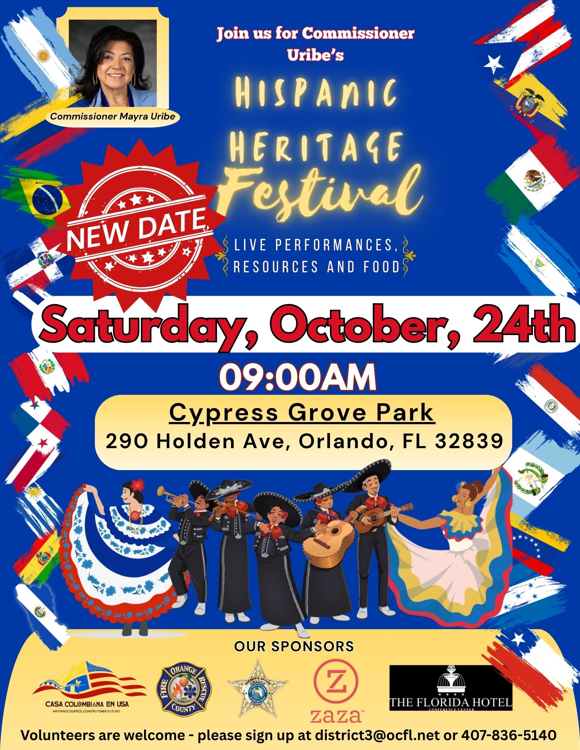
Commissioner Uribe Announces New Date for Hispanic Heritage Festival Due to Weather

ORLANDO, Fla. (FNN) — Commissioner Uribe announced that the Hispanic Heritage Festival has been rescheduled due to weather conditions. The event will now take place Saturday, Oct. 24, 2026, from 9 a.m. to noon at Cypress Grove Park, 290 Holden Ave., Orlando.
The festival will celebrate the rich history, cultures, traditions and contributions of Hispanic and Latino communities through live music, dance performances, food and community resources.
Scheduled highlights include:
- Live music by youth orchestra The Nucleus Orchestral.
- Dance performances featuring Maria Saavedra of FusionFest with Huellas de Colombia, Unidos for Ecuador and Mexico Dansa.
- Food from Zaza.
- Community resources from 311 and other participants.
Join Commissioner Uribe and the community for a morning celebrating Hispanic and Latino heritage.
NEW DATE: Saturday, Oct. 24, 2026
TIME: 9 a.m. to noon
LOCATION: Cypress Grove Park
ADDRESS: 290 Holden Ave., Orlando, FL 32839
Florida
FNN PERSPECTIVE | Byron Donalds Visits ONYX Gala in Orlando: Could Orange County Help Him Win Florida’s Governor’s Race?

Democratic crossover endorsements provide context. Orange County’s vote margin could help shape the contest between Donalds and David Jolly.
ORLANDO, Fla. (FNN) — Republican gubernatorial nominee Byron Donalds’ appearance at ONYX Magazine’s Men of Honor Gala in Orlando raises a broader electoral question: Could crossover support in Democratic-leaning Orange County help him reach the governor’s mansion?
Source: ONYX Magazine Facebook Page
Donalds and Democratic opponent David Jolly attended the Oct. 3 celebration at the Rosen Centre Hotel, according to Hoodline reporting citing the Orlando Sentinel. The gathering brought together elected officials, business executives, educators and community leaders to recognize leadership, achievement and service. Source: Hoodline
Organizers emphasized that the candidates’ attendance did not constitute an endorsement. Among the honorees was Orange County Mayor Jerry Demings, selected for a lifetime achievement award. Source: Jacksonville Free Press
Orange County, home to Orlando, provides a setting for examining both candidates’ electoral prospects. Its history includes prominent Democrats backing Republicans, while its Democratic vote margins illustrate how the county can contribute to the statewide outcome.
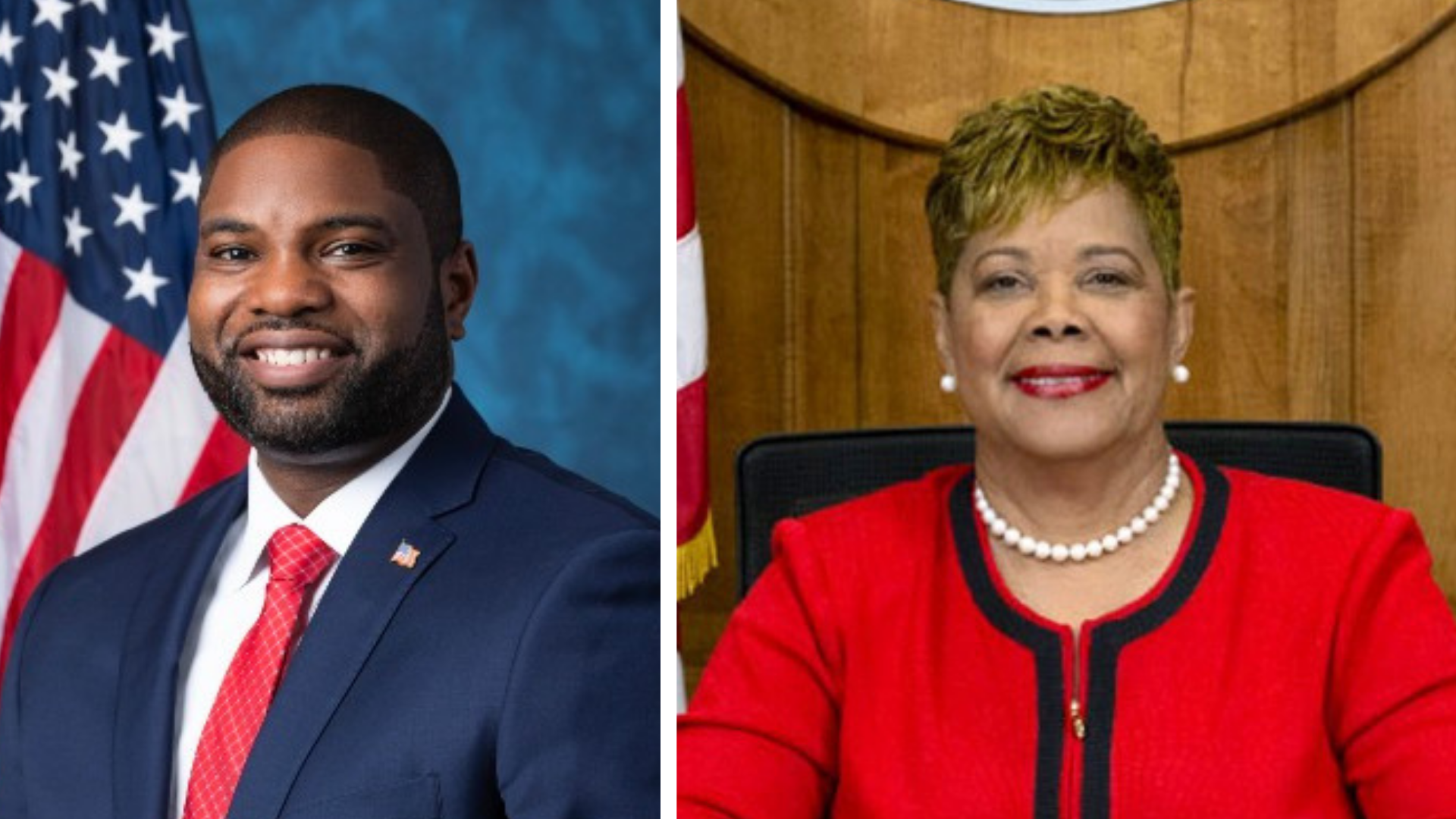
Republican gubernatorial nominee Byron Donalds, left, and Gainesville City Commissioner Cynthia Moore Chestnut, a longtime Democrat who endorsed Donalds for governor.
Donalds Has Secured a Democratic Crossover Endorsement
Gainesville City Commissioner Cynthia Moore Chestnut, a registered Democrat, endorsed Donalds over Jolly in September, according to WCJB. She cited Black representation, dissatisfaction with the Democratic ticket and support for historically Black colleges and universities, while acknowledging disagreements with some of Donalds’ policies. Source: WCJB
Chestnut subsequently introduced Donalds at a University of Florida town hall, emphasizing access to his office and fair consideration of Gainesville’s needs. Source: WCJB
Her endorsement raises a question about whether other Democrats, including those with conservative or moderate views, might support Donalds. However, her stated reasons do not establish a broader ideological shift. Dissatisfaction with party leadership or progressive positions does not automatically translate into Republican votes.
Source: Winter Park Voice
Orange County Democrats Have Backed Republicans Before
Democratic Orlando Mayor Buddy Dyer endorsed Republican state Rep. Mike Miller against Democrat Beth Tuura in the 2016 Florida House District 47 election — a partisan legislative contest. Source: Florida Politics
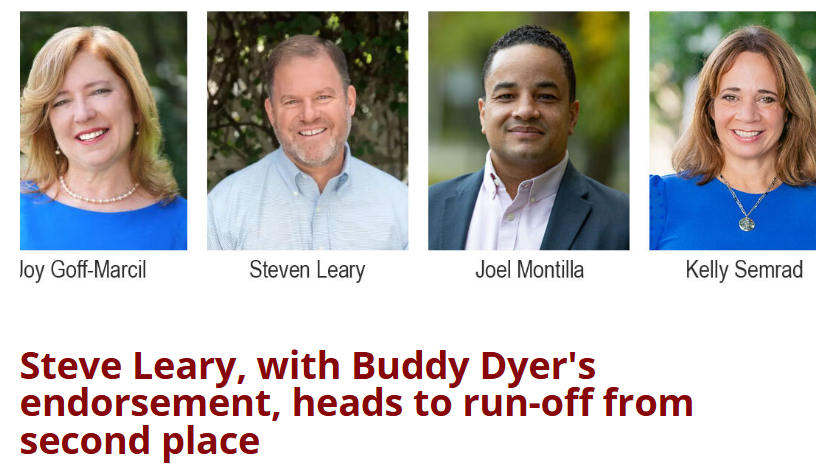
In the nonpartisan 2024 Orange County Commission District 5 race, Dyer endorsed Republican former Winter Park Mayor Steve Leary. Winter Park Voice also identified former Democratic state Sen. Gary Siplin, former Orange County Commissioner Victoria Siplin and Winter Park Commissioner Craig Russell as Democratic supporters of Leary. Source: Winter Park Voice
Dyer’s Orlando PAC contributed $4,000 to Neighbors for a Sensible Orange County, the political committee chaired by Leary, according to Winter Park Voice’s reporting on campaign finance filings. The committee also promoted Leary alongside Democratic candidates. This was financial support between political committees, rather than a personal donation by Dyer or a direct contribution to Leary’s candidate account. Source: Winter Park Voice
Former Orange County Chair Linda Chapin encouraged Democrats to support Republican Teresa Jacobs’ 2014 reelection campaign for county mayor while Democrat Val Demings was challenging her. Source: Orlando Weekly
Dyer and Orlando Commissioner Tony Ortiz also endorsed Republican Commissioner Jim Gray in the 2025 Orlando election. Ortiz had switched from Republican to Democrat earlier that year. Source: Orlando Weekly
These examples document individual cross-party support across different elections. They do not establish that those leaders endorse Donalds.
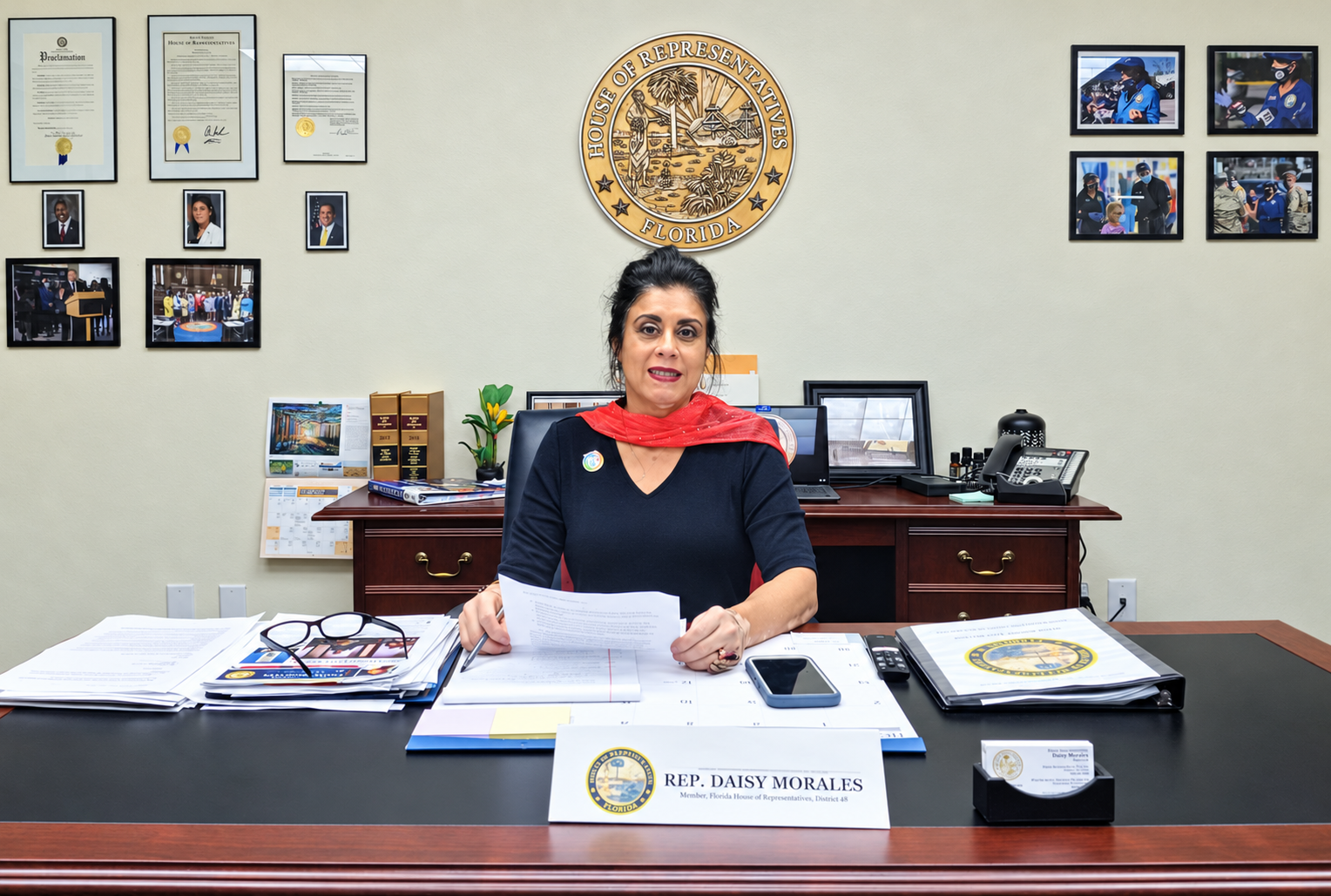
Then-state Rep. Daisy Morales, D-Orlando, sits at her district office in Orange County, Florida. Morales represented House District 48 from 2020 to 2022 and sponsored or co-sponsored more than 110 bipartisan bills that became law.
Montilla and Morales: Participation, Endorsements and Party Enforcement
Republican attorney Joel Antonio Montilla’s 2024 Orange County Commission campaign provides additional context about political participation and disputes over party loyalty.
Former Democratic state Rep. Daisy Morales participated on Montilla’s non-partisan campaign-launch host committee for Orange County Commissioner. Montilla separately confirmed to Florida Politics that Morales did not endorse his candidacy. Source: Florida Politics
Morales brings a record of electoral success in Orange County. In 2018, she won countywide reelection to the Orange County Soil and Water Conservation District board with 256,342 votes. In 2020, she defeated four opponents in the Democratic primary, including Samuel Vilchez Santiago, before defeating Republican Jesus Martinez in the general election to win Florida House District 48, a majority-Hispanic district with a large Puerto Rican community. Official general-election results show she received 47,341 votes, or 65.3%.
Morales alleges that Orange County’s Democratic establishment, including Vilchez Santiago, her 2026 House District 43 primary opponent and former Orange County Democratic Party chair, targeted her over an alleged violation of party endorsement rules while treating prominent Democrats who supported Republican candidates differently. She characterizes that treatment as selective enforcement in a defamation lawsuit filed in Orange County.
The documented crossover endorsements provide context for her allegation, but determining whether party rules were applied unevenly requires comparing the applicable rules, circumstances and disciplinary decisions in each case.
Endorsements, financial contributions, campaign management and host-committee participation represent distinct activities. Those distinctions matter when evaluating both crossover support and allegations of inconsistent party enforcement. Morales’ participation in Montilla’s event does not establish support for Donalds.
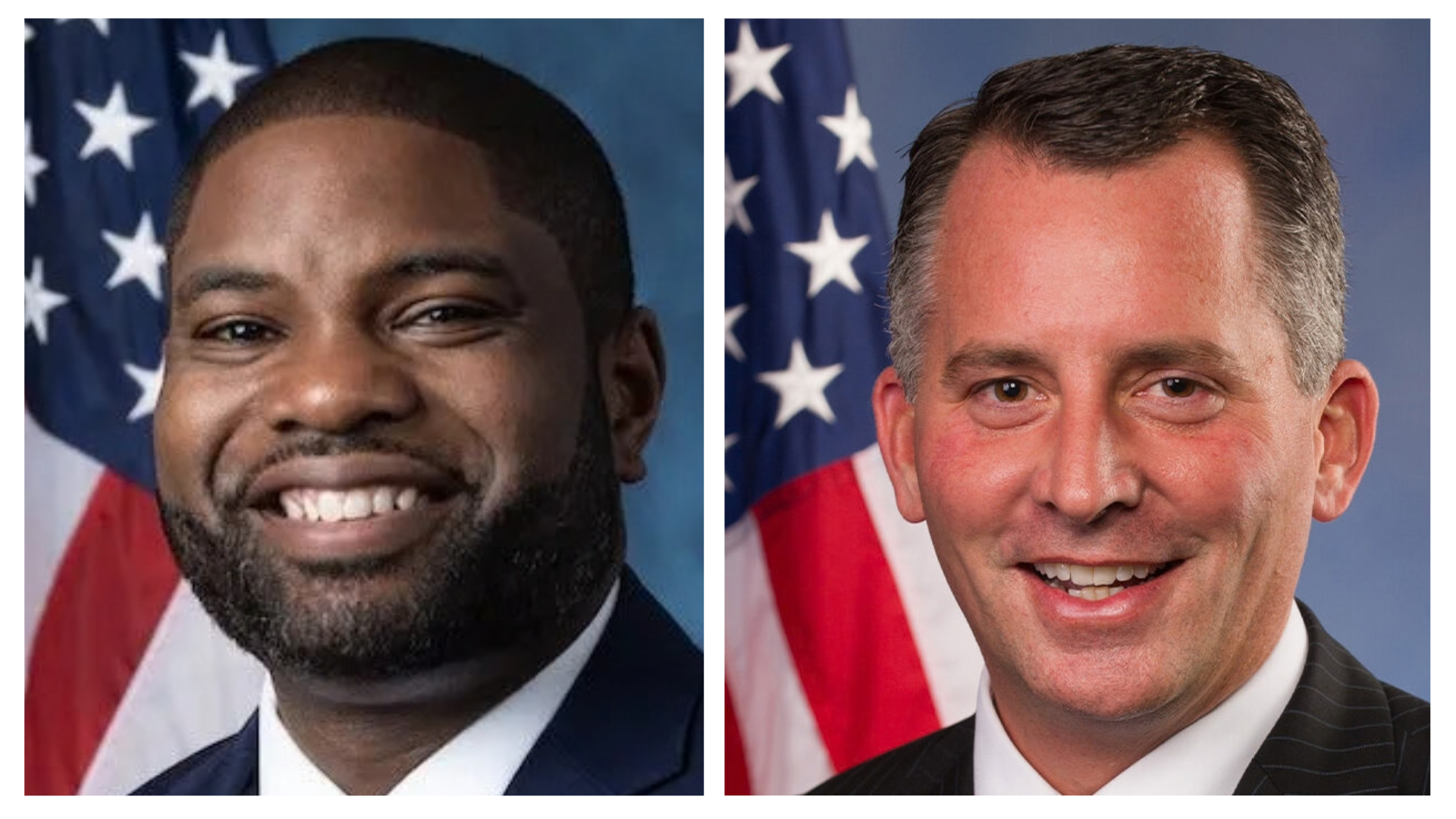
U.S. Rep. Byron Donalds, left, the Republican nominee for Florida governor, and former U.S. Rep. David Jolly, the Democratic nominee.
Orange County: A Gateway to the Governor’s Mansion?
Orange County’s influence rests on the votes it contributes and the advantage it delivers to either candidate.
In the 2018 governor’s election, Democrat Andrew Gillum received 296,257 votes in Orange County, compared with Republican Ron DeSantis’ 174,228 — a Democratic advantage of 122,029 votes. DeSantis nevertheless won statewide by 32,463 votes. Source: Florida Division of Elections
The county also voted Democratic in the 2024 presidential election. Kamala Harris received 340,807 votes, while Donald Trump received 258,279, giving Harris an 82,528-vote advantage. Source: Florida Division of Elections
The elections involved different offices, candidates and turnout conditions. Their results provide historical context rather than a forecast for the governor’s race.
Neither Donalds nor Jolly must win Orange County to win Florida. The margin is what matters. A smaller Democratic advantage would improve Donalds’ statewide position, assuming results elsewhere remained unchanged. A larger advantage for Jolly could help offset Republican strength in other counties.
Changes in that margin could reflect turnout, crossover voting or choices by voters without a party affiliation. County totals alone cannot establish how many Democrats voted Republican.
Will Community Engagement Translate Into Votes?
The ONYX gala placed both candidates before a community gathering outside a conventional partisan campaign event. Whether such appearances generate support will depend on voters’ assessments of their records, proposals and priorities.
Endorsements have limits. Gray lost his 2025 reelection bid to Democrat Tom Keen despite Dyer’s backing and a fundraising advantage. Source: Florida Politics
Chestnut’s endorsement provides a documented example of Democratic support for Donalds. Polling and voter interviews would be needed to determine whether comparable support exists in Orange County and how significant it might be.
For Donalds, making a sustained case to Black voters would require addressing the issues they identify as priorities, including housing costs, economic opportunity, education, health care and public safety. Community appearances create opportunities to hear those concerns and explain specific proposals; electoral support depends on whether voters find the answers persuasive.
A Donalds victory would make him Florida’s first Black governor. Orange County could help shape the outcome through the Democratic advantage Jolly builds or the margin Donalds narrows.
What would most influence your choice for Florida’s next governor: party affiliation, the candidate’s record or specific policy proposals — and why?
Florida
FNN Perspective: Black Leaders Back Byron Donalds for Governor. Will More Black and Hispanic Leaders Follow?

Lawsuits challenging Democratic campaign tactics raise questions about party trust as David Jolly faces the task of holding his coalition together.
ORLANDO, Fla. (FNN) — A coalition of Black leaders backing Republican gubernatorial nominee Byron Donalds raises a broader question: Could frustration with Democratic campaign tactics make additional leaders and voters willing to consider his candidacy?
More than two dozen pastors, elected officials, business owners, educators and civic leaders have joined the Florida Coalition of Black Leaders for Donalds. Among them is Gainesville City Commissioner Cynthia Chestnut, a Democrat whose endorsement demonstrates that his outreach has attracted support beyond Republicans. If elected, Donalds would become Florida’s first Black governor.
For Democratic nominee David Jolly, the challenge involves both presenting an alternative to Donalds and maintaining confidence within his own coalition. Separate lawsuits involving Democratic candidates have brought questions about campaign fairness and accountability into that debate.
Campaign Lawsuits Raise Questions About Fairness
Former Democratic state Reps. Daisy Morales and James Bush III filed separate defamation lawsuits naming the Florida House Democratic Campaign Committee as a defendant.
Bush’s August 2025 lawsuit challenges communications distributed during his 2022 campaign. Morales’ August 2026 lawsuit challenges primary campaign claims about her alleged Republican endorsements and Democratic Party status. Both contend that false communications damaged their reputations and misled voters.
The allegations remain disputed. Ashley Gantt and her attorney have called Bush’s lawsuit baseless. Samuel Vilchez Santiago has rejected Morales’ allegations and characterized her lawsuit as politically motivated.
Beyond the legal disputes lies a political question: Can Democrats preserve relationships with candidates and supporters who believe party campaign resources were used unfairly against them?
Bipartisan Work Produced Results for Constituents
Morales and Bush have documented records of participating in legislation supported by both parties.
Morales and Christopher Benjamin sponsored bipartisan HB 45, joined by 17 co-introducers, including James Bush III. Passed unanimously by both chambers and signed by Gov. Ron DeSantis in 2022, the law supplements federal Post-9/11 GI Bill benefits by waiving remaining tuition and fees for qualifying Florida disabled veterans receiving less than the full federal benefit at eligible public institutions.
Republican former state Rep. Rene Plascencia praised Morales’ constituent service in an August 2022 statement reproduced by FNN:
“She worked hard for her constituents, always trying to find common ground to build relationships off of while never compromising her principles.”
Bush similarly called for solutions that “we can all work together in a bipartisan way” during a July 2026 interview with El Vocero News. He identified housing, education, property taxes and transportation as priorities.
Those examples provide context for evaluating their relationships with Republicans. Legislative cooperation can deliver public benefits without constituting a partisan endorsement.
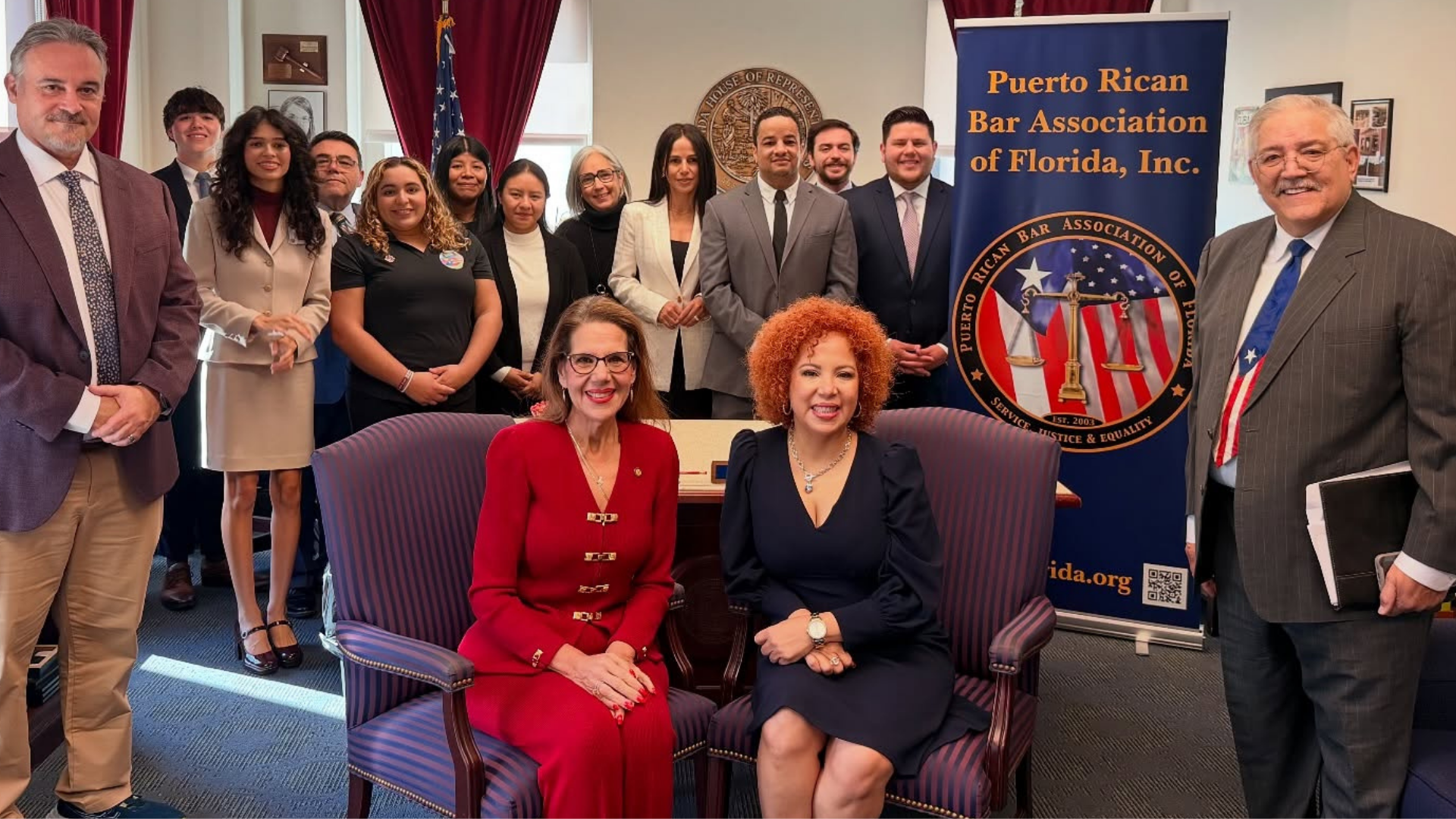
PHOTO CAPTION: Republican state Rep. Susan Valdés appears with Orange County Democratic political figures and other attendees during a gathering involving the Puerto Rican Bar Association of Florida at the Florida Capitol in Tallahassee. Among those identified are Samuel Vilchez Santiago, Johanna López and Joel Montilla. Valdés left the Democratic Party for the GOP in December 2024. Courtesy photo.
Recent Departures Show the Stakes of Party Division
Florida Democrats have already experienced departures by sitting lawmakers.
State Rep. Susan Valdés joined Republicans in December 2024, criticizing Democratic caucus leadership and saying she felt ignored. Later that month, state Rep. Hillary Cassel also joined Republicans, citing differences over party values, support for Israel and her ability to deliver for constituents.
In April 2025, Senate Democratic Leader Jason Pizzo left the party and registered with no party affiliation after criticizing its direction. Party Chair Nikki Fried rejected his assessment and attributed his departure to personal political ambitions.
Their circumstances differ from the Morales and Bush disputes, but the departures demonstrate that shared party registration does not guarantee lasting loyalty.
Democratic Leaders and Caucus Members Face Questions About Accountability
Repeated news reports about lawsuits challenging campaign tactics and the Florida House Democratic Campaign Committee’s use of resources warrant a public response from Democratic leaders and caucus members.
If those concerns remain unanswered, the party risks deepening distrust among affected candidates and their supporters heading into the general election. Leaders should explain how committee resources are allocated, whether the disputed tactics comply with party policies and how allegations of misconduct are reviewed.
The allegations remain contested, but accountability requires addressing them openly. Party unity depends on fair treatment and credible answers.
Jolly Faces a Test of Policy and Party Trust
Jolly has centered his campaign on housing, health care and education. His proposals include a state catastrophe fund intended to reduce property insurance costs, greater access to primary health care and investment in public schools. Those are campaign proposals whose effectiveness voters must evaluate.
His campaign also emphasizes stronger ethics and campaign finance rules. That platform invites scrutiny of whether accountability standards apply consistently—including when concerns involve Democratic campaign organizations.
Jolly does not control every party committee, and the lawsuits do not establish wrongdoing. Nevertheless, his candidacy faces a credibility test: Can a campaign promising fairer government maintain the confidence of supporters who question fairness within its own party?
His background as a former Republican congressman also highlights the distinction between changing political affiliations and working across party lines. The election will test how voters assess each candidate’s record, proposals and commitments.
Winning a Primary Does Not Secure November
Florida Democrats’ most recent statewide victory came in 2018, when Nikki Fried won the agriculture commissioner’s race. The party has not won a gubernatorial election since Lawton Chiles’ reelection in 1994.
Defeating another Democrat in a primary offers no assurance of defeating Republicans statewide.
Neither Morales’ nor Bush’s lawsuit establishes support for Donalds, and endorsements by individual leaders cannot predict how Black or Hispanic voters will vote.
The political possibility remains: Unresolved grievances could weaken enthusiasm or make some voters more receptive to alternatives. Donalds must turn outreach into confidence in his policies. Jolly faces the parallel challenge of making his case while retaining the trust of the coalition he needs to win.


 Florida3 days ago
FNN Perspective: Black Leaders Back Byron Donalds for Governor. Will More Black and Hispanic Leaders Follow?
 Florida21 hours ago
FNN PERSPECTIVE | Byron Donalds Visits ONYX Gala in Orlando: Could Orange County Help Him Win Florida’s Governor’s Race?
 Basketball2 days ago
UPSHOT Announces Professional Women’s Basketball Franchise for Tampa Bay


 World17 hours ago
UN Chief Guterres Praises Pakistan’s Peacekeeping, Calls for Climate Funding
 Central Florida News5 days ago
Temple Hands USF First Loss, 17-13


