

Florida
Rep. Gallop Franklin Secures Key Committee Assignments for 2024-2026 Florida Legislature


TALLAHASSEE, Fla. (FNN) – Florida State Representative Gallop Franklin (D-Tallahassee) has been appointed to serve on five influential committees and subcommittees for the 2024-2026 term of the Florida Legislature. Chief among these appointments is his role as a member of the 26-member Florida House Commerce Committee, a key body that oversees significant aspects of the state’s economy and business environment. The announcement of committee assignments was made Tuesday by House Speaker Daniel Perez.
“The citizens of Gadsden and Leon counties have entrusted me with the sacred duty of representing their interests,” said Rep. Franklin. “It is my responsibility to advocate for their needs and work toward what’s best for all Floridians as I cast votes on their behalf in these committees and on the floor of the Florida House.”

The Florida House Commerce Committee is one of the most powerful committees in the legislature, considering matters related to Florida’s economy, business and professional regulation, housing, transportation infrastructure, energy, utilities, telecommunications, insurance, financial entities, and gaming. Rep. Franklin’s role on this committee will enable him to directly influence legislative decisions impacting businesses, industries, and communities across Florida.

In addition to the Florida House Commerce Committee, Rep. Franklin will also serve on the following subcommittees:
- Economic Infrastructure Subcommittee
This subcommittee addresses matters related to transportation infrastructure, energy, utilities, telecommunications services, broadband services, telephone solicitation, and emerging marketplaces. Rep. Franklin’s involvement in this subcommittee positions him to influence the development of critical infrastructure projects that will impact both his district and the entire state. - Health Care Facilities & Systems Subcommittee
Focused on access and affordability of health care, this subcommittee considers consumer price transparency, health facility regulation, and operations for Medicaid and the Children’s Health Insurance programs for low-income Floridians. It also addresses commercial health insurance coverage and the state employee health plan. Rep. Franklin’s role here allows him to advocate for better health care solutions for his constituents in Gadsden and Leon counties. - Higher Education Budget Subcommittee
This subcommittee examines legislation with a fiscal impact on workforce education, the Florida College System, state universities, private colleges and universities, and student financial aid. It also oversees the Division of Blind Services, the Division of Vocational Rehabilitation, and the Board of Governors. With education being a top priority, Rep. Franklin’s participation in this subcommittee is vital for advancing educational opportunities for students in his district and statewide. - Housing, Agriculture & Tourism Subcommittee
This subcommittee handles issues related to housing, agriculture, tourism, economic development, defense development, sports, international trade, rural programs, unemployment compensation, growth management, homeowners’ associations, condominiums, and mobile homes. Given Florida’s reliance on agriculture and tourism as economic drivers, Rep. Franklin’s role in this subcommittee ensures that his district’s interests are represented as major decisions affecting these sectors are made.

The Florida House of Representatives will begin committee meetings in January 2025 to hear presentations and consider proposed legislation. These discussions are part of the lead-up to the 2025 Regular Session of the Florida Legislature, which officially begins on March 4, 2025, and is scheduled to adjourn on May 2, 2025. Key decisions on bills that affect Florida’s economy, education, health care, and infrastructure will be made during this period.
The scheduled 2025 Florida House committee weeks leading up to the Regular Session are as follows:
- January 13th through 17th
- January 21st through 24th
- February 3rd through 7th
- February 10th through 14th
- February 17th through 21st
Rep. Franklin’s appointments to these pivotal committees and subcommittees place him in a prime position to advocate for Gadsden and Leon counties while shaping policy that affects all Floridians. His leadership roles will allow him to influence crucial legislative areas, from health care reform and education funding to business development and infrastructure growth.
______________________________________________________________________________________
J Willie David, III
Florida National News and FNN News Network
news@FloridaNationalNews.com


Florida
FNN ANALYSIS: After 2024 Defections, Florida Democrats Face 2026 Election Test: Can They Rebuild as Republicans Expand Their Advantage?


Florida
Nikki Fried Targets Donalds, Luna Over Affordability as Republicans Gather for Trump Convention

Central Florida News
State House Democratic Nominee Samuel Vilchez Santiago Faces Defamation Lawsuit, Election Law Investigation

Civil discovery and Florida Elections Commission investigation could broaden evidentiary inquiry, potentially reaching records and witnesses including Orlando Mayor Buddy Dyer and School Board Chair-elect Angie Gallo.
ORLANDO, Fla. (FNN) — Democratic Florida House nominee Samuel Vilchez Santiago heads toward the November general election with an unresolved defamation lawsuit and Florida Elections Commission investigation stemming from disputed political communications distributed during his Aug. 18 Democratic primary against former state Rep. Daisy Morales.
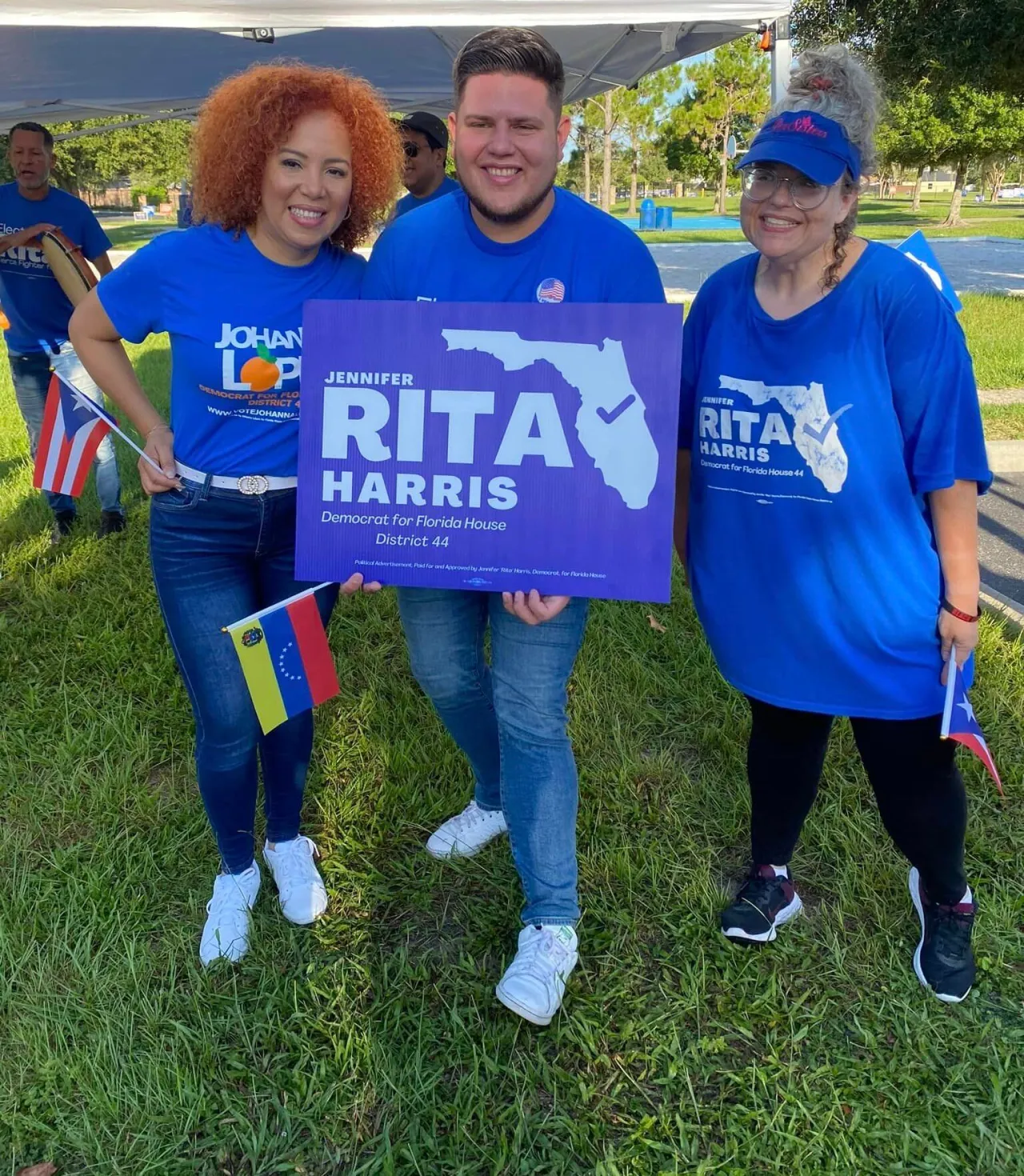
Then-Orange County School Board member and Florida House District 43 candidate Johanna López, left, Samuel Vilchez Santiago, center, and then-political newcomer and Florida House District 44 candidate Jennifer “Rita” Harris, right, campaign together during the 2022 election cycle. Vilchez Santiago and López supported Harris in her Democratic primary challenge against then-state Rep. Daisy Morales. Contemporary reporting confirms Harris received support from both López and Vilchez Santiago.
A POLITICAL RIVALRY DATING TO 2020
The 2026 Florida House District 43 Democratic primary was a rematch of the 2020 House District 48 primary, when Morales defeated Vilchez Santiago. Johanna López served as Vilchez Santiago’s campaign manager and José Gamboa as deputy campaign manager during that race.
Their political rivalry continued after 2020. Vilchez Santiago supported Democratic candidates challenging Morales in subsequent election cycles, including her 2022 reelection campaign, before facing her again in 2026.
That history provides context for the current dispute. The contested 2026 communications emerged from a political rivalry spanning multiple election cycles, rather than a first-time contest.
Morales alleges Vilchez Santiago and the Florida House Democratic Campaign Committee (FHDCC) falsely portrayed her as supporting Republican candidates and Gov. Ron DeSantis, while also misrepresenting her standing in the Democratic Party. Those allegations are now part of pending legal proceedings and have not been adjudicated.
Florida Politics independently reported Aug. 15 that Morales sued Vilchez Santiago and FHDCC over mailers accusing her of backing Republicans and stating that she had been expelled from the Orange County Democratic Party.
Ongoing lawsuit and Florida Elections Commission investigation could broaden the scope of evidence and records examined, with potential witnesses including Orlando Mayor Buddy Dyer and Orange County School Board Chair-elect Angie Gallo
No court or state agency has determined that Vilchez Santiago, FHDCC or another person committed defamation, violated Florida election law or committed a crime. The allegations remain disputed and subject to separate legal processes.
But FNN’s continuing investigation has assembled a growing documentary record that could be tested through civil discovery or an authorized state election investigation.
That record includes Republican attorney Joel Montilla’s statement that Morales did not endorse his campaign; the original context of a years-old photograph of Morales with DeSantis; Orange Democrats’ 2022 praise of Morales; her 97% People First legislative rating; Vilchez Santiago’s own 2024 public comments concerning Democrats supporting a Republican candidate; and documentary material showing Democratic Orange County School Board member Angie Gallo served as Montilla’s campaign manager and publicly endorsed him.
The central question is increasingly straightforward:
What information existed before the disputed representations were presented to Democratic voters, and what did the people responsible for creating, approving and distributing those communications know?
TWO PROCEEDINGS, TWO PATHS TO THE EVIDENCE
The dispute is unfolding through two separate legal processes with different purposes and powers.
Morales’ defamation lawsuit against Vilchez Santiago and FHDCC is a civil court proceeding.
Subject to Florida’s civil procedure rules, relevance requirements, privileges, objections and judicial supervision, discovery can potentially be used to obtain relevant documents, electronically stored information and sworn testimony.
The Florida Elections Commission investigation is separate.
Florida law gives the commission jurisdiction over alleged violations of Chapters 104 and 106 properly brought before it. The commission investigates alleged violations specifically contained in a qualifying sworn complaint or information reported by the Division of Elections.
The distinction matters.
The court determines the civil claims before it.
The Elections Commission determines alleged Election Code violations within its statutory jurisdiction.
Neither proceeding automatically determines the outcome of the other.

MONTILLA: MORALES DID NOT ENDORSE MY CAMPAIGN
One of the central factual disputes involves attorney Joel Montilla, a Republican who ran for the nonpartisan Orange County Commission District 5 seat in 2024.
Morales’ name appeared on a host committee associated with Montilla’s campaign kickoff. Morales maintains that participating on the committee was not an endorsement.
Montilla subsequently told Florida National News that Morales did not endorse his campaign and that her involvement was limited to the host committee.
According to Montilla’s account to FNN, Democrats and Republicans participated in the campaign kickoff.
That distinction could become important because the challenged political communications portrayed Morales as having endorsed Republican candidates.
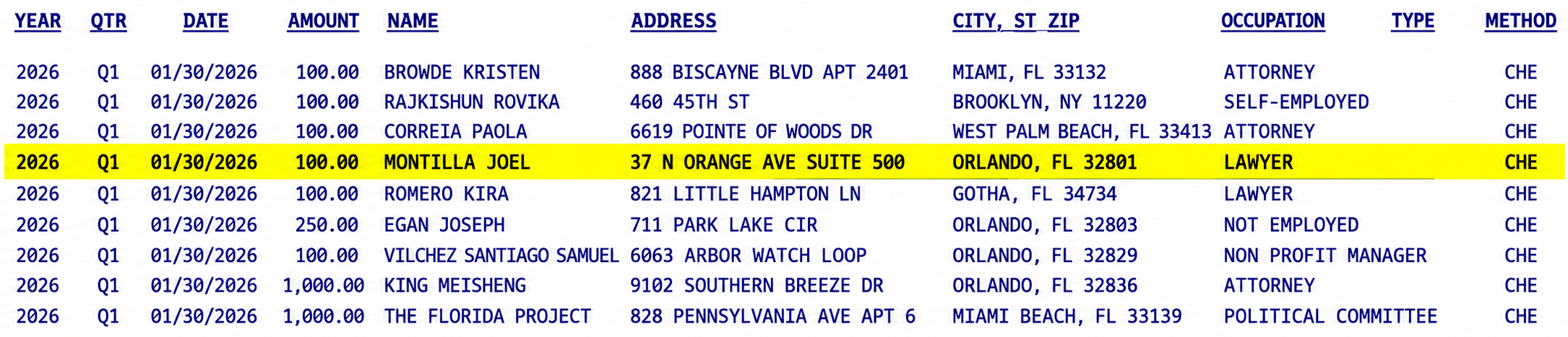
Campaign finance record showing a $100 contribution from attorney Joel Montilla to Samuel Vilchez Santiago’s HD 43 campaign on Jan. 30, 2026. The contribution is highlighted for emphasis. FNN illustration.
FNN’s investigation also found that Montilla contributed $100 to Vilchez Santiago’s 2026 House campaign.
FNN further documented Vilchez Santiago and Montilla appearing within overlapping Puerto Rican civic and professional circles.
Those facts do not establish wrongdoing or knowledge of falsity.
They raise a narrower factual question:
Was Montilla asked whether Morales endorsed him before his campaign was used to support that allegation?

ANGIE GALLO’S ROLE COULD SHARPEN THE ENDORSEMENT QUESTION
Another potentially important comparison involves Democratic Orange County School Board member Angie Gallo.
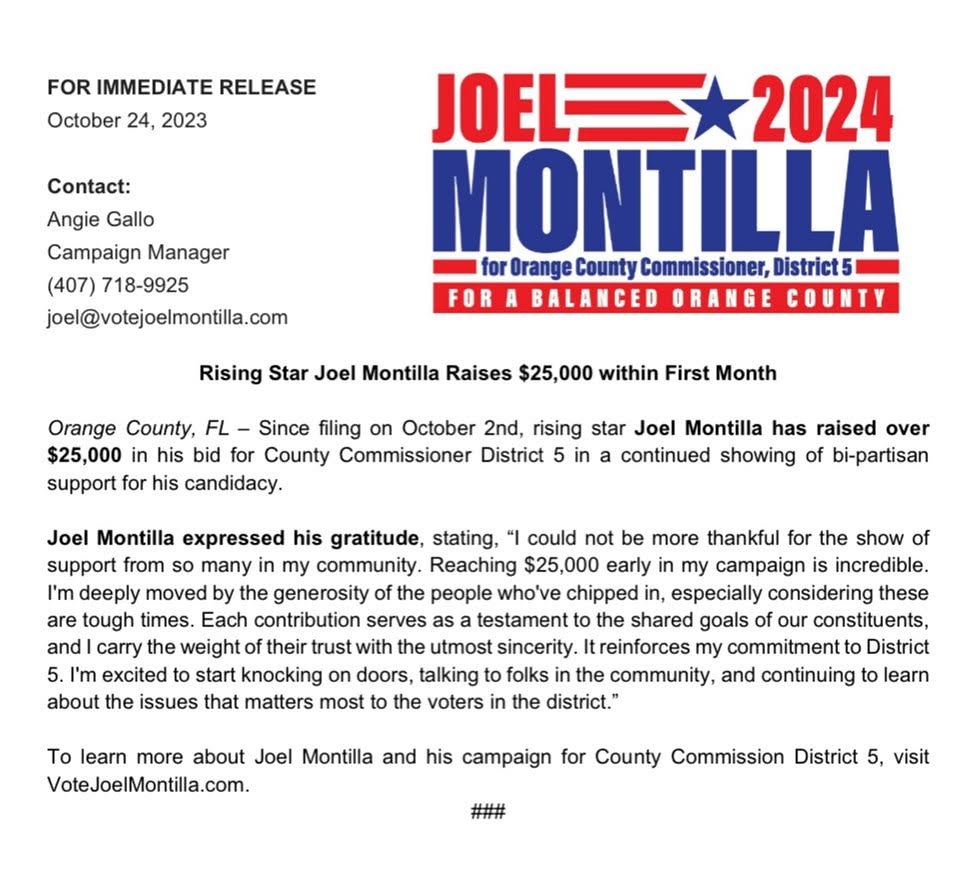
Documentary material reviewed by FNN identifies Gallo as campaign manager for Montilla’s Orange County Commission campaign.
Separate campaign material also publicly announced Gallo’s endorsement of Montilla.
That creates a materially different record from the evidence involving Morales.
Gallo is documented as both an active campaign participant and an announced supporter of Montilla. Morales, by contrast, is documented on a host committee, while Montilla himself says Morales did not endorse him.
That distinction could matter if the litigation or election proceeding examines how an endorsement was defined and what evidence existed to support the claim that Morales endorsed Republican candidates.
It could also raise another verification question:
Before Vilchez Santiago publicly repeated or approved the allegation concerning Morales, did he ask Gallo — Montilla’s campaign manager and a publicly identified endorser — whether Morales had actually endorsed the campaign?
That question does not presume that Vilchez Santiago asked Gallo, failed to ask her, or knew what she would have said.
It identifies a potential firsthand witness who, because of her documented campaign role, may have possessed direct knowledge about how the Montilla campaign identified campaign managers, endorsers, host-committee members and other supporters.
GALLO AND VILCHEZ SANTIAGO MOVED IN OVERLAPPING DEMOCRATIC CIRCLES
FNN’s prior reporting and documentary material also place Gallo and Vilchez Santiago in overlapping Orange County Democratic political circles.
That relationship does not establish that they discussed Morales or the Montilla campaign.
But if discovery examines what avenues were available to verify the endorsement allegation, their political relationship could become relevant to the narrower question of access to firsthand information.
A court or authorized investigator could potentially examine whether Vilchez Santiago contacted Montilla, Gallo or another person directly involved with the campaign before the allegation was disseminated.
Whether Gallo would actually become a witness or receive a subpoena would depend on relevance, procedural rules, objections and the scope of the proceeding.
Her inclusion in the article should therefore be understood as a potential fact-witness issue, not an allegation of wrongdoing.
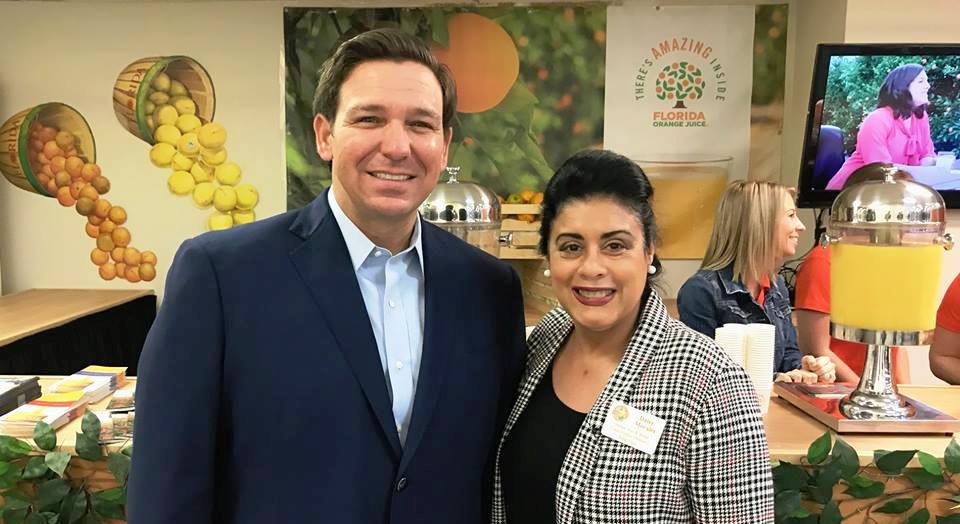
Then-newly elected Florida Gov. Ron DeSantis and Orange County Soil and Water Conservation District Supervisor Daisy Morales attend a Florida agriculture-related event at the Florida State Fair in February 2019. The photograph predates Morales’ election to the Florida House in 2020. Photo provided to FNN.
FNN TRACES DESANTIS PHOTO TO 2019 STATE FAIR
FNN also investigated a photograph used to associate Morales politically with DeSantis.
The photograph was not taken during the 2026 campaign or during Morales’ service in the Florida House.
FNN traced the photograph to February 2019 at the Florida State Fair, where Morales was serving as an elected Orange County Soil and Water Conservation District supervisor.
DeSantis had recently taken office as Florida’s Republican governor. Morales had been reelected to the nonpartisan conservation district and would not be elected to the Florida House until November 2020.
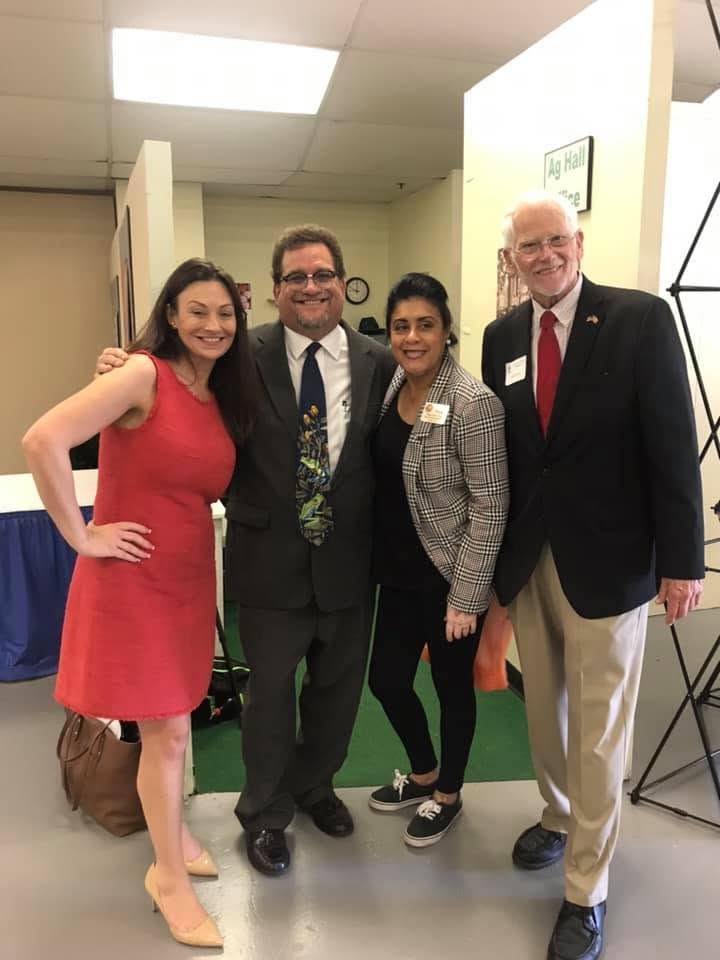
Then-Florida Agriculture Commissioner Nikki Fried, left, and Orange County Soil and Water Conservation District Supervisor Daisy Morales, second from right, attend an agriculture-related event at the Florida State Fair in February 2019. The photograph provides additional context surrounding Morales’ participation in the event where she was also photographed with Gov. Ron DeSantis. Photo provided to FNN.
FNN’s records also show Morales participating in the agriculture-related event with newly elected Democratic Agriculture Commissioner Nikki Fried.
The photograph establishes that Morales and DeSantis appeared together at an event involving Florida agriculture.
Standing alone, it does not establish that Morales endorsed DeSantis or supported his political agenda.
Whether the photograph, accompanying language and overall presentation created a false or defamatory implication is a question governed by the claims, evidence and applicable law in the civil case.
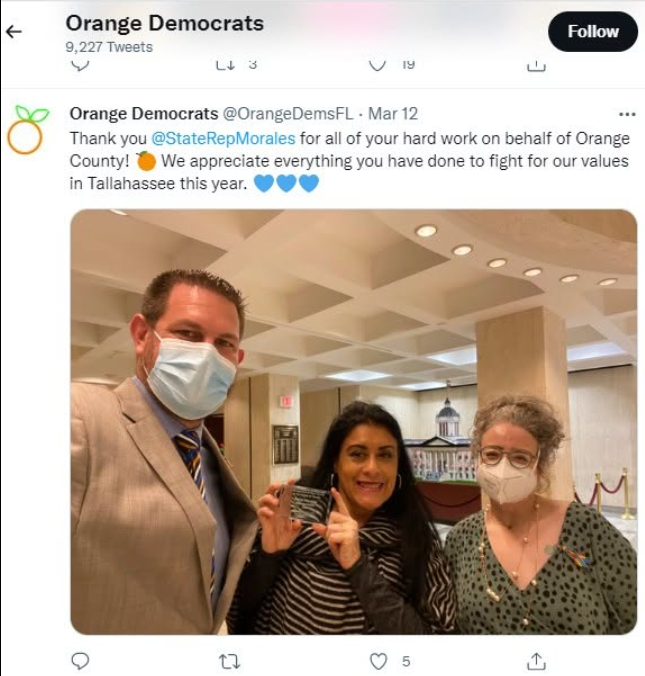
Then-Orange County Democratic Party Chair Wes Hodge, left, then-state Rep. Daisy Morales, center, and then-Orange County Democratic Party Vice Chair Jennifer “Rita” Harris, right, are pictured in March 2022 as Orange Democrats publicly recognized Morales’ work in Tallahassee. The party’s post thanked Morales for her work on behalf of Orange County and said, “We appreciate everything you have done to fight for our values in Tallahassee this year.”
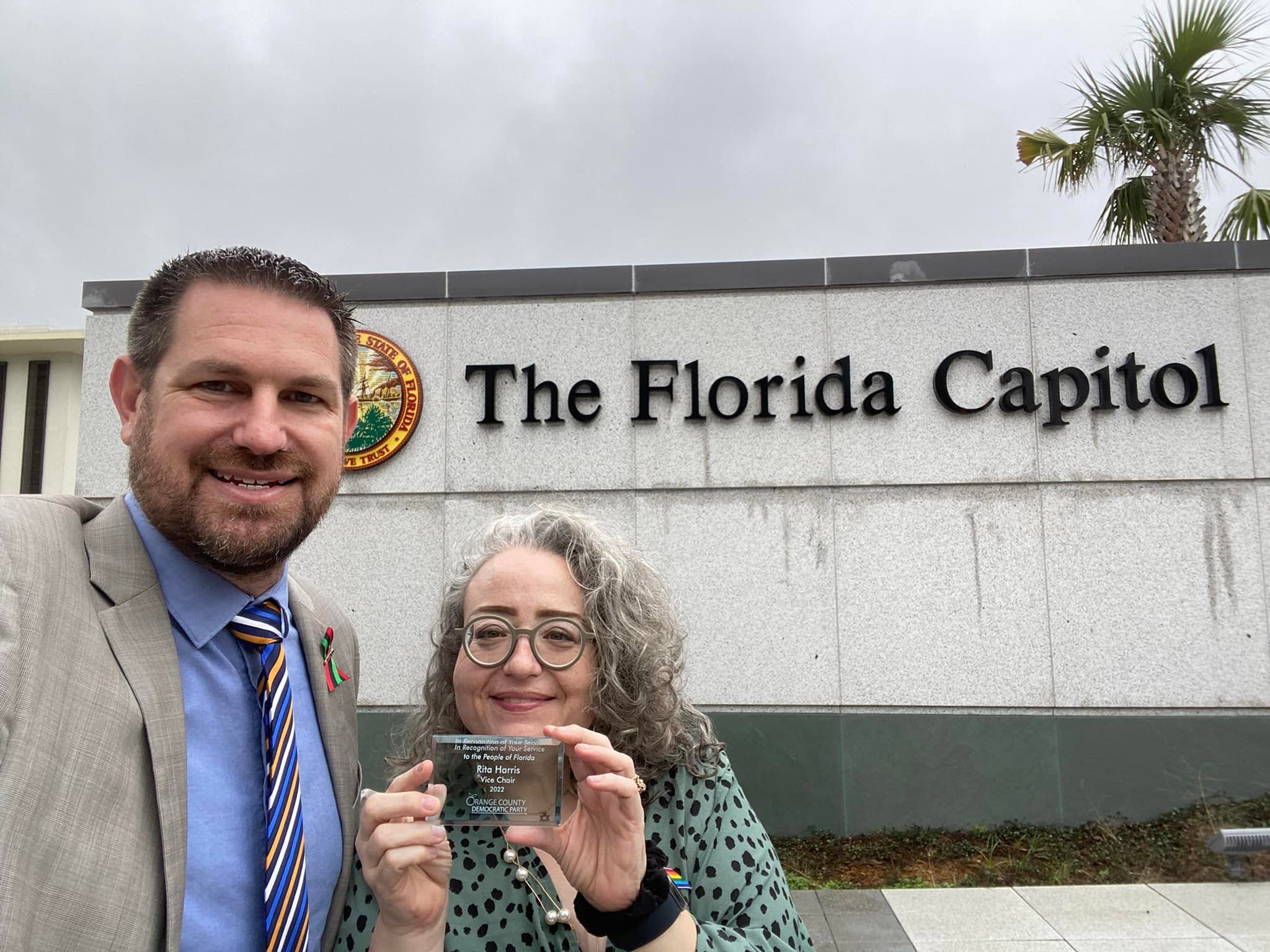
ORANGE DEMOCRATS PREVIOUSLY PRAISED MORALES
FNN also reviewed contemporaneous documentary material showing that the Orange County Democratic organization publicly praised Morales during her legislative tenure.
A 2022 Orange Democrats post thanked Morales for her work on behalf of Orange County and stated:
“We appreciate everything you have done to fight for our values in Tallahassee this year.”
At the time, Wes Hodge served as Orange County Democratic Party chair and Jennifer “Rita” Harris served as vice chair.
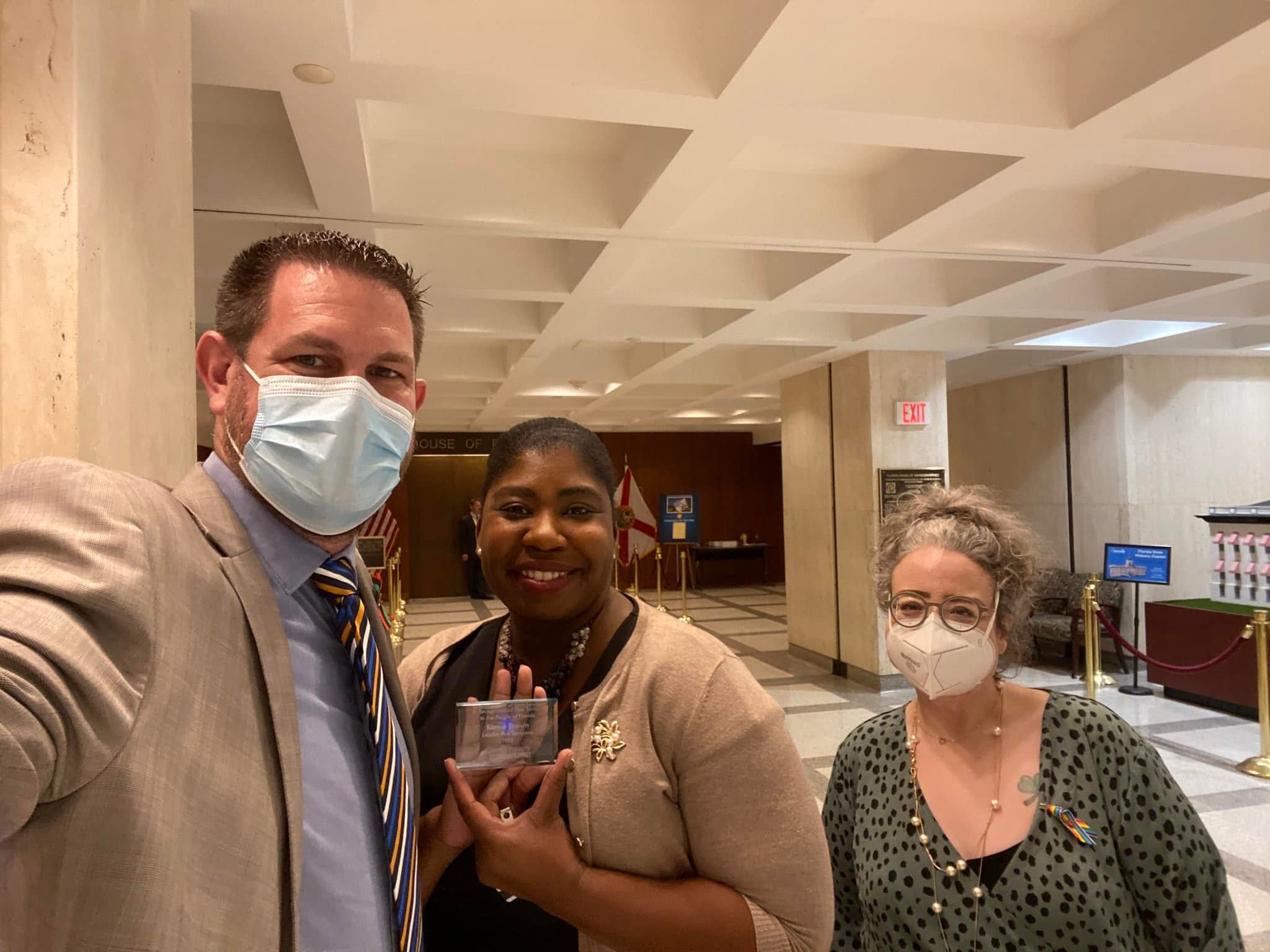
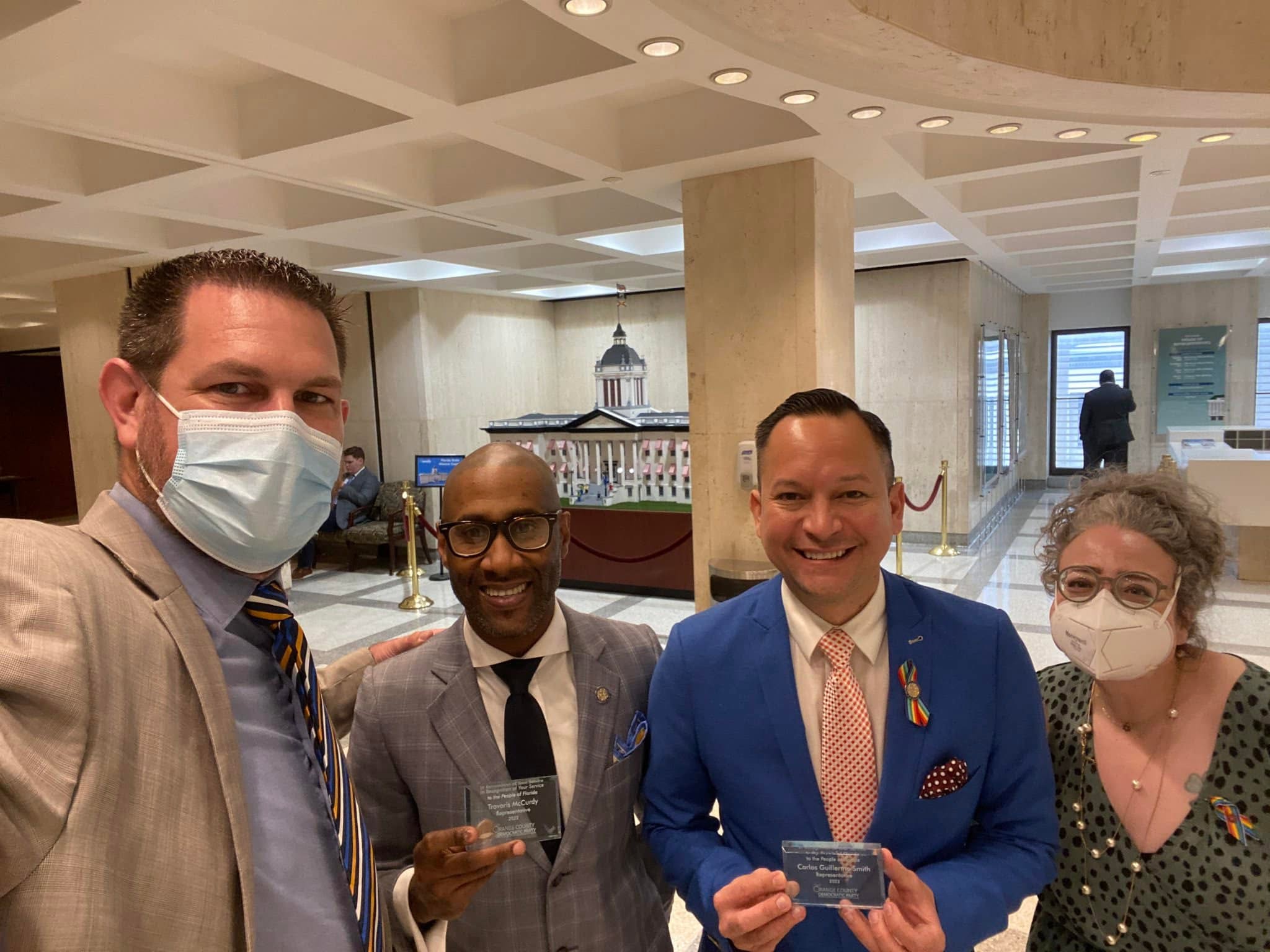
FNN’s documentary materials also show Morales receiving recognition during that period along with other Orange County Democratic state lawmakers.
The significance is chronological.
The recognition does not establish that Morales could not subsequently have violated a party rule. It does document how local Democratic leadership publicly characterized her before the later loyalty dispute.
By February 2024, an Orange County Democratic membership record reviewed by FNN identified Morales’ position as:
“Vacant — Oath Loyalty Violation.”
That creates questions potentially capable of being answered through original party records:
What occurred between the 2022 recognition and the 2024 vacancy designation? What rule was invoked? What process was followed? Was there a formal expulsion? What documents and votes support that characterization?
97% PEOPLE FIRST RATING ADDS LEGISLATIVE CONTEXT
Morales’ legislative voting record provides another contemporaneous reference point.
Florida’s People First Report Card identified Morales as a Democrat representing Orlando’s House District 48 and awarded her an A, or 97%, for the 2022 legislative session.
The rating does not establish Morales’ position on every issue and does not resolve the pending defamation claims.
It does provide a contemporaneous measurement of her voting record while serving as a Democratic state representative.
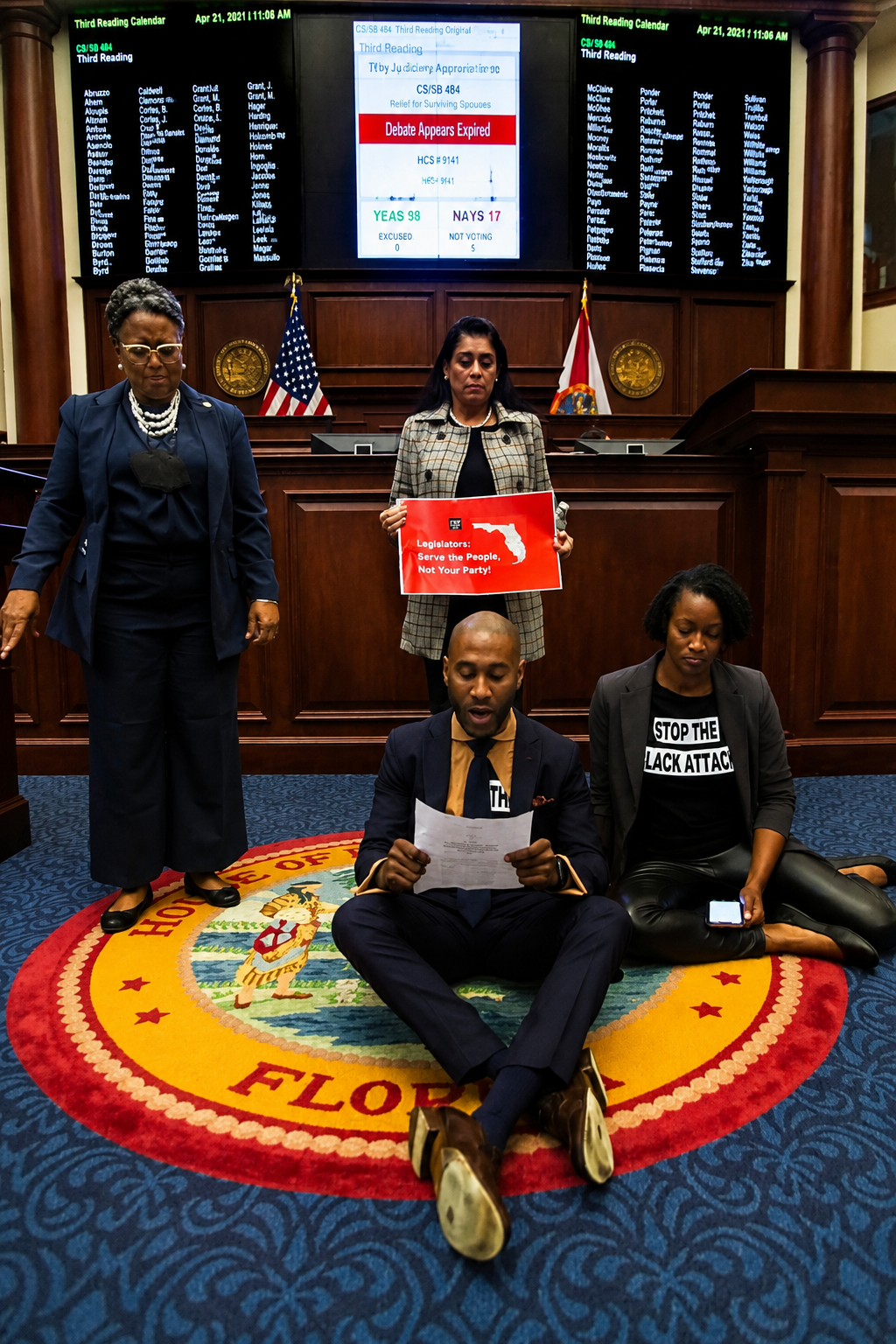
Rep. Yvonne Hayes Hinson, D-Gainesville, Rep. Daisy Morales, D-Orlando, Rep. Tray McCurdy, D-Orlando (in front) and Rep. Angie Nixon, D-Jacksonville, protest on the Florida Seal as debate is halted in the House of Representatives Thursday, April 21, 2022, at the Capitol in Tallahassee, Fla. The session was halted by the protest, but continued after a brief recess. Phil Sears AP
MIAMI HERALD DOCUMENTED MORALES IN DESANTIS MAP PROTEST
Morales’ legislative record also includes a highly public confrontation over a major DeSantis-backed initiative.
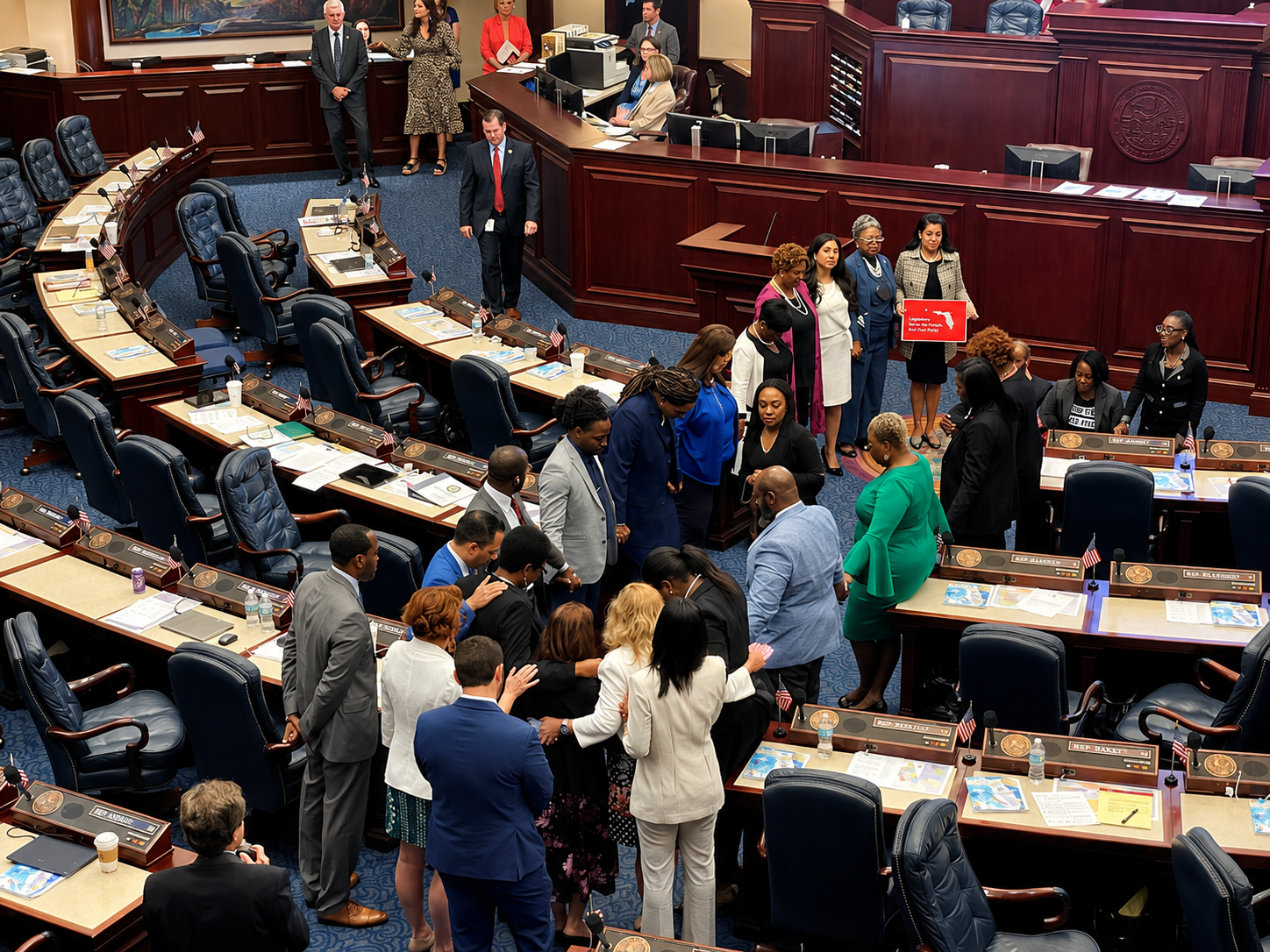
On April 21, 2022, Democratic lawmakers disrupted Florida House proceedings during debate over a congressional redistricting map drawn by the governor’s staff.
The Miami Herald documented the protest and Morales’ participation alongside Democratic lawmakers challenging the map.
Morales held a sign declaring:
“Legislators serve the people. Not your party.”
Democratic lawmakers sang “We Shall Overcome,” and the confrontation interrupted House proceedings before lawmakers returned and passed the map.
The Miami Herald coverage is significant because it was published contemporaneously in 2022 — years before the HD 43 primary, the disputed mailers or Morales’ lawsuit.
NBC NEWS CORRECTED NATIONAL RECORD TO IDENTIFY MORALES
The House-floor confrontation also received national coverage from NBC News.
NBC reported on Democratic lawmakers disrupting Florida House proceedings over the DeSantis congressional map.
Of particular significance, NBC subsequently issued a correction after initially misidentifying the Hispanic representative participating in the protest.
The correction specifically identified Daisy Morales.
Together, NBC’s national reporting, the Miami Herald’s coverage, Associated Press photography and FNN’s contemporaneous reporting independently document Morales’ participation in the confrontation.
That does not establish that Morales opposed every DeSantis policy or never worked across party lines.
It does provide historical evidence against which broad representations concerning her political alignment with DeSantis or Republicans can be evaluated.
Dource: Winter Park Voice
VILCHEZ SANTIAGO’S 2024 STATEMENT ADDS CONTEXT TO PARTY-LOYALTY DISPUTE
A statement Vilchez Santiago made while serving as chairman of the Orange County Democratic Executive Committee provides another contemporaneous record concerning cross-party political activity.
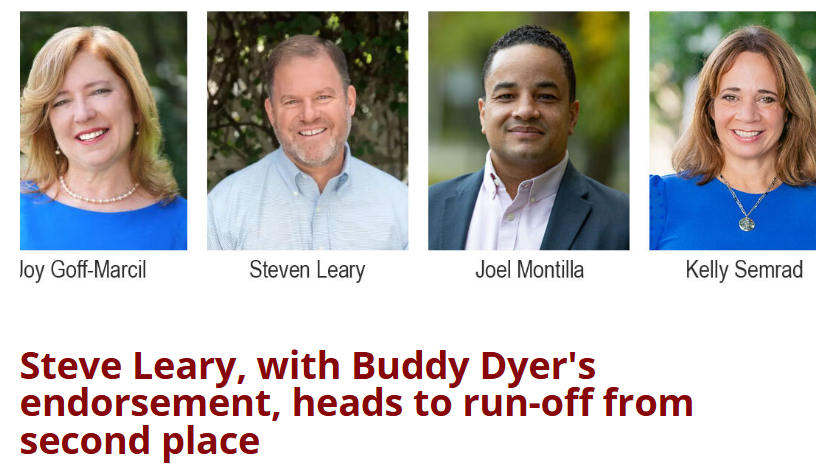
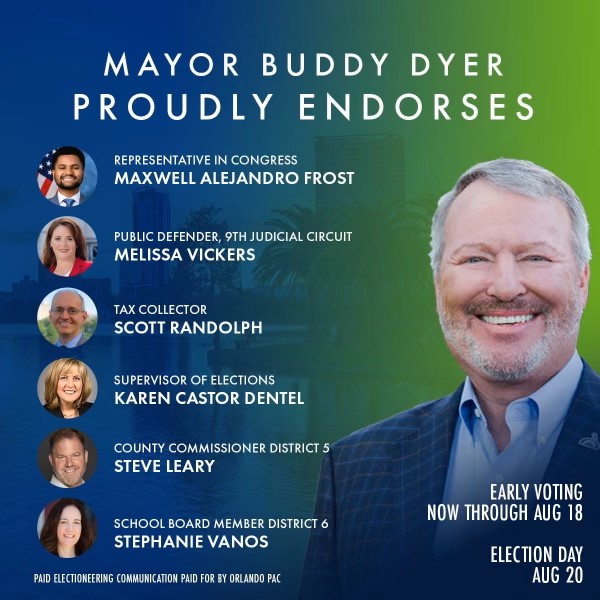
On Aug. 26, 2024, Winter Park Voice reported that Democratic Orlando Mayor Buddy Dyer had endorsed Republican former Winter Park Mayor Steve Leary in the nonpartisan Orange County Commission District 5 race.
The report also documented that other Democrats supported Leary.
Winter Park Voice interviewed Vilchez Santiago in his capacity as chairman of the Orange County Democratic organization. He said his organization had sent texts and mailers informing voters that Leary was a Republican rather than a Democrat.
Vilchez Santiago said that effort was intended to educate voters and was not undertaken specifically in response to Dyer’s endorsement.
That 2024 statement does not establish that party rules were selectively enforced against Morales.
It does create a contemporaneous comparison:
How did Vilchez Santiago and the Orange County Democratic organization distinguish among cross-party endorsements, participation in nonpartisan campaigns, voter education and conduct considered serious enough to trigger formal party discipline?
GALLO COMPARISON COULD TEST HOW PARTY RULES WERE APPLIED
Gallo’s documented involvement with Montilla adds another layer to that comparison.
If Gallo was subject to the same Orange County Democratic Executive Committee loyalty requirements as Morales at the relevant time, discovery could potentially examine how the party treated Gallo’s documented campaign-management and endorsement activity compared with Morales’ disputed host-committee participation.
But that threshold must first be established.
A registered Democrat is not necessarily a Democratic Executive Committee member subject to the same internal loyalty rules.
The relevant questions therefore would include:
Was Gallo an ODEC member at the relevant time?
Was Morales subject to the same rule?
What did the applicable loyalty oath actually prohibit?
Did the rules distinguish between endorsement, campaign management, host-committee participation and attendance at a nonpartisan campaign event?
Were comparable cases treated similarly?
The answers should come from membership records, bylaws, loyalty-oath provisions, disciplinary records and testimony rather than political assumptions.
CROSS-PARTY POLITICAL ACTIVITY COULD TEST PARTY-RULE CLAIMS
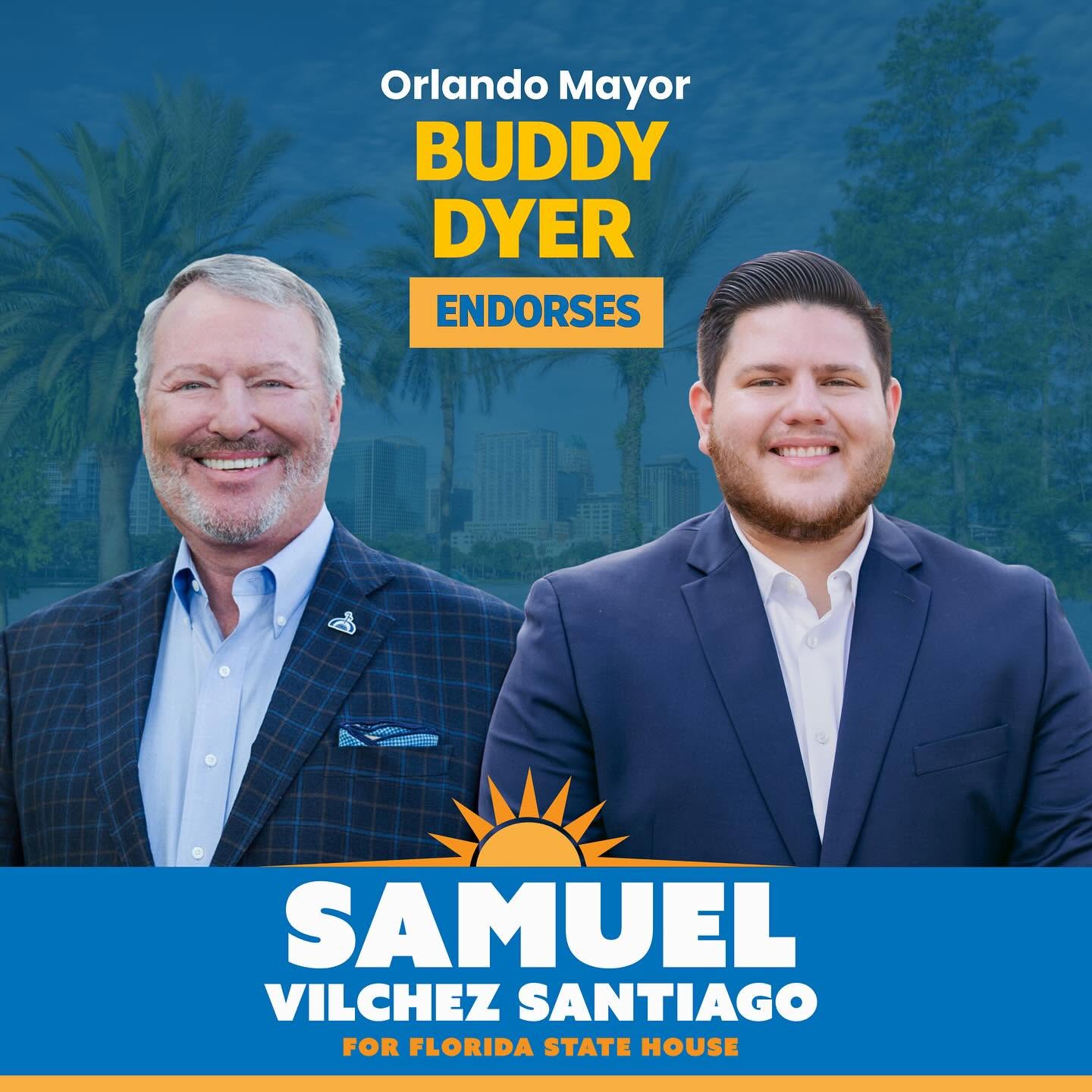
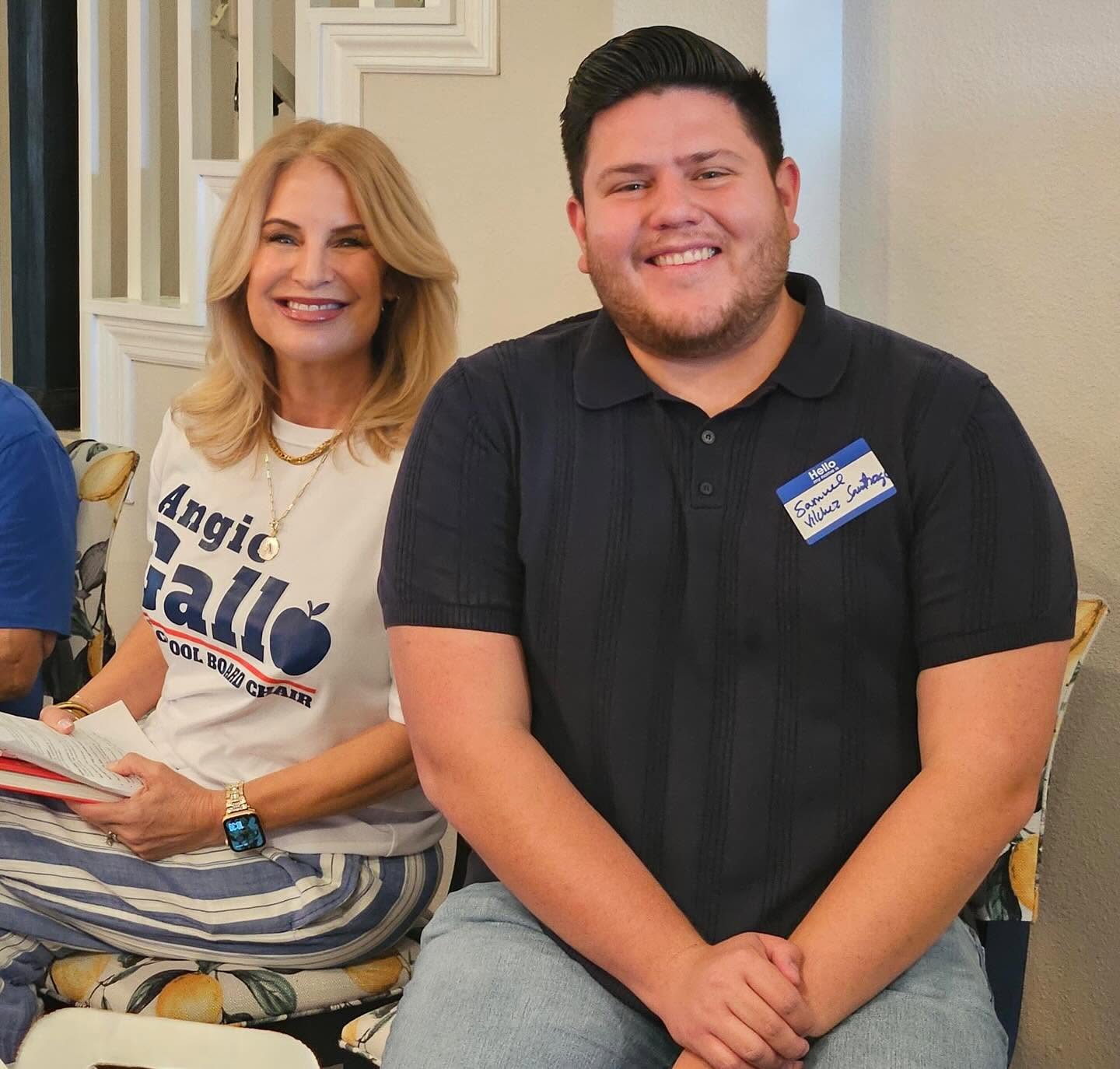
The broader cross-party record could also potentially include testimony or documents involving Orlando Mayor Buddy Dyer, Orange County Commissioner Michael Scott, Angie Gallo or other Democrats and Republicans if their experiences become relevant to a legally permitted issue.
Their possible relevance does not mean they are defendants, investigation targets or accused of misconduct.
The evidentiary purpose would be narrower: determining whether comparable political activity occurred and how party rules were interpreted or enforced.
DISCOVERY COULD TEST WHO KNEW WHAT — AND WHEN
The civil lawsuit could move the dispute beyond campaign statements and into original records and sworn testimony.
The original 2019 DeSantis photograph could establish its complete context.
The Montilla materials could establish precisely what involvement Morales had with his campaign.
Gallo could potentially provide firsthand information about the Montilla campaign’s endorsement practices.
Party records could establish what action was actually taken concerning Morales’ membership.
And Vilchez Santiago’s 2024 statements could be compared against the organization’s actual treatment of other cross-party political activity.
The resulting questions include:
Who originated the allegation that Morales endorsed Montilla?
What evidence supported it?
Was Montilla contacted?
Was Angie Gallo, Montilla’s campaign manager and announced endorser, contacted?
What information did they provide, if any?
Who provided the endorsement allegation to FHDCC?
What did Vilchez Santiago review before approving the communication?
What official records supported the representation concerning Morales’ Democratic Party status?
How had comparable cross-party activity previously been handled?
Was contradictory information available before publication?
FLORIDA ELECTIONS COMMISSION HAS SEPARATE INVESTIGATIVE AUTHORITY
The Florida Elections Commission proceeding presents another potential route for developing evidence.
Under Florida Statute 106.26, the commission has substantial subpoena authority when carrying out its statutory responsibilities.
The commission may subpoena qualifying persons and require production of records relevant to an investigation, including certain records and accounts of banks and trust companies doing business in Florida. Authorized representatives may administer oaths, and the commission can seek circuit-court enforcement when a witness fails to comply with a lawful subpoena.
That authority could permit an authorized investigation to test public allegations against underlying documents and testimony.
The filing of a complaint, however, does not itself establish that a violation occurred.
SUBPOENA POWER COULD MOVE THE DISPUTE BEYOND POLITICAL RHETORIC
Political accusations ordinarily can be answered with competing political statements.
A lawful subpoena operates differently.
That could make the distinction among Montilla, Gallo and Morales particularly relevant.
Montilla can address whether he received an endorsement.
Gallo potentially can address the internal operation of Montilla’s campaign and how endorsements were identified.
Morales can address the nature of her own involvement.
Other records could show what information Vilchez Santiago, FHDCC or political consultants possessed before the disputed communications were approved and distributed.
Whether any of those individuals is actually subpoenaed would remain a decision for the legally authorized body.
COULD EVIDENCE REACH OTHER STATE OR FEDERAL AUTHORITIES?
Potentially — but the legal distinction remains important.
A defamation lawsuit does not become a criminal prosecution because evidence emerges during discovery.
A Florida Elections Commission proceeding likewise is not automatically a criminal investigation merely because the commission has investigative powers.
Florida Statute 106.25 expressly preserves the jurisdiction of other government officers and agencies independently empowered by law to investigate, act upon or dispose of alleged Election Code violations.
Evidence developed through civil discovery or an authorized election investigation therefore could potentially be considered by another authority if it falls within that authority’s independent jurisdiction.
Depending upon the facts and applicable law, that potentially could include a local state attorney, the Florida Department of Law Enforcement, the Florida attorney general or Office of Statewide Prosecution, or federal investigative or prosecutorial authorities where an independent federal jurisdictional basis exists.
Those agencies do not possess interchangeable authority.
The legally appropriate progression is:
Evidence → applicable law → jurisdiction → agency review or investigation → prosecutorial decision, if warranted.
REFERRAL, INVESTIGATION AND PROSECUTION ARE DIFFERENT
A request for another agency to review evidence is not the same as confirmation that an investigation has begun.
An agency receiving information must make its own assessment of jurisdiction and evidence.
It could decline to act, request more information, conduct a preliminary review, open an investigation or pursue another action authorized by law.
PRESERVATION OF ORIGINAL EVIDENCE COULD BECOME IMPORTANT
As the documentary record grows, preservation of original materials could become increasingly important to both the defamation lawsuit and Florida Elections Commission investigation.
Potentially relevant materials could include original photographs and metadata, emails, party records, endorsement materials and communications concerning the creation, approval and distribution of the disputed campaign messages.
There is no finding that evidence has been destroyed, concealed, fabricated or altered. Any allegation of evidence tampering or improper destruction would require separate supporting facts and legal analysis.
Preservation nevertheless matters because original records can allow courts and authorized investigators to determine what information existed, when it existed, who possessed it and whether later representations accurately reflected the underlying record.
WHAT’S AT STAKE: THE EVIDENCE NOW MATTERS
Vilchez Santiago won the Aug. 18 Democratic primary, but the election did not resolve the allegations now before the civil court and Florida Elections Commission.
The lawsuit and election proceeding could move the dispute beyond campaign rhetoric to documents, electronic communications, witnesses, subpoenas and sworn testimony — testing what was presented to voters, what evidence supported it and what those responsible knew before publication.
Montilla’s denial that Morales endorsed him, Gallo’s documented role as Montilla’s campaign manager and public endorser, and the broader party record sharpen a central question: Could the disputed claims have been verified before they reached voters?
Vilchez Santiago now heads toward the November general election as the Democratic nominee while those legal questions remain unresolved.
For FNN, the story no longer ends with what was said during the campaign. It now turns on what the evidence can prove.


 Central Florida News4 days ago
State House Democratic Nominee Samuel Vilchez Santiago Faces Defamation Lawsuit, Election Law Investigation
 North Florida News2 days ago
WNBA Bound: Jacksonville Waves Guard Shyanne Sellers Signs With Los Angeles Sparks


 World4 days ago
Ecuador Honors Marco Rubio With National Order of Merit Grand Cross
 Florida2 days ago
FNN ANALYSIS: After 2024 Defections, Florida Democrats Face 2026 Election Test: Can They Rebuild as Republicans Expand Their Advantage?
 Florida4 days ago
Nikki Fried Targets Donalds, Luna Over Affordability as Republicans Gather for Trump Convention


