Politics
Rep. Soto Calls for Senate Action on Key House-Passed Bills and Highlights Some Key Bipartisan Achievements for the Year
Published
6 years agoon
WASHINGTON, D.C. – Today, Rep. Darren Soto (FL-09) celebrated the more than 400 bills, including more than 275 bipartisan bills still awaiting action in the GOP-controlled Senate, passed by the Democratic House Majority over the past year.
“In 2018, the American people elected a Democratic House Majority committed to delivering results that make a difference in the lives of Florida families and all Americans,” said Rep. Soto. “For more than 300 days, Democrats have honored our promises and have passed key initiatives in our For The People agenda. Yet, instead of listening to the will of the American people, Senate Majority Leader Mitch McConnell refuses to bring more than 275 bipartisan bills to the Senate floor. As we close out 2019, I will continue to call on the Senate to bring these critical initiatives up for a vote.”
Many key initiatives remain on Senate Leader Mitch McConnell’s desk, including such bills as:
- H.R. 1, For The People Act, to restore confidence in our democracy, including by cracking down on dark money in campaigns;
- H.R. 3, Lower Drug Costs Now Act, sweeping legislation to dramatically reduce drug prices by giving Medicare the power to negotiate directly with the drug companies; making lower drug prices negotiated by Medicare available to Americans with private insurance, not just Medicare beneficiaries; and stopping drug companies from ripping off Americans while charging other countries less for the same drugs;
- H.R. 4, Voting Rights Advancement Act, to finally restore the full strength of the Voting Rights Act after the disastrous 2013 Shelby v. Holder Supreme Court decision;
- H.R. 5, Equality Act, to finally and fully end discrimination against LGBTQ Americans;
- H.R. 6, The American Dream and Promise Act, to provide a pathway to lawful permanent residence (and eventual citizenship) to those who have lived most of their lives in this country, including Dreamers and TPS and DED holders;
- H.R. 7, Paycheck Fairness Act, to ensure that women receive equal pay for equal work;
- H.R. 8, Bipartisan Background Checks Act, a commonsense measure to require background checks for all gun sales, closing the gun show and online loopholes;
- H.R. 9, Climate Action Now Act, to ensure that the U.S. honors our commitments on climate action detailed in the Paris Agreement;
- H.R. 987, Protecting People With Pre-Existing Conditions/Lowering Drug Costs, an omnibus bill that includes several provisions to strengthen protections for pre-existing conditions, end ACA sabotage, and bring down drug costs;
- H.R. 582, Raise The Wage Act, to gradually raise the minimum wage to $15 per hour by 2025, raising the wages of up to 33 million hard-working Americans;
- H.R. 5430, U.S.-Mexico-Canada Trade Agreement Implementing Legislation
- H.R. 397, Rehabilitation For Multiemployer Pensions Act (The Butch Lewis Act)
- H.R. 1585, Violence Against Women Reauthorization Act, a strong improvement and long-term reauthorization of VAWA;
- H.R. 1644, Save The Internet Act, to protect the free and open internet for all;
- H.R. 2722, Securing America’s Federal Elections (SAFE) Act, to strengthen our election defenses against foreign attack;
- H.R. 1112, Enhanced Background Checks; to close the Charleston loophole;
- H.R. 5038, Farm Workforce Modernization Act, to honor workers’ dignity and support the farm economy;
- H.R. 2534, Insider Trading Prohibition
- H.R. 205, 1146, 1941 – Banning Offshore Drilling
- H.R. 1423, Forced Arbitration Injustice Repeal
- H.R. 840, Veterans’ Access to Childcare
These key bills have the support of strong majorities of the American people. For example:
- 93 percent of Americans support universal background checks.
- 88 percent of Americans support giving Medicare the power to negotiate lower drug prices with drug companies.
- 75 percent of Americans support bills strengthening the protections for people with pre-existing conditions.
- 67 percent of Americans support raising the minimum wage to $15.
- 66 percent of Americans support legislation to combat climate change.
- 87 percent of Americans support protecting Dreamers from deportation.
Despite the key initiatives currently being blocked in the Senate, there have been some important bipartisan achievements this year that have been signed into law or are expected to be signed into law soon, including Rep. Soto’s Strengthening Mosquito Abatement for Safety and Health Act and bills such as:
- H.R. 1327, Never Forget the 9/11 Heroes Act
- H.R. 1994, SECURE/Gold Star Family Tax Relief
- S. 151, Pallone-Thune TRACER Act, (Cracking Down on Robocalls)
- H.R. 748, Middle Class Health Benefits Tax Repeal
- S. 1790, National Defense Authorization Act
- Includes 12 weeks of paid family leave for federal workers
- S. 1838, Hong Kong Human Rights & Democracy
- S. 47, Conservation, Management, & Recreation Act
- H.R. 2157, Response to Hurricanes/Floods/ Wildfires
- H.R. 3151, Taxpayer First Act, Making the IRS More Consumer-Friendly
- H.R. 2336, Family Farmer Relief Act
- H.R. 299, Blue Water Navy Vietnam Veterans Act
- H.R. 2486, FUTURE Act to fund HBCUs, MSIs & TCUs & simplify the student aid process
- Bipartisan Appropriations Bills:
- Invests in health care, education, infrastructure, election security, rural communities and the environment
- Funds research on gun safety
- Raises the tobacco age to 21
“Despite a divided government, I’m proud that the Democratic-led House, working with the GOP-led Senate and the Republican White House, has been successful in achieving some major bipartisan legislation – such as my own bill the Strengthening Mosquito Abatement for Safety and Health Act, the United States-Mexico-Canada Trade Agreement, bipartisan appropriations measures that included 37 of my provisions, a permanent reauthorization of the Victim Compensation Fund for 9/11 heroes, providing critical tax relief to Gold Star families and a bill cracking down on robocalls,” continued Rep. Soto. “As we enter a new decade, I hope we can have many more bipartisan achievements on the issues that matter in the lives of the American people.”
You may like
Florida
Central Florida Lawmakers Challenge DeSantis Redistricting Map as Lawsuits Mount
Published
5 days agoon
May 6, 2026By
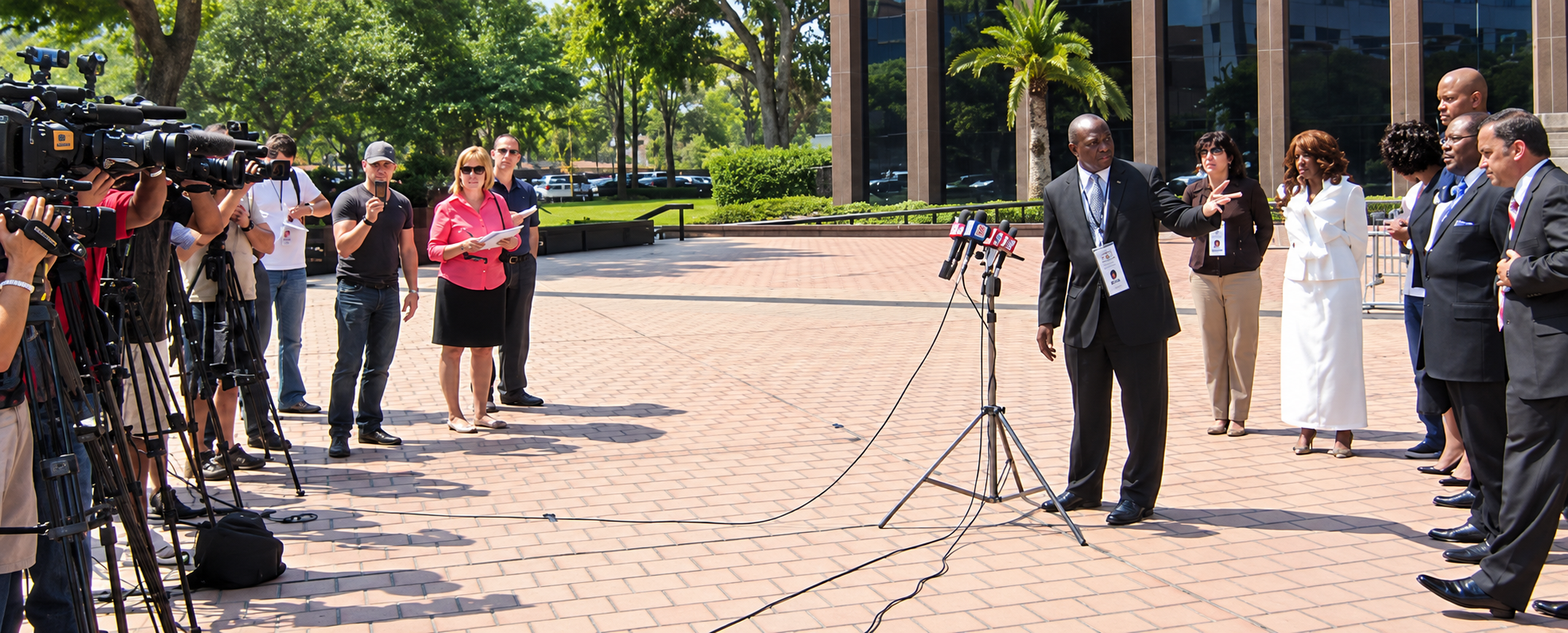
Willie DavidORLANDO, Fla. (FNN) — The Central Florida Black Caucus of Local Elected Officials held a press conference on the steps of Orlando City Hall, criticizing a new congressional map signed into law by Florida Governor Ron DeSantis.
Speakers included U.S. Congressman Maxwell Frost, State Senator Lavon Bracy-Davis, State Representative Bruce Antone, Orange County Clerk of Courts Tiffany Moore Russell, representatives from Equal Ground, and the Central Florida Urban League. Officials argued the map weakens minority representation and follows a recent U.S. Supreme Court ruling that scaled back key protections under the Voting Rights Act.
Florida National News has learned that three lawsuits have been filed seeking to block the newly approved congressional map following the redistricting process. The map is widely viewed as an effort to expand Republican representation in Florida’s congressional delegation ahead of upcoming elections.
IMPACT ON BLACK REPRESENTATION
Leaders warned the redistricting plan could significantly reduce the influence of Black voters in Central Florida and across the state. They argued that dismantling historically minority-access districts undermines decades of progress in equitable representation.
LEGAL CHALLENGES UNDERWAY
At least three lawsuits have been filed challenging the legality of the new map. Civil rights advocates contend the redistricting plan violates federal protections and could further erode voting rights following the Supreme Court’s recent decision.
FUTURE OF BLACK CONGRESSIONAL LEADERSHIP
Elected officials and advocacy groups expressed concern about the long-term effects on Black congressional representation. They emphasized the need for continued legal action and community engagement to protect fair representation in future elections.
Florida
DeSantis’ New Florida Congressional Map Could Spark Lawsuits, Legislative Showdown, and Statewide Protests
Published
2 weeks agoon
April 27, 2026TALLAHASSEE, Fla. (FNN) — Governor Ron DeSantis unveiled a proposed congressional redistricting map that could significantly reshape Florida’s representation in the U.S. House ahead of the 2026 midterm elections.
The proposal, released Monday, outlines districts that could favor Republicans in 24 seats, compared to four Democratic-leaning districts. Currently, Florida’s congressional delegation includes 20 Republicans and seven Democrats, with one vacant seat.
REDISTRICTING PROPOSAL & POLITICAL IMPACT
The governor said the new map reflects Florida’s population changes and fulfills his commitment to mid-decade redistricting. Lawmakers have been called into a special legislative session to consider the proposal.
The map appears to eliminate four Democratic-held seats, including a Tampa-area district represented by U.S. Rep. Kathy Castor, an Osceola County district held by U.S. Rep. Darren Soto—the first Puerto Rican elected to Congress from Florida—and a Palm Beach-Broward district that could displace U.S. Rep. Jared Moskowitz.
The proposal also affects a majority-Black voting district spanning Palm Beach and Broward counties, previously represented by former U.S. Rep. Sheila Cherfilus-McCormick, raising concerns about the future of minority representation.
Supporters, including Evan Power, say the map could better align districts with voter distribution. Critics, including Nikki Fried, have called the proposal unconstitutional gerrymandering. Florida law prohibits partisan gerrymandering, setting up potential legal challenges.
Rep. Tray McCurdy, D-Orlando and Rep. Angie Nixon, D-Jacksonville sit on the Florida Seal in protest as debate stops on Senate Bill 2-C: Establishing the Congressional Districts of the State in the House of Representatives Thursday, April 21, 2022 at the Capitol in Tallahassee, Fla. Rep. Daisy Morales, D-Orlando, joins the protest, holding a sign. The session was halted on the protest. (AP Photo/Phil Sears)
LOOKING BACK: 2022 PROTESTS OVER REDISTRICTING
The current debate mirrors tensions from 2022, when Democratic lawmakers staged a sit-in protest on the Florida House floor in opposition to a previous congressional map backed by DeSantis.
Lawmakers including Yvonne Hinson, Angie Nixon, Travaris McCurdy, Felicia Robinson, and Daisy Morales participated in the protest, temporarily halting legislative proceedings.
Morales, a member of the Congressional Redistricting Subcommittee and the only Hispanic lawmaker involved in the sit-in, strongly criticized the map at the time.
“Our democracy is being attacked. The governor eliminating two Black congressional seats is a power grab and it’s wrong,” Morales said in a written statement. “Stripping seats from Black representation is the same as saying the Black voice—the Black vote—doesn’t matter.”
She also warned about potential impacts on Hispanic representation:
“With this map passing, I’m deeply concerned it could target the only Puerto Rican representing Florida in Congress, Darren Soto, to benefit partisan interests. We don’t want to disenfranchise the 1.2 million Puerto Ricans in Florida.”
WHAT COMES NEXT IN 2026
As lawmakers prepare to debate the new proposal, Democrats are expected to push back through legal challenges, legislative opposition, and public advocacy.
The outcome of Florida’s redistricting battle could play a pivotal role in shaping control of the U.S. House and influence the national political landscape heading into the 2026 midterm elections.
Politics
Gov. Ron DeSantis Orders Flags at Half-Staff for Slain Coral Springs Vice Mayor Nancy M. Metayer Bowen
Published
4 weeks agoon
April 16, 2026TALLAHASSEE, Fla. (FNN) — Gov. Ron DeSantis has ordered flags to be flown at half-staff in honor of Coral Springs Vice Mayor Nancy M. Metayer Bowen, who was killed April 1 in what authorities describe as a domestic violence incident.
The directive calls for U.S. and Florida state flags to be lowered from sunrise to sunset Friday, April 17, 2026, at the State Capitol in Tallahassee and at all local and state buildings, installations and grounds throughout Coral Springs.
According to Coral Springs Police, officers conducted a wellness check at Metayer Bowen’s home after city staff raised concerns when she missed scheduled meetings and could not be reached. Responding officers found her deceased inside the residence.
Investigators said the killing appears to be a domestic violence incident. Her husband, Stephen Bowen, was later taken into custody and faces charges of premeditated murder and tampering with evidence. The case remains under active investigation.
State and local leaders say the half-staff order honors Metayer Bowen’s service and legacy in the Coral Springs community, where she was recognized for her leadership and commitment to public service.
What We Know About Her Death
Police say Metayer Bowen was killed April 1 at her Coral Springs home. Officers discovered her body during a wellness check prompted by her unexplained absence from official duties and lack of communication.
Husband Arrested, Faces Charges
Authorities arrested her husband, Stephen Bowen, who now faces premeditated murder and evidence-tampering charges. Investigators have identified the case as an apparent domestic violence incident.
State Honors Her Legacy
Gov. DeSantis ordered flags lowered across key government buildings in Tallahassee and Coral Springs, recognizing Metayer Bowen’s public service and the impact of her loss on the community.