

Education
Rubio Warns of Beijing’s Growing Influence, Urges Florida Schools to Terminate Confucius Institute Agreements

Published
9 years agoon
By
Willie David
Washington, D.C. – U.S. Senator Marco Rubio (R-FL) today urged Miami Dade College, the University of North Florida, the University of South Florida, the University of West Florida, and Cypress Bay High School to terminate their agreements with Chinese government-run programs known as Confucius Institutes. In a letter sent to each Florida school, along with its board of trustees, Rubio warned of China’s growing foreign influence operations in the United States.
The full text of the letters is below:
Dear X:
I write with regards to growing foreign influence operations of the People’s Republic of China (PRC) in the United States, particularly in our academic institutions. There is mounting concern about the Chinese government’s increasingly aggressive attempts to use “Confucius Institutes” and other means to influence foreign academic institutions and critical analysis of China’s past history and present policies. Additionally, the PRC continues its efforts to interfere in multilateral institutions, threaten and intimidate rights defenders and their families, and impose censorship mechanisms on foreign publishers and social media companies. For reasons outlined below, I respectfully urge you to consider terminating your Confucius Institute agreement.
Confucius Institutes are Chinese government-run programs that use the teaching of Chinese language and culture as a tool to expand the political influence of the PRC. In November 2011, Li Changchun, a former member of the Standing Committee of the Politburo, the highest body of the Chinese Communist Party, stated in a speech at the Beijing Headquarters of the Confucius Institute:
“The Confucius Institute is an appealing brand for extending our culture abroad. It has made an important contribution toward improving our soft power. The ‘Confucius’ brand has a natural attractiveness. Using the excuse of teaching Chinese language, everything looks reasonable and logical.”
There are presently more than 100 Confucius Institutes, in addition to Confucius Classrooms at the K-12 level in the United States, including several in the state of Florida. These institutes are overseen by a branch of the Chinese Ministry of Education, and are instructed to only teach versions of Chinese history, culture or current events that are explicitly approved by the Chinese Government and Communist Party. As the American Association of University Professors noted in a June 2014 report:
“Confucius Institutes function as an arm of the Chinese state and are allowed to ignore academic freedom. Their academic activities are under the supervision of Hanban, a Chinese state agency which is chaired by a member of the Politburo and the vice-premier of the People’s Republic of China. Most agreements establishing Confucius Institutes feature nondisclosure clauses and unacceptable concessions to the political aims and practices of the government of China. Specifically, North American universities permit Confucius Institutes to advance a state agenda in the recruitment and control of academic staff, in the choice of curriculum, and in the restriction of debate.”[1]
Moreover, Confucius Institute instructors are almost always hired in China and trained by the Chinese Ministry of Education without any of the same employment and hiring protections that exist in the United States. Much more difficult to measure but no less insidious, however, is the self-censorship that often takes place in academic settings where there is a Chinese government presence in the form of a Confucius Institute. University of Chicago professor Marshall Sahlins has called Confucius Institutes “academic malware” because they represent and reflect decidedly illiberal views of education and academic freedom. We know from multiple reports that topics, such as the status of Tibet and Taiwan, the fourth of June 1989 at Tiananmen Square, Falun Gong, and universal human rights, are off-limits at these institutes.
In a 2017 report titled, “Outsourced to China: Confucius Institutes and Soft Power in American Higher Education,” the National Association of Scholars found that “to a large extent, universities have made improper concessions that jeopardize academic freedom and institutional autonomy. Sometimes these concessions are official and in writing; more often they operate as implicit policies.”[2] In turn, a growing number of universities have already cut ties with Confucius Institutes:
- In 2014, the University of Chicago suspended negotiations to renew its agreement to host a Confucius Institute following a petition signed by more than 100 faculty members raising concerns.
- Days later, Pennsylvania State University cut ties with its Confucius Institute, noting: “Several of our goals are not consistent with those of the Office of Chinese Languages Council International, known as the Hanban, which provides support to Confucius Institutes throughout the world.” [3]
- Ontario’s McMaster University shuttered its Confucius Institute in 2013 after a former instructor alleged that the university was “giving legitimization to discrimination” because her contract with Hanban prohibited her participation in Falun Gong.[4]
Indeed, as Politico reported in “How China Infiltrated U.S. Classrooms” (January 16, 2018): “The American Association of University Professors, America’s leading professorial guild, also recommended in 2014 that ‘universities cease their involvement in Confucius Institutes unless the agreement between the university and Hanban is renegotiated,’ so that the universities have unilateral control over the curriculum and faculty, Confucius faculty have the same rights of free inquiry as their fellow teachers, and contracts between Hanban and the partner universities are made public.”
I remain deeply concerned by the proliferation of Confucius Institutes and Confucius Classrooms in the United States. Given China’s aggressive campaign to “infiltrate” American classrooms, stifle free inquiry, and subvert free expression both at home and abroad, I respectfully urge you to consider terminating your Confucius Institute agreement. Should you have any questions or concerns please do hesitate to contact my office for further discussion.
Thank you for your time and attention to this important matter.
###
[1] https://www.aaup.org/report/confucius-institutes
[2] https://www.nas.org/projects/confucius_institutes
[3] https://www.wsj.com/articles/penn-state-latest-school-to-drop-chinas-confucius-institute-1412196655
[4] https://www.theglobeandmail.com/news/national/education/mcmaster-closing-confucius-institute-over-hiring-issues/article8372894/


Central Florida News
Festival of Trees Marks 40 Years With Holiday Displays, Santa Breakfasts and Parties

Published
18 hours agoon
October 22, 2026
The nine-day celebration benefits the Orlando Museum of Art and its educational programs.
ORLANDO, Fla. (FNN) — Festival of Trees will return to the Orlando Museum of Art Nov. 14–22, celebrating its 40th anniversary with designer-decorated trees, visits with Santa, holiday workshops and evening parties.
Presented by the Council of 101, with AdventHealth as platinum presenting sponsor, this year’s festival carries the theme “Forty Seasons of Joy.” Its design inspiration comes from the ruby, a traditional symbol of a 40th anniversary.
The museum will feature more than 50 designer-decorated trees, along with wreaths, tablescapes, holiday vignettes, a Gingerbread Village and a Holiday Boutique, according to organizers.
“Whether you’re bringing the children to meet Santa, gathering friends for a festive night out or finding inspiration for your own holiday decorating, there’s a way to make the season your own at Festival of Trees,” said Elizabeth Benoist, president of the Council of 101.
Hours, Tickets and Museum Support
The festival will be open daily from 10 a.m. to 5 p.m. The Nutcracker Café will operate from 10 a.m. to 3 p.m.
General admission costs $23 for adults and $15 for children ages 3–12. Seniors, active-duty and retired military personnel, first responders and educators qualify for $15 admission with valid identification.
Guests can purchase designer trees, wreaths and gingerbread creations, enter drawings for tabletop displays and participate in a silent auction. Proceeds support the museum and its educational and lifelong-learning programs.
“We’re excited to welcome guests back for another memorable celebration that supports the Orlando Museum of Art and the important role it plays in enriching our community through art and education,” Benoist said.
Santa Breakfasts and Family Celebrations
Breakfast with Santa returns Nov. 14, 15 and 21 from 8:30 to 10 a.m. Families can reserve tables for four, six, eight or 10 guests, with prices ranging from $185 to $460.
The breakfasts include a hot meal, crafts, face painting, photos with Santa, balloon artists and early access to the festival.
The Reindeer Romp Children’s Holiday Party takes place Nov. 20 from 6:30 to 9 p.m., with VIP admission beginning at 5:30 p.m. Activities include photos with Santa, story time with Mrs. Claus, face painting, holiday sing-alongs and reindeer stilt walkers.
Tickets cost $35 per adult or child of any age, or $40 for VIP admission. Dinner will be available for purchase at the café.
Holiday Parties and Evening Events
The celebration begins before the public opening with the Opening Night “TreeView” Party on Nov. 13 from 7 to 10 p.m. The evening includes entertainment, food offerings and a ceremonial tree lighting. Guests receive a welcome glass of sparkling wine and two drink tickets; a cash bar will also be available.
Other evening events include:
| Event | Date and time | Admission |
|---|---|---|
| Ugly Sweater Holiday Party — Live music, a holiday sweater contest and cash bar | Nov. 14, 7:30–9:30 p.m. | $40 |
| Festival After 5 — After-hours displays and Holiday Cookie Stops; food and beverages sold separately | Nov. 19, 5:30–9:30 p.m. | $15 adults; $10 children |
| Sip & Sleigh Cocktail Party — Adults-only evening with jazzy holiday music; food and drinks sold separately | Nov. 21, 7–9 p.m. | $35 |
Decorating, Beauty and Entertaining Workshops
The festival’s workshops offer ideas guests can bring into their own holiday celebrations.
| Workshop | Date and time | Ticket price |
|---|---|---|
| From the White House to Your House — Winter Park interior designer Lindsay Matteoni shares stories, photographs and tips from volunteering to decorate the White House for Christmas | Nov. 14, 3:30–5 p.m. | $65 |
| Shimmer & Spice — Film and television makeup artist Leslie Christin demonstrates holiday makeup techniques | Nov. 15, 1:30–3:30 p.m. | $65 |
| The Festive Platter — Chef-led appetizer demonstration, tastings and take-home recipes | Nov. 15, 3:30–5:30 p.m. | $70 |
| Baubles & Branches — Bow-making techniques and seasonal decorating tips | Nov. 21, 3–5 p.m. | $65 |
The makeup workshop is limited to 25 guests, who should bring a hand or stand mirror. Participants in Baubles & Branches may bring their own ribbon or use materials provided.
Special-event tickets are priced separately from general admission and include festival admission, according to organizers.
Special Days Honor Seniors and Community Heroes
Salute to Seniors takes place Nov. 18 from 10 a.m. to 5 p.m., offering guests ages 60 and older $15 admission and special entertainment.
Heroes Day, scheduled for Nov. 22 during the same hours, offers $15 admission with valid identification to active-duty and retired military personnel, first responders and educators.
New Café Operator Supports Hunger Relief
Plate Above Catering, a catering company of Second Harvest Food Bank of Central Florida, will operate The Nutcracker Café this year.
Organizers said the partnership connects the festival’s support for arts education with local hunger relief efforts.
Tickets, special-event details and updates are available at councilof101.org. Follow @FestivalofTreesOrlando on Facebook and @councilof101oma on Instagram.
Central Florida News
Bethune-Cookman Secures Nearly $5.2 Million in Federal Health Funding
Published
19 hours agoon
October 22, 2026
Separate $250,000 state appropriation will help launch a dual enrollment nursing program.
DAYTONA BEACH, Fla. (FNN) — Bethune-Cookman University’s College of Nursing and Health Sciences has secured nearly $5.2 million in federal funding from the Health Resources and Services Administration, marking the university’s first funding award from the agency, according to B-CU.
Separately, a $250,000 appropriation from the state of Florida will help launch the university’s new dual enrollment nursing program.
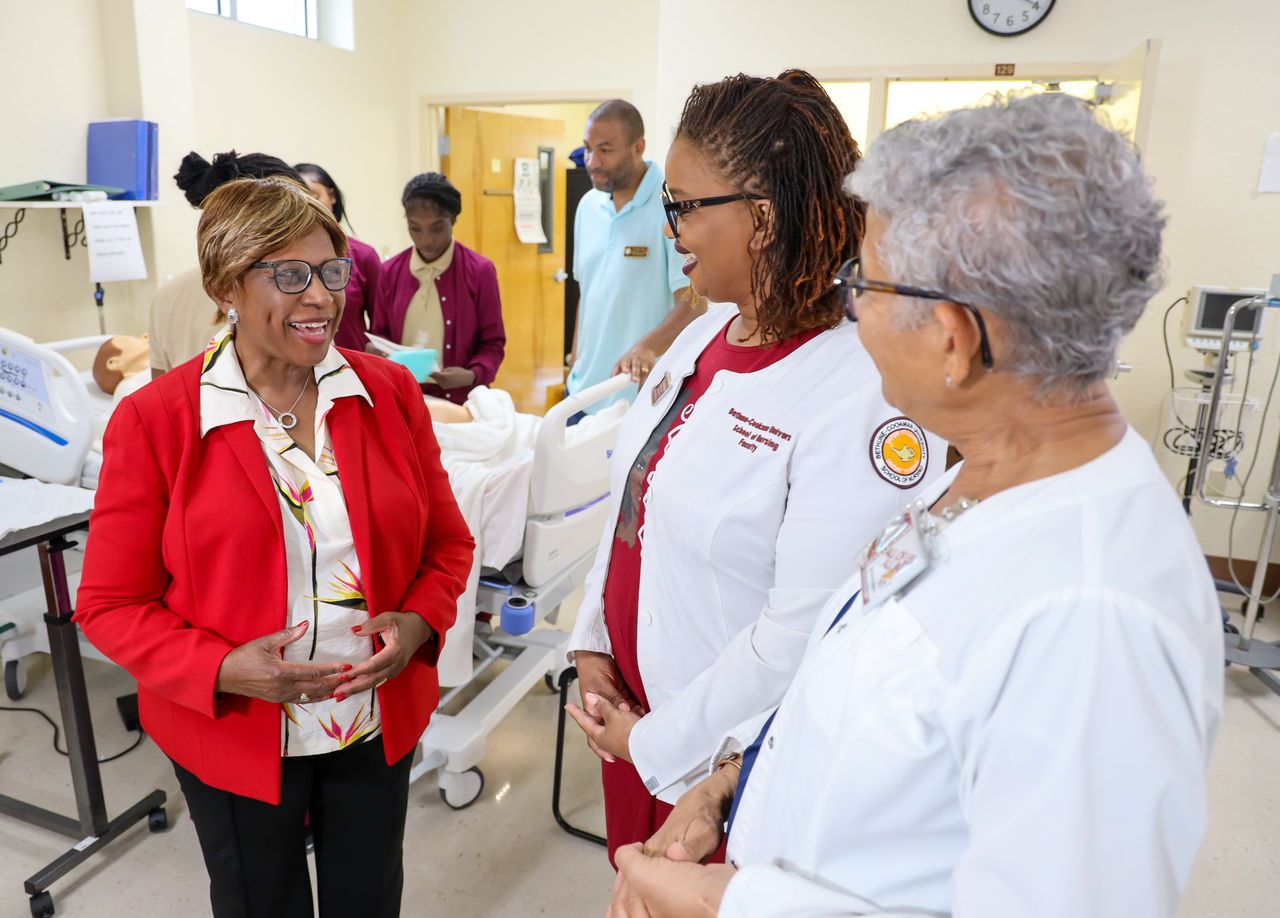
Bethune-Cookman Secures Nearly $5.2 Million in Federal Health Funding
First HRSA Funding for B-CU
The university described the federal award as a first for the institution. The information provided identifies the College of Nursing and Health Sciences as the recipient but does not specify the award’s programs, spending timeline or anticipated number of participants.
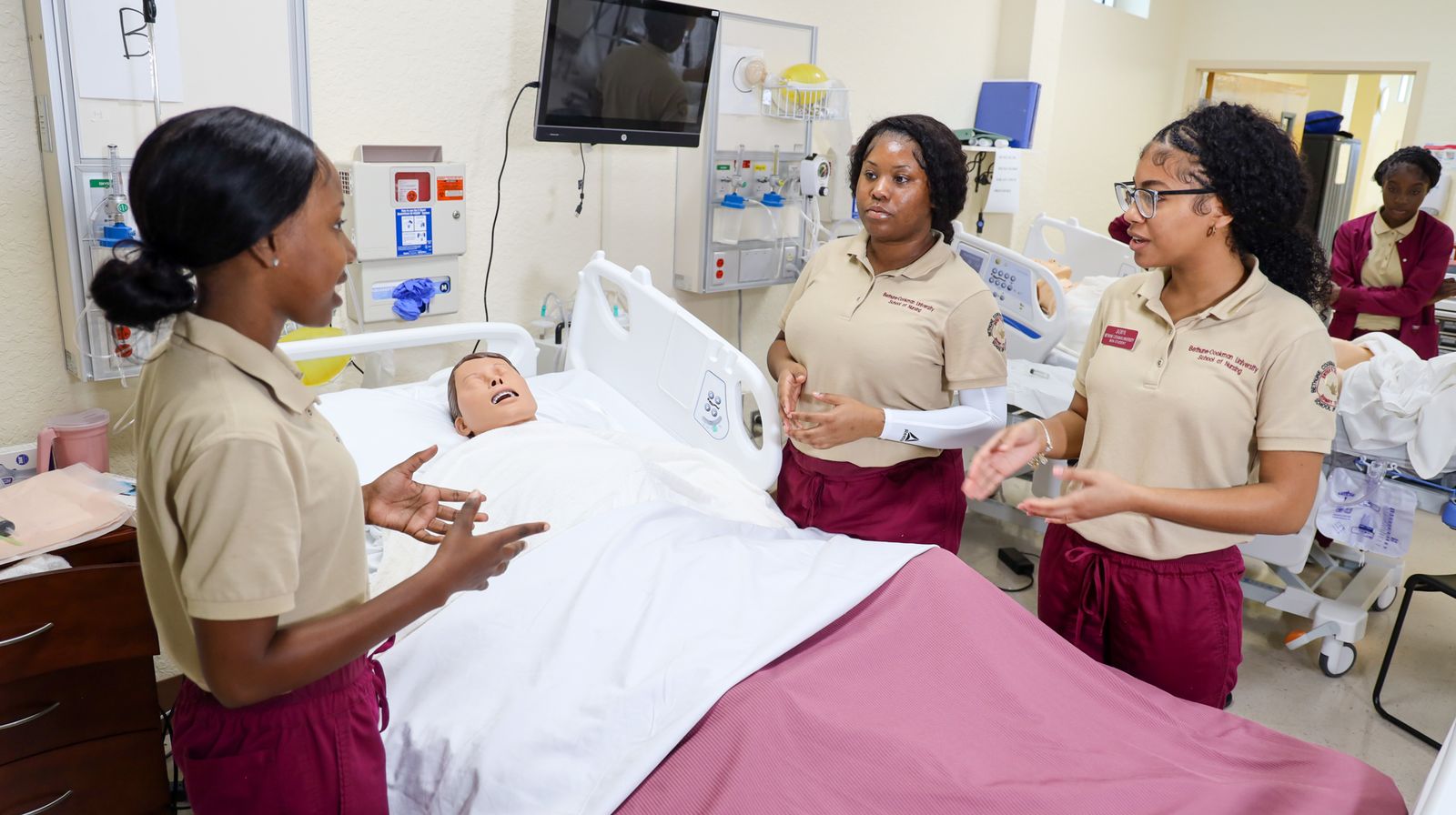
Bethune-Cookman Secures Nearly $5.2 Million in Federal Health Funding
State Funding Supports Nursing Program
The state appropriation will support the launch of B-CU’s dual enrollment nursing program. It is separate from the nearly $5.2 million in federal funding.
Central Florida News
UCP Charter Schools, UCF Launch Community Schools Initiative to Expand Student and Family Support
Published
4 months agoon
July 6, 2026
ORLANDO, Fla. (FNN NEWS) — UCP Charter Schools and the University of Central Florida have launched a new partnership to expand academic, health and family support services through the U.S. Department of Education’s Full-Service Community Schools initiative.
The federally funded Unlimited Potential Initiative (UPI) will establish Community Schools at UCP Bailes Community Academy, UCP Downtown and UCP Pine Hills Charter School beginning with the 2026-27 school year. Two additional UCP campuses are scheduled to join the initiative in January 2027.
University-Assisted Community Schools Model
The initiative is a collaboration between UCP Charter Schools, the Toni Jennings Exceptional Education Institute (TJEEI) and the UCF Center for Community Schools (UCF CCS).
Together, the partners will implement the University-Assisted Community Schools model, which brings together schools, families, higher education institutions, community organizations and local stakeholders to address barriers to student success while improving educational and family outcomes.
Expanded Student and Family Services
Through the partnership, UCP Charter Schools and UCF will enhance and expand services that include:
- After-school enrichment programs
- Academic support services
- Health and wellness resources
- Family engagement opportunities
- Connections to community-based services
Community Input Will Guide the Initiative
As implementation begins, UCP Charter Schools and UCF’s Toni Jennings Exceptional Education Institute will conduct comprehensive needs assessments at each participating campus.
Families, students, school staff and community partners will be invited to participate through surveys, focus groups and stakeholder meetings. Feedback gathered during the process will help shape each school’s Community School plan and future programming.
“Community schools are most successful when they build upon the strengths and priorities of the communities they serve,” said Dr. Matthew Marino of UCF’s Toni Jennings Exceptional Education Institute. “We are excited to partner with UCP Charter Schools to develop sustainable systems of support that connect students and families with the resources, opportunities and relationships that contribute to long-term success.”
Serving More Than 2,100 Central Florida Students
UCP Charter Schools serves more than 2,100 students across Central Florida through an inclusive educational model designed to provide individualized learning opportunities and support for every student.
School leaders said the organization’s longstanding commitment to customized education, family engagement and community partnerships positions it well to implement the Community Schools model.
“At UCP, we have always believed that schools can serve as the hub of their communities,” said Anna Morin, associate superintendent of UCP Charter Schools and project liaison for the initiative. “This partnership will allow us to deepen our work with families, expand access to critical resources and create new opportunities for students to thrive. Most importantly, the needs and voices of our families, students and staff will guide the development of each school’s Community School plan.”
Shared Commitment to Student Success
The Community Schools initiative reflects a shared commitment between UCP Charter Schools and UCF to strengthen educational achievement, increase family engagement and develop sustainable partnerships that support the whole child and the entire family.


FNN Newsletter
Trending


 Florida1 day ago
Donalds, Jolly Court Black Voters In Governor’s Race. How Much Are They Spending With Black-Owned Media?
 Central Florida News18 hours ago
Festival of Trees Marks 40 Years With Holiday Displays, Santa Breakfasts and Parties
 Entertainment17 hours ago
“4000 Days,” “Frampton” Set for Naples International Film Festival Oct. 24–25
 Business16 hours ago
GOAA Highlights Airport Improvements, Approves New Small Business Policies
 Florida15 hours ago
Nikki Fried to Challenge Trump’s Economic Record Ahead of Florida Visit


