Politics
Senate gets confidential FBI files on Kavanaugh allegations
Published
8 years agoon
WASHINGTON (AP) — The White House has sent the Senate a new FBI background file on Supreme Court nominee Brett Kavanaugh, giving senators a day to digest the confidential material and make a decision on the tottering nomination before a first vote on Friday.
Even before the FBI delivered interview summaries on claims that Kavanaugh sexually abused women, Senate Majority leader Mitch McConnell set the first vote for his polarized chamber in an election-season battle over power and who to believe that has consumed the nation. A showdown roll call on confirmation seemed likely over the weekend.
With Republicans clinging to a razor-thin 51-49 majority and five senators — including three Republicans — still vacillating, the conservative jurist’s prospects of Senate confirmation remained murky and dependent, in part, on the file’s contents, which are supposed to be kept secret. Kavanaugh staunchly denies the allegations.
“There will be plenty of time for members to review and be briefed on the supplemental material” before Friday’s procedural vote, McConnell said to the nearly empty chamber.
Senate Judiciary Chairman Chuck Grassley said early Thursday that he had the Kavanaugh FBI report: “Supplemental FBI background file for Judge Kavanaugh has been received,” he tweeted.
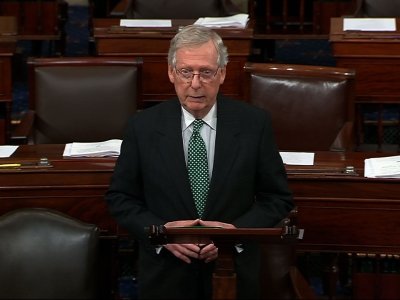
Senate Majority Leader Mitch McConnell announces the FBI would deliver to Senators its report on claims that Kavanaugh sexually abused women, Oct. 4, 2018. (AP video)
The White House said senators had “ample time” to review the report and vote on Kavanaugh.
“With this additional information, the White House is fully confident the Senate will vote to confirm Judge Kavanaugh to the Supreme Court,” spokesman Raj Shah said.
Lawmakers were to begin reading the FBI report Thursday morning, with senators and a small number of top aides permitted to view it in a secure room in the Capitol complex. Senators are not supposed to divulge the contents of the agency’s background reports.
The report arrived at a Capitol palpably tense over the political stakes of the nomination fight and from aggressive anti-Kavanaugh protesters who have rattled and reportedly harassed senators. Feeding the anxiety was an unusually beefy presence of the U.S. Capitol Police, who were keeping demonstrators and frequently reporters at arm’s length by forming wedges around lawmakers walking through corridors.
Amid complaints that some lawmakers were being confronted outside their homes, McConnell claimed on the Senate floor that the protesters were “part of the organized effort” to derail Kavanaugh’s nomination.
“There is no chance in the world that they’re going to scare us out of doing our duty,” he said.
Adding to the uncertainty, the three undecided GOP senators who could decide Kavanaugh’s fate rebuked President Donald Trump for mocking one accuser, Christine Blasey Ford, by mimicking her responses to questions at last week’s dramatic Senate Judiciary Committee hearing.
“I would tell him, knock it off. You’re not helping,” Trump ally Sen. Lindsey Graham, R-S.C., said of Trump’s Tuesday night tirade.
Senate Minority Leader Chuck Schumer, D-N.Y., said Trump’s insults marked a “new low.”
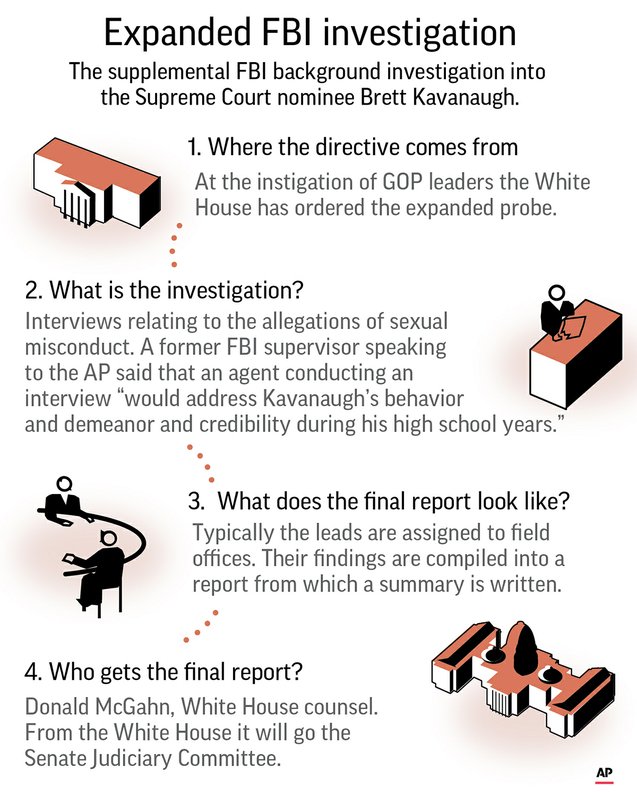
A look at supplemental F.B.I. background investigation into the Supreme Court nominee Brett Kavanaugh. (AP graphic)
Barring leaks, it was unclear how much of the FBI report, if any, would be made public. While senators from both sides have expressed support for revealing at least parts of the findings, FBI background checks on nominees are supposed to remain confidential.
Underscoring rising tensions, Democrats suggested that previous FBI background checks of Kavanaugh may have unearthed misconduct by the nominee.
Democrats wrote to Grassley, R-Iowa, challenging a Tuesday tweet by GOP aides saying prior investigations never found “a whiff of ANY issue — at all — related in any way to inappropriate sexual behavior or alcohol abuse.” Democrats wrote that the GOP tweet contained information that is “not accurate.”
Committee Republicans tweeted in response that their prior tweet was “completely truthful” and accused Democrats of “false smears.”
Sen. Susan Collins, R-Maine, told reporters that Trump’s lampooning of Ford at a Tuesday night Mississippi campaign rally was “just plain wrong.” Sen. Lisa Murkowski, R-Alaska, called it “wholly inappropriate and in my view unacceptable,” and Sen. Jeff Flake, R-Ariz., said on NBC’s “Today” show that the remarks were “kind of appalling.”
Those senators, along with Democrats Heidi Heitkamp of North Dakota and Joe Manchin of West Virginia, have yet to declare how they will vote.
“All of us need to keep in mind there’s a few people that are on the fence right now. And right now, that’s sort of where our focus needs to be,” said Sen. Bob Corker of Tennessee, who has traded barbs with Trump and will retire at year’s end.
Trump drew laughs Tuesday with his rendition of how Ford answered questions at last week’s hearing. “I had one beer — that’s the only thing I remember,” he stated inaccurately.
As he flew aboard Air Force One to the Mississippi rally, Trump was enraged by New York Times articles about Kavanaugh’s high school and college years and alleging tax avoidance efforts by the president and his family, according to a person familiar with the situation who spoke on the condition of anonymity.
White House counselor Kellyanne Conway on Wednesday echoed the president’s newly aggressive approach. She said Ford has “been treated like a Fabergé egg by all of us, beginning with me and the president,” and said Trump was merely “pointing out factual inconsistencies.”
Trump himself didn’t respond publicly to the criticism. On Twitter, he hailed Kavanaugh as “a fine man and great intellect” and insisted, “The country is with him all the way!”
The California psychology professor has testified that a drunken Kavanaugh sexually abused her in a locked room at a high school party in the 1980s and has said she believed he was trying to rape her. Kavanaugh has denied her assertions and those of two other women, who have accused him of other instances of sexual misconduct in the 1980s.
Democrats argued that the investigation has been insufficient, lacking interviews with her, with Kavanaugh and others who his accusers have said could know about the alleged incidents.
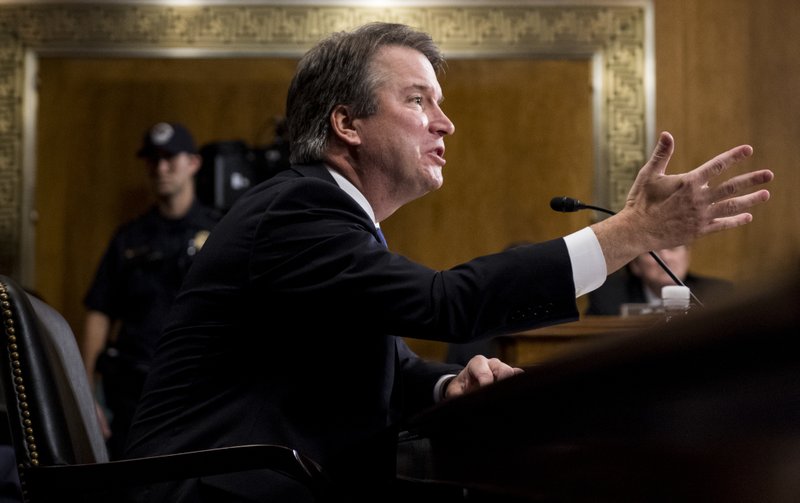
Supreme Court nominee Judge Brett Kavanaugh testifies during the Senate Judiciary Committee, Thursday, Sept. 27, 2018 on Capitol Hill in Washington. (Tom Williams/Pool Image via AP)
In a statement Wednesday night after McConnell set the vote in motion, Ford’s counsel wrote: “An FBI supplemental background investigation that did not include an interview of Dr. Christine Blasey Ford — nor the witnesses who corroborate her testimony — cannot be called an investigation. We are profoundly disappointed that after the tremendous sacrifice she made in coming forward, those directing the FBI investigation were not interested in seeking the truth.”
Corker and Sen. Mike Rounds, R-S.D., said senators were expecting the document to contain reports that FBI agents compile on their interviews with subjects, perhaps accompanied by a cover letter. Background checks do not traditionally contain investigators’ conclusions about who they believe is credible.
Washington has been awaiting completion of the investigation since last week, when Flake, Collins and Murkowski pressured a reluctant Trump and GOP leaders to order the FBI to renew its background check of the 53-year-old Kavanaugh.
The FBI interviewed several people, including three who Ford has said attended a 1982 high school gathering in suburban Maryland where she says Kavanaugh’s attack occurred, plus another Kavanaugh friend. The agency has also spoken to a second woman, Deborah Ramirez, who has claimed Kavanaugh exposed himself to her at a Yale party when both were freshmen.
Democrats also demanded that the FBI privately brief the Senate about the investigation before the chamber votes. McConnell rejected that request in a letter Wednesday to Schumer, saying Democrats would use it to delay Kavanaugh’s confirmation.
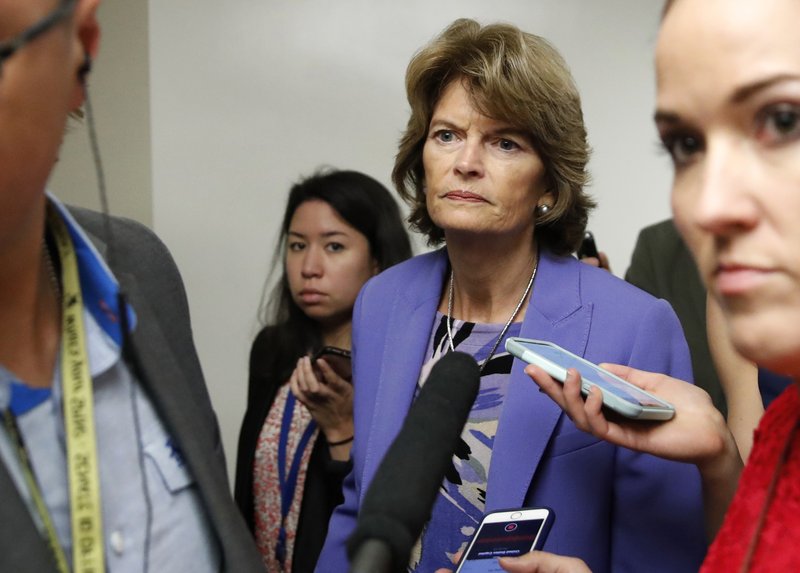
Sen. Lisa Murkowski, R-Alaska, walks on Capitol Hill, Wednesday, Oct. 3, 2018 in Washington, as reporters ask her questions. (AP Photo/Alex Brandon)
You may like
Politics
Grenada PM Dickon Mitchell Wins Second Term as NDC Takes 14 of 15 Seats
Published
3 days agoon
November 11, 2026The National Democratic Congress secures its first consecutive election victories, strengthening Mitchell’s mandate as he faces demands for jobs, better healthcare and economic growth.
ORLANDO, Fla. (FNN) — Grenada Prime Minister Dickon Mitchell has won a second consecutive term after his National Democratic Congress (NDC) captured 14 of the country’s 15 parliamentary seats in the Nov. 5 general election, according to reported preliminary results.
The opposition New National Party retained one seat, St. George North West, won by Adrian Joseph. The outcome marks the first time the NDC has won consecutive general elections since its founding in 1987. NOW Grenada
NDC expands its parliamentary majority
Mitchell first led the NDC to power in June 2022, winning nine seats against the NNP’s six and ending the administration of former Prime Minister Keith Mitchell.
The latest result increases the governing party’s representation by five seats. The NNP contested the election under Emmalin Pierre, while Peter David led the Democratic People’s Movement, which won no constituencies. Caribbean Broadcasting Corporation
Jobs and healthcare among priorities
Mitchell has pledged to modernize Grenada’s economy, improve healthcare and reduce youth unemployment. He has also joined Caribbean leaders seeking an apology and reparations from Britain for slavery. apnews.com
His administration faces the broader challenge of sustaining development while continuing recovery from Hurricane Beryl, which struck in 2024. The International Monetary Fund has identified tourism, reconstruction and development investment as important supports for economic activity amid global uncertainty. imf.org
U.S. relations and international engagement
The United States established diplomatic relations with Grenada in 1974 following its independence from Britain. Cooperation has included counter-narcotics programs and humanitarian assistance, according to the U.S. State Department. United States Department of State
Those ties provide an existing foundation for engagement during Mitchell’s second term. Additional cooperation on investment, disaster preparedness and economic development would depend on decisions by both governments.
Tourism and investment opportunities
Tourism, agriculture and construction are central to Grenada’s economy. Their importance also leaves the country exposed to changes in international travel, global prices and extreme weather, according to the World Bank. World Bank Group
Hotels, visitor services, agricultural supply chains and infrastructure are areas to watch as the government pursues growth. A central question for the second term will be whether new development creates lasting employment and opportunities for local businesses.
The IMF reports that foreign investment continues to help finance the country’s substantial external financing needs, underscoring the importance of maintaining investor confidence. imf.org
What’s next for Prime Minister Mitchell?
With a larger parliamentary majority, attention turns to how Mitchell translates his election mandate into government action.
Based on his stated priorities, key developments to watch include healthcare proposals, youth employment initiatives and measures to modernize the economy. Budget allocations, implementation schedules and public reporting will provide practical ways to assess progress.
The expanded majority gives Mitchell stronger parliamentary backing. Delivering improvements in public services and household economic conditions will be the next test.
Independence and the 1983 intervention
Grenada gained independence in 1974 after periods of French and British colonial rule.
In October 1983, the United States invaded following the execution of Prime Minister Maurice Bishop and others during an internal power struggle. Grenada observes Oct. 25, the anniversary of the intervention, as Thanksgiving Day. apnews.com
Central Florida News
Darren Soto defeats Gov. Ron DeSantis’ gerrymandered map, narrowly wins reelection
Published
4 days agoon
November 10, 2026The Central Florida Democrat edged Republican Dan Green in a congressional district that shifted toward the GOP under a map signed by Gov. Ron DeSantis.
KISSIMMEE, Fla. (FNN) — Democratic U.S. Rep. Darren Soto narrowly won reelection in Florida’s 9th Congressional District, defeating Republican Dan Green in the first election under a new map that made the district more favorable to Republicans. The Associated Press called the race Tuesday, one week after Election Day. apnews.com
A race just outside the recount threshold
Soto led Green by 1,506 votes, or 0.53 percentage points, in unofficial returns submitted Saturday. The margin put the race just above Florida’s automatic recount threshold of 0.5 percentage points. State officials announced that the race would proceed without a recount. www.wusf.org
How the DeSantis map changed District 9
DeSantis called lawmakers into a special session on congressional redistricting and signed the new map into law May 4. Republicans redrew a district previously anchored in Osceola and southern Orange counties, adding territory in four counties. The new boundaries brought in parts of Okeechobee, Indian River and St. Lucie counties and gave Republicans a more favorable district heading into the November election. www.edr.state.fl.us
The larger district brought rural and coastal communities into the race. Soto, a former member of the House Agriculture Committee, called for rolling back tariffs and highlighted the cost of diesel and fertilizer during the campaign. Green, a military veteran, also addressed rising costs as the candidates laid out competing approaches to affordability. history.house.gov
Puerto Rican representation in Congress
Soto’s victory keeps a lawmaker of Puerto Rican descent in Florida’s congressional delegation. The Democrat served in both chambers of the Florida Legislature before entering Congress in 2017 and is a member of the Congressional Hispanic Caucus. history.house.gov
Soto said his priorities for the newly added communities include restoring the Indian River Lagoon and improving local infrastructure.
Central Florida News
Florida Puerto Rican Lawmakers’ First-Term Impact: FNN Audit Reviews Bills Becoming Law, 1999–2026
Published
1 week agoon
November 6, 2026A review of 14 Florida House members of Puerto Rican descent examines sponsored bills that became law and policies reflected in other enacted legislation, documenting their early legislative results.
TALLAHASSEE, Fla. (FNN) — Voters across Florida cast ballots in the Nov. 3 general election to elect candidates of their choice. Against that backdrop, Florida National News examined the first-term legislative records of 14 Florida House lawmakers of Puerto Rican descent, reviewing legislative sessions from 1999 through 2026.
The audit focuses on bills they sponsored that became law and proposals whose policies were reflected in other enacted legislation, providing readers with a documented comparison of their early legislative results.
Former Republican Reps. Bob Cortes and David Santiago lead the reviewed group in combined legislative outcomes. Former Democratic Rep. Daisy Morales leads the Democratic members included in the report.
Cortes recorded six sponsored House bills that became law under their own numbers, the highest direct-enactment total in the reviewed group. He also had six additional proposals with policies reflected in other enacted legislation.
Santiago recorded five direct enactments and seven policy-overlap outcomes. Each Republican had 12 combined outcomes.
Morales recorded two direct enactments and three additional policy-overlap outcomes during the 2021 and 2022 legislative sessions, giving her five combined outcomes.
The FNN audit distinguishes those categories rather than treating every identified outcome as a separate law personally authored by a legislator.
Legislative Results With Statewide Reach
The measures examined extend beyond the lawmakers’ individual districts, addressing education, public safety, professional licensing, military families and other statewide issues.
Cortes’ direct enactments included HB 837 in 2016, jointly sponsored with Michael Bileca. The legislation addressed education programs for individuals with disabilities, including transition-to-work opportunities for qualifying students. It became Chapter 2016-137.
Susan Plasencia’s first-term record included HB 1275 in 2023, which authorized local law enforcement agencies to establish registries containing information about participating people with disabilities. The measure became Chapter 2023-312.
Morales’ direct enactments included HB 855 in 2021, addressing barber services, and HB 45 in 2022, providing tuition and fee assistance for qualifying disabled veterans.
HB 45, sponsored with Christopher Benjamin, passed the House 115-0 and the Senate 38-0. Gov. Ron DeSantis signed it June 9, 2022, and it became Chapter 2022-187. The unanimous votes illustrate the bipartisan support secured for that measure.
The audit also identifies policies in Morales’ proposals concerning telephone solicitation restrictions, property tax exemptions and a Down Syndrome Awareness specialty license plate that were reflected in other enacted bills.
First-Term Outcomes Across the Reviewed Group
| Lawmaker | Party | Sessions reviewed | Direct enactments | Policy-overlap outcomes | Combined |
|---|---|---|---|---|---|
| Bob Cortes | R | 2015–2016 | 6 | 6 | 12 |
| David Santiago | R | 2013–2014 | 5 | 7 | 12 |
| Susan Plasencia | R | 2023–2024 | 5 | 3 | 8 |
| John Quiñones | R | 2003–2004 | 2 | 6 | 8 |
| René Plasencia | R | 2015–2016 | 4 | 3 | 7 |
| Yvette Benarroch | R | 2025–2026 | 3 | 2 | 5 |
| Daisy Morales | D | 2021–2022 | 2 | 3 | 5 |
| Robert Asencio | D | 2017–2018 | 1 | 1 | 2 |
| Amy Mercado | D | 2017–2018 | 0 | 2 | 2 |
| Anthony Suárez* | D | 1999–2000 | 1 | 0 | 1 |
| Johanna López | D | 2023–2024 | 1 | 0 | 1 |
| Victor Torres | D | 2013–2014 | 0 | 1 | 1 |
| John Cortes | D | 2015–2016 | 0 | 0 | 0 |
| Darren Soto* | D | 2007–2008 | 0 | 0 | 0 |
Source: FNN audit. Soto and Suárez served partial initial terms. Zero means no qualifying outcome was identified under the audit’s method; it does not establish that a lawmaker made no legislative contribution.
Why the Audit Matters
The audit gives readers a way to examine legislative accomplishments beyond campaign descriptions and broad claims about bills “passed.”
It separates primary and joint sponsorship from ordinary co-sponsorship and distinguishes bills enacted under their own numbers from proposals whose policies appear in other laws.
Those distinctions matter because a House bill can die while some of its provisions survive in another legislative vehicle. Conversely, a related-bill listing does not establish that a proposal’s specific provisions became law.
The report also documents the scope of the identified outcomes. A narrow licensing change and a broad education measure each can count as one outcome, although their reach and consequences differ.
For readers examining Puerto Rican representation in Florida government, the findings provide a record of specific legislative activity. The measures’ beneficiaries extend across ethnic backgrounds and communities.
Why Focus on the First Term?
The first term provides a defined period for examining what lawmakers accomplished when they entered the House, before accumulating multiple terms of legislative experience.
Comparing initial terms also prevents a long-serving member’s career total from being measured directly against the record of someone who served only one term.
Some lawmakers lose reelection, retire, seek another office or pursue other careers. Their first term may therefore represent their entire House tenure. That makes early legislative results worth documenting.
The comparison still has limits. Members entering through special elections have less time than those beginning full two-year terms. Party control, committee assignments and legislative priorities also can affect opportunities to advance bills.
Soto’s Initial Service Is Counted Separately
Darren Soto won a special election April 24, 2007, and was sworn into office the following day. His initial House service belongs in the 2007–2008 window. His reelection in November 2008 began the full term covering the 2009 and 2010 legislative sessions.
The audit identifies no qualifying direct enactment or policy-overlap outcome for his initial regular-session window. It lists four outcomes from 2009–2010 separately as later-term context.
That distinction preserves the report’s focus on initial service rather than later accomplishments.
Anthony Nieves and the 2027 Legislative Session
Anthony Nieves represents the next chapter of Puerto Rican representation examined in FNN’s coverage.
Nieves defeated Jorge Figueroa in the Aug. 18 Democratic primary for House District 47. He subsequently won the seat without appearing on the November ballot after the general election contest was canceled, according to Ballotpedia.
His first regular legislative session will be in 2027, when he will have the opportunity to sponsor legislation and establish a first-term record.
Nieves is discussed separately from the audit’s 14-member outcome comparison because the 2027 and 2028 regular sessions fall outside its 1999–2026 review period. His absence from the rankings is a timing distinction, not a finding of legislative failure.
A future comparison can evaluate his sponsored bills, direct enactments and policies reflected in other enacted legislation during those sessions. Assigning him a zero alongside lawmakers whose initial legislative sessions have concluded would misrepresent his opportunity to produce results.
What the Findings Establish
The audit compares 14 identified lawmakers. It is not an exhaustive ancestry census or a definitive ranking of every Puerto Rican lawmaker in Florida history.
Ordinary co-sponsorships, resolutions and appropriations requests are excluded. Combined outcomes count qualifying source proposals, not necessarily distinct laws. Jointly sponsored bills can appear in more than one member’s record.
The report measures identified legislative outcomes rather than overall effectiveness, constituent service or the relative public benefit of each measure.
FNN’s Corrections and Updates Policy
Florida National News welcomes factual information identifying a lawmaker incorrectly included in or excluded from the audit, an inaccurate service period, a sponsorship error or an overlooked legislative outcome.
Submissions should identify the lawmaker, legislative session, bill number, sponsorship role and official supporting records. For proposals reflected in another enacted bill, documentation should identify the resulting bill, chapter law and relevant provisions.
FNN will review the information and make necessary corrections to the roster, bill records, session dates, outcome counts and rankings when supported by the evidence. Corrections will be reflected in the audit’s revision history.
Hashtags:
#FloridaNationalNews #FNN #FloridaPolitics #PuertoRicanLawmakers #FloridaHouse #LegislativeAudit #FirstTermLawmakers #GovernmentAccountability #PuertoRicanHeritage #PoliticsAndPower
Trending
Entertainment1 day agoFlorida Strawberry Festival Announces 2027 Lineup Featuring Becky G, Shaboozey, 38 Special and more
Central Florida News4 days agoDarren Soto defeats Gov. Ron DeSantis’ gerrymandered map, narrowly wins reelection
Politics3 days agoGrenada PM Dickon Mitchell Wins Second Term as NDC Takes 14 of 15 Seats
Central Florida News4 days agoOsceola Magic Set Franchise Steals Record in 97-89 Season-Opening Win
College Football13 hours agoUSF’s Fourth-Quarter Comeback Falls Short in 52–41 Loss to Memphis