

US NATIONAL NEWS
Trump’s Jibe Deepens Feud with Tillerson; He was Joking?


WASHINGTON (AP) — President Donald Trump challenged Secretary of State Rex Tillerson to “compare IQ tests,” delivering a sharp-edged ribbing that threw a bright spotlight on his seemingly shaky relationship with his top diplomat. The White House insisted the president was only joking.
Trump issued the challenge in an interview with Forbes magazine, when asked about reports that Tillerson called him a “moron” after a classified briefing this summer. The president responded that if the claim was true, the two should duke it out in a battle of brainpower.
“And I can tell you who is going to win,” Trump said.
The White House and the State Department suggested Tuesday that the president was simply trying to make light of what they describe as inaccurate reports of tension. But coming amid increasingly public signs of strain between the president and Tillerson, the remark landed with a distinct hint of malice.
Trump’s comments have threatened to undermine Tillerson’s diplomatic initiatives and sow confusion among allies and foes over whether he speaks for the U.S. and has the support of the White House. That uncertainty could impact a number of foreign policy crises, including the nuclear threat posed by North Korea and the imminent decision to be made as to whether to continue the Iran nuclear pact.
Trump declared Tuesday that he had confidence in Tillerson just hours after the publication of the interview — and before a private luncheon with Tillerson and Defense Secretary Jim Mattis.
But people close to Trump say the president has grown increasingly dissatisfied with the former Exxon CEO, whom he views as holding a merely conventional view of America’s role in the world and lacking star power. Tillerson, meanwhile, is said to have grown weary of Trump contradicting his public pronouncements and of becoming increasingly isolated in a capital to which he has never warmed.
The NBC News report last week claiming Tillerson described Trump as a “moron” — to associates after a highly classified July briefing — brought the simmering frustration between the men into the open.
This account is based on conversations with several White House aides, State Department officials and others who spoke with the two men over the past week.
Seldom backing down from a fight, Trump escalated another public feud on Tuesday, unloading on ’Liddle Bob Corker,” a Republican senator who has dubbed the White House an “adult day care center” and said the president could be setting the nation on the path toward World War III.
Other GOP leaders urged the two men to calm a quarrel that could imperil the Republican agenda on Capitol Hill and lawmakers’ election chances next fall.
Later Tuesday, Trump took to Twitter in defense of White House chief of staff John Kelly. Trump accused “The Fake News” of trying to hurt Kelly “by saying he will soon be fired.”
“This story is totally made up by the dishonest media,” Trump tweeted. It was unclear which specific news outlets he was referring to.
As for Tillerson, Trump had no relationship with him prior to last year’s election but offered him the secretary of state post after being impressed with his global oil tycoon resume and receiving recommendations from foreign policy heavyweights including former Secretary of State Condoleezza Rice and former Secretary of Defense Bob Gates.
But the two men have not clicked, and Tillerson was soon painted by some “America First” forces in the White House as a publicity-shy, slow-moving “globalist” who did not grasp the nationalist platform of Trump’s campaign. In particular, Trump has been irked by Tillerson’s advocacy of staying in both the Paris climate deal and the Iran nuclear pact, and has complained to associates that he does not like how Tillerson candidly voices his disapproval to the president in meetings, according to White House officials and outside advisers.
Trump empowered his son-in-law, senior adviser Jared Kushner, to spearhead the administration’s efforts at Middle East peace, stripping the State Department of what is usually a major priority. Trump also grew annoyed with what he perceived as Tillerson’s go-it-alone approach to diplomacy with North Korea, declaring in a scorching tweet last weekend that the secretary of state was “wasting his time trying to negotiate with Little Rocket Man,” Trump’s nickname for Kim Jong Un.
The president was also angry with Tillerson’s remarks after Trump declared there were “fine people” on both sides of the clashes in Charlottesville, Virginia, between white supremacists and anti-racist demonstrators that left one person dead, according to two people familiar with the Trump’s beliefs but not authorized to discuss private conversations.
“The president speaks for himself,” Tillerson said at the time.
The back-and-forth has been eyebrow raising for foreign diplomats tasked with decoding U.S. foreign policy. While the State Department has assured diplomats there’s no rift between Trump and Tillerson, the president’s barbed comments have risked undermining confidence in the direction of Washington’s foreign policy and given an impression of disunity in the Cabinet, according to three foreign diplomats based in Washington.
One specifically cited the confusion created by Trump’s tweet on Tillerson’s North Korea diplomacy, saying that if North Korea’s interlocutors feel Tillerson lacks authority, they may be more hesitant to convey possible U.S. diplomatic overtures to their leadership in Pyongyang.
The diplomats spoke on condition of anonymity because they were not authorized to speak publicly.
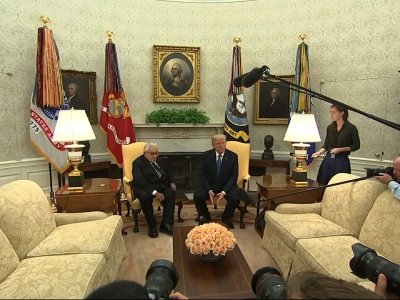
Trump denied Tuesday that he was undermining Tillerson. Sitting alongside former Secretary of State Henry Kissinger at a White House meeting, Trump told reporters, “No, I didn’t undercut anybody. I don’t believe in undercutting people.” And White House press secretary Sarah Huckabee Sanders tried to laugh off Trump’s IQ comment.
“The president certainly never implied that the secretary of state was not incredibly intelligent. He made a joke, no more than that,” she said.
But Tillerson has at times felt undercut by Trump’s contradictory messages, including his comments on a crisis with Qatar this summer, according to a person who has spoken with the secretary of state.
Tillerson lost the argument over staying in the Paris climate accord, acknowledging he had been overruled. His budget proposal for the State Department, which featured drastic cuts up to 32 percent, was met with criticism from both sides of the aisle. And he was the target of a whisper campaign by nationalist advisers at the White House, including chief strategist Steve Bannon and his ally Sebastian Gorka.
Vice President Mike Pence met with Tillerson over the summer to offer advice on how to ease tensions, according to a person familiar with the discussion.
Tillerson has found other allies in the administration. He and Defense Secretary Mattis took the lead this summer in organizing a highly classified briefing for Trump at the Pentagon at which military, diplomatic and intelligence officials sought to make the case for retaining a robust U.S. presence in Afghanistan and other far-flung locales.
It was after that meeting on July 20 that Tillerson is alleged to have referred to Trump as a “moron.” Tillerson has dismissed reports of the remark as “petty nonsense” and State Department spokeswoman Heather Nauert denied he ever said it.
But the meeting resulted in a rare win for Tillerson, as Trump committed to maintaining and slightly growing American forces in Afghanistan.
___


FORT MYERS, Fla. (FNN) — President Donald Trump is scheduled to hold a midterm rally in Fort Myers on Friday, Oct. 23, bringing his campaign efforts to the congressional district represented by his endorsed candidate for Florida governor, U.S. Rep. Byron Donalds.
Donalds, the Republican nominee, faces Democrat David Jolly in the Nov. 3 election. If elected, Donalds would become Florida’s first Black governor, succeeding term-limited Republican Gov. Ron DeSantis.
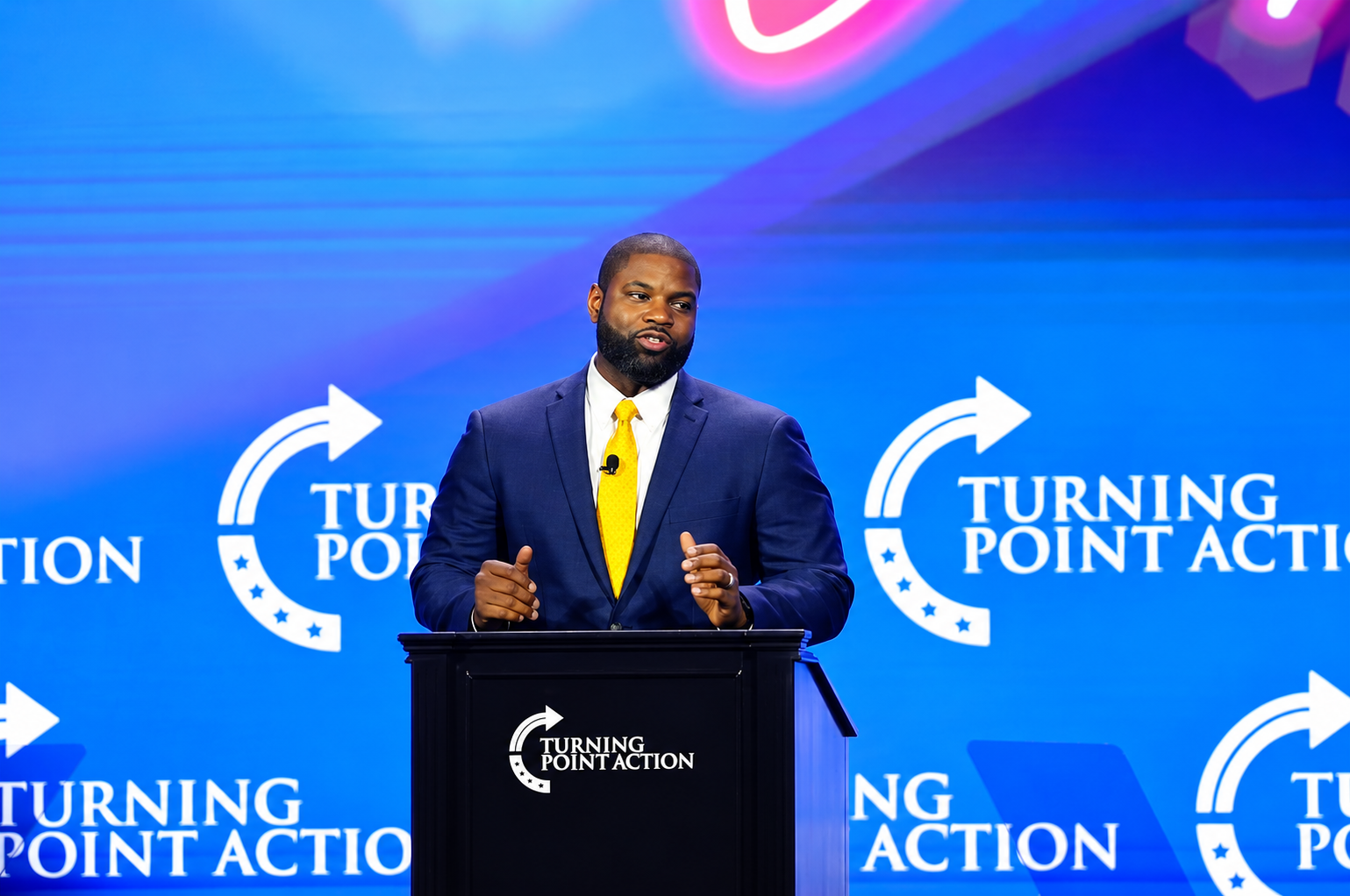
U.S. Rep. Byron Donalds speaks at a Turning Point Action event in Florida. Photo by Roman Garay / Florida National News.
Rally Set for Oct. 23
Trump’s remarks are scheduled to begin at 2 p.m., with doors opening at 10:30 a.m., according to the Republican Party’s event registration page. All times are Eastern.
Gulf Coast News reports that the rally will take place at Alico Arena at Florida Gulf Coast University. However, the official GOP registration page still lists the venue as “To Be Announced.” Attendees should check that page for confirmation and updates.
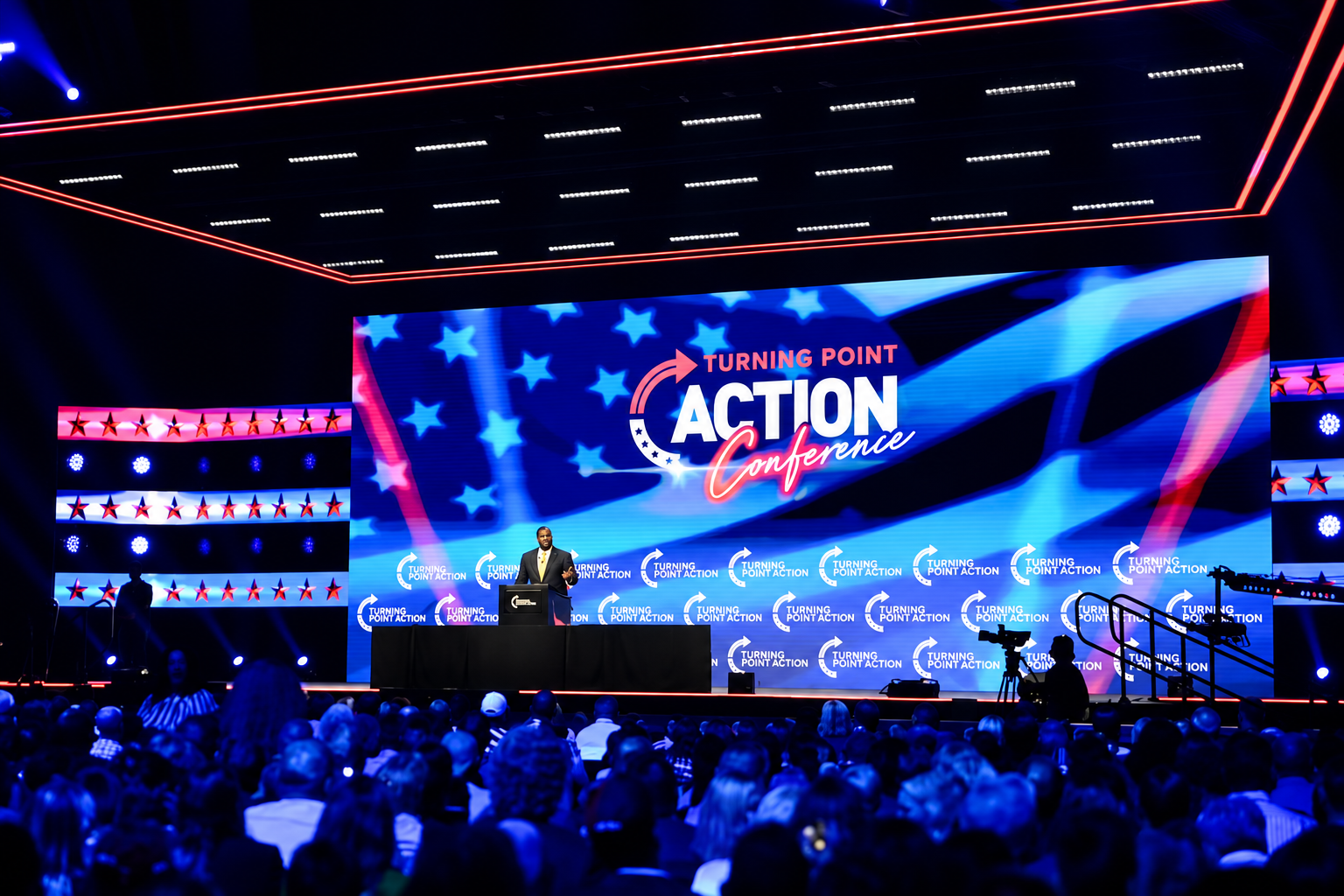
Prominent conservative figures, including Tucker Carlson, then-former President Donald Trump, U.S. Rep. Byron Donalds and Megyn Kelly, rallied Republican voters during the Turning Point Action Conference at the Palm Beach County Convention Center, July 15-16, 2023.
Photo by Roman D. Garay / Florida National News.
Trump’s Endorsement Connects President to Historic Bid
Trump has endorsed Donalds, whose campaign lists the president among its prominent Republican supporters. The Fort Myers visit places Trump in Donalds’ Southwest Florida political base during the closing weeks of the election.
Following his primary victory, Donalds acknowledged Trump’s influence among Republican voters.
“Obviously, he has the strongest following of anybody in our party,” Donalds said, according to Associated Press reporting.
A Donalds victory would give Florida its first Black governor and extend Republican leadership in the governor’s office. Trump’s endorsement connects the president to that potentially historic outcome, although the rally announcement does not identify the event as exclusively supporting Donalds.
Republican Unity and Voter Turnout
Donalds called for Republicans to unite after the primary, telling supporters, “Tonight we are one united Republican Party,” according to the AP.
The Fort Myers rally will provide Trump another platform to address supporters ahead of the Nov. 3 midterm elections. The published event announcement confirms his appearance but does not list additional speakers.


 Florida5 days ago
Donalds, Jolly Court Black Voters In Governor’s Race. How Much Are They Spending With Black-Owned Media?
 Central Florida News4 days ago
Broadcaster Ray Cruz Santiago Criticizes Samuel Vilchez Santiago With Communist Graphics, Puerto Rican Identity Claims
 Central Florida News4 days ago
Festival of Trees Marks 40 Years With Holiday Displays, Santa Breakfasts and Parties
 Entertainment4 days ago
“4000 Days,” “Frampton” Set for Naples International Film Festival Oct. 24–25
 Business4 days ago
GOAA Highlights Airport Improvements, Approves New Small Business Policies


