

Tech
NASA Awards Millions in STEM Research Grants


NASA announced the recipients of its annual STEM grants, providing nearly $4 million in total funding, to support scientific and technical research that aligns with the agency’s strategic research and technology development priorities. By providing resources to STEM research, NASA helps create a stronger and more vibrant scientific community to drive innovation and push the boundaries of what is possible in space exploration.
“We’re excited to announce the awardees of this year’s grants that will help the agency answer some difficult questions regarding research capabilities,” said Kathy Loftin, manager for NASA’s Established Program to Stimulate Competitive Research (EPSCoR) project. “These grants are a vital component of NASA’s science, technology, engineering, and math strategy to foster collaboration and stimulate growth in research and development in underserved areas across the country.”
NASA STEM provides a unique opportunity for researchers to solve science and exploration issues impacting its programs and missions. Forty research projects from 21 universities and organizations were selected based on their merit and alignment with agency missions. Each grantee will focus on a range of agency research needs, including repair, manufacturing, and fabrication technology for deep space missions; methods for detecting and eliminating bacteria in spacecraft; and studies on lunar and Martian regolith, including potential toxicity, suitability as soil for crops, and its ability to be used as construction material.
The grantees include Wichita State University in Kansas, which will receive funding to develop a compact, more efficient thermal management system for electric motors for vertical takeoff and landing vehicles. With the growth of electric, turbo-electric, and hybrid electric propulsion systems, development of smaller, more efficient, and easily manufactured cooling systems for electric motors could have significant applications for the automotive, aviation, and space industries.

With NASA returning to the Moon through Artemis, new technologies are necessary to help achieve the goal of a long-term lunar exploration. With efforts like NASA’s Lunar Surface Innovation Initiative, focusing on in-situ resource utilization of lunar materials, research from Louisiana State University will build upon in-space manufacturing advancements by studying the physical, chemical, and structural properties of alloys created from simulated regolith, including melting range, heat capacity, viscosity, and density.
To help NASA achieve its mission of unlocking the mysteries of the universe for the benefit of all, a research team from West Virginia University will develop a new concept in localization and guidance, navigation, and control algorithms for exploring Earth-like planets such as Venus. The team’s orbiter-assisted balloon navigation will use a variable-altitude balloon and orbiter to provide accurate geotagging and enable autonomous exploration of Venus, generating critical data to help understand Earth’s own formation and habitability change over time.
The remaining grantees are:
- Brown University, Providence, Rhode Island
- College of Charleston, Charleston, South Carolina
- Iowa State University, Ames, Iowa
- Montana State University, Bozeman, Montana
- Nevada System of Higher Education, Reno, Nevada
- New Mexico State University, Las Cruces, New Mexico
- Oklahoma State University, Stillwater, Oklahoma
- South Dakota School of Mines & Technology, Rapid City, South Dakota
- University of Alaska, Fairbanks, Alaska
- University of Alabama, Huntsville, Alabama
- University of Arkansas, Little Rock, Arkansas
- University of Delaware, Newark, Delaware
- University of Idaho, Moscow, Idaho
- University of Kentucky, Lexington, Kentucky
- University of Mississippi, University, Mississippi
- University of Nebraska, Omaha, Nebraska
- University of Puerto Rico, San Juan, Puerto Rico
- University of Wyoming, Laramie, Wyoming
The grants are funded through NASA’s EPSCoR’s R3 (Rapid Response Research) project. The EPSCoR project is directed at jurisdictions that have not participated evenly in competitive aerospace and aerospace-related research activities. For the EPSCoR R3 grants, universities and schools across the country submitted proposals, with each jurisdiction eligible to submit a total of six proposals for competitive agreement awards of up to $100,000 each. Twenty-five states, the Commonwealth of Puerto Rico, the U.S. Virgin Islands, and Guam currently participate in the program.
NASA’s Office of STEM Engagement, in collaboration with several of the agency’s mission directorate programs and offices, established these grants to support research and development in areas critical to NASA’s mission and to contribute to the overall research infrastructure, science, and technology capabilities of higher education and economic development in the jurisdictions receiving funding.


Florida
VIDEO: NASA Artemis II Mission Sends Astronauts Around the Moon in First Crewed Test Since Apollo


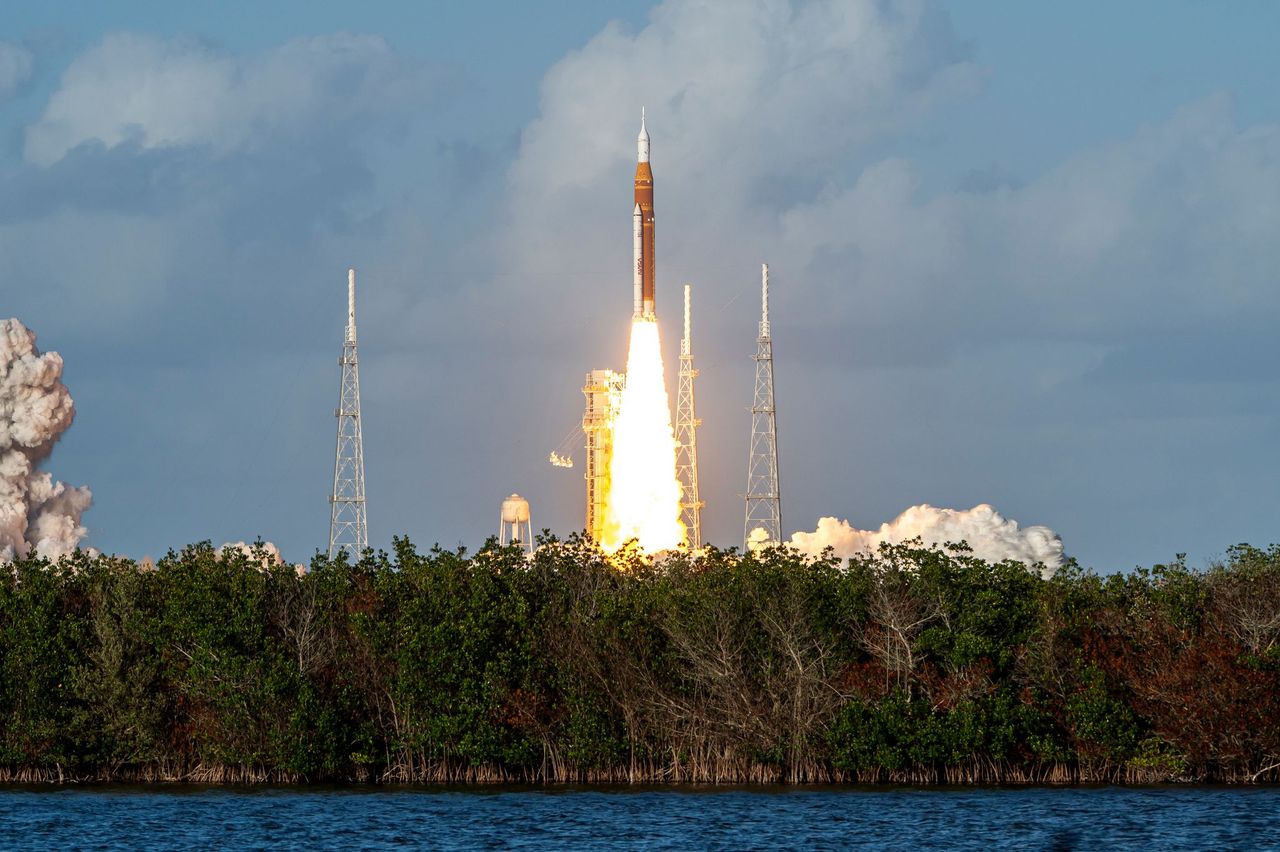
The Artemis II crewed lunar mission launches from Kennedy Space Center on April 1, 2026. Four astronauts blasted off aboard a massive NASA rocket on a long-anticipated journey around the Moon—marking the first crewed lunar flyby in more than 50 years. Photo by Nickolas Wolf / Florida National News.
Historic Return to Deep Space Artemis II is the first crewed mission in NASA’s Artemis program, designed to return humans to the Moon and eventually establish a sustainable presence there. The flight follows the successful uncrewed test mission, Artemis I, which demonstrated the Orion spacecraft’s ability to travel to lunar orbit and return to Earth. The Artemis program represents NASA’s long-term strategy to explore deep space, including preparing astronauts for future missions to Mars. Astronaut Crew to Circle the Moon
The Artemis II crew includes four astronauts selected to test Orion’s life-support systems and navigation capabilities during the mission.
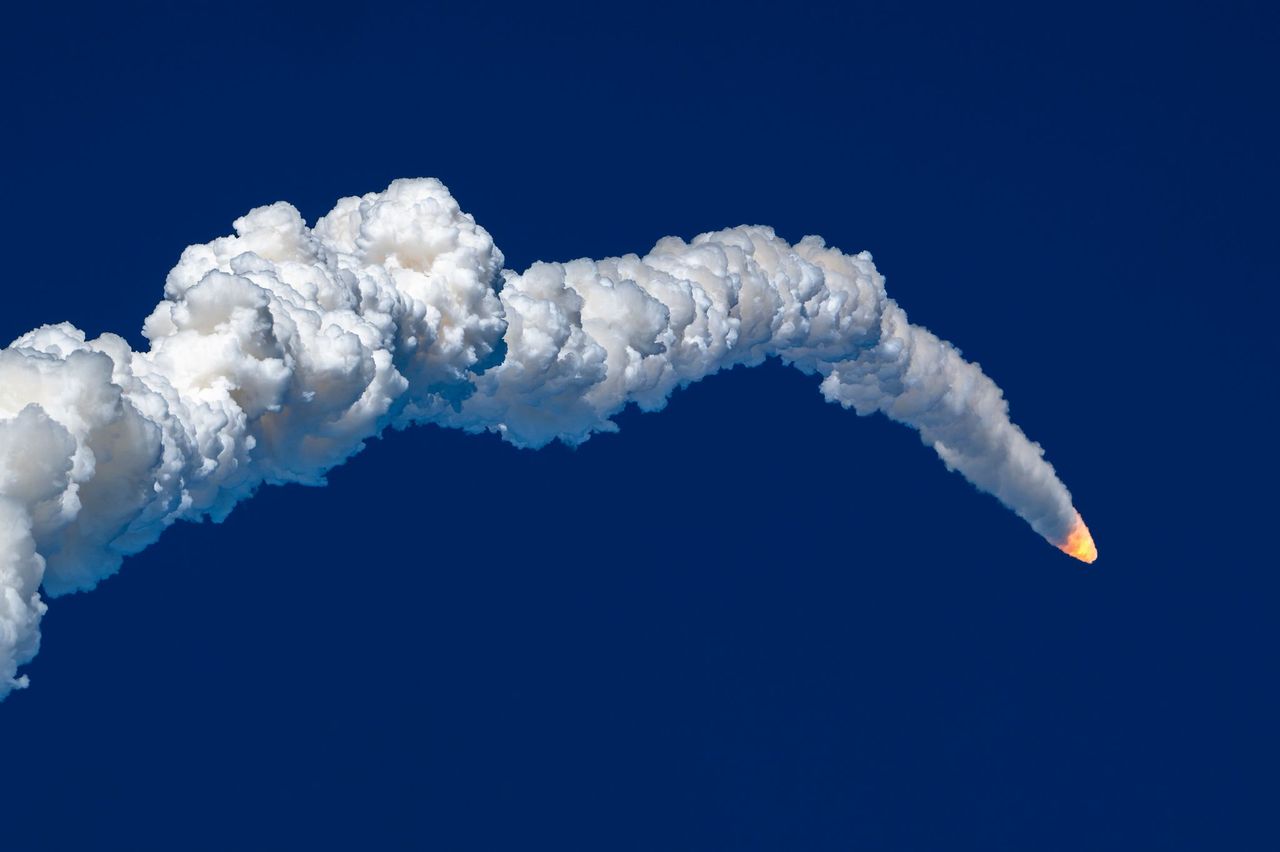
The Artemis II crewed lunar mission launches from Kennedy Space Center on April 1, 2026. Four astronauts blasted off aboard a massive NASA rocket on a long-anticipated journey around the Moon—marking the first crewed lunar flyby in more than 50 years.
Photo by Nickolas Wolf / Florida National News.
Their journey will take them thousands of miles beyond the Moon before returning to Earth. The mission will also demonstrate critical technologies needed for future lunar landings planned under upcoming Artemis missions.
Florida’s Space Coast in the Global Spotlight The launch is expected to draw thousands of spectators to Florida’s Space Coast, including viewers gathering along beaches in Cocoa Beach and nearby communities to witness the historic liftoff.

Local officials and tourism leaders say the Artemis program continues to reinforce Florida’s role as the nation’s gateway to space exploration.


 Florida5 days ago
Donalds, Jolly Court Black Voters In Governor’s Race. How Much Are They Spending With Black-Owned Media?
 Central Florida News4 days ago
Broadcaster Ray Cruz Santiago Criticizes Samuel Vilchez Santiago With Communist Graphics, Puerto Rican Identity Claims
 Central Florida News4 days ago
Festival of Trees Marks 40 Years With Holiday Displays, Santa Breakfasts and Parties
 Entertainment4 days ago
“4000 Days,” “Frampton” Set for Naples International Film Festival Oct. 24–25
 Business4 days ago
GOAA Highlights Airport Improvements, Approves New Small Business Policies


