

Business
Business Expert Carol Tice Highlights 17 Areas in Your Business to Make Razor-Sharp Cost Cuts [Review]


Are you starting or running a business on a shoestring budget? If you’re like most starting ‘treps, you have question marks all around your head:
- How’s my cash flow?
- How’s my balance sheet and income statement looking?
- Do I have the right insurance?
- Am I paying my employees at or above the federal minimum wage? Did I set money aside for payroll tax?
- Am I taking the proper steps to prove to the IRS that I’m running an actual business and not a hobby?
The details can be overwhelming at first, demanding your undivided attention. But don’t panic or give up — there’s help available.
Business expert Carol Tice’s latest book, The Pocket Small Business Owner’s Guide to Starting Your Business on a Shoestring, gives you the jump-start you need to shred costs and improve your company’s bottom line, and we’re giving you a chapter-by-chapter primer for the 18-chapter book here.
(You’ll want to bookmark this.)
Tice answers your toughest business questions, then points to even more answers.
Tice taps her 15-plus years of business reporting to give you clear, simple steps to meet your cost-cutting goals, and supplements them with case studies of businesses that successfully applied these principles and businesses that failed because they didn’t.
The shoestring guide covers every major step of business development in 17 chapters; the 18th lists the data resources she used to write the book so you can verify it all for yourself and learn even more.
Our Chapter-by-Chapter Primer for Tice’s Shoestring Guide
 Title: The Pocket Small Business Owner’s Guide to Starting Your Business on a Shoestring
Author: Carol Tice
ISBN: 978-1-62153-239-2
Publisher: Allworth Press, an imprint of Skyhorse Publishing, Inc.
Total pages: 233
Now that we’ve handled the technical stuff, let’s get down to business.
Chapter 1: Market Research
Without research, you’re taking a huge (and possibly unnecessary) gamble with your business.
If you don’t know where to start with researching your niche market, that’s alright. Tice offers 4 market research basics for you to use; here are 2: market competition and customer demand. Some questions include: who are the leaders in your market, and what other companies offer the same product or service you do? Is customer demand poised to grow or shrink in the next few years?
Tice specifies that you can get market research data two ways: either for low or no cost, or on your own.
She shares 11 low-cost/free sources; here are 3: press releases (via sites such as PRWeb and PR Newswire), trade publications (via sites like TradePub.com), and market leaders’ research slideshows (via Slideshare).
Three self-research sources include surveys (she gives specific tips on how to frame the questions to get the answers you need), picking business and entrepreneurship students’ brains, and barter exchanges and time banks.
Never heard of barter exchanges or time banks before? She breaks them down nicely for you here.
The chapter ends with a market research success story.
Chapter 2: Business Plan
This chapter starts off with why it helps to have a business plan, then gives you the areas you need to research to create a basic, bare-bones business plan.
Then Tice gets into the financial nitty-gritty of the plan: the forms. If you fear, avoid, or have never done business financial statements before, Tice arms you with a comprehensive how-to guide for the income statement, balance sheet, and cash flow statement, including mathematical formulae and term definitions. She also explains what boosts and drains net cash.
Though there are plenty of business plan templates online, she also suggests two other under-discussed sources: requesting a “plain vanilla” business plan from competitors, and the SEC’s website (“Edgar”) to research major, publicly traded companies’ business plans.
Chapter 3: Training
If you’re looking to expand your skill set or step your learning game up in general, this chapter’s for you. Tice provides 7 learning sources; here are 3: job shadowing (like shadowing franchisors, for example), online learning (e.g. sites like Lynda.com or PSDTuts +), and basic business training, offered by most local community colleges for low cost.
This chapter also ends with a success story.
Chapter 4: E-Commerce
Do you sell merchandise or services online, or plan to? Tice kicks off the chapter off listing 9 free and cheap e-commerce business tools with example services and their web links.
She follows up with 11 ways to monetize your website. Here are 4 for you: offering services on your site (such as a job board, like Problogger does), becoming an affiliate seller, offering contests with an entry fee, and selling digital products (ebooks, white papers, reports, a manifesto, etc.).
Expect a success story in this chapter as well.
Chapter 5: Sales
Tice gives you the option of hiring someone else to do your business’ sales for you, or doing it yourself.
She guides you through ways to optimize your website to be the ultimate sales vehicle, then dives into DIY creative sales strategies, which include customer referrals and relationship selling (which involves finding businesses with goods or services that complement yours, and you all talk up each other’s companies). There are more gems in there, so don’t just rely on this primer.
Chapter 6: Marketing
This is one of the best chapters in the book. Tice breaks down marketing tactics by offline-only methods, online-only methods, and both. Each category is rife with tips, services, and websites you can immediately put to use.
She also gives us a slice of her freelance writing expertise in the PR section: the various story angles from which you can frame one topic. The example she provides will expand your mind.
Chapter 7: Collaboration and Partnerships
This chapter is more demonstrative. Tice uses 4 different case studies to explain the different collaborative approaches you can use to boost your business and reduce costs.
Chapter 8: Advertising
There’s a difference between marketing and advertising, and this chapter clearly illustrates it. Tice provides insight in three different advertising methods: print, online, and mobile. She squares the chapter off with another value-packed case study.
Chapter 9: Facilities
If your business has a physical location or you’re planning to get one, this chapter gives you the pitfalls to avoid, ways to reduce your facility costs, and the advantages of starting small (or better yet virtual), or mobile. Look for two inspiring success stories, and a helpful explanation of the difference between renting, leasing, and owning a facility.
Chapter 10: Operations
Tice explains the difference between fixed and variable costs, and tips to cut fixed costs in all areas of your business, including a section and case study on reducing energy costs.
Chapter 11: Purchasing
This chapter discusses cost-cutting strategies for buying the supplies and goods you sell. Ever wondered what an SKU is and how it’s charged? Tice breaks it down. Expect another case study here as well.
Chapter 12: Transportation and Shipping
This’ll open your eyes to the technicalities of shipping and transporting goods because the effects these costs cause on the bottom line are easily overlooked. Tice covers the different ways to shave costs here as well, and offers another case study.
Chapter 13: Labor
Hired help is a cardinal business expense, and Tice brings several ways to acquire that help while sidestepping the tax burden that accompanies hiring full-fledged employees, such as unpaid and paid internships, and freelancers (with 10 different freelancer service websites you can use).
She also provides helpful, low-cost ways to hire full-time employees (including government programs) and 5 tips for hiring the right candidate for your business.
Chapter 14: Financing
You’ll come back to this chapter often. Tice brings 4 major funding categories and the details you need to get started: cash, grants, equity funding, and debt options (under which she also includes crowdfunding).
Chapter 15: Cash Flow
According to Tice, it’s unchecked cash flow that causes businesses to go under. If money moves through the business too quickly, there isn’t enough income to keep it afloat.
She therefore advises 3 different ways to improve your company’s cash flow, and each section is filled with details and actionable tips to fulfill that method.
Chapter 16: Taxes
You’ll need to revisit this chapter often as well. Tice again gives you the choice to hire a specialist to take care of your business’ taxes, or handle it yourself in efficient ways. She explains each business entity type and its tax implications, the IRS’s definition of a business versus a hobby, and reminds you about the self-employment tax.
She also delineates the many business deductions you can make on your taxes, and 4 things you can do if you’re financially short come tax time.
Chapter 17: Getting Help
One of entrepreneurs’ biggest complaints is the seemingly lonely journey to build their business. However, Tice shines a light on a wealth of resources in this chapter in 3 major categories: government help, business incubators (includes a case study), and private and non-profit business assistance programs.
You’ll want to reference this chapter often as well, no matter how far along you are in growing your business. Sometimes all you need is one mentor or helpful resource to blast your business off.
Whether you’re considering starting a business or running a young one…
…Tice’s book meets its title: it’s a pocket guide for your small business filled with valuable information, one you can take anywhere and reference anytime.
It costs less than $15, which is far less expensive than similar books from other thought leaders, so if you’re looking for a succinct yet robust business book, this is one’s a well-spent investment.
You can find it on Amazon.com, (Barnes & Noble), and Indie Bound.
Important disclosure: as of this posting, I am not a Carol Tice affiliate, so I won’t make a commission if you purchase the book. I’m simply sharing the great value I got from it with you to help you on your business journey.
Flickr photo by



Florida National News and FNN News en Español will provide on-site coverage of the Hispanic Heritage Month celebration at Cranes Roost Park.
ALTAMONTE SPRINGS, Fla. (FNN) — Hola at the Park will bring Hispanic culture, local businesses and live entertainment to Cranes Roost Park on Saturday, Oct. 3, from 2 to 6 p.m.
Hosted by the Hispanic Chamber of Metro Orlando and presented by AdventHealth, the event celebrates National Hispanic Heritage Month through food, entertainment, entrepreneurship and community connections.
According to the chamber’s event announcement, admission is free, the celebration is open to the community and no registration is required.

FNN to Spotlight Businesses and Community Voices
Florida National News and FNN News en Español, official media sponsors, will be on location covering the festivities.
The FNN team will spotlight chamber representatives, sponsors, participating businesses and community leaders, while sharing attendees’ perspectives throughout the afternoon.
Coverage will highlight the people, businesses and cultural traditions contributing to the celebration.

Photo: Florida National News
Food, Entertainment and Family Activities
The chamber’s announcement lists authentic cuisine, live entertainment, local businesses, wellness experiences, community resources, networking and family-friendly activities among the event’s offerings.
Attendees will have opportunities to explore Hispanic traditions, connect with entrepreneurs and learn about organizations serving Central Florida.

Photo: Florida National News
A Waterfront Setting in Uptown Altamonte
Cranes Roost Park, located in Uptown Altamonte, features a waterfront setting with scenic walkways around Cranes Roost Lake and the Eddie Rose Amphitheater and floating stage.
The park will serve as the gathering place for an afternoon celebrating Hispanic heritage and the connections between culture, business and community.
Event Details
- Date: Saturday, Oct. 3, 2026
- Time: 2–6 p.m. EDT
- Location: Cranes Roost Park, Altamonte Springs
- Host: Hispanic Chamber of Metro Orlando
- Presenting sponsor: AdventHealth
- Admission: Free and open to the community
- Registration: Not required

Photo: Florida National News
Vendor Inquiries
For information about vendor opportunities, contact the Hispanic Chamber of Metro Orlando at info@hispanicchamber.com or events@hispanicchamber.com.

The refrigerated lineup includes five single-serve dishes and two family-size meals.
BATAVIA, Ill. (FNN) — ALDI will begin rolling out seven ready-made meals in select stores in early October, with single-serve dishes priced under $8 and family-size options under $15. The grocer expects the full lineup to be available nationwide by January 2027.
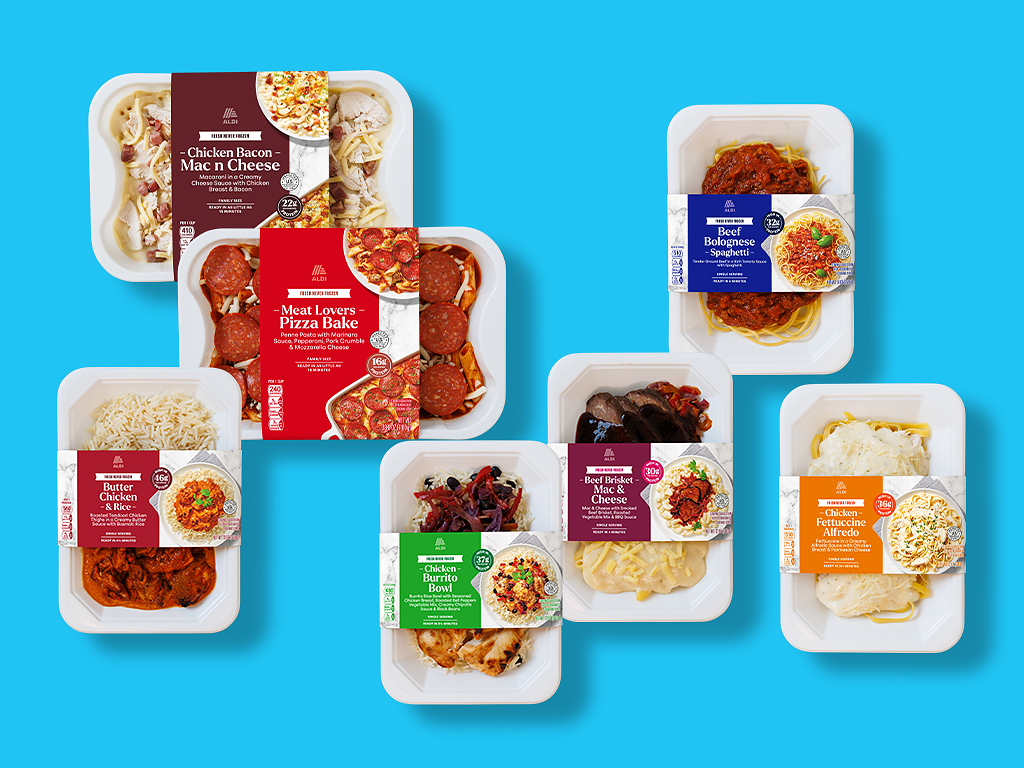
The collection includes five single-serve meals: beef Bolognese spaghetti, beef brisket with white mac and cheese, butter chicken and rice, a chicken burrito bowl, and chicken fettuccine Alfredo. The two family-size dishes are chicken and bacon mac and cheese and a meat lovers pizza bake.
“Our shoppers are looking for meals that fit into busy lives,” said Joan Kavanaugh, vice president of national buying for ALDI U.S. She said the company developed the lineup with shoppers’ budgets and demand for convenient meals in mind.
Price and preparation
ALDI said the single-serve meals contain 30 to 46 grams of protein each. The family-size dishes contain 16 to 22 grams per serving. The company announced price limits for the two sizes but did not list a price for each individual meal.
“We tested hundreds of recipes as we developed this collection,” said Terry Jackson, head of food at Kitchen Food Company, ALDI’s supplier for the meals. Jackson said the team focused on flavor and ingredients while developing the dishes.
The meals are refrigerated, not frozen. ALDI says the single-serve dishes can be heated in a microwave, while the family-size meals are prepared in an oven. Shoppers should follow the directions on each package.

2026 Hispanic Chamber Hola at the Park. Uptown Altamonte Springs, Florida at beautiful Cranes Roost Park Saturday, October 3, 2026 (2:00 PM – 6:00 PM) (EDT)
When and where to find them
The meals will be stocked in the refrigerated meals section near the front of ALDI stores. Availability will vary during the rollout, which begins in select markets in early October and expands through the fall. ALDI also plans to offer additional meals through its limited-time ALDI Finds assortment each month over the following year. corporate.aldi.us


 Central Florida News3 days ago
Tiffany Moore Russell Plans Orange County Campaign Stops Ahead of Early Voting
 Florida2 days ago
Trump Plans Fort Myers Rally as Byron Donalds Seeks to Become Florida’s First Black Governor
 Politics3 days ago
RNC Chairman Joe Gruters Calls Trump an ‘Absolute Machine’ Ahead of Midterm Elections
 Central Florida News3 days ago
Orlando Magic Beat Miami Heat 136-115 in Preseason Finale Behind Banchero, Bane


