Connect with us

Crimes and Courts

Supreme Court says gay, transgender workers protected by law

Published

on

WASHINGTON (AP) — The Supreme Court ruled Monday that a landmark civil rights law protects gay, lesbian and transgender people from discrimination in employment, a resounding victory for LGBT rights from a conservative court.

The court decided by a 6-3 vote that a key provision of the Civil Rights Act of 1964 known as Title VII that bars job discrimination because of sex, among other reasons, encompasses bias against people because of their sexual orientation or gender identity.

“An employer who fires an individual for being homosexual or transgender fires that person for traits or actions it would not have questioned in members of a different sex,” Justice Neil Gorsuch wrote for the court. “Sex plays a necessary and undisguisable role in the decision, exactly what Title VII forbids.”

The decision was a defeat not just for the employers, but also the Trump administration, which argued that the law’s plain wording compelled a ruling for the employers. Gorsuch, a conservative appointee of President Donald Trump, concluded the opposite, and Trump said Monday he accepted the court’s “very powerful decision.”

https://www.youtube.com/watch?v=BdknzmWgrm8&feature=emb_logo

Gorsuch was joined in the majority by Chief Justice John Roberts and the court’s four liberal members. Justice Brett Kavanaugh, Trump’s other Supreme Court pick, dissented, along with Justices Samuel Alito and Clarence Thomas.

“The Court tries to convince readers that it is merely enforcing the terms of the statute, but that is preposterous,” Alito wrote in the dissent. “Even as understood today, the concept of discrimination because of ‘sex’ is different from discrimination because of ‘sexual orientation’ or ‘gender identity.’”

Kavanaugh wrote in a separate dissent that the court was rewriting the law to include gender identity and sexual orientation, a job that belongs to Congress. Still, Kavanaugh said the decision represents an “important victory achieved today by gay and lesbian Americans.”

Trump had a restrained reaction, telling reporters that he’d read the decision and that “some people were surprised.”

He added: “But they’ve ruled and we live with their decision. That’s what it’s all about. We live with the decision of the Supreme Court. Very powerful. A very powerful decision actually. But they have so ruled.”

The outcome is expected to have a big impact for the estimated 8.1 million LGBT workers across the country because most states don’t protect them from workplace discrimination. An estimated 11.3 million LGBT people live in the U.S., according to the Williams Institute at the UCLA law school.

Gerald Bostock, a gay county government worker from Georgia whose lawsuit was one of three the Supreme Court decided Monday, said no one should should have to be “fearful of losing their job because of who they are, who they love or how they identify. And the justices have now made sure that we won’t have to worry about that.”

John Bursch, who argued the appeal from a Michigan funeral home owner against a fired transgender employee, said, “Americans must be able to rely on what the law says, and it is disappointing that a majority of the justices were unwilling to affirm that commonsense principle. Redefining ‘sex’ to mean ‘gender identity’ will create chaos and enormous unfairness for women and girls in athletics, women’s shelters, and many other contexts.”

But Monday’s decision is not likely to be the court’s last word on a host of issues revolving around LGBT rights, Gorsuch noted.

Rights groups have said they will challenge the administration’s effort to roll back anti-discrimination protections for transgender people in health care. Lawsuits are pending over transgender athletes’ participation in school sporting events, and courts also are dealing with cases about sex-segregated bathrooms and locker rooms, a subject that the justices seemed concerned about during arguments in October. Employers who have religious objections to employing LGBT people also might be able to raise those claims in a different case, Gorsuch said.

“But none of these other laws are before us; we have not had the benefit of adversarial testing about the meaning of their terms, and we do not prejudge any such question today,” he wrote.

The cases were the court’s first on LGBT rights since J ustice Anthony Kennedy’s retirement and replacement by Kavanaugh. Kennedy was a voice for gay rights and the author of the landmark ruling in 2015 that made same-sex marriage legal throughout the United States. Kavanaugh generally is regarded as more conservative.

The Trump administration had changed course from the Obama administration, which supported LGBT workers in their discrimination claims under Title VII.

During the Obama years, the federal Equal Employment Opportunity Commission had changed its longstanding interpretation of civil rights law to include discrimination against LGBT people. The law prohibits discrimination because of sex, but has no specific protection for sexual orientation or gender identity.

Democratic presidential contender Joe Biden, Obama’s vice president, praised the decision on Twitter as “another step in our march toward equality for all. The Supreme Court has confirmed the simple but profoundly American idea that every human being should be treated with respect.”

In recent years, some lower courts have held that discrimination against LGBT people is a subset of sex discrimination, and thus prohibited by the federal law.

Efforts by Congress to change the law to explicitly bar job discrimination on the basis of sexual orientation and gender identity have so far failed.

The Supreme Court cases involved two gay men and a transgender woman who sued for employment discrimination after they lost their jobs.

Aimee Stephens lost her job as a funeral director in the Detroit area after she revealed to her boss that she had struggled with gender most of her life and had, at long last, “decided to become the person that my mind already is.” Stephens told funeral home owner Thomas Rost that following a vacation, she would report to work wearing a conservative skirt suit or dress that Rost required for women who worked at his three funeral homes. Rost fired Stephens.

The 6th U.S. Circuit Court of Appeals in Cincinnati, Ohio, ruled that the firing constituted sex discrimination under federal law.

Stephens died last month. Donna Stephens, her wife of 20 years, said in a statement that she is “grateful for this victory to honor the legacy of Aimee, and to ensure people are treated fairly regardless of their sexual orientation or gender identity.”

The federal appeals court in New York ruled in favor of a gay skydiving instructor who claimed he was fired because of his sexual orientation. The full 2nd U.S. Circuit Court of Appeals ruled 10-3 that it was abandoning its earlier holding that Title VII didn’t cover sexual orientation because “legal doctrine evolves.” The court held that “sexual orientation discrimination is motivated, at least in part, by sex and is thus a subset of sex discrimination.”

That ruling was a victory for the relatives of Donald Zarda, who was fired in 2010 from a skydiving job in Central Islip, New York, that required him to strap himself tightly to clients so they could jump in tandem from an airplane. He tried to put a woman with whom he was jumping at ease by explaining that he was gay. The school fired Zarda after the woman’s boyfriend called to complain.

Zarda died in a wingsuit accident in Switzerland in 2014.

In a case from Georgia, the federal appeals court in Atlanta ruled against Bostock, a gay employee of Clayton County, in the Atlanta suburbs. Bostock claimed he was fired in 2013 because he is gay. The county argues that Bostock was let go because of the results of an audit of funds he managed.

The 11th U.S. Circuit Court of Appeals dismissed Bostock’s claim in a three-page opinion that noted the court was bound by a 1979 decision that held “discharge for homosexuality is not prohibited by Title VII.”

Continue Reading
Click to comment

Leave a Reply

Your email address will not be published. Required fields are marked *

Crimes and Courts

Florida Gambling Crackdown Earns International Award After 14000 Slot Machine Seizures

Published

on

The commission reports more than $24 million in gambling proceeds seized since July 2022, with international recognition highlighting its coordinated enforcement efforts.

TALLAHASSEE, Fla. (FNN) — The Florida Gaming Control Commission has won the 2026 Regulatory Excellence Award from the International Association of Gaming Regulators, recognizing the agency’s coordinated efforts to combat illegal gambling.

The commission announced the award Oct. 26. The honor recognizes excellence in gaming policy, regulation, compliance and enforcement outcomes.

International Recognition for Coordinated Enforcement

IAGR CEO Kevin Mullally praised the commission’s collaboration with enforcement partners and its support for international efforts against illegal online gambling.

“The Florida Gaming Control Commission’s coordinated approach to combating illegal gambling has produced impressive results,” Mullally said. “Its strategy illustrates the power of collaboration.”

He also recognized the agency’s willingness to support IAGR’s international work targeting illegal online gambling.

Agency Reports 14,000 Illegal Slot Machines Seized

Since beginning operations in July 2022, the commission says it has seized more than 14,000 illegal slot machines and more than $24 million in illegal gambling proceeds.

In the past year, the agency reported shutting down 184 illegal gambling arcades and making 160 arrests.

According to the commission, its investigations have also helped authorities combat illegal narcotics, illegal firearms and dog betting rings connected to criminal gambling operations.

The enforcement figures describe seizures, closures and arrests reported by the agency; arrests do not establish guilt.

Commission Chair Credits Staff and State Support

Commission Chair Julie Brown said the award recognizes the agency’s employees and the support of Florida’s elected leaders.

“We are thrilled to receive such a tremendous honor for our very young agency,” Brown said.

Brown credited Gov. Ron DeSantis, the Florida Legislature and Attorney General James Uthmeier for supporting the commission’s work.

Attorney General Calls for Tougher Penalties

Uthmeier said his office will continue working with the commission to investigate illegal gambling and pursue stronger criminal penalties.

“Illegal gambling operations pose a serious threat to public safety and jeopardize the integrity of gaming in our state,” Uthmeier said.

He said stronger penalties would help hold illegal gambling operators accountable and support law enforcement efforts.

Oversight Extends Beyond Illegal Gambling

The commission’s responsibilities also include regulating authorized gambling activities, including pari-mutuel wagering, cardrooms and slot machine facilities, along with overseeing the state’s gaming compacts. Its authority excludes the Florida Lottery.

Continue Reading

Central Florida News

Attorney General James Uthmeter announces 100 felony counts against Kissimmee man, sues AI platform

Published

on

James Uthmeier speaks at a news conference wearing a navy suit, white shirt and red tie, with flags behind him.

ORLANDO, Fla. (FNN) — Florida Attorney General James Uthmeier announced Wednesday, Oct. 28, that a Kissimmee man faces 100 felony counts involving child sexual abuse material and images depicting sexual activity with animals. In a separate action, the state sued an artificial intelligence company accused of enabling users to generate sexualized images of children and other people without their consent.

The criminal case names Jerry Jesus Reyes, 26. The civil lawsuit targets Rengstorff Consulting Ltd., the company operating the A2E artificial intelligence platform.

“There is nothing more evil than the sexual exploitation of children, and anyone who possesses, shares, or creates these images is an active participant in that abuse,” Uthmeier said in a statement.
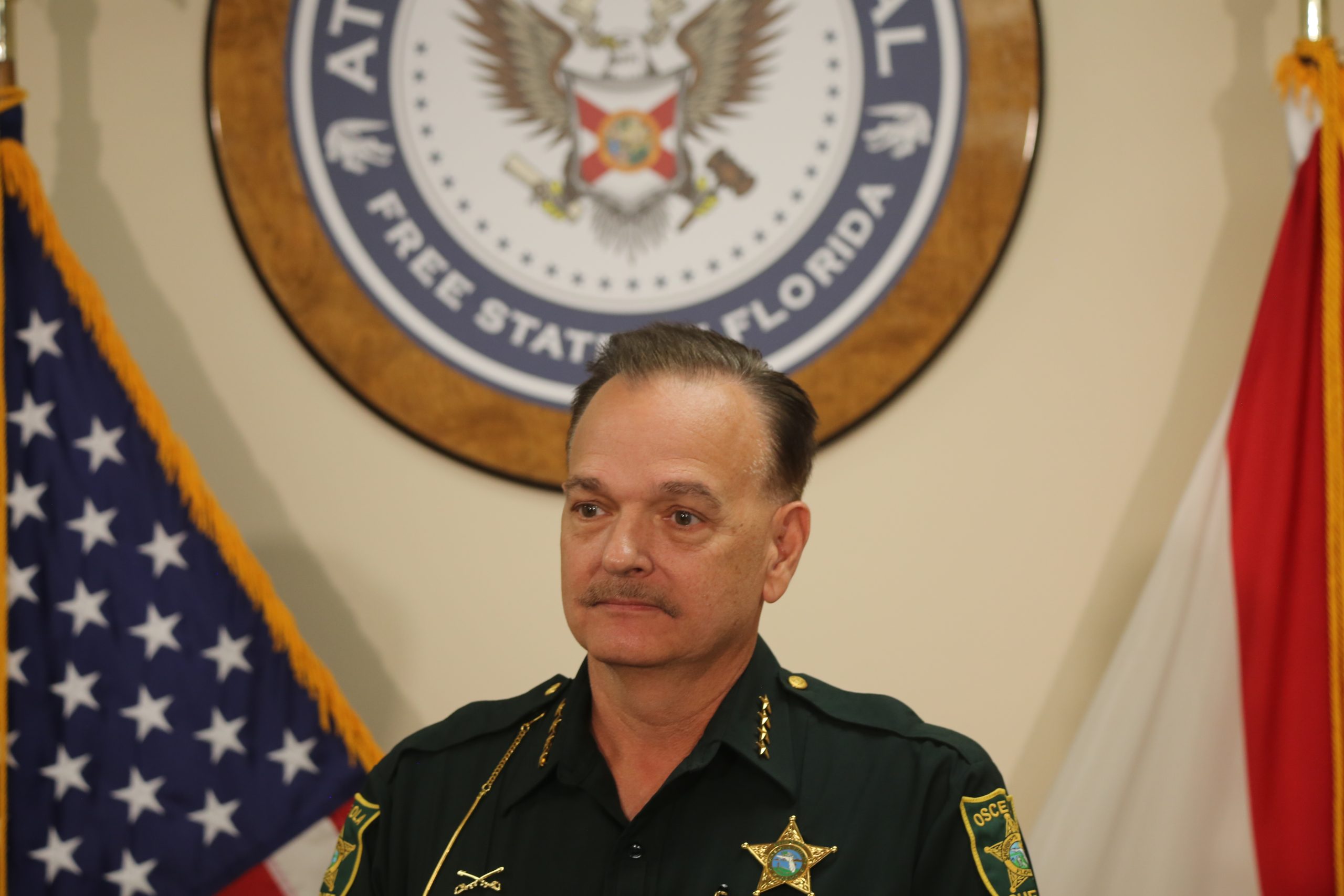
Osceola County Sheriff Christopher Blackmon. Photo by Florida National News

Tip leads to criminal investigation

According to the attorney general’s office, the Reyes investigation began with a CyberTipline report from the National Center for Missing & Exploited Children concerning activity on a Snapchat account.

Detectives with the Osceola County Sheriff’s Office Internet Crimes Against Children Unit used subpoenas and search warrants to link the account to Reyes, authorities said. Investigators reported finding files depicting the sexual abuse of children and sexual activity involving an animal.

The charges include:

  • 86 counts of unlawful possession of materials depicting sexual performance by a child.
  • 13 counts of unlawful possession of materials depicting sexual activity with animals.
  • One count of transmitting child pornography by electronic device.

Potential prison penalties

According to the announcement, the child sexual abuse material possession charges were reclassified as first-degree felonies because the case involved 10 or more images. First-degree felonies generally carry a maximum sentence of 30 years per count under Florida law.

The second-degree felony transmission charge carries a five-year mandatory minimum, according to the announcement, and a statutory maximum of 15 years. Third-degree felonies generally carry up to five years per count.

Reyes could face decades in state prison if convicted. His total sentence would depend on the convictions, applicable sentencing provisions and whether the judge orders sentences served concurrently or consecutively.

The attorney general’s office said Reyes was being held at the Osceola County Jail on $100,000 bond, with conditions of release prohibiting internet access and contact with minors.

Senior Assistant Statewide Prosecutor Lauryn Day is prosecuting the case in the Ninth Judicial Circuit.

Separate lawsuit targets AI platform

In the civil case, the state alleges A2E allows users to upload photographs or videos of real people, including children, and generate nude or sexually explicit depictions without their consent.

The complaint also alleges the platform permits users to digitally alter adults to appear underage in sexualized imagery.

Although A2E’s terms prohibit certain abusive content, the state alleges the company failed to enforce those restrictions through adequate monitoring, consent verification and reporting of illegal material.

The complaint cites separate criminal investigations in Tampa and Tallahassee in which people allegedly used A2E to generate child sexual abuse material.

“Predators who traffic in the abuse of children and animals have no place in Florida,” Uthmeier said.

He added that companies profiting from AI tools that facilitate child sexual abuse material or nonconsensual sexual imagery “will be held accountable.”

State seeks injunction and financial penalties

The lawsuit, filed in Sarasota County, alleges violations of the Florida Deceptive and Unfair Trade Practices Act.

The state seeks a permanent injunction restricting the company’s provision of the challenged AI tools, restitution, recovery of profits and civil penalties of up to $10,000 per willful violation.

Reyes is presumed innocent unless proven guilty. The allegations against Rengstorff Consulting have not been proven in court. Responses from Reyes or his attorney and the company were not included in the materials available for this report.

Continue Reading

Central Florida News

FBI Director Kash Patel Addresses Global Threats, Crime-Fighting Partnerships at International Police Conference in Orlando

Published

on

Kash Patel seated onstage in a gray suit and dark tie, speaking with one hand raised against a black and turquoise background.

ORLANDO, Fla. (FNN) — FBI Director Kash Patel discussed bureau priorities, violent crime and cooperation across jurisdictions during the 2026 International Association of Chiefs of Police conference at the Orange County Convention Center.

The annual conference and exposition, held Oct. 24-27, brought together law enforcement professionals from the United States and abroad for training, presentations and discussions about public safety.

Patel addressed the evolving global threat environment and the importance of partnerships among federal, state, local, territorial and international law enforcement agencies confronting violent crime and transnational threats.

FBI priorities and violent crime

Violent crime enforcement was among the priorities Patel discussed during his Orlando visit.

Published coverage of his weekly update from Orlando described a broader agenda encompassing cybercrime, fraud and other investigative responsibilities. The update also highlighted cooperation among the FBI, the Justice Department and state and local authorities.

The conference provided an opportunity for bureau leadership to discuss those priorities with police executives whose agencies work alongside federal investigators.

Photo by Florida National News


Cooperation across jurisdictions

Partnerships were a central theme of Patel’s appearance, including coordination among agencies at different levels of government and cooperation with international counterparts.

Transnational investigations can involve suspects, evidence and criminal activity spanning multiple jurisdictions, requiring agencies to work across geographic and institutional boundaries.

Published coverage of Patel’s visit also reported plans for meetings with the Major Cities Chiefs Association and the IACP Board of Directors.

Patel highlights partnerships in X post

“Great to be in Orlando visiting with our brilliant law enforcement partners,” Patel wrote in a post on X about the conference.

Patel described the gathering as drawing more than 20,000 law enforcement professionals, leaders and partners. He credited cooperation with the FBI for reductions in crime.

In the post, Patel cited a 20% reduction in the national murder rate and more than 54,000 FBI violent crime arrests, which he described as a 90% increase.

The post did not specify the reporting periods or underlying datasets for those figures. The statistics were not independently verified for this article..

Global threats and local policing

The changing threat environment was another focus of Patel’s remarks, connecting the FBI’s national responsibilities with challenges facing police departments and their international partners.

The gathering offered law enforcement leaders an opportunity to discuss shared concerns, exchange professional knowledge and strengthen relationships that support investigations.

IACP President David B. Rausch, left, gestures over an open notebook while FBI Director Kash Patel listens from a gray armchair onstage.

FBI Director Kash Patel, right, participates in a fireside chat with IACP President David B. Rausch during the Closing General Assembly of the 2026 International Association of Chiefs of Police conference at the Orange County Convention Center in Orlando, Florida. Photo by Florida National News.

Training and professional development

Beyond executive presentations, the four-day conference featured educational sessions, networking opportunities and an exposition showcasing products and services for law enforcement.

Organizers identified training, networking and exhibit hall education as the conference’s three central components.

The Orlando event brought those activities together to help police leaders develop their agencies and exchange approaches to public safety.

__________________________________________________

Florida National News Staff | News@FloridaNationalNews.com

Continue Reading
Advertisement
Advertisement Ticket Time Machine ad
Advertisement Orlando Regional REALTOR Association logo
Advertisement Parts Pass App
Advertisement Hispanic Chamber of Commerce of Metro Orlando
Advertisement
Advertisement African American Chamber of Commerce of Central Florida
Advertisement FNN News en Español
Advertisement Indian American Chamber of Commerce logo
Advertisement Florida Sports Channel

FNN Newsletter

Trending