Tech
US opens probe of Cruise robotaxi braking, clogging traffic
Published
3 years agoon
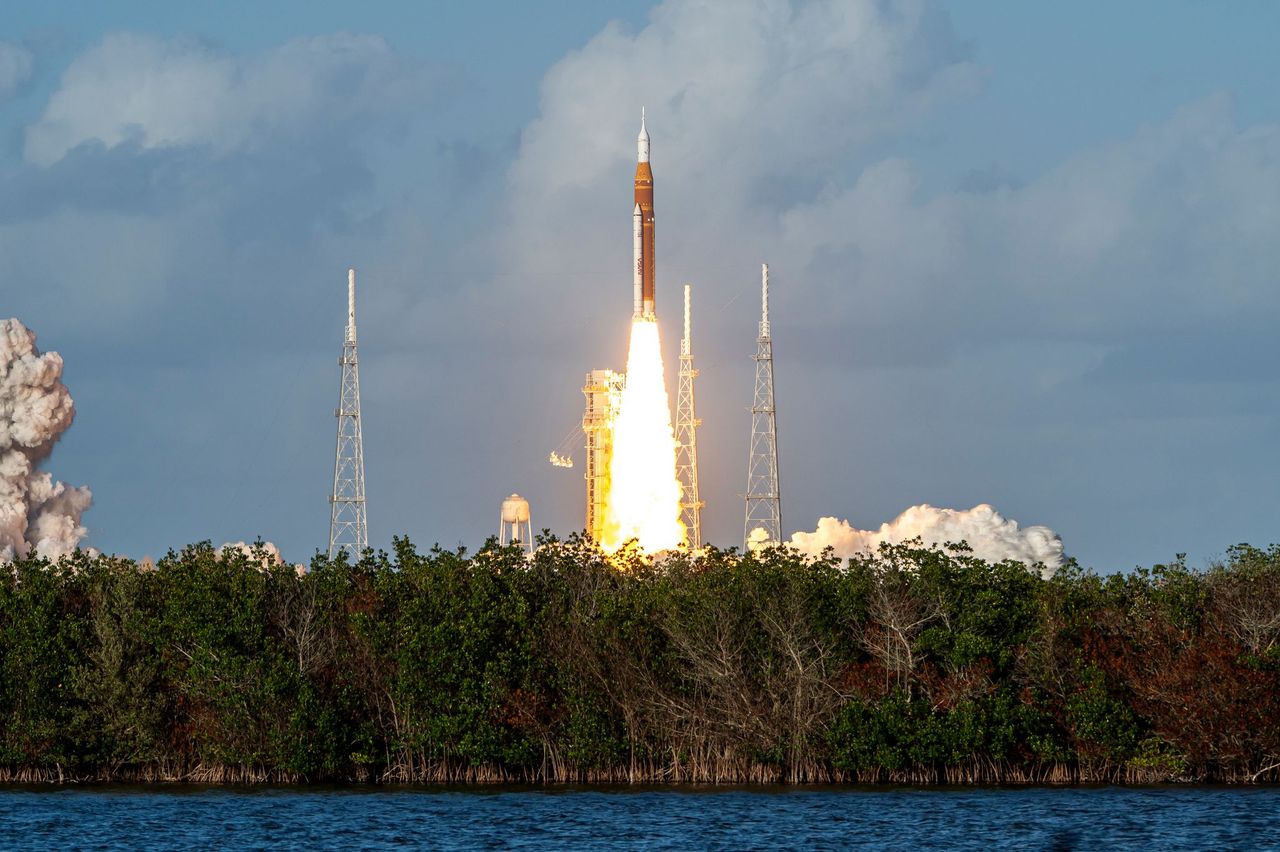
DETROIT (AP) — U.S. safety regulators are investigating reports that autonomous robotaxis run by General Motors’ Cruise LLC can stop too quickly or unexpectedly quit moving, potentially stranding passengers.
Three rear-end collisions that reportedly took place after Cruise autonomous vehicles braked hard kicked off the probe, according to the National Highway Traffic Safety Administration. At the time, robotaxis were staffed by human safety drivers.
The agency also has multiple reports of Cruise robotaxis without human safety drivers becoming immobilized in San Francisco traffic, possibly stranding passengers and blocking lanes.
The reports of immobilized vehicles came from discussions with Cruise, media reports and local authorities, NHTSA said in an investigation document posted Friday on its website.
There have been two reports of injuries related to the hard braking, including a bicyclist seriously hurt last March, according to the NHTSA crash database.
NHTSA says it will determine how often the problems happen and potential safety issues they cause. The probe, which covers an estimated 242 Cruise autonomous vehicles, could bring a recall. “With these data, NHTSA can respond to safety concerns involving these technologies through further investigation and enforcement,” the agency said in a statement.
Cruise CEO Kyle Vogt told The Associated Press that the company is fully cooperating with the NHTSA. “I am happy to help educate them on the safety of our products,” Vogt said during a Friday interview. “Regulators are doing their job. They are scrutinizing things as they should, asking lots of questions.”
So far, Cruise vehicles have driven nearly early 700,000 autonomous miles (1.1 million autonomous kilometers) in San Francisco without causing any life-threatening injuries or deaths.
“This is against the backdrop of over 40,000 deaths each year on American roads,” Cruise spokesman Drew Pusateri wrote in a statement. “There’s always a balance between healthy regulatory scrutiny and the innovation we desperately need to save lives.”
He said police didn’t issue tickets in any of the crashes, and that in each case, the autonomous vehicle was responding to aggressive or erratic behavior of other road users. “The AV was working to minimize collision severity and risk of harm,” Pusateri wrote.
In the clogged traffic incidents, Pusateri wrote that whenever Cruise technology isn’t extremely confident in moving, it’s designed to be conservative, turning on hazard lights and coming to a safe stop.
“If needed, Cruise personnel are physically dispatched to retrieve the vehicle as quickly as possible,” Pusateri wrote. Such stoppages are rare and have not caused any crashes, he wrote.
NHTSA said Cruise reported the three rear-end accidents under a 2021 order requiring automated vehicle companies to notify the agency of crashes.
Reports of Cruise robotaxis becoming immobilized in traffic came from the San Francisco Municipal Transportation Agency and the San Francisco County Transportation Authority, the agency said.
Cruise vehicles may strand passengers in unsafe locations, such as travel lanes or intersections, increasing the risk to exiting passengers. And they can become obstacles to other road users, causing them to make unsafe maneuvers to avoid collisions. “The vehicles may also present a secondary safety risk, by obstructing the paths of emergency response vehicles and thereby delaying their emergency response times,” NHTSA said in the document.
The municipal transportation agency, in comments to NHTSA, said that starting in May, the city began to notice 911 calls from people who were inconvenienced by Cruise operations. Some city police officers also saw Cruise vehicles disabled in travel lanes. One incident in June involved 13 Cruise vehicles stopped on a major road. Two other large blockages were reported in August, the agency said.
The probe comes at an important time for Cruise, which in June started charging passengers for autonomous rides without human safety drivers in part of San Francisco at night. On Thursday, the company got approval from a state agency to carry riders citywide, around the clock. One more agency has to sign off.
It’s also a critical time for the autonomous vehicle industry, with Google spinoff Waymo running a robotaxi service in the Phoenix area with plans to expand to San Francisco. Other companies also are moving toward services without human safety drivers.
San Francisco-based Cruise plans to expand the service to Phoenix and Austin, Texas. The startup owned by GM has been testing autonomous Chevrolet Bolt electric vehicles for several years.
In September Cruise revealed that it recalled 80 of its driverless vehicles for a software update after one of the cars was involved in a crash that caused minor injuries.
Cruise told the National Highway Traffic Safety Administration, that one of its vehicles was making an unprotected left turn at an intersection when it was hit by an oncoming vehicle. The Cruise vehicle had to be towed away from the scene, according to the regulatory filing.
GM acquired a majority stake in Cruise when it was a startup in 2016. The company invested to take 80% stake in the company last May.
You may like
Tech
NASA Rolls Out Massive SLS Rocket Stage for Artemis III Mission to Kennedy Space Center
Published
5 days agoon
April 13, 2026By
Willie DavidNEW ORLEANS (FNN) — NASA will roll out the largest section of its Space Launch System rocket on Monday, April 20, marking a major milestone for the Artemis III mission.
The section, representing the top four-fifths of the SLS core stage, is being moved from NASA’s Michoud Assembly Facility in New Orleans. It includes the liquid hydrogen tank, liquid oxygen tank, intertank and forward skirt. The structure will be loaded onto NASA’s Pegasus barge for transport to Kennedy Space Center in Florida.
CORE STAGE DELIVERY AND INTEGRATION
Once the core stage arrives at Kennedy Space Center, teams will complete final outfitting and vertical integration. The hardware will then be transferred to NASA’s Exploration Ground Systems Program for stacking and launch preparation.
The Artemis III engine section and boat-tail, which protects the engines during launch, were previously moved to the Vehicle Assembly Building in July 2025. The four RS-25 engines are scheduled to arrive from Stennis Space Center in Mississippi no later than July 2026 for integration.
POWERING THE ARTEMIS III MISSION
Equipped with four RS-25 engines, the SLS core stage will generate more than 2 million pounds of thrust, enabling the launch of astronauts aboard the Orion spacecraft.
Artemis III is currently targeted for launch in 2027, following the successful Artemis II mission, which completed a crewed flight around the Moon on April 10.
NASA’S MOON-TO-MARS STRATEGY
The Artemis III mission is part of NASA’s broader Artemis program, aimed at returning astronauts to the Moon and establishing a sustained human presence.
The mission will test critical capabilities, including rendezvous and docking between the Orion spacecraft and commercial systems needed for future lunar landings, currently planned for 2028.
NASA is working in partnership with Boeing, the SLS core stage lead contractor, and L3Harris Technologies, the lead contractor for the RS-25 engines. The core stage remains the backbone of the SLS rocket and is manufactured at the Michoud Assembly Facilit
Tech
NASA’s Artemis II Astronauts Begin Historic Journey Around the Moon After Key Orion Engine Burn
Published
2 weeks agoon
April 3, 2026By
Willie DavidCAPE CANAVERAL, Fla. (FNN) — For the first time in more than 50 years, astronauts on a NASA mission are headed around the Moon after successfully completing a critical burn of the Orion spacecraft’s main engine.
The approximately six-minute firing of Orion’s service module engine Thursday — known as the translunar injection burn — accelerated the spacecraft and its crew beyond Earth’s orbit, placing them on a trajectory toward the Moon.
Aboard the spacecraft are NASA astronauts Reid Wiseman, Victor Glover and Christina Koch, along with Canadian Space Agency astronaut Jeremy Hansen.
“Today, for the first time since Apollo 17 in 1972, humans have departed Earth orbit,” said Dr. Lori Glaze, acting associate administrator for NASA’s Exploration Systems Development Mission Directorate. “Reid, Victor, Christina and Jeremy now are on a precise trajectory toward the Moon. Orion is operating with crew for the first time in space, and we are gathering critical data and learning from each step.”
NASA’s Space Launch System rocket and Orion spacecraft lifted off from Launch Pad 39B at Kennedy Space Center at 6:35 p.m. EDT on April 1, beginning a planned 10-day test mission around the Moon and back.
Successful Launch and Spacecraft Activation
Shortly after reaching space, Orion deployed its four solar array wings, allowing the spacecraft to generate power from the Sun. The crew and mission controllers then began transitioning the spacecraft from launch to normal flight operations while checking critical onboard systems.
About 49 minutes into the flight, the rocket’s upper stage fired to place Orion into an elliptical orbit around Earth. A second burn propelled the spacecraft — named “Integrity” by the crew — into a high Earth orbit extending roughly 46,000 miles above the planet for nearly 24 hours of system testing.
Following the maneuver, Orion separated from the upper stage and began flying independently.
System Tests and Crew Operations in Space
During the early phase of the mission, the astronauts conducted a manual piloting demonstration to evaluate Orion’s handling capabilities using the Interim Cryogenic Propulsion Stage as a docking target.
After the test, Orion executed an automated departure burn to safely move away from the stage. The propulsion stage later performed a disposal burn before re-entering Earth’s atmosphere over a remote area of the Pacific Ocean.
Before its re-entry, four small CubeSats were deployed from the rocket’s Orion stage adapter to conduct separate scientific missions.
Mission teams also transitioned communications to NASA’s Deep Space Network while the crew adjusted to the space environment. Astronauts completed their first rest periods, performed onboard exercise routines, restored the spacecraft’s toilet to normal operations and prepared the spacecraft for the translunar injection burn.
Lunar Flyby and Artemis Program Goals
The crew is scheduled to conduct a lunar flyby Monday, April 6, when astronauts will capture high-resolution images and make observations of the Moon’s surface — including portions of the lunar far side rarely seen directly by humans.
Although the far side will only be partially illuminated during the flyby, the lighting conditions are expected to cast long shadows across the terrain, highlighting ridges, slopes and crater rims that are difficult to observe under full sunlight.
After completing the flyby, the astronauts will return to Earth and splash down in the Pacific Ocean off the coast of San Diego.
The mission marks a major milestone for NASA’s Artemis program, which aims to send astronauts on increasingly ambitious missions to explore the Moon, advance scientific discovery, stimulate economic growth and prepare for the first crewed missions to Mars.
Florida
VIDEO: NASA Artemis II Mission Sends Astronauts Around the Moon in First Crewed Test Since Apollo
Published
2 weeks agoon
April 1, 2026By
Willie DavidThe Artemis II crewed lunar mission launches from Kennedy Space Center on April 1, 2026. Four astronauts blasted off aboard a massive NASA rocket on a long-anticipated journey around the Moon—marking the first crewed lunar flyby in more than 50 years. Photo by Nickolas Wolf / Florida National News.
Historic Return to Deep Space Artemis II is the first crewed mission in NASA’s Artemis program, designed to return humans to the Moon and eventually establish a sustainable presence there. The flight follows the successful uncrewed test mission, Artemis I, which demonstrated the Orion spacecraft’s ability to travel to lunar orbit and return to Earth. The Artemis program represents NASA’s long-term strategy to explore deep space, including preparing astronauts for future missions to Mars. Astronaut Crew to Circle the Moon
The Artemis II crew includes four astronauts selected to test Orion’s life-support systems and navigation capabilities during the mission.
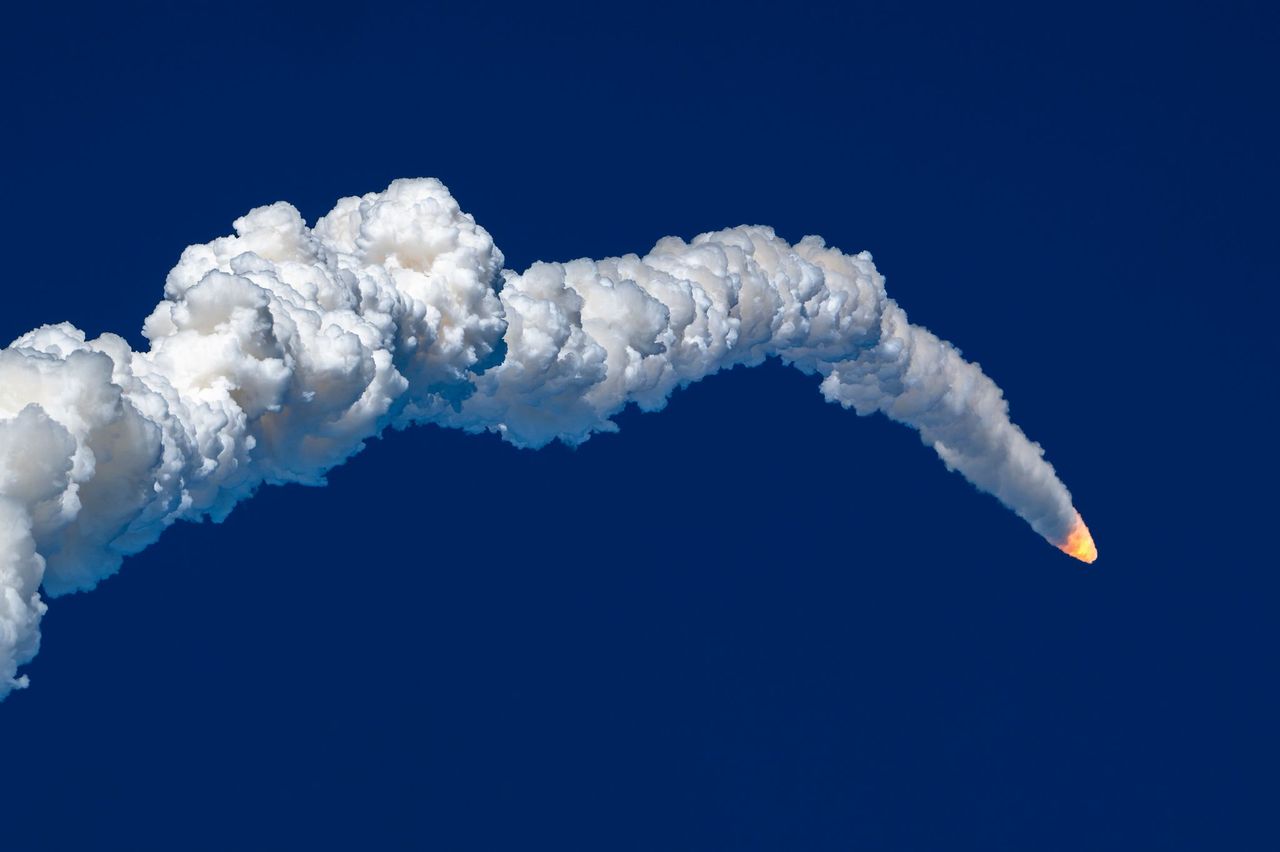
The Artemis II crewed lunar mission launches from Kennedy Space Center on April 1, 2026. Four astronauts blasted off aboard a massive NASA rocket on a long-anticipated journey around the Moon—marking the first crewed lunar flyby in more than 50 years.
Photo by Nickolas Wolf / Florida National News.
Their journey will take them thousands of miles beyond the Moon before returning to Earth. The mission will also demonstrate critical technologies needed for future lunar landings planned under upcoming Artemis missions.
Florida’s Space Coast in the Global Spotlight The launch is expected to draw thousands of spectators to Florida’s Space Coast, including viewers gathering along beaches in Cocoa Beach and nearby communities to witness the historic liftoff.
Trending
Central Florida News4 days agoNick Nesta Wins Apopka Mayor Runoff in Landslide, Defeats Christine Moore
Florida4 days agoDavid Jolly Campaign Tops $5 Million in Fundraising, Gains Momentum in Florida Governor’s Race
Entertainment3 days ago160+ Bands, 5 Stages: Welcome To Rockville Returns to Daytona International Speedway May 7–10 with Expanded Fan Experience
Central Florida News4 days agoMaribel Gomez Cordero, Rick Singh and Emily Bonilla File for Orange County Clerk of Courts Race
Politics2 days agoGov. Ron DeSantis Orders Flags at Half-Staff for Slain Coral Springs Vice Mayor Nancy M. Metayer Bowen