

Florida
Governor Ron DeSantis Issues Updates on Hurricane Idalia, August 30th


- FDEM is leading the State Emergency Response Team (SERT) for the Hurricane Idalia response.
- FDEM has mobilized requested resources to support residents and first responders including more than 100 pallets of Meals Ready to Eat (MREs), nearly 500 pallets of bottled water, and more than 20 pallets of tarps.
- Just two months after the first graduation of Florida State Guard soldiers in 75 years, they’ve been called up to support Florida’s Hurricane Response and are on the ground in Taylor County. We thank them for their service during this community’s time of need.
- The Florida National Guard (FLNG) has been fully activated, with a mobilization of 5,300 guardsmen in position across the state for response efforts. Mobilized units are postured to support humanitarian assistance, route clearance, traffic control, aviation, and security missions throughout impacted areas.
- The Florida National Guard’s Air Force Rapid Engineer Deployable Heavy Operational Repair Squadrin Engineer (REDHORSE) is a highly trained unit in heavy construction that is uniquley mobile and also able to quickly move debris and clear vital routes for our responders. They have worked tirelessly since early morning to clear routes for our own teams to conduct door to door wellness checks for our fellow Floridians.
- The FLNG 53rd Infantry Brigade Combat Team has deployed forward into western and northwestern Florida.
- The Florida National Guard currently has:
- 2400 vehicles to include high mobility and high-water vehicles,
- 14 FLARNG helicopters strategically placed around the state and that number could double with assistance from neighboring states,
- 23 small watercrafts ready to support search and rescue, and reconnaissance missions.
- Two National Guard Truck Companies from neighboring states are enroute to Florida to provide our Guardsmen with additional mobility capabilities.
- The Florida Department of Law Enforcement (FDLE) mutual aid team is coordinating Florida’s law enforcement response with 68 active missions including deployment of search and rescue teams.
- A total of 80 FDLE agents from Miami, Orlando, Tampa Bay, Jacksonville and Pensacola are deployed into the impacted area and an FDLE drone operator is working with Urban Search and Rescue Teams.
- FDLE has deployed the following equipment:
- One command center
- One mobile command center
- Six mobile staging units
- Three large trailers
- Four box trailers
- Two cargo trucks
- One forklift
- 24 generators
- 30 Chainsaws.
- The Florida Fish and Wildlife Conservation Commission (FWC) two rapid response teams The teams have of a total of 47 officers and support personnel and the following equipment:
- 47 four-wheel drive vehicles
- 15 vessels including airboats and shallow draft vessels
- 9 UTV/ATVs
- 1 drone unit
- 4 swamp buggies
- 2 supply trailers
- 1 command trailer
- multiple generators
- mobile communications equipment
- fuel resupply containers
- FWC response teams have integrated with three teams from the Department of Financial Services Bureau of Fire, Arson and Explosives Investigations with heavy debris removal capability.
- The Florida Highway Patrol has activated 300 troopers and implemented 12-hour Alpha, Bravo to provide resources to impacted areas. This activation has resulted in regular days off being cancelled and 24-Hour enhanced coverage.
- The Florida Department of Environmental Protection (DEP) The Florida Department of Environmental Protection (DEP) is actively working to provide any needed assistance to drinking water, wastewater and hazardous waste facilities. Outreach to these facilities to determine operation status is ongoing.
- DEP’s request for a fuel waiver was granted by U.S. Environmental Protection Agency to temporarily adjust certain regulatory requirements statewide so the state can ensure a sustained, useable fuel supply.
- DEP is coordinating with Florida’s Water/Wastewater Agency Response Network (FlaWARN), the Florida Rural Water Association and other response agencies to dispatch fuel and pump trucks to assist drinking and wastewater facilities.
- 14 Florida State Parks strike teams have been assembled to assist with assessment and recovery efforts at impacted parks.
- DEP’s Emergency Final Order removes barriers for expediting necessary repair, replacement and restoration of structures, equipment, surface water management systems, works and other systems that may be damaged by the storm.
- The Florida Department of Children and Families’ (DCF) has released more than $104 million in SNAP (Supplemental Nutrition Assistance Program) benefits early in preparation/response to Hurricane Idalia for over 327,000 households that would normally receive their September SNAP benefit between the 1st – 14th of the month. This applies to SNAP households located in one of the 49 designated counties in Governor DeSantis’ Executive Order. Eligible recipients will have the benefits automatically added to their EBT card. There is no need for recipients to apply.
- The Florida Department of Health (DOH) is staging mobile field hospitals and emergency rooms for deployment to facilities in the Big Bend.
- DOH and AHCA are supporting patient transport and efficient reopening of health care facilities in affected areas.
- Over 400 ambulances and paratransit buses are deployed or staged to support emergency medical services and patient transport.
- DOH is supporting 45 special needs shelters in the following counties: Alachua, Baker, Bradford, Charlotte, Clay, Columbia, Citrus, DeSoto, Dixie, Duval, Flagler, Gadsden, Gilchrist, Glades/Henry, Hardee, Hamilton, Hernando, Hillsborough, Lake, Leon, Levy, Liberty, Madison, Manatee, Marion, Nassau, Orange, Pasco, Pinellas, Polk, Putnam, Sarasota, St. John’s, Sumter, Suwannee, Union, and Volusia.
- DOH Children’s Medical Services Managed Care Plan (CMS) conducted outreach to providers and high-risk clients within 46 counties. CMS has ensured clients have access to early prescription refills.
- DOH has provided additional supplies of special infant formula to Women, Infants, and Children (WIC) clients in need. WIC clients have been contacted regarding clinic closures.
- The DOH and Office of Insurance Regulation (OIR) sent information regarding early prescription refills permitted under Executive Order 23-171. This information was sent to the public, health insurers, managed care organizations, pharmacy benefit managers, pharmacy chains, and health care providers.
- The Agency for Health Care Administration (AHCA) is pulling reports utilizing newly developed GIS software that includes information from residential providers and hospitals in impacted areas.
- AHCA opened an event in the Health Facility Reporting System, All Residential/Inpatient Health Care Providers must submit updates on census, bed availability, evacuation and receiving status, power outages and generator status by 10AM daily & when a situation changes. This has been put in place for all 67 counties.
- On-site post storm visits will be made by the Agency to conduct health and life safety surveys.
- For health facilities with storm damage, damage assessment guidelines, are available here.
- Teledoc is providing free virtual health care services, including general medical telehealth visits, non-emergency services, and prescription refills, to Florida residents, first responders and others directly impacted by Hurricane Idalia. Call Teladoc directly at 855-225-5032.
- AHCA sent a Medicaid Provider Alert outlining Key Medicaid Information for Fee-For-Service and Managed Care Providers during Hurricane Idalia, this can be found here.
- The Agency waived all prior authorization requirements for providers to perform critical services beyond policy limits until further notice.
- AHCA has activated the Emergency Patient Look-Up System (E-PLUS). Special needs shelters are able to utilize the system to retrieve patient medical records. E-PLUS is also available to assist medical providers and emergency response personnel with locating missing or displaced persons after the storm.
- Publix pharmacies have agreed to share data with the E-PLUS and are also being credentialed to use the system to assist with prescribing needs.
- 100% of operating long-term care facilities have a generator on-site. The Generator Status Map for long-term care facilities is available here.
- AHCA has contacted the Medicaid Managed Care Plans, to ensure they are allowing for early prescription refills. Fee-for-service recipients are also eligible for early refills.
- The Agency for Persons with Disabilities (APD), APD and its partners have contacted APD clients, families, providers and critical stakeholders pre-landfall to ensure readiness and track any evacuations plans for post storm activities.
- APD Field Leadership and their teams are checking in with clients, providers, and staff in the affected areas to determine health and safety post landfall.
- The Department of Elder Affairs (DOEA) is receiving daily updates from all 11 Area Agencies on Aging throughout Florida. PSA 6 is currently closed to the public but is operating in a more limited capacity with staff working on the Elder Help Line and in their Long-Term Care Services Departments. There are currently no unmet needs being reported by any PSA 6 providers.
- The Florida Department of Agriculture and Consumer Services (FDACS) continues to complete assessments of the fuel supplies as locations reported by CITGO to determine the severity of contaminated fuel within on-site tanks. Updates on inspections and testing can be found here.
- The Florida Highway Patrol (FHP) is maintaining high visibility on interstate systems, bridges, and rest areas. Motorists can report disabled vehicles or dangerous driving conditions to *FHP (*347).
- FHP is coordinating UAV flights to capture images of all the State Law Enforcement Radio System (SLERS) towers to ensure state law enforcement personnel have communications to provide Hurricane Idalia response and law enforcement resources.
- FLHSMV driver license and motor vehicle service center closures can be found here.
- FDACS has opened up the consumer hotline to receive complaints from consumers impacted by the Port of Tampa fuel contamination. If you believe you were sold contaminated gasoline, you can file a complaint by calling 1-800-HELP-FLA or visiting fdacs.gov.
- Florida Department of Transportation (FDOT) For the latest and real-time road and bridge closures, please visit Florida 511, at FL511.com or download the app. Florida’s 511 Traveler Information System is available for drivers to stay informed about roadway conditions during emergencies. This service is monitored and updated 24/7 by FDOT and includes traffic conditions, road and bridge closures, and other specialized alerts.
- FDOT has nearly 700 team members deployed to the impacted areas, which includes nearly 100 Bridge Inspectors and 224 Cut and Toss crew members.
- Nearly 250 pieces of major equipment, including 140 dump trucks, 59 pumps, and 207 other heavy equipment (front-end loaders, skid-steers, etc.)
- Nearly 1,100 generators are ready to deploy as needed to quickly restore traffic signals.
- All 13 traffic management centers across the state, which are open 24/7, are monitoring road conditions and traffic levels along critical corridors including I-10, I-75, and I-4 to ensure safe travel for drivers.
- 185 Road Rangers are available across the state to assist motorists in need.
- Tolls have been suspended at facilities along the West Coast of Florida until Noon on Tuesday, September 5. The facilities include the I-4 Connector, Selmon Expressway (S.R. 618), Veterans Expressway (S.R. 589), Suncoast Parkway (S.R. 589), Turnpike Mainline (I-75 to I-4), Pinellas Bayway (S.R. 679), Sunshine Skyway Bridge (U.S. 19).
- FDOT issued an Emergency Order to temporarily allow expanded weight and size requirements for vehicles transporting emergency equipment, services, supplies, and agriculture commodities and citrus.
- For rolling updates on Florida’s airport, seaport, and transit partners, please visit local listings or www.fdot.gov/idalia.
- Remember to heed the advice of local officials following a severe weather event. FDOT reminds motorists to always proceed cautiously and drive safely.
- DEP has pre-authorized 707 Disaster Debris Management Sites for the counties included in the Governor’s Executive Order to temporarily stage storm-generated debris that may result from the storm.
- The Florida Department of Education is consistently updating their website with school district closures, as well as State University System and Florida College System Closures.
- 50 County School Districts have issued closures.
- 20 Florida State College Systems have issued closures.
- Nine State University Systems have issued closures.
- Ten State Testing Site has issued closures.
- Ten Division of Blind Services have issued closures.
- 20 Vocational Rehabilitation Offices have issued closures.
- Today, FloridaCommerce and the State Emergency Response Team (SERT) activated the Business Damage Assessment Survey in response to Hurricane Idalia. Survey responses will allow the state to expedite Hurricane Idalia recovery efforts by gathering data and assessing the needs of affected businesses. Businesses can complete the survey online by visiting www.FloridaDisaster.biz and selecting “Hurricane Idalia” from the dropdown menu.
- In partnership with FloridaCommerce, DOH has provided resources to private sector partners selling generators to Floridians regarding generator safety and carbon monoxide poisoning prevention. Information regarding proper generator safety has also been distributed on social media platforms.
- FloridaCommerce has activated the private sector hotline at 850-815-4925 from 8:00 a.m. to 6:00 p.m. Inquiries may also be emailed to ESF18@em.myflorida.com.
- FloridaCommerce has alerted the statewide Community Action Agency (CAA) Network and Local Workforce Development Boards (LWDBs) to initiate disaster preparedness activities. LWDBs and CAAs have been advised to submit their anticipated cash needs or invoice packages for reimbursement, as appropriate, to ensure critical services to Floridians are not disrupted.
- FloridaCommerce is hosting daily private sector coordination calls beginning Monday, August 28, 2023. Briefings will be provided by SERT meteorology, fuels, communications, transportation, and energy, as well as private sector partners such as the Florida Retail Federation, Florida Restaurant and Lodging Association, and VISIT FLORIDA.
- FloridaCommerce is in contact with local ESF 18 representatives in the anticipated impacted areas to support economic resiliency in their communities.
- FloridaCommerce has also been in contact with Amazon who will donate gift cards and supplies to nonprofits following the storm.
- U-HAUL is offering 30 days of free self-storage or container use at more than 50 of its locations across the state. For more information contact the nearest participating location: bit.ly/3Ehal49.
- OnStar: Crisis Mode has been turned on for all OnStar-equipped Chevrolet, Buick, GMC & Cadillac owners impacted by Idalia. Services are complimentary. Just push your OnStar button and say “Advisor.”
- Wells Fargo is ready to support Floridians by providing access to your accounts, banker support on their customer assistance line at 1-800-219-9739.
- Visa is waiving interchange fees for donations made to the Florida Relief Fund. They will match employee donations made in support of Florida disaster relief efforts and the Visa Small Business Team has activated their Back to Business tools to help Floridians affected by Hurricane Idalia.
- Comcast has opened 141,000 public Xfinity WiFi hotspots in areas it serves across Florida in Hurricane Idalia’s potential path for anyone to use, including non-Xfinity customers, for free.
- Uber announced FREE* round-trip rides to Florida shelter locations in Alachua, Citrus, Collier, Dixie, Hernando, Hillsborough, Lake, Leon, Marion, Manatee, Nassau, Orange, Pasco, Pinellas, Polk, Sarasota, Sumter, Union, and Volusia counties in preparation of Hurricane Idalia
- Open your app.
- Tap “Account” on the bottom right.
- Tap Wallet
- Scroll down to “+ Add Promo Code.”
- Enter code IDALIARELIEF
- *Up to $35 each way, to and from a state- approved evacuation shelter listed at floridadisaster.org/planprepare/shelters.
- VISIT FLORIDA has activated the Emergency Accommodations Module with Expedia to provide real-time availability of hotel rooms throughout the state.
- Updates on closures and business resources are consistently being updated at FloridaDisaster.Biz/CurrentDisasterUpdates.
- The Department of Business and Professional Regulation (DBPR) linking the Boil Water Notice Guidelines and the Emergency Recovery Guidelines was sent to food and lodging establishments throughout the impacted areas of the state to help businesses prepare for post-storm recovery.
- DBPR is coordinating with the Florida Restaurant and Lodging Association to secure accommodations for state workers and first responders deploying to impacted areas.
- The DBPR Division of Hotels and Restaurants is coordinating emergency response teams in the Big Bend, North Florida and Tampa Bay regions for a post-storm rapid response to assist lodging establishments and restaurants in reopening as necessary.
- DBPR encourages Florida’s licensed contractors who are looking to help property owners in need of post-storm construction-related services to register with the Florida Disaster Contractors Network at DCNOnline.org. Once homeowners are safely able to assess their home repair needs, DBPR encourages them to log onto DCNOnline.org and search by county for a list of Florida-licensed contractors providing these services in their community.
- OIR issued an Informational Memorandum to all authorized residential property insurers to provide guidance on hurricane preparedness and response. OIR directed insurers to review all aspects of their disaster preparedness and response plans to ensure they’re in compliance with Florida law. Informational Memorandum OIR-23-05M is available here.
- DBPR Emergency Order 2023-06 also:
- Extends the deadline for the filing of monthly reports and returns by certain alcoholic beverage and tobacco license holders to October 25, 2023.
- Suspends and tolls through October 25, 2023, all final orders reflecting agency action and all-time requirements and deadlines for filing responses outlined in agency orders through September 28, 2023.
- Suspends and tolls the annual $4 mobile home fee and $1 surcharge for mobile home park owners.
- Waives the $200 fee for the issuance of temporary licenses for out-of-state veterinarians through October 25, 2023.

- Florida Department of Highway Safety and Motor Vehicles (FLHSMV) has FLHSMV has issued Emergency Order 082623, which:
- waives specific requirements for commercial motor vehicles providing emergency relief; and
- waives the replacement fees for driver’s license and identification credentials, vehicle registrations and titles, vessel registrations and titles and temporary parking permits for impacted individuals.
- Following the issuance of the Governor’s Executive Order, DEP has issued an Emergency Final Order waiving permitting requirements for the storage and processing of solid waste, including hurricane debris.
- DEP’s Emergency Final Order also removes barriers for expediting necessary repair, replacement and restoration of structures, equipment, surface water management systems, works and other systems that may be damaged by the storm.
- FDOT issued an Emergency Order to temporarily allow expanded weight and size requirements for vehicles transporting emergency equipment, services, supplies, and agriculture commodities and citrus.


Florida
Civil Rights Group Honors Nobel Peace Prize Winner Navi Pillay, Highlights Florida’s Trayvon Martin Connection


The Orlando-based civil rights association recalls supporting the former U.N. human rights chief’s 2012 call for an investigation into the teenager’s killing in Sanford.
ORLANDO, Fla. (FNN) — The Florida Civil Rights Association is congratulating 2026 Nobel Peace Prize winner Navanethem “Navi” Pillay, recalling her call for an investigation into Trayvon Martin’s killing and the international attention it brought to questions of racial equality and justice in Florida.
The Norwegian Nobel Committee announced Pillay’s selection Oct. 9 for her efforts to promote peace and international law. The South African jurist served as United Nations high commissioner for human rights from 2008 to 2014 and helped shape landmark international court decisions.
In a press release, FCRA President J. Willie David III said Pillay’s intervention connected a Florida family’s demand for answers to a broader concern for human rights.
“Pillay’s call for an investigation reinforced that a family’s demand for justice in Sanford mattered beyond Florida and the United States,” David said.
“We welcomed her intervention in 2012 because families deserve answers and the law must protect everyone equally.”
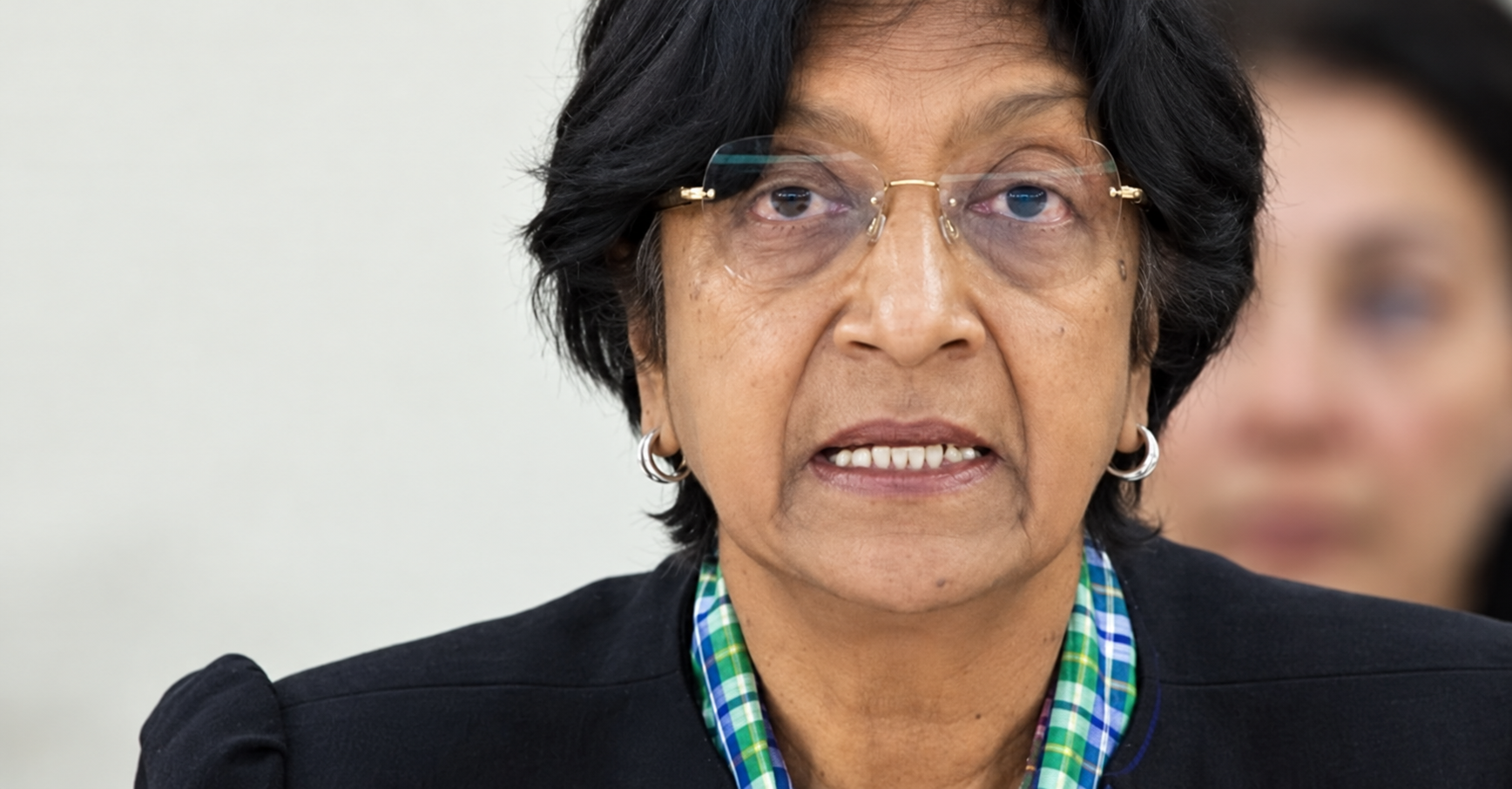
UN Human Rights Commissioner Navi Pillay (Photo credit: UN Photo/Jean-Marc Ferre)
FCRA recalls its response in 2012
Martin, an unarmed Black 17-year-old, was fatally shot by neighborhood watch volunteer George Zimmerman on Feb. 26, 2012, in Sanford, northeast of Orlando.
In April 2012, Pillay called for an immediate investigation into the killing as the case drew international attention and scrutiny of Florida’s Stand Your Ground law.
FCRA welcomed that call. The association’s current release cites an April 7, 2012, West Orlando News report that quoted David discussing the case’s global impact.
“The shooting death of Trayvon Martin and Florida’s Stand Your Ground Law have created a worldwide movement that calls into question how justice is delivered to victims of color,” David said at the time, according to the release.
FCRA describes the activism surrounding Martin’s death as a defining moment that galvanized a new generation of civil rights advocates.
Zimmerman was charged with second-degree murder and acquitted in July 2013. In February 2015, the U.S. Justice Department closed its separate investigation, finding insufficient evidence to pursue federal criminal civil rights charges.
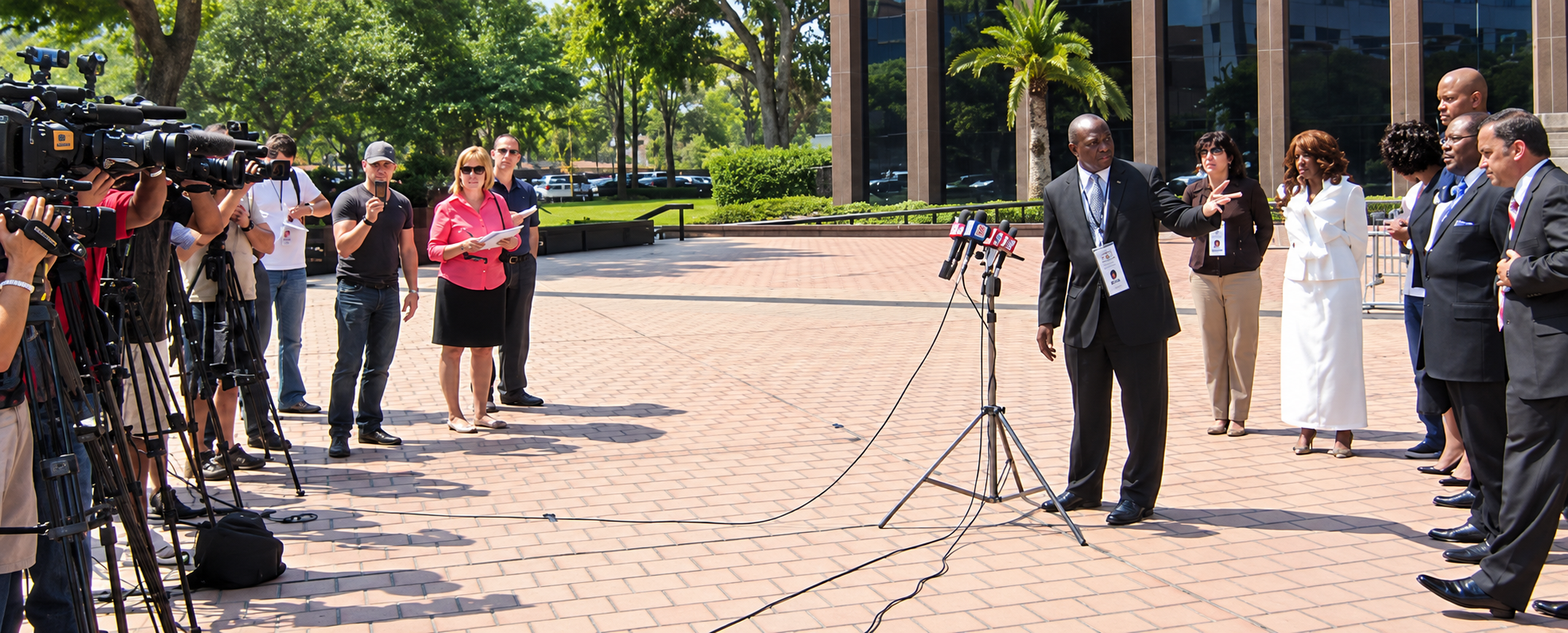
The Florida Civil Rights Association (FCRA) held a press conference outside the State of Florida’s regional offices in Orlando in 2012, calling on then-Gov. Rick Scott to take action following Trayvon Martin’s killing. Photo by FCRA.
Why Florida’s case drew global scrutiny
The Florida connection shows how the handling of a local killing can draw international scrutiny over racial discrimination, access to justice and the protection of human rights.
Pillay’s intervention brought those concerns into the international discussion surrounding Martin’s death. In September 2013, U.N. human rights experts also urged the United States to complete its civil rights investigation and examine concerns about racial profiling.
The significance lies in human rights oversight: how public institutions investigate deaths and provide equal treatment can attract attention beyond national borders. Pillay’s call was an appeal for investigation, rather than an international court judgment about Zimmerman’s guilt or Florida’s compliance with international law.
For FCRA, that connection remains relevant to how Florida leaders evaluate laws and practices affecting the communities they serve.
Pillay’s record in international justice
Pillay challenged discrimination under apartheid before serving on South Africa’s High Court, the International Criminal Tribunal for Rwanda and the International Criminal Court.
At the Rwanda tribunal, she was part of the judicial panel that established that rape and sexual violence can constitute acts of genocide, a landmark development in international criminal law.
David said honoring that career should also encourage accountability at home.
“Her Nobel Peace Prize recognizes a career built on confronting injustice through the rule of law,” he said. “Honoring that work means demanding transparent investigations and equal protection here at home. Rights belong to everyone.”
A renewed call for fairness in Florida
FCRA urged Florida leaders to safeguard impartial investigations, examine whether Stand Your Ground and other laws are applied fairly, and address policies or practices that produce discriminatory outcomes.
Founded in 2005, the association advocates for civil rights, human rights and civil liberties through education, advocacy and accountability. Its statement links Pillay’s international recognition to a continuing demand for fairness and human dignity in Florida.
Florida
Florida Governor Candidates: Donalds Spent Longer as a Democrat; Jolly Reports Longer Republican History

Florida
FNN PERSPECTIVE | Byron Donalds Visits ONYX Gala in Orlando: Could Orange County Help Him Win Florida’s Governor’s Race?

Democratic crossover endorsements provide context. Orange County’s vote margin could help shape the contest between Donalds and David Jolly.
ORLANDO, Fla. (FNN) — Republican gubernatorial nominee Byron Donalds’ appearance at ONYX Magazine’s Men of Honor Gala in Orlando raises a broader electoral question: Could crossover support in Democratic-leaning Orange County help him reach the governor’s mansion?
Source: ONYX Magazine Facebook Page
Donalds and Democratic opponent David Jolly attended the Oct. 3 celebration at the Rosen Centre Hotel, according to Hoodline reporting citing the Orlando Sentinel. The gathering brought together elected officials, business executives, educators and community leaders to recognize leadership, achievement and service. Source: Hoodline
Organizers emphasized that the candidates’ attendance did not constitute an endorsement. Among the honorees was Orange County Mayor Jerry Demings, selected for a lifetime achievement award. Source: Jacksonville Free Press
Orange County, home to Orlando, provides a setting for examining both candidates’ electoral prospects. Its history includes prominent Democrats backing Republicans, while its Democratic vote margins illustrate how the county can contribute to the statewide outcome.
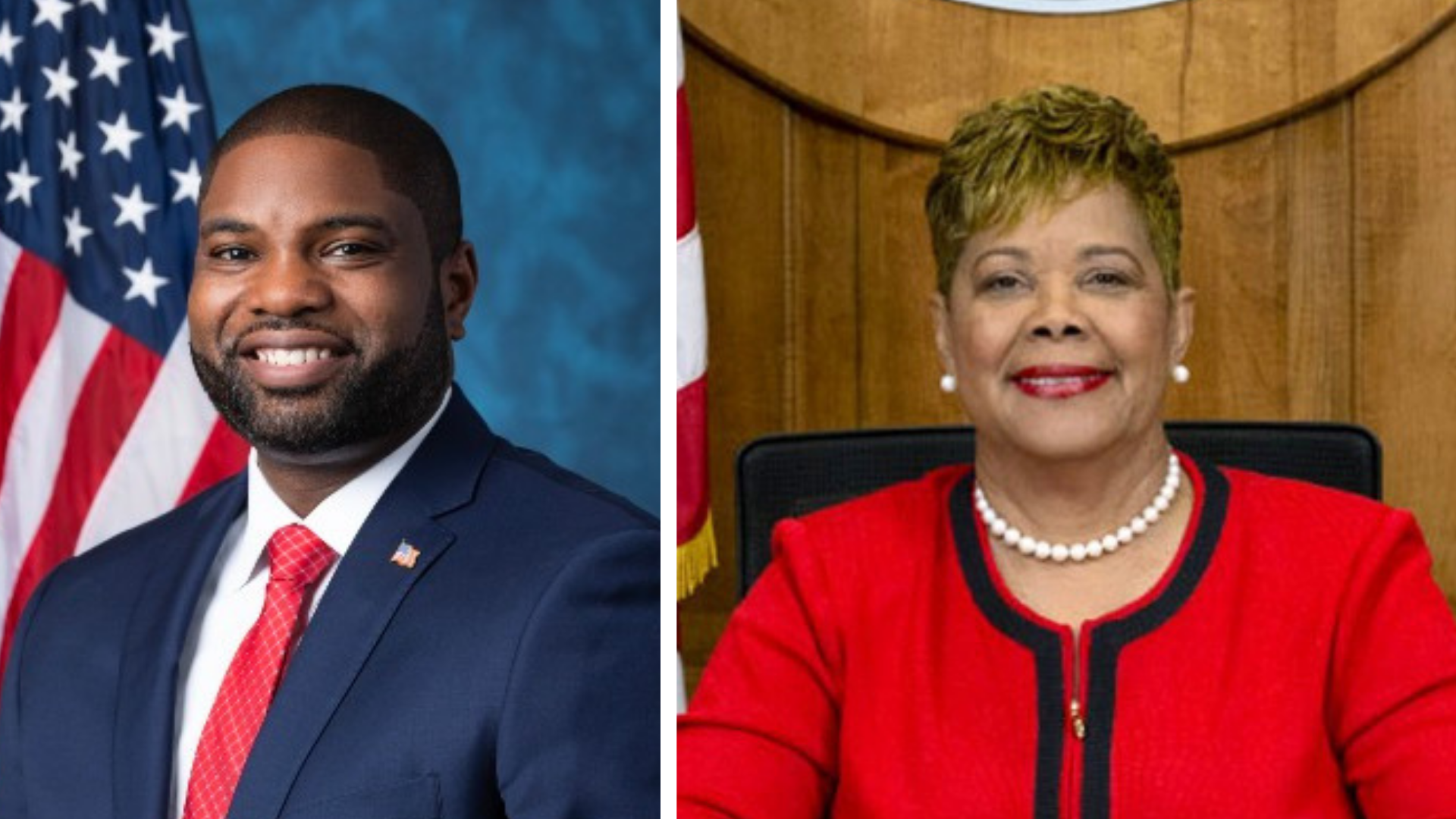
Republican gubernatorial nominee Byron Donalds, left, and Gainesville City Commissioner Cynthia Moore Chestnut, a longtime Democrat who endorsed Donalds for governor.
Donalds Has Secured a Democratic Crossover Endorsement
Gainesville City Commissioner Cynthia Moore Chestnut, a registered Democrat, endorsed Donalds over Jolly in September, according to WCJB. She cited Black representation, dissatisfaction with the Democratic ticket and support for historically Black colleges and universities, while acknowledging disagreements with some of Donalds’ policies. Source: WCJB
Chestnut subsequently introduced Donalds at a University of Florida town hall, emphasizing access to his office and fair consideration of Gainesville’s needs. Source: WCJB
Her endorsement raises a question about whether other Democrats, including those with conservative or moderate views, might support Donalds. However, her stated reasons do not establish a broader ideological shift. Dissatisfaction with party leadership or progressive positions does not automatically translate into Republican votes.
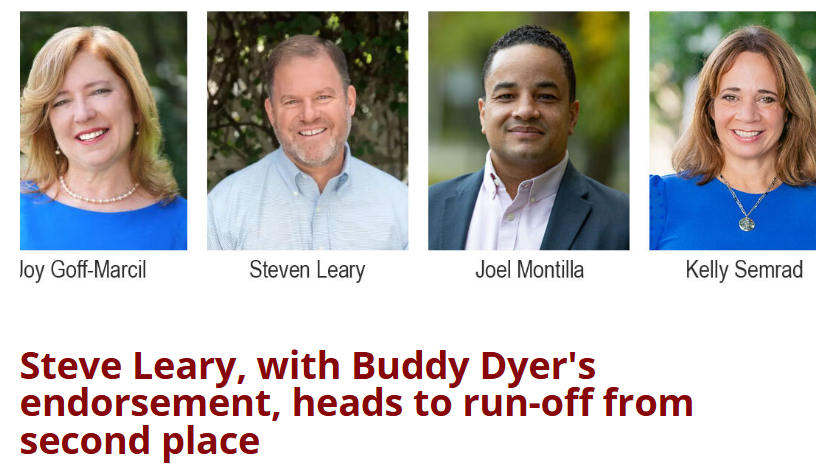
Source: Winter Park Voice
Orange County Democrats Have Backed Republicans Before
Democratic Orlando Mayor Buddy Dyer endorsed Republican state Rep. Mike Miller against Democrat Beth Tuura in the 2016 Florida House District 47 election — a partisan legislative contest. Source: Florida Politics
In the nonpartisan 2024 Orange County Commission District 5 race, Dyer endorsed Republican former Winter Park Mayor Steve Leary. Winter Park Voice also identified former Democratic state Sen. Gary Siplin, former Orange County Commissioner Victoria Siplin and Winter Park Commissioner Craig Russell as Democratic supporters of Leary. Source: Winter Park Voice
Dyer’s Orlando PAC contributed $4,000 to Neighbors for a Sensible Orange County, the political committee chaired by Leary, according to Winter Park Voice’s reporting on campaign finance filings. The committee also promoted Leary alongside Democratic candidates. This was financial support between political committees, rather than a personal donation by Dyer or a direct contribution to Leary’s candidate account. Source: Winter Park Voice
Former Orange County Chair Linda Chapin encouraged Democrats to support Republican Teresa Jacobs’ 2014 reelection campaign for county mayor while Democrat Val Demings was challenging her. Source: Orlando Weekly
Dyer and Orlando Commissioner Tony Ortiz also endorsed Republican Commissioner Jim Gray in the 2025 Orlando election. Ortiz had switched from Republican to Democrat earlier that year. Source: Orlando Weekly
These examples document individual cross-party support across different elections. They do not establish that those leaders endorse Donalds.
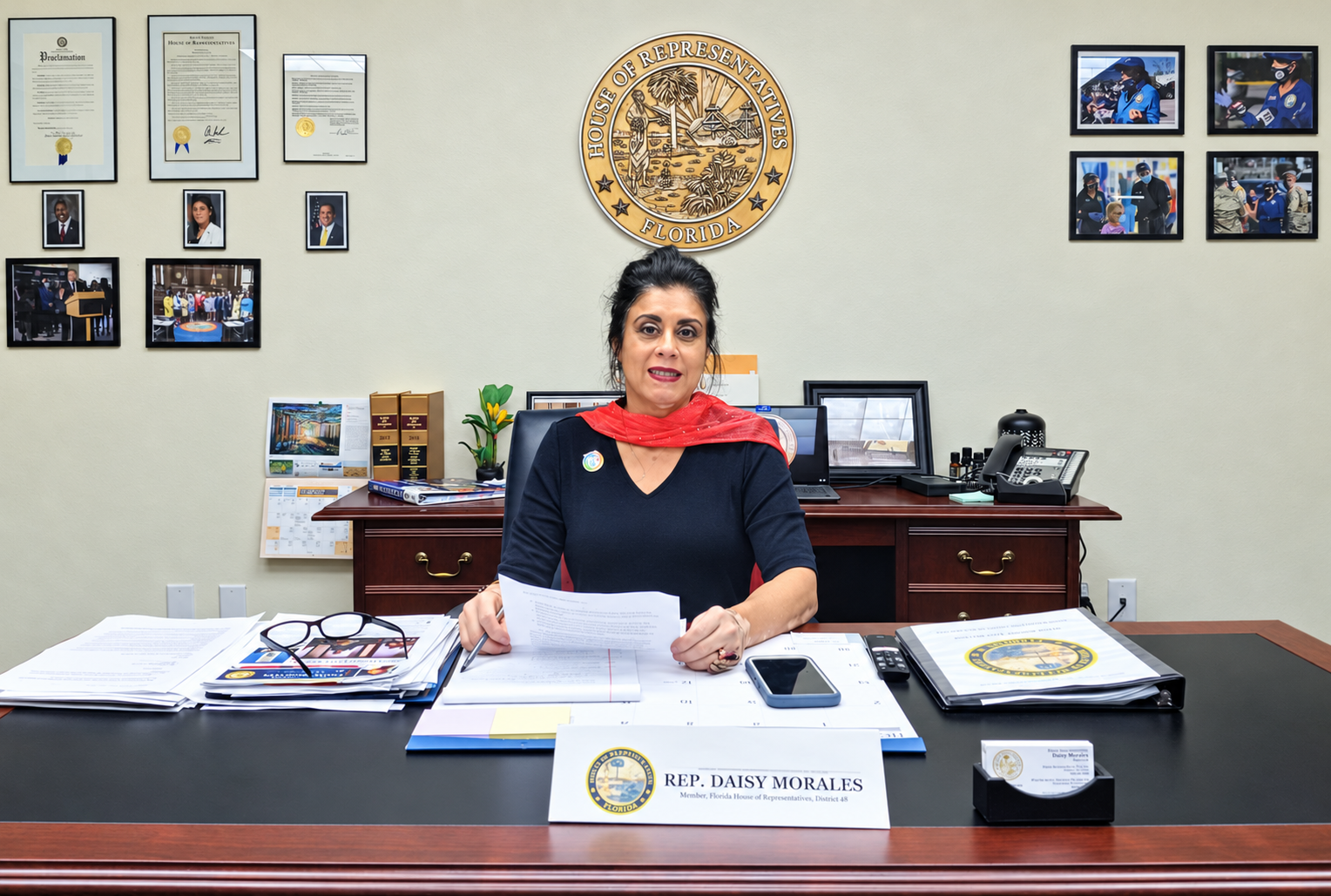
Then-state Rep. Daisy Morales, D-Orlando, sits at her district office in Orange County, Florida. Morales represented House District 48 from 2020 to 2022 and sponsored or co-sponsored more than 110 bipartisan bills that became law.
Montilla and Morales: Participation, Endorsements and Party Enforcement
Republican attorney Joel Antonio Montilla’s 2024 Orange County Commission campaign provides additional context about political participation and disputes over party loyalty.
Former Democratic state Rep. Daisy Morales participated on Montilla’s non-partisan campaign-launch host committee for Orange County Commissioner. Montilla separately confirmed to Florida Politics that Morales did not endorse his candidacy. Source: Florida Politics
Morales brings a record of electoral success in Orange County. In 2018, she won countywide reelection to the Orange County Soil and Water Conservation District board with 256,342 votes. In 2020, she defeated four opponents in the Democratic primary, including Samuel Vilchez Santiago, before defeating Republican Jesus Martinez in the general election to win Florida House District 48, a majority-Hispanic district with a large Puerto Rican community. Official general-election results show she received 47,341 votes, or 65.3%.
Morales alleges that Orange County’s Democratic establishment, including Vilchez Santiago, her 2026 House District 43 primary opponent and former Orange County Democratic Party chair, targeted her over an alleged violation of party endorsement rules while treating prominent Democrats who supported Republican candidates differently. She characterizes that treatment as selective enforcement in a defamation lawsuit filed in Orange County.
The documented crossover endorsements provide context for her allegation, but determining whether party rules were applied unevenly requires comparing the applicable rules, circumstances and disciplinary decisions in each case.
Endorsements, financial contributions, campaign management and host-committee participation represent distinct activities. Those distinctions matter when evaluating both crossover support and allegations of inconsistent party enforcement. Morales’ participation in Montilla’s event does not establish support for Donalds.
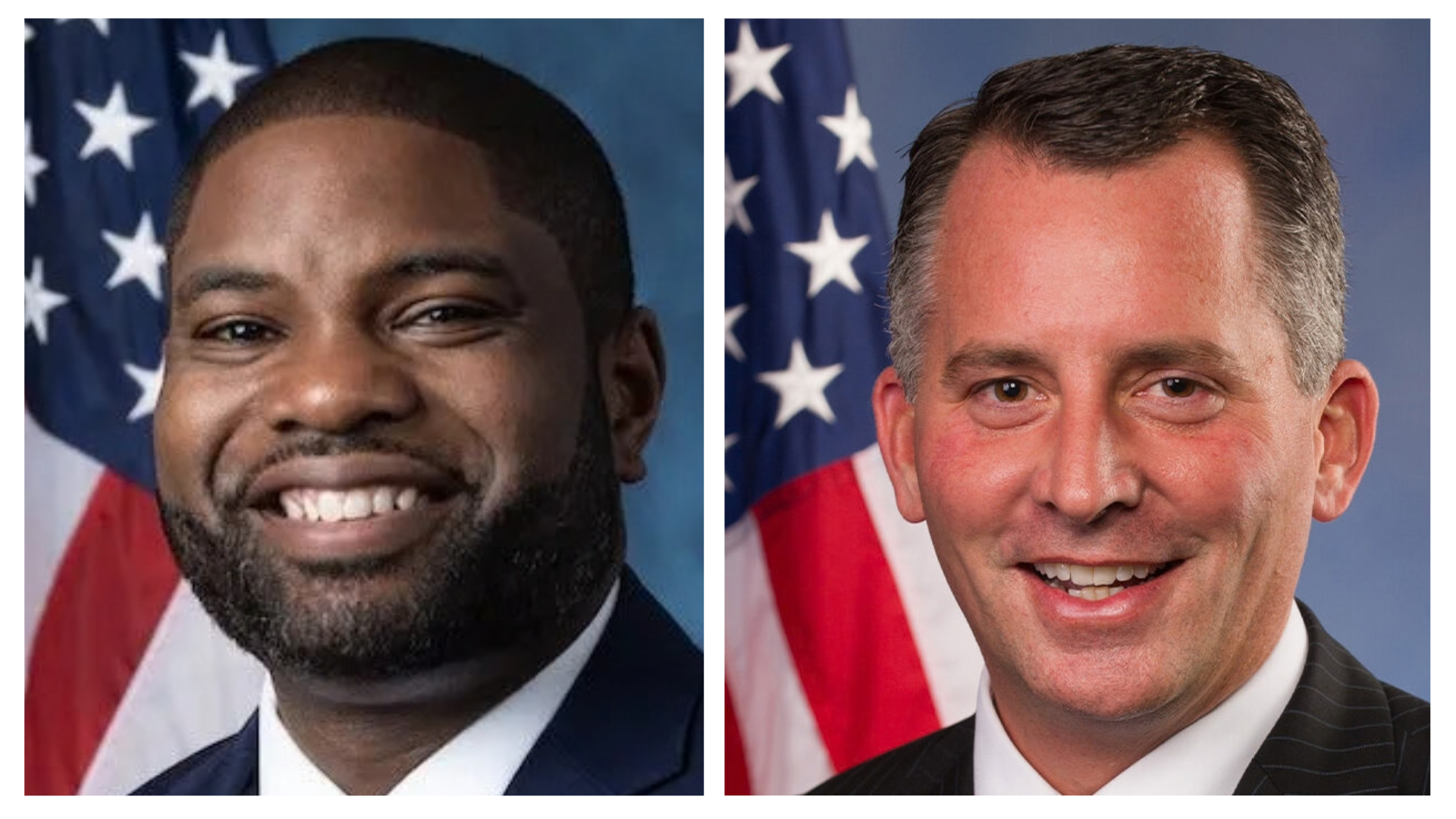
U.S. Rep. Byron Donalds, left, the Republican nominee for Florida governor, and former U.S. Rep. David Jolly, the Democratic nominee.
Orange County: A Gateway to the Governor’s Mansion?
Orange County’s influence rests on the votes it contributes and the advantage it delivers to either candidate.
In the 2018 governor’s election, Democrat Andrew Gillum received 296,257 votes in Orange County, compared with Republican Ron DeSantis’ 174,228 — a Democratic advantage of 122,029 votes. DeSantis nevertheless won statewide by 32,463 votes. Source: Florida Division of Elections
The county also voted Democratic in the 2024 presidential election. Kamala Harris received 340,807 votes, while Donald Trump received 258,279, giving Harris an 82,528-vote advantage. Source: Florida Division of Elections
The elections involved different offices, candidates and turnout conditions. Their results provide historical context rather than a forecast for the governor’s race.
Neither Donalds nor Jolly must win Orange County to win Florida. The margin is what matters. A smaller Democratic advantage would improve Donalds’ statewide position, assuming results elsewhere remained unchanged. A larger advantage for Jolly could help offset Republican strength in other counties.
Changes in that margin could reflect turnout, crossover voting or choices by voters without a party affiliation. County totals alone cannot establish how many Democrats voted Republican.
Will Community Engagement Translate Into Votes?
The ONYX gala placed both candidates before a community gathering outside a conventional partisan campaign event. Whether such appearances generate support will depend on voters’ assessments of their records, proposals and priorities.
Endorsements have limits. Gray lost his 2025 reelection bid to Democrat Tom Keen despite Dyer’s backing and a fundraising advantage. Source: Florida Politics
Chestnut’s endorsement provides a documented example of Democratic support for Donalds. Polling and voter interviews would be needed to determine whether comparable support exists in Orange County and how significant it might be.
For Donalds, making a sustained case to Black voters would require addressing the issues they identify as priorities, including housing costs, economic opportunity, education, health care and public safety. Community appearances create opportunities to hear those concerns and explain specific proposals; electoral support depends on whether voters find the answers persuasive.
A Donalds victory would make him Florida’s first Black governor. Orange County could help shape the outcome through the Democratic advantage Jolly builds or the margin Donalds narrows.
What would most influence your choice for Florida’s next governor: party affiliation, the candidate’s record or specific policy proposals — and why?


